
15 Powerful Vegan Cooking Techniques Tips: Boost Flavor, Protein & Meal Quality Instantly
Vegan cooking techniques tips are the difference between “just plants on a plate” and food that tastes like it came out of a restaurant kitchen. When you understand how heat, fat, acid, and texture work in plant-based cooking, you can boost flavor, protein, and meal quality instantly—without spending more money or more time in the kitchen.
In the same way that cheap vegan meals on a budget are not a compromise but a smarter nutritional system, mastering vegan cooking techniques is not about restriction: it is about unlocking the full potential of the ingredients you already buy. As one of our core guides puts it, “Cheap vegan meals on a budget are not a compromise: they are, gram for gram, the most nutritionally efficient food on the planet.” The people who feel “unsatisfied” on a vegan diet are almost always missing technique, not protein.
If you’re also exploring topics like a whole-food vegan diet, vegan umami flavor hacks, or vegan pantry staples, the techniques in this guide will plug directly into those systems and make every recipe you try more reliable and more delicious.
This guide breaks down 15 powerful vegan cooking techniques tips across flavor, texture, protein, and meal prep. You’ll learn how to build deep umami without meat, crisp and brown tofu properly, use marinades that actually work, batch-cook components like a chef, and structure your week so that every meal tastes fresh—even when it was cooked three days ago. We’ll also connect these skills to broader topics like vegan meal prep for beginners, kitchen essentials on a budget, and meal prep that stays fresh and tasty, so your technique upgrades translate into real-life, sustainable habits.
Why Vegan Cooking Techniques Matter More Than Recipes
Most people think they need “more recipes” when what they actually need is better technique. A single block of tofu can be soft and watery, or it can be shatter-crisp on the outside and custardy inside—depending entirely on how you treat it. The same chickpeas can be bland and mushy, or deeply savory and crunchy. The ingredient didn’t change. Your technique did.
Recipes are scripts. Techniques are language. Once you learn the language of vegan cooking—how to brown, deglaze, marinate, reduce, emulsify, and season—you can improvise with whatever is in your pantry and still produce food that tastes intentional and complete. This is especially powerful if you’re following structured plans like a vegan meal prep vs. cooking every day approach or a 30-day vegan meal prep plan.
The Flavor Foundation: Pantry, Tools, and Mindset
Before we dive into specific vegan cooking techniques tips, it helps to set up a foundation that makes good technique easy. You don’t need a professional kitchen, but a few strategic choices in your pantry and tools will multiply the impact of every skill you learn. If you’re just getting started, pairing this section with a full vegan kitchen essentials guide and a pantry staples list will give you everything you need.
Pantry essentials that support technique
- High-heat oil: For proper browning and stir-frying (e.g., canola, avocado, or refined sunflower).
- Acid sources: Lemon juice, limes, apple cider vinegar, rice vinegar, and balsamic for finishing dishes.
- Umami boosters: Soy sauce or tamari, miso paste, nutritional yeast, tomato paste, and dried mushrooms.
- Texture builders: Cornstarch, arrowroot, breadcrumbs, rolled oats, and nuts or seeds.
- Aromatics: Onions, garlic, ginger, scallions, and celery—these are the base of most great dishes.
Core Vegan Flavor Toolkit
Think of this as your “technique pantry”—a small set of ingredients that make every method more effective. It’s the same toolkit that powers budget-friendly systems like vegan pantry meals and high-flavor frameworks like vegan umami flavor hacks.
Tools that make technique easier
- Heavy skillet or pan: Cast iron or thick stainless steel for proper browning and searing.
- Sheet pan: For roasting vegetables, tofu, and chickpeas at high heat.
- Sharp knife: Even cuts mean even cooking and better texture.
- Blender or stick blender: For creamy soups, sauces, and emulsions.
If you’re cooking for one or two people, combining these tools with a strategy like vegan meals for one or beginner freezer meals can dramatically reduce decision fatigue and food waste.
How Techniques Upgrade Flavor, Protein, and Satisfaction
Technique doesn’t just change taste—it changes how filling and satisfying a meal feels. When you crisp tofu instead of simmering it, you add contrast and chew. When you reduce a sauce instead of serving it watery, you concentrate flavor and make every bite feel richer. When you toast grains or spices before cooking, you unlock aromas that make simple ingredients feel luxurious.
These numbers aren’t magic—they’re the result of small, repeatable actions: salting at the right time, using enough heat, not crowding the pan, and finishing with acid and fresh herbs. When you combine these actions with smart planning systems like a vegan meal prep plan for busy professionals or a 30-day vegan weight loss plan, you get meals that are both satisfying and aligned with your goals.
15 Powerful Vegan Cooking Techniques Tips
Use this section as a toolbox. You don’t need to master all 15 vegan cooking techniques tips at once. Start with two or three, practice them for a week, and then layer in more. Over time, they stack into a system that makes every plant-based meal taste intentional, rich, and satisfying.
Tip 1: Master the Vegan Sear
Whether you’re cooking tofu, tempeh, seitan, or mushrooms, the sear is where flavor begins. Pat ingredients dry, season them, heat your pan until a drop of water sizzles, then add oil and your protein. Don’t move it for a few minutes. When it releases easily and has a deep golden crust, flip it. This simple habit turns “soggy tofu” into something you’d happily serve to a skeptic. For a deeper dive into protein options, see our comparison of tofu vs. tempeh vs. seitan and our guide to vegan protein sources.
Tip 2: Salt Early, Taste Often
Salting only at the end makes food taste salty, not seasoned. Salting early draws out moisture from vegetables, helping them brown and concentrate. Taste as you go—after the aromatics, after the vegetables, after the sauce reduces. You’re not just adding salt; you’re adjusting the entire flavor balance. This is especially important if you’re cooking for health-focused goals like a vegan diet for high blood pressure, where you may be moderating sodium but still want bold flavor.
Tip 3: Build a Flavor Base with Aromatics
Start many dishes with a simple trio: onion, garlic, and something aromatic like celery, carrot, or ginger. Cook them slowly in a bit of oil with a pinch of salt until they’re soft and lightly golden. This “flavor base” makes even quick weeknight meals taste like they’ve been simmering for hours. It’s the backbone of soups, stews, curries, and sauces—and it’s the same logic that underpins many recipes in our vegan batch cooking recipes.
Tip 4: Toast Spices and Tomato Paste
Raw spices taste dusty. Toasted spices taste alive. Add your dried spices to the pan after the aromatics and cook them for 30–60 seconds until fragrant. If you’re using tomato paste, fry it in the oil until it darkens slightly. This unlocks sweetness and umami that would otherwise stay trapped. You’ll notice this especially in dishes inspired by Middle Eastern vegan recipes, where spice toasting is a core technique.
Tip 5: Deglaze for Instant Sauce
After browning vegetables or tofu, you’ll see browned bits stuck to the pan. That’s flavor. Pour in a splash of water, broth, wine, or plant milk and scrape with a wooden spoon. You’ve just created the base of a sauce that tastes like it took much longer to make. This is one of the simplest ways to turn a basic stir-fry into something that feels like a composed dish.
Tip 6: Use Starch for Crispy Coatings
For ultra-crispy tofu, chickpeas, or cauliflower, toss them in a light coating of cornstarch or arrowroot before roasting or pan-frying. The starch absorbs surface moisture and forms a delicate crust that stays crisp even after saucing. This technique is a game-changer for high-protein meals like those in our vegan high-protein meals and high-protein vegan snacks guides.
Tip 7: Marinate with Fat, Acid, and Time
A good vegan marinade has three parts: fat (oil or tahini), acid (vinegar or citrus), and flavor (garlic, herbs, spices, soy sauce). Press tofu to remove excess water, then marinate for at least 30 minutes—or overnight if you can. The goal isn’t just flavor on the surface; it’s depth. This same logic applies when you’re building hormone-supportive or gut-friendly meals, like those in our guides on a vegan hormone balancing diet or vegan gut-healing foods.
Tip 8: Emulsify Sauces for Creaminess
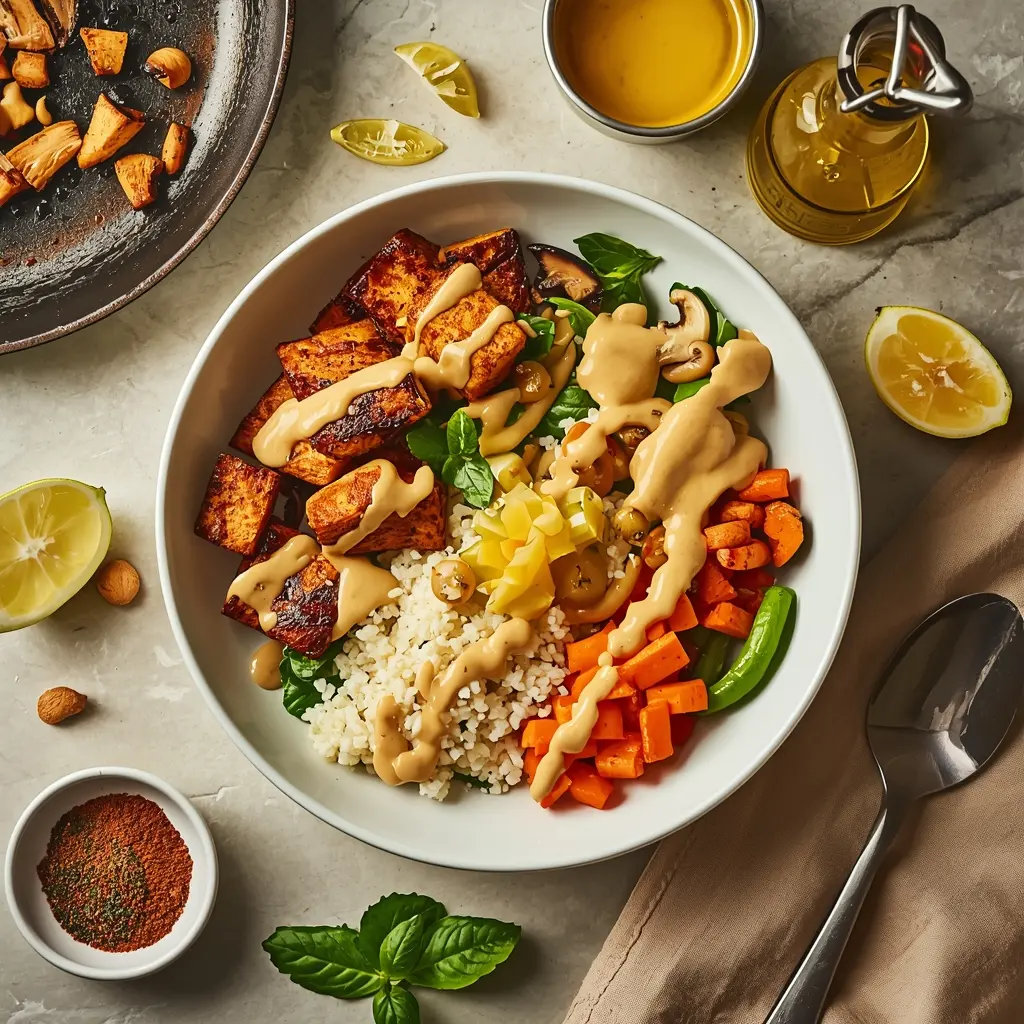
Many creamy vegan sauces are just emulsions: fat and water held together. Blend tahini with lemon juice, garlic, and water; or cashews with broth and nutritional yeast. Add liquid slowly while blending until the sauce is glossy and smooth. Emulsified sauces cling to vegetables and grains instead of pooling at the bottom of the bowl. This is the backbone of many dishes in our vegan baking and sauce-heavy comfort recipes.
Tip 9: Roast at High Heat
Roasting vegetables at low heat steams them. Roasting at high heat (around 220°C / 425°F) with enough space between pieces gives you caramelized edges and tender centers. Toss with oil, salt, and spices, spread in a single layer, and don’t overcrowd the pan. High-heat roasting is one of the easiest ways to make vegetables craveable, especially when you’re building meals for families using a vegan meal plan for families.
Tip 10: Layer Textures on Purpose
A bowl of soft ingredients feels monotonous, no matter how well seasoned it is. Add crunchy toppings (toasted seeds, nuts, crispy chickpeas), fresh elements (herbs, shredded lettuce, radishes), and creamy components (sauces, avocado, hummus). Each bite becomes interesting, and your brain registers the meal as more satisfying. This is especially helpful if you’re using food to support mood or energy, as explored in our guides on a vegan diet for energy and a vegan diet for depression.
Tip 11: Finish with Fresh Herbs and Citrus
Fresh herbs and citrus are the “last 5%” that make a dish taste finished. Sprinkle chopped parsley, cilantro, basil, or dill over stews, pastas, and grain bowls. Add lemon zest or a squeeze of lime right before serving. These bright notes cut through richness and wake up your palate. They also pair beautifully with anti-inflammatory frameworks like an anti-inflammatory vegan diet.
Tip 12: Use Broth Instead of Water
Whenever you’re cooking grains, soups, or stews, consider using vegetable broth instead of water. Even a simple homemade broth made from onion skins, carrot ends, and celery leaves adds depth. If you only have water, boost it with soy sauce, miso, or a spoonful of nutritional yeast. This is a small shift that makes a big difference in dishes across our vegan grocery hacks and pantry meals content.
Tip 13: Reduce, Don’t Rush
Thin, watery sauces taste flat. Let sauces simmer uncovered until they thicken and coat the back of a spoon. Reducing concentrates flavor and gives you that “restaurant gloss” on curries, tomato sauces, and gravies. Patience here pays off more than any fancy ingredient. This is one of the core differences between “homey” and “restaurant-level” vegan cooking.
Tip 14: Pre-Season Grains and Legumes
Grains and legumes are flavor sponges. Season the cooking water with salt, bay leaves, garlic, or a piece of kombu. When they’re done, they’ll already taste good before you even add sauces or toppings. This is especially powerful for rice, quinoa, lentils, and chickpeas, and it’s a key technique in high-fiber frameworks like high-fiber vegan foods and vegan gut health guides.
Tip 15: Cook Once, Season Twice
Many vegan components taste better the next day—but only if you season them twice. Season during cooking, then taste and adjust when reheating. Add a splash of water or broth, a bit more salt, and a hit of acid or fresh herbs. Leftovers stop feeling like “second-best” and start feeling like planned meals. This is the heart of systems like vegan meal prep that stays fresh and tasty and weekly batch cooking.
A 7-Day Practice Plan to Lock in the Skills
Skills stick when you repeat them in different contexts. This 7-day practice plan weaves the 15 vegan cooking techniques tips into simple meals you can actually cook on a busy week. You’re not just eating—you’re training. You can layer this plan on top of any existing structure, like a first-week vegan day-by-day guide or a beginner meal prep routine.
Repeat this plan for a second week, swapping in different vegetables, grains, and sauces. You’ll notice that your “default” way of cooking has changed: more browning, more tasting, more finishing touches. That’s technique doing its quiet work—and it’s exactly what makes long-term patterns like a vegan diet for menopause or a sleep-supportive vegan diet feel sustainable instead of restrictive.
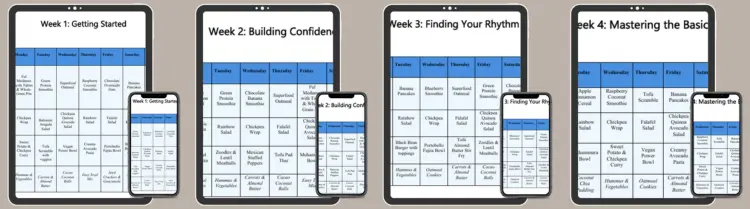
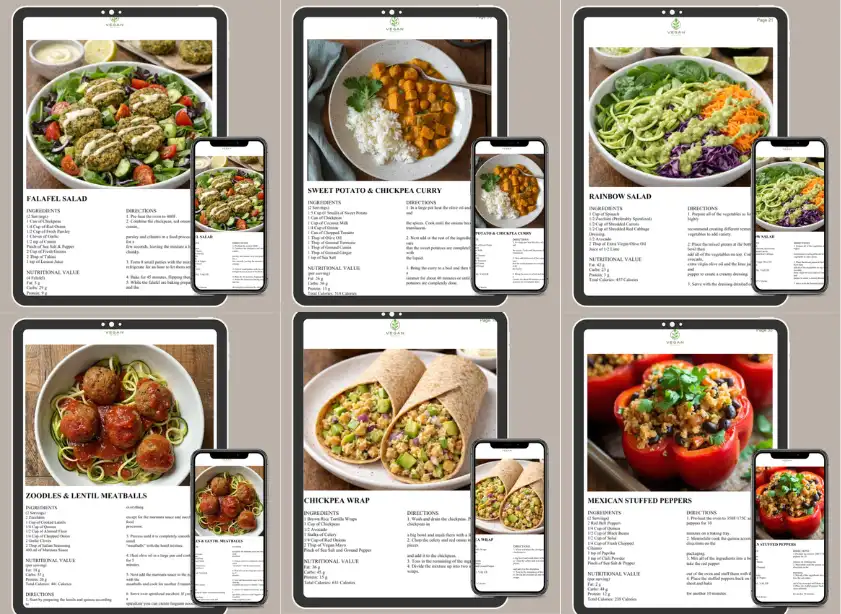
Psst.. Start your transformation now. Everything is done for you, 36 chef vegan recipes, 4 weekly grocery lists, and a full 28-day Meal Plan. Zero thinking, every meal decided. Balanced macros daily, one Sunday prep feeds your whole week. No subscription.
Get the Plan →Batch Cooking and Component Cooking for Vegans
Once you understand basic vegan cooking techniques tips, batch cooking becomes much more powerful. Instead of reheating entire meals that get soggy, you cook components that can be recombined in different ways: a tray of roasted vegetables, a pot of beans, a batch of sauce, a container of cooked grains. This is the core idea behind systems like our fresh-tasting meal prep and $30-per-week meal prep.
Think in components, not leftovers
- Protein component: Crispy tofu, baked tempeh, marinated chickpeas, or lentils cooked with aromatics.
- Grain component: Pre-seasoned rice, quinoa, barley, or farro cooked in broth with bay leaves.
- Vegetable component: Roasted mixed vegetables, sautéed greens, or marinated raw salads.
- Sauce component: Tahini dressing, cashew cream, tomato-based sauce, or miso-ginger dressing.
- Crunch component: Toasted seeds, nuts, crispy chickpeas, or baked croutons.
During the week, you assemble meals from these components instead of starting from zero. Because each component was cooked with good technique, the assembled meals taste fresh and intentional, not like random leftovers. This approach is especially helpful if you’re juggling health goals like a vegan diet for insulin resistance or type 2 diabetes, where consistency matters.
Scientific Section: What Research Says About Technique, Texture, and Satiety
Good technique doesn’t just make food taste better—it can also influence how satisfying and health-supportive your meals feel. While most nutrition research focuses on what we eat, there is growing interest in how we prepare food and how that affects appetite, digestion, and overall dietary patterns.
For example, research on nutrient density and cost has shown that legumes and starchy vegetables provide some of the highest nutrition-per-dollar of any food group, especially when prepared in ways that preserve their structure and flavor. One analysis found that “potatoes and beans provide most nutrients per penny,” reinforcing the idea that simple ingredients, cooked well, can be both economical and nutritionally robust.
Texture also matters. Studies on satiety suggest that meals with higher chewiness and more varied textures can increase feelings of fullness and satisfaction, even when calorie content is similar. Techniques like high-heat roasting, crisping, and layering crunchy elements over creamy bases directly support this effect.
• Drewnowski A, Rehm CD. “Vegetable cost metrics show that potatoes and beans provide most nutrients per penny.” PLOS ONE. 2013. Available via PubMed: https://pubmed.ncbi.nlm.nih.gov/23734210/
• U.S. Department of Agriculture. “Dietary Guidelines for Americans, 2020–2025.” Emphasizes legumes, whole grains, and vegetables as core components of healthy patterns: https://www.dietaryguidelines.gov
• National Institutes of Health (NIH). “Plant-based diets and cardiovascular health” – discusses benefits of legumes, whole grains, and vegetables in heart health: https://www.ncbi.nlm.nih.gov/pmc/articles/PMC5466936/
When you combine this evidence with practical technique, you get a powerful synergy: meals that are rich in fiber, micronutrients, and plant protein, but also deeply satisfying to eat. That’s the sweet spot for long-term adherence—whether your focus is gut health, hormone balance, or performance.
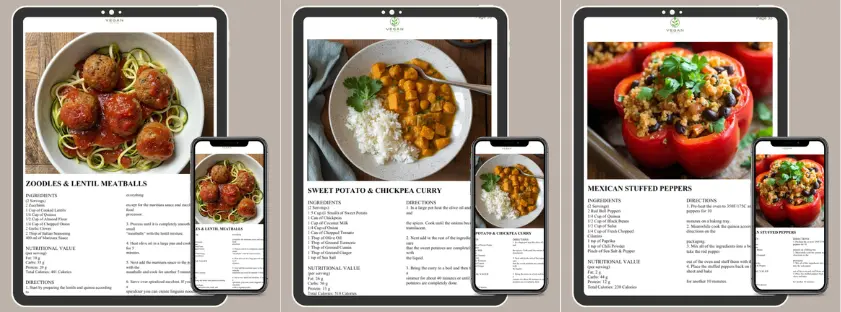
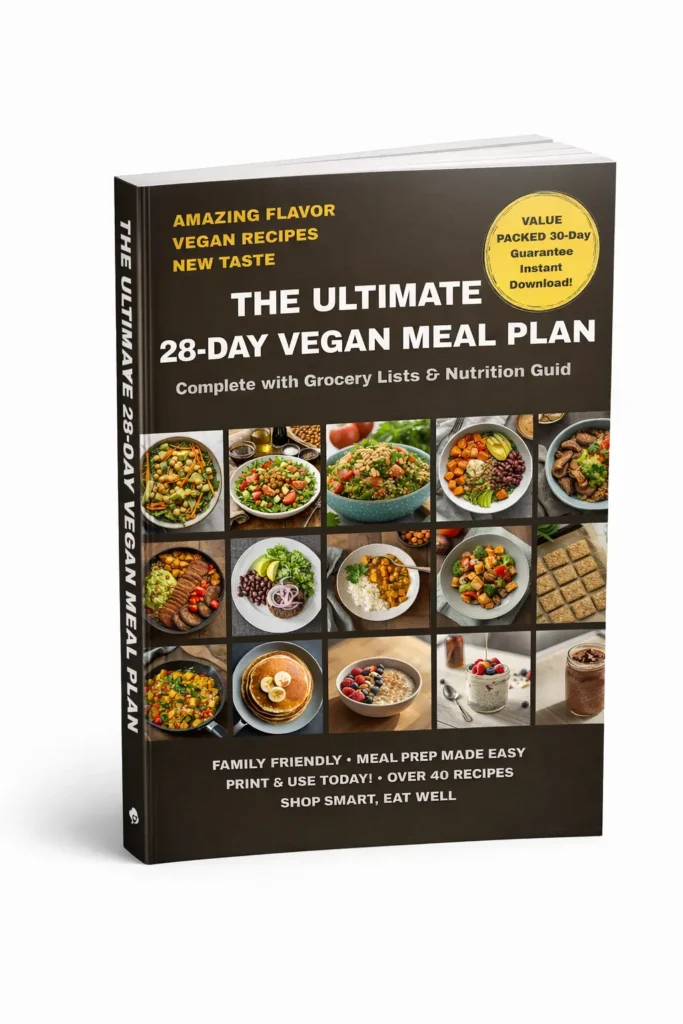
28-Day Vegan Meal Plan + Grocery list.
Transform your lifestyle with our comprehensive guide. This isn’t just a recipe book; it’s a complete system designed for success:
- 28-Day Meal Plan every meal, nothing to figure out
- 4 Weekly Grocery Lists sorted by aisle, saves money
- Balanced Macros protein, iron and B12 daily
- Under $1 Per Serving eat well on any budget
- 90-Min Sunday Prep one session, whole week fed
- Vegan Swaps Guide meat, dairy and eggs replaced
- Nutrition Toolkit protein targets and dining guide
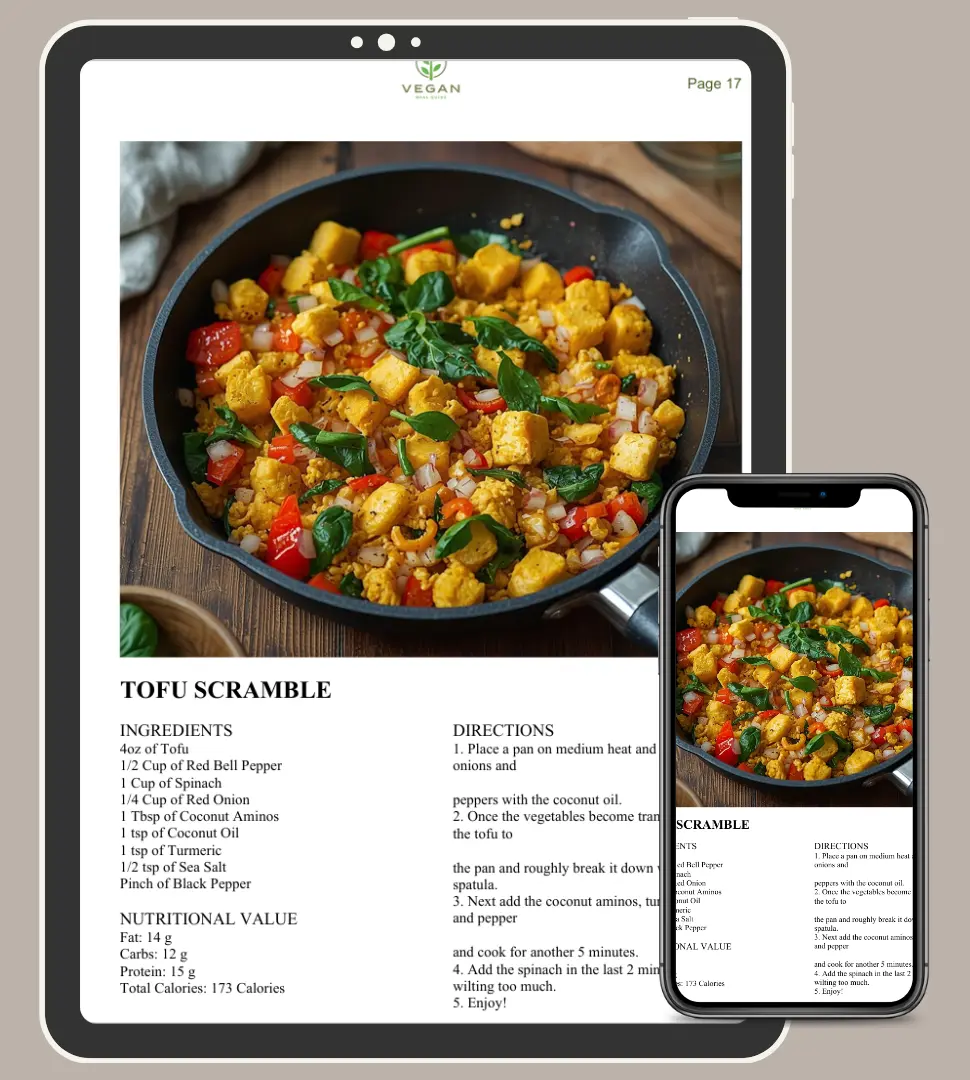
- 36 Chef Recipes every meal photographed
The Nutrition Angle: Protein, Iron, and Texture Satisfaction
Technique also affects how “nutritious” a meal feels. A bowl of plain beans and rice might be balanced on paper, but if it feels heavy and monotonous, you’ll be hungry for something else an hour later. When you add crisp textures, bright acids, and deep umami, the same ingredients feel more complete.
Plant-based foods already deliver more nutrition per dollar than most animal products; the real upgrade is making that nutrition feel satisfying in your mouth. Techniques like browning, roasting, and emulsifying help you get there without adding ultra-processed ingredients. This is especially important if you’re using food to support specific conditions, like a vegan diet for osteoporosis, vegan iron sources, or B12 and other key nutrients.
Chef’s Perspective: How Professionals Think About Vegan Technique
Professional chefs don’t think in terms of “vegan vs. non-vegan” nearly as much as home cooks do. They think in terms of structure: fat, acid, salt, heat, texture, and aroma. When they design a plant-based dish, they ask the same questions they’d ask of any plate: Where is the crunch? Where is the creaminess? Where is the brightness? Where is the depth?
From a chef’s point of view, vegan cooking is an invitation to get creative with technique. Mushrooms become “steaks” when seared and basted. Carrots become “charcuterie” when roasted, smoked, and sliced thin. Beans become “meatballs” when seasoned, bound, and browned properly. The ingredients are familiar; the methods are what make them feel new.
If you adopt this mindset at home, you stop chasing novelty in recipes and start chasing mastery in technique. That’s when cooking becomes easier, not harder—because you can look at a random mix of vegetables, grains, and legumes and know exactly what to do to make them taste good. It’s also when bigger lifestyle shifts, like a vegan diet for autoimmune conditions or a men’s performance-focused vegan diet, start to feel like a natural extension of how you already cook.
Frequently Asked Questions
Do I need special equipment to use these vegan cooking techniques tips?
No. A heavy pan, a decent knife, a sheet pan, and a basic blender or stick blender are enough to apply almost every technique in this guide. Fancy tools can be nice, but they’re not required for great flavor. If you’re building your kitchen from scratch, our vegan kitchen essentials on a budget guide is a good place to start.
What if I’m completely new to cooking?
Start with three skills: browning (Tip 1), salting in layers (Tip 2), and finishing with acid and herbs (Tips 3 and 11). Practice them on simple dishes like roasted vegetables, tofu stir-fries, and soups. You’ll see a noticeable difference within a week. Pair this with a structured plan like our beginner vegan diet guide if you want a full roadmap.
How do I avoid bland tofu and mushy vegetables?
For tofu, press it, marinate it, and cook it over high heat without moving it until a crust forms. For vegetables, roast at high heat with enough space between pieces so they brown instead of steam. Both rely on heat, dryness, and patience. Our deep dive on tofu vs. tempeh vs. seitan includes more texture-specific tips.
Can these techniques work with gluten-free or soy-free diets?
Yes. The techniques are about how you cook, not which specific ingredients you use. You can apply searing, roasting, emulsifying, and reducing to beans, lentils, nuts, seeds, and gluten-free grains just as easily as to tofu or seitan. Many of our condition-specific guides, like vegan diet for IBS or kidney-friendly vegan diets, use the same techniques with tailored ingredient choices.
How long does it take to feel confident with these techniques?
If you cook 3–4 times per week and deliberately practice one or two techniques each time, you can feel a major confidence shift in about a month. The key is repetition: the more often you brown, deglaze, and finish with acid, the more automatic it becomes. Over a few months, this becomes the foundation for bigger transformations, like those described in our 90-day vegan challenge results.
Vegan cooking techniques tips are not just “nice-to-have” tricks—they’re the bridge between your goals and your daily plate. When you combine evidence-based nutrition, smart planning systems, and chef-level methods, you get meals that are affordable, satisfying, and aligned with whatever you’re working toward: better energy, improved digestion, hormone balance, athletic performance, or simply enjoying your food more.
If you want to go deeper after this guide, explore our broader resources on complete vegan nutrition, meal prep for beginners, and umami flavor hacks. Every new skill you add makes the next meal easier—and more delicious—than the last.
Tired of overthinking your meals?
What’s included in your download
- 28-Day Meal Plan
- 4 Weekly Grocery Lists
- Balanced Nutrtion, protein, iron, B12
- Under $1 Per Serving
- 90-Min Sunday Prep
- Vegan Swaps Guide
- Nutrition Toolkit
- Beginner Action Plan
- Dining Out Guide
- 36 Chef Recipes
Instant PDF download. No subscriptions.
🍳 Level Up Your Vegan Kitchen
Mastering techniques is the key to never eating a boring meal again. Combine your new skills with these essential systems:
- 🧰 Essential Tools: The $200 Complete Kitchen Setup
- 🥫 The Ingredients: 50 Pantry Staples That Last Forever
- 🔄 Efficiency: Batch Cooking Bible: Cook Once, Eat All Week
- 🧪 Advanced Flavor: Flavor Science & Storage Hacks
Want a meal plan that puts these techniques to work?
Get the 28-Day “Pro Chef” Meal PlanP.S. I’ve bundled everything for your first month into one easy 28-Day Vegan Meal Plan, including grocery lists and nutrition guides. Grab your copy here.
Want to try before you buy?
Enter your email below to get 2 free recipes instantly: