
⚡ TL;DR — Key Takeaways
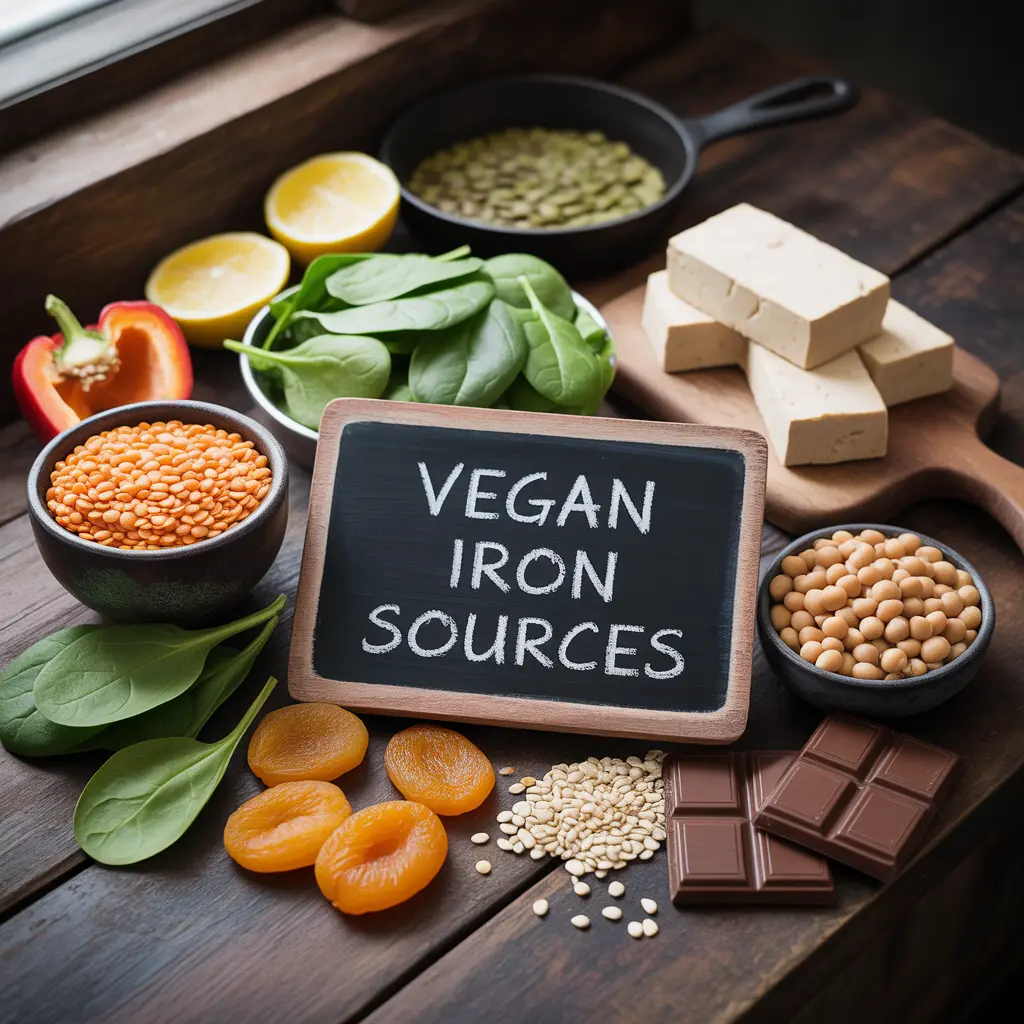
- Vegan iron sources are abundant — lentils, tofu, pumpkin seeds, quinoa, and dark leafy greens are all iron-dense plant foods.
- Plant-based iron (non-heme iron) has lower bioavailability than animal iron — but this is correctable through strategic food pairing.
- Eating vitamin C-rich food alongside iron-rich plant foods can increase non-heme iron absorption by up to 300%.
- The biggest mistakes vegans make: consuming iron-rich foods with tea, coffee, or calcium — all three significantly block non-heme iron absorption.
- Vegans need approximately 1.8× more dietary iron than meat-eaters due to bioavailability differences — but this is achievable through whole-food plant-based eating.
- Iron deficiency is the most common nutritional deficiency globally. On a poorly planned plant-based diet, it is a genuine risk — on a well-planned one, it is entirely avoidable.
“But where do you get your iron?” — every plant-based eater has heard this. And the honest answer is: from a wider variety of whole foods than most meat-eaters realise exist.
Vegan iron sources are not rare or exotic. Lentils, chickpeas, tofu, pumpkin seeds, quinoa, blackstrap molasses, and dark leafy greens are all iron-dense plant foods that are available in every supermarket, affordable on any budget, and versatile in the kitchen. The problem is not the existence of plant-based iron. The problem is that most people — including many long-term vegans — do not understand the science of plant iron absorption.
This post fixes that. Completely.
You will learn the exact milligrams of iron per serving for 15 plant-based iron foods, the biochemical difference between plant and animal iron, the specific food pairings that can increase iron absorption by up to 300%, and the common everyday habits that silently block it. Whether you are newly plant-based and worried about deficiency, or an experienced vegan who has been told your ferritin is low, this is the complete reference guide you need.
By the end of this article, you will understand how to build an iron-rich plant-based diet that not only meets your daily requirements but exceeds them — without relying on supplementation in most cases.
Heme vs Non-Heme Iron: The Bioavailability Science
🔬 Two Types of Iron — One Critical Difference
Dietary iron exists in two distinct chemical forms, and understanding the difference is the foundation of effective vegan iron nutrition:
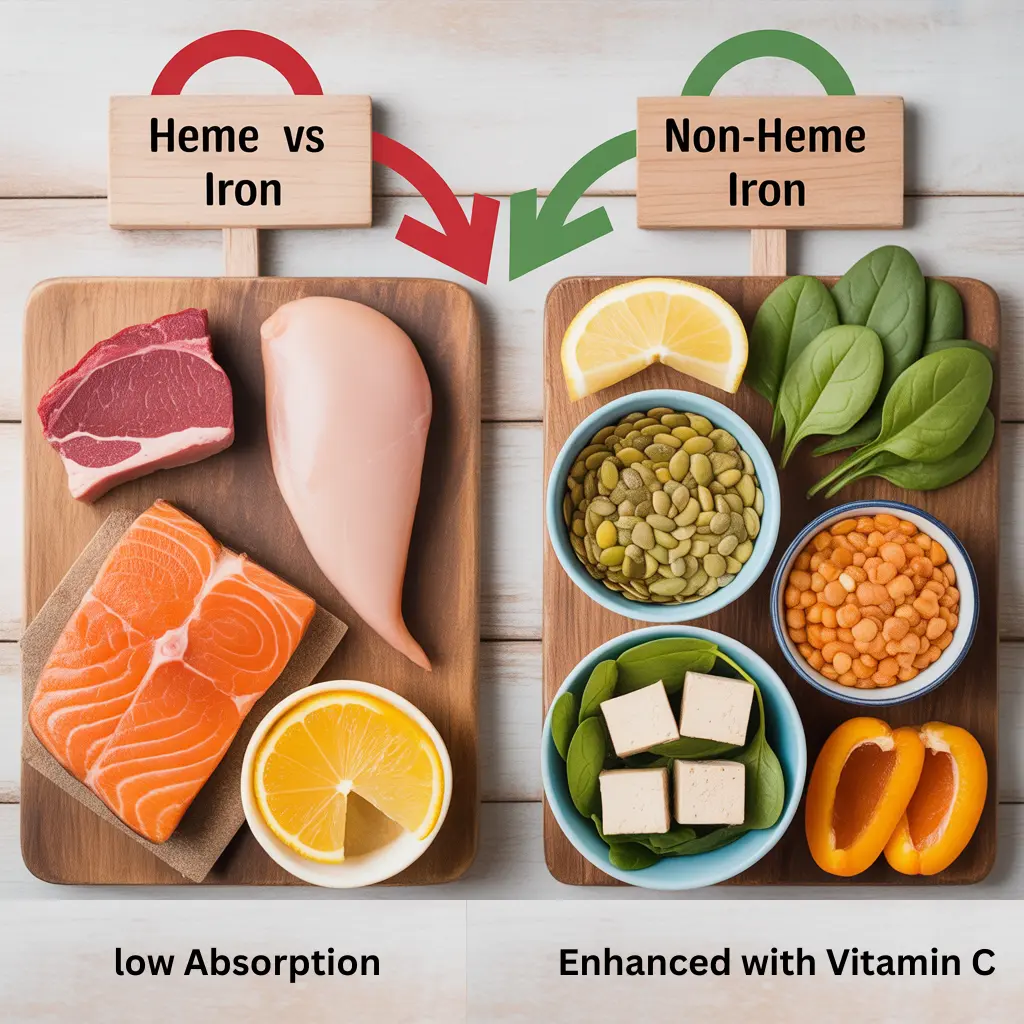
- Heme iron — Found exclusively in animal products (meat, poultry, fish). Absorbed at a rate of 15–35% regardless of what else is in the meal.
- Non-heme iron — Found in all plant foods, as well as eggs and dairy. Absorbed at a base rate of 2–20%, but this rate is highly variable and directly influenced by other foods consumed in the same meal.
This variability is the key insight. Non-heme iron absorption is dramatically responsive to dietary context. The right pairings increase it dramatically. The wrong combinations suppress it almost completely. This is both the challenge and the opportunity of plant-based iron nutrition.
🧬 The Ferritin Regulation Mechanism
Here is something most articles on vegan iron sources miss entirely: the body has a built-in regulatory mechanism for non-heme iron absorption. When iron stores (measured as serum ferritin) are low, the intestinal cells upregulate the expression of DMT1 (divalent metal transporter 1) — the protein responsible for transporting non-heme iron across the gut lining. When stores are adequate, this transporter is downregulated.
In practical terms: individuals with low iron stores absorb significantly more non-heme iron from the same food than individuals who are iron-replete. This is a protective adaptation that partially compensates for lower baseline bioavailability. Long-term vegans who are iron-sufficient have demonstrated in population studies that they maintain adequate iron status despite consuming no heme iron — because the regulatory mechanism adjusts over time.
⚗️ The Enhancer-Inhibitor Framework
Non-heme iron absorption is governed by a simple framework: enhancers vs inhibitors. Certain compounds in food actively increase iron absorption; others block it. The science of optimising iron intake on a plant-based diet is simply the science of maximising exposure to enhancers and minimising simultaneous exposure to inhibitors.
This framework is covered in full in the absorption sections below. First, let’s establish how much iron you actually need.
How Much Iron Do Vegans Actually Need?
📊 The 1.8× Multiplier
The National Institutes of Health and most major nutrition bodies recommend that vegans consume approximately 1.8 times the standard recommended dietary allowance (RDA) for iron, due to the lower bioavailability of non-heme iron compared to heme iron.
In numbers, this means:
- Adult men and post-menopausal women: Standard RDA 8mg/day × 1.8 = approximately 14mg/day
- Pre-menopausal women (18–50): Standard RDA 18mg/day × 1.8 = approximately 32mg/day — the most demanding target
- Pregnant women: Standard RDA 27mg/day × 1.8 = approximately 49mg/day — supplementation typically required
- Adolescents (14–18, female): Standard RDA 15mg/day × 1.8 = approximately 27mg/day
These numbers look large. They are achievable on a well-structured whole-food plant-based diet — particularly when absorption-enhancing strategies are consistently applied. But they require intentionality. Eating iron-rich plant foods randomly without pairing strategy will not reliably hit these targets in bioavailable form.
⚠️ Who Is Most at Risk on a Vegan Diet?
Iron deficiency on a plant-based diet is not inevitable, but certain groups are at meaningfully higher risk:
- Pre-menopausal women — highest iron requirements combined with monthly losses
- Endurance athletes — exercise increases iron loss through sweat and foot-strike haemolysis
- Pregnant vegans — dramatically increased requirements that almost always require supplementation
- Newly transitioned vegans — before the DMT1 upregulation adaptation occurs
- Those with gut absorption issues — coeliac disease, IBD, and low stomach acid all reduce non-heme iron uptake
If you fall into any of these categories, monitoring ferritin levels twice yearly is a prudent approach. Our complete guide on what blood tests vegans should check covers exactly which iron markers to request and what the results mean.
15 Best Vegan Iron Sources (With Exact mg Per Serving)
The following list ranks the most practical, accessible, and iron-dense plant-based foods available. All values are per standard serving, cooked where applicable.
- Cooked Lentils (200g) — 6.6mg iron — The most cost-effective iron-rich vegan food per calorie. Also provides folate, zinc, and protein.
- Canned Chickpeas (200g, drained) — 4.8mg iron — Versatile, cheap, and packed with plant-based iron and fibre.
- Firm Tofu (200g) — 6.0mg iron — Calcium-set tofu contains less iron than magnesium-set; check the label.
- Cooked Soybeans / Edamame (200g) — 4.4mg iron — One of the highest-iron legumes, also complete protein.
- Pumpkin Seeds (30g) — 2.5mg iron — Concentrated iron in a small, sprinkle-on-anything format. Also zinc, magnesium, tryptophan.
- Cooked Quinoa (185g) — 2.8mg iron — The only grain that is a complete protein. Iron plus all essential amino acids.
- Blackstrap Molasses (1 tbsp / 20g) — 3.5mg iron — One of the most iron-dense foods by weight on this list. Add to oats, smoothies, or sauces.
- Cooked Spinach (180g) — 6.4mg iron — High iron but high oxalates reduce net absorption. Cook and pair with vitamin C to compensate.
- Cooked Swiss Chard (175g) — 4.0mg iron — Lower oxalates than spinach, making it a smarter iron source from the leafy green category.
- Hemp Seeds (3 tbsp / 30g) — 2.4mg iron — Complete protein + iron + omega-3 ALA. A daily sprinkle habit pays multiple nutritional dividends.
- Cooked Black Beans (200g) — 3.6mg iron — Rich in iron, fibre, and folate. A staple iron-rich vegan food in Latin American culinary traditions.
- Tempeh (100g) — 2.1mg iron — Fermentation increases iron bioavailability compared to unfermented soy by reducing phytate content.
- Fortified Breakfast Cereal (30g) — 4.0–18mg iron — Highly variable by brand. Check labels. Paired with orange juice, this is one of the highest-absorption iron meals available.
- Cooked Amaranth (250g) — 5.2mg iron — An ancient grain with exceptional iron density. Underused in Western plant-based kitchens.
- Dried Apricots (60g / ~10 pieces) — 2.1mg iron — A portable, snack-format iron-rich plant food. Combine with vitamin C for absorption.
Ingredient Spotlights: Deep Dives on the Top 5 Vegan Iron Sources
🫘 1. Lentils — The Iron Powerhouse
Lentils are arguably the single most important iron-rich vegan food available. A 200g serving delivers 6.6mg iron — 37% of the standard female RDA — alongside 18g protein, 358mcg folate (90% daily requirement), 2.5mg zinc, and 15g fibre. They are simultaneously a protein, iron, and gut health food in one bowl.
Best preparation: Soak 4–8 hours before cooking to reduce phytates by 30–50%. Always pair with vitamin C — lemon juice, tomatoes, or bell pepper.
🥩 2. Tofu — The Underrated Iron Source
Most people associate tofu with protein. Fewer realise 200g of firm tofu provides 6.0mg iron alongside complete protein, selenium, and manganese. The key variable is the coagulant used: magnesium-set (nigari) tofu is preferable for iron absorption — calcium-set tofu brings calcium that competes with iron at the same intestinal transporter. If your tofu packaging lists calcium sulphate as the coagulant, consume it separately from your highest-iron meals.
🌱 3. Pumpkin Seeds — The Iron Snack
Pumpkin seeds are the most nutritionally concentrated small food on this list. Per 30g serving: 2.5mg iron, 2.2mg zinc, 150mg magnesium, plus vitamin K. The iron-zinc combination is nutritionally significant — zinc deficiency impairs haemoglobin synthesis, so these two minerals work synergistically. Adding 30g daily to oats, smoothies, or salads is one of the simplest single-food interventions for improving vegan iron nutrition.
🌾 4. Quinoa — The Complete-Protein Iron Grain
Quinoa is the only commonly consumed grain that is simultaneously a complete protein and a meaningful iron source. 185g cooked provides 2.8mg iron, 8g complete protein, 118mg magnesium, and 78mcg folate — all of which support red blood cell synthesis. Always rinse quinoa thoroughly to remove saponins, which can mildly inhibit mineral absorption.
⬛ 5. Blackstrap Molasses — The Forgotten Iron Bomb
Blackstrap molasses is the most underrated vegan iron source on this entire list. It is the thick, dark by-product of sugar refining — stripped of sucrose but retaining concentrated levels of every mineral that was present in the original sugarcane. One tablespoon (20g) provides:
- Iron — 3.5mg (nearly 20% of standard adult female RDA)
- Calcium — 200mg
- Magnesium — 48mg
- Potassium — 293mg
- Vitamin B6 — supports haemoglobin synthesis
It has an intense, slightly bitter flavour that works excellently in oatmeal, smoothies, energy balls, and savoury sauces. The calcium content means consuming it simultaneously with your primary iron-rich meal is not ideal — but adding it to breakfast oats while saving your main iron-heavy meal for lunch or dinner is a straightforward workaround.
How to Double Iron Absorption: The Pairing Science
🍊 The Vitamin C Effect — Up to 300% Increase
The single most evidence-backed strategy for increasing non-heme iron absorption is pairing iron-rich plant foods with vitamin C (ascorbic acid). Vitamin C reduces ferric iron (Fe³⁺) to ferrous iron (Fe²⁺) — the form that intestinal DMT1 transporters can actually absorb. Multiple clinical studies have shown that consuming 25–100mg of vitamin C alongside a non-heme iron source increases absorption by 67–300% depending on the baseline inhibitor load of the meal.
Practical vitamin C sources to pair with iron-rich vegan foods:
- Half a lemon squeezed over lentils or spinach — ~19mg vitamin C
- One medium orange alongside a meal — ~70mg vitamin C
- Half a red bell pepper in a stir-fry — ~95mg vitamin C
- One kiwi fruit with breakfast — ~64mg vitamin C
- Broccoli florets added to any iron-rich bowl — ~51mg per 80g
- Tomato-based sauce on a lentil or bean dish — ~25mg per 100g tomatoes
🍋 The Acid Environment Effect
Iron absorption in the small intestine is enhanced by an acidic gastric environment. Foods and drinks that maintain stomach acidity during digestion support iron uptake:
- Apple cider vinegar added to salad dressings
- Fermented foods (kimchi, sauerkraut, tempeh) — the organic acids produced during fermentation lower the pH of the digestive environment and reduce phytate-iron binding
- Citrus marinades for tofu or tempeh — acidic marinades both flavour and increase mineral bioavailability simultaneously
🌾 Protein Pairing Logic — Complete Amino Acids and Iron Metabolism
Iron metabolism is protein-dependent. Transferrin (the iron-transport protein in blood), ferritin (the iron-storage protein), and haemoglobin itself are all proteins requiring adequate amino acid availability to synthesise. Ensuring adequate protein intake — particularly the essential amino acid lysine, which is found in legumes and supports iron absorption — is not just about muscle. It is about iron utilisation at the cellular level.
This is the protein pairing logic that matters for vegan iron nutrition:
- Grain + legume combinations (lentil soup with quinoa, rice and beans, tofu stir-fry with whole grain noodles) provide complementary amino acid profiles — grains supply methionine, legumes supply lysine — creating a complete amino acid spectrum that supports both haemoglobin synthesis and iron transport protein production.
- You do not need to combine proteins at every single meal, but ensuring both lysine-rich and methionine-rich plant foods appear across your daily intake supports optimal iron utilisation.
5 Iron Absorption Killers You Must Know
☕ 1. Tea and Coffee — The Most Common Mistake
Polyphenols in both tea and coffee — particularly tannins — bind to non-heme iron in the gut and form insoluble complexes that cannot be absorbed. Studies show that drinking tea with a meal reduces iron absorption by 60–70%. Coffee reduces it by approximately 35–40%.
Solution: Consume tea or coffee at least one hour before or two hours after your main iron-rich meals. This single timing adjustment can dramatically improve iron status without changing a single food in your diet.
🥛 2. Calcium — A Competing Mineral
Calcium and iron compete for the same intestinal transporter proteins. Consuming calcium and iron simultaneously reduces absorption of both. This is particularly relevant for vegans who use fortified plant milks (high in calcium) as a base for iron-rich meals. Do not drink calcium-fortified soy milk alongside lentil soup or a spinach bowl.
🌾 3. Phytates — The Whole-Grain Paradox
Phytic acid (phytate) — found in whole grains, legumes, and seeds — binds non-heme iron and reduces its absorption. This creates a paradox: many of the best plant-based iron foods also contain significant phytates. The solution is food preparation, not food avoidance:
- Soaking legumes 4–8 hours before cooking reduces phytate content by 30–50%
- Sprouting grains and legumes reduces phytates by up to 50%
- Fermentation (tempeh, sourdough bread) reduces phytates by 50–70% through microbial phytase activity
- Cooking alone reduces phytates modestly — soaking before cooking is more effective
🥚 4. Oxalates — The Spinach Warning
Oxalates bind iron (and calcium) in the gut. Spinach is the most commonly cited example — it is high in iron on paper but also high in oxalates that significantly reduce net iron absorption. Cooking spinach reduces oxalate content compared to raw, and pairing with vitamin C further compensates. Swiss chard, kale, and bok choy are lower-oxalate leafy green alternatives with better net iron bioavailability.
💊 5. Zinc and Calcium Supplements Taken With Meals
High-dose zinc and calcium supplements taken simultaneously with iron-rich meals compete for absorption. If you supplement either mineral, take them away from your highest-iron meals — typically in the evening, separate from lunch where most iron-rich plant foods appear in a well-structured vegan diet.
Complete Vegan Iron Reference Tables
Iron Content of 15 Best Vegan Iron Sources
*RDA based on 18mg/day for adult pre-menopausal women. Vegan target is 1.8× this figure.
Iron Absorption Strategy: What Helps vs What Blocks
7 Iron-Optimised Vegan Meal Ideas
Every meal below is built around the enhancer-inhibitor framework — iron-rich plant food plus a vitamin C source, without tea, coffee, or calcium competing in the same sitting.
🍲 1. Red Lentil Soup with Lemon and Roasted Peppers
Iron: ~8mg | Key pairing: lemon juice + roasted red pepper (vitamin C × 2)
Cook 200g red lentils with onion, garlic, cumin, and vegetable stock. Blend partially. Serve with fresh lemon and chopped roasted peppers. Two vitamin C sources, high iron, zero inhibitors — a textbook absorption meal.
🥗 2. Warm Quinoa and Chickpea Bowl with Citrus Dressing
Iron: ~7.6mg | Key pairing: orange juice + apple cider vinegar dressing
Combine cooked quinoa with chickpeas, roasted cherry tomatoes, and steamed broccoli. Dress with orange juice, apple cider vinegar, and olive oil. The acidic dressing maintains an optimal gastric pH for non-heme iron absorption throughout digestion.
🥬 3. Tofu Stir-Fry with Broccoli and Bell Peppers
Iron: ~9mg | Key pairing: broccoli (51mg vit C) + red bell pepper (95mg vit C)
Pan-fry firm tofu in tamari and sesame oil. Add broccoli, red bell pepper, and snap peas. Finish with lime. Two of the highest vitamin C vegetables alongside one of the most iron-dense plant foods — a high-absorption combination.
🫘 4. Black Bean and Mango Salsa Bowl
Iron: ~5mg | Key pairing: mango and lime
Black beans over rice with fresh mango, red onion, coriander, jalapeño, and lime. Mango delivers both vitamin C and beta-carotene. One of the most enjoyable iron-rich vegan food combinations on this list.
🌿 5. Amaranth Porridge with Blackstrap Molasses and Kiwi
Iron: ~8.7mg | Key pairing: kiwi fruit (64mg vit C)
Cook amaranth until thick. Stir in one tablespoon blackstrap molasses. Top with sliced kiwi. Two iron sources — grain plus molasses — with kiwi as the vitamin C enhancer. Avoid tea for two hours after.
🥙 6. Tempeh and Roasted Vegetable Wrap
Iron: ~5mg | Key pairing: citrus marinade + roasted peppers
Marinate tempeh in citrus juice and tamari — fermentation already reduces phytates; the citrus marinade adds vitamin C directly to the iron source. Pan-fry and fill a whole grain wrap with roasted peppers, spinach, and tahini.
🥣 7. Iron-Boosted Overnight Oats
Iron: ~5mg | Key pairing: strawberries + kiwi
Soak oats overnight in soy milk with one tablespoon blackstrap molasses, two tablespoons hemp seeds, and one tablespoon pumpkin seeds. Top with strawberries and kiwi in the morning. Zero morning effort. Stacked iron from three sources.
Chef’s Professional Tips: 20 Years Cooking Across the MENA Region
🇱🇧 The Levantine Kitchen Was Built for Iron Absorption
The traditional Levantine diet is one of the most iron-optimised culinary traditions in the world — and it arrived there through centuries of whole-food cooking culture, not nutritional science.
A standard Lebanese lunch spread illustrates this perfectly: lentil soup with lemon (iron + vitamin C), fattoush with tomatoes and sumac (vitamin C-rich), hummus from soaked chickpeas (phytate-reduced iron), tabbouleh with fresh parsley and lemon (parsley is iron-dense, lemon is the pairing), and pickled turnip on the side (fermented acid-environment enhancer). Every component supports non-heme iron absorption. None of it was designed that way. It evolved that way — and it works.
🍋 The Lemon Reflex — Make It Automatic
After nearly twenty years in professional kitchens across Lebanon, Dubai, and Saudi Arabia, the most consistent nutritional advice I can give a plant-based home cook is this: develop a lemon reflex.
Every time you plate a lentil dish, a bean bowl, a tofu scramble, or a leafy green salad — reach for the lemon. Not as a flavour afterthought. As a deliberate, automatic nutritional act. The squeeze of lemon that takes two seconds can double the bioavailability of the iron in that meal. No supplement. No extra shopping. Just the lemon that was already in your fruit bowl.
⚠️ The Tea Habit That Was Costing My Team Their Energy
In every kitchen I have managed across the MENA region, strongly brewed black tea was consumed constantly — often alongside or immediately after meals. When I began tracking fatigue patterns, the correlation between mid-meal tea drinking and low energy was clear. I introduced a single rule: no tea within 90 minutes of the staff meal. The difference in afternoon performance was visible within two weeks. No supplement programme. No diet overhaul. One timing adjustment. The iron was always in the food. The tea was just blocking the door.
5 Common Mistakes That Cause Iron Deficiency on a Vegan Diet
❌ Mistake 1: Drinking Tea or Coffee With Meals
Covered in detail above, but worth repeating as the single most impactful correctable iron absorption mistake. The solution is a timing adjustment, not a dietary restriction. You do not need to stop drinking tea — you need to stop drinking it with iron-rich meals.
❌ Mistake 2: Relying on Raw Spinach as Your Primary Iron Source
Raw spinach in smoothies and salads delivers less bioavailable iron than cooked spinach due to higher oxalate content. Lightly cooking spinach reduces oxalates, and pairing cooked spinach with lemon or tomatoes compensates further. Alternatively, swap raw spinach for kale or Swiss chard — lower oxalate, better net iron delivery.
❌ Mistake 3: Not Soaking Legumes
Most people cook lentils and beans from dry without soaking. This is the single most impactful preparation step for improving plant iron bioavailability. Overnight soaking is the standard. Even a 4-hour soak before cooking makes a measurable difference in phytate reduction and consequent iron absorption.
❌ Mistake 4: Using Calcium-Fortified Plant Milk With Iron-Rich Meals
A bowl of iron-fortified cereal with calcium-fortified oat milk is a classic example of two nutrients competing and both losing. Use orange juice instead of plant milk with fortified cereals for dramatically better iron absorption. Save calcium-fortified milks for meal contexts where iron is not the primary nutritional target.
❌ Mistake 5: Not Monitoring Ferritin
Serum iron can appear normal while ferritin (stored iron) is critically depleted. Many people experience fatigue, hair thinning, poor concentration, and reduced exercise performance from low ferritin before standard haemoglobin tests flag any problem. Request ferritin specifically — not just iron or full blood count — from your doctor. If you are experiencing fatigue on a plant-based diet, low ferritin is one of the first things to rule out, as our guide on why vegans feel tired explains in detail.
Frequently Asked Questions About Vegan Iron Sources
Do vegans get enough iron?
Well-planned plant-based diets can absolutely meet iron requirements. Population studies on long-term vegans show iron deficiency rates are not significantly higher than in omnivores when the diet is varied and absorption-enhancing strategies are applied. However, poorly planned vegan diets — particularly those high in tea consumption, unsoaked legumes, and low in vitamin C — do carry elevated deficiency risk. The key variable is diet quality and absorption strategy, not simply whether animal products are included.
What is the highest iron vegan food?
By volume, cooked lentils (6.6mg per 200g) and cooked spinach (6.4mg per 180g) rank highest among whole plant foods. Fortified breakfast cereals can contain up to 18mg per 30g serving — making them the single highest-iron plant-based food by weight — but absorption varies significantly based on the fortification form and pairing choices. Blackstrap molasses (3.5mg per tablespoon) delivers the highest iron density per gram of any natural, unfortified plant food.
Is plant iron as good as meat iron?
The short answer is: it can be, with the right approach. Heme iron from meat has higher baseline absorption (15–35%) than non-heme iron from plants (2–20%). However, non-heme iron absorption is responsive to enhancers — particularly vitamin C — and is regulated upward when stores are low. Long-term vegans who apply consistent absorption strategies can maintain iron status equivalent to well-nourished omnivores. The key difference is intentionality: plant-based iron requires strategic pairing; heme iron does not.
Can I get enough iron from spinach alone?
Not reliably. Spinach is high in iron on paper but also high in oxalates that significantly reduce absorption. Additionally, relying on a single food source for any nutrient is nutritionally suboptimal. A diverse approach — lentils, tofu, seeds, quinoa, leafy greens, and fortified foods — distributes iron intake across multiple foods with different absorption characteristics. Vitamin C pairing and avoiding inhibitors is more important than any single food choice.
How do I know if I am iron deficient?
Common symptoms of iron deficiency include persistent fatigue, shortness of breath during mild exertion, pale inner eyelids and skin, brittle nails, cold hands and feet, difficulty concentrating, hair thinning, and reduced exercise performance. Note that these symptoms overlap with B12 deficiency, which is also relevant for vegans. Blood testing — specifically requesting ferritin, serum iron, and full blood count — is the only way to distinguish between causes. Do not self-supplement iron without confirming deficiency first, as excess iron is harmful.
Should vegans take iron supplements?
Only if blood testing confirms deficiency or insufficiency. Iron supplementation in individuals with adequate stores can cause oxidative stress and gastrointestinal harm. If ferritin is confirmed low, iron bisglycinate is generally the best-tolerated supplemental form for vegans — better absorbed and with fewer gastrointestinal side effects than ferrous sulphate. Always take iron supplements away from tea, coffee, and calcium, and alongside vitamin C for optimal absorption.
Does cooking destroy iron in plant foods?
No — iron is a mineral and is not destroyed by heat. Cooking actually improves net iron bioavailability by reducing phytates in legumes, breaking down oxalates in spinach, and softening cell walls. The main risk is destroying vitamin C in the same meal — add lemon juice or fresh vitamin C sources after cooking, not during.
What vitamin C foods pair best with iron-rich vegan foods?
The most practical pairings: fresh lemon juice over any dish, red bell pepper in stir-fries and salads, kiwi with breakfast, orange juice with fortified cereals, broccoli alongside tofu or tempeh, and tomato-based sauces on lentil or bean dishes. Any of these used consistently will meaningfully increase non-heme iron absorption.
Is tofu a good iron source for vegans?
Yes — 200g of firm tofu provides 6.0mg iron, making it one of the highest-iron plant foods available. Choose magnesium-set (nigari) tofu over calcium-set where possible to avoid calcium competing with iron absorption. Pair with red bell peppers, broccoli, or a citrus-based sauce to maximise uptake.
Are lentils the best vegan iron source?
Lentils are the most practical all-round iron-rich vegan food — high iron (6.6mg per 200g), affordable, versatile across all meal times, and naturally paired with vitamin C-rich ingredients like tomatoes, lemon, and peppers. For pure iron density by weight, blackstrap molasses exceeds lentils — but lentils win on overall nutritional value and meal practicality.
Can iron-rich vegan foods help with fatigue?
When fatigue on a plant-based diet is caused by low ferritin, correcting iron status through strategic iron-rich food intake typically improves energy within four to twelve weeks. However, fatigue can also stem from B12 deficiency, vitamin D, or inadequate calories — all requiring separate assessment. Our article on why vegans feel tired covers the full diagnostic framework.
What are the signs of iron overload from supplementation?
Iron overload from excessive supplementation can cause abdominal pain, joint pain, liver enzyme elevation, and in severe cases organ damage. Non-heme iron from whole plant foods does not cause overload in healthy individuals — the body’s regulatory mechanisms limit absorption when stores are adequate. This protection does not fully apply to supplemental iron at high doses, which is why testing before supplementing matters.