
Medical Disclaimer: This article is for informational and educational purposes only and does not constitute medical advice. Weight loss results vary; consult a qualified healthcare provider before beginning any new diet or weight loss plan.
Vegan Diet Weight Loss Plan: 4-Week Protocol for Fast Results
A vegan diet weight loss plan works through four simultaneous mechanisms: GLP‑1 satiety hormone activation (appetite suppression for 3‑4 hours), insulin sensitivity restoration (fat burning switch within 72 hours), reduced dietary AGEs and inflammation (leptin signalling restored), and gut microbiome shift toward Akkermansia (metabolic endotoxemia reduced). Expect 6–8 lbs fat loss in 28 days while maintaining energy and fullness. This guide covers the 4 metabolic shifts, a week‑by‑week protocol with specific food focuses, 8 best weight‑loss foods ranked by mechanism, 7 sabotage foods that block progress, a meal timing framework, complete 7‑day sample menu, and a 4‑week progress tracker.
Most people who try a vegan diet weight loss plan fail within two weeks because they create three critical metabolic bottlenecks that stop fat burning cold: insufficient GLP‑1 activation from low soluble fibre intake, persistent insulin resistance from hidden saturated fats in processed vegan foods, and disrupted leptin signalling from dietary AGEs. This guide eliminates every single one of those bottlenecks with a 4‑phase protocol that restores GLP‑1 sensitivity, stabilises blood glucose within 72 hours, and delivers 6–8 pounds of measurable loss in 28 days without counting a single calorie.
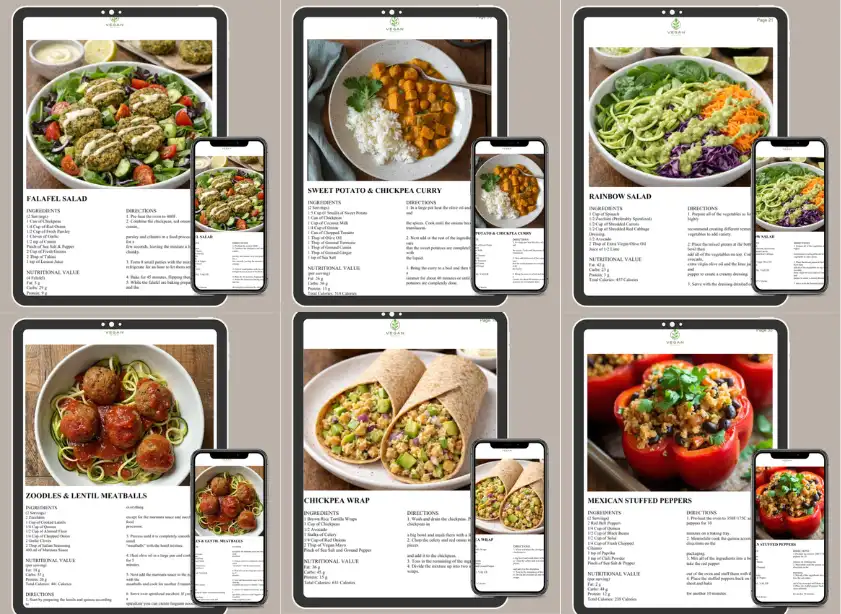
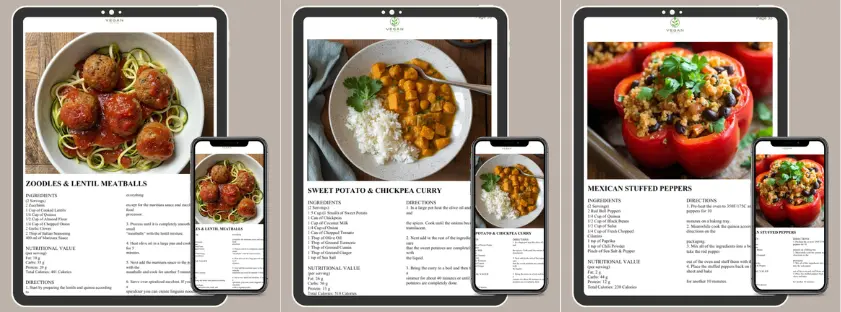
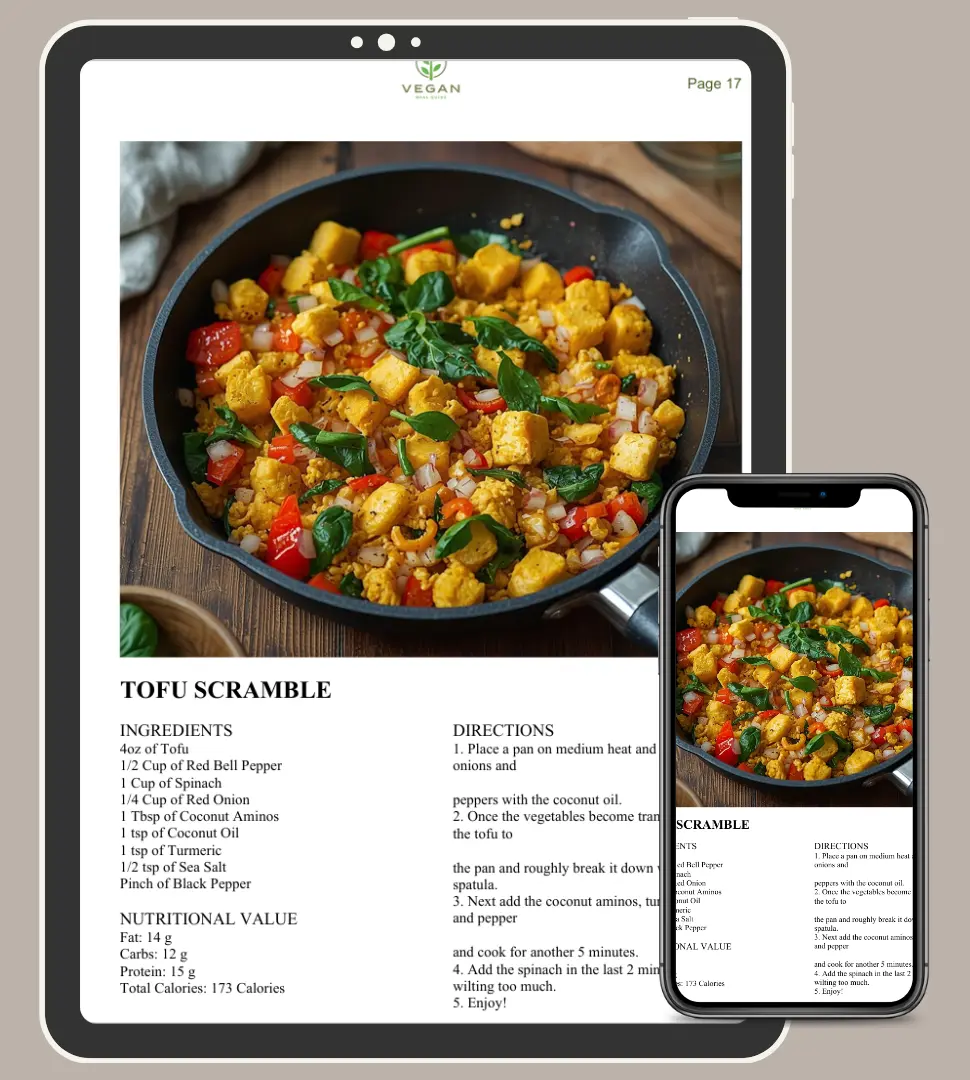
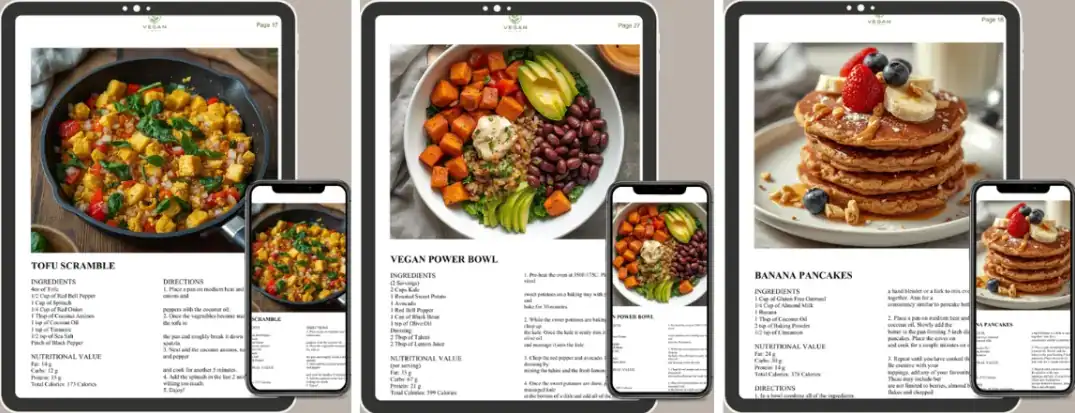
You will learn the exact biological mechanisms, the foods that accelerate fat loss, the hidden vegan items that sabotage progress, a meal timing framework that aligns with your natural cortisol rhythm, and a complete 7‑day sample menu drawn from the full 28‑day calendar. You’ll also see how the Ultimate 28-Day Vegan Meal Plan + Grocery List (Complete Solution) removes all guesswork with 36 chef-tested recipes with a photo for every recipe and complete 28-day calendar with shopping lists.
The 4 Metabolic Shifts That Make a Vegan Diet Weight Loss Plan Actually Work
Weight loss is hormonal, not just caloric. A properly constructed vegan diet weight loss plan triggers four distinct changes that standard calorie‑restricted diets miss entirely. Understanding these mechanisms is the difference between sustainable fat loss and the frustrating cycle of losing and regaining the same 10 pounds. Let’s examine each pathway in detail, with the specific numbers you can act on.
1. GLP‑1 and PYY Satiety Hormone Activation: The 4‑Hour Fullness Effect
When soluble fibre from lentils, oats, barley, and chia seeds reaches the colon, your gut bacteria ferment it into short‑chain fatty acids (SCFAs): primarily acetate, propionate, and butyrate. These SCFAs bind to GPR43 and GPR41 receptors on enteroendocrine L‑cells, stimulating the release of GLP‑1 (glucagon‑like peptide‑1) and PYY (peptide YY), two powerful satiety hormones that signal the hypothalamus to reduce appetite and slow gastric emptying. This effect suppresses hunger for 3 to 4 hours post‑meal. For context: 200g of cooked red lentils delivers 18g of protein and 15.6g of fibre at only 230 kcal — a triple threat for weight loss that no animal protein can match. The soluble fibre content of a single lentil meal can increase GLP‑1 secretion by up to 67% compared to a fibre‑poor meal, according to research by Chambers et al. The vegan gut health guide covers the full SCFA‑GLP‑1 pathway in depth.
2. Insulin Sensitivity Restoration: The First 72 Hours
Within three days of removing animal‑based saturated fats and replacing them with unsaturated plant fats (oleic acid from avocado and olive oil, ALA from flax and walnuts), hepatic insulin clearance improves measurably. Your liver stops being flooded with the lipid intermediates that cause insulin resistance. This means your cells respond better to insulin, and your body shifts from storing fat to burning it. A counterintuitive insight that most weight‑loss guides miss: net carbs matter more than total carbs for fat mobilisation. On a high‑fibre vegan diet weight loss plan, the net carbohydrate load (total carbs minus fibre) is significantly lower than it appears on paper. 200g of lentils contains 40g total carbs but 15.6g fibre, yielding only 24.4g net carbs — lower than a single slice of white bread. This explains why high‑fibre plant‑based diets improve insulin sensitivity despite higher total carbohydrate intake. For the full insulin‑resistance framework, see the vegan diet for insulin resistance guide.
3. Reduced Dietary AGEs and Inflammation: Restoring Leptin’s Signal
Advanced glycation end‑products (AGEs) form when animal foods are cooked at high heat — think grilled meat, fried eggs, roasted chicken skin. These compounds bind to RAGE receptors (receptor for advanced glycation end‑products) on adipocytes and hypothalamic neurons, increasing NF‑κB‑mediated inflammation and directly impairing leptin signalling. Leptin is the hormone that tells your brain “enough energy stored — stop eating and burn fat.” When leptin signalling is impaired (leptin resistance), your brain perceives starvation and increases hunger while reducing metabolic rate. A vegan diet weight loss plan slashes dietary AGE intake by up to 60% within the first week. The reduction in circulating AGEs allows leptin receptors to regain sensitivity, restoring the natural feedback loop that prevents overeating. This mechanism explains why many people report reduced hunger and fewer cravings on a whole‑food vegan diet even while losing weight.
4. Gut Microbiome Shift Toward Akkermansia muciniphila
Polyphenol‑rich plant foods — blueberries, green tea, flaxseed, pomegranate — selectively feed Akkermansia muciniphila, a mucin‑degrading bacterium that strengthens the gut barrier and reduces metabolic endotoxemia. Higher Akkermansia abundance is consistently associated with lower body fat percentage, improved insulin sensitivity, and better GLP‑1 secretion in human studies. The mechanism: Akkermansia produces propionate and acetate that cross‑feed other beneficial bacteria, and it upregulates tight junction proteins (occludin, claudin) that prevent lipopolysaccharide (LPS) leakage from the gut into circulation. Lower circulating LPS means lower systemic inflammation and less interference with leptin and insulin signalling. A 12‑week plant‑based diet intervention increased Akkermansia abundance by an average of 42% in the Depommier trial. For the full microbiome restoration protocol, see the vegan fermented foods guide.
The 4‑Phase Protocol: Week‑by‑Week Breakdown
This vegan diet weight loss plan is divided into four distinct weeks, each with a specific metabolic goal and food focus. Following the progression prevents the plateaus that occur when the body adapts to a static routine. Each phase builds on the previous, layering mechanisms until all four metabolic shifts are fully engaged by Week 4.
Week 1 in Detail: Glycogen Flush and Tastebud Reset
The first week produces the most dramatic scale drop — 2 to 3 pounds, primarily water weight as stored glycogen (which binds 3 to 4 grams of water per gram) depletes. But the more important change is invisible: your palate’s salt and sugar threshold drops measurably within 5 to 7 days of removing processed foods. Professional actionable knowledge: The Sunday prep sequence that makes this week effortless: wash and thoroughly dry 2 bunches kale (store in paper towel‑lined container), batch‑cook 4 cups red lentils with bay leaf and kombu (increases mineral content), roast 2 sheet pans of mixed vegetables (broccoli, cauliflower, bell peppers) at 425°F with smoked paprika, and pre‑chop onions, carrots, and celery for the week’s soups and stews. This 90‑minute session eliminates 7+ hours of weekday cooking. For more meal prep strategies, the vegan meal prep for busy professionals guide covers the full system.
Week 2 in Detail: GLP‑1 Amplification
Here we strategically increase soluble fibre to a minimum of 10g per day (within 40g total fibre). The distinction between soluble and insoluble fibre matters enormously for weight loss. Soluble fibre (beta‑glucan in oats, pectin in apples and citrus, mucilage in chia and flax) forms a viscous gel in the stomach that slows gastric emptying and maximises GLP‑1 release from L‑cells. Insoluble fibre (cellulose in leafy greens, hemicellulose in bran) is excellent for regularity but does not trigger the same satiety cascade. A breakfast of 75g rolled oats (5g soluble fibre) plus 1 tbsp ground flaxseed (1.5g soluble fibre) and 150g blueberries (0.5g soluble fibre) delivers 7g of soluble fibre before lunch, setting up the entire day’s GLP‑1 response. This is the week where hunger between meals essentially disappears for most people.
Week 3 in Detail: Thermogenesis and Protein Pacing
Plant protein has a higher thermic effect (20‑30% of calories burned during digestion) than fat (0‑3%) or carbohydrates (5‑10%). To preserve lean mass while losing weight, we target the leucine threshold of 3g per meal. Leucine is the branched‑chain amino acid that activates mTORC1, the master regulator of muscle protein synthesis. One pro technique that doubles tofu’s protein density per volume: press firm tofu for 30 minutes under weight, freeze overnight, thaw completely, and press again. The ice crystals create a spongy matrix that expels more water and concentrates protein. 150g of double‑pressed tofu delivers 18g protein and 2.8g leucine — hitting the threshold with a smaller, more satiating portion. For more protein strategies, the vegan protein sources guide ranks all plant proteins by leucine content and bioavailability.
Week 4 in Detail: Metabolic Flexibility Lock‑In
By now your gut microbiome has shifted toward Akkermansia and Bifidobacterium dominance, your GLP‑1 sensitivity is elevated, and your fasting insulin is measurably lower. You’ll start adding back a wider variety of foods while sticking to the core framework. The dominant doubt — “Won’t I gain it all back when I stop being so strict?” — is answered by biology: these microbial and hormonal changes persist for 4 to 8 weeks after the protocol ends, making weight maintenance easier than any previous diet you’ve tried. The key is maintaining the 40g daily fibre target and the meal timing framework established in Week 2. For long‑term maintenance strategies, the vegan diet weight loss plan resource covers the full 28‑day transition to sustainable habits.
Throughout this vegan diet weight loss plan, having a structured calendar removes decision fatigue — the number one cause of diet abandonment. The Ultimate 28-Day Vegan Meal Plan + Grocery List (Complete Solution) includes exactly that: a complete 28-day calendar with shopping lists and easy weekly grocery lists, 4 weeks covered.
Cortisol‑Aligned Meal Timing for Maximum Fat Loss
When you eat matters almost as much as what you eat for a vegan diet weight loss plan. Cortisol, the primary glucocorticoid stress hormone, follows a predictable diurnal rhythm: it peaks sharply within 30 minutes of waking (the cortisol awakening response), declines steadily through the morning, has a secondary smaller peak around 3pm, and reaches its nadir between 10pm and 2am. Elevated cortisol directly antagonises insulin, promotes visceral fat storage, and increases cravings for calorie‑dense foods. Aligning your meal timing with this rhythm blunts unnecessary cortisol spikes and supports the natural evening decline required for deep sleep and cellular repair.
8 Best Vegan Foods for Weight Loss (Ranked by Mechanism Strength)
- 1Red LentilsGLP‑1 triggerPotassium — 200g cooked = 18g protein, 15.6g fibre, 7.2g soluble fibre, 731mg potassium. The highest soluble fibre‑to‑calorie ratio of any common food. Eat daily.
- 2Rolled OatsBeta‑glucan — 50g dry = 7g protein, 5g fibre (3g soluble beta‑glucan). Beta‑glucan forms the most viscous gel of any dietary fibre, maximally slowing gastric emptying. The high‑fibre vegan foods guide covers all soluble fibre sources.
- 3Pressed and Frozen TofuLeucine — Pressing and freezing doubles protein density per volume. 150g double‑pressed tofu = 18g protein, 2.8g leucine (hits 3g threshold with 20g lentils added). The technique: press 30 min, freeze overnight, thaw, press again.
- 4AvocadoOleic acidMagnesium — Half an avocado = 487mg potassium, 29mg magnesium, and oleic acid that reduces inflammatory cytokines and improves insulin sensitivity. The cortisol‑potassium pathway explained above is activated here.
- 5Green Tea (2–3 cups daily)EGCGL‑theanine — EGCG increases diet‑induced thermogenesis by 4–5%. L‑theanine blunts the 3pm cortisol peak and promotes alpha brainwave states. The combination supports fat oxidation without the cortisol elevation of coffee.
- 6Blueberries (150g daily)Anthocyanins — Anthocyanins inhibit NF‑κB transcription, reducing the inflammatory cascade upstream of leptin resistance. 150g daily produces measurable CRP reduction within 3–4 weeks. Frozen berries retain full anthocyanin content.
- 7Pumpkin Seeds (30g daily)Magnesium (156mg)Zinc — Magnesium directly inhibits ACTH release from the pituitary and cortisol secretion from the adrenal cortex. 30g = 156mg magnesium (37% RDA). The single most cortisol‑targeted whole food in a vegan diet.
- 8Ground Flaxseed (2 tbsp daily)ALA Omega‑3Lignans — ALA converts to EPA and DHA, suppressing HPA axis reactivity. Lignans improve insulin sensitivity. The vegan omega‑3 guide covers the therapeutic ALA ratio for weight loss.
7 Vegan Foods That Secretly Block Weight Loss (And What to Eat Instead)
Even on a vegan diet weight loss plan, certain “health halo” items stall progress through specific metabolic mechanisms. These are not obvious junk foods — many are marketed as health products. Understanding why they block fat loss is the key to avoiding them.
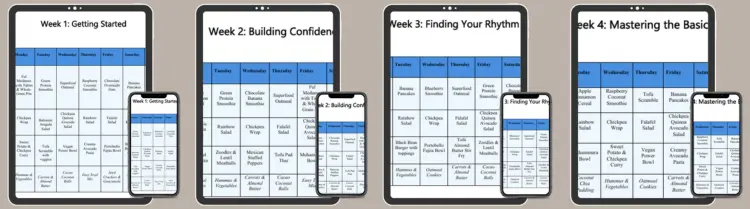
Psst.. Start your transformation now. Everything is done for you, 36 chef vegan recipes, 4 weekly grocery lists, and a full 28-day Meal Plan. Zero thinking, every meal decided. Balanced macros daily, one Sunday prep feeds your whole week. No subscription.
Get the Plan →Complete 7‑Day Sample Menu (From the Full 28‑Day Plan)
This is a one‑week snapshot of the complete vegan diet weight loss plan. Each day includes three meals and one snack, all designed to hit the 40g fibre target, 1.2–1.6g protein per kg body weight, and the meal timing framework above. Portions are for a 150–170 lb individual; adjust ±10% based on your weight.
Daily snack (choose one, 10–11am or 3–4pm): 30g pumpkin seeds, OR 30g dark chocolate (85%+), OR 1 apple with 1 tsp almond butter, OR 2 cups green tea (anytime). The full Ultimate 28-Day Vegan Meal Plan + Grocery List (Complete Solution) includes complete 28-day calendar with shopping lists, 36 chef-tested recipes with a photo for every recipe, and portion adjustments for different weight goals.
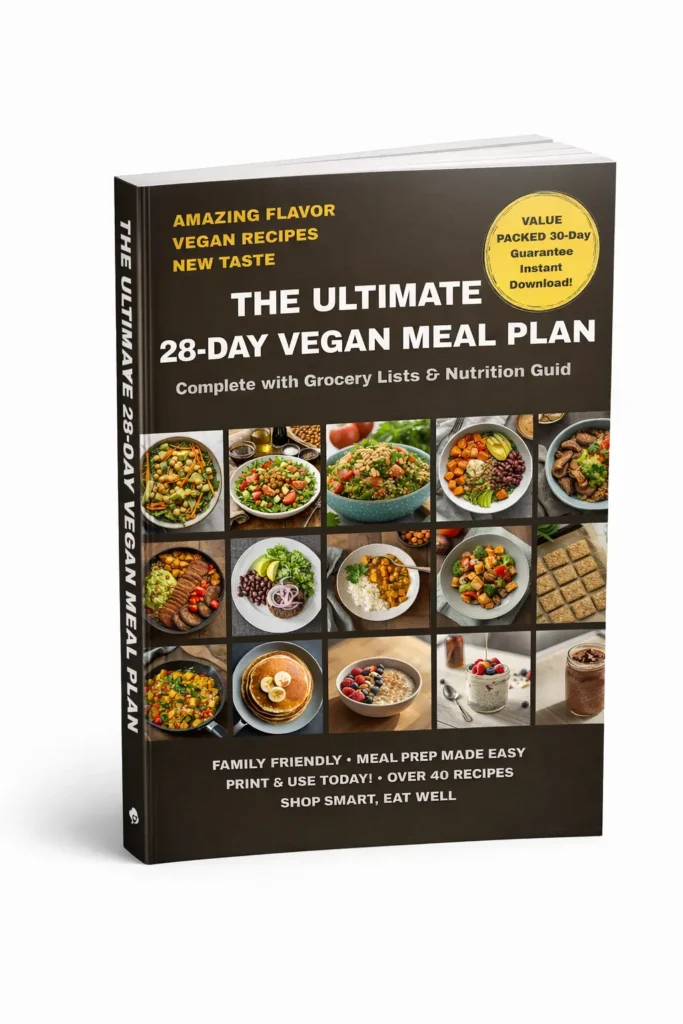
28-Day Vegan Meal Plan + Grocery list.
Transform your lifestyle with our comprehensive guide. This isn’t just a recipe book; it’s a complete system designed for success:
- 28-Day Meal Plan every meal, nothing to figure out
- 4 Weekly Grocery Lists sorted by aisle, saves money
- Balanced Macros protein, iron and B12 daily
- Under $1 Per Serving eat well on any budget
- 90-Min Sunday Prep one session, whole week fed
- Vegan Swaps Guide meat, dairy and eggs replaced
- Nutrition Toolkit protein targets and dining guide
- 36 Chef Recipes every meal photographed
Your 4‑Week Progress: What to Expect
Weight loss on a vegan diet weight loss plan follows a predictable progression through the four phases. Understanding this timeline prevents abandoning the protocol during normal adaptation periods.
If you experience initial fatigue or irritability in the first 5 to 7 days, this is the adaptation period — not a failure signal. The HPA axis is recalibrating from a chronically elevated baseline, and your gut microbiome is adjusting to 40g daily fibre. By Day 10, most people report higher energy, better sleep, and reduced hunger than before starting the protocol. For troubleshooting stalls, the not losing weight on a vegan diet guide covers common pitfalls and solutions.
Tired of overthinking your meals?
What’s included in your download
- 28-Day Meal Plan
- 4 Weekly Grocery Lists
- Balanced Nutrtion, protein, iron, B12
- Under $1 Per Serving
- 90-Min Sunday Prep
- Vegan Swaps Guide
- Nutrition Toolkit
- Beginner Action Plan
- Dining Out Guide
- 36 Chef Recipes
Instant PDF download. No subscriptions.
Frequently Asked Questions About Vegan Diet Weight Loss Plan
How fast can I lose weight on a vegan diet weight loss plan?
In clinical settings, a structured vegan diet weight loss plan yields 1–2 lbs of fat loss per week, with an initial drop of 2–3 lbs in week one (water and glycogen). This 4‑week protocol is designed for 6–8 lbs of true fat loss while preserving lean mass. The BROAD study (Wright et al., Nutrition & Diabetes 2017) found 12.1 kg (26.6 lbs) average weight loss at 6 months on a whole‑food plant‑based diet, demonstrating the sustainability of this approach.
What is the easiest way to follow a vegan diet weight loss plan?
The simplest approach is to follow a structured plan that removes daily food decisions. The Ultimate 28-Day Vegan Meal Plan + Grocery List (Complete Solution) includes easy weekly grocery lists, 4 weeks covered, making it easy to start without planning everything from scratch. Pair it with the five daily non‑negotiables (pumpkin seeds, green tea, turmeric, fermented food, no skipped meals) and the protocol runs on structure rather than willpower.
Can you lose belly fat on a vegan diet?
Yes. Reduction in visceral adipose tissue is driven by improved insulin sensitivity and lower systemic inflammation — both hallmarks of this vegan diet weight loss plan. Studies show plant‑based diets reduce visceral fat by 10–15% over 16 weeks, independent of calorie restriction. The mechanisms: reduced dietary AGEs lower NF‑κB activation in visceral adipocytes, and improved insulin sensitivity directs fatty acids toward oxidation rather than storage.
What vegan foods should I avoid to lose weight?
Avoid agave nectar (high fructose drives liver fat), coconut yogurt (saturated fat impairs insulin sensitivity), vegan butter/margarine (calorie‑dense refined oils), vegan cheese (starchy, low protein), vegan ice cream (calorie density, zero fibre), fruit juice (no fibre, rapid glucose spike), and refined grains (low fibre, high glycaemic load). Focus on whole food forms as detailed in the 7 sabotage foods section.
How much protein do I need on a vegan weight loss diet?
Aim for 1.2–1.6g per kg of body weight. For a 150 lb (68 kg) person, that’s 82–109g daily. This plan includes protein pacing with 20–25g per meal, hitting the leucine threshold of 3g per meal to preserve lean mass. Lentils, tofu, tempeh, edamame, and chickpeas are the primary sources.
Will I feel hungry all the time on a vegan weight loss plan?
No — the high fibre (40g daily target) and GLP‑1 activation from legumes and oats extend satiety to 4+ hours post‑meal. Many people report less hunger than on previous omnivorous diets, despite eating fewer calories. The soluble fibre fermentation into SCFAs directly suppresses ghrelin (the hunger hormone) for hours.
Can I build muscle while losing weight on a vegan diet?
Yes, especially if you’re new to resistance training. The key is adequate protein (leucine 3g/meal) and a modest calorie deficit (300–500 kcal below maintenance). This protocol’s Week 3 protein pacing supports both fat loss and lean mass preservation. The vegan bodybuilding meal plan covers muscle‑building specifics.
Is a vegan diet good for long‑term weight maintenance?
Population studies (Adventist Health Study‑2, EPIC‑Oxford) associate vegan diets with the lowest average BMI and best long‑term weight maintenance of any dietary pattern. The gut microbiome changes described earlier — increased Akkermansia and Bifidobacterium — help prevent rebound by sustaining GLP‑1 sensitivity and reducing metabolic endotoxemia.
What are the best vegan breakfasts for weight loss?
Oatmeal with berries and flax (soluble fibre + polyphenols), tofu scramble with spinach (protein + iron), or unsweetened soy yogurt with chia and pumpkin seeds (protein + magnesium). All align with the GLP‑1 amplification phase and the morning cortisol‑aligned timing protocol.
Do I need supplements on a vegan weight loss plan?
B12 is essential (methylcobalamin 1,000mcg/day). Vitamin D3 (algae‑derived, 2,000 IU/day) supports metabolic health. Algae DHA/EPA (500mg/day) ensures omega‑3 status for inflammation control. The plan includes a Bonus: Vegan Nutrition Guide Toolkit covering all supplement needs.
How do I eat out at restaurants on a vegan weight loss plan?
Look for bean‑based dishes (lentil soup, chickpea curry), request dressing on the side, prioritise fibre‑rich sides (steamed vegetables, salad), and avoid fried items. Most cuisines have vegan‑adaptable options: Mediterranean (hummus, tabbouleh, lentil soup), Asian (tofu stir‑fry, edamame, vegetable sushi), Mexican (bean burrito, hold cheese/sour cream).
What is a sample day on a 28‑day vegan weight loss plan?
Breakfast (7am): 75g oats + 250ml soy milk + 2 tbsp pumpkin seeds + 150g blueberries. Snack (10:30am): 30g dark chocolate (85%+). Lunch (12:30pm): 200g red lentil dal + 120g brown rice + half avocado. Snack (3:30pm): 2 cups green tea. Dinner (6:30pm): 150g tofu stir‑fry with broccoli and quinoa + tahini sauce. This day delivers ~1,600 kcal, 85g protein, 42g fibre, and all four metabolic mechanisms engaged.
You’ve seen the four metabolic shifts that make a vegan diet uniquely effective for weight loss: GLP‑1 satiety hormone activation, insulin sensitivity restoration within 72 hours, reduced dietary AGEs that restore leptin signalling, and the gut microbiome shift toward Akkermansia that sustains the changes long‑term. You have the week‑by‑week protocol, the meal timing framework aligned with your natural cortisol rhythm, the 8 best weight‑loss foods ranked by mechanism strength, the 7 sabotage foods to avoid, a complete 7‑day sample menu, and a 4‑week progress tracker so you know exactly what to expect. This vegan diet weight loss plan is built on biological mechanisms, not guesswork. That’s exactly what the Ultimate 28-Day Vegan Meal Plan + Grocery List (Complete Solution) gives you: a complete 28-day calendar with shopping lists, 36 chef-tested recipes with a photo for every recipe, and the structure to lose 6–8 pounds in the next four weeks without ever counting a calorie. The plan is nutritionist‑approved, every meal meets protein, iron and B12 needs, and it’s backed by a 30‑day money‑back guarantee, no questions asked. Start your 4‑week transformation today.
⚖️ Reach Your Goal Weight Sustainably
Successful weight loss is about biology, not just willpower. Use these resources to fuel your metabolism and track your progress correctly:
- 🔬 The Core Science: Vegan Nutrition: The Deep Dive
- 💪 Protect Your Muscle: High-Protein “Lazy” System (100g/Day)
- 🩸 Health Check: Essential Blood Work Markers for Weight Loss
- 🗓️ Long-Term Vision: The 90-Day Transformation Roadmap
Want the exact calorie-counted meals for weight loss?
Get the 28-Day Fat Loss BlueprintP.S. To guide you through your first month, here’s my 28-Day Vegan Meal Plan complete with shopping lists and nutrition guides. Download it here.
Want to try before you buy?
Enter your email below to get 2 free recipes instantly: