
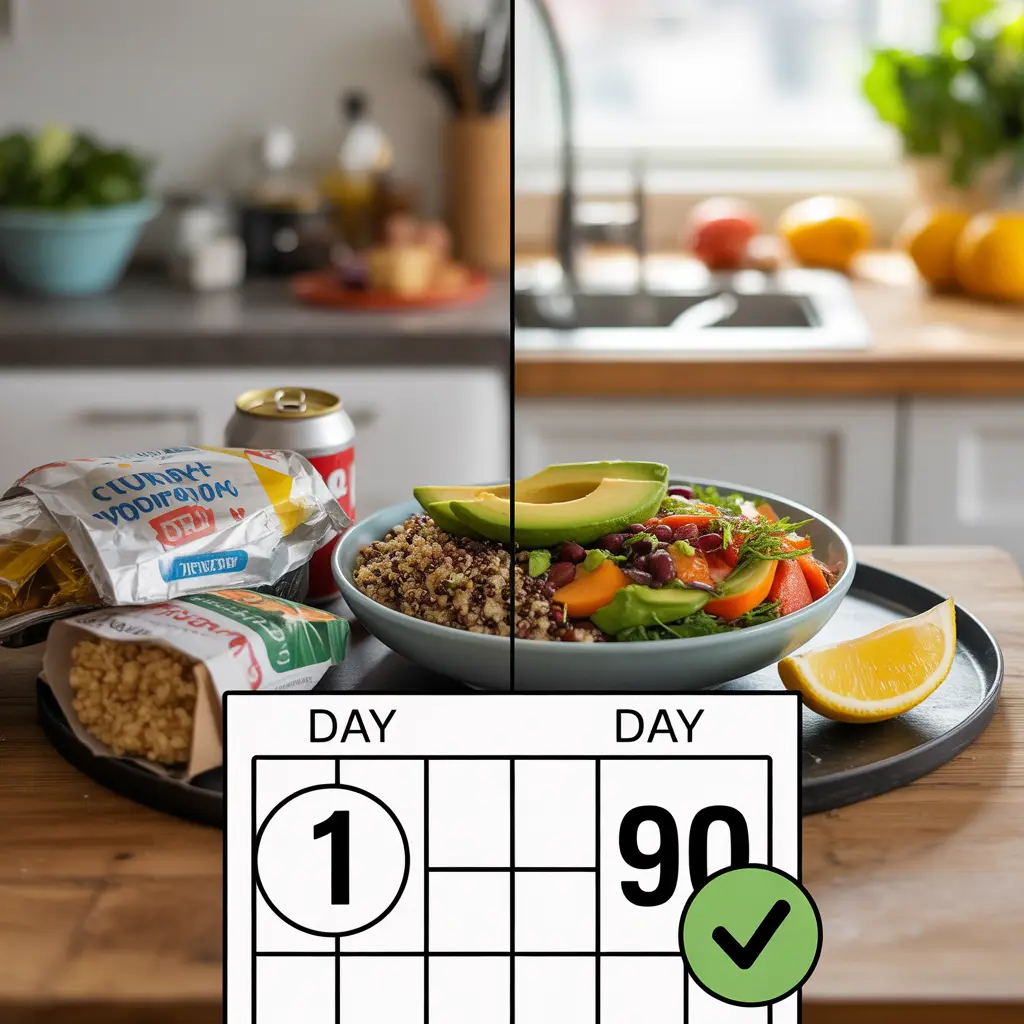
The 90 Day Vegan Challenge: Complete Transformation Plan
Most people who attempt a 90 day vegan challenge fail not because a plant-based diet is too hard, but because they start week one without a roadmap, hit the adjustment phase in week three with no plan for it, and quit before the compounding changes that begin in weeks 6 to 9 have any chance to show up. Follow this guide and you will have a complete week-by-week system, the real science behind what changes in your body at each phase, a structured meal plan, and the exact failure points that derail most challenges before day 30.
The 90 day vegan challenge is structured across three distinct phases: Month 1 (Foundation), Month 2 (Adaptation), and Month 3 (Optimisation). This guide covers a 12-week roadmap, the body changes at each phase, a full daily meal plan, the 5 most common failure points, expected results data from clinical research, and 12 answers to the most-asked challenge questions. Every section is designed to be returned to during your challenge, not read once and forgotten.
Why 90 Days and Not 30: The Science of Plant-Based Transformation
A 30-day vegan challenge produces surface-level changes: some weight loss, better digestion, reduced bloating, improved energy in some people. These are real but incomplete. The deeper physiological transformations that define a successful 90 day vegan challenge require a different timescale. Three specific biological processes explain why:
- Gut microbiome remodelling takes 8 to 12 weeks to complete a meaningful shift. The first 4 weeks produce instability (this is why weeks 2 to 4 are often harder than week 1). Weeks 5 to 8 produce stabilisation. Weeks 9 to 12 produce a fundamentally different microbial ecosystem with measurably higher fibre-fermenting bacteria populations and lower inflammatory species. You cannot rush this timeline.
- Red blood cell turnover occurs on a 90 to 120 day cycle. Iron, B12, and folate changes in your diet do not fully reflect in blood markers until your old red blood cells have been replaced by new ones built from your new dietary inputs. This is why blood tests taken at 30 days often miss the full picture of what a plant-based transition is doing nutritionally.
- Habit automaticity research shows complex behaviours like weekly meal prep and ingredient substitution take an average of 66 days to become genuinely automatic. At 30 days you are still consciously managing the diet. At 90 days, it runs itself.
For anyone brand new to plant-based eating, the complete beginner vegan diet guide provides the foundational knowledge base before the 90 day vegan challenge begins. Starting the challenge without this foundation is the most common cause of early dropout: people do not know what to eat, run out of ideas by week two, and conclude that the diet is too restrictive when in fact they have simply not built the recipe repertoire yet.
The 12-Week 90 Day Vegan Challenge Roadmap
The 90 day vegan challenge is divided into three distinct phases, each with a different primary goal, a different emotional texture, and a different set of skills to build. Understanding which phase you are in prevents you from misinterpreting normal adjustment as failure.
Weeks 1-4. Build the pantry, learn the protein sources, establish meal prep Sunday, and survive the gut adjustment phase.
- Stock your pantry staples
- Learn 5 reliable meals
- Start B12 supplementation
- Expect some digestive change
- Goal: show up every day
Weeks 5-8. Gut stabilises, energy improves, meal variety expands, the diet stops feeling like an effort.
- Expand to 15 reliable meals
- First blood test check
- Energy and sleep improve
- Meal prep becomes automatic
- Goal: optimise the system
Weeks 9-12. Results are visible, habits are automatic, the challenge becomes a lifestyle decision.
- Refine protein strategy
- Social eating confidence
- Second blood test check
- Results measurably visible
- Goal: decide what comes next
Week-by-Week Focus Points
For a structured weekly meal prep approach that runs in parallel with this roadmap, vegan meal prep for beginners covers the Sunday session setup that makes weeks 1 through 4 dramatically easier.
What Changes in Your Body During the 90 Day Vegan Challenge
Understanding the physiological timeline of the 90 day vegan challenge is what separates people who complete it from those who quit in week three. Every uncomfortable week has a biological explanation. Every improvement has a mechanism. When you know what your body is doing and why, the discomfort becomes evidence that the process is working rather than a signal that something is wrong.
The two nutrients most critical to monitor during the 90 day vegan challenge are vitamin B12 and iron. For a comprehensive overview of what the research shows about specific deficiency risks on a plant-based diet, the complete guide to vegan nutrient deficiencies covers every marker with clinical reference ranges. For B12 specifically, supplementation is non-negotiable from day one: start your B12 protocol before beginning the challenge, not after you feel symptoms.
Daily Meal Plan Framework for the 90 Day Vegan Challenge
The meal plan that sustains a 90 day vegan challenge is not 90 different daily menus. It is a rotating system of reliable core meals with built-in variety from spicing, saucing, and protein rotation. The framework below covers one representative day from each month, showing how the meals evolve as your skills build. For pantry setup guidance, the complete vegan pantry staples list covers every base ingredient needed across all three phases.
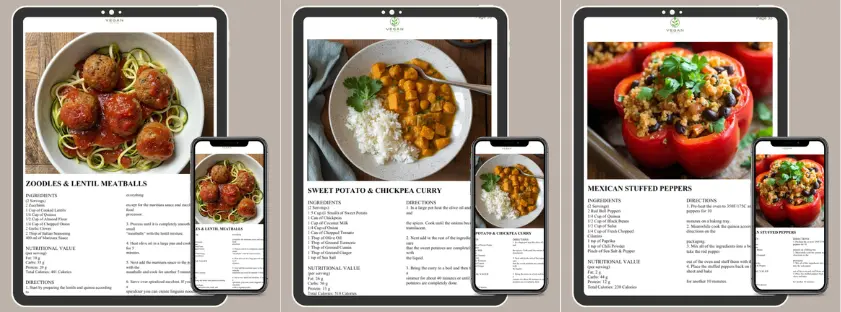
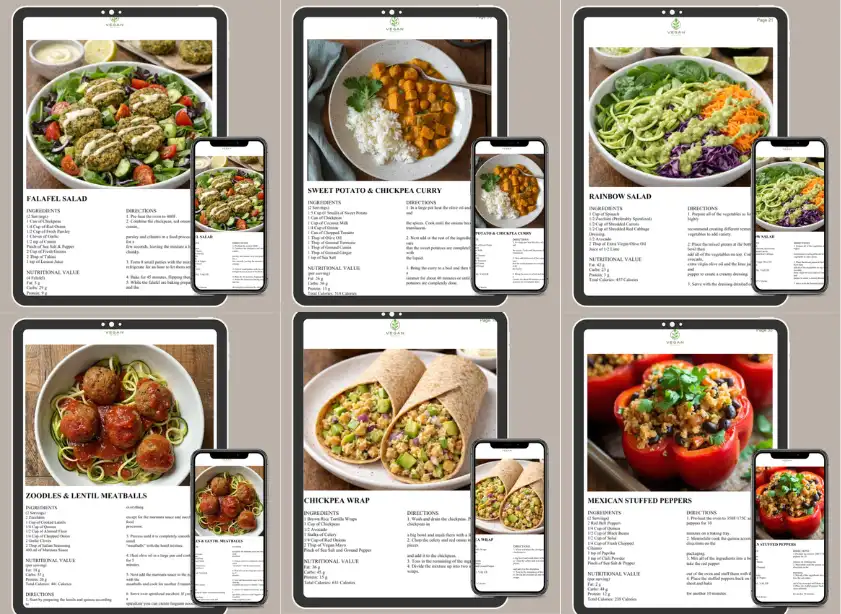
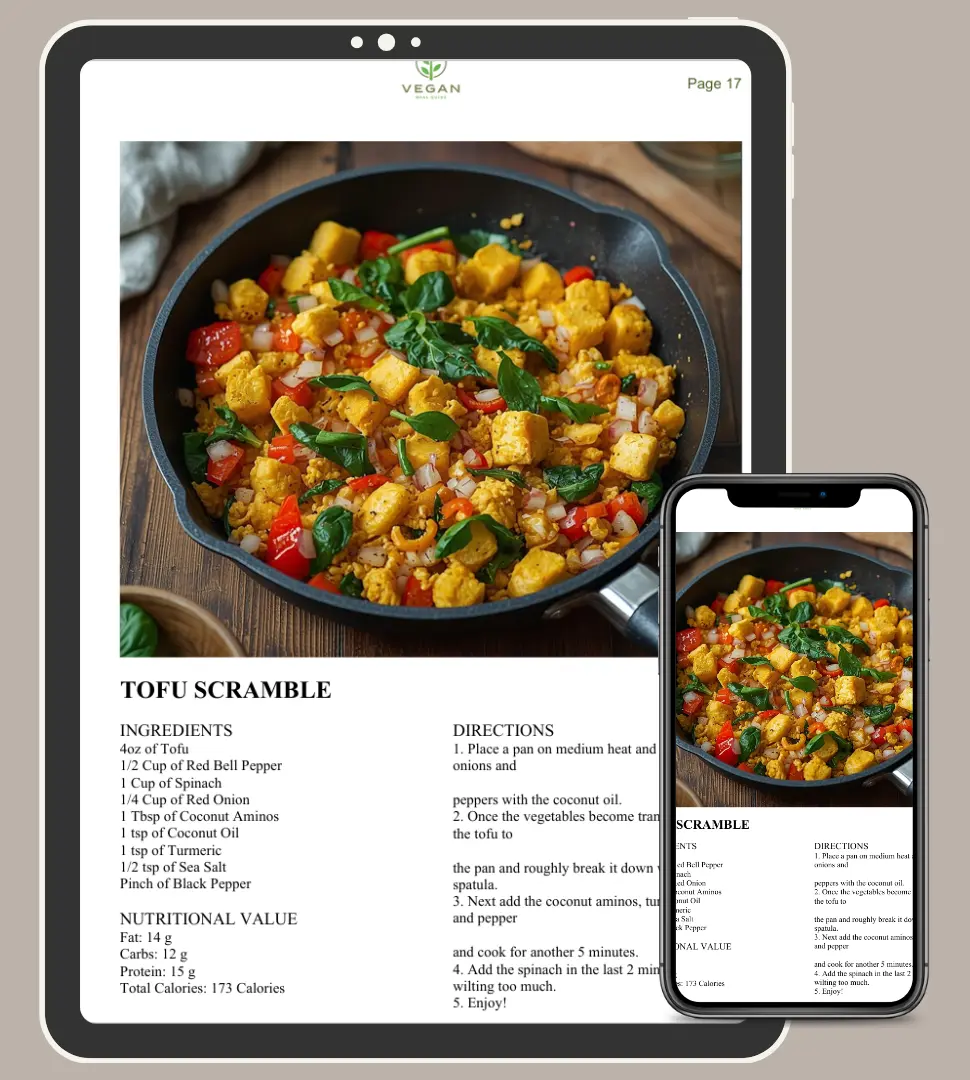
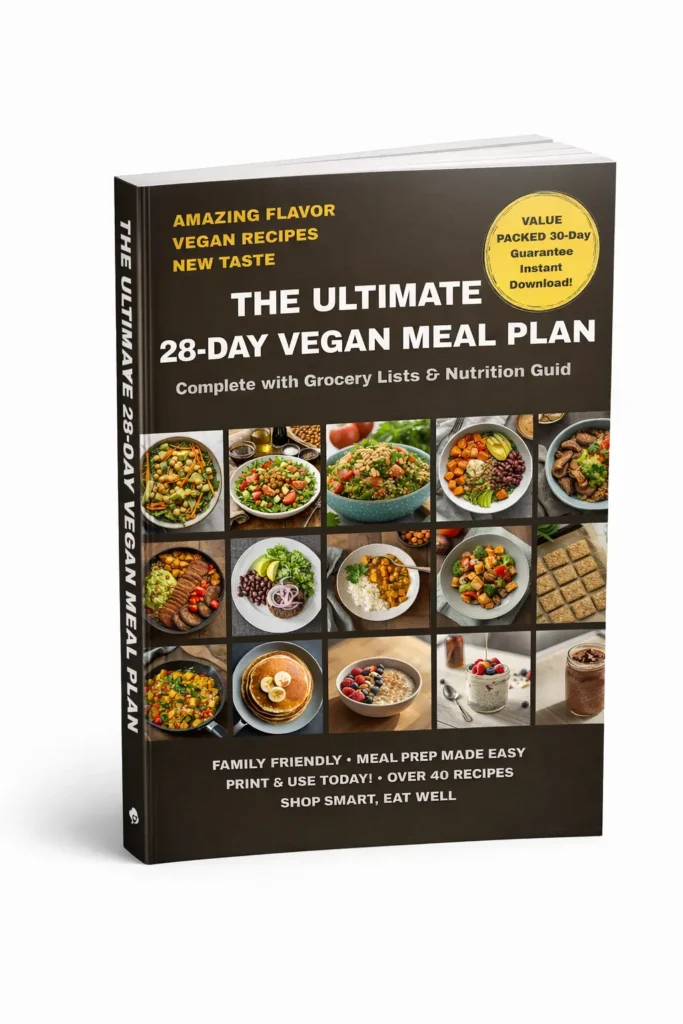
28-Day Vegan Meal Plan + Grocery list.
Transform your lifestyle with our comprehensive guide. This isn’t just a recipe book; it’s a complete system designed for success:
- 28-Day Meal Plan every meal, nothing to figure out
- 4 Weekly Grocery Lists sorted by aisle, saves money
- Balanced Macros protein, iron and B12 daily
- Under $1 Per Serving eat well on any budget
- 90-Min Sunday Prep one session, whole week fed
- Vegan Swaps Guide meat, dairy and eggs replaced
- Nutrition Toolkit protein targets and dining guide
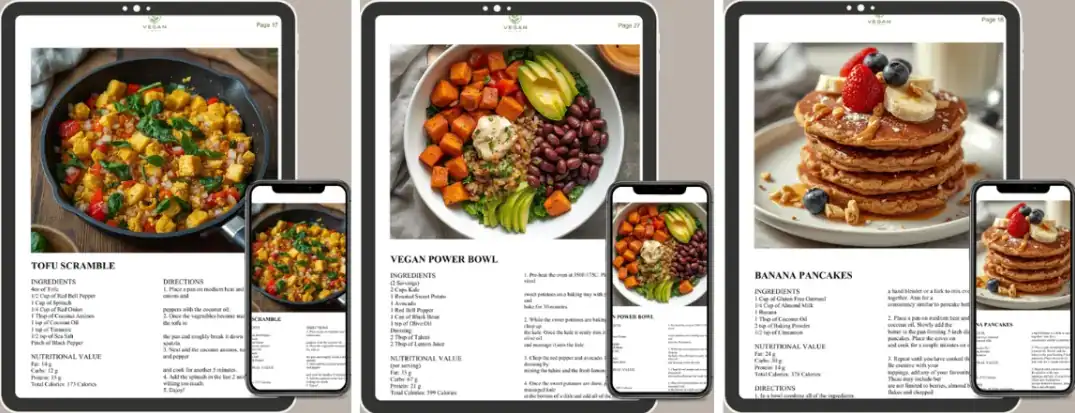
- 36 Chef Recipes every meal photographed
For dedicated recipes in each meal slot, the weekly batch cooking system that runs in parallel with these daily plans is covered in detail in the weekly vegan batch cooking guide. Running a Sunday prep session alongside this challenge is the single most important structural decision for long-term success.
The Ultimate 28-Day Vegan Meal Plan + Grocery List (Complete Solution) covers the first month of your 90 day vegan challenge in complete detail, with a complete 28-day calendar with shopping lists, 36 chef-tested recipes with a photo for every recipe, and nutritionist-approved recipes ensuring every meal meets protein, iron, and B12 needs.
The 5 Failure Points That Kill Most 90 Day Vegan Challenges
Tired of overthinking your meals?
What’s included in your download
- 28-Day Meal Plan
- 4 Weekly Grocery Lists
- Balanced Nutrtion, protein, iron, B12
- Under $1 Per Serving
- 90-Min Sunday Prep
- Vegan Swaps Guide
- Nutrition Toolkit
- Beginner Action Plan
- Dining Out Guide
- 36 Chef Recipes
Instant PDF download. No subscriptions.
Real Results: What the Research Says to Expect from 90 Days
The results from a completed 90 day vegan challenge vary considerably by starting point, adherence quality, supplementation, and exercise. The following data reflects ranges reported in controlled clinical research on plant-based diet interventions of 8 to 16 weeks, which bracket the 90-day window directly. For a complete picture of what physiological changes a plant-based diet produces, the guide to what happens to your body when you go vegan covers every system from gut to cardiovascular in detail.
Note: results are population averages from controlled research and individual outcomes vary significantly based on starting metabolic health, adherence quality, and caloric intake.
Chef’s Perspective: 20 Years of Plant-Based Transformation Across MENA and the Mediterranean
I have watched hundreds of people begin a version of the 90 day vegan challenge across kitchens, cooking classes, and personal transitions throughout my professional career. The ones who succeed share one characteristic that is not motivation, not discipline, and not even knowledge. It is system design. They build a kitchen that makes plant-based eating the path of least resistance. They batch-cook on Sunday. They keep three reliable meals they genuinely enjoy eating. They supplement correctly. And they do not rely on novelty or excitement to sustain the process past week four.
The ones who fail share a different characteristic: they treat the 90 day vegan challenge as a willpower exercise rather than an infrastructure project. They try to make interesting, creative, ambitious meals every day, exhaust themselves, and revert to familiar patterns when energy is low. The solution is not more recipes. It is fewer, better-executed recipes, prepared in advance, with protein anchors at every meal.
Across MENA and Mediterranean plant-based cuisines, the foundational insight is the same as the professional kitchen insight: excellence comes from mastering a small number of techniques applied to a rotating cast of ingredients. A lentil dal made with properly bloomed whole spices and finished with lemon is extraordinary eating. It requires 25 minutes and costs under a dollar per serving. This is the recipe logic that sustains a 90 day vegan challenge through week 12.
Ingredient Spotlight: Red Lentils, The 90-Day Challenge Backbone
The most reliable, fastest-cooking, highest-nutrition legume for anyone in the first month of a 90 day vegan challenge. No soaking. Ready in 20 minutes. Adapts to any spice profile. The dietary workhorse of the Foundation phase.
Professional technique: Toast cumin, coriander, and turmeric in a dry pan for 60 seconds before adding to your lentil pot. The heat releases volatile aromatic compounds that pre-ground spices from a jar have already lost. The result is a dal that tastes as though it has been cooking for hours, from a technique that adds 90 seconds. This is the difference between a vegan meal that sustains enthusiasm through 90 days and one that feels like penance by week three.
Everything I know about building a plant-based diet that sustains through challenge conditions is applied inside the Ultimate 28-Day Vegan Meal Plan + Grocery List (Complete Solution), with 36 chef-tested recipes with a photo for every recipe, nutritionist-approved recipes ensuring every meal meets protein, iron, and B12 needs, and family-friendly meal prep made easy, so your first month of the 90 day vegan challenge is already planned, already tested, and already built to survive week three.
Frequently Asked Questions: 90 Day Vegan Challenge
Is a 90 day vegan challenge safe for everyone?
A plant-based diet is safe for the vast majority of adults when properly planned. The critical caveat is supplementation: B12 must be supplemented from day one, and vitamin D and omega-3 (algae-based EPA/DHA) are strongly recommended. People with existing nutritional deficiencies, kidney disease (which may require protein restriction), or who are pregnant should consult a healthcare provider or registered dietitian before beginning the 90 day vegan challenge. Children and teenagers should have medical oversight for a full vegan transition.
What should I eat in week 1 of the 90 day vegan challenge?
Week 1 should be simple, not impressive. Three reliable meals you actually enjoy: lentil dal with rice, black bean tacos, and a tempeh or tofu grain bowl will cover the full week. Add overnight oats with soy milk for breakfast and edamame for snacks. Do not try to master 15 new recipes in week 1. Master 5 and eat them repeatedly. Variety comes in month 2 when the system is stable.
Will I lose weight on a 90 day vegan challenge?
Most people do, but weight loss is not guaranteed and is highly individual. Clinical studies show average weight losses of 3 to 7 kg over 8 to 12 weeks on a plant-based diet, primarily because fibre and water content of plant foods produce satiety at lower caloric intake than calorie-equivalent animal-product meals. However, it is entirely possible to gain weight on a vegan diet if caloric intake is high from oils, nuts, coconut products, and processed vegan foods.
How do I handle the week 3 energy dip?
Prepare for it rather than responding to it. In week 2, batch-cook extra portions of your highest-protein meals and freeze them specifically for week 3. Increase water intake. Ensure B12 supplementation is correct. Check that you are eating enough calories: under-eating is the most common cause of week 3 fatigue. Eat more legumes and add a protein smoothie as a daily snack. The dip typically resolves by days 21 to 24 as the gut microbiome stabilises.
Do I need protein powder to complete the 90 day vegan challenge?
No. Protein powder is useful as a convenience tool but not nutritionally necessary. The daily meal plans in this guide reach 85 to 110g of protein using only whole foods. Tempeh (31g per cup), tofu (20g per cup), lentils (18g per cup), and soy milk (8g per cup) are sufficient anchors without supplementation. Protein powder adds reliability and speed, particularly for post-workout protein timing, but its absence does not prevent challenge success.
What is the easiest way to follow the full 90 day vegan challenge meal plan?
The simplest approach is to use a structured plan for the first 28 days rather than building everything from scratch. The Ultimate 28-Day Vegan Meal Plan + Grocery List (Complete Solution) covers the entire Foundation phase with a complete 28-day calendar with shopping lists, save 7+ hours weekly on meal planning, and simple recipes with common supermarket ingredients so your challenge starts with a full system rather than a blank page.
Can I exercise during the 90 day vegan challenge?
Yes, and exercise significantly amplifies the results. The key adjustment is ensuring protein intake is adequate for your activity level: 1.4 to 2.0g per kilogram of body weight for those doing regular resistance training. Prioritise tempeh, tofu, seitan, and legumes as post-workout protein sources. Eat your largest protein meal within 2 hours of training. Plant-based athletes at every level (from recreational to elite) have performed at high levels on well-planned vegan diets, and 90 days is more than enough time to find the nutritional equilibrium that supports your training.
What happens to my gut during the 90 day vegan challenge?
Your gut microbiome undergoes significant remodelling. Fibre-fermenting bacterial populations (Bifidobacterium, Lactobacillus, Faecalibacterium prausnitzii) increase substantially as dietary fibre intake rises. These bacteria produce butyrate and other short-chain fatty acids that feed colonocyte cells, reduce intestinal inflammation, and support gut barrier integrity. The first 3 to 4 weeks involve bacterial population turnover, which is why digestive discomfort is common and temporary. By week 6 to 8, most participants report significantly improved digestive comfort compared to their pre-challenge baseline.
How do I eat out during the 90 day vegan challenge?
Identify 3 to 4 reliable restaurant types in your area before you need them: Indian, Japanese, Thai, Middle Eastern, and Mediterranean restaurants reliably offer vegan-appropriate dishes. For unfamiliar restaurants, scan menus online before arriving. At social events, eat a protein-rich snack beforehand so you are not eating from hunger. For travel, pack pumpkin seeds, protein bars, and single-serve nut butter packets as reliable protein bridges between meals.
What supplements do I need during the 90 day vegan challenge?
Non-negotiable: B12 (cyanocobalamin, 1,000 to 2,000mcg, three times weekly). Strongly recommended: vitamin D3 (from lichen, 1,000 to 2,000 IU daily in northern climates) and algae-based omega-3 (250 to 500mg EPA+DHA daily). Optional but useful for most people: iodine if not using iodised salt and eating no seaweed. Do not start a 90 day vegan challenge without B12 in hand.
How do I know if the 90 day vegan challenge is working for me?
Take a baseline measurement before starting: weight, energy level (1-10), sleep quality (1-10), digestive comfort (1-10), and mood (1-10). Repeat at week 4, week 8, and week 12. Most people see improvements across all five metrics by week 8, with the largest gains in energy and digestive comfort. If energy has not improved by week 5 and B12 supplementation is correct, consider a blood test to check ferritin, vitamin D, and active B12.
What should I do after finishing the 90 day vegan challenge?
You have three evidence-based options. Option 1: Continue permanently: by day 90 the habits are automatic and the benefits are established. Option 2: Adopt a flexible plant-based pattern (vegan at home, plant-forward when dining out). Option 3: Take a structured break with full data in hand and return at a later point. What the research consistently shows is that the gut microbiome changes, cardiovascular improvements, and habit formation achieved at 90 days begin reversing within 2 to 4 weeks of returning to a high-animal-product diet. The 90 days built something worth keeping.
Day One Is the Only Hard Day
The 90 day vegan challenge is hard at the beginning and effortless by the end. That reversal is the point. Week 1 is hard because the kitchen is unfamiliar. Week 3 is hard because the gut is adjusting. By week 9, the diet runs itself. The transformation is not just physical: it is a fundamental restructuring of how you relate to food, how your kitchen functions, and what your body considers its baseline for energy, digestion, and wellbeing. That restructuring takes 90 days. Thirty days produces a good outcome. Ninety days produces a new normal.
The Ultimate 28-Day Vegan Meal Plan + Grocery List (Complete Solution) gives you the complete foundation for the first month of your 90 day vegan challenge, with a complete 28-day calendar with shopping lists, 36 chef-tested recipes with a photo for every recipe, and a 30-day money-back guarantee, no questions asked, so your challenge starts today, on solid ground, with a tested plan behind it.
🏆 Your 90-Day Success Toolkit
A transformation requires the right systems. Use these professional resources to stay on track from Day 1 to Day 90:
- 📅 The Master Plan: The 30-Day Meal Prep Roadmap
- 📉 Weight Loss: The Science-Based Vegan Weight Loss Plan
- 🩸 Monitor Progress: Vegan Blood Test: Tracking Your Health Markers
- 🔄 Stay Consistent: Batch Cooking Bible: Save 5+ Hours Weekly
Need the exact plan for your first 90 days?
Get the 28-Day Kickstart GuideP.S. For a simple, structured start to vegan eating, download my 28-Day Meal Plan with grocery lists and nutrition guides here.
Want to try before you buy?
Enter your email below to get 2 free recipes instantly: