
Medical Disclaimer: This content is for informational purposes only and does not constitute medical advice. Vitamin B12 deficiency can cause serious and irreversible neurological damage. If you suspect deficiency, consult a qualified healthcare provider for testing and treatment guidance before making changes to your supplementation.
Vegan B12 Foods: Every Plant-Based Source of Vitamin B12 Explained
TL;DR
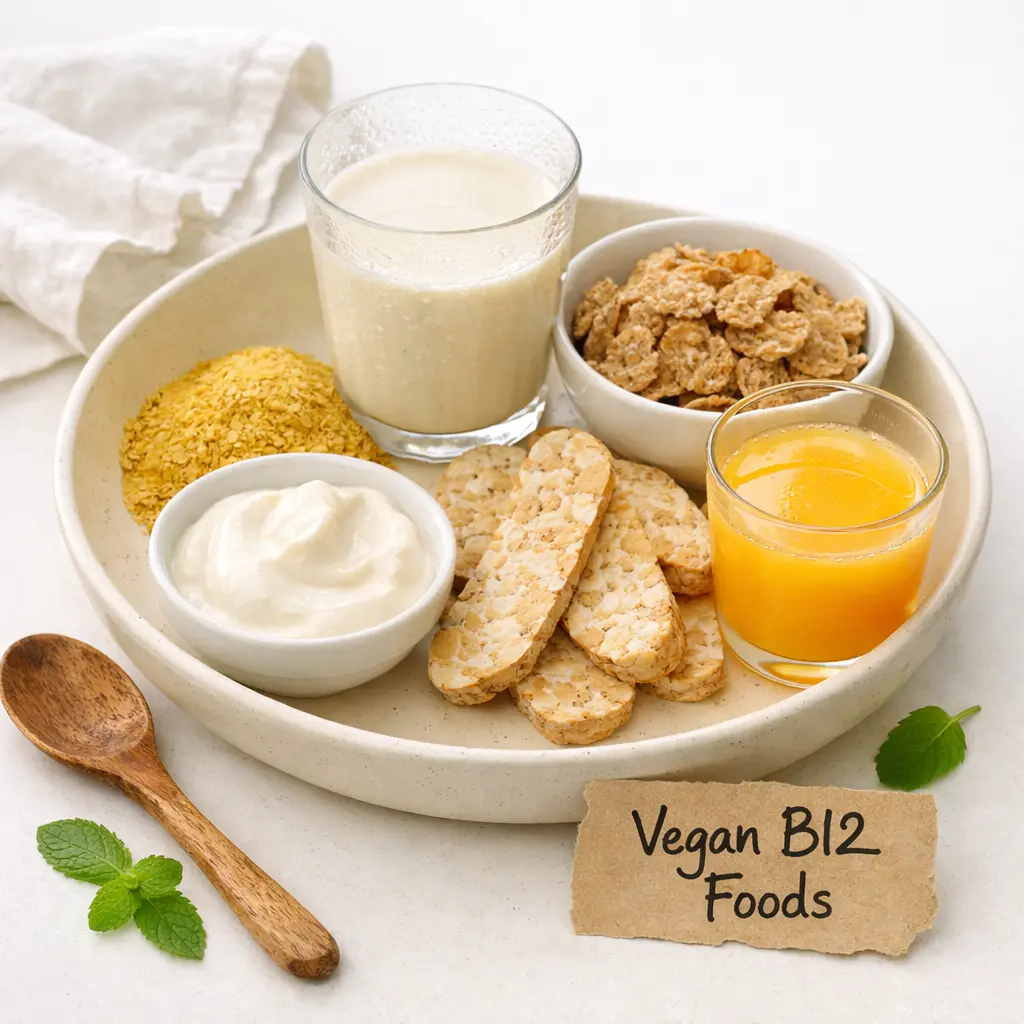
Vegan B12 foods require an honest answer rather than a reassuring one. There are no reliable whole plant foods that contain meaningful, bioavailable vitamin B12. Nori, spirulina, tempeh, and fermented foods contain B12 analogues that either do not absorb or actively block true B12 absorption. The only reliable vegan B12 foods are fortified: nutritional yeast (when B12-fortified), plant milks, breakfast cereals, some meat alternatives, and fortified spreads. Even with daily fortified food consumption, the absorption mechanics of B12 mean supplementation is still required for most vegans to reach adequate serum levels consistently. This guide covers the honest science, every fortified food source ranked, the absorption cascade, the nori and spirulina myth debunked, B12 requirements by life stage, and the optimal combined diet-plus-supplement strategy. Vegan B12 foods are manageable. They just require clarity about what they are and are not.
The Honest Truth About B12 in Plant Foods
Vegan B12 foods is one of the most searched phrases in plant-based nutrition. People searching it want to know which foods they can eat to get B12. The answer they receive on many sites is incomplete. This guide gives the complete picture.
Vitamin B12 is produced exclusively by bacteria and archaea. Animals acquire it by eating animal products or drinking water from unsterilised sources where bacteria reside. Plants do not produce B12 and have no biological need for it. The B12 that does appear in some plant-adjacent foods (nori, certain fermented products) is overwhelmingly in the form of B12 analogues: corrinoid compounds that resemble B12 but either do not absorb into human cells or, critically, actively compete with and block the absorption of true B12 (cobalamin).
Why B12 Deficiency Is Uniquely Dangerous
B12 deficiency is not merely a nutritional gap. At the neurological level, inadequate B12 causes demyelination: the breakdown of the myelin sheath that insulates nerve fibres. This damage is initially reversible if caught early, but becomes permanent if allowed to progress. Symptoms of neurological B12 deficiency include tingling and numbness in extremities, balance problems, cognitive decline, and in severe cases, irreversible spinal cord damage. The insidious aspect is that the liver stores B12 for years, meaning deficiency can develop silently before any symptom appears. By the time neurological symptoms present, significant damage may already have occurred. B12 management is not optional for vegans. It is one of the highest-priority nutritional decisions in plant-based eating.
What B12 Does in the Body
Understanding the stakes requires knowing what B12 actually does:
- Myelin synthesis: B12 is required to produce and maintain the myelin sheath surrounding nerve fibres. Without it, nerve conduction degrades progressively.
- DNA synthesis: B12 is a cofactor for the enzyme methionine synthase, which converts homocysteine to methionine. This reaction is essential for DNA methylation, gene expression, and cell division throughout the body.
- Red blood cell formation: B12 deficiency impairs DNA synthesis in developing red blood cells, producing large, abnormal cells (megaloblastic anaemia) that cannot carry oxygen efficiently.
- Homocysteine regulation: without B12, homocysteine accumulates in blood. Elevated homocysteine is a cardiovascular risk factor and marker of neurological vulnerability.
- Melatonin pathway: B12 is required for the methylation step that converts serotonin to melatonin, making B12 deficiency a contributing factor in circadian rhythm disruption and sleep disorders.
The complete deficiency framework for B12 alongside all other critical vegan nutrients is covered in the vegan nutrient deficiencies guide.
Fortified Vegan B12 Foods Ranked by B12 Content per Serving
Fortified foods are the only dietary route to reliable B12 on a vegan diet. The ranking below uses realistic daily serving sizes. Fortification levels vary enormously between brands, so the figures represent typical values. Always check the nutritional label of each specific product.
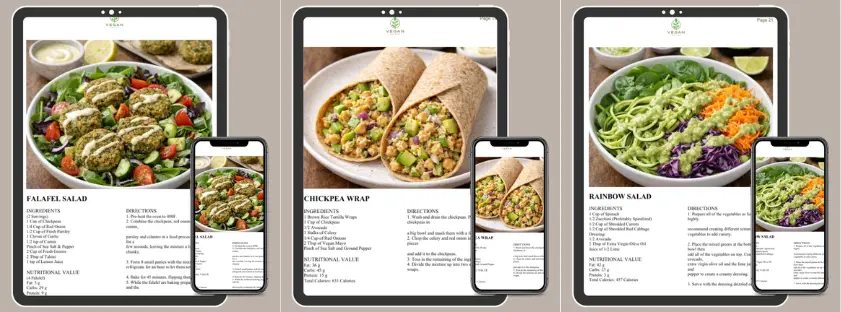
28-Day Vegan Meal Plan
+ Grocery List
Complete Solution · Nutritionist-Approved · Print & Use Today
Read on any device · No apps needed
6 Key Fortified B12 Food Sources: Spotlight Cards
These six food categories represent the complete practical landscape of vegan B12 foods. Each card covers the realistic B12 contribution, the critical label-reading requirement, and the practical daily application.
1. Nutritional Yeast (B12-Fortified)
B12 per serving: 2.4mcg per tablespoon (when fortified)
Critical check: Many nutritional yeast products are not fortified with B12. The label must explicitly state B12 or cyanocobalamin in the ingredients or nutrition panel.
Practical use: Sprinkled on pasta, stirred into soups, blended into sauces. The nutty, cheesy flavour integrates into savoury cooking invisibly.
2. Fortified Plant Milks
B12 per serving: 1.0-3.0mcg per 250ml cup
Critical check: Not all plant milks are B12-fortified. Soy and oat milks have the most consistent B12 fortification across brands globally. Always verify the label.
Practical use: The most reliable daily B12 food habit. Two cups consumed throughout the day (in coffee, porridge, smoothies) covers most of the adult RDA without effort.
3. Fortified Breakfast Cereals
B12 per serving: 1.5-6.0mcg per serving (highly variable)
Critical check: Fortification levels vary dramatically. Some brands provide 100% or more of the daily RDA per serving. Others provide minimal amounts. This is the most variable category in vegan B12 foods.
Practical use: A B12-dense breakfast option when the right brand is chosen. Combine with fortified plant milk for a double B12 delivery at one meal.
4. Vegan Meat Alternatives
B12 per serving: 1.0-3.5mcg per 100g (when fortified)
Critical check: Many vegan meat products are B12-fortified as part of their nutritional profile. This makes them among the most B12-rich vegan foods available, not just protein sources. Always check the label.
Practical use: Used 3-4 times per week as a protein source, fortified vegan meats contribute significantly to weekly B12 accumulation even without daily use.
5. Fortified Plant Yogurts
B12 per serving: 0.4-1.0mcg per 125g portion
Critical check: Soy-based yogurt alternatives are most consistently B12-fortified. Coconut yogurt and almond yogurt alternatives vary significantly by brand.
Practical use: A useful daily B12 contributor as part of a breakfast or snack. At 0.4-1.0mcg per serving it is a secondary source, not a primary one.
6. Fortified Vegan Spreads
B12 per serving: 0.2-0.5mcg per teaspoon
Critical check: Certain vegan margarines and spreads are B12-fortified. Marmite and similar yeast extract spreads can be significant B12 sources depending on the fortification level.
Practical use: A small but daily contribution on toast, in sandwiches, or stirred into hot drinks like miso soup. The cumulative effect of daily use over months is meaningful.
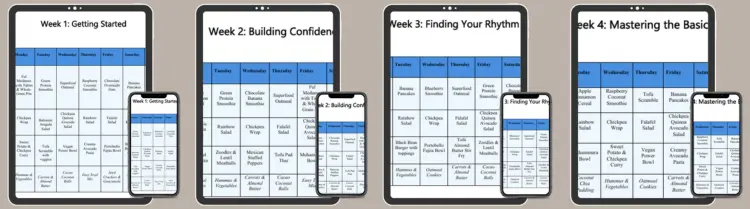
Psst..just to add: The 28-Day Vegan Meal Plan gives you 40+ recipes, a full shopping list, and a 28-day calendar. No subscription.
Get the Plan →The B12 Absorption Science: Intrinsic Factor and Passive Absorption
B12 absorption is more complex than almost any other nutrient. Two entirely separate absorption mechanisms exist, and the distinction between them is the key to understanding why supplementation strategy matters as much as food choices when it comes to vegan B12 foods.
The Two B12 Absorption Pathways
Food or supplement B12 consumed
B12 arrives in the stomach bound to food proteins or as free cyanocobalamin in a supplement
Pathway 1: Active (Intrinsic Factor)
Stomach acid releases B12 from food. Intrinsic factor (IF) produced by stomach cells binds B12. IF-B12 complex absorbed in terminal ileum. Highly efficient but saturates at ~1.5-2mcg per dose.
Pathway 2: Passive Diffusion
1% of any B12 dose absorbed without intrinsic factor. Works at any dose. No saturation. Explains why 250-1000mcg supplements work despite the low percentage.
Serum B12 and Tissue Delivery
B12 enters circulation bound to transcobalamin II. Delivered to cells throughout the body. Liver stores 2-5mg as a reserve lasting 3-10 years.
Cellular Function
Methionine synthase and methylmalonyl-CoA mutase use B12 as a cofactor. DNA synthesis, myelin production, and homocysteine clearance proceed.
Why the Saturation Point Changes Everything
The active absorption pathway using intrinsic factor saturates at approximately 1.5-2mcg per meal. This has a critical practical implication:
- Eating 100mcg of B12 from food at one sitting absorbs approximately 1.5-2mcg through active transport, the same as eating 2.4mcg
- Spreading B12-fortified foods across 2-3 meals is more effective than consuming all B12 at once
- A 250mcg cyanocobalamin supplement once daily uses passive diffusion (1%) to absorb approximately 2.5mcg, bypassing the saturation limit
- A 1000mcg supplement once daily absorbs approximately 10mcg through passive diffusion alone, providing a larger buffer
The Intrinsic Factor Vulnerability
Several conditions reduce intrinsic factor production and severely impair B12 absorption even when dietary intake is adequate:
- Atrophic gastritis: common in people over 50. Reduces stomach acid and intrinsic factor production simultaneously.
- Proton pump inhibitor (PPI) use: acid-blocking medications reduce the stomach acid needed to release B12 from food proteins
- Metformin use: the diabetes medication reduces B12 absorption through a separate mechanism. Vegans on metformin need especially careful B12 monitoring.
- Pernicious anaemia: autoimmune destruction of intrinsic factor-producing cells. Requires B12 injections rather than oral supplementation.
Anyone in these categories should have serum B12 and methylmalonic acid (MMA) tested regularly. The complete vegan blood testing guide is at the vegan blood test guide.
Nori, Spirulina, and Fermented Foods: The Myth Debunked
Three plant foods are consistently and incorrectly cited as reliable vegan B12 sources. The evidence on each is clear, well-established, and consistently ignored in popular nutrition content. Understanding why these sources fail is as important as knowing which sources work.
Nori Seaweed: Pseudovitamin B12
Nori contains compounds that measure as B12 in standard assays. This is why early research suggested it as a B12 source. The problem was identified when researchers looked more carefully at what those compounds actually were.
- Nori contains pseudovitamin B12 (a specific corrinoid compound) rather than methylcobalamin or adenosylcobalamin
- Pseudovitamin B12 does not bind to the intrinsic factor-B12 receptor in the gut
- More critically: pseudovitamin B12 competes with and actively blocks the absorption of true B12 consumed alongside it
- Studies reviewed at PubMed confirm that regular nori consumption in vegans does not improve serum B12 levels and can worsen B12 status when relied upon as a primary source
Spirulina: The Most Dangerous B12 Myth
Spirulina is the most aggressively marketed false B12 source in the vegan supplement market. The claims made about its B12 content are technically accurate in one narrow sense: spirulina does contain corrinoid compounds that measure as B12 in standard laboratory assays. But approximately 80% of the B12 measured in spirulina is pseudovitamin B12, which is not bioavailable. The remaining 20% competes with true B12 at absorption sites. Studies on populations consuming spirulina as a B12 source show deteriorating, not improving, B12 status. Spirulina is a valuable protein and antioxidant source. It is not a B12 source. Anyone using it as one is at significant risk of developing B12 deficiency while believing they are protected.
Fermented Foods: Inconsistent and Unreliable
Tempeh, miso, kimchi, sauerkraut, and kombucha are sometimes cited as fermented vegan B12 sources. The situation here is more nuanced but the conclusion is the same:
- Some fermentation processes involving certain bacterial strains do produce genuine B12 cobalamin compounds
- However, B12 content varies enormously between batches, brands, and fermentation conditions with no reliable consistency
- The actual B12 content of any fermented product in a shop cannot be predicted from the product name alone
- Fermented foods are excellent for gut health and should be eaten daily for those reasons, but they cannot be counted toward B12 targets
The Soil and Unwashed Produce Argument
Some sources cite the possibility of B12 from soil bacteria on unwashed organic produce. This argument is historically accurate but practically irrelevant. Premodern humans living close to the soil, drinking unsterilised water, and not washing vegetables may have received trace B12 from environmental bacterial sources. Modern food hygiene, water treatment, and produce washing eliminate this source entirely. It is not a practical B12 strategy for any contemporary vegan.
B12 Requirements by Life Stage and Population Group
B12 needs are not uniform throughout life. Four life stages have elevated or specifically critical requirements that warrant individual attention on a plant-based diet.
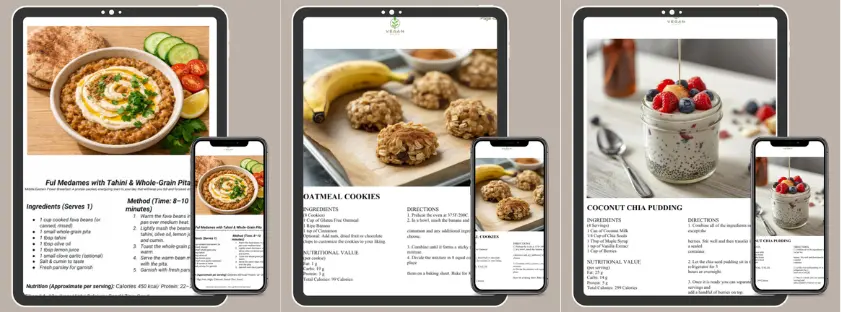
| Plan Comparison | Standard Search | Your 28-Day Plan |
|---|---|---|
| Structured 4-Week Calendar | — | ✓ Included |
| Ready-to-Use Grocery Lists | — | ✓ Included |
| 40+ Professional Recipes | Random Results | ✓ Included |
| Nutrition & Transition Guide | — | ✓ Included |
| Chef-Verified Methods | — | ✓ Included |
| High-Quality Recipe Photos | — | ✓ Included |
The Optimal B12 Strategy: Diet Plus Supplement Combined
The evidence is clear that relying on fortified vegan B12 foods alone is insufficient for consistent, reliable B12 status in most plant-based eaters. The optimal strategy combines daily dietary sources with a supplementation protocol calibrated to the absorption mechanics.
Daily: Fortified Plant Milk (2 cups)
Two cups of B12-fortified plant milk across the day provides 2.0-6.0mcg B12 depending on brand. This is the most effortless daily B12 food habit available.
- Morning cup in porridge, coffee, or smoothie: 1.0-3.0mcg B12
- Evening cup in cooking, warm drink, or cereal: additional 1.0-3.0mcg B12
- Spread across two meals: activates intrinsic factor absorption twice rather than once
Daily: B12-Fortified Nutritional Yeast (1-2 tbsp)
One tablespoon of B12-fortified nutritional yeast provides the full adult RDA of 2.4mcg. Used daily in cooking, it is the most concentrated single-food B12 source available on a plant-based diet.
- Stir into pasta sauces, soups, grain bowls, or scrambled tofu
- Check the label every purchase: not all nutritional yeast is B12-fortified
- Store in a dark, cool location: B12 degrades under heat and light exposure
Daily: 250mcg Cyanocobalamin Supplement
This is the non-negotiable foundation of vegan B12 management. At 250mcg once daily, passive absorption delivers approximately 2.5mcg of B12, meeting the adult RDA through a mechanism that bypasses intrinsic factor and its saturation limit.
- Cyanocobalamin is preferred: the most stable form with the longest shelf life and most clinical evidence
- Methylcobalamin is acceptable but less stable; some people prefer it but it requires more frequent dosing
- Take with or without food: passive absorption occurs independently of meal timing
Alternative: 2000mcg Cyanocobalamin Weekly
For those who prefer weekly rather than daily supplementation, a single 2000mcg dose once per week provides approximately 20mcg through passive absorption plus additional active absorption, exceeding the weekly 16.8mcg requirement with a safety buffer.
- Set a specific day (e.g., every Monday) and link it to an existing habit to prevent forgetting
- Weekly dosing is as effective as daily dosing when the dose is adjusted appropriately
- Useful for people who struggle with daily supplement habits
Spread B12 Foods Across Meals (Not All at Once)
Because the active intrinsic factor pathway saturates at 1.5-2mcg per meal, consuming all B12 fortified foods at a single meal wastes the absorption advantage of active transport. Distributing across two or three meals activates intrinsic factor absorption multiple times across the day.
- Fortified milk at breakfast + nutritional yeast at lunch + fortified cereal or yogurt at dinner
- This distribution strategy can meaningfully increase total absorbed B12 from food sources
Test Every 2-3 Years (Sooner If Symptomatic)
Serum B12 testing confirms whether the strategy is working. Request methylmalonic acid (MMA) and homocysteine alongside serum B12 for a complete picture of functional B12 status, as serum B12 alone can appear normal while functional deficiency exists.
- Serum B12 below 200pg/mL: deficiency. Increase supplementation immediately.
- Serum B12 150-200pg/mL: borderline. Supplementation protocol needs revision.
- Elevated MMA with normal serum B12: functional deficiency. Increase dose.
Eliminate False Sources from Your B12 Accounting
Remove nori, spirulina, fermented foods, and unwashed vegetables from your B12 calculation entirely. Do not count them. Do not rely on them. Eat them for their other nutritional benefits, but treat your B12 strategy as if these sources do not exist.
This single rule, applied consistently, prevents the most common cause of vegan B12 deficiency: believing your B12 is covered when it is not.
The complete supplement framework for all critical vegan nutrients is covered at the vegan supplements guide.
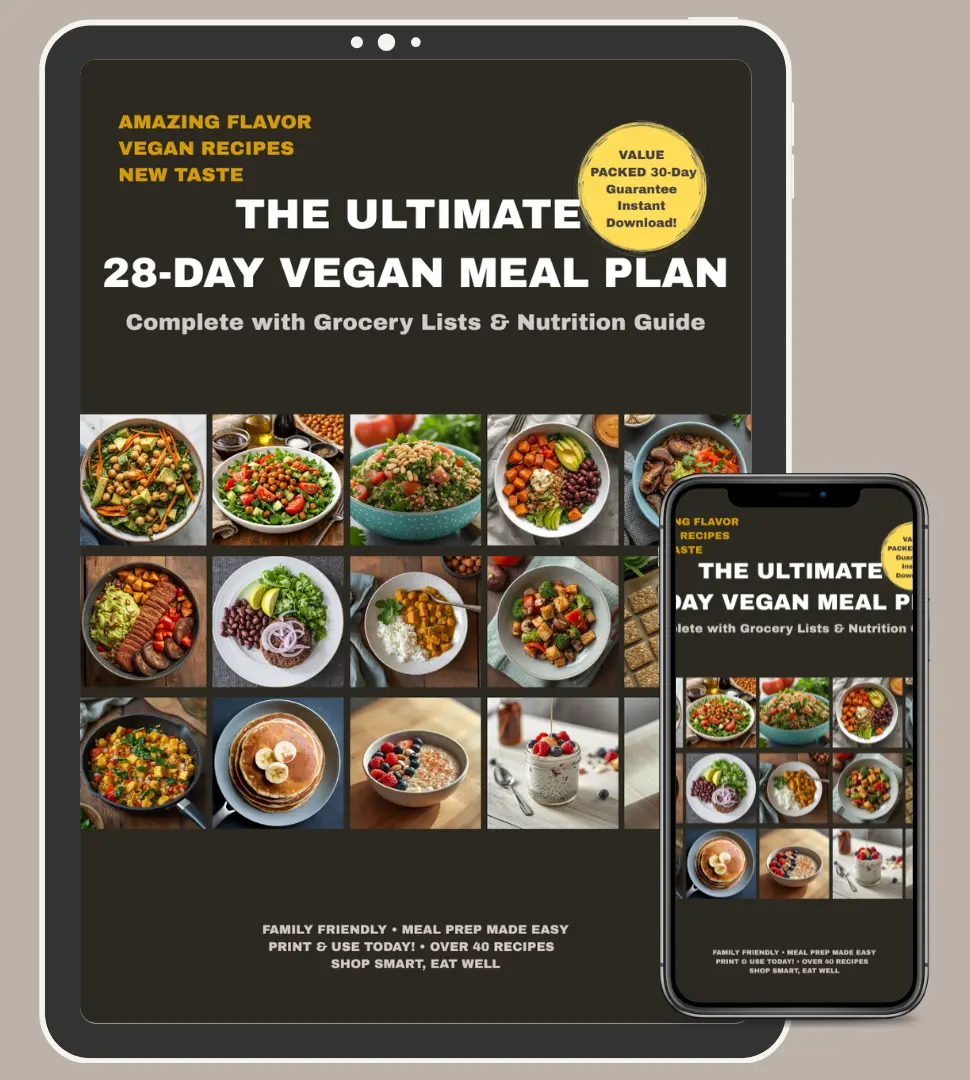
28-Day Vegan Meal Plan + Grocery list.
Transform your lifestyle with our comprehensive guide. This isn’t just a recipe book; it’s a complete system designed for success:
- The Vegan Guide: Essential transition tips and nutritional benefits.
- 40+ Chef Recipes: Breakfast, lunch, and dinner with high-quality photos.
- 4-Week Meal Plan: A fully structured day-by-day calendar.
- Grocery Lists: Categorized weekly lists to save you time and money.
- Photos: High-Quality Recipe Photos.
- Nutritions: Vegan Nutrition Guide Toolkit.
Chef Section: Building B12-Fortified Foods Into MENA Cooking
Twenty years of professional MENA and Mediterranean kitchen experience offers a practical perspective on integrating fortified vegan B12 foods into daily cooking without treating supplementation as a clinical interruption of real eating.
Three MENA Kitchen B12 Integration Strategies
1. Nutritional Yeast in the MENA Spice Tradition
MENA cooking is built on layered seasoning. Za’atar, baharat, sumac, and ras el hanout are blended spice foundations that define dish flavour. Nutritional yeast integrates into this tradition naturally as a umami-deepening layer. Two tablespoons stirred into a tomato-based stew or lentil soup before serving adds depth that would otherwise come from bone stock in traditional cooking, while delivering the full adult B12 RDA from a single tablespoon. In professional kitchen practice, nutritional yeast belongs in the spice section alongside dried herbs. It is a seasoning first, a B12 source second, and it performs both roles simultaneously.
2. Fortified Oat Milk in the MENA Breakfast Tradition
The traditional MENA breakfast is built around warm, sustaining foods: ful medames, hummus, flatbread, olives, and warm drinks. Fortified oat milk integrates into this framework in the warm drink component, replacing the glass of dairy milk that appears in some modern MENA households. Used in warm oat-based porridges (now common across the urban MENA region), fortified oat milk delivers B12 and calcium in the first meal of the day without any disruption to the culinary tradition. The key professional technique: always shake the carton before use. Fortification minerals settle to the bottom. An unshaken carton delivers a fraction of the stated B12 content.
3. Fortified Vegan Spreads on MENA Flatbread
The MENA flatbread tradition, whether Lebanese manousheh, Iraqi samoon, or Egyptian aish baladi, is built around the spread that accompanies it. Za’atar and olive oil, hummus, and labneh (in dairy-eating households) are the traditional accompaniments. A B12-fortified vegan spread used as a base layer under a za’atar and olive oil topping adds a small but daily cumulative B12 contribution to the most-eaten bread format in the region. The spread is invisible under the za’atar. The B12 contribution accumulates across every daily flatbread.
The MENA B12 Day: A Professional Kitchen Framework
- Breakfast: Warm oat porridge with 2 cups fortified oat milk + 1 tbsp nutritional yeast stirred in (2.0-5.0mcg B12)
- Lunch: Lentil soup with 1 tbsp nutritional yeast added before serving + whole grain flatbread with fortified spread (2.4-2.9mcg B12)
- Evening supplement: 250mcg cyanocobalamin with evening meal (2.5mcg B12 via passive absorption)
- Weekly total: well above requirements. Serum B12 should remain stable and optimal.
For a full range of MENA-inspired vegan recipes built around these B12-supporting foods, the Middle Eastern vegan recipes guide provides the culinary framework.
Putting It Together: Vegan B12 Foods Require Honesty and Strategy
Vegan B12 foods are a topic that demands clarity over comfort. The honest position is that no whole plant food reliably delivers bioavailable B12. The reliable sources are all fortified: nutritional yeast (when B12-added), plant milks, breakfast cereals, some meat alternatives, and certain spreads. Even these sources, consumed daily and distributed across meals, are best treated as a dietary contribution that supplements rather than replaces a supplementation protocol.
The optimal vegan B12 strategy is a combination approach: daily consumption of two or three fortified vegan B12 foods distributed across meals, plus 250mcg cyanocobalamin daily (or 2000mcg weekly), plus serum B12 and MMA testing every two to three years. This three-part system is virtually certain to maintain adequate B12 status across all life stages.
Nori, spirulina, and fermented foods are off the B12 accounting sheet entirely. They are nutritionally valuable for other reasons and should be eaten for those reasons. But counting them toward B12 targets is how deficiency develops silently over years in people who believe they have the situation managed. Vegan B12 foods, chosen correctly and supplemented strategically, make B12 deficiency on a plant-based diet almost entirely preventable. The only prerequisite is knowing what works and what does not.
FAQ: 12 Questions About Vegan B12 Foods
For most people, yes. The reason is absorption mechanics. The active intrinsic factor pathway saturates at 1.5-2mcg per meal regardless of how much B12 is consumed at that sitting. Even if fortified foods theoretically provide the RDA, absorption inefficiencies, variable fortification levels, meal distribution, and age-related changes in intrinsic factor production mean that relying on food alone is unreliable for most vegans. A 250mcg cyanocobalamin supplement once daily bypasses these limitations through passive diffusion, providing an insurance layer that food sources alone cannot reliably offer. People who eat large amounts of multiple fortified vegan B12 foods daily and have verified adequate serum B12 through testing may be able to forgo supplements, but regular testing is then essential.
Only when it is B12-fortified. This is the single most important label-reading task in vegan nutrition. Many nutritional yeast products on the market are not fortified with B12. They are excellent protein and B-vitamin sources regardless, but they contain no consistent or reliable B12. The label must state cyanocobalamin or B12 in the fortification information. Check every brand separately, and check again if you switch brands. Some popular brands are fortified; others identical in appearance are not.
No. This is among the most harmful misconceptions in vegan nutrition. Spirulina contains primarily pseudovitamin B12, a corrinoid compound that does not function as vitamin B12 in the human body and actively competes with and blocks true B12 absorption. Vegans relying on spirulina as a B12 source consistently show deteriorating rather than stable B12 status in observational studies. Spirulina has genuine nutritional value for protein and antioxidants. It has no value as a B12 source and poses a specific risk for vegans who believe it covers their B12 needs.
Cyanocobalamin is the preferred form for most people. It is the most stable form, has the longest shelf life, is the most extensively studied, and converts efficiently to the active forms (methylcobalamin and adenosylcobalamin) once absorbed. Methylcobalamin is an acceptable alternative that some people prefer as it is already in an active form, but it is less stable and has shorter shelf life. Hydroxocobalamin is used in injectable form and some sublingual preparations. Adenosylcobalamin has limited research support for oral supplementation. For daily oral supplementation, 250mcg cyanocobalamin is the most evidence-supported and practical choice.
Longer than most nutrients, which is part of what makes it dangerous. The liver stores 2-5mg of B12, which is enough to last 3-10 years on zero intake. This means someone who transitions to veganism from a B12-replete omnivore diet may not show deficiency symptoms for years. The clinical risk is that by the time neurological symptoms appear, significant myelin damage may have already occurred. Serum B12 levels begin to decline within the first 1-2 years of inadequate intake, which is why testing at year 1 and every 2-3 years thereafter is the appropriate monitoring strategy rather than waiting for symptoms.
No. Nori contains pseudovitamin B12, not true cobalamin. Research published on PubMed confirms that pseudovitamin B12 does not bind to intrinsic factor and is not absorbed through either the active or passive pathway in a functional way. Moreover, pseudovitamin B12 competes with true B12 at absorption sites. Studies on populations consuming nori as a B12 source show no improvement in serum B12 status. Do not count nori toward B12 needs. Eat it for its iodine, fiber, and trace mineral content.
Across at least two separate meals. The intrinsic factor absorption pathway saturates at approximately 1.5-2mcg per meal. Consuming all B12 from fortified foods at one meal limits active transport to that single saturation ceiling. Spreading B12 foods across breakfast, lunch, and dinner activates intrinsic factor absorption at each meal, meaningfully increasing total absorbed B12 from dietary sources. A practical distribution: fortified plant milk at breakfast, nutritional yeast added to lunch, and fortified yogurt or a second serving of fortified plant milk with dinner.
It is possible but requires very careful dietary management and regular testing to verify. Given the critical importance of B12 for childhood neurological development and the consequences of deficiency in growing children, supplementation is strongly recommended alongside fortified vegan B12 foods rather than relying on food alone. A children’s B12 supplement at age-appropriate doses alongside fortified plant milks and cereals provides the dual-source security that the stakes of childhood B12 management demand. The complete framework for raising vegan children is at the vegan kids nutrition guide.
Three markers provide a complete picture of B12 status:
- Serum B12: the standard test. Adequate when above 300pg/mL. Deficient below 200pg/mL. Borderline 200-300pg/mL.
- Methylmalonic acid (MMA): the most sensitive functional marker. Elevated MMA indicates functional B12 deficiency even when serum B12 appears borderline normal. This is the test that catches early deficiency before symptoms appear.
- Homocysteine: elevated homocysteine alongside low B12 confirms the methylation pathway is impaired. A cardiovascular and neurological risk marker that B12 directly controls.
Request all three together at the same blood draw. Serum B12 alone can appear normal while MMA elevation reveals functional deficiency. The complete blood testing guide is at the vegan blood test guide.
Yes. B12 is sensitive to heat, light, and alkaline conditions. Key practical implications:
- Nutritional yeast B12 degrades at high cooking temperatures. Add nutritional yeast after cooking when possible, or in the last 60 seconds of heat
- Fortified plant milks retain B12 well at moderate heating temperatures. Using in porridge or warm drinks is fine.
- Store nutritional yeast in a dark, cool location. Exposure to light and heat degrades B12 over time in the container.
- Fortified cereals retain B12 well when eaten with cold or warm (not boiling) milk
B12 deficiency causes one specific type of anaemia (megaloblastic anaemia) but is not the same condition as all anaemia. Megaloblastic anaemia occurs because impaired DNA synthesis in red blood cell precursors produces large, abnormal cells that cannot carry oxygen effectively. However, B12 deficiency also causes neurological damage that occurs independently of anaemia. Critically, neurological B12 deficiency can be present without any anaemia, particularly when folate intake is high (as is common on plant-based diets). High folate can mask the haematological signs of B12 deficiency while neurological damage progresses undetected. This is why B12 testing should always include MMA and homocysteine rather than relying on haemoglobin or red blood cell size alone.
B12 has no established tolerable upper limit because excess is efficiently excreted by the kidneys. There is no documented toxicity from oral B12 supplementation at any dose studied in healthy adults. Very high doses (1000mcg+ daily) sometimes cause mild acne in sensitive individuals, though this is uncommon. The much more relevant concern is too little rather than too much. Given the kidney’s efficient excretion of excess B12, erring on the side of higher doses (1000mcg weekly rather than 250mcg daily, for example) provides a larger safety buffer at no clinical risk for healthy adults with normal kidney function.
Still spending hours figuring out what to eat?
What’s included in your download
- 40+ nutritionist-approved recipes
- Complete 28-day calendar
- Meets protein, iron & B12 needs
- Family & meal prep friendly
- Vibrant photo for every recipe
- Simple, common ingredients
Instant PDF download. No subscriptions. No waiting.