

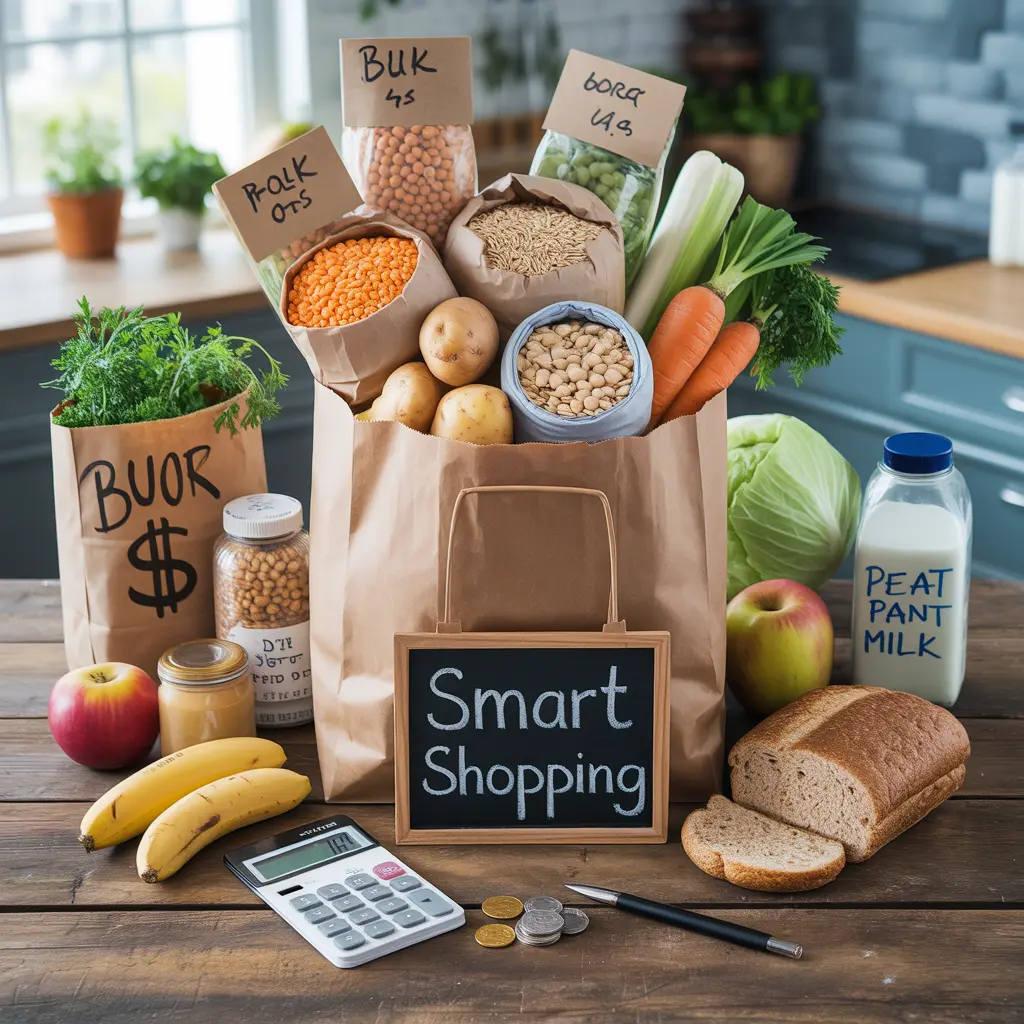
⚡ TL;DR: The Chef’s Grocery Hacks at a Glance
- Professional kitchens feed hundreds of people daily at a fraction of the cost most home cooks spend per person. The strategies that make this possible are not exclusive to commercial operations. Every single one transfers directly to a home vegan kitchen.
- The single biggest money mistake in vegan grocery shopping is buying convenience and processing. Every processing step between a raw ingredient and your shopping basket adds cost. A can of chickpeas costs twice the equivalent dried chickpeas. Spiralised courgette costs four times the whole courgette. Pre-washed bagged spinach costs three times loose bulk spinach.
- Buying protein from whole legumes and seeds rather than processed vegan products reduces protein cost by 60 to 80%. A gram of protein from lentils costs approximately 4 cents. The same gram from a vegan protein bar costs approximately 40 cents.
- Seasonal, local produce costs 30 to 70% less than out-of-season imported equivalents and is nutritionally superior at the point of purchase due to shorter time between harvest and consumption.
- The freezer is a professional kitchen’s most powerful financial tool. Strategic freezing eliminates food waste, extends purchasing power, and allows bulk buying at reduced unit cost.
- An organised pantry built around 12 high-value staples eliminates 80% of emergency purchases, the most expensive grocery behaviour pattern of all.
Chef’s Secret Vegan Grocery Hacks: Save 30% on Your Plant-Based Food Bill
There is a persistent myth that eating plant-based is expensive. Walk through a supermarket and compare the price of a packet of vegan sausages against a kilo of dried lentils. Read about a fashionable new vegan protein supplement. Browse the specialty aisle with its imported freekeh and activated charcoal tonics and $12 cashew cheese. The myth has supporting evidence if you shop the wrong way.
But here is what twenty years of running professional kitchens across Lebanon, Dubai, and Saudi Arabia taught me about the actual economics of plant-based cooking: the vegan diet is, at its nutritional foundation, the cheapest way to feed people well that exists. Dried lentils, chickpeas, whole grains, seasonal vegetables, and tahini are the nutritional and financial backbone of Levantine food culture, a cuisine that has sustained populations at minimal cost for millennia. The expensive version of plant-based eating is a modern retail construction. The original is extraordinarily affordable.
The Protein Cost Analysis: Where Most Vegans Overspend
💰 Cost Per Gram of Protein: The Number That Changes Everything
The most useful financial metric in vegan grocery shopping is not cost per kilogram of food. It is cost per gram of protein delivered. This single number exposes the extraordinary price premium that processing, branding, and convenience packaging adds to nutritionally equivalent protein sources.
Cost per 10g Protein: A Professional Kitchen Analysis
Prices are approximate market averages. The ranking principle holds across most markets globally even when absolute prices vary.
The data makes the economics of vegan eating transparent. Dried lentils deliver protein at 75 times lower cost than a specialty vegan meat product, and at 8 to 10 times lower cost than the canned equivalent of the same legume. Every processing step adds cost without adding nutritional value. In a professional kitchen, we call this the “value-add penalty”: you are paying for labour, packaging, branding, and distribution that adds nothing to the amino acid profile in the food.
✅ Low Cost Vegan Protein (Under $0.20 per 10g)
- Dried red lentils: cook in 15 minutes, batch-cook Sunday
- Dried chickpeas: soak overnight, batch-cook, freeze portions
- Dried black beans, kidney beans, white beans
- Rolled oats: bulk buy, use for 3 to 4 weeks
- Split peas: no soaking required, 20-minute cook time
- Nutritional yeast: long shelf life, 8g protein per 2 tablespoons
⚠️ High Cost Vegan Protein (Over $1.00 per 10g)
- Vegan protein bars and shakes
- Specialty vegan “meat” and “fish” alternatives
- Pre-made vegan cheese products
- Premium powdered plant protein supplements
- Branded ready-made hummus and dips
- Pre-marinated, pre-seasoned tofu products

+ Grocery List
12 Professional Kitchen Grocery Hacks for Vegan Home Cooks
🫘 Hack 1: The Dried Legume System
In every professional kitchen I have managed, dried legumes are purchased in 25kg sacks and batch-cooked in large stockpots twice a week. The cost difference between dried and canned is not marginal. A 500g bag of dried chickpeas produces approximately 1.2kg of cooked chickpeas, equivalent to 4 to 5 cans of ready-cooked chickpeas, at less than 30% of the combined canned price.
The home kitchen implementation:
- Buy one 1kg bag each of red lentils, green lentils, chickpeas, and black beans monthly. Total spend: approximately $8 to $12 for a month’s legume protein supply for one to two people.
- Soak chickpeas and black beans overnight. Red lentils and split peas require no soaking.
- Cook one large batch of each variety on Sunday (or any free day). Each batch takes 20 to 45 minutes of simmering with minimal supervision.
- Portion into 200g servings, refrigerate what you will use in 4 to 5 days, freeze the rest in labelled containers.
- Result: ready-to-use legumes throughout the week at 60 to 70% lower cost than canned equivalents. Red lentils are the exception: they cook in 15 minutes from dry without soaking, making on-demand cooking practical and batch cooking optional.
🌾 Hack 2: Whole Grain Bulk Buying
Grains bought in 1 to 5kg quantities cost dramatically less per kilogram than the same grains in standard 500g retail packets. The price difference is almost entirely packaging, distribution costs, and retail margin on the smaller format. Bulk bin sections in health food stores and online suppliers deliver the same product at substantially lower unit cost.
The professional kitchen principle: buy your three staple grains in the largest practical quantity and store properly. Properly means an airtight container in a cool, dark cupboard or freezer for longer storage. Oats, brown rice, and quinoa stored this way maintain quality for 6 to 12 months. Most home cooks consume these within 2 to 3 months, making quality degradation irrelevant.
🥬 Hack 3: The Seasonal Produce Principle
No professional kitchen buys asparagus in December or butternut squash in June. The price premium for out-of-season produce is substantial, the quality is inferior due to long transit and cold storage, and the nutritional value is lower because vitamins degrade with time after harvest. In contrast, seasonal produce at its peak represents the intersection of maximum nutrition, maximum flavour, and minimum cost.
The financial argument is compelling. In-season courgettes (August to September) cost approximately 30 to 40% of the price of the same courgettes in February, which have been cold-stored or flown from southern hemisphere markets. The nutritional difference is equally significant: research shows vitamin C content in freshly harvested vegetables can be 20 to 40% higher than the same vegetables after 7 to 10 days of cold storage and transit.
The practical rule: identify the cheapest vegetables in the produce section of your supermarket each week. These are invariably the ones in peak local season. Buy these in abundance. Build your weekly meals around what is cheapest at that moment, not around a fixed weekly menu that demands specific ingredients regardless of their seasonal status.
❄️ Hack 4: The Professional Freezer System
Food waste is the silent tax on every home grocery budget. The average household wastes approximately 30% of purchased food, representing a 30% premium paid on every weekly shop for food that is never eaten. In professional kitchens, the standard is waste under 3 to 5% of purchased food. The primary tool that achieves this is systematic, intelligent use of the freezer as a production asset rather than a storage overflow.
What belongs in a professional vegan freezer and why:
- Cooked legumes in 200g portions: batch-cooked chickpeas and beans freeze perfectly for 3 months. Label with contents and date. Reheat from frozen in 5 minutes. This eliminates the financial argument for canned legumes entirely once the batch-cooking habit is established.
- Ripe bananas: never discard a browning banana. Peel and freeze. They become natural sweetener for smoothies, energy balls, and porridge at zero additional cost.
- Bread: slice an entire loaf the day you buy it and freeze. Defrost individual slices as needed. A loaf bought on offer lasts weeks rather than days. Bread waste is among the most common and most avoidable household food cost losses.
- Ginger and turmeric root: freeze whole. Grate directly from frozen onto dishes. Frozen ginger grates more finely than fresh and lasts months, eliminating the waste of fresh ginger that softens and molds in the fridge before the whole root is used.
- Herbs: when fresh herb bunches are at risk of wilting, blend with olive oil and freeze in ice cube trays. Each cube is one portion of herb-infused oil ready to drop directly into soups, sauces, and stir-fries. Zero waste, maximum flavour, fraction of the cost of fresh herbs on demand.
- Cooked grains: cook double quantities of rice, quinoa, or barley and freeze half in single-serving portions. Never pay for ready-to-heat grain pouches when homemade frozen portions reheat identically in 3 minutes.
🏪 Hack 5: The Shop Hierarchy: Where to Buy What
Professional kitchens use multiple suppliers for different categories because no single supplier is best value across all categories. The same principle applied to home vegan shopping produces significant savings with minimal additional effort:
- Middle Eastern and South Asian grocery stores: the single most valuable vegan grocery channel available. Tahini at 40 to 60% of supermarket price. Dried legumes at bulk prices. Spices sold loose or in large bags at a fraction of branded small-jar supermarket prices. Pomegranate molasses, dried limes, freekeh, sumac, za’atar, and every Levantine pantry staple at authentic prices rather than specialty food premium prices.
- Frozen aisle at mainstream supermarkets: frozen spinach, frozen peas, frozen corn, frozen edamame, and frozen berries at consistently lower prices than fresh equivalents with zero waste risk. The nutritional equivalence of frozen to fresh vegetables (often superior due to immediate freezing after harvest) is well-established in the research literature.
- Discount supermarkets: for staples that are standardised commodities (oats, brown rice, canned tomatoes, olive oil, pasta), discount supermarkets deliver equivalent nutritional value at significantly lower cost than mainstream branded equivalents.
- Online bulk suppliers: hemp seeds, chia seeds, ground flaxseeds, nutritional yeast, and specialty grains cost 30 to 50% less per kilogram through online bulk suppliers than supermarket shelf prices. These are non-perishable items where bulk purchasing is entirely practical.
🫙 Hack 6: Make Your Own Foundational Sauces
Hummus is the most dramatic example. A 200g tub of supermarket hummus costs approximately 5 to 7 times the ingredient cost of making the same quantity at home. More importantly, restaurant-quality hummus cannot be purchased from a supermarket at any price: the preparation technique (peeled chickpeas, 3-minute blending) that produces silk-smooth restaurant hummus is a process, not an ingredient list.
100g tahini · Juice of 1 lemon · 1 small garlic clove, minced · 80 to 100ml cold water · Pinch of salt. Whisk tahini and lemon together (the mixture will seize: this is correct). Add cold water tablespoon by tablespoon, whisking until the sauce flows smoothly. Taste and adjust. Refrigerates 7 days. Dresses every salad, bowl, and vegetable dish for the week. Cost: approximately $0.60 for the full batch versus $4.50 for a jar of branded tahini dressing with inferior ingredients and stabilisers added.
The five sauces every vegan home kitchen should always have ready:
- Tahini-lemon sauce: 5 minutes, $0.60, dresses everything for the week
- Miso-ginger dressing: 3 minutes, $0.45, covers all Asian-format meals
- Spiced tomato base: 15 minutes, $1.20 for a 500ml batch (shakshuka, pasta, dal base)
- Avocado-lime cream: 3 minutes, $1.00, replaces sour cream and mayonnaise in all formats
- Roasted garlic and herb oil: 25 minutes (mostly passive oven time), $0.80, finishing oil for breads, bowls, and pasta
🧅 Hack 7: The Flavour Base Investment
In professional Levantine kitchens, the flavour of a dish is built from the first three minutes of cooking, not from expensive ingredients added later. The aromatics, the combination of onion, garlic, and spices cooked in oil until fragrant and caramelised, create the flavour platform onto which everything else is added.
Onions and garlic are among the cheapest vegetables available per kilogram and among the most flavourfully powerful. A meal built on a well-developed aromatics base of $0.40 of onion, garlic, and cumin outperforms a meal with expensive ingredients added to an undeveloped flavour foundation. Professional chefs understand that technique applied to cheap ingredients produces better food than expensive ingredients applied with poor technique. The financial implication: invest in spices, not in expensive processed ingredients.
A basic spice collection (cumin, coriander, turmeric, smoked paprika, cinnamon, allspice, black pepper, and dried chilli) costs approximately $15 to $25 to build from scratch but lasts 6 to 12 months at daily use and transforms every cheap legume, grain, and vegetable into genuinely satisfying, complex food. The ROI on a spice cabinet is extraordinary and completely invisible to most home cooks.
🥕 Hack 8: Buy the Ugly Produce
Wonky vegetables, misshapen carrots, twin tomatoes, oversized courgettes, and undersized onions are nutritionally identical to cosmetically perfect equivalents. The price difference, 20 to 40% in most markets, is entirely determined by supermarket grading standards driven by customer preference for uniformity rather than any quality measure.
In professional kitchens, irregular produce is actively preferred when cutting vegetables for soups, stews, and sauces because it does not matter what a carrot looks like when it is diced. The only context where regular shaped produce matters is whole presentation plates where visual consistency affects the finished dish’s appearance. For 95% of home vegan cooking (soups, curries, stir-fries, stews, smoothies, and baked dishes), the shape of the vegetable before cutting is irrelevant.
🌿 Hack 9: Grow the Three Most Expensive Herbs
Fresh flat-leaf parsley, mint, and coriander (cilantro) are the three herbs most frequently called for in vegan cooking, particularly in Levantine and Middle Eastern dishes. They are also among the fastest-wilting produce items in any grocery basket: a bunch of parsley bought Monday is often composted by Friday.
A small windowsill pot of each of these three herbs, started from seed or small plant at approximately $3 to $5 each, provides an indefinitely self-renewing supply at zero ongoing cost. Mint in particular is aggressively vigorous and will provide more than any household can use from a single pot, indefinitely. Parsley grown from seed produces a full usable plant within 6 to 8 weeks and persists through cutting. The one-time investment of $10 to $15 in herb pots eliminates herb purchasing costs permanently for a household that uses these herbs regularly.
📦 Hack 10: The Case Purchase Strategy
Professional kitchens buy all non-perishable high-consumption items by the case (typically 6 or 12 units). The unit price reduction is typically 10 to 25% and the transaction cost (time and travel per purchase) falls to near zero for the items bought in this way. The items worth buying by the case in a vegan kitchen are those consumed consistently in meaningful quantities:
- Canned tomatoes (12 tins): the backbone of every stew, sauce, and soup base. Buy the best quality available in case quantities. The difference between cheap canned tomatoes and better-quality ones is significant in final dish quality.
- Olive oil (3 to 5 litres): buy the largest practical format from a reputable producer. Per-litre price falls dramatically at 3 to 5 litre purchases compared to 500ml bottles.
- Tahini (3 to 6 jars): shop from Middle Eastern grocery stores or online at near-restaurant pricing. A 1kg jar of tahini from a Middle Eastern supplier costs 40 to 60% of the equivalent weight from a specialty food retailer.
- Nutritional yeast (1 to 2 large tubs): price per 100g falls by 30 to 40% in 250g or 500g formats compared to 100g packets.
🔢 Hack 11: The Protein Stack Shopping Mentality
The single most transformative mental shift for vegan grocery efficiency is planning meals by protein grams needed and then choosing the cheapest sources to deliver that total, rather than shopping by recipe ingredient lists that may default to expensive protein formats.
If a meal needs 30g of protein, the cheapest combination might be 150g cooked chickpeas (12g, from dried batch) + 3 tablespoons nutritional yeast (8g) + 2 tablespoons hemp seeds (7g) + 100g cooked lentils (9g). Total protein cost: approximately $0.50. The same 30g from a vegan chicken alternative product: approximately $3.50 to $4.50 per serving. The nutritional outcome is virtually identical. The economic outcome is radically different.
📋 Hack 12: The Written Weekly Shopping List Without Exceptions
Research on consumer grocery behaviour consistently finds that unplanned purchases represent 15 to 25% of the average grocery bill. The supermarket environment is explicitly engineered to maximise impulse purchases through product placement, promotional displays, and sensory cues including smell (fresh-baked goods near the entrance) and visual anchoring (promotional items at eye level).
The professional kitchen equivalent of discipline is the purchase order: a detailed, itemised list of exactly what is needed with quantities specified before any contact with a supplier. Nothing is bought outside this list without an explicit decision and justification. Applied at home: write the shopping list before leaving, based on a planned menu for the week. Shop exclusively from this list. The savings compound over time because list-based shopping also prevents redundant purchases of items already in the pantry and reduces the “what should I cook?” emergency purchases that produce the most expensive grocery decisions.
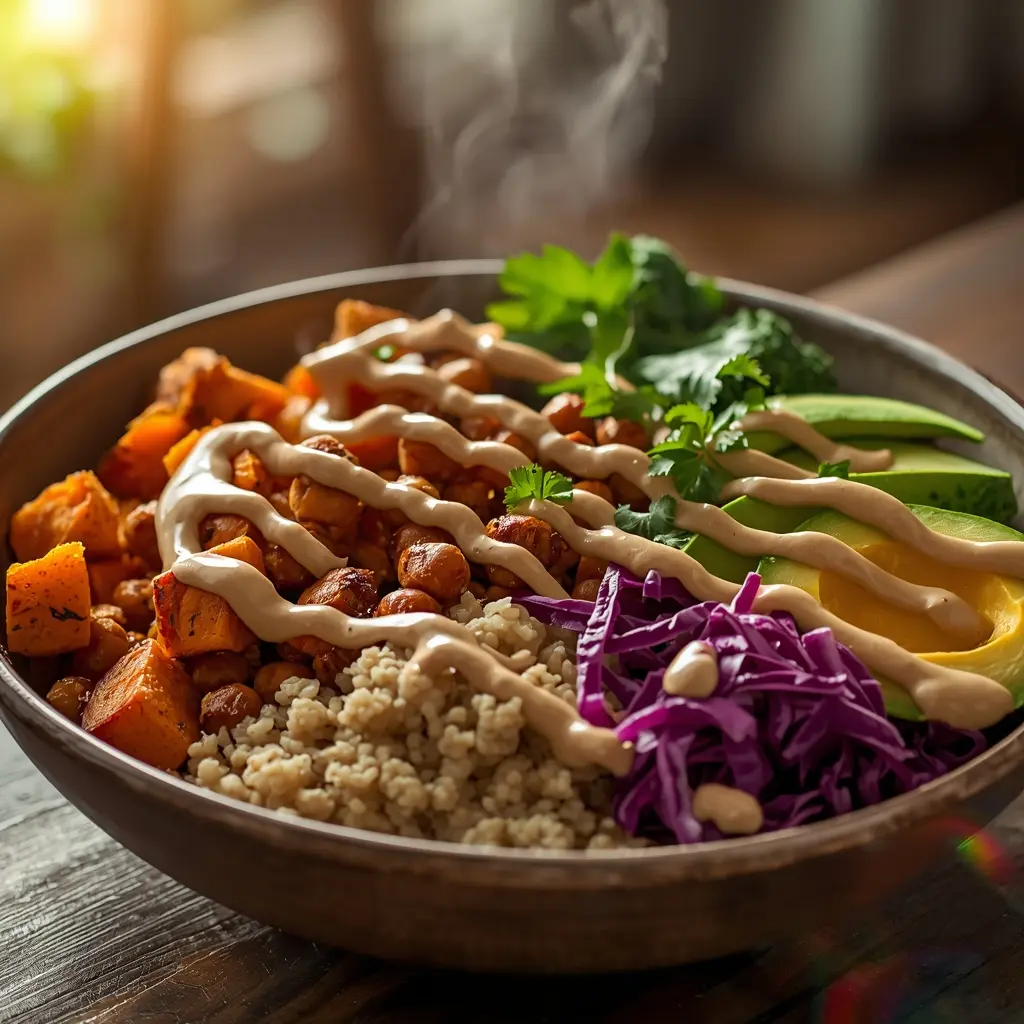
28-Day Vegan Meal Plan + Grocery list.
Transform your lifestyle with our comprehensive guide. This isn’t just a recipe book; it’s a complete system designed for success:
- The Vegan Guide: Essential transition tips and nutritional benefits.
- 40+ Chef Recipes: Breakfast, lunch, and dinner with high-quality photos.
- 4-Week Meal Plan: A fully structured day-by-day calendar.
- Grocery Lists: Categorized weekly lists to save you time and money.
- Photos: High-Quality Recipe Photos.
- Nutritions: Vegan Nutrition Guide Toolkit.
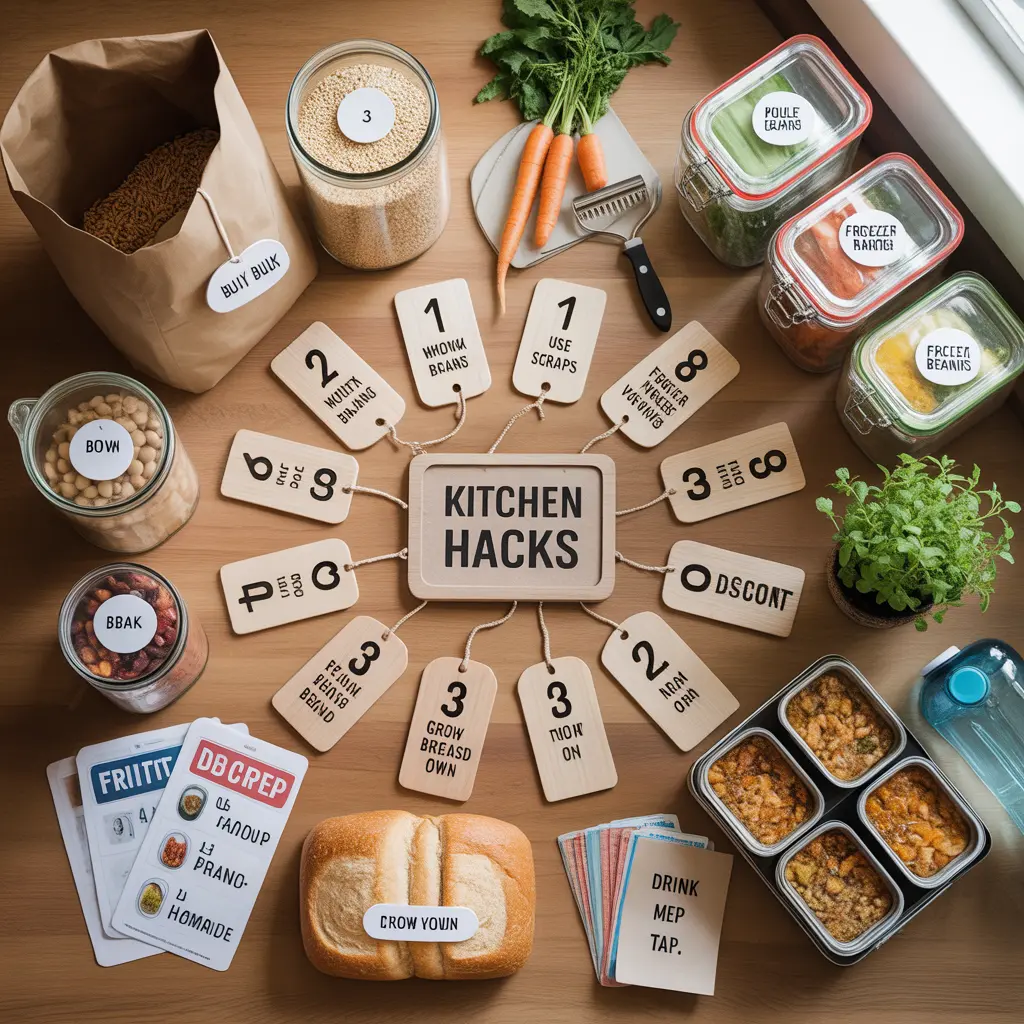
The 20-Item Vegan Pantry That Eliminates Emergency Shopping
Emergency purchases, buying food on the way home because “there is nothing in the house,” are among the most expensive grocery behaviours. They produce convenience food purchases, takeaway decisions, or small-quantity supermarket buys at full unit price. A well-stocked pantry of 20 items eliminates the conditions that trigger emergency purchases by ensuring that a nutritionally complete, genuinely satisfying meal is always achievable without leaving the house.
The Seasonal Buying Calendar: When to Buy What
Seasonal produce availability varies by climate and hemisphere. The principle below applies globally with local calendar adjustments. In every case, the cheapest and most nutritious produce is what is in season locally at the time of purchase.
🌱 Spring (March to May)
Buy in abundance: asparagus, spring onions, peas, new potatoes, spinach, purple sprouting broccoli, radishes.
Buy frozen: courgettes, peppers, aubergine (expensive and out of season).
Chef note: Spring peas eaten fresh or lightly blanched have remarkable sweetness and flavour that frozen peas, excellent as they are for cooking, cannot replicate. This is one of the rare cases where seasonal fresh genuinely outperforms frozen.
☀️ Summer (June to August)
Buy in abundance: courgettes, aubergines, tomatoes, peppers, cucumber, corn, green beans, basil, berries of all kinds.
Freeze for winter: berries (highest polyphenol content at peak season), roasted red peppers, blanched corn.
Chef note: Summer tomatoes, bought at the height of the season and slow-roasted, produce a flavour depth that canned tomatoes cannot match. Freeze slow-roasted tomato batches for use through winter.
🍂 Autumn (September to November)
Buy in abundance: butternut squash, pumpkin, apples, pears, kale, Brussels sprouts, parsnips, beetroot, leeks, mushrooms.
Preserve: make large batches of soup from autumn squash and freeze. Make apple sauce from bulk autumn apples at a fraction of the cost of jarred versions.
Chef note: Autumn is the best season for legume soups. Lentil and leek soup, chickpea and butternut squash stew, and black bean and roasted pumpkin bowls are all at their most affordable and most flavourful simultaneously.
❄️ Winter (December to February)
Buy in abundance: kale, bok choy, cabbage, carrots, celeriac, turnips, swede, citrus fruits, Jerusalem artichokes.
Rely heavily on: dried legumes, frozen vegetables, canned tomatoes, and root vegetables for maximum budget efficiency.
Chef note: Winter is the season of the legume stew. Red lentil dal, chickpea harira, white bean and kale ribollita: these are not compromises for budget eating. They are the most nutritionally dense, flavourfully complex meals available at any budget level, and they are winter’s gift to the vegan cook.
The Freezer Strategy: Your Most Underused Financial Asset
🧊 The Professional Kitchen Freezer Philosophy
In a professional kitchen, the freezer is a production tool, not a storage facility for things that will eventually be thrown away. Every item that enters a professional freezer has a specific purpose, a known use timeline, and a label with its contents and date. This discipline transforms the freezer from a graveyard of forgotten leftovers into a financial asset that extends the purchasing power of every shopping trip.
- Label everything. Contents and date, every time, without exception. An unlabelled container is a liability, not an asset. By the time uncertainty about contents causes hesitation, the window for use is usually closed and waste occurs anyway.
- FIFO: First In, First Out. New items go to the back. Items closest to their freeze date come to the front and are used first. This simple discipline reduces freezer losses to near zero in professional kitchens and works identically at home.
- Freeze at peak quality, not at crisis point. Freeze produce, bread, and cooked food at its best, not when it is about to go bad. Freezing deteriorating food produces inferior frozen food. Freezing food at its peak produces frozen food equivalent to fresh.
+ Grocery List
📋 The Optimal Vegan Freezer Contents List
- Cooked legumes (200g portions, labelled): chickpeas, black beans, white beans. 3-month shelf life. Reheat from frozen in 5 minutes in microwave or 8 minutes in saucepan.
- Cooked grains (single-serving portions): brown rice, quinoa, freekeh. Reheat from frozen in 3 minutes. Eliminates the argument for expensive ready-to-heat grain packets.
- Ripe bananas (peeled): use in smoothies, oat porridge, or as natural sweetener in baking. Never throw away a browning banana again.
- Sliced bread: buy 2 loaves when on offer, slice both, freeze one. Defrost individual slices in 30 seconds.
- Herb oil cubes: fresh parsley, coriander, basil blended with olive oil and frozen in ice cube trays. Each cube replaces a fresh herb bunch in most cooking applications.
- Ginger and turmeric root: grate directly from frozen. Lasts 3 months. No waste, no mould, fine-grade grating produces better texture than thawed ginger.
- Large batch soups and stews: every soup or stew recipe doubled and half frozen in individual portions. A 30-minute cooking investment produces 6 to 8 ready meals. The most time and cost-efficient cooking strategy available.
- Opened coconut milk: when a recipe uses half a can of coconut milk, freeze the remainder in an ice cube tray. Never pour half a tin of coconut milk down the drain.
- Summer berries: when in peak season and cheapest, buy large quantities and freeze immediately. Winter smoothies from summer berries at summer prices.
The Optimised Weekly Vegan Shop: A Real Example With Costs
This example is calibrated for one to two people eating three nutritionally complete vegan meals daily. Prices reflect approximate UK/European market averages at time of writing. The structure and savings principles apply globally.
🛒 The Optimised Weekly Shop (estimated $45 to $55 for two people)
- 400g firm tofu: $1.50 to $2.00
- 500g dry red lentils: $1.20 (covers 4 to 5 meals)
- 1 bag frozen edamame (500g): $2.50
- 100g hemp seeds: $2.50 to $3.00
- Note: dried chickpeas and black beans come from the monthly pantry batch, not weekly shopping
- 2 bags of kale or bok choy: $3.00 to $4.00
- Seasonal vegetables of choice (whatever is cheapest that week): $5.00 to $6.00
- Large bag of onions (1kg): $1.50
- Garlic bulb (or bag): $0.80
- Broccoli (2 heads): $2.00
- Brown rice (1kg, own-brand): $1.50
- Wholemeal pasta (500g): $1.20
- Oats (1kg, own-brand rolled): $1.50
- Note: quinoa and specialty grains from monthly pantry batch
- Canned tomatoes (×4): $2.50
- Fortified soy milk (1 to 2 cartons): $2.50 to $4.00
- Nutritional yeast (if running low): $3.50 per 100g bag
- Lemons (bag of 5 to 6): $1.50
- Fresh ginger root (large piece, then freeze remainder): $0.80
- Avocados (×4, ripe or 2 to 3 day ripening): $3.00 to $4.00
- Frozen berries (500g bag, if smoothies planned): $3.00
- Frozen peas or spinach: $2.00 to $3.00
Reference Tables
Vegan Protein Sources: Cost per 10g Protein and Shelf Life
Where to Buy Vegan Staples: Price Channel Comparison
5 Expensive Habits That Drain Vegan Grocery Budgets
❌ Habit 1: Buying All Proteins From Specialty Vegan Product Ranges
Vegan meat alternatives, vegan cheese, and branded plant-based protein products exist at a premium because they are solving a specific problem (replicating animal food textures and formats) using expensive ingredients, sophisticated processing, and heavy marketing spend. That premium is legitimate for occasional use. As everyday protein sources, they represent extraordinary financial waste compared to whole legume and tofu-based alternatives delivering identical or superior nutrition at 10 to 50 times lower cost per gram of protein. The professional kitchen never builds a menu around expensive processed proteins as the primary protein source for the same reason.
❌ Habit 2: Shopping Without a List
Unplanned grocery shopping is the most expensive grocery behaviour pattern available. Without a list anchored to a planned weekly menu, every shopping trip is exposed to the full suite of supermarket impulse purchase engineering: end-of-aisle promotions, multi-buy offers on items not needed, sensory triggers from baked goods and hot food sections, and the premium convenience products placed at eye level for exactly the moment when decision fatigue strikes. A written list prepared from a planned weekly menu, and followed without deviation, eliminates this entire category of cost. The 10 minutes of planning saves far more than the time cost in weekly shopping bills.
❌ Habit 3: Throwing Away Produce That Could Be Frozen
The moment when produce transitions from “fresh” to “going off” is the signal to freeze, not to discard. Ripe bananas, soft avocados (blend and freeze), wilting herbs (blend with oil and freeze in cubes), surplus cooked legumes, opened coconut milk, and half-used tomato paste (freeze in tablespoon portions) are all freezable at the point they would otherwise be wasted. Food thrown in the bin is money thrown in the bin. The professional kitchen zero-waste mentality applied to home cooking reduces the effective cost of every shopping trip by the percentage of purchased food that is currently being discarded.
❌ Habit 4: Buying Spices in Small Supermarket Jars
Supermarket spice jars typically contain 30 to 50g of spice at a price that represents the highest cost-per-gram format available for any dry ingredient. The same cumin, coriander, turmeric, smoked paprika, and cinnamon available in a Middle Eastern grocery store in 100g to 500g bags costs 60 to 80% less per gram and is often fresher due to higher stock turnover. A single trip to a Middle Eastern grocery store to stock the spice collection costs $15 to $25 and lasts 6 to 12 months for a household cooking vegan food daily. The financial and culinary return on this single purchase is among the highest available in the home kitchen.
❌ Habit 5: Buying Out-of-Season Produce at Premium Prices
Loyalty to specific recipes regardless of seasonal ingredient availability is one of the most reliable ways to overspend on produce. A recipe that calls for asparagus in December, cherry tomatoes in January, or fresh basil in February is demanding out-of-season imported produce at a significant price premium and inferior quality. The professional kitchen approach inverts this: identify what is cheapest and best quality each week (invariably the seasonal produce) and build meals around it. This demands flexibility and a repertoire of adaptable recipes rather than fixed weekly menus, but it consistently reduces produce costs by 30 to 50% annually without any reduction in nutritional quality or variety. Seasonal eating is not a compromise. It is the original and most economically intelligent approach to vegetables.
Frequently Asked Questions About Vegan Grocery Shopping
Is a vegan diet actually cheaper than eating meat?
A plant-based diet built around whole dried legumes, whole grains, seasonal vegetables, and home-prepared sauces is significantly cheaper than any diet built around animal proteins as the primary protein source. Research from the University of Oxford found that plant-based diets cost an average of 33% less than omnivorous diets in high-income countries. The confusion about vegan food being expensive arises from comparing premium specialty vegan products to generic animal products, rather than comparing equivalent-quality whole food sources. Dried lentils versus conventional ground beef is not a close comparison. Dried lentils win comprehensively on cost per gram of protein, cost per meal, and cost per nutritional density unit.
What are the cheapest vegan protein sources?
The cheapest vegan protein sources by cost per 10g of protein are dried red lentils (~$0.04), dried chickpeas and black beans (~$0.05 to $0.06), rolled oats (~$0.07), and split peas (~$0.05). Nutritional yeast at ~$0.15 per 10g is excellent value given its B12 fortification alongside the protein. Firm tofu at ~$0.22 per 10g is excellent value for a complete protein source. Hemp seeds at ~$0.45 per 10g are the most expensive regular vegan protein but justify the cost through their unique complete amino acid profile, omega-3 content, and zinc delivery in a single sprinkle-on format.
Where is the best place to buy vegan staples cheaply?
Middle Eastern and South Asian grocery stores are the single best-value channel for tahini, dried legumes, spices, pomegranate molasses, and many whole grains. Prices typically run 40 to 70% below equivalent supermarket prices because these stores serve communities where these are everyday staples rather than specialty items. Online bulk suppliers are the best channel for hemp seeds, nutritional yeast, chia seeds, and ground flaxseeds. Discount supermarket own-brand ranges are the best channel for oats, brown rice, pasta, canned tomatoes, and olive oil in practical quantities.
How do I reduce vegan food waste?
The three highest-impact anti-waste strategies for a vegan kitchen are: the freezer-first policy (when produce approaches the end of its useful fresh life, freeze immediately rather than waiting until it is past saving), batch cooking on a weekly schedule (cook larger quantities than needed immediately and refrigerate or freeze the surplus), and building a 20-item pantry of non-perishables that provides a complete meal base regardless of what fresh produce is in the fridge. A well-stocked pantry of dried legumes, whole grains, canned tomatoes, and spices means the answer to “there is nothing to eat” is never accurate, which eliminates the emergency purchases and food waste that arise from genuinely empty kitchens.
Is it worth making your own hummus?
Yes, overwhelmingly. The ingredient cost of homemade hummus is approximately 80 to 90% lower than equivalent supermarket hummus, and the quality ceiling of homemade hummus using properly prepared chickpeas and the correct technique exceeds anything purchasable at supermarket prices. The key technique markers: soak dried chickpeas overnight, cook until very soft, peel the skins (rub cooled chickpeas in water, the skins float off), blend with tahini for 3 full minutes minimum in a high-speed blender, add cold water gradually while blending. The result is fundamentally different from commercial hummus in texture. This technique has been standard in Lebanese restaurant kitchens for decades and is the most direct application of professional kitchen method to home cooking available.
How can I save money on vegetables without sacrificing nutrition?
Buy seasonally (30 to 70% cheaper than out-of-season), buy frozen for cooking applications (nutritionally equivalent to fresh, no waste risk, consistently cheaper), buy whole rather than pre-cut (50 to 70% cheaper per kilogram with minimal additional preparation time), buy from produce markets or independent greengrocers rather than supermarkets where possible (10 to 30% lower cost for equivalent quality), and grow the three highest-cost fresh herbs (parsley, coriander, mint) on a windowsill to eliminate herb purchasing entirely after a $10 to $15 one-time setup cost.
Should I buy organic vegan food?
The evidence on organic versus conventional produce for nutritional value is mixed and the premium is significant (30 to 100% over conventional). From a budget-efficiency standpoint, organic produce at the cost of significantly reduced overall food diversity and quantity is a poor trade-off. The produce with the highest pesticide residue concerns are the thin-skinned items in the “dirty dozen” list (strawberries, spinach, peppers, apples). For these specific items, organic may be worth the premium for those with concerns. For thick-skinned vegetables (onions, avocados, sweet potato), the organic premium produces minimal practical benefit. A budget used for more diverse seasonal conventional produce will produce better health outcomes than the same budget spent on a narrower organic range.
How do I build a vegan pantry on a very limited budget?
Build in this order of priority over 4 to 8 weeks. Week 1: dried red lentils, rolled oats, onions, garlic, canned tomatoes, and cumin plus coriander from a Middle Eastern store. This $15 to $20 investment produces complete, nutritious meals daily. Week 2: add tahini (Middle Eastern store), brown rice, and nutritional yeast. Week 3: add frozen edamame, frozen berries, and fortified soy milk for calcium and B12. Week 4: add firm tofu and a block of tempeh. By week 4, a complete, nutritionally robust vegan pantry is in place at a cumulative cost of $50 to $70, producing meals at $1.50 to $2.50 per person per meal.
Is canned or frozen produce as nutritious as fresh?
For most produce categories, yes. Frozen vegetables are harvested at peak nutritional quality and frozen immediately, preserving vitamin and polyphenol content effectively. Research comparing frozen peas to fresh-from-the-pod peas consistently finds that frozen peas have equal or higher vitamin C content, because fresh peas begin degrading immediately after harvest and continue to degrade during transport and retail storage. Canned tomatoes often contain higher lycopene than fresh tomatoes because the processing heat makes lycopene more bioavailable. The exceptions where fresh genuinely outperforms frozen or canned: delicate fresh herbs, fresh seasonal stone fruits at peak ripeness, and certain salad leaves where texture is the primary use case.
What is the most cost-effective way to meal prep for a week?
The most financially efficient meal prep approach is the batch-component method: cook building blocks (a large pot of one or two legume varieties, two batches of grain, a large pot of soup or stew that can form multiple meals) rather than complete separate recipes for each meal. This method uses ingredients in bulk, reduces per-serving time cost dramatically, and produces the lowest cost-per-meal of any preparation approach. A Sunday session of 45 to 60 minutes producing 1.5kg of cooked legumes, 1kg of cooked grain, and one batch of soup covers 80% of the nutritional foundation for the entire week at minimal ingredient cost. For the full system, our vegan meal prep guide covers the complete approach.
How much does a healthy vegan diet actually cost per day?
A nutritionally complete vegan diet built on the principles in this guide, covering three full meals per day with adequate protein, vitamins, and minerals, costs approximately $3 to $5 per person per day in most high-income countries. This compares favourably to the $7 to $12 per day often spent on omnivorous diets of equivalent nutritional quality. The $3 to $5 range assumes: dried legumes rather than canned, bulk grains, seasonal produce, home-made sauces, and strategic use of frozen vegetables. The upper end of the vegan food cost range ($10 to $20 per day) is produced by heavy reliance on specialty vegan processed products, year-round out-of-season organic produce, and frequent ready-made vegan meals, none of which are necessary for excellent nutrition.
Is tempeh worth buying given the cost?
Tempeh at approximately $3 to $5 per 200g block represents $0.20 to $0.25 per 10g of protein, making it good value for a complete plant protein with the fermentation benefits of improved digestibility, reduced phytate content, and GABA production. As an everyday protein source used 3 to 4 times per week, the cost is reasonable for its nutritional profile. As a daily primary protein source in large quantities, the cost adds up significantly. The optimal use of tempeh in a budget-conscious vegan kitchen is as a high-value protein anchor 3 to 4 times per week, complemented by much cheaper dried legume proteins as the daily protein workhorse. This combination delivers the versatility and nutritional benefits of tempeh without making it the dominant budget item.
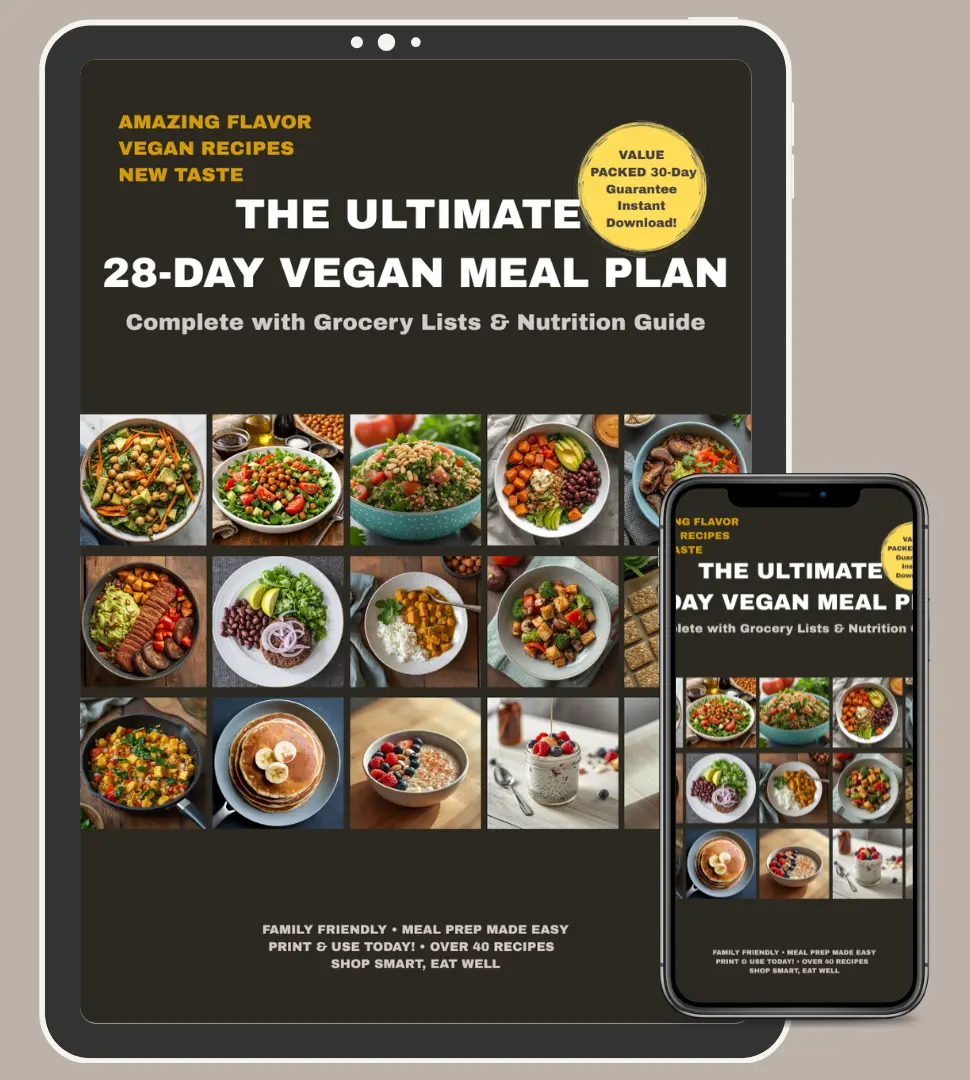
Still spending hours figuring out what to eat?
What’s included in your download
- 40+ nutritionist-approved recipes
- Complete 28-day calendar
- Meets protein, iron & B12 needs
- Family & meal prep friendly
- Vibrant photo for every recipe
- Simple, common ingredients
Instant PDF download. No subscriptions. No waiting.