Disclaimer: This content is for informational purposes only. Protein supplements are not regulated as medicines. If you have kidney disease, liver conditions, or specific medical dietary requirements, consult a registered dietitian before significantly increasing protein supplement intake.
Vegan Protein Powder: The Complete Guide to Plant-Based Protein Supplements
TL;DR
Vegan protein powder is not one product — it is six distinct product categories with meaningfully different amino acid profiles, digestibility scores, taste properties, and use-case fits. Pea protein is the workhorse: high leucine, complete amino acid profile, excellent digestibility, and broadly suitable for muscle building and weight management. Soy protein isolate is the only plant protein whose amino acid profile and DIAAS (digestibility score) rivals whey directly. Hemp protein is the most nutritionally complete whole-food option but has the lowest protein concentration per scoop. Brown rice protein and pea protein combined create a synergistic complete amino acid profile that outperforms either alone. This guide compares all six types by amino acid completeness, leucine content (the key muscle protein synthesis trigger), digestibility score, taste, best use case, and what to look for and avoid on the label.
Why Vegan Protein Powder Is Not the Same as Animal Protein
The fundamental difference between vegan protein powders and whey, casein, or egg protein is at the amino acid level, not the protein content level. Most high-quality vegan protein powders can deliver 20-30g protein per serving — equivalent to whey. The difference is in leucine content and amino acid completeness, both of which directly determine the muscle protein synthesis (MPS) response to each serving.
Leucine is the rate-limiting amino acid for MPS. It functions as the molecular trigger that switches on the mTOR pathway responsible for muscle protein synthesis in skeletal muscle cells. Whey protein contains approximately 10-11% leucine by weight. Pea protein contains 8% leucine. Hemp protein contains 5-6% leucine. This gap matters practically: to trigger equivalent MPS from pea protein versus whey, a larger serving is required, or the serving needs to be timed post-workout when muscle cells are maximally sensitised to even lower leucine concentrations.
What Vegan Protein Powder Does and Does Not Do
Protein supplements in general are food supplements, not performance drugs. They do not build muscle on their own. They provide concentrated protein in a convenient format that makes hitting daily protein targets easier when whole-food protein intake is insufficient from meals alone. For plant-based eaters, the daily protein target of 1.6-2.2g per kg of body weight for active individuals is achievable from whole foods alone — but a protein powder makes the target considerably more practical for people with high protein needs, busy schedules, or poor appetites.
- What it does well: provides 20-30g protein in a 2-minute preparation, convenient post-workout protein timing, boosts daily protein total without significant caloric cost, palatability for people who dislike legumes or struggle with high-fiber protein foods
- What it does not do: replace whole-food protein and its micronutrients, provide the fiber and phytonutrient benefits of legumes, automatically build muscle (training stimulus is required), or work significantly better than an equivalent whole-food protein meal when total daily protein is adequate
- Who benefits most: athletes and bodybuilders with daily protein needs above 150g, people who train early before appetite establishes, vegans transitioning who find whole-food protein volumes difficult, and anyone using a daily 100g protein strategy
The foundational whole-food protein guide — which should always come before supplements in priority — is at the vegan protein sources guide.
The 6 Types of Vegan Protein Powder Compared
Each type of vegan protein powder has a distinct source, amino acid profile, digestibility, taste, and ideal use case. Understanding these differences is the foundation for choosing the right product. The mini-scorecards in each card show ratings out of 10 for completeness (full amino acid profile), leucine (MPS trigger content), digestibility (DIAAS-based), and taste (blendability and palate appeal).
1. Pea Protein Isolate
Source: Yellow split peas, protein-extracted and isolated to 80-90% protein concentration.
The most popular plant protein powder for good reason. High in lysine, arginine, and branched-chain amino acids (BCAAs). Only limiting amino acid is methionine, which is easily supplemented by adding a small amount of hemp or rice protein. The 8% leucine content is high enough to trigger MPS when consumed at 25-30g servings post-workout. Excellent digestibility. Neutral earthy taste that blends well.
2. Soy Protein Isolate
Source: Defatted soy flour, protein-isolated to 90%+ protein concentration.
The only plant protein with a DIAAS score (1.0) that matches whey (1.09). Complete amino acid profile with all nine essential amino acids in adequate ratios. High leucine content (7.5%). Contains isoflavones that have been shown to support cardiovascular health. The myth of soy disrupting testosterone in men is not supported by clinical evidence at normal dietary doses. Best-in-class digestibility among plant proteins.
3. Hemp Protein
Source: Ground hemp seeds, protein content typically 45-60% (lower than isolates).
The most nutritionally holistic plant protein powder. Complete amino acid profile. Contains omega-3 ALA (6g per 30g serving), magnesium (210mg per 30g), and zinc alongside the protein. Lower protein concentration per scoop than isolates, so requires larger serving sizes to hit 25-30g protein. Lowest leucine of the six types. Earthy, nutty flavour that works well in smoothies but poorly in baked goods. Best choice when nutrition completeness matters more than protein concentration.
4. Brown Rice Protein
Source: Brown rice, enzyme-processed to isolate protein to 70-80% concentration.
High in methionine and cysteine — the amino acids that pea protein lacks. Low in lysine. This makes brown rice protein the perfect partner for pea protein: the amino acid profiles are complementary, and a 50/50 blend creates a complete profile that rivals soy. On its own, brown rice protein has a chalky texture and mild grainy taste that does not blend as smoothly as pea isolate. Hypoallergenic: suitable for people with soy, dairy, or legume allergies.
5. Pea + Rice Blend (50:50)
Source: Typically 50% pea isolate + 50% brown rice protein, sometimes with added enzymes.
The gold-standard plant protein formula. Pea’s high lysine fills rice’s lysine gap. Rice’s high methionine fills pea’s methionine gap. The combined amino acid profile at a 50:50 or 60:40 pea:rice ratio matches or exceeds whole egg protein and approaches whey in all essential amino acid ratios. DIAAS of a well-formulated blend is typically 0.9-1.0. Most premium plant protein powders use this base. When in doubt, a pea-rice blend is the best default choice for muscle building on a vegan diet.
6. Quinoa / Multi-Blend Proteins
Source: Quinoa, chia, sacha inchi, pumpkin seed, or multi-source blends.
Quinoa protein is technically complete (all nine essential amino acids) but low in overall protein concentration and leucine. Sacha inchi is notable for its omega-3 content alongside protein. Multi-source blends combining four or more plant proteins can achieve excellent amino acid completeness and digestibility when well-formulated. More expensive per gram of protein. Often chosen for their additional micronutrient contributions rather than pure protein performance. Best for nutrition diversity rather than pure muscle protein synthesis efficiency.
Ultimate 28-Day Vegan Meal Plan
+ Easy Grocery List & 40+ Recipes
The complete done-for-you plant-based nutrition system
Amino Acid Completeness and Leucine Content Ranked
The charts below rank vegan protein powders by the two metrics that matter most for muscle protein synthesis: overall essential amino acid completeness (DIAAS score relative to whey reference) and leucine content as a percentage of protein weight.
The Leucine Threshold in Practice
To trigger maximal muscle protein synthesis, approximately 2.5-3g of leucine is required per dose. This means:
- Whey: 25g protein delivers 2.75g leucine. Standard one-scoop serving triggers MPS optimally.
- Pea protein (8% leucine): 30g protein delivers 2.4g leucine — close but slightly below optimal. 35g protein (1.2 scoops) delivers 2.8g leucine and triggers MPS fully.
- Hemp protein (5.5% leucine): 30g protein delivers only 1.65g leucine. Requires approximately 50g protein (double scoop) to approach the MPS threshold. Better used as a nutritional supplement than a post-workout MPS trigger.
- Pea + Rice blend: 30g protein at 7.8% leucine delivers 2.34g leucine. 32g protein (slightly more than one standard scoop) crosses the threshold. Practical difference from whey is minimal at reasonable serving sizes.
The practical implication: for post-workout muscle protein synthesis specifically, pea isolate, pea-rice blend, and soy isolate all perform adequately at 30-35g serving sizes. Hemp and quinoa-based proteins require larger servings to trigger equivalent MPS. The full muscle-building framework for plant-based athletes is at the vegan bodybuilding guide.
How to Read a Vegan Protein Powder Label
The label on a vegan protein powder contains everything you need to evaluate its quality — and several things manufacturers use to make inferior products look equivalent to better ones. Knowing what to look for, what to check, and what to avoid cuts through marketing claims to the actual product quality.
Look For
- Protein per 100g: above 70g for isolates, 60g+ for hemp. If it looks high per scoop but the scoop is 50g+, calculate per 100g.
- Leucine listed: quality brands list amino acid profiles. Minimum 7%+ leucine for MPS adequacy.
- DIAAS or PDCAAS score: on premium products. Above 0.8 is good, above 0.9 is excellent.
- Short ingredient list: protein source, flavouring, natural sweetener. Nothing else needed.
- Third-party tested: Informed Sport or NSF certified for athletes — confirms no contamination.
Check Carefully
- Serving size manipulation: large serving sizes (50g+) inflate per-serving protein numbers. Always compare per 100g.
- Protein spiking: added amino acids (glycine, taurine, creatine) inflate total protein measurement but are not complete protein. Check if branched-chain or specific amino acids are listed separately.
- Sweetener type: stevia and monk fruit are well-tolerated. Sucralose and aspartame cause GI distress in some people. Avoid if sensitive.
- Added vitamins/minerals: can be useful (B12, D3, iron) but check doses — some are meaninglessly low and present purely for label marketing.
Avoid or Question
- Proprietary blends: “protein matrix” without per-ingredient amounts. You cannot assess quality of an unlisted ratio.
- Heavy metal contamination risk: rice and hemp protein can accumulate arsenic, lead, and cadmium from soil. Choose third-party tested products.
- Artificial flavours and colourings: unnecessary and associated with GI sensitivity in some users.
- Very high serving sizes: 60-80g scoops often indicate low protein concentration being padded with fillers, flavours, and carbohydrates.
- Unverified “complete protein” claims: always verify by checking the actual amino acid profile if listed.
The Ultimate 28-Day Vegan Meal Plan + Grocery List
Everything you need to eat well for a full month — planned, photographed, and ready to print.
- Complete 28-day daily calendar
- 40+ nutritionist-approved recipes
- 4 weekly grocery lists
- Protein, iron & B12 at every meal
- Saves 7+ hours of planning per week
Matching Protein Type to Your Goal
The best vegan protein powder is not the same for everyone. The right choice depends on the primary goal. The pathway below maps each major use case to the protein type that addresses it most effectively.
Goal: Muscle Building and Athletic Performance
Best choice: Pea + Rice blend (50:50) or Soy protein isolate
Prioritise DIAAS score and leucine content. A pea-rice blend at 30-35g per post-workout serving delivers the amino acid completeness and leucine threshold required for maximal MPS. Soy isolate performs equivalently and is slightly easier to digest. Take within 60 minutes post-training. The full framework is at the vegan athletes guide.
- Dose: 30-35g protein per serving, 1-2 servings daily on training days
- Timing: within 60 minutes post-workout + dietary protein to reach daily target
- Daily protein target: 1.6-2.2g per kg body weight
Goal: Weight Loss and Satiety
Best choice: Pea protein isolate (high satiety) or Hemp protein (high fiber + protein combination)
Protein is the most satiating macronutrient. Pea protein specifically has been shown in RCTs to produce satiety equivalent to whey protein despite lower leucine content, making it effective for appetite suppression at lower serving sizes. Hemp protein’s fiber content adds additional satiety benefits that pure isolates do not provide. Use as a meal replacement component in smoothies rather than a pure supplement. See the vegan weight loss plan.
- Dose: 20-25g protein per serving, used to replace one lower-protein meal or snack
- Blend with oats, berries, and ground flaxseed for a complete high-satiety meal
Goal: Nutritional Completeness (Not Performance)
Best choice: Hemp protein or a certified complete multi-blend
If the primary need is boosting daily protein alongside micronutrient intake rather than maximising MPS, hemp protein or a multi-source blend adds omega-3, magnesium, zinc, and fiber alongside protein in a single supplement. This is the nutritionist-preferred choice for people who are not training intensely and need a whole-food-adjacent protein supplement rather than a performance product.
Goal: Allergy-Free or Soy-Free
Best choice: Pea + Rice blend or Hemp protein
Brown rice and pea proteins are hypoallergenic and suitable for people with soy, dairy, gluten, and tree nut allergies. Hemp protein is also broadly hypoallergenic. Verify that the manufacturing facility also processes soy if cross-contamination is a concern. Third-party allergen-free certification is available on some products and worth seeking for people with confirmed allergies.
Goal: Baking and Cooking with Protein Powder
Best choice: Pea protein isolate or Soy protein isolate
Pea and soy protein isolates have neutral enough flavours and the right functional protein characteristics (protein network formation) to work in baked goods. Hemp protein’s strong flavour and high fat content make it poorly suited to baking. Brown rice protein’s chalky texture creates dry, crumbly textures in cakes and breads. For cooking applications including pancakes, protein balls, and energy bars, a flavorless pea protein isolate is the most versatile choice.
The 7 Rules for Choosing a Vegan Protein Powder
Rule 1: Compare Protein per 100g, Not per Serving
Serving sizes vary wildly between products: one brand’s scoop may be 25g, another’s may be 50g. A product delivering 25g protein per 50g scoop has 50g protein per 100g. A product delivering 22g protein per 25g scoop has 88g protein per 100g. The per-100g figure reveals the actual protein concentration and allows meaningful comparison. Look for 70g+ protein per 100g for isolates, 55g+ for hemp. Below these thresholds, a significant portion of the product is fillers, flavours, or carbohydrates.
Rule 2: Choose Third-Party Tested Products
Plant protein powders — particularly rice and hemp — can contain elevated levels of heavy metals (arsenic, cadmium, lead) accumulated from soil during cultivation. These metals are not removed by standard protein extraction processes. Third-party testing by Informed Sport, NSF Certified for Sport, or independent labs like Labdoor verifies both heavy metal safety and that the stated protein content matches the actual content. For regular daily use, third-party certification is not optional — it is the minimum quality standard for any supplement consumed consistently.
Rule 3: For Muscle Building, Prioritise Pea-Rice Blend or Soy
The leucine and DIAAS data in this guide make the performance choice clear: pea-rice blend and soy isolate outperform hemp, quinoa, and multi-blends for post-workout MPS. If muscle building, strength, or athletic recovery is the primary purpose of the supplement, the evidence consistently points to pea-rice blend as the default plant protein for performance. This is confirmed by the clinical studies reviewed at Examine.com. The hemp and multi-blend options are excellent for nutrition but are not optimised for the MPS trigger.
Rule 4: Protein Powder Supplements Whole-Food Protein — It Does Not Replace It
Whole-food protein sources (legumes, tofu, tempeh, edamame, seeds) provide protein alongside fiber, micronutrients, phytochemicals, and resistant starch that powders do not. A supplement that provides 25g protein in a 30g powder is nutritionally narrower than 200g tempeh providing equivalent protein. Protein powder should fill the gap between whole-food protein and daily target — not constitute the majority of daily protein intake. Anyone getting more than 50% of their daily protein from powder rather than whole food is missing the nutritional benefits of whole-plant-protein foods. See the protein powder vs whole food comparison.
Rule 5: Minimise Additives and Sweeteners
The best protein powders contain three to five ingredients: protein source, a natural sweetener (stevia or monk fruit), natural flavouring, and nothing else. Products with ten or more ingredients including gums, artificial sweeteners, colourings, and multiple additives are formulated for palatability and cost efficiency rather than nutritional clarity. Sucralose and aspartame are the most common artificial sweeteners in cheaper protein products and the most commonly associated with GI distress, particularly at high serving frequencies.
Rule 6: Match Timing to Purpose
- Post-workout (within 60 min): fast-absorbing pea or soy isolate, 30-35g protein, no fat or fiber added in the shake (fat slows absorption)
- Morning meal replacement: hemp or blended powder in a smoothie with oats, berries, and ground flaxseed — fiber and fat are appropriate here for satiety
- Before bed: soy protein has slower digestion than pea; a small 20g casein-equivalent effect can be approximated by soy protein shaken in thick plant milk before sleep to support overnight muscle protein synthesis
- General daily top-up: any type is fine — protein timing matters primarily for people training hard, less so for general nutrition
Rule 7: Expect a Taste Adjustment Period
Vegan protein powders have improved dramatically in taste over the past five years, but most people accustomed to whey protein experience a palate adjustment period of 2-3 weeks. The earthy flavours of pea and hemp protein blend well with strong-flavoured additions: cacao powder, banana, dates, nut butter, and vanilla. Unflavoured versions blend more versatilely into savoury contexts like soups and grain bowls. Start with flavoured versions in smoothies during the adjustment period before branching into unflavoured cooking applications.
Chef Section: The MENA Kitchen Protein Shake Tradition
Twenty years of professional MENA and Mediterranean kitchen experience reveals a nutritional tradition that predates protein powder by centuries: the practice of high-protein morning drink preparations using tahini, date syrup, nuts, seeds, and plant milks that serve as complete, culturally rooted protein-dense breakfasts across the Arab world, Turkey, and the Eastern Mediterranean.
Three MENA Protein Drink Traditions That Context Modern Plant Protein
1. The Tahini-Date Smoothie: The Original Plant Protein Shake
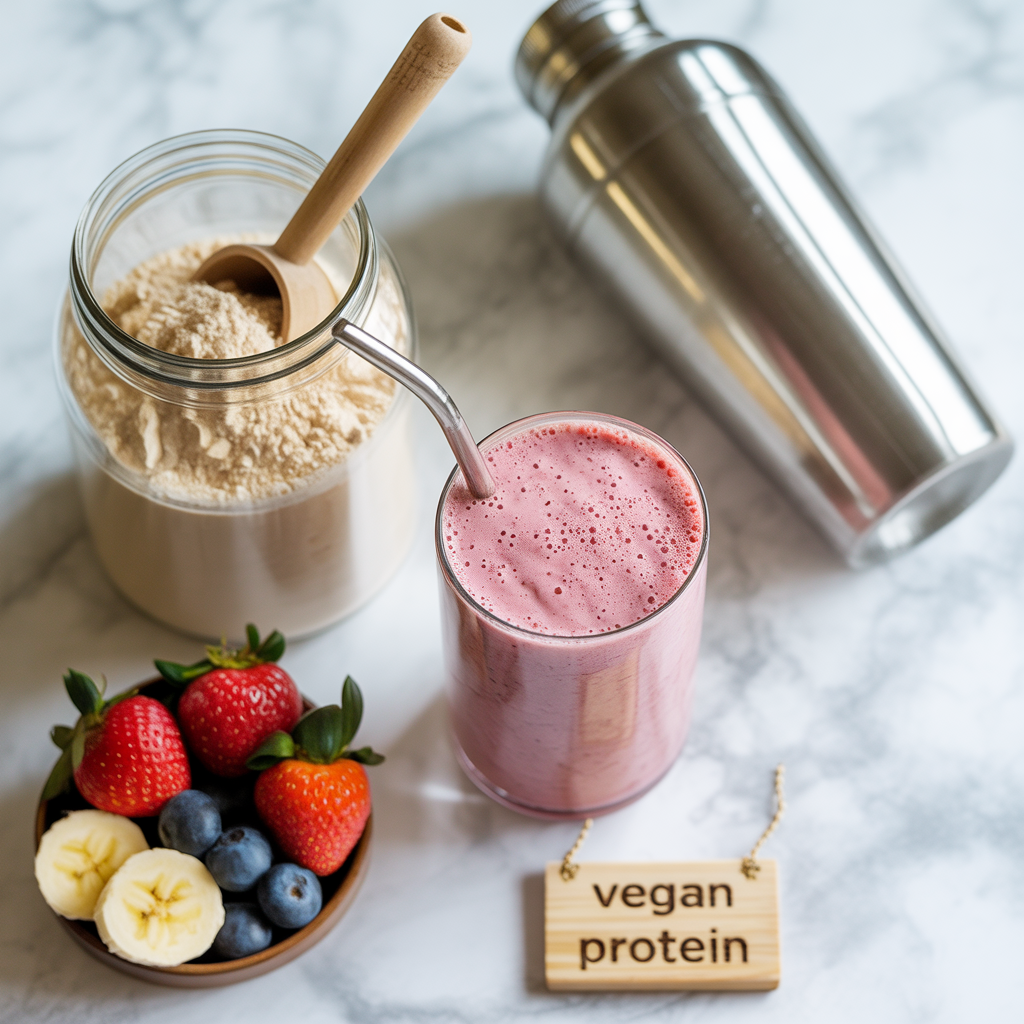
In MENA homes and street food culture, the combination of tahini (sesame paste), date syrup or whole dates, plant milk, and sometimes banana or oats is a morning drink preparation consumed across Lebanon, Jordan, Palestine, Egypt, and the Gulf. This combination delivers 15-20g protein per large serving from the tahini alone (14g per 4 tablespoons), alongside magnesium, zinc, calcium, and healthy fats. Adding a scoop of pea or hemp protein powder to this traditional preparation transforms a culturally authentic breakfast into a 30-35g protein meal that a professional MENA kitchen chef would recognise as entirely consistent with the culinary tradition while meeting modern plant-based athlete protein targets.
2. Carob and Almond Milk: The Levantine Protein Base
Carob molasses (dibs el kharrub) combined with almond or oat milk is a traditional MENA beverage used as a fortifying drink for children, recovering patients, and working adults throughout the Levant. Carob itself is relatively low in protein, but the combination with almond milk, a tablespoon of ground flaxseed, and hemp protein powder creates a complete MENA-flavoured protein shake that delivers omega-3, fiber, zinc, and complete protein in a preparation that takes 90 seconds and requires no cooking. The flavour profile — slightly sweet, faintly nutty, subtly earthy — pairs precisely with the taste profile of hemp protein powder in a way that works better than any generic chocolate or vanilla flavouring.
3. The Professional Kitchen Post-Service Recovery Drink
In the MENA professional kitchen context, the post-service recovery protocol for cooks working 12-14 hour shifts involves a concentrated protein and electrolyte drink consumed after service. The traditional kitchen version uses warm salted plant milk with tahini, honey or date syrup, and ground seeds. In a modern plant-based adaptation, adding one scoop of pea-rice blend to this warm base creates a culturally authentic, palatability-optimised recovery drink that supports both the muscle repair of physically demanding kitchen work and the sleep quality critical for professional kitchen performance. The warm drink format also provides faster gastric emptying than cold smoothies for some individuals, making protein absorption more efficient in the immediate post-work window.
Three Professional MENA Protein Shake Recipes
- Tahini Power Shake (35g protein): 4 tbsp tahini + 1 scoop (30g) pea-rice blend + 250ml oat milk + 2 dates + 1 tbsp ground flaxseed + cinnamon. Blend cold. High protein, high magnesium, omega-3, complete amino acids.
- Levantine Recovery Shake (28g protein): 1 scoop hemp protein + 250ml fortified almond milk + 1 tbsp carob molasses + 1 tbsp almond butter + 1 tsp vanilla. Blend with ice. Lower calorie, high micronutrient, earthy MENA flavour profile.
- Warm Post-Training Drink (25g protein): 1 scoop pea isolate (unflavoured) + 200ml warm oat milk + 1 tbsp tahini + 1 tsp date syrup + pinch of cardamom. Whisk until smooth. Consume within 60 minutes of training. Traditional MENA flavour, modern protein performance.
Putting It Together: Choosing the Right Vegan Protein Powder
Vegan protein powder in 2026 is a mature, high-quality product category. The taste gap with whey has largely closed for pea and soy isolates. The amino acid science is settled: pea-rice blends and soy isolate deliver complete protein at DIAAS scores that support muscle protein synthesis effectively at practical serving sizes. Hemp protein delivers the most nutritionally complete whole-food-adjacent option for people prioritising micronutrient density over pure performance metrics.
The seven rules in this guide reduce the choice to its essentials: compare per 100g protein content, choose third-party tested products, match protein type to your primary goal, keep additives minimal, supplement whole-food protein rather than replace it, time post-workout servings appropriately, and allow a short palatability adjustment period. Apply these rules to any product under evaluation and the choice becomes clear regardless of marketing claims.
For most vegans, a pea-rice blend from a third-party tested brand, used once daily to supplement whole-food protein from the vegan protein sources guide, is the complete protein supplement strategy. Everything else is refinement.
FAQ: 12 Questions About Vegan Protein Powder
Yes, when the right types are used at adequate doses. A meta-analysis of RCTs published in sports nutrition journals found no significant difference in muscle mass or strength gains between pea protein and whey protein supplementation over 8-12 week training periods when total protein intake was equalised. The key conditions: use pea-rice blend or soy isolate (not hemp or quinoa-based proteins), consume 30-35g per post-workout serving to compensate for the slightly lower leucine percentage, and ensure total daily protein hits 1.6-2.2g per kg body weight. At equivalent total daily protein and with appropriate post-workout timing, plant proteins and whey produce equivalent muscle-building results per the research reviewed at PubMed.
A flavoured pea-rice blend from a reputable third-party tested brand is the best starting point for most beginners. It has the best combination of amino acid completeness, digestibility, taste palatability, and price point. Beginners should start with one serving daily (in a smoothie or shaken in plant milk) rather than two, allow 2-3 weeks for the palate to adjust, and increase to two servings only once daily protein targets from whole food alone are confirmed to be insufficient. The protein intake baseline to establish first is at the vegan protein requirements guide.
No. This is one of the most persistent myths in plant-based nutrition and it is not supported by clinical evidence. Multiple RCTs and systematic reviews have confirmed that soy protein supplementation at doses used in practice (25-50g daily) does not affect testosterone, estrogen, or reproductive hormones in men or women. The isoflavone content of soy protein isolate is significantly lower than whole soy foods, and even studies of very high whole-soy consumption have not found meaningful hormonal effects in healthy adults. The testosterone-soy myth originated from in vitro cell studies that do not translate to human physiology at normal dietary intakes.
One to two servings of 25-35g protein each. More than this provides diminishing returns because muscle protein synthesis is stimulated optimally by individual doses (not cumulative daily protein) and because very high total protein intakes (above 2.5g per kg body weight) do not produce additional muscle gains and may burden kidneys in susceptible individuals. Most people need at most one supplement serving daily to bridge the gap between whole-food protein and their daily target. Two servings daily is appropriate only for high-intensity athletes with daily protein targets above 150g who cannot reach those targets from whole food alone.
Protein spiking is the practice of adding individual amino acids (glycine, taurine, creatine, BCAA) to a protein powder to artificially inflate total nitrogen content (which is how protein is measured by the Kjeldahl method). The product appears to have more protein than it actually contains. Detection: check if individual amino acids are listed in the ingredient list separately from the protein source. A product listing “pea protein, BCAA blend (leucine, isoleucine, valine), glycine” is spiking the protein measurement. A clean product lists only the protein source. Third-party testing by Informed Sport or NSF eliminates this risk by independently measuring actual protein content.
Yes, in some people, particularly with pea protein. Pea protein contains some residual oligosaccharides (the same compounds that cause gas from whole legumes) that can produce bloating, especially when starting supplementation or consuming large doses. Mitigation strategies: start with 15g serving sizes and increase gradually over 2 weeks, use pea protein isolate rather than pea protein concentrate (lower oligosaccharide content), consume with a digestive enzyme supplement containing alpha-galactosidase, or switch to soy protein isolate which has lower oligosaccharide content. Hemp protein causes bloating less frequently than pea. Most people adapt to pea protein within 3-4 weeks with consistent daily use.
DIAAS stands for Digestible Indispensable Amino Acid Score. It measures protein quality by assessing both the essential amino acid profile of a food relative to human requirements and the actual digestibility of those amino acids in the small intestine (not just theoretical content). DIAAS replaced PDCAAS (Protein Digestibility Corrected Amino Acid Score) as the gold standard protein quality metric because PDCAAS did not account for ileal digestibility and could be artificially inflated. A DIAAS of 1.0 or above means the protein fully meets human essential amino acid requirements at the tested serving size. Whey scores 1.09, soy scores 1.0, pea-rice blend scores 0.9-1.0, and isolated pea scores 0.82. For muscle building, a DIAAS above 0.8 at adequate serving sizes is sufficient.
Yes, but for different reasons than pea-rice or soy. Hemp protein is worth using when the goal is nutritional completeness rather than pure post-workout MPS performance. Its advantages — omega-3 ALA, magnesium, zinc, fiber, and a complete amino acid profile — make it the most whole-food-adjacent plant protein supplement available. Its disadvantages — lower protein concentration per gram, lower leucine percentage, and lower DIAAS — make it a poor choice as the sole post-workout supplement for serious muscle building. Hemp protein best serves as a morning nutrition addition to smoothies or porridge rather than a post-workout supplement, combining it with a pea-rice blend for the performance application.
Some products, yes. Multiple independent testing programs (Consumer Reports, Labdoor, Clean Label Project) have found elevated arsenic in rice protein products and elevated cadmium in some hemp protein products at levels above safe daily exposure thresholds when consumed regularly. The solution is third-party certification: Informed Sport, NSF Certified for Sport, and Labdoor-certified products have independently verified heavy metal levels below safety thresholds. This is not a theoretical risk — choose certified products for any supplement consumed daily. Pea protein has the lowest heavy metal accumulation risk of the six types as peas are not heavy metal accumulators in the way rice and hemp plants are.
Yes, and it can be an effective weight management tool. Protein is the most thermogenic and satiating macronutrient. A 25g protein shake before a meal reduces ad libitum caloric intake at that meal by 15-20% in RCTs. This appetite-suppression mechanism is identical for plant and animal proteins at equivalent doses. For weight loss specifically, pea protein has strong evidence for satiety comparable to whey. Hemp protein adds fiber to the satiety equation. Using a protein powder as a partial meal replacement — blended with berries, ground flaxseed, and oat milk into a complete 400-calorie breakfast — supports both daily protein targets and sustainable caloric deficit management. See the vegan weight loss guide.
The extraction process determines the final product:
- Protein concentrate: 60-80% protein by weight. Contains more residual carbohydrates, fats, and fiber from the source food. Lower protein per gram, more naturally occurring micronutrients, more residual oligosaccharides (more bloating risk), less expensive.
- Protein isolate: 80-95% protein by weight. Most non-protein compounds removed. Higher protein per gram, minimal residual carbohydrates or fat, lower bloating risk, more expensive.
For pure post-workout protein delivery, isolate is preferred. For whole-food-adjacent nutrition supplementation, concentrate is reasonable. Hemp protein is always sold in concentrate form because the extraction process does not achieve isolate-level concentration. Most pea and soy products are available in both forms.
No. Protein powder is a supplement, not a dietary requirement. If whole-food protein from legumes, tofu, tempeh, edamame, and seeds consistently meets daily protein targets, there is no physiological benefit to adding protein powder. The convenience argument is legitimate — a protein shake takes 2 minutes to prepare versus 20+ minutes to cook a legume meal — but convenience is a practical benefit, not a nutritional necessity. People who would benefit most from protein powder are those whose daily protein target exceeds 150g (difficult to achieve consistently from whole food alone), those who train early before appetite establishes, and those transitioning to plant-based eating who have not yet built the cooking habits to reliably hit whole-food protein targets. Anyone else should prioritise the high-protein vegan breakfast, lunch, and dinner frameworks first.