

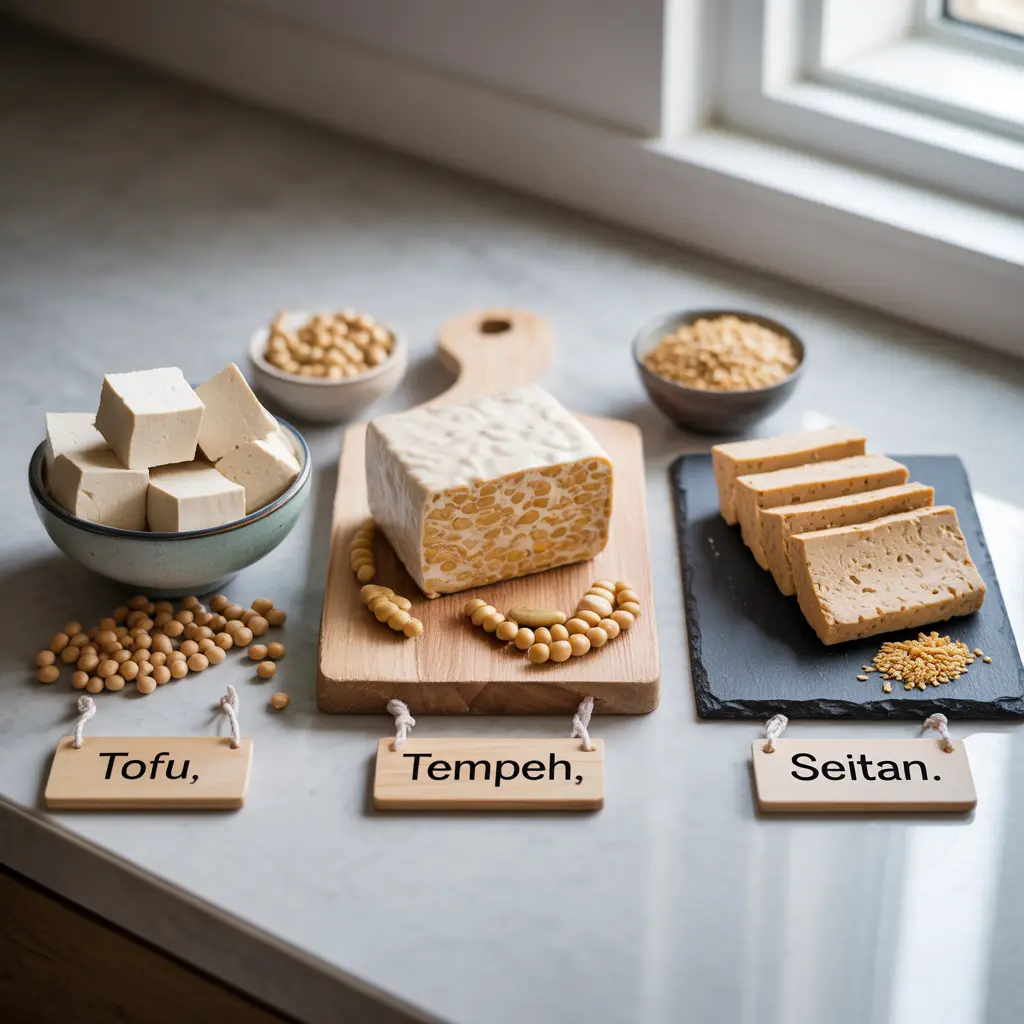
- Seitan wins on pure protein density: 25g per 100g cooked, with almost zero fat and minimal carbs. Not suitable for anyone with celiac disease or gluten intolerance.
- Tempeh wins on nutritional completeness: highest fiber, most bioavailable nutrients due to fermentation, and genuine probiotic benefit for gut health.
- Tofu wins on versatility and accessibility: the most widely available, mildest flavor, widest range of textures, and works in virtually every cuisine and cooking method.
- For weight loss: tofu. For muscle building: seitan. For gut health and overall nutrition: tempeh. For beginners: tofu.
- All three are complete or near-complete protein sources and are among the most valuable foods in any plant-based diet.
- Why Tofu vs Tempeh vs Seitan Is the Most Important Vegan Protein Decision
- How Each One Is Made: Origins and Production
- Complete Nutrition Comparison: The Full Data
- Tofu Deep Dive: Types, Benefits, and Best Uses
- Tempeh Deep Dive: The Fermentation Advantage
- Seitan Deep Dive: The Protein Powerhouse
- Which One Is Best for Your Specific Goal?
- How to Cook All Three: Methods, Times, and Techniques
- Taste, Texture, and Versatility Compared
- Cost and Availability Compared
- Frequently Asked Questions About Tofu vs Tempeh vs Seitan
- The Final Verdict: Which Should You Eat?
The debate around tofu vs tempeh vs seitan comes up in almost every plant-based nutrition conversation, and for good reason. These three foods are the backbone of vegan protein eating. They appear in nearly every high-quality vegan meal plan, every serious plant-based athlete’s diet, and every list of essential vegan pantry staples.
But choosing between tofu vs tempeh vs seitan is not always straightforward. Each one has a genuinely different nutritional profile, a different production process, a different flavor and texture, and it excels in different cooking contexts and for different health goals. Choosing the wrong one for your specific situation, or not knowing how to use any of them properly, is one of the most common reasons plant-based eaters fail to hit their protein targets.
This guide settles the tofu vs tempeh vs seitan debate completely. You will get the full nutrition data, a practical goal-based guide, detailed cooking instructions for all three, and a clear, unambiguous verdict on which one belongs in your diet, when, and why.
If you are building a plant-based eating system from scratch and need to understand all your protein options together, our complete guide to vegan protein sources is the best place to start before diving into this comparison.
Why Tofu vs Tempeh vs Seitan Is the Most Important Vegan Protein Decision You Will Make
Protein is the nutrient that most vegans need to plan most carefully. Unlike carbohydrates and fats, which are abundant in almost every plant food, complete and sufficient protein requires deliberate, intentional food selection on a plant-based diet.
Tofu, tempeh, and seitan are the three plant foods that most closely replicate the protein density, texture, and culinary versatility of meat. They are not interchangeable. Understanding the genuine differences between tofu vs tempeh vs seitan means you can select the right one for each meal, each goal, and each body type.
The stakes are real. Getting your primary protein source wrong can mean the difference between building muscle and losing it, between feeling satisfied after meals and struggling with constant hunger, and between a nutritionally complete diet and one with significant gaps.
Many people default to tofu simply because it is the most familiar. Others avoid seitan entirely without understanding its exceptional protein profile. And tempeh, arguably the most nutritionally complete of the three, is consistently underused because its fermented flavor intimidates beginners.
By the end of this guide, the tofu vs tempeh vs seitan decision will be completely clear, based on your specific goals, preferences, and dietary needs.
How Each One Is Made: Origins and Production
Understanding how tofu vs tempeh vs seitan is produced helps explain why each one has its unique nutritional profile, texture, and flavor. These are not similar foods with minor differences. They are fundamentally different products made through entirely different processes.
How Tofu Is Made
Tofu originated in China over 2,000 years ago and has been a dietary staple across East and Southeast Asia ever since. It is made by a process remarkably similar to cheese-making. Soybeans are soaked, ground, and cooked to produce soy milk. The soy milk is then curdled using a coagulant, either calcium sulfate (nigari), magnesium chloride, or glucono delta-lactone, each of which produces slightly different textures and mineral contents.
The resulting curds are pressed into blocks of varying firmness depending on how much whey is removed. More pressing means firmer tofu with higher protein density per gram. Silken tofu retains most of the liquid, producing a soft, custard-like texture. Extra-firm tofu is pressed extensively, producing a dense block with the highest protein-to-weight ratio of any tofu variety.
When calcium sulfate is used as the coagulant, which is the most common commercial method, tofu becomes an excellent source of dietary calcium. A 100g serving of calcium-set firm tofu can provide up to 350mg of calcium, which is comparable to a glass of cow’s milk.
How Tempeh Is Made
Tempeh originated in Indonesia, where it has been produced and consumed for centuries, and is made through a controlled fermentation process. Whole soybeans (or sometimes a mix of soybeans with grains like barley or rice) are partially cooked, dehulled, and inoculated with a mold culture called Rhizopus oligosporus.
Over 24 to 48 hours at a controlled warm temperature, the mold grows a dense white mycelium that binds the soybeans into a firm, dense cake. This fermentation process is critical: it partially breaks down the phytic acid and other anti-nutrients present in soybeans, dramatically increasing the bioavailability of minerals like zinc, iron, and magnesium. The fermentation also generates B vitamins and creates the characteristic nutty, earthy, slightly mushroom-like flavor that defines tempeh.
Tempeh is one of very few plant foods that has been associated with probiotic benefit, though the live cultures are largely destroyed during cooking. The prebiotic fiber content that feeds beneficial gut bacteria, however, remains fully intact regardless of cooking method.
How Seitan Is Made
Seitan is the most different of the three. It is not soy-based at all. Seitan is made from wheat gluten, specifically the protein fraction of wheat that remains after the starch has been washed away. The process begins by mixing wheat flour with water to form a dough, then repeatedly rinsing the dough under water until only the elastic, rubbery protein network remains. This concentrated gluten is then flavored and cooked, typically by simmering in a seasoned broth, steaming, or baking.
The result is a food with an extraordinarily high protein concentration: around 25g of protein per 100g of cooked seitan, with almost no fat and very few carbohydrates despite being derived from wheat. The carbohydrate content is minimal because the washing process removes virtually all of the starch.
Seitan has been used in East Asian Buddhist cooking for over a thousand years, where it was developed as a meat substitute for monasteries following vegetarian precepts. It is commonly referred to as “wheat meat” because of its remarkably meaty, chewy texture.
The critical caveat: seitan is entirely unsuitable for anyone with celiac disease or non-celiac gluten sensitivity. For those individuals, the tofu vs tempeh vs seitan comparison effectively becomes tofu vs tempeh only.
Complete Nutrition Comparison: The Full Data on Tofu vs Tempeh vs Seitan
This is where the tofu vs tempeh vs seitan decision becomes most instructive. The nutritional profiles of these three foods are dramatically different. Understanding the numbers is essential for making the right choice for your goals.
| Nutrient | Firm Tofu | Tempeh | Seitan (cooked) | Winner | Why It Matters |
|---|---|---|---|---|---|
| Calories | 76 kcal | 193 kcal | 120 kcal | Tofu (lowest) | Tofu gives the most protein per calorie, ideal for weight loss |
| Protein | 8g | 19g | 25g | Seitan | Seitan has 3x the protein of tofu gram for gram — highest of any plant food |
| Total Fat | 4g | 11g | 1.5g | Seitan (lowest) | Seitan is almost entirely protein, making it the purest muscle-building food |
| Saturated Fat | 0.5g | 2g | 0.2g | Seitan | All three are low in saturated fat, superior to most animal proteins |
| Carbohydrates | 2g | 9g | 4g | Tofu (lowest) | All three are low carb, suitable for low-carb and ketogenic plant-based diets |
| Dietary Fiber | 0.3g | 7g | 0.5g | Tempeh | Tempeh’s fiber feeds gut bacteria, supports digestion, and extends satiety |
| Calcium | 350mg (calcium-set) | 111mg | 14mg | Tofu (calcium-set) | Calcium-set tofu rivals dairy for calcium, critical for bone health on a vegan diet |
| Iron | 1.6mg | 2.7mg | 3.6mg | Seitan | Iron is a top deficiency risk for vegans; seitan provides meaningful amounts |
| Zinc | 0.8mg | 1.7mg | 0.9mg | Tempeh | Fermentation in tempeh reduces phytic acid, making zinc more bioavailable |
| Magnesium | 30mg | 81mg | 12mg | Tempeh | Magnesium supports over 300 enzymatic reactions including energy production |
| Phosphorus | 97mg | 266mg | 44mg | Tempeh | Phosphorus works with calcium for bone density and cellular energy (ATP) |
| Potassium | 121mg | 412mg | 57mg | Tempeh | Potassium regulates blood pressure, muscle contractions, and fluid balance |
| Isoflavones | High (25mg) | High (43mg) | None | Tempeh | Isoflavones are plant estrogens linked to reduced heart disease and cancer risk |
| Complete Protein? | Yes (all 9 EAAs) | Yes (all 9 EAAs) | Low in lysine | Tofu/Tempeh | Seitan lacks adequate lysine; combine with legumes to complete the amino profile |
| Gluten-Free? | Yes | Yes (pure soy) | No (IS gluten) | Tofu/Tempeh | Seitan is entirely off-limits for celiac disease and gluten sensitivity |
| Probiotic/Prebiotic Benefit | None | Yes (prebiotic fiber, fermented) | None | Tempeh | Tempeh is the only one of the three with direct gut microbiome benefits |
| Protein per 100 kcal | 10.5g | 9.8g | 20.8g | Seitan | Seitan delivers twice the protein per calorie of both tofu and tempeh |
| Typical Cost per 100g Protein | Medium ($0.80 to $1.20) | Medium-High ($1.00 to $1.50) | Low (homemade: $0.30 to $0.50) | Seitan (homemade) | Homemade seitan is by far the cheapest protein source in vegan eating |
This table is your permanent reference for the tofu vs tempeh vs seitan decision. Screenshot it and keep it. Every major nutritional difference between the three is captured here, with context for why each number matters in the real world of plant-based eating.
The key insight from this data: there is no single winner in the tofu vs tempeh vs seitan comparison across all categories. Each one leads in specific areas. The optimal approach for most plant-based eaters is to rotate all three through the weekly meal plan rather than defaulting to just one.
Tofu Deep Dive: The Versatility Champion
In the tofu vs tempeh vs seitan debate, tofu is the food most people try first, and for good reason. It is widely available in virtually every supermarket globally, relatively inexpensive, neutral in flavor, and extraordinarily adaptable to different cuisines, cooking methods, and dietary goals.
The Four Main Types of Tofu and What Each Is Best For
Silken tofu has the highest water content and a smooth, custardy texture. It does not hold its shape when cooked in the conventional sense. Its best uses are in smoothies, soups, sauces, desserts, and as a replacement for eggs in baking. Silken tofu blended into a sauce creates an extraordinary creamy texture with no dairy whatsoever.
Soft tofu is slightly firmer than silken but still delicate. It works well in miso soups, Korean sundubu jjigae (soft tofu stew), and gentle scrambles where a tender texture is desired.
Firm tofu is the most commonly used variety in everyday cooking. It holds its shape reasonably well when sliced and pan-fried, baked, or added to curries and stir-fries. It absorbs marinades effectively due to its porous structure.
Extra-firm tofu has the lowest water content, the highest protein density, and the most structurally robust texture. It is ideal for pressing, cubing, and pan-frying or air-frying to achieve a golden, slightly crispy exterior. This is the variety to choose when you want tofu that genuinely holds its shape through intense cooking.
The Critical Importance of Pressing Tofu
One of the most common mistakes people make with tofu is skipping the pressing step. Firm and extra-firm tofu contain a significant amount of residual water even after manufacturing. Cooking un-pressed tofu produces a steamed, soggy result with poor texture and very limited flavor absorption.
Pressing tofu for 20 to 30 minutes before cooking using a tofu press or by wrapping it in clean towels and placing a heavy object on top removes this excess water. The result is a tofu that crisps properly when pan-fried, absorbs marinades deeply rather than superficially, and has a noticeably firmer, meatier bite.
For the best possible result: press tofu, marinate for a minimum of 30 minutes (preferably overnight), then cook at high heat. This transforms tofu from bland and spongy to flavorful and genuinely satisfying.
Tofu and Calcium: A Crucial Nutritional Point
Not all tofu provides the same calcium content. Tofu made with calcium sulfate as the coagulant (look for “calcium sulfate” in the ingredients) contains up to 350mg of calcium per 100g, making it one of the best non-dairy sources of calcium available. Tofu made with nigari (magnesium chloride) contains significantly less calcium.
For vegans, particularly women over 40, who need to pay close attention to bone health, choosing calcium-set tofu rather than other varieties is a meaningful and easy dietary optimization in the tofu vs tempeh vs seitan selection.
Tofu and Soy: Addressing the Hormone Question
A common concern in tofu vs tempeh vs seitan discussions is whether the phytoestrogens (isoflavones) in soy-based foods like tofu affect hormone levels. The research is clear on this: the isoflavones in soy are phytoestrogens, which are plant compounds that bind weakly to estrogen receptors. They are not the same as human estrogen and do not function the same way in the body.
Multiple large-scale studies and systematic reviews have found no adverse hormonal effects from regular soy consumption in healthy adults. On the contrary, isoflavone consumption is associated with reduced risk of breast cancer, improved bone density in post-menopausal women, and reduced LDL cholesterol. The concern about soy and hormones is not supported by the weight of scientific evidence for whole soy foods like tofu and tempeh consumed in normal dietary quantities.
For a full breakdown of the nutritional science behind vegan protein foods, our vegan nutrition facts and science guide covers the research in detail.
Tempeh Deep Dive: The Nutritional Overachiever
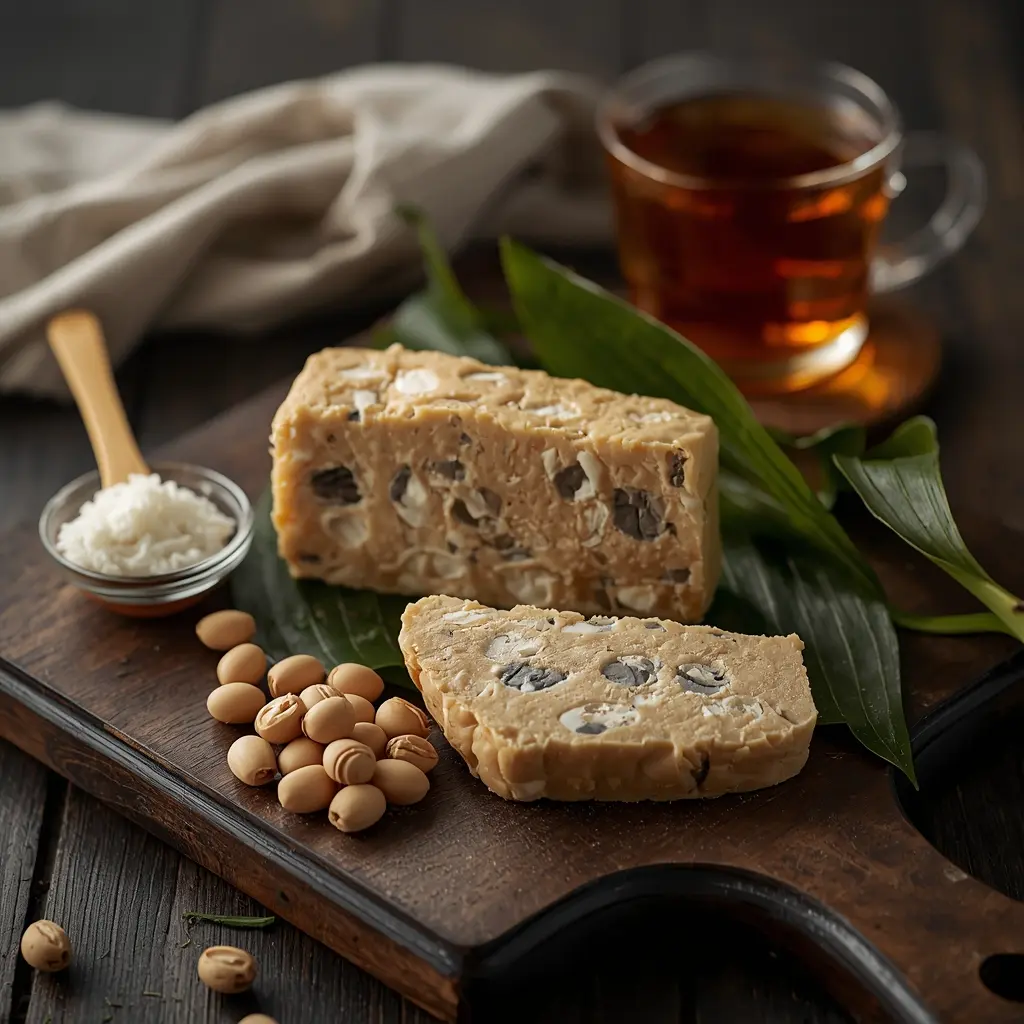
Tempeh is the most underrated food in the tofu vs tempeh vs seitan comparison by a significant margin. Most people who have tried it once and found the flavor too strong either bought it raw without preparation or cooked it without understanding its specific requirements. Properly prepared tempeh is one of the most satisfying, nutritionally complete, and genuinely delicious foods in the entire plant-based repertoire.
Why Fermentation Changes Everything
The fermentation process that produces tempeh is not merely a flavor development step. It fundamentally alters the nutritional composition of the soybeans in ways that make tempeh more nutritious than unfermented soy products like tofu in several important categories.
Raw soybeans contain phytic acid, a compound that binds to minerals including zinc, iron, calcium, and magnesium, significantly reducing how much of these minerals the body can absorb. Fermentation substantially breaks down phytic acid, which is why the zinc and iron in tempeh are considerably more bioavailable than the same minerals in tofu despite similar starting soybean composition.
Fermentation also partially breaks down the complex oligosaccharides in soybeans (specifically raffinose and stachyose) that cause bloating and gas in many people. This means tempeh is generally much better tolerated digestively than unfermented soy products, an important consideration for anyone who has experienced digestive discomfort from tofu or soy milk.
The Rhizopus mold culture used in tempeh fermentation also synthesizes certain B vitamins during the fermentation process, including riboflavin (B2) and niacin (B3). Some sources historically cited tempeh as a source of B12, but modern analysis shows the B12 analogues in tempeh are not bioavailable to humans. B12 supplementation remains essential for all vegans regardless of tempeh consumption.
The Bitter Taste Problem and How to Fix It
Fresh tempeh has a pleasant mild, nutty flavor. However, tempeh that has been refrigerated for several days or is approaching its use-by date can develop a noticeably bitter, ammonia-like undertone caused by ongoing microbial activity. This is the flavor that turns many first-time tempeh eaters off the food entirely.
The solution is simple and effective: steaming tempeh for 10 minutes before any other cooking completely eliminates the bitter flavor. Steam it, let it cool slightly, then marinate and cook it using your preferred method. This single step transforms the eating experience dramatically.
Tempeh also absorbs marinades extremely well due to its porous, open structure. The same principles that apply to tofu marinating apply to tempeh, with the added benefit that tempeh’s denser texture means it holds up better in high-heat cooking methods like grilling and air-frying.
Tempeh and Gut Health: The Real Story
In the tofu vs tempeh vs seitan comparison, tempeh is the only food of the three with genuine gut health benefits. The fermentation process means tempeh contains both prebiotic fiber (which feeds beneficial gut bacteria) and residual fermentation byproducts that support a healthy gut microbiome.
While the live probiotic cultures in tempeh are largely killed during cooking, the prebiotic fiber content remains fully intact and bioactive. Regular tempeh consumption has been associated in research with improved gut microbiome diversity, which in turn is linked to better immune function, improved mood via the gut-brain axis, and more efficient nutrient absorption across the board.
For anyone who has been asking why am i tired on a vegan diet and suspects gut health or nutrient absorption issues, incorporating tempeh two to three times per week is one of the most practical dietary interventions available. Our post on why you are tired on a vegan diet covers the gut-absorption connection in detail.
Tempeh Varieties Beyond Plain Soy
Plain soy tempeh is the most common variety, but several others are worth knowing about in the context of tofu vs tempeh vs seitan nutritional planning:
Multi-grain tempeh blends soybeans with barley, brown rice, or flaxseeds. These versions have slightly lower protein but higher carbohydrate content, making them better suited as a complete meal component rather than a pure protein source.
Black bean tempeh offers a different amino acid profile and is suitable for those with soy allergies who want the fermentation benefits of tempeh without the soy. It has similar probiotic and fiber properties to traditional soy tempeh.
Chickpea tempeh is a newer innovation, producing a milder, nuttier flavor that many Western palates find more approachable than traditional soy tempeh. Its protein content is slightly lower (around 15g per 100g) but the flavor profile makes it an excellent entry point for tempeh beginners.
Seitan Deep Dive: The Protein Density King
In any serious analysis of tofu vs tempeh vs seitan for high-protein plant-based eating, seitan occupies a category of its own. No other plant food comes close to seitan’s protein density when adjusted for both volume and calorie count. At 25g of protein per 100g of cooked seitan with only 120 calories, seitan delivers protein at an efficiency that rivals and in many cases exceeds that of chicken breast.
The Amino Acid Profile: Understanding the Lysine Gap
Seitan’s one genuine nutritional limitation in the tofu vs tempeh vs seitan comparison is its amino acid profile. Wheat gluten is particularly low in lysine, one of the nine essential amino acids that the human body cannot synthesize and must obtain from food.
This does not disqualify seitan as a protein source. It simply means that seitan should not be the only protein source in a meal or diet. Combining seitan with any legume-based food (lentils, chickpeas, edamame, tofu, tempeh) within the same meal or day provides the complementary lysine needed to complete the amino acid profile. This is easy to achieve in practice and does not require any complicated meal planning.
For example: seitan stir-fry served with edamame and brown rice provides a complete amino acid profile. Seitan added to a lentil-based soup becomes a complete protein meal. The combination is natural and effortless in most whole-food vegan cooking.
Commercial Seitan vs Homemade Seitan
One of the most important practical distinctions in the tofu vs tempeh vs seitan discussion is the difference between commercial and homemade seitan. Commercial seitan products (packaged seitan, seitan strips, seitan roasts) are often significantly higher in sodium due to the flavored broths and seasonings used in manufacturing. Some commercial products contain over 800mg of sodium per 100g, which is a meaningful consideration for anyone monitoring cardiovascular health.
Homemade seitan made from vital wheat gluten flour is dramatically different. It is inexpensive (vital wheat gluten costs around $0.30 to $0.50 per 100g of finished protein), completely customizable in flavor, and contains only the sodium you choose to add. Making seitan at home requires roughly 20 minutes of preparation and produces a food that is, gram for gram, one of the most cost-effective and protein-dense foods available in any dietary category.
Basic homemade seitan ratio: 1 cup vital wheat gluten flour (120g) combined with liquid seasonings (soy sauce, garlic, spices) and water, kneaded briefly, shaped, then simmered in vegetable broth for 45 minutes. This produces approximately 300g of seitan containing roughly 75g of protein at a total ingredient cost of under $1.50.
Seitan Texture: The Closest to Meat of the Three
In the tofu vs tempeh vs seitan texture comparison, seitan wins unambiguously for those seeking the most meat-like experience. Its dense, chewy, fibrous texture when properly cooked is unlike any other plant food. It shreds like pulled chicken, slices cleanly like a roast, and develops a satisfying crust when pan-fried or grilled.
The texture of seitan is determined largely by how it is kneaded and shaped during preparation. Vigorous kneading develops the gluten network further, producing a chewier, more fibrous texture. Minimal kneading produces a more tender result. Steamed seitan is softer; baked seitan is firmer and drier; pan-fried seitan develops a caramelized crust that many people find the most satisfying of all cooking methods.
Who Should Not Eat Seitan
This is the most critical caveat in the tofu vs tempeh vs seitan discussion. Seitan is pure wheat gluten. It is absolutely contraindicated for anyone with celiac disease, where gluten triggers an autoimmune response causing intestinal damage. It is also inappropriate for those with non-celiac gluten sensitivity (NCGS), who experience bloating, fatigue, and digestive discomfort from gluten without the autoimmune mechanism of celiac disease.
For these individuals, the tofu vs tempeh vs seitan comparison effectively becomes a tofu vs tempeh decision, which is entirely sufficient for meeting protein needs on a plant-based diet. Both tofu and tempeh are naturally gluten-free (assuming no cross-contamination in manufacturing), and a combination of the two alongside other legume-based proteins provides complete and sufficient protein without any need for seitan.
Which One Is Best for Your Specific Goal? Tofu vs Tempeh vs Seitan by Use Case
This is the section where the tofu vs tempeh vs seitan comparison becomes directly actionable. The right choice depends almost entirely on what you are trying to achieve.
| Your Goal | Best Choice | Why | How Much Per Day | Avoid If |
|---|---|---|---|---|
| Maximum muscle building | Seitan (primary) + Tofu or Tempeh (secondary) | Seitan’s 25g protein per 100g is unmatched. Combine with legumes to complete the amino acid profile. | 150 to 200g seitan daily, supplemented with tofu or tempeh | Celiac disease, gluten sensitivity |
| Weight loss and calorie control | Tofu (extra-firm) | 76 kcal per 100g with 8g protein. High satiety, very low calorie density, works in high-volume low-calorie meals. | 150 to 250g daily across meals | No restrictions |
| Gut health improvement | Tempeh | Only one of the three with prebiotic fiber and fermentation benefits. Supports microbiome diversity. | 100 to 150g 3 to 4 times per week | Soy allergy (try chickpea tempeh instead) |
| Bone health and calcium intake | Tofu (calcium-set specifically) | 350mg calcium per 100g rivals dairy. Essential for vegan women over 40 and anyone with low dietary calcium. | 150g daily provides over 500mg calcium | Check packaging for calcium sulfate in ingredients |
| Vegan beginners | Tofu | Most widely available, most familiar, mildest flavor, works in every cuisine. Lowest barrier to entry. | Start with 100g per meal, 2 meals per day | No restrictions |
| Budget eating | Seitan (homemade) | Vital wheat gluten costs under $0.50 per 100g protein. Cheapest protein source in plant-based eating by far. | As much as needed within daily calorie targets | Celiac disease, gluten sensitivity |
| Athletic performance and endurance | Tempeh + Seitan combination | Tempeh’s minerals and B vitamins support energy metabolism. Seitan provides the high protein load needed for recovery. | 100g tempeh + 150g seitan on training days | Gluten sensitivity (swap seitan for extra tempeh) |
| Hormone balance and cardiovascular health | Tempeh | Highest isoflavone content (43mg per 100g). Associated with reduced LDL cholesterol and improved cardiovascular markers. | 100g 4 to 5 times per week | Individuals with specific hormone-sensitive conditions (consult a doctor) |
| Gluten-free vegan diet | Tofu + Tempeh (pure soy, certified GF) | Both are naturally gluten-free. Seitan is entirely excluded. Rotating tofu and tempeh covers all protein and micronutrient needs. | 150g tofu + 100g tempeh daily | Seitan in any form |
| Meat-like texture and satisfaction | Seitan | No other plant food replicates the chewy, fibrous, satisfying texture of meat as closely as seitan. Ideal for transition-phase vegans. | Use as the main protein in one meal per day | Celiac disease, gluten sensitivity |
For plant-based athletes and active individuals who need to maximize protein intake strategically, our vegan diet for athletes performance guide shows exactly how to combine tofu, tempeh, seitan, and other plant proteins to hit performance-level targets.
How to Cook All Three: Complete Methods, Times, and Techniques
Understanding the nutritional differences in tofu vs tempeh vs seitan means nothing if you cannot cook them well. Poor cooking technique is the single biggest reason people give up on these foods after one or two disappointing attempts.
The Golden Rules for Cooking Tofu
Rule one: always press firm and extra-firm tofu before cooking. Twenty to thirty minutes of pressing under a heavy weight or using a dedicated press removes enough water to transform the final result.
Rule two: marinate after pressing, not before. Pre-pressing marination is largely wasted because the water inside the tofu prevents absorption. Post-pressing tofu absorbs marinades deeply and efficiently.
Rule three: cook at high heat. Tofu that is pan-fried or baked at moderate temperatures steams rather than crisps. A cast iron pan at high heat with a thin layer of oil produces the golden, slightly caramelized exterior that makes tofu genuinely crave-worthy.
Rule four: do not move it. When pan-frying tofu, leave it completely undisturbed for three to four minutes before flipping. Moving it too early tears the developing crust and produces uneven results.
Recommended cooking methods for tofu: pan-frying, air-frying (400°F for 15 to 20 minutes), baking (400°F for 25 to 30 minutes), deep-frying for restaurant-style crispiness, crumbling for scrambles, and blending silken tofu for sauces and desserts.
The Golden Rules for Cooking Tempeh
Rule one: steam first. Ten minutes of steaming before any other cooking removes bitterness, softens the texture slightly, and opens the pores for superior marinade absorption. This step is non-negotiable for the best results.
Rule two: slice thin or cube small. Tempeh’s dense structure means that large pieces do not absorb marinade or seasoning into the interior. Slicing tempeh into 5mm strips or cubing it into 1.5cm pieces maximizes surface area contact with flavor.
Rule three: use bold, acidic marinades. Tempeh’s earthy, nutty flavor pairs exceptionally well with soy sauce, balsamic vinegar, tamari, apple cider vinegar, and citrus-based marinades. These acidic components also help further tenderize the exterior during marination.
Recommended cooking methods for tempeh: pan-frying until golden on both sides (the most popular method), baking at 375°F for 20 to 25 minutes after marinating, crumbling and browning for bolognese and taco filling replacements, and grilling on skewers for a smoky char.
The Golden Rules for Cooking Seitan
Rule one: do not over-boil. Seitan simmered too vigorously develops a spongy, airy texture that many people find unpleasant. A gentle simmer at a very low rolling boil produces the densest, meatiest result.
Rule two: the cooking liquid is flavor. Since seitan itself has a relatively mild, slightly wheat-like flavor, the broth you simmer it in determines most of its taste. Use a richly seasoned broth with soy sauce, garlic, ginger, onion, bay leaves, and smoked paprika for the most flavorful result.
Rule three: rest before slicing. Like meat, seitan benefits from a 10-minute rest after cooking before being sliced or pulled. This allows the internal structure to firm up and produces cleaner cuts with less tearing.
Recommended cooking methods for seitan: simmering in broth (standard method for homemade seitan), pan-frying slices in a cast iron pan with soy sauce and sesame oil, grilling for char marks and smoky flavor, slicing thin and using in sandwiches and wraps, and shredding for pulled-style dishes.
🛑 Tired of the “What do I eat?” stress?
Download the 28-Day Success System and get 100+ recipes, shopping lists.
Taste, Texture, and Versatility: The Complete Tofu vs Tempeh vs Seitan Comparison
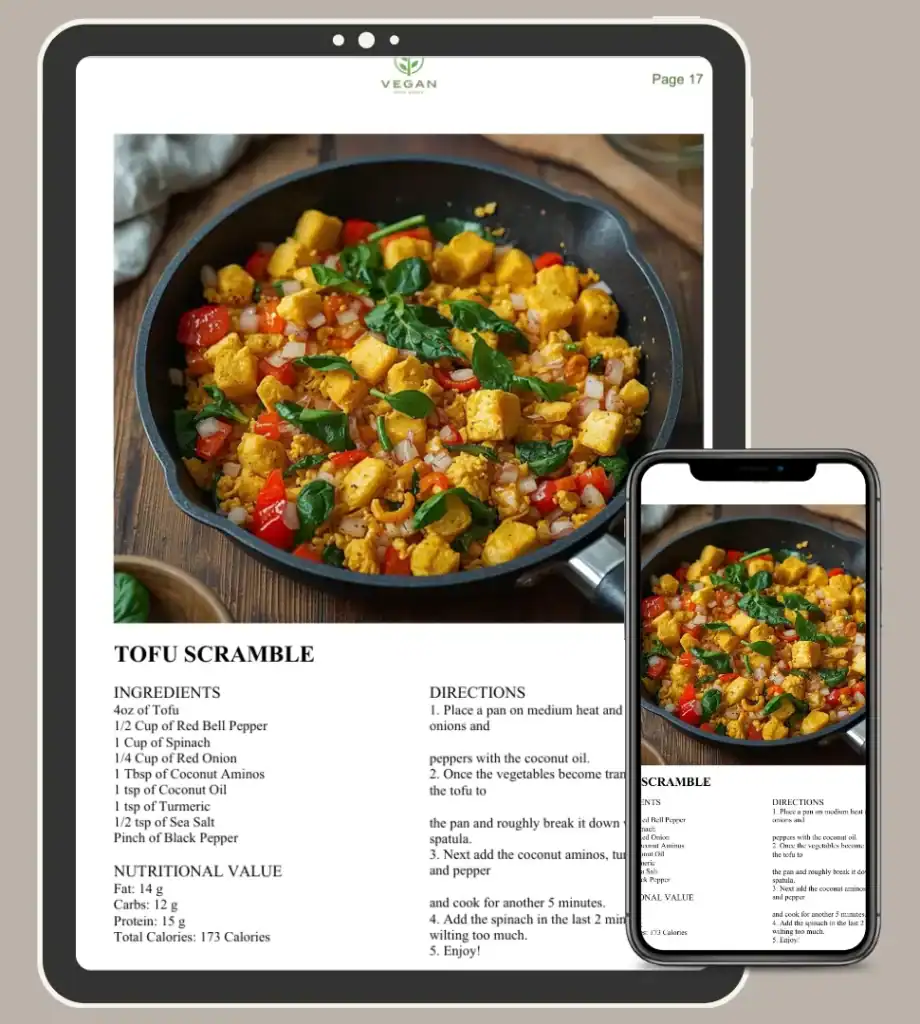
Beyond nutrition and cooking technique, the tofu vs tempeh vs seitan decision is also influenced by practical factors like flavor profile, texture, cuisine compatibility, and how each food performs across different meal types.
| Category | Tofu | Tempeh | Seitan |
|---|---|---|---|
| Raw flavor | Neutral, very mild, slightly beany | Nutty, earthy, slightly mushroom-like, fermented undertone | Mild, slightly wheaty, virtually flavorless before seasoning |
| Cooked flavor (plain) | Mild with subtle nuttiness when pan-fried. Takes on the flavor of whatever it is cooked with. | Rich, nutty, slightly smoky when pan-fried. Holds its own flavor even without seasoning. | Deeply savory and meaty when properly seasoned during cooking or simmering in broth. |
| Texture raw | Soft to firm depending on variety. Silken is custardy, extra-firm is dense and slightly spongy. | Firm, dense, slightly grainy due to whole soybean structure. Compact and holds shape. | Springy, elastic, fibrous. Most similar to raw meat of the three in its raw uncooked state. |
| Texture when cooked | Ranges from silky and smooth (silken, braised) to golden and slightly crispy (extra-firm, pan-fried or air-fried). | Firm with a satisfying bite. Develops a golden crust when pan-fried. Slightly grainy interior. | Chewy, dense, fibrous, and meaty. The closest to meat texture of any plant food. |
| Best cuisine fits | Asian (stir-fry, miso, mapo tofu), Mediterranean, Mexican (scramble), Western (salad, grain bowl), desserts | Indonesian, Asian, American (sandwiches, tacos, BLT), Western (grain bowls, salads), BBQ | Asian (stir-fry, Chinese mock duck), Western (steak, roast, stew, sandwich), Italian, BBQ |
| Absorbs marinades? | Very well after pressing. Soaks in flavors deeply over 30 to 60 minutes. | Excellently after steaming. Porous structure creates deep flavor penetration. | Moderately. Takes on broth flavors well during simmering. Surface marination effective. |
| Beginner-friendly? | Very high. Widely available, neutral flavor, easy to use in familiar dishes. | Medium. Flavor can be off-putting initially. Steam first rule is essential. | Medium. Homemade requires practice. Commercial seitan is more straightforward. |
| Works in desserts? | Yes (silken tofu only). Excellent in chocolate mousse, cheesecake, puddings, smoothies. | No. Flavor is too strong and savory for sweet applications. | No. Not suitable for dessert use. |
| Works as a complete meal centerpiece? | Yes, particularly extra-firm. Works as the main protein in any cuisine-style bowl or plate. | Yes. Pan-fried tempeh with grain and vegetables is a nutritionally complete, deeply satisfying meal. | Yes. Seitan roast, seitan steak, or seitan stew is the most visually and texturally meat-like main course. |
| Shelf life (refrigerated) | 5 to 7 days once opened. Firm and silken tofu keep well in water-filled sealed containers. | 7 to 10 days. Freshest within the first 3 to 4 days. Can be frozen for up to 3 months. | 5 to 7 days cooked. Uncooked vital wheat gluten dough can be refrigerated for 3 days or frozen. |
| Freezable? | Yes, but texture changes dramatically. Frozen and thawed tofu develops a chewy, spongy texture that absorbs marinades even more intensely. Many prefer it this way for stews. | Yes, very well. Freezing does not significantly alter tempeh’s texture or flavor. | Yes, excellent. Cooked seitan freezes and reheats perfectly with no texture loss. |
| Meal prep suitability | High. Batch-bake or pan-fry at the start of the week and use across multiple meals. | High. Steam and marinate a large batch Sunday. Pan-fry portions as needed through the week. | Very high. Seitan keeps and reheats better than tofu or tempeh. Ideal for weekly meal prep. |
This table covers the practical tofu vs tempeh vs seitan decision from the everyday cooking perspective. If you are doing weekly meal prep (which we strongly recommend for consistent plant-based eating), all three of these foods are excellent batch-cook candidates. Our 30-day vegan meal prep plan shows exactly how to rotate all three through a weekly prep system to maximize both nutritional variety and cooking efficiency.
Cost and Availability: The Practical Tofu vs Tempeh vs Seitan Reality
Nutritional value means nothing if the food is not accessible. Here is an honest assessment of cost and availability for each one.
Tofu is now available in virtually every major supermarket worldwide. Even in smaller towns and rural areas, firm tofu is typically stocked in the refrigerated produce or health food section. The average price for 400g of firm tofu ranges from $1.50 to $3.00 depending on brand and country, making it one of the most affordable protein sources available anywhere.
Tempeh is less universally available but is stocked in most health food stores, organic supermarkets, and larger mainstream chains in urban areas. Online ordering from natural food retailers provides a reliable supply if local options are limited. At $2.50 to $5.00 for 200g, tempeh is more expensive per gram of protein than tofu, but its nutritional density per dollar still compares very favorably to animal protein sources.
Seitan in commercial form (packaged, ready to cook) is less commonly stocked and typically the most expensive of the three on a per-gram basis. However, homemade seitan made from vital wheat gluten flour completely reverses this equation. Vital wheat gluten costs approximately $5 to $8 per kilogram and produces around 2.5kg of finished seitan, making the per-kilogram protein cost the lowest of any food in this comparison. If you eat seitan regularly, learning to make it from scratch is one of the most cost-effective investments you can make in your plant-based diet.
For a complete framework for keeping your vegan diet affordable without compromising nutrition, our budget vegan meals guide covers cost-per-gram protein strategies across the entire plant-based pantry.
Frequently Asked Questions About Tofu vs Tempeh vs Seitan
Which has the most protein: tofu, tempeh, or seitan?
Seitan wins by a large margin: 25g protein per 100g cooked. Tempeh comes second at 19g per 100g. Tofu comes third at 8g per 100g of firm tofu. For pure protein density, seitan is unmatched by any other plant food. However, seitan is not a complete protein and must be combined with lysine-rich foods like legumes. See the full tofu vs tempeh vs seitan nutrition table above for all data.
Is tempeh healthier than tofu?
In most nutritional categories, yes. Tempeh has more protein, more fiber, more minerals (zinc, magnesium, potassium, phosphorus), and superior mineral bioavailability due to fermentation reducing phytic acid. It also has prebiotic gut health benefits tofu does not. Tofu leads on calcium (when calcium-set) and calorie efficiency for weight loss. Neither is universally “healthier” — both belong in a well-planned vegan diet. For a full comparison, see our vegan protein sources guide.
Can I eat tofu, tempeh, and seitan every day?
Yes, all three are safe for daily consumption for most healthy adults. Soy foods like tofu and tempeh are well-studied and safe at normal dietary quantities (two to four servings daily). Seitan is safe daily for those without celiac disease or gluten sensitivity. Rotating all three across the week is optimal for both nutritional variety and to prevent dietary monotony, which is the most common reason people fall off their meal plans.
Does soy in tofu and tempeh affect hormones?
No, not adversely, according to the weight of current research. Soy isoflavones are phytoestrogens that bind weakly to estrogen receptors but do not function like human estrogen. Multiple large-scale reviews find no negative hormonal effects from normal soy consumption. The research actually associates regular soy food consumption with reduced breast cancer risk and improved cardiovascular markers. This applies to whole soy foods like tofu and tempeh, not isolated soy protein supplements.
What is the best way to use all three in a weekly meal plan?
Use tofu in stir-fries, scrambles, and soups 3 to 4 times per week for versatility and calcium. Use tempeh in grain bowls, tacos, and sandwiches 2 to 3 times per week for gut health and mineral density. Use seitan in more substantial, meat-replacement-style meals 2 to 3 times per week for maximum protein loading. Rotating all three covers the full nutritional spectrum and keeps meals genuinely interesting. Our guide to getting 100g protein as a vegan shows exactly how to structure this.
The Final Verdict: Which Should You Eat?
The tofu vs tempeh vs seitan debate does not have one winner. It has three, each winning for a different reason. Here is the definitive, no-compromise answer:
Eat tofu when you want the most versatile, calorie-efficient, calcium-rich protein that works in any cuisine and suits any meal type. Tofu is the foundation of most great vegan diets and the best starting point for anyone new to plant-based eating.
Eat tempeh when you want maximum nutritional density, superior mineral bioavailability, gut health benefits, and a richer, more complex flavor. Tempeh is the nutritional overachiever of the tofu vs tempeh vs seitan comparison and belongs in every serious plant-based diet at least three times per week.
Eat seitan when you want the highest possible protein per calorie, the most satisfying meat-like texture, and the most cost-effective protein source available in plant-based eating. Seitan, especially homemade, is the closest thing the vegan world has to a direct meat substitute in both nutrition and experience. Not suitable for celiac disease or gluten sensitivity.
The optimal answer: eat all three, rotating them throughout the week. The tofu vs tempeh vs seitan question is best answered not with an either-or choice but with a deliberate, rotating weekly plan that leverages the strengths of each. This approach maximizes both nutritional completeness and the variety that makes a plant-based diet genuinely enjoyable and sustainable long-term.
For a complete, done-for-you 28-day plan that already incorporates all three proteins in the right quantities, the right combinations, and the right weekly rotation, the solution is below.