
Vegan Umami Flavor Hacks: The Science of Deep Savory Taste on a Plant Diet
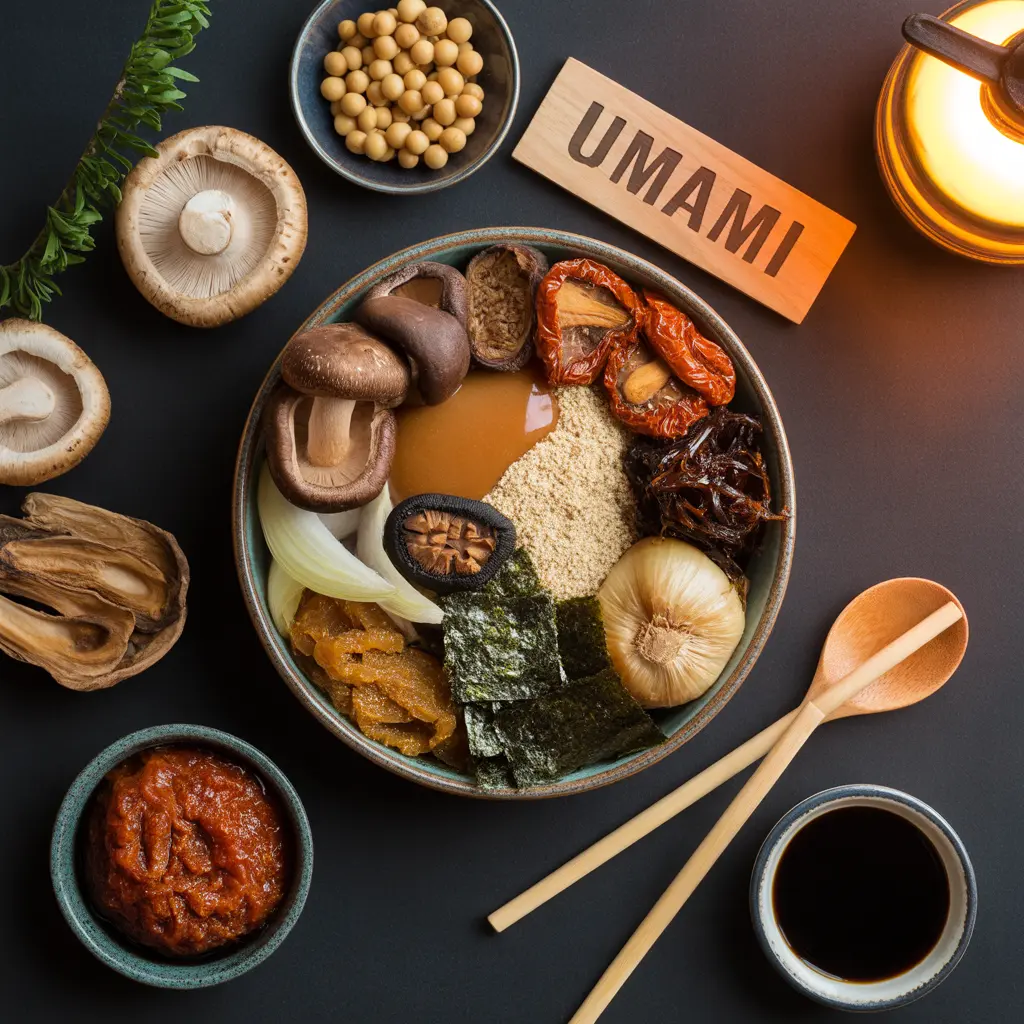
Vegan umami flavor hacks are the key to making plant-based meals deeply satisfying, crave-worthy, and rich with the fifth taste. Umami comes from glutamate, inosinate, and guanylate compounds found abundantly in mushrooms, fermented foods, tomatoes, miso, soy, nutritional yeast, and seaweed. This guide covers the science of umami perception, the top plant-based umami sources ranked by intensity, layering techniques used in professional kitchens, and a complete cooking method guide for building deep savory flavor without any animal products.
What Umami Actually Is: The Science Behind the Fifth Taste
Umami is the fifth primary taste alongside sweet, sour, salty, and bitter. Identified by Japanese chemist Kikunae Ikeda in 1908 from kombu seaweed broth, it describes the deep, savory, mouth-coating satisfaction found in fermented, aged, and slow-cooked foods.
The mechanism involves T1R1/T1R3 receptors responding to free glutamate and two ribonucleotides: inosinate (IMP) and guanylate (GMP). Glutamate concentrates in fermented, aged, and dried foods. Guanylate, critically for plant-based cooks, is found in its highest concentration in dried mushrooms. Which compounds trigger umami, and in which foods, is the foundation of every practical vegan umami flavor hack.
Umami matters for plant-based cooking because glutamate receptors exist not only on the tongue but in the stomach and gut lining. When activated, they signal nutrient density and satiety to the brain. Meals rich in umami compounds are perceived as more filling even at identical caloric content, a critical factor for long-term satisfaction with a vegan diet.
This connects directly to the broader principle of flavor-forward plant cooking explored in the vegan diet nutrition and science guide, and to the practical meal assembly strategies in the vegan meal prep for busy professionals guide.
The 8 Most Powerful Vegan Umami Sources Ranked
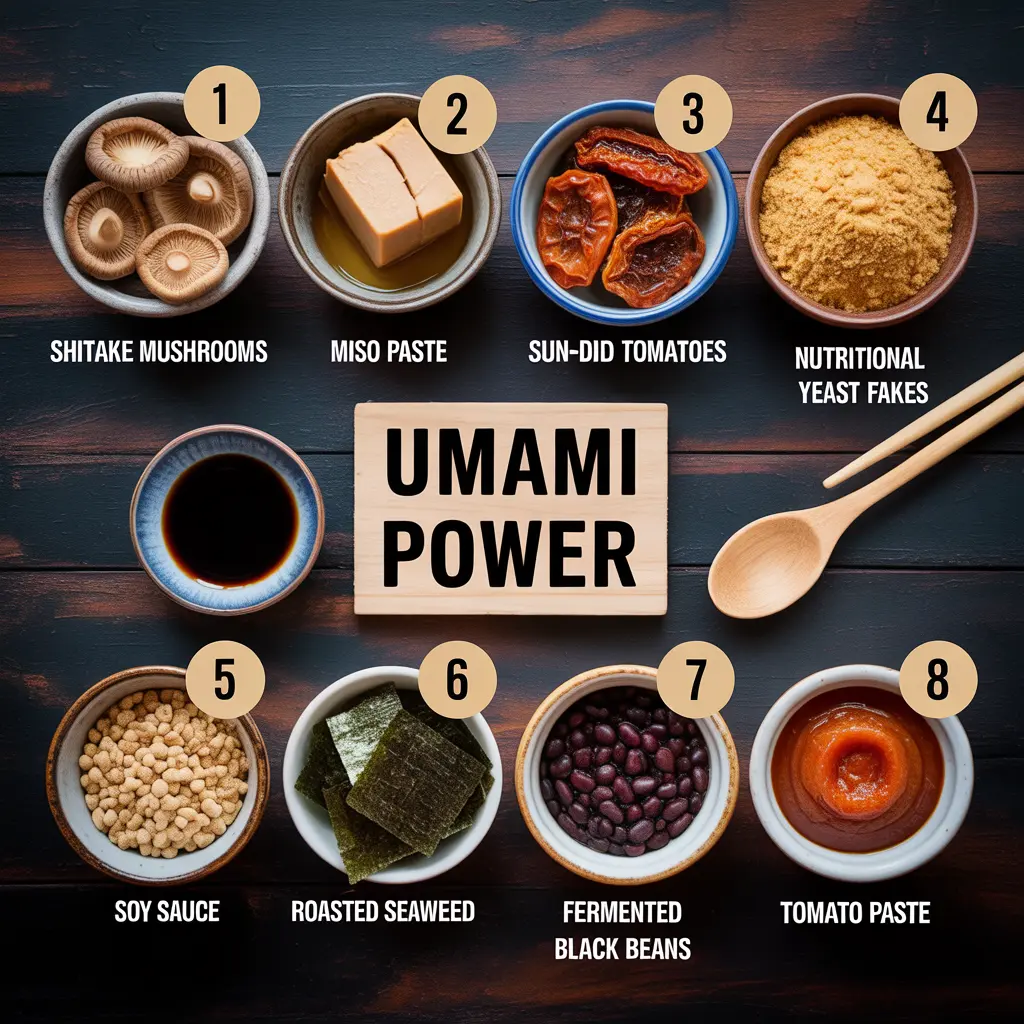
The most effective plant-based umami sources fall into two categories: glutamate-rich and guanylate-rich. Combining both in a single dish activates the synergy effect described next. The following eight are the most potent and versatile vegan umami sources available.
Using even three of these eight sources consistently transforms the perceived richness of plant-based meals. The key is pairing them synergistically.
If building rich, satisfying plant-based meals every week feels complicated, the Ultimate 28-Day Vegan Meal Plan + Grocery List, (Complete Solution) does the planning for you. Over 40 nutritionist-approved recipes, vibrant photo for every dish, easy grocery list, and a complete 28-day calendar. Family friendly meal prep made easy.
The Umami Synergy Effect: The Most Important of All Vegan Umami Flavor Hacks
The most important scientific principle behind practical vegan umami flavor hacks is umami synergy. When glutamate-rich ingredients are combined with guanylate-rich or inosinate-rich ingredients in the same dish, the perceived umami intensity is not additive. It is multiplicative. Research by taste scientists has shown that combining glutamate with guanylate can produce an umami sensation up to eight times more intense than either compound in isolation at the same concentration.
The mechanism involves cooperative binding at the T1R1/T1R3 receptor: glutamate occupies the primary site while GMP or IMP bind an adjacent allosteric site. When both are occupied simultaneously, the receptor produces a dramatically amplified signal. This is a measurable neurochemical response, not a flavor illusion, and explains why many traditional cuisine combinations have endured for thousands of years.
In practice, pair dried shiitake (high GMP) with miso, soy sauce, or nutritional yeast (high glutamate) in any broth, sauce, or dressing. Adding kombu during stock preparation alongside sun-dried tomatoes stacks both compound classes simultaneously. This principle underpins the most satisfying vegan soups, stews, and grain bowls at a professional level.
Dried shiitake (GMP) plus any fermented glutamate source (miso, soy sauce, or nutritional yeast) activates the full receptor synergy, producing savory depth that rivals meat-based stocks in sensory evaluations.
This also explains why many vegan dishes feel flat. It is rarely about the absence of meat. It is about using only one umami compound class. Tomato sauce with nutritional yeast has glutamate but no guanylate. Adding dried mushrooms or kombu instantly activates synergy. This insight alone is worth more than any other vegan umami flavor hack.
The vegan protein sources guide covers the amino acid profile of key ingredients, which directly relates to their glutamate content and vegan umami flavor hacks potential.
Pro Kitchen Techniques for Maximum Vegan Umami Flavor Hacks
Knowing which ingredients carry umami is only half the picture. Technique determines how much is extracted, concentrated, and bioavailable. The following six methods maximise vegan umami flavor hacks through cooking method rather than ingredient quantity.
Applied together, these six techniques produce layered complexity irreducible to any single ingredient. Technique amplifies ingredient quality: the central insight of twenty years in professional MENA and Mediterranean kitchens.
The Layering Method: Building Depth Through Every Stage of Cooking
The layering method is the most systematic approach to vegan umami flavor hacks in professional kitchens: distributing umami sources across every stage of cooking rather than adding everything at the end. Each addition builds on the last, creating depth that simultaneous addition cannot produce.
▼
▼
▼
▼
▼
This six-stage protocol applies to soups, stews, braises, and sauces equally. It is teachable and systematic because it is about process, not a secret ingredient.
For applying this method at weekly scale, see the vegan batch cooking guide and the vegan pantry staples list.
Glutamate Content in Vegan Umami Flavor Hacks vs. Common Animal Sources
A common misconception is that deep savory flavor requires animal products. The glutamate data says otherwise: several plant ingredients contain as much or more free glutamate per gram than the most cited animal umami sources.
Kombu at 3,190mg per 100g surpasses every animal product in raw glutamate density. Dried shiitake at 1,400mg exceeds aged parmesan, the most cited umami-dense cheese. This data is consistent with research available at VeganHealth.org, which covers the nutritional science of plant-based ingredients in clinical detail. The argument that plant-based diets cannot produce deep savory flavor is not supported by the underlying food chemistry.
Vegan Umami Flavor Map: Sources by Compound Type
20 Years of MENA and Mediterranean Cuisine: Pro Kitchen Secrets for Deep Plant-Based Flavor
Working twenty years across MENA and Mediterranean professional kitchens, building depth in plant-based dishes has never been about substituting meat. It has been about understanding what the most satisfying traditional dishes always did with umami compounds.
The first insight is about pomegranate molasses as a glutamate carrier. This thick reduction concentrates naturally occurring glutamate in pomegranate, adding a savory-fruity depth that layers beautifully with dried mushrooms, lentils, and roasted vegetables. One of the most underused vegan umami flavor hacks in international plant-based cooking.
The second is the double ferment finish: adding two distinct fermented elements at the end of cooking, one paste (harissa, preserved lemon) and one liquid (apple cider vinegar or vegetable brine). Both develop free glutamate through salt fermentation. Their combination in the finish layer creates extraordinary complexity that is systematic in professional plant-forward kitchens.
The third insight is temperature sequencing with spices. Dry-toasting before building the umami base increases Maillard products in the fat layer. Fat-soluble aromatic compounds from toasted spices and water-soluble glutamate from mushrooms form two complementary layers that never compete. Toasting cumin and coriander in oil before adding tomato paste and mushroom stock builds structural flavor depth that satisfies at every level of taste perception.
These principles apply directly to the Middle Eastern vegan recipes guide and the vegan cooking techniques guide.
Every recipe in the Ultimate 28-Day Vegan Meal Plan + Grocery List, (Complete Solution) is built for flavor as well as nutrition. Over 40 recipes with vibrant photos, easy grocery list, every meal meets protein, iron, and B12 needs. Save 7+ hours weekly on meal planning. Print and use today.
5 Mistakes That Undermine Your Vegan Umami Flavor Hacks
Understanding vegan umami flavor hacks includes recognising the five most common errors that flatten plant-based cooking, each with a specific fix.
Mistake 1: Using Only One Umami Source
Adding only soy sauce or only nutritional yeast misses the synergy effect entirely. The fix is always to pair a glutamate source with a guanylate source (dried mushroom, kombu) in the same dish. One source gives you umami. Two compound classes give you depth.
Mistake 2: Boiling Miso
High heat destroys miso’s live enzymes and volatile aromatics, leaving only saltiness. Add miso off the heat or into liquid below 80C.
Mistake 3: Discarding Mushroom Soaking Liquid
The liquid from rehydrating dried shiitake or porcini contains the highest guanylate concentration in the entire preparation. Strain through a fine mesh and use it as your cooking base. Discarding it is discarding the most potent element in the dish.
Mistake 4: Salting Before Tasting Fermented Additions
Miso, soy sauce, tamari, and preserved lemon are all highly saline. Add fermented elements first, then adjust salt only after tasting. Over-seasoning from this order error is one of the most common avoidable mistakes.
Mistake 5: Under-Reducing the Sauce
Umami compounds are water-soluble and concentration-dependent. A 30-40% reduction transforms a good sauce into a deeply satisfying one. Concentration is the simplest and most overlooked upgrade in any vegan umami toolkit.
Keep cold-brewed dried shiitake liquid in the refrigerator. Add a tablespoon to any savory dish during cooking. This single habit introduces guanylate into every meal, instantly activating synergy with whatever glutamate sources are already present.
For pantry sourcing, the vegan grocery hacks guide covers every key ingredient. For finished recipes, the high-protein vegan dinner guide puts these techniques into practice.
Conclusion: Apply These Vegan Umami Flavor Hacks with Confidence
Vegan umami flavor hacks are food science in action. Kombu outperforms most animal products in glutamate density. Dried shiitake delivers the highest guanylate of any food source. Fermented miso, tamari, nutritional yeast, and sun-dried tomatoes build into extraordinary depth when combined with technique.
Use synergistic pairs of glutamate and guanylate, apply the six professional techniques, follow the layering protocol, and avoid the five common mistakes. These vegan umami flavor hacks apply to every cuisine and every skill level. Master them and the question of how to make plant-based food deeply satisfying answers itself.
Want 28 days of fully planned, flavor-rich vegan meals without the guesswork? The Ultimate 28-Day Vegan Meal Plan + Grocery List, (Complete Solution) includes a complete 28-day calendar with shopping lists, nutritionist-approved recipes, and helpful vegan tips and guides. Simple recipes with common ingredients. Print and use today.
Frequently Asked Questions About Vegan Umami Flavor Hacks
1. What is umami and why does it matter in vegan cooking?
Umami is the fifth primary taste, driven by glutamate and guanylate compounds activating taste receptors on the tongue and gut. It creates the deep, satisfying savory quality that makes meals feel complete and filling rather than flat.
2. Can plant-based food match the umami of meat-based dishes?
Yes. Kombu contains more free glutamate per gram than most animal products, and dried shiitake holds the highest guanylate concentration of any food. Combined through synergy, plant sources match or exceed meat-based stocks in umami intensity.
3. What is the easiest vegan umami hack for everyday cooking?
Add a tablespoon of cold-brewed dried shiitake liquid to any savory dish. It introduces guanylate instantly, activating synergy with the glutamate in tomatoes, soy sauce, or other ingredients already in the pot.
4. What is umami synergy and how do I use it?
Umami synergy is the up to 8x amplification of perceived umami when glutamate and guanylate sources are combined in the same dish. In practice, pair miso, soy sauce, or nutritional yeast with dried shiitake or kombu.
5. Why does my vegan cooking taste flat even when I add soy sauce?
Soy sauce is high in glutamate but contains no guanylate. Using only one compound class limits depth. Add dried shiitake liquid or kombu alongside the soy sauce to activate synergy and transform the flavor.
6. Is nutritional yeast a good umami source?
Yes. At 638mg of glutamate per 100g, it is one of the most concentrated dry pantry umami sources available. Its cheesy, nutty profile makes it highly versatile. Combine it with dried mushrooms for full synergy activation.
7. Can I use miso in cooking without boiling it?
Absolutely. Miso should always be added off the heat or into warm liquid below 80C. Boiling destroys its live enzymes and volatile aromatics, leaving only salt. Stir miso in at the end of cooking for maximum complexity.
8. Best vegan substitute for Parmesan umami in pasta?
Nutritional yeast combined with a small amount of white miso closely replicates parmesan’s glutamate intensity. A drizzle of olive oil or tablespoon of cashew cream adds the fat-carried aromatic richness.
9. Does cooking method affect how much umami a dish has?
Significantly. Reduction concentrates glutamate and guanylate. Maillard browning in tomato paste and mushrooms generates additional savory compounds. Cold extraction preserves delicate GMP. Technique multiplies the umami output of the same ingredients.
10. Is black garlic worth using for vegan umami?
Yes. The aging process concentrates free amino acids including glutamate alongside Maillard compounds that fresh garlic lacks. A small quantity in sauces or grain dishes adds remarkable depth and it is widely available pre-made.
11. How do fermented foods create umami?
Fermentation breaks intact proteins into free amino acids, releasing glutamate. The longer the fermentation, the more free glutamate is produced and the more intense the umami. This is why aged miso is deeper than white miso.
12. Can I build umami depth in a quick weeknight meal?
Yes. Toasting tomato paste takes 2 minutes. Adding mushroom soaking liquid takes seconds. Finishing with miso off the heat takes one minute. These vegan umami flavor hacks fit comfortably into a 20-minute dish.
Still spending hours figuring out what to eat?
What’s included in your download
- 40+ nutritionist-approved recipes
- Complete 28-day calendar
- Meets protein, iron & B12 needs
- Family & meal prep friendly
- Vibrant photo for every recipe
- Simple, common ingredients
Instant PDF download. No subscriptions. No waiting.