
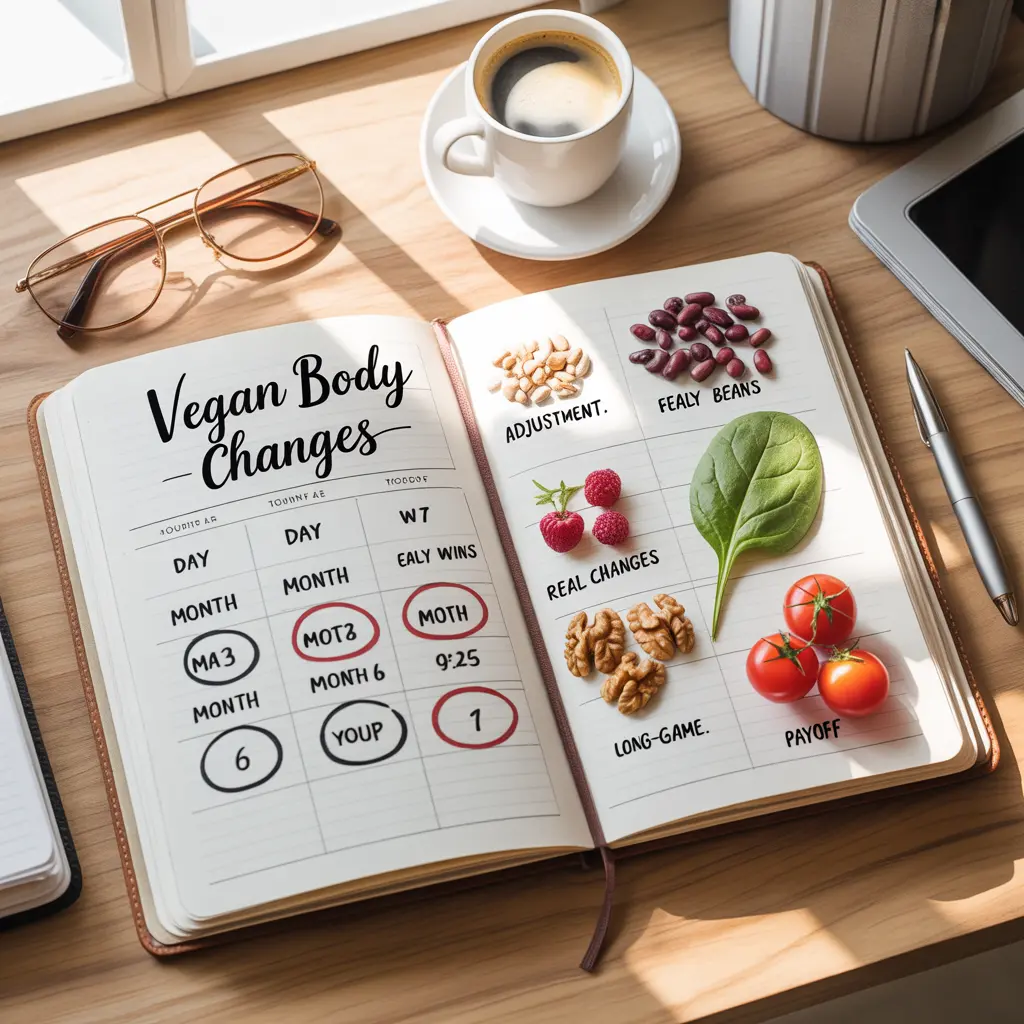
- Week 1: Digestion shifts noticeably. Bloating is common and normal. Energy may dip before it rises.
- Month 1: Blood sugar stabilises, skin may begin clearing, early weight change begins.
- Month 3: Cholesterol drops, energy levels settle at a new higher baseline, gut microbiome meaningfully restructures.
- Month 6+: Blood markers improve across the board. Inflammation markers fall. Weight stabilises at a lower set point.
- The honest caveat: What happens to your body when you go vegan depends almost entirely on the quality of the diet. A junk food vegan diet produces junk food outcomes. A whole food vegan diet produces the results the research documents.
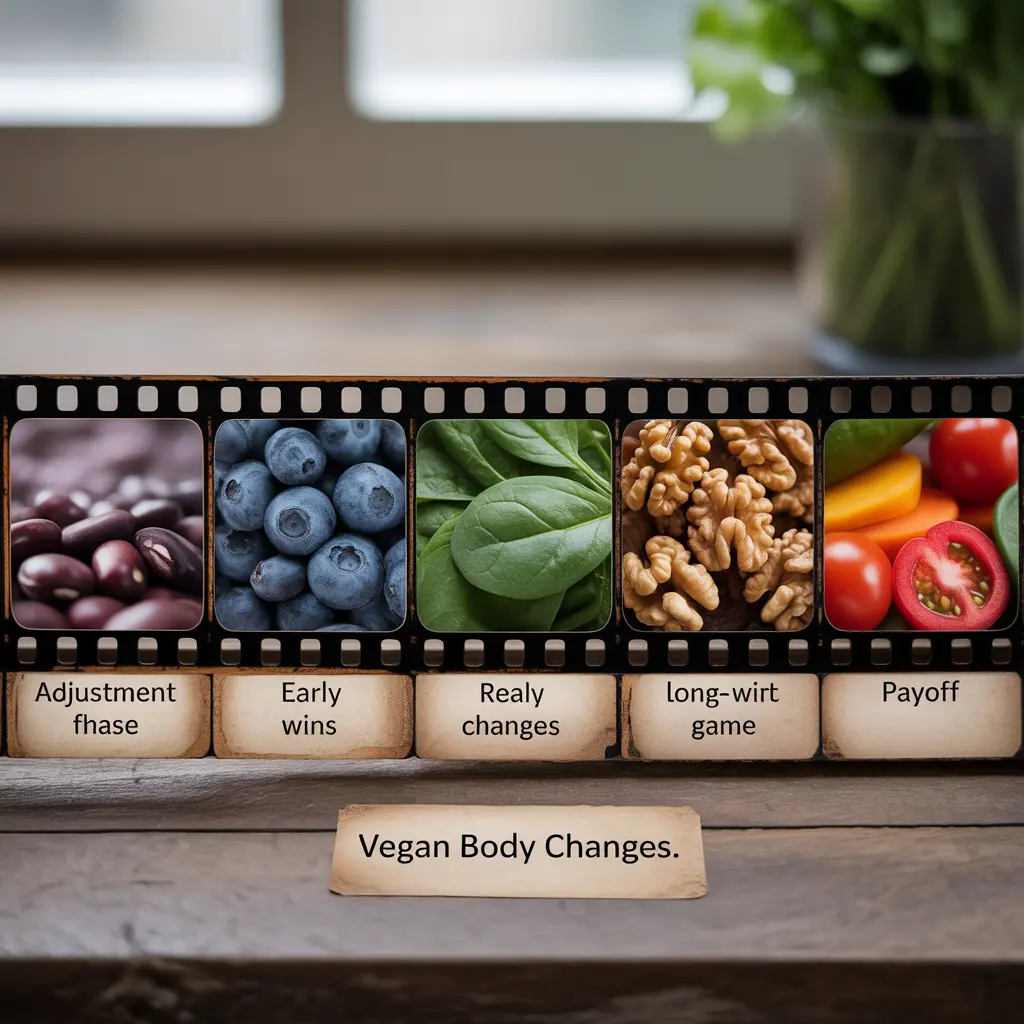
- Week 1: The Adjustment Phase
- Month 1: Early Wins and What to Watch
- Month 3: Where the Real Changes Begin
- Month 6 to Year 1: The Long-Game Payoff
- Complete Body Change Timeline Table
- Body System by System: What Changes and When
- The Honest Risks: What Can Go Wrong
- Frequently Asked Questions
- Your Starting Point
Tracking your blood markers before and after is the most accurate way to measure what happens to your body when you go vegan beyond what you can feel and see in the mirror.
What happens to your body when you go vegan is one of the most searched questions in plant-based nutrition — and one of the most dishonestly answered. Most content gives you either the optimistic version (clear skin, endless energy, weight loss overnight) or the pessimistic version (deficiencies, muscle loss, constant fatigue). The truth is more specific and more interesting than either.
What happens to your body when you go vegan depends on three variables: what you ate before, what you eat now, and how well you plan the nutritional gaps. Get those three right and the research is genuinely impressive. Get them wrong and a vegan diet is just a different way to eat poorly.
Understanding what happens to your body when you go vegan is the first step to making the transition work long-term rather than abandoning it in week two.
This guide gives you the honest, mechanistic, week-by-week answer. No ideology. No fear. Just what the science says happens, when it happens, and what to do about it. For the practical first-step structure, our beginner vegan diet guide maps the exact food framework for each phase.
Week 1: The Adjustment Phase
Week 1 is the most misread phase. Everything feels like a sign — either that the diet is working brilliantly or failing completely. Most of what you feel in week 1 is neither. It is simply adjustment.
What actually happens in week 1:
- Gut bacteria begin shifting immediately. Within 24 to 48 hours of a significant dietary change, the composition of your gut microbiome begins to change. This is not metaphorical. Measurable shifts in bacterial populations occur within days of increasing fibre intake.
- Bloating and gas peak. The gut bacteria you currently have are not optimised for the volume of fibre a plant-based diet provides. They ferment the excess, producing gas. This is temporary, not pathological.
- Blood sugar begins flattening. Even in week 1, replacing white bread and processed foods with legumes and vegetables reduces post-meal insulin spikes. Many people notice they feel less foggy after lunch within the first few days.
- Cravings peak in days 3 to 5. This is when the habit-brain is loudest. It passes for most people by day 7 to 10.
- Energy is unpredictable. Some people feel lighter and clearer immediately. Others feel fatigued as the body adjusts to a fundamentally different fuel mix. Both are normal in week 1.
What to do in week 1:
- Increase water intake alongside fibre increase.
- Cook all cruciferous vegetables — raw broccoli and cabbage are the primary gas culprits.
- Rinse canned legumes for 60 seconds under cold water before using.
- Start B12 supplementation immediately — 1,000mcg methylcobalamin daily.
- Do not judge the diet by week 1 digestion. It is the worst week and not representative of what comes next.
Month 1: Early Wins and What to Watch
By the end of month 1, what happens to your body when you go vegan starts becoming clearly positive for most people. The adjustment discomfort fades and the first measurable benefits arrive.
Most people searching for what happens to your body when you go vegan expect either a miracle or a disaster — the reality is more gradual, more specific, and more manageable than either.
The early wins at 30 days:
- Post-meal energy is noticeably different. The heaviness after high-fat animal meals disappears. Many people describe eating lunch and being able to focus immediately afterwards rather than experiencing the familiar afternoon crash.
- Skin begins changing. For people who were consuming significant amounts of dairy, acne and skin oiliness often begin improving in weeks 3 to 4 as bovine IGF-1 clears the system and sebum production normalises.
- Bowel regularity improves. Higher fibre intake and improved gut motility produce more consistent, easier bowel movements for the majority of people by week 3 to 4.
- Weight begins shifting. Not through calorie counting. Through the natural calorie deficit produced by high-volume, low-calorie-density plant foods that provide satiety at lower caloric loads than animal products.
What to watch at 30 days:
- Protein gaps. Without deliberate planning, plant protein intake often falls short in month 1. Legumes must anchor every main meal. See our complete protein guide for the practical framework.
- Iron absorption. Plant iron (non-haem) requires vitamin C at the same meal for maximum absorption. If you are eating iron-rich foods but not pairing them with vitamin C sources, absorption is significantly lower than expected.
- The junk food vegan trap. Month 1 is when many people realise their diet has become heavy in vegan processed foods, sweetened plant milks, and refined carbohydrates. These do not produce the benefits described in this guide. A whole food approach does.
Month 3: Where the Real Changes Begin
Month 3 is when what happens to your body when you go vegan becomes measurable in blood tests, visible in the mirror, and felt consistently in daily energy and cognitive function.
Clinically measurable changes at 3 months:
- LDL cholesterol drops 10 to 15 percent on average in people switching from an omnivore diet to a whole food plant-based diet. This is driven by the elimination of dietary cholesterol and saturated fat, alongside the active LDL-lowering effect of soluble fibre from oats and legumes.
- HbA1c (3-month blood sugar average) improves meaningfully for anyone with elevated baseline blood sugar. Multiple randomised controlled trials document HbA1c reductions of 0.5 to 1.2 percentage points at the 3-month mark.
- Blood pressure falls in most people. High potassium from plant foods, reduced dietary sodium from unprocessed whole foods, and weight loss combine to lower both systolic and diastolic blood pressure measurably.
- Inflammatory markers decline. C-reactive protein and interleukin-6, the markers used to assess systemic inflammation, are consistently lower in people following plant-based diets for three or more months.
- Gut microbiome restructuring is now substantial. At 3 months, the beneficial fibre-fermenting bacterial populations that were underrepresented in an omnivore gut have proliferated significantly. Short-chain fatty acid production increases. Gut barrier integrity improves.
Book your 3-month blood test. Request:
- Full lipid panel (LDL, HDL, triglycerides)
- HbA1c and fasting glucose
- B12, ferritin, vitamin D
- Thyroid panel (TSH, T3, T4)
- Full blood count
Our complete blood test guide covers exactly what to request and how to interpret each result in the context of a plant-based diet.
Month 6 to Year 1: The Long-Game Payoff
What happens to your body when you go vegan at 6 months and beyond is what the large population studies have been measuring for decades. This is where the data becomes genuinely compelling.
The research on what happens to your body when you go vegan is clear on one point above all others: dietary quality determines outcomes, not the label.
Six months:
- Weight stabilises at a lower set point for most people following a whole food vegan diet. Average weight loss in long-term plant-based eaters versus omnivores is 4 to 6kg across multiple large cohort studies.
- Gut microbiome is fully adapted. The digestive discomfort of month 1 is a distant memory. The gut now processes high-fibre plant meals efficiently.
- Chronic disease risk markers are at their new baseline. For people with elevated cardiovascular risk, type 2 diabetes risk, or PCOS, the dietary interventions are producing their full effect by 6 months.
- If you are wondering what happens to your body when you go vegan after age 50, the cardiovascular and metabolic benefits are even more pronounced than in younger adults due to higher baseline risk.
Year 1 and beyond:
- Cardiovascular disease risk reduction of 25 to 32 percent versus omnivore counterparts documented in long-term cohort studies.
- Type 2 diabetes risk reduction of 23 percent in vegans versus omnivores in the Adventist Health Study 2, the largest vegan diet cohort study available.
- All-cause mortality is measurably lower in long-term whole food plant-based eaters in multiple independent population studies.
- Gut microbiome diversity reaches its new high-diversity baseline, associated with reduced risk of metabolic disease, autoimmune conditions, and mood disorders.
The honest answer to what happens to your body when you go vegan includes both the impressive benefits and the specific nutritional risks — ignoring either gives you an incomplete picture.
Two tables. One shows the timeline of changes by week and month. One shows what happens to your body when you go vegan across every major body system. Both are designed to be saved and referenced, not just read once.
| Timeframe | What Improves | What’s Difficult | What to Do |
|---|---|---|---|
| Week 1 to 2 | Blood sugar begins to stabilise. Energy after meals feels lighter. Some people notice clearer skin within days of dairy elimination. | Bloating and gas from fibre increase. Possible fatigue as the body adjusts. Cravings for eliminated foods peak in week 1. | Increase water intake. Cook all cruciferous vegetables. Rinse canned legumes thoroughly. Do not panic about digestive symptoms — they are expected. |
| Week 3 to 4 | Digestion begins settling. Energy levels rise noticeably. Post-meal heaviness typical of high-fat animal meals disappears. Skin may begin clearing. | Social eating becomes more complex. Nutritional planning awareness becomes necessary. B12 supplementation must be started if not already. | Start B12 (1,000mcg methylcobalamin daily). Plan protein sources deliberately at every meal. Begin introducing fermented foods. |
| Month 1 to 3 | LDL cholesterol drops measurably. Weight begins to shift. Gut microbiome restructures significantly. Inflammatory markers decline. Sleep quality often improves. | Without planning, protein and iron gaps emerge. Eating out requires more thought. Some people hit a motivation plateau after initial enthusiasm. | Book a blood test at the 3-month mark. Review protein sources. Add omega-3 algae supplement. Build a meal prep routine to maintain momentum. |
| Month 3 to 6 | HbA1c improves measurably for those with elevated blood sugar. Cardiovascular markers continue improving. Energy at a new higher stable baseline. Skin at its new clearer baseline. | Micronutrient gaps (B12, D, iodine, zinc, omega-3) become clinically relevant if not supplemented. Fatigue may return if iron or B12 is low. | Full blood panel: B12, ferritin, vitamin D, zinc, thyroid, HbA1c. Adjust supplements based on results. This is the most important maintenance window. |
| Month 6 to Year 1 | Comprehensive long-term improvements in cardiovascular risk, metabolic health, and inflammatory load. Body weight stabilises at a lower set point for most people. Gut microbiome fully adapted to high-fibre diet. | Complacency about supplementation. Dietary monotony if variety is not actively maintained. Long-term B12 monitoring becomes critical. | Annual blood tests as standard. Maintain supplement routine. Introduce new plant foods regularly to preserve microbiome diversity. |
| Body System | What Changes | Timeline | Watch Out For |
|---|---|---|---|
| Digestive system | Fibre intake typically doubles or triples. Beneficial Firmicutes and Bacteroidetes populations shift. Transit time increases. Gut lining strengthens over months. | Bloating weeks 1 to 4. Improved regularity from week 3. Microbiome restructuring takes 3 to 6 months. | Increasing fibre too fast. Undercooked or unsoaked legumes. Raw cruciferous in large amounts. See our complete bloating guide if symptoms persist. |
| Cardiovascular system | LDL cholesterol drops 10 to 15 percent on average within 8 weeks. Blood pressure falls in most studies. Arterial flexibility improves. CRP (inflammation marker) declines progressively. | LDL measurable at 4 to 8 weeks. Blood pressure within 4 weeks. CRP reduction takes 3 to 6 months. | Replacing animal fat with refined carbohydrates raises triglycerides. High coconut oil use maintains high saturated fat intake. Whole food choices are essential for cardiovascular gains. |
| Blood sugar and metabolism | Post-meal glucose spikes flatten. Insulin sensitivity improves through higher fibre and lower saturated fat. HbA1c drops meaningfully at 3 months in most people with elevated baseline. | Post-meal stability within 1 to 2 weeks on whole food vegan diet. HbA1c at 3-month blood test. Insulin sensitivity at 4 to 12 weeks. | A high-GI vegan diet worsens blood sugar. White bread, fruit juice, sweetened plant milks, and vegan pastries spike insulin as aggressively as processed omnivore food. |
| Skin | Dairy elimination removes the primary dietary IGF-1 and androgen stimulus for acne. Higher antioxidant intake reduces skin oxidative damage. Improved gut health reduces inflammatory skin conditions. | Acne: 4 to 8 weeks post dairy elimination. Skin texture: 6 to 10 weeks. Eczema and psoriasis: variable, 8 to 16 weeks. | Replacing dairy with sweetened plant milks maintains the insulin-acne cycle. Zinc and omega-3 deficiency worsens skin despite dairy elimination. See our complete acne guide. |
| Energy and brain | Post-meal energy dips from heavy animal meals disappear. Mental clarity often improves with lower systemic inflammation. Gut-brain axis improves with microbiome restructuring. | Post-meal energy within days. Brain clarity at 4 to 8 weeks. Full gut-brain improvement at 3 to 6 months. | B12 deficiency causes neurological fatigue that mimics burnout. Omega-3 DHA insufficiency impairs cognitive function. Iron deficiency from heavy periods causes energy collapse. See our tiredness guide. |
| Weight and body composition | Average BMI is consistently 1 to 2 points lower in long-term vegans versus omnivores across population studies. High-volume, low-calorie-density plant foods produce calorie deficits naturally without restriction. | Early weight loss in week 1 to 2 (water and glycogen). Steady fat loss from week 3 to 4 if whole food diet. Body composition plateau at 6 to 12 months. | Calorie insufficiency if not eating enough volume. Not losing weight despite whole food eating often signals not eating enough legumes and protein. See our weight loss troubleshooting guide. |
| Hormones | Dairy elimination removes exogenous bovine hormones. Fibre binds oestrogen in the gut, reducing recirculation. IGF-1 levels fall measurably. Sex hormone binding globulin rises, reducing free androgen activity. | IGF-1 reduction at 4 to 8 weeks. SHBG changes at 4 to 12 weeks. Menstrual cycle regularity (in PCOS) at 8 to 16 weeks. | Iodine intake must be monitored. Thyroid function depends on iodine. Low iodine on a vegan diet disrupts thyroid hormones and downstream sex hormone balance. See our supplement guide for iodine dosing. |
These timelines represent what happens to your body when you go vegan on a whole food plant-based diet. A junk food vegan diet will not produce these outcomes. The research supporting these changes is conducted on diets built around legumes, whole grains, vegetables, nuts, and seeds, not on diets built around vegan nuggets, oat milk lattes, and processed vegan cheese.
For a complete day-by-day guide through your first week of this transition, our first week vegan guide covers exactly what to eat, expect, and do to make the transition as smooth as possible.
According to NutritionFacts.org’s comprehensive research on plant-based diet outcomes, the most consistent findings across decades of studies are reductions in cardiovascular disease risk, type 2 diabetes incidence, certain cancer risks, and all-cause mortality in people following long-term whole food plant-based diets, with the magnitude of benefit correlating directly with dietary quality and adherence duration.
The NHS guidance on the vegan diet confirms that a well-planned vegan diet can support healthy living at every age, while emphasising that key nutrients including B12, vitamin D, calcium, iodine, and omega-3 require specific attention to ensure sufficiency on a plant-based diet.
Athletes who have researched what happens to your body when you go vegan consistently report improved recovery time as one of the earliest and most noticeable performance benefits.
The Honest Risks: What Can Go Wrong
Any guide that only tells you the benefits of what happens to your body when you go vegan is selling you something. Here is what can genuinely go wrong, and exactly how to prevent each one.
1. Vitamin B12 Deficiency
- Risk level: High if not supplemented. B12 is found almost exclusively in animal products and is non-negotiable on a vegan diet.
- What it causes: Neurological damage, megaloblastic anaemia, cognitive impairment, and fatigue that worsens progressively and is irreversible if left untreated long enough.
- The fix: 1,000mcg methylcobalamin daily. No exceptions. No “I eat nutritional yeast” workarounds. Supplement reliably.
- Test: Every 12 months minimum. Active B12 (holotranscobalamin) is the most accurate marker, more so than total serum B12.
2. Iron Deficiency (Particularly in Women)
- Risk level: Moderate to high, especially in premenopausal women with heavy periods.
- What it causes: Fatigue, brain fog, hair loss, impaired immunity, poor exercise recovery.
- The fix: Iron-rich plant foods (lentils, tofu, pumpkin seeds, dark leafy greens) paired with vitamin C at every meal. Test ferritin specifically — haemoglobin alone misses early iron deficiency.
- The threshold that matters: Ferritin below 70mcg/L causes symptoms even when haemoglobin is normal. Most doctors only flag ferritin below 12. Push for the higher threshold interpretation.
3. Omega-3 DHA and EPA Insufficiency
- Risk level: High without supplementation. ALA from flaxseeds and walnuts converts to DHA at only 5 to 10 percent efficiency.
- What it causes: Increased systemic inflammation, cognitive impairment over time, worsened skin conditions, mood instability.
- The fix: Algae-based DHA and EPA supplement 250 to 500mg daily. This is where fish get their omega-3 from. Going direct to the source is more efficient and more sustainable.
4. Iodine and Thyroid Disruption
- Risk level: Moderate. Iodine is found primarily in dairy and seafood in Western diets. Both are absent in a vegan diet without deliberate planning.
- What it causes: Thyroid dysfunction, fatigue, weight changes, hair loss, cognitive slowing.
- The fix: A supplement providing 150mcg of iodine daily. Most vegan multivitamins do not include iodine. Check the label. Use iodised salt if not supplementing. Do not rely on seaweed as an iodine source as the content is too variable.
5. Protein Insufficiency (In Early Months)
- Risk level: Moderate in the first one to three months without deliberate planning.
- What it causes: Muscle loss, slow recovery, persistent hunger, fatigue, hair thinning.
- The fix: Legumes at every main meal. Minimum 150g cooked legumes per sitting. Tofu or tempeh as protein centrepiece. Target 1.2 to 1.6g protein per kg body weight. Our 100g protein guide shows the daily food combinations that hit these targets without protein powders.
Frequently Asked Questions
What happens to your body when you go vegan in the first week?
In the first week, your gut microbiome begins shifting immediately, bloating and gas peak as bacteria adjust to higher fibre, blood sugar begins flattening, and energy is unpredictable. Cravings peak around days 3 to 5. Week 1 is the most difficult week of the transition and the least representative of the long-term experience. Increase water, cook all cruciferous vegetables, start B12 supplementation, and do not judge the diet by week 1 digestion.
One of the most consistent findings in studies examining what happens to your body when you go vegan is the measurable improvement in gut microbiome diversity within the first three months.
How quickly do you lose weight when you go vegan?
Initial weight loss in week 1 to 2 is primarily water and glycogen as carbohydrate storage shifts. Actual fat loss begins from week 3 to 4 on a whole food vegan diet as the natural calorie deficit from high-volume, low-calorie-density plant foods takes effect. Average weight loss in studies of people switching to whole food plant-based diets is 4 to 6kg over the first 6 to 12 months without calorie restriction. A high-GI vegan diet produces much slower or no weight loss. See our weight loss troubleshooting guide if the scale is not moving.
Does going vegan really lower cholesterol?
Yes, consistently and measurably. LDL cholesterol drops 10 to 15 percent on average within 8 weeks of switching to a whole food vegan diet. The mechanism is triple: elimination of dietary cholesterol entirely, significant reduction in saturated fat, and the active LDL-lowering effect of soluble fibre from oats and legumes binding bile acids in the gut. This is one of the most robust and replicated findings across all plant-based diet research.
What happens to muscle when you go vegan?
Nothing negative happens to muscle when you go vegan if protein intake is adequate. The research is clear: a vegan diet with sufficient protein (1.2 to 1.6g per kg body weight) supports muscle protein synthesis, maintenance, and growth equivalent to an omnivore diet. What happens to your body when you go vegan and fail to plan protein is muscle loss, fatigue, and slow recovery. What happens when you build meals around legumes, tofu, and tempeh is no muscle loss and often improved recovery due to reduced systemic inflammation.
What happens to your body when you go vegan overnight is nothing dramatic — the meaningful changes accumulate over weeks and months, not hours.
Does your gut ever fully adapt when you go vegan?
Yes. The bloating and digestive discomfort most people experience in the first 2 to 4 weeks resolves completely for the vast majority of people within 4 to 8 weeks as the gut microbiome restructures and beneficial fibre-fermenting bacteria proliferate. By month 3 to 6, the gut microbiome of a long-term whole food vegan is measurably more diverse and populated with more beneficial species than a typical omnivore microbiome. If bloating persists beyond 8 weeks, specific causes need investigating. Our complete bloating guide covers every cause and fix.
Doctors are increasingly recommending plant-based diets after seeing the clinical evidence for what happens to your body when you go vegan in terms of cholesterol, blood pressure, and inflammatory markers.
Your Starting Point
What happens to your body when you go vegan is not a single answer. It is a sequence. Here is what you control and when:
This week:
- Start B12 — 1,000mcg methylcobalamin. Non-negotiable from day one.
- Build every meal around a legume base. Protein and blood sugar stability follow automatically.
- Cook all cruciferous vegetables for the first four weeks. Raw broccoli and cabbage are not your friends during adaptation.
- Switch to unsweetened plant milk. The sweetened versions replace one insulin problem with another.
Month 1:
- Add an algae-based omega-3 supplement (DHA and EPA 250 to 500mg daily).
- Add vegan D3 (1,000 to 2,000 IU) and iodine (150mcg) if not in your multivitamin.
- Start daily fermented foods: tempeh, miso, kimchi, or sauerkraut to accelerate gut adaptation.
Month 3:
- Book a blood test. B12, ferritin, vitamin D, lipid panel, HbA1c, thyroid. See the full list in our blood test guide.
- Review your protein sources. Are legumes appearing at every main meal? If not, adjust.
- Build a meal prep routine. The people who maintain a vegan diet long-term are not more motivated than those who abandon it. They have better systems. Our 30-day meal prep plan gives you the system.
What happens to your body when you go vegan is, ultimately, what you make it. The research documents the potential. The food choices determine whether you reach it.

⏳ Limited Time Offer — Price Goes Up Soon
VEGAN
MEAL
PLAN
Ebook On Sale Now
Best Selling · Instant Download
28-Day Vegan
Meal Plan
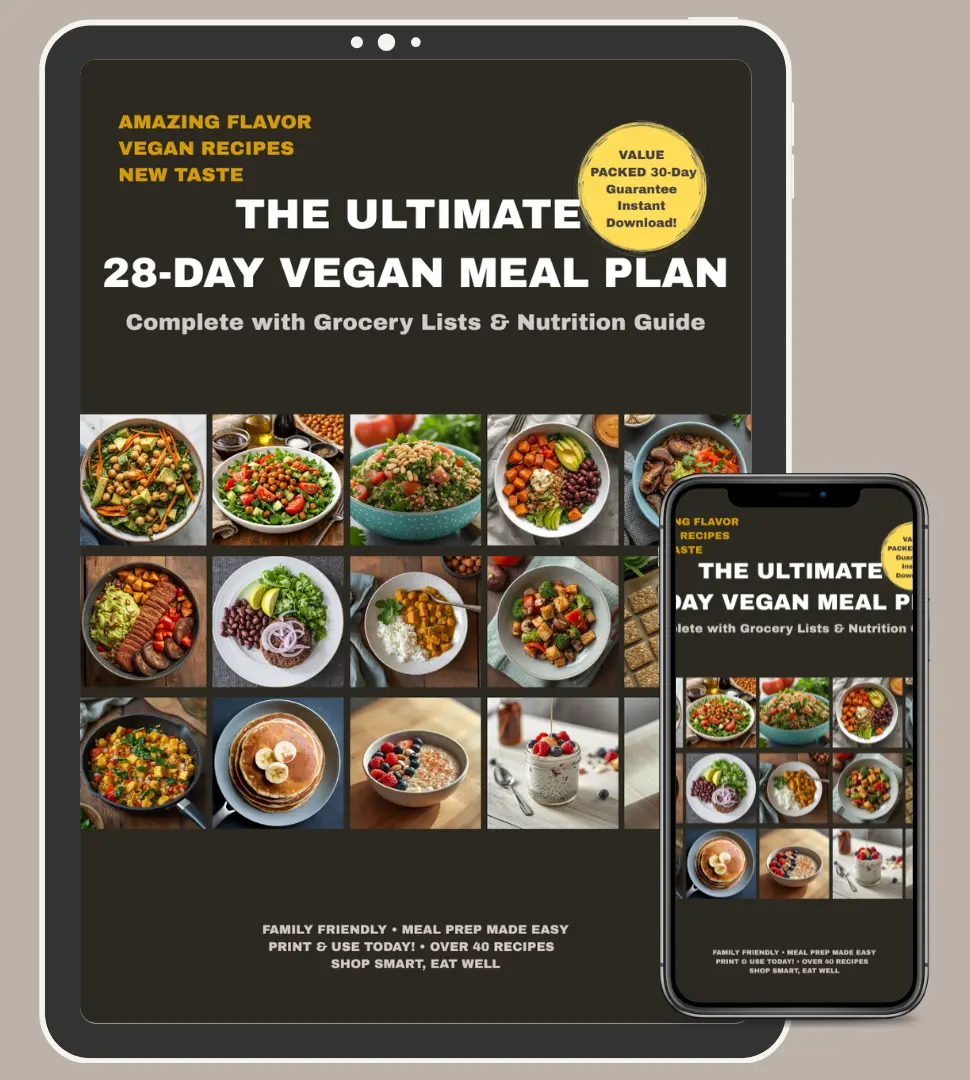
✓ 40+ recipes with photos
✓ Complete 28-day calendar
✓ Daily easy shopping lists
✓ Protein, iron & B12 met daily
✓ Bonus Nutrition Toolkit
🔥 This price won’t last — grab it before it’s gone.