
Section 1: The Vegan Advantage: Why Plant-Based Diets Are Naturally Aligned with Weight Loss
Adopting a vegan diet weight loss plan offers distinct, science-backed advantages that make creating a sustainable calorie deficit more manageable. Research consistently shows that individuals following plant-based diets tend to have lower body mass indexes (BMIs) and reduced rates of obesity compared to their omnivorous counterparts. This isn’t mere correlation; the physiology of a well-structured vegan diet weight loss plan creates multiple pathways to success. The primary mechanism is the fiber factor.
Plant foods are inherently rich in dietary fiber, which adds bulk without adding calories, promoting satiety and naturally reducing overall calorie intake. Fiber also slows digestion, stabilizing blood sugar and preventing the insulin spikes that drive fat storage.
Another cornerstone of an effective vegan diet weight loss plan is calorie density. Most whole plant foods—vegetables, fruits, legumes, and whole grains—are low in calories per pound, meaning you can eat larger, more satisfying volumes of food while consuming fewer calories. This “volume eating” approach is a powerful psychological and physiological tool against hunger. Furthermore, a whole-food, plant-based diet improves insulin sensitivity, allowing your body to use carbohydrates for energy more efficiently rather than storing them as fat.
Emerging research also highlights the role of the gut microbiome; plant-based diets foster a diverse population of beneficial bacteria that may influence metabolism and reduce inflammation. However, a crucial reality check is essential: vegan does not automatically equal weight loss. Oreos, potato chips, and sugary sodas are technically vegan. The “junk food vegan” trap is real and can easily lead to weight gain. This guide provides the framework for a strategic, whole-food-focused vegan diet weight loss plan that leverages these natural advantages while avoiding common pitfalls.
Section 2: The Non-Negotiable Science: Mastering the Calorie Deficit
The fundamental law of weight loss remains immutable, regardless of diet: you must consume fewer calories than you burn. A successful vegan diet weight loss plan does not circumvent this truth but makes adhering to it more effortless and sustainable. There are no magic foods or metabolism hacks that override the energy balance equation. The power of a strategic vegan diet weight loss plan lies in structuring your nutrition to create this deficit without constant hunger or deprivation.
Step 1: Calculate Your Basal Metabolic Rate (BMR).
This is the number of calories your body needs at complete rest to maintain basic physiological functions. Use the Mifflin-St Jeor Equation:
- For men: BMR = (10 × weight in kg) + (6.25 × height in cm) – (5 × age) + 5
- For women: BMR = (10 × weight in kg) + (6.25 × height in cm) – (5 × age) – 161
Step 2: Determine Your Total Daily Energy Expenditure (TDEE).
Multiply your BMR by an activity factor:
- Sedentary (little to no exercise): BMR × 1.2
- Lightly active (light exercise 1-3 days/week): BMR × 1.375
- Moderately active (moderate exercise 3-5 days/week): BMR × 1.55
- Very active (hard exercise 6-7 days/week): BMR × 1.725
Step 3: Establish Your Calorie Deficit.
For sustainable weight loss as part of a vegan diet weight loss plan, subtract 300-500 calories from your TDEE. This typically results in a loss of 0.5 to 1 pound per week. A more aggressive deficit of 500-750 calories may yield 1-1.5 pounds per week but can be harder to maintain. Never consume fewer than 1,200 calories (women) or 1,500 calories (men) daily without medical supervision.
Example: A 165 lb (75 kg), 5’6″ (168 cm), 35-year-old moderately active woman.
- BMR = (10 × 75) + (6.25 × 168) – (5 × 35) – 161 = 1,444 calories
- TDEE = 1,444 × 1.55 = 2,238 calories
- Vegan Diet Weight Loss Plan Target: 1,738 – 1,938 calories/day.
Why a Vegan Diet Weight Loss Plan Makes This Easier: High-fiber, water-rich plant foods have a low energy density. You can eat a large volume of broccoli, salads, or vegetable soup for very few calories, promoting fullness and making a calorie deficit feel natural rather than restrictive.
Section 3: Macronutrient Strategy: Optimizing Protein, Carbs, and Fats for Fat Loss
While calories are king for weight loss, macronutrient distribution is the queen that determines body composition, satiety, and adherence within your vegan diet weight loss plan.
Protein: The Priority Macronutrient (Target: 1.6-2.2g per kg of body weight)
Protein is the most satiating macronutrient, has the highest thermic effect of food (meaning your body burns more calories digesting it), and is crucial for preserving lean muscle mass during a calorie deficit—a key to maintaining metabolism. For a 165 lb (75 kg) individual, this means 120-165g of protein daily. Within your vegan diet weight loss plan, prioritize these calorie-efficient sources:
- Seitan: ~20g protein per 100 calories.
- Extra-Firm Tofu & Tempeh: ~10-11g protein per 100 calories.
- Lentils & Black Beans: ~7-8g protein per 100 calories.
- Vegan Protein Powder: A convenient tool to hit targets without excess carbs/fat.
Carbohydrates: The Strategic Fuel (Target: 40-50% of calories)
Carbs are not the enemy in a vegan diet weight loss plan; they provide essential energy for daily activity and workouts. The key is selection and timing. Prioritize high-fiber, nutrient-dense whole foods: oats, quinoa, sweet potatoes, fruits, and legumes. Minimize refined carbs (white bread, pastries, sugary cereals). A useful strategy is to time the majority of your carbohydrate intake around periods of activity (e.g., pre- and post-workout) when your body can use them most effectively.
Fats: The Essential Moderation (Target: 20-30% of calories)
Healthy fats from avocados, nuts, seeds, and olive oil are vital for hormone production and nutrient absorption. However, at 9 calories per gram, they are the most calorie-dense macronutrient and can quickly derail a vegan diet weight loss plan if not measured. Two tablespoons of peanut butter or a generous pour of olive oil can add 200+ unintended calories. The solution is not elimination but precision: use measuring spoons for oils and nut butters, and be mindful of portions of high-fat whole foods like avocado.
Section 4: The Calorie Density Strategy: Your Secret Weapon for Fullness
This is the most practical tool within your vegan diet weight loss plan. Calorie density measures calories per pound of food. By structuring your meals around low-calorie-dense foods, you can eat large, satisfying portions while staying in a deficit.
The Calorie Density Spectrum:
- Very Low (0-300 cal/lb): Non-starchy vegetables (leafy greens, broccoli, peppers, mushrooms, zucchini). Strategy: Eat liberally. Fill half your plate here.
- Low (300-600 cal/lb): Starchy vegetables (potatoes, corn), whole grains (cooked rice, quinoa), legumes (beans, lentils), and most fruits. Strategy: Build your meals around these.
- Medium (600-1,200 cal/lb): Whole grain bread, dried fruit, avocado, tofu. Strategy: Consume in moderate, measured portions.
- High (1,200-2,000+ cal/lb): Nuts, seeds, nut butters, oils, vegan butter, dark chocolate. Strategy: Use sparingly as condiments or measured snacks.
The “Plate Method” for Your Vegan Diet Weight Loss Plan:
Visualize your plate at each meal:
- 50% Non-Starchy Vegetables: A massive pile of greens, broccoli, cauliflower, etc.
- 25% Plant-Based Protein: Tofu, tempeh, lentils, or chickpeas.
- 25% Complex Carbohydrate: Quinoa, brown rice, sweet potato.
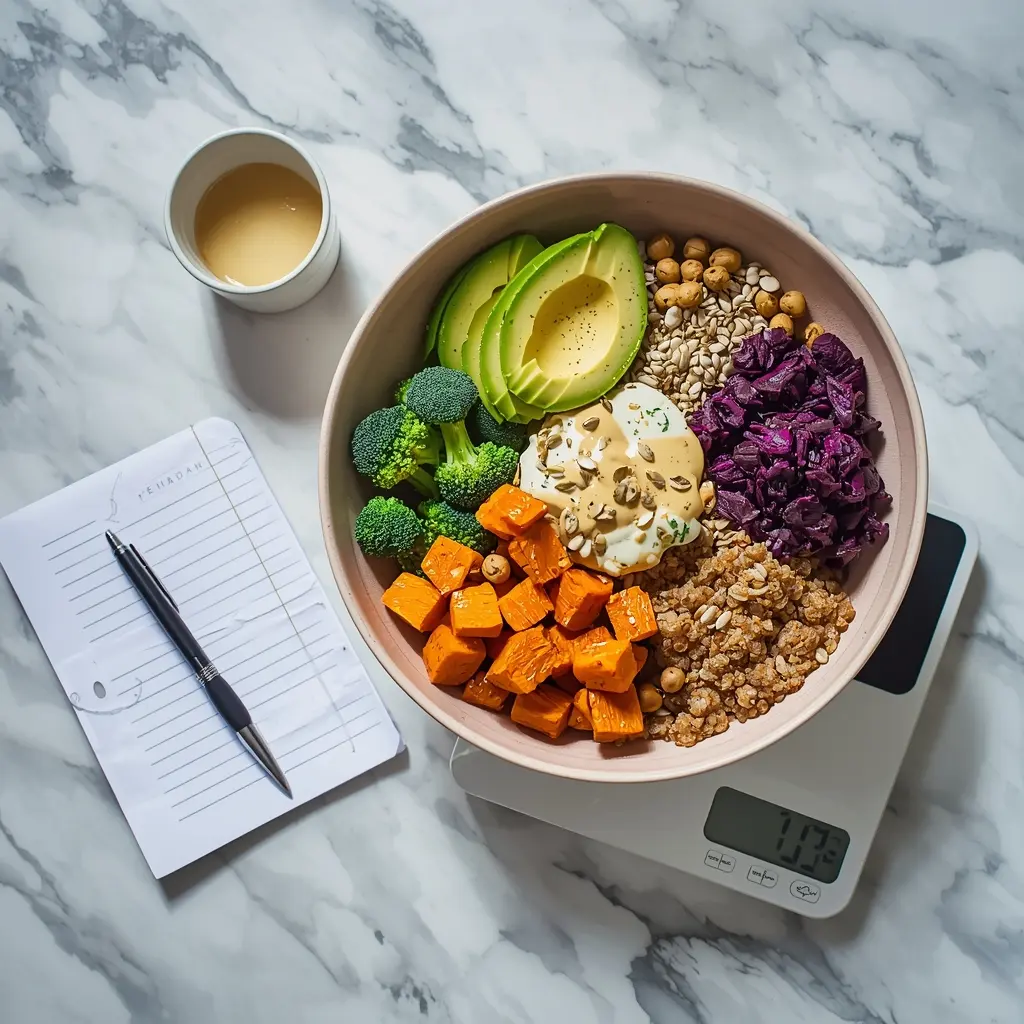
- Add a Thumb-Sized Serving of Healthy Fat: 1/4 avocado, 1 tbsp seeds, or a drizzle of tahini dressing.
This method automatically controls calories while maximizing nutrient intake and satiety, making your vegan diet weight loss plan simple to execute.
Section 5: Sample Meal Plans: Putting Theory into Practice
Here are two structured examples of a daily vegan diet weight loss plan, one at a lower calorie target and one at a moderate level.
1,600-Calorie Vegan Diet Weight Loss Plan (Aggressive Deficit)
- Breakfast (400 cal): Protein Power Oats. 1/2 cup dry oats cooked with water, mixed with 1 scoop vanilla pea protein powder, 1/2 cup blueberries, and 1 tbsp ground flaxseed.
- Lunch (450 cal): Massive Rainbow Salad. 3 cups mixed greens, 1 cup chickpeas, unlimited cucumber/peppers/tomatoes, 2 tbsp lemon-tahini dressing (thinned with water).
- Snack (150 cal): 1 medium apple with 1 tbsp almond butter.
- Dinner (600 cal): Tofu & Veggie Stir-Fry. 150g pressed tofu, stir-fried with 3+ cups of broccoli, bell peppers, and snap peas in 1 tsp sesame oil and low-sodium soy sauce. Served over 1/2 cup cooked brown rice.
- Totals: ~1,600 calories, 90g protein, 45g fiber.
1,900-Calorie Vegan Diet Weight Loss Plan (Moderate Deficit)
- Breakfast (500 cal): Savory Tofu Scramble. 200g crumbled tofu scrambled with turmeric, black salt, spinach, and mushrooms. Served with 1 slice whole-grain toast and 1/4 avocado.
- Lunch (550 cal): Hearty Lentil Bowl. 1 cup cooked lentils, 1 cup roasted sweet potato and Brussels sprouts, over a bed of massaged kale with a mustard vinaigrette.
- Snack (200 cal): Green Protein Smoothie. 1 cup unsweetened almond milk, 1 scoop protein powder, big handful of spinach, 1/2 banana.
- Dinner (650 cal): Tempeh & Quinoa Power Bowl. 150g marinated and baked tempeh, 1 cup cooked quinoa, 2 cups steamed broccoli and carrots, drizzled with 2 tbsp peanut sauce (made with powdered peanut butter).
- Totals: ~1,900 calories, 110g protein, 50g+ fiber.
These vegan diet weight loss plan examples showcase how to hit high protein and fiber targets within a controlled calorie budget, ensuring you feel full and energized.
Section 6: Hunger Management: Science-Backed Strategies to Stay on Track
A major reason diets fail is unmanaged hunger. Your vegan diet weight loss plan should include proactive strategies to prevent it.
- The Volume Starter: Begin lunch and dinner with a large green salad (light dressing) or a bowl of vegetable-based broth soup. This physically fills your stomach with low-calorie food, reducing the space and desire for more calorie-dense items.
- Prioritize Protein at Every Meal: As outlined, protein is supremely satiating. Ensure each meal in your vegan diet weight loss plan contains a solid protein source (tofu, tempeh, legumes) to extend fullness.
- Hydrate Strategically: Drink 16 ounces of water 20-30 minutes before meals. Often, mild dehydration is misinterpreted as hunger.
- Embrace High-Fiber Foods: Aim for 40-50 grams of fiber daily from beans, vegetables, berries, and whole grains. Fiber slows gastric emptying and feeds healthy gut bacteria linked to satiety.
- Maintain Meal Rhythm: Eat at consistent times each day. Skipping meals often leads to ravenous hunger, poor choices, and overeating later.
Section 7: Common Vegan Weight Loss Mistakes and How to Fix Them
Even with a solid vegan diet weight loss plan, these pitfalls can stall progress.
- Mistake 1: The “Unlimited Healthy Fat” Fallacy. Over-consuming nuts, seeds, oils, and avocado.
- Fix: Measure and log all fats. They are nutritious but calorie-dense.
- Mistake 2: Over-reliance on Processed Vegan Foods. Meat alternatives, vegan cheeses, and desserts are often high in calories, fat, and sodium.
- Fix: Treat these as occasional foods, not staples. Base your vegan diet weight loss plan on whole foods.
- Mistake 3: Liquid Calories. Smoothies, juices, fancy coffee drinks, and even plant milks can add hundreds of uncounted calories.
- Fix: Track beverages, use unsweetened plant milks sparingly, and prioritize whole fruits over juice.
- Mistake 4: Not Tracking Accurately (or at All). Eyeballing portions, forgetting condiments, and not tracking cooking oil.
- Fix: Use a food scale and tracking app consistently for at least 2-3 weeks to recalibrate your portion intuition.
- Mistake 5: Insufficient Protein Intake. Leading to muscle loss, a slower metabolism, and increased hunger.
- Fix: Revisit Section 3. Hitting your protein target is non-negotiable in an effective vegan diet weight loss plan.
This is Good resources here.
Section 8: The Role of Exercise: Supporting, Not Driving, Weight Loss
Exercise is a crucial companion to your vegan diet weight loss plan, but its primary role is to preserve muscle and improve health, not to create a massive calorie deficit. The 80/20 rule often applies: diet is responsible for roughly 80% of weight loss results.
- Resistance Training (Priority): Lift weights or perform bodyweight exercises 3-4 times per week. This sends a “keep me” signal to your muscles during a calorie deficit, preventing the loss of metabolically active tissue. This is critical for long-term metabolic health.
- Cardiovascular Exercise (Secondary): Incorporate 2-3 sessions of moderate-intensity cardio (e.g., brisk walking, cycling) per week for heart health and to modestly increase your weekly calorie burn. Avoid excessive cardio, which can spike hunger and fatigue.
- Increase Non-Exercise Activity Thermogenesis (NEAT): This is the energy you burn through daily movement—walking, taking stairs, fidgeting. Consciously increasing NEAT by aiming for 8,000-10,000 steps daily can significantly boost your TDEE without the stress of added workout time.
Section 9: Tracking Progress and Making Intelligent Adjustments
What gets measured gets managed. Implement a consistent tracking system for your vegan diet weight loss plan.
- Weigh yourself daily, first thing in the morning after using the bathroom. Focus on the weekly average trend, not daily fluctuations, which are influenced by water retention, sodium, and digestion.
- Take body measurements (waist, hips) and progress photos every 2-4 weeks. These are often better indicators of fat loss than the scale, especially if you are building muscle.
- Adjusting Your Plan: If your weight has plateaued (no change in weekly average for 3+ weeks), first ensure tracking accuracy. If accurate, reduce your daily calorie target by 100-150 calories OR increase your daily activity (e.g., add 2,000 steps). Small, incremental adjustments are key.
Related Post: Vegan Protein Without Trying
Section 10: Troubleshooting Common Sticking Points
- “I’m following the vegan diet weight loss plan but not losing.” This is almost always a tracking error. Re-commit to weighing food, counting all oils/condiments, and avoiding unplanned snacks for one week.
- “I’m losing weight but feel weak in my workouts.” This signals inadequate fueling. Ensure you are eating enough carbohydrates, particularly around your training sessions, and double-check that your calorie deficit is not too aggressive.
- “I’m constantly hungry.” Re-evaluate your plate. Are you skimping on the 50% vegetable portion? Are you hitting your protein and fiber targets? Often, adding more volume from vegetables and a glass of water before meals solves this.
- “I hit my goal weight—now what?” Transition to maintenance by slowly adding 100-200 calories back to your daily intake every 1-2 weeks, preferably from whole-food carbs and fats, until your weight stabilizes. This “reverse dieting” helps prevent rapid regain.
A well-designed vegan diet weight loss plan is a powerful, health-promoting tool that works with your body’s physiology. By understanding the science of the calorie deficit, leveraging the satiating power of protein and fiber, mastering calorie density, and avoiding common mistakes, you can achieve sustainable weight loss without fads or deprivation. This vegan diet weight loss plan provides the roadmap; your consistency provides the results.
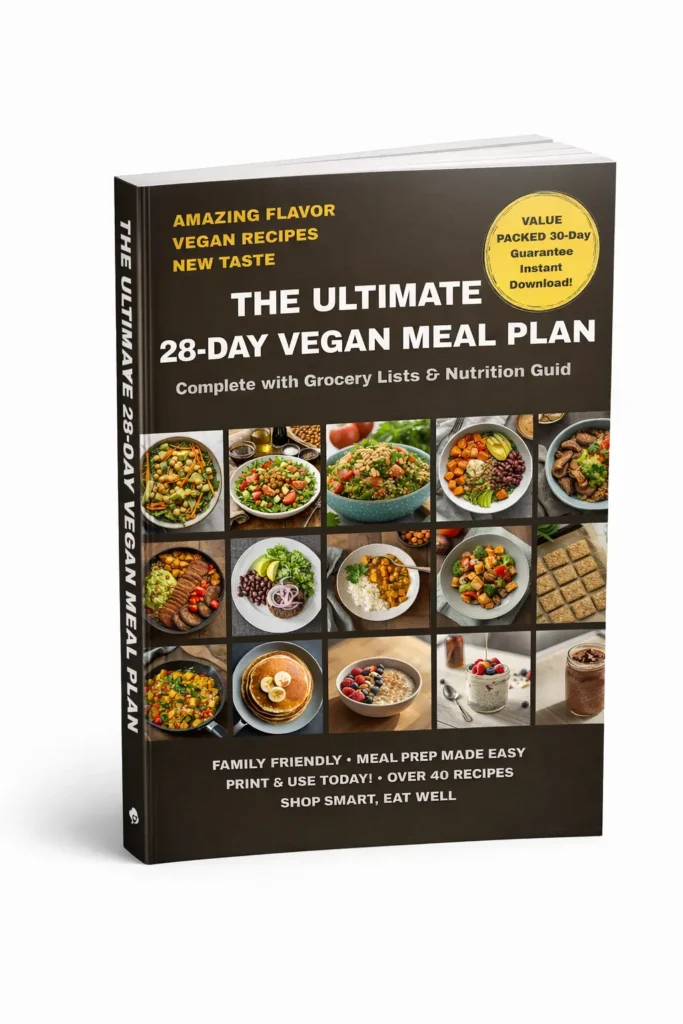
P.S. To guide you through your first month, here’s my 28-Day Vegan Meal Plan complete with shopping lists and nutrition guides. Download it here.
Want to try before you buy?
Enter your email below to get 2 free recipes instantly: