
⚡ TL;DR — Key Takeaways
- A high protein vegan lunch of 30–40g protein sustains afternoon energy, prevents the 3pm energy crash, and supports muscle protein synthesis throughout the day.
- The best plant-based lunch proteins are tempeh, tofu, edamame, lentils, chickpeas, hemp seeds, and black beans — all widely available and affordable.
- Protein at lunch is more critical than most people realise — skipping it leads to compensatory overeating at dinner and disrupted appetite hormones the following morning.
- Grain + legume combinations at lunch create complete amino acid profiles essential for muscle repair and neurotransmitter synthesis in the afternoon window.
- All 12 meals in this guide include exact protein counts, calorie totals, prep times, and difficulty ratings.
- The most common mistake: building a “healthy” vegan lunch around salad and vegetables with no protein anchor — leaving you hungry within 90 minutes.
High Protein Vegan Lunch: 12 Nutrient-Dense Meals With 30g+ Protein Each
The midday meal is where most plant-based diets quietly fall apart. Not because of a lack of good intentions — but because the default vegan lunch is a salad, some roasted vegetables, and perhaps a piece of bread. That combination might look healthy. It delivers almost no protein. And by 3pm, you are raiding the snack drawer.
A high protein vegan lunch is the structural fix that most people overlook. Not a superfood addition. Not a supplement. A fundamental rebuild of what goes on your plate at midday — anchored around plant-based protein sources that actually deliver 30 grams or more per meal.
Why 30 grams? Because that is the threshold at which protein demonstrably impacts satiety hormones, afternoon blood glucose stability, and muscle protein synthesis during the most metabolically active window of the working day. Below that threshold, the benefits are partial. At 30 grams and above, the research shows consistent, measurable improvements in afternoon energy, reduced calorie intake at dinner, and better body composition outcomes over time.
This guide gives you 12 high protein vegan lunch options — not ideas, options — with exact protein counts, calorie totals, prep times, and the science behind why each combination works the way it does. Whether you are meal prepping for a working week, training for performance, or simply trying to stop being hungry again by 2pm, this is the complete reference.
The Science: Anabolic Window, Protein Leverage Hypothesis & Bioavailability
🔬 The Anabolic Window at Lunch — Why Midday Protein Matters
The concept of the anabolic window — the period following physical or cognitive activity when the body is most receptive to using dietary protein for repair and synthesis — is not exclusive to post-workout nutrition. Research published in the Journal of the International Society of Sports Nutrition established that protein synthesis rates remain elevated for four to six hours after moderate physical activity, and that cognitive work produces similar but less pronounced anabolic signalling in the brain.
For most people who are active in the morning — whether exercising, commuting, or engaging in demanding cognitive work — lunch falls directly within or immediately after this elevated synthesis window. Consuming adequate protein at this point feeds the repair and building processes that are actively running. Skipping protein at lunch means the anabolic window closes without adequate substrate, and the body compensates by drawing on existing muscle protein — a process called muscle protein breakdown (MPB) that is exactly what you want to avoid.
This is not theoretical for plant-based eaters. It is directly actionable: eating a high protein vegan lunch at midday is not optional if you are concerned about body composition, athletic performance, or cognitive function in the afternoon.
📊 The Protein Leverage Hypothesis — Why You Overeat at Dinner
The Protein Leverage Hypothesis, developed by researchers David Raubenheimer and Stephen Simpson at the University of Sydney, proposes that humans have a hard-wired appetite drive specifically for protein — independent of total calorie intake. When protein needs are unmet at a meal, the body continues to drive hunger signals until the protein target is satisfied, even if total calorie intake is already high.
In practical terms: if you eat a low-protein vegan lunch, your body will demand more food at dinner to compensate for the unmet protein target from midday. This is one of the primary mechanisms behind evening overeating and late-night snacking in people who eat well in the morning but neglect lunch protein.
Solving your lunch protein is therefore not just about midday satiety. It is about controlling total daily energy intake by satisfying the protein leverage drive before it builds into an evening appetite surge. This is one of the strongest evidence-based arguments for prioritising a high protein plant-based midday meal over simply eating “something healthy.”
⚗️ Plant Protein Bioavailability — The Real Numbers
Plant proteins are frequently dismissed due to lower bioavailability compared to animal proteins. The reality is more nuanced than a simple comparison allows:
- PDCAAS (Protein Digestibility-Corrected Amino Acid Score): Soy protein (tofu, tempeh, edamame) scores 0.91–1.00 — essentially equivalent to whey protein and significantly higher than most other plant proteins.
- Tempeh advantage: Fermentation increases protein digestibility compared to unfermented soy by breaking down phytates and trypsin inhibitors that interfere with protein absorption.
- Leucine threshold: Muscle protein synthesis requires a leucine threshold of approximately 2–3g per meal to activate mTOR signalling. Most plant proteins are leucine-deficient individually — but strategic combinations (legumes + grain, soy + seeds) reliably cross this threshold.
- Cooking effect: Cooking legumes significantly improves protein digestibility — raw lentils and beans have substantially lower net protein availability than their cooked equivalents.
The key takeaway: plant protein bioavailability is not a fixed limitation — it is a preparation and combination variable. The meals in this guide are structured to maximise leucine availability and overall protein digestibility through strategic pairings, preparation methods, and food combinations.
For the complete picture on daily protein targets and how to distribute them across meals on a plant-based diet, our guide on how to get 100g protein as a vegan breaks down the full framework.
Protein Pairing Logic: Building Complete Amino Acid Profiles at Lunch
🧬 Why Completeness Matters at the Midday Meal
Essential amino acids — the nine amino acids the human body cannot synthesise and must obtain from food — need to be present simultaneously in adequate ratios for protein synthesis to proceed at maximum efficiency. Animal proteins provide all nine in one source. Most plant proteins do not.
The classic solution is complementary protein pairing — combining two plant foods whose amino acid profiles compensate for each other’s limiting amino acids. The most important pairings for a high protein vegan lunch are:
- Legumes + grains: Legumes are rich in lysine (limiting in grains) and grains are rich in methionine (limiting in legumes). Combined, they create a complete amino acid spectrum. Examples: lentil soup with quinoa, chickpea bowl with brown rice, black bean burrito with whole wheat wrap.
- Soy + anything: Tofu, tempeh, and edamame are complete proteins on their own — no pairing required. Including soy at lunch simplifies the completeness equation significantly.
- Seeds + legumes: Hemp seeds and pumpkin seeds provide methionine that legumes lack. Adding 2–3 tablespoons of hemp seeds to a lentil or bean bowl creates a complete protein without adding significant calories.
⏱️ You Do Not Need to Pair at Every Single Meal
Current nutritional consensus has moved away from the requirement to combine proteins at every meal. Research shows that amino acid pools in the body remain available for several hours, meaning complementary proteins consumed across the same day — not necessarily at the same meal — can still combine effectively for protein synthesis.
However, for lunch specifically — given the four to six hour gap between breakfast and dinner — eating a complete or near-complete protein combination at midday remains the most reliable strategy for maintaining muscle protein synthesis throughout the afternoon without relying on memory of what you ate at breakfast.
The 8 Best Protein Sources for a Plant-Based Midday Meal
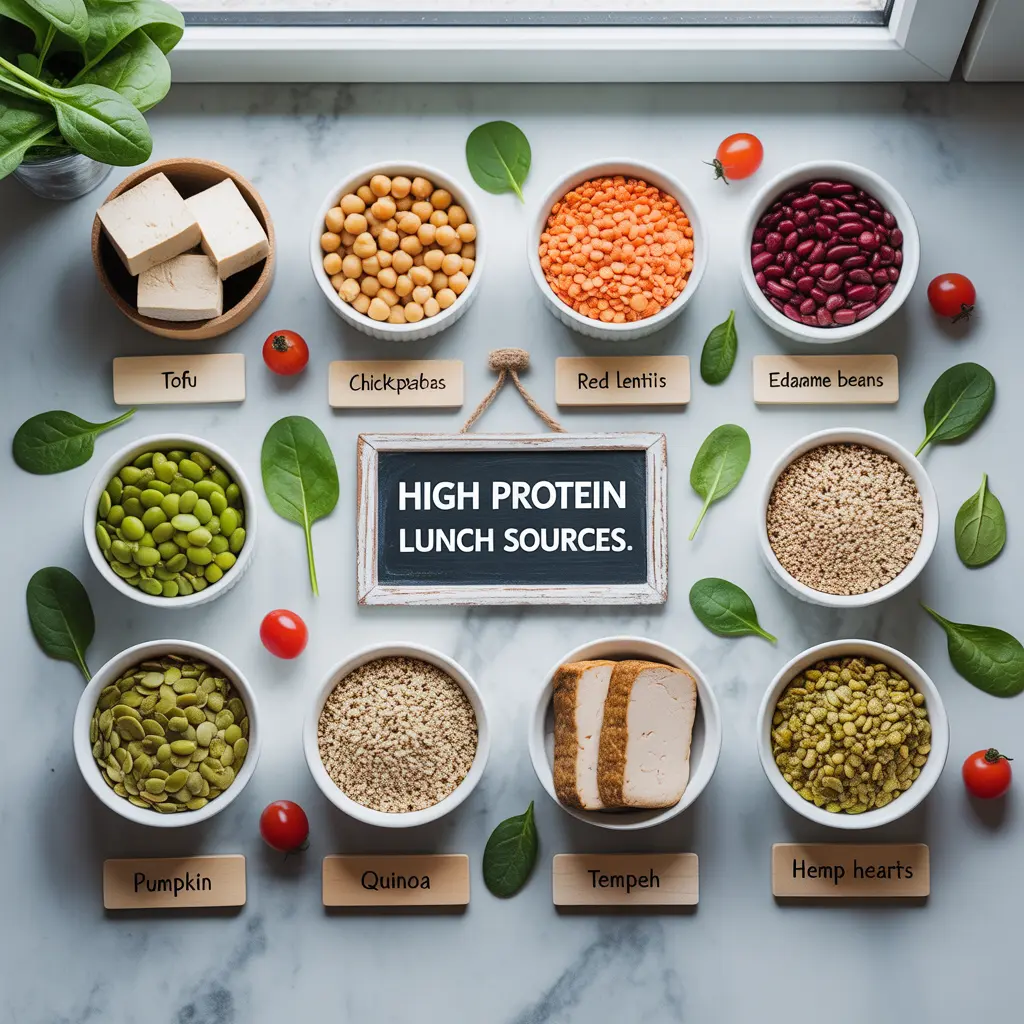
These eight ingredients form the foundation of every high protein vegan lunch worth building. Know them, stock them, rotate them.
- Tempeh (100g) — 21g protein — The highest-protein whole plant food per gram. Fermented, dense, sliceable. The serious protein anchor for any plant-based midday meal.
- Firm Tofu (200g) — 17g protein — Complete amino acid profile. Works marinated, scrambled, baked, or pan-fried.
- Cooked Lentils (200g) — 18g protein — Protein plus iron plus folate plus fibre. The most nutritionally efficient single lunch food available.
- Cooked Chickpeas (200g) — 15g protein — Versatile, canned-ready, and an excellent grain pairing for complete amino acids.
- Edamame (200g) — 17g protein — Complete protein, frozen-ready, works as a side or main component.
- Hemp Seeds (3 tbsp / 30g) — 10g protein — Complete amino acid profile including methionine. Add to any bowl for an immediate protein boost.
- Black Beans (200g cooked) — 15g protein — Rich in lysine, fibre, and iron. Ideal for wraps, bowls, and tacos.
- Nutritional Yeast (2 tbsp) — 8g protein — B12-fortified protein booster. Stirs into any sauce, dressing, or soup for immediate protein uplift.
These are not niche ingredients. Every single one is available in standard supermarkets, affordable across all budgets, and versatile enough to feature in multiple different lunch formats without repetition. For full amino acid profiles and bioavailability comparisons across all plant protein sources, our complete guide to vegan protein sources covers the science in depth.
Ingredient Spotlights: Deep Dives on the Top 5
🥩 1. Tempeh — The Protein-Dense Lunch Anchor
Tempeh is the single most protein-dense whole plant food available for a high protein vegan lunch. 100g delivers 21g protein alongside a complete amino acid profile, making it nutritionally comparable to chicken breast on a gram-for-gram protein basis. Beyond protein, the micronutrient profile is exceptional:
- Riboflavin (B2) — 0.36mg per 100g, supporting energy metabolism and red blood cell production
- Manganese — 1.3mg per 100g, a cofactor for enzymatic reactions involved in muscle function
- Phosphorus — 266mg per 100g, structural component of ATP (the body’s primary energy currency)
- Iron — 2.1mg per 100g, with fermentation improving bioavailability by reducing phytate inhibition
The fermentation process that creates tempeh also produces beneficial bacterial metabolites that support gut health, making this a dual-action food: high protein and microbiome-supportive simultaneously. Marinate in tamari, smoked paprika, and garlic before pan-frying for the best flavour and texture.
🫘 2. Lentils — The Nutrient-Dense Protein Foundation
Cooked lentils provide 18g protein per 200g alongside one of the most comprehensive micronutrient profiles of any single plant food. For a plant-based midday meal, no single food delivers more nutritional value per calorie:
- Folate (B9) — 358mcg per 200g (90% of daily requirement), critical for DNA synthesis and red blood cell production
- Iron — 6.6mg per 200g, supporting oxygen transport and afternoon cognitive function
- Zinc — 2.5mg per 200g, supporting immune function and testosterone production
- Fibre — 15g per 200g, the highest-fibre protein food on this list, feeding gut microbiome diversity
Key preparation step: Soak lentils for 4–8 hours before cooking to reduce phytates by 30–50%, improving both protein digestibility and mineral bioavailability. Red lentils require no soaking and cook in 15 minutes — the fastest protein-dense lunch ingredient available.
🌱 3. Hemp Seeds — The Complete Protein Sprinkle
Hemp seeds are the most convenient complete protein addition to any plant-based midday meal. Three tablespoons (30g) deliver 10g complete protein including all nine essential amino acids with a particularly strong methionine profile that compensates for the methionine deficit in legumes. Additional micronutrients per 30g serving:
- Gamma-linolenic acid (GLA) — an omega-6 fatty acid with anti-inflammatory properties
- Omega-3 ALA — 2.5g per 30g, supporting brain function and reducing neuroinflammation
- Magnesium — 210mg per 100g (one of the richest magnesium plant sources), supporting muscle relaxation and afternoon cognitive performance
- Vitamin E — antioxidant protection for cellular membranes
The combination of complete protein, anti-inflammatory omega-3, and magnesium makes hemp seeds the single most versatile nutrient-dense addition to a high protein plant-based midday meal. Sprinkle on any bowl, blend into dressings, or mix into grain dishes.
🟡 4. Chickpeas — The Versatile Midday Protein
Chickpeas provide 15g protein per 200g cooked and are the most format-flexible protein source on this list — working equally well in bowls, wraps, soups, curries, roasted as a crunchy topping, or blended into hummus. Micronutrient profile per 200g cooked:
- Manganese — 1.7mg (supporting enzymatic reactions in energy metabolism)
- Copper — 0.6mg (cofactor for iron absorption and collagen synthesis)
- B6 — 0.3mg (supporting neurotransmitter synthesis — directly relevant to afternoon mood and focus)
- Resistant starch — feeds beneficial gut bacteria, supporting the gut-brain axis that influences afternoon mood and concentration
Pair chickpeas with quinoa or brown rice at lunch to create a complete amino acid profile. Roasting chickpeas at 200°C for 25 minutes creates a crunchy, portable, shelf-stable protein topping that works on any salad or bowl.
🌿 5. Edamame — The Underused Lunch Protein
Edamame (immature soybeans) is one of the most underused high protein vegan lunch ingredients available. A 200g serving delivers 17g complete protein — all essential amino acids — in a food that is frozen-ready, requires 5 minutes to prepare, and works as a bowl component, salad addition, or standalone protein side. Per 200g:
- Vitamin K — 41mcg, supporting bone health and blood coagulation
- Folate — 482mcg (over 100% of daily requirement), exceptional for a single food serving
- Iron — 4.4mg, supporting oxygen transport and sustained afternoon energy
- Fibre — 8g per 200g, supporting satiety and gut health simultaneously
Edamame’s combination of complete protein, exceptional folate content, and iron make it a nutritionally superior lunch protein for pre-menopausal women specifically — addressing three key nutritional priorities (protein, iron, folate) in a single, convenient food.
12 High Protein Vegan Lunch Ideas (With Exact Macros)
🌯 1. Tempeh and Roasted Vegetable Grain Bowl
Protein: 38g | Calories: 540 | Prep: 20 min | Difficulty: Moderate
The highest-protein option on this list. Pan-fry 150g marinated tempeh (tamari, smoked paprika, garlic) until crispy. Serve over 185g cooked quinoa with roasted sweet potato, steamed broccoli, and 2 tablespoons hemp seeds. Dress with tahini and lemon.
Why it works: Tempeh provides complete protein + fermentation benefits. Quinoa adds a second complete protein with complementary amino acids. Hemp seeds push the total past 38g while adding omega-3 and magnesium for afternoon cognitive support.
Meal prep note: Marinate and cook tempeh in bulk on Sunday. Reheat portions in 3 minutes throughout the week.
🥙 2. Protein-Loaded Chickpea and Quinoa Wrap
Protein: 32g | Calories: 490 | Prep: 12 min | Difficulty: Easy
Combine 150g cooked chickpeas with 100g cooked quinoa, shredded kale, sliced avocado, roasted red peppers, and a tahini-lemon dressing. Load into a large whole grain wrap. Top with 1 tablespoon nutritional yeast.
The protein pairing logic: Chickpeas (lysine-rich) + quinoa (complete protein) + nutritional yeast creates stacked, complete protein from three simultaneous sources. This is the protein pairing framework applied in a practical, portable format.
🍜 3. Red Lentil and Coconut Soup with Hemp Seed Topping
Protein: 30g | Calories: 420 | Prep: 20 min | Difficulty: Easy
Simmer 200g red lentils with onion, garlic, ginger, turmeric, cumin, and light coconut milk until thick and creamy. Finish with lemon juice. Serve with 3 tablespoons hemp seeds stirred through and whole grain bread for dipping.
This is the meal prep vegan lunch champion. Make a large batch on Sunday — it refrigerates for 5 days and freezes for 3 months. The hemp seeds added fresh at serving ensure the complete amino acid profile is achieved at every portion.
🥗 4. Edamame Power Bowl with Brown Rice and Miso Dressing
Protein: 31g | Calories: 460 | Prep: 10 min (using pre-cooked rice) | Difficulty: Easy
Layer 150g cooked brown rice with 200g edamame, sliced cucumber, shredded purple cabbage, avocado, and nori strips. Dress with white miso, rice vinegar, sesame oil, and ginger. Top with sesame seeds.
Why edamame at lunch? At 17g complete protein per 200g, edamame is one of the fastest high protein plant-based lunch components — frozen, defrosted in minutes, no cooking required. The brown rice provides resistant starch and B vitamins; the miso adds fermentation benefits for gut health and iron absorption.
🌮 5. Black Bean and Tempeh Tacos
Protein: 36g | Calories: 510 | Prep: 15 min | Difficulty: Moderate
Crumble 100g tempeh and cook with 100g black beans, cumin, coriander, smoked paprika, and chipotle. Fill three small corn tortillas. Top with mango salsa, shredded kale, avocado, and a squeeze of lime.
This is a high-satiety, high-protein plant-based midday meal that works equally well as a desk lunch or a weekend meal. The tempeh + black bean combination stacks two strong plant protein sources: tempeh provides complete amino acids; black beans add lysine-rich legume protein and fibre for sustained afternoon energy.
🧆 6. Chickpea Flour Socca with White Bean Spread
Protein: 29g | Calories: 440 | Prep: 18 min | Difficulty: Moderate
Prepare socca: blend 100g chickpea flour with 180ml water, olive oil, rosemary, and salt. Cook in a hot oven-safe pan at 230°C for 12 minutes. Serve with a spread made from 150g white beans blended with garlic, lemon, and olive oil. Top with roasted cherry tomatoes and fresh basil.
Chickpea flour is the hidden protein star. 100g provides 22g protein — higher than most other grain-based lunch components. The white bean spread stacks a second legume protein source, creating a combined plant-based lunch protein of nearly 30g before adding any sides.
🍱 7. Tofu Satay Bowl with Peanut Noodles
Protein: 34g | Calories: 580 | Prep: 20 min | Difficulty: Moderate
Bake 200g cubed firm tofu at 200°C for 20 minutes until golden. Toss cooked soba noodles (also a complete protein grain) in a sauce of natural peanut butter, tamari, lime juice, and chilli. Combine with tofu, steamed edamame, and shredded carrot. Top with spring onions and sesame seeds.
The soba noodle advantage: Soba (buckwheat) noodles are a complete protein grain providing all essential amino acids — unlike wheat pasta. Combined with tofu and peanut butter, this bowl delivers protein from four distinct plant-based sources.
🥘 8. Lentil and Spinach Dal with Whole Grain Roti
Protein: 30g | Calories: 450 | Prep: 25 min | Difficulty: Moderate
Cook 200g green lentils with spinach, onion, garlic, ginger, cumin, coriander, turmeric, and tomatoes until thick. Serve with two small whole grain rotis or a piece of wholemeal flatbread for the grain component.
This is the classic protein pairing in action: lentil (legume, lysine-rich) + whole grain roti (methionine-rich) = complete amino acid profile. This combination has been a nutritionally complete lunch across South Asian culinary traditions for thousands of years — the science confirms what empirical food culture discovered long ago.
🥪 9. Smashed Chickpea and Avocado Sandwich
Protein: 28g | Calories: 480 | Prep: 8 min | Difficulty: Very Easy
Mash 200g chickpeas with half an avocado, lemon juice, Dijon mustard, celery, and red onion. Season with salt, pepper, and smoked paprika. Pile onto two slices of sprouted grain bread. Add sliced tomato and peppery rocket.
This is the 8-minute office lunch solution. No cooking required beyond opening a can. Chickpeas + sprouted grain bread creates the legume-grain protein pairing. The avocado provides healthy fat for fat-soluble vitamin absorption and extends satiety into the afternoon. Add 2 tablespoons hemp seeds to the mash to push protein above 30g.
🍝 10. White Bean and Tempeh Pasta
Protein: 35g | Calories: 560 | Prep: 20 min | Difficulty: Easy
Cook 80g wholemeal pasta. Fry 100g crumbled tempeh with garlic, sun-dried tomatoes, and white wine. Add 150g canned white beans and a handful of spinach. Toss with the pasta, lemon zest, and 2 tablespoons nutritional yeast.
This meal delivers protein from three simultaneous sources: tempeh (21g per 100g), white beans (10g per 150g), and nutritional yeast (8g per 2 tablespoons). The wholemeal pasta provides slow-release carbohydrate for sustained afternoon energy and the methionine component for amino acid completeness.
🌶️ 11. Spiced Tofu and Black Bean Burrito Bowl
Protein: 33g | Calories: 520 | Prep: 15 min | Difficulty: Easy
Crumble 150g firm tofu with cumin, smoked paprika, and black salt. Cook until golden. Serve over brown rice with 120g black beans, roasted corn, tomato salsa, avocado, and a squeeze of lime. Top with 1 tablespoon hemp seeds.
A fully customisable protein-rich vegan lunch format. Swap the rice for quinoa for a higher protein base. Replace tofu with tempeh for an additional 5g protein. This bowl format absorbs virtually any vegetable available — making it the most adaptable high protein plant-based midday meal structure on this list.
🥣 12. Green Goddess Protein Bowl
Protein: 30g | Calories: 410 | Prep: 10 min | Difficulty: Very Easy
Layer 150g edamame, 100g cooked quinoa, sliced cucumber, steamed broccoli, avocado, and 3 tablespoons hemp seeds in a bowl. Dress with a blended sauce of tahini, lemon, garlic, and nutritional yeast (add 2 tablespoons to the dressing for additional protein boost).
The lowest-calorie 30g+ protein lunch on this list at 410 calories. Ideal for those managing calorie intake while maintaining protein targets. The dressing incorporates nutritional yeast as both a flavour agent and a protein source — a technique worth applying to any lunch bowl that needs a protein boost without changing the main ingredients.
Complete Reference Tables
Save these. Screenshot them. Use them as your weekly lunch planning reference.
12 High Protein Vegan Lunch Options — Full Macro Reference
Protein Stacking Cheatsheet — Build Your Own 30g+ Lunch
Chef’s Professional Tips: 20 Years Cooking Across Lebanon, Dubai, and Saudi Arabia
🇱🇧 Lesson 1 — The Levantine Lunch Was Engineered for Performance
In professional kitchens across the MENA region, the midday staff meal — the family meal — is the most important meal of the day. A kitchen brigade operating at full capacity through a dinner service needs to be fuelled at lunch with precision: enough protein to maintain muscle performance and cognitive sharpness through a physically demanding six-hour shift, enough complex carbohydrate for sustained energy, and enough fat to support hormone function and fat-soluble nutrient absorption.
The traditional Levantine lunch table accomplishes this without nutritional science labels. Ful medames (spiced fava beans) provides lysine-rich protein. Kibbeh or mujaddara (lentils and rice) delivers the grain-legume complete protein combination. Fattoush with lemon provides vitamin C for mineral absorption. Hummus from soaked chickpeas delivers phytate-reduced protein and iron. Every component serves a performance function. This is the food intelligence of a culinary tradition refined over centuries.
⚙️ Lesson 2 — Mise en Place Applied to Plant Protein
In a professional kitchen, mise en place — everything prepared and in its place before service begins — is not optional. It is the operational foundation of quality output under time pressure. The same principle applies to a high protein vegan lunch routine at home.
Here is the professional mise en place framework applied to plant-based lunch protein:
- Cook a large batch of lentils or chickpeas on Sunday — refrigerates 5 days, reheats in 2 minutes
- Marinate and pan-fry an entire block of tempeh — slice, refrigerate, add cold or reheated to any bowl
- Pre-portion hemp seeds into daily servings — no measuring, no decision, no excuse
- Pre-cook two batches of grain (quinoa Monday/Tuesday, brown rice Wednesday/Thursday) — grain prep is the biggest time cost; eliminating it daily saves 20 minutes per lunch
- Keep a jar of tahini-lemon dressing in the fridge — this single dressing works on every bowl format on this list
🔢 Lesson 3 — Count by Architecture, Not by Calories
In twenty years of professional cooking, I have never met a kitchen professional who obsessively counted calories. What every good chef does instead is think in architectural terms: what is the protein anchor, what is the carbohydrate base, what is the fat component, and what is the micronutrient contribution?
Apply this to your high protein plant-based midday meal:
- Protein anchor — tempeh, tofu, lentils, chickpeas, or edamame (minimum 20g from this component)
- Protein booster — hemp seeds, nutritional yeast, or edamame added to the bowl (+8–12g)
- Grain base — quinoa, brown rice, or whole grain (completes amino acid profile, adds B vitamins)
- Vegetable component — minimum 2 varieties for micronutrient breadth and fibre
- Fat component — avocado, tahini, or olive oil (fat-soluble vitamin absorption + satiety)
This architecture consistently produces a protein-rich vegan lunch of 28–40g protein without calorie counting, without nutritional apps, and without overthinking the process.
5 Mistakes That Kill Your Afternoon Protein
❌ Mistake 1: Building Lunch Around Salad Vegetables
Salad is not a meal. It is a side component of a meal. A plate of mixed leaves, cucumber, and tomato with a vinaigrette provides perhaps 3–5g protein and will leave you hungry within 60–90 minutes. The fix is not to abandon the salad — it is to add a protein anchor to it. 150g chickpeas on the side, 100g tempeh sliced through it, or 3 tablespoons hemp seeds dressed in transforms the same salad from a snack into a protein-rich vegan lunch.
❌ Mistake 2: Relying on Nuts as Your Only Protein
Almonds, cashews, and walnuts are fat sources with some protein — not protein sources with some fat. A 30g handful of almonds provides 6g protein and 15g fat. This is insufficient as a primary lunch protein. Use nuts as a fat and micronutrient component while building your protein total around legumes, tofu, or tempeh.
❌ Mistake 3: Skipping the Grain Component
Eating legumes alone at lunch without a grain component means missing the methionine contribution that completes the amino acid profile. It also means missing the slow-release carbohydrate that stabilises blood glucose through the afternoon. The grain does not need to be a large portion — 80–100g cooked is sufficient — but its absence meaningfully reduces both the completeness and the satiety value of the meal.
❌ Mistake 4: Using Regular Pasta Without Protein Anchoring
A standard pasta lunch with tomato sauce delivers 10–12g protein — far below the 30g target. Pasta is a legitimate lunch base but requires aggressive protein anchoring. Add tempeh to the sauce, stir white beans through the dish, and finish with nutritional yeast. The same format goes from 12g to 35g protein with three additions that each take under two minutes.
❌ Mistake 5: Not Preparing Anything in Advance
Decision fatigue is the primary reason people eat inadequate lunches. When noon arrives and there is nothing prepared, the path of least resistance is bread with nut butter or a shop-bought sandwich — neither of which hits the protein target. Forty minutes of Sunday preparation eliminates this problem entirely. See the full framework in our vegan meal prep vs daily cooking guide.
Meal Prep Strategy: Build a Week of Lunches in 40 Minutes
Sunday Prep Framework
- Batch cook lentils or chickpeas (20 minutes): Cover both meals 3 and 8 from this list simultaneously. One pot, 20 minutes, 5 days of protein-ready legumes.
- Cook two grains simultaneously (15 minutes active): Brown rice in one pot, quinoa in another. Both cook while the legumes are running. Zero additional time cost.
- Marinate and cook full block of tempeh (10 minutes): Slice an entire 300g block, marinate for 5 minutes, pan-fry until crispy. Refrigerate. Reheats in 2 minutes or works cold directly in bowls.
- Make a large batch of tahini dressing (3 minutes): Tahini, lemon juice, garlic, water, salt. This dresses every bowl on this list. Refrigerates for one week.
- Pre-portion seeds (2 minutes): 5 × daily hemp seed portions in small containers. Done for the week.
Total active time: approximately 40 minutes. This preparation covers the protein anchor, the grain base, the dressing, and the seed boost for five high protein vegan lunches — requiring zero decision-making and less than 5 minutes of morning assembly per day.
For a complete structured approach to this framework across all three meals — not just lunch — our 30-day vegan meal prep plan builds this habit over four weeks with full shopping lists and prep guides.
If you are training hard and need to understand how lunch protein fits into a total daily target of 100g or more, our guide on how to reach 100g protein as a vegan maps the complete daily distribution framework including breakfast, lunch, dinner, and snacks.
Frequently Asked Questions About High Protein Vegan Lunch
How much protein should I eat at lunch?
Research supports 30–40g of protein at lunch as the target for meaningful satiety, sustained afternoon energy, and muscle protein synthesis support. This aligns with the general principle of distributing daily protein intake evenly across three meals rather than concentrating it at dinner — which is the typical pattern in Western eating and one of the least efficient approaches to protein utilisation.
What is the fastest high protein vegan lunch?
The smashed chickpea and avocado sandwich (Meal 9) takes 8 minutes and delivers 28g protein with zero cooking required. The edamame miso bowl (Meal 4) takes 10 minutes using pre-cooked rice. For the fastest meal-prep-dependent option, any bowl built from pre-cooked lentils or tempeh takes under 5 minutes of morning assembly.
Is tofu good for lunch protein?
Yes — 200g firm tofu provides 17g complete protein, making it an excellent protein anchor for a plant-based midday meal. The key is preparation: tofu needs marination and pressing to reach its flavour and textural potential. Baked tofu (200°C, 20 minutes) or pan-fried in tamari produces a satisfying, dense protein component that works in bowls, wraps, and pasta dishes.
Can I build a 30g protein vegan lunch without cooking?
Yes. The smashed chickpea sandwich requires no cooking (canned chickpeas, avocado, bread). The edamame bowl requires only defrosting and pre-cooked rice. Any bowl built from canned legumes, hemp seeds, nutritional yeast, and a grain easily reaches 28–32g protein with zero hot cooking. Keeping canned chickpeas, canned lentils, frozen edamame, and hemp seeds stocked makes no-cook high protein plant-based lunches achievable daily.
What is the best vegan lunch for weight loss?
The lowest-calorie 30g+ protein lunch on this list is the Green Goddess Protein Bowl (Meal 12) at 410 calories and 30g protein. The lentil and spinach dal (Meal 8) at 450 calories and 30g protein is also excellent for calorie-managed eating. High protein at lunch supports weight loss specifically through the Protein Leverage mechanism — by satisfying the protein drive at midday, you reduce compensatory evening overeating.
Does tempeh have more protein than tofu?
Yes — gram for gram, tempeh is significantly more protein-dense than tofu. 100g tempeh provides 21g protein versus 8–10g for 100g firm tofu. At equivalent serving sizes used in meals (100g tempeh vs 200g tofu), tempeh still leads at 21g vs 17g. For maximum protein per calorie at a high protein vegan lunch, tempeh is the superior choice. It also has better protein digestibility than tofu due to the fermentation process.
How do I make vegan lunch filling enough?
Three structural factors determine satiety at a plant-based midday meal: protein quantity (minimum 30g activates satiety hormones), fibre content (minimum 10g slows gastric emptying), and fat presence (fat delays hunger signal return). Every meal on this list is built around all three. If you find vegan lunches unsatisfying, the most likely gap is protein — not total calorie intake.
Are legumes enough protein for lunch?
Legumes alone can reach the 30g target with sufficient volume and a protein booster. 200g cooked lentils (18g) plus 3 tablespoons hemp seeds (10g) plus 2 tablespoons nutritional yeast (8g) = 36g protein from a lentil-based lunch. However, legumes alone without the hemp seeds or nutritional yeast typically deliver 15–18g — below the 30g threshold. The protein stacking cheatsheet above shows exactly how to bridge this gap for every legume option.
What vegan lunch is best for muscle building?
For muscle building specifically, the priority is maximising leucine availability to activate mTOR signalling for muscle protein synthesis. The highest-leucine options on this list are tempeh, tofu, and edamame — all soy-based, all complete proteins with relatively strong leucine profiles for plant foods. The tempeh grain bowl (Meal 1) and black bean tempeh tacos (Meal 5) are the best options for muscle-focused plant-based eaters. For the full bodybuilding framework, our vegan bodybuilding meal plan covers daily protein distribution in detail.
Can I meal prep all 12 of these lunches?
Most of the 12 options are meal-prep friendly. The most prep-efficient are: red lentil soup (freezes perfectly, 3 months), lentil dal (refrigerates 5 days), tofu burrito bowl components (prep all components separately, assemble daily), tempeh grain bowl (pre-cook tempeh, grain, and roast vegetables), and smashed chickpea filling (refrigerates 3 days). The least suitable for advance prep are the wraps and tacos — their components travel best prepared fresh daily, though the fillings can be pre-cooked.
Is 30g of protein at lunch too much?
No — 30g at lunch is squarely within optimal range for most adults. Research on protein distribution shows that the body can utilise 25–40g of protein per meal for muscle protein synthesis, with diminishing returns above this range for most non-elite athletes. For most adults, 25–35g at each of three meals is the most efficient daily protein distribution strategy. 30g at lunch is therefore not excessive — it is precisely targeted.
What is a good high protein vegan lunch for work?
The most workplace-practical options from this list are: the smashed chickpea sandwich (no reheating needed, portable), the edamame miso bowl (cold, no reheating, travels well), overnight-prepped lentil soup (reheat in office microwave, 2 minutes), and the tofu burrito bowl (assemble at desk, all components room-temperature friendly). The key for workplace lunches is separating the dressing from the bowl components until eating — this prevents sogginess and maintains texture across a morning commute.