
Vegan Pantry Meals: 20 Surprisingly Good Recipes from an Almost Empty Kitchen
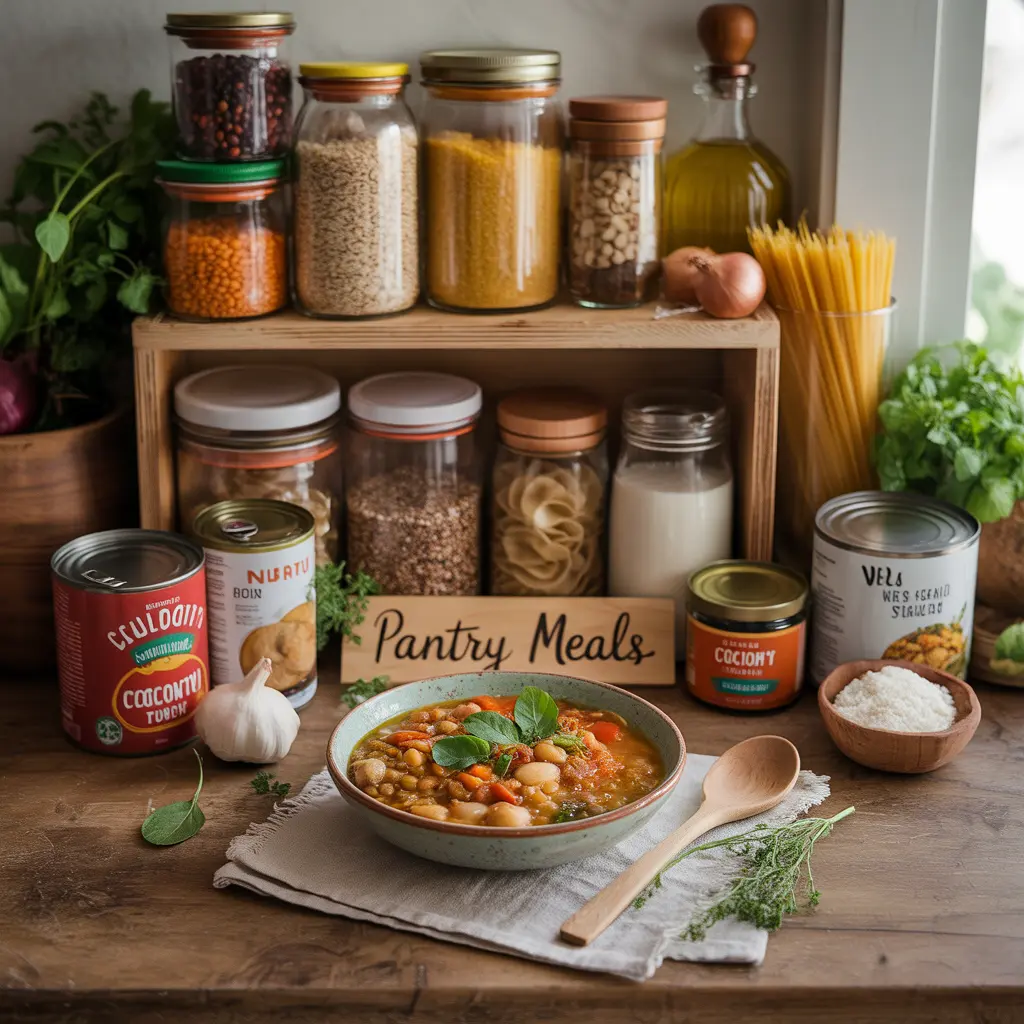
Vegan pantry meals are what you cook when the fridge is empty but the cupboards still have something. This guide covers the 20 best plant-based meals you can build from dried legumes, canned tomatoes, grains, spices, and basic condiments. No fresh produce required for most of them. Each recipe uses five or fewer core ingredients, and the professional layering techniques shared here transform the simplest staples into genuinely satisfying food in under 30 minutes.
Why Pantry Cooking Is the Most Important Skill in Plant-Based Eating
Vegan pantry meals are not a compromise. They are a skill. The ability to open a mostly empty kitchen and produce genuinely satisfying, nutritious food from what is already there separates people who maintain a plant-based diet long-term from those who give up when life gets busy or the shops close. It is the culinary equivalent of financial resilience: the capacity to function well under constraint.
Most people underestimate what their pantry can produce. A can of chickpeas, dried lentils, pasta, a tin of tomatoes, and three spices is enough for at least four complete meals. The limitation is rarely ingredients. It is technique, flavour knowledge, and the confidence that comes from understanding what makes simple food taste good.
The most shared food content in recent years features accessible, minimal-ingredient cooking that makes people feel equipped rather than overwhelmed. Pantry cooking sits exactly at that intersection: affordable, fast, scalable, and genuinely impressive given the constraints.
The foundation is in the vegan pantry staples list. If your cupboards contain those ingredients, you are always one step away from a satisfying meal.
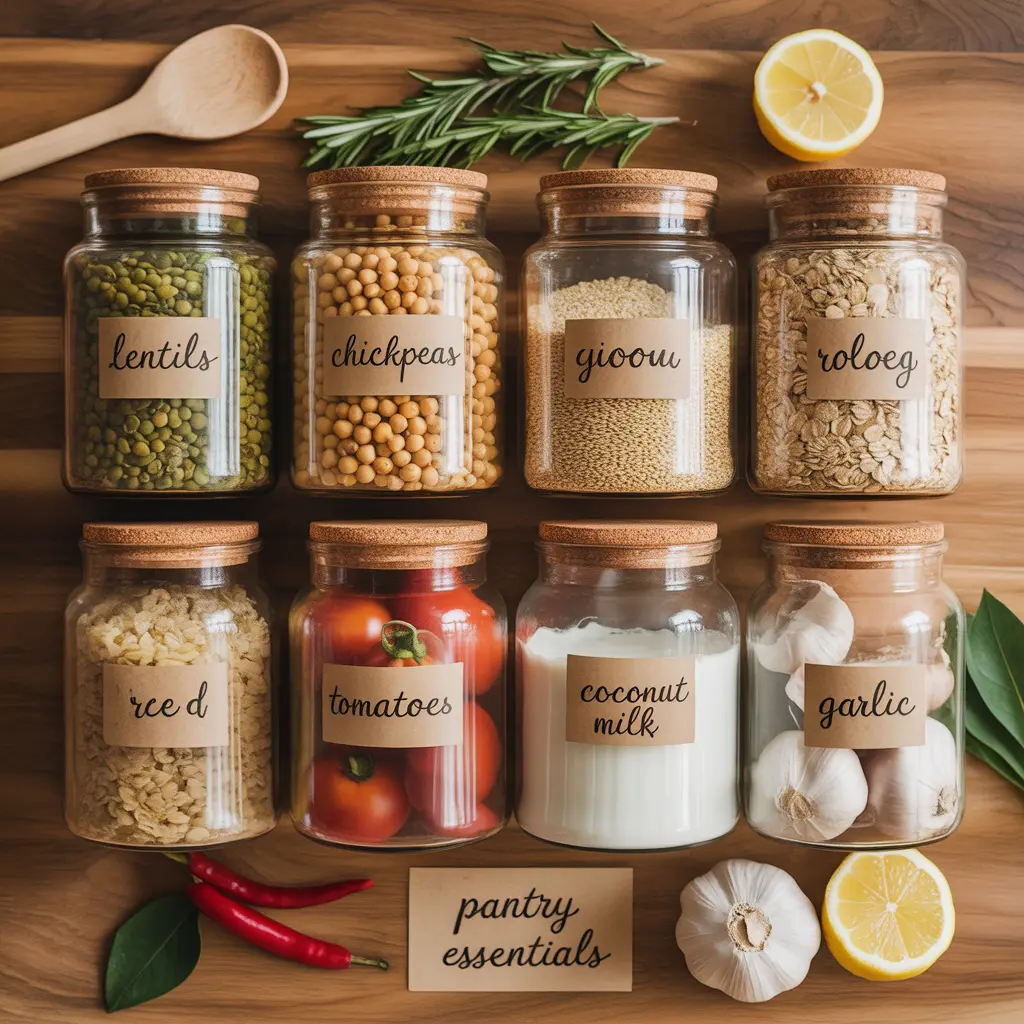
The 8 Pantry Staples That Make Every Vegan Pantry Meal Possible
These eight ingredients are the building blocks of flexible, satisfying plant-based cooking from staples. Stock all eight and you can produce at least fifteen different meals without shopping.
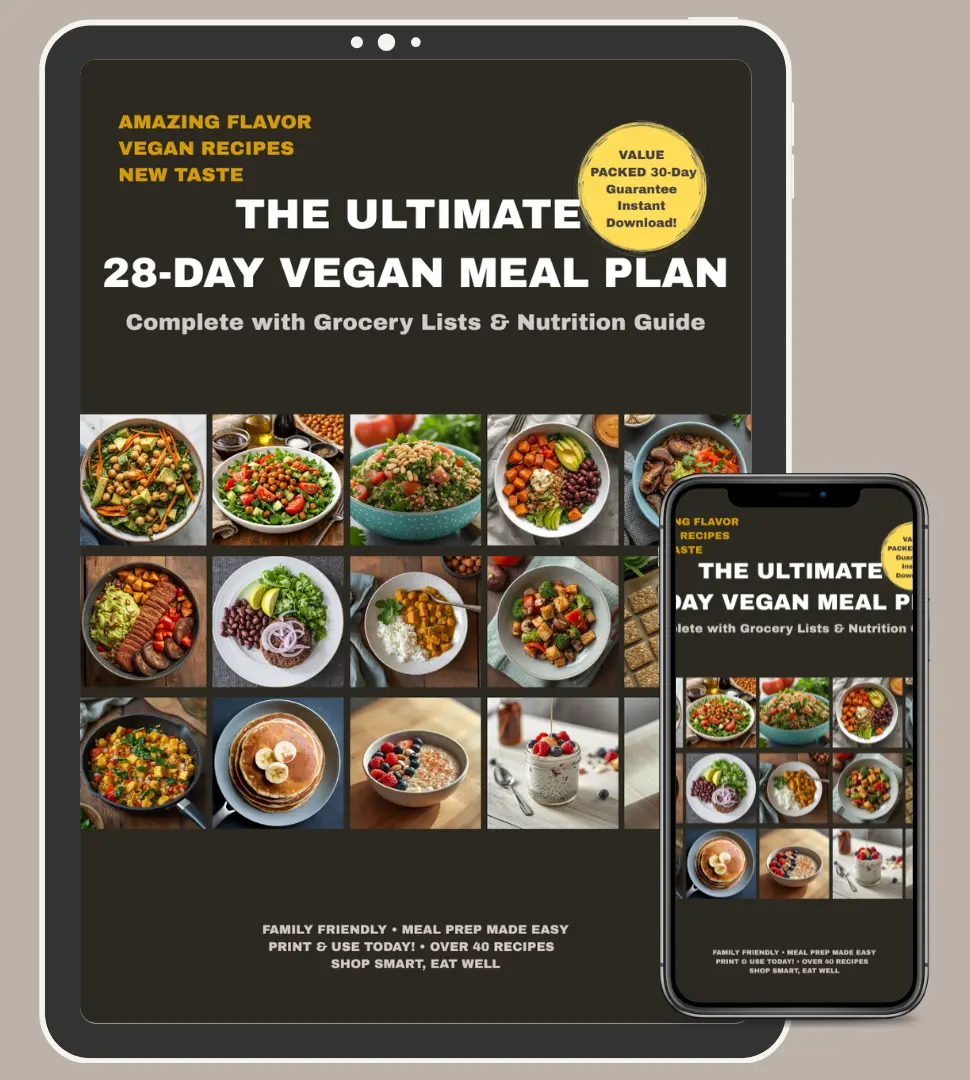
If stocking the perfect pantry for consistent vegan cooking feels like a project, the Ultimate 28-Day Vegan Meal Plan + Grocery List, (Complete Solution) includes an easy grocery list that covers exactly what you need for 28 days of meals. Over 40 nutritionist-approved recipes, vibrant photo for every dish, and a complete 28-day calendar. Shop smart, eat well.
20 Best Vegan Pantry Meals: Quick Cards
The following meals are ranked by satisfaction: protein content, flavour complexity, speed, and completeness without fresh ingredients. Every recipe uses only pantry items. Times are honest kitchen estimates.
The vegan meals for one guide covers single-serve adaptations of many of these dishes. The cheap vegan meals on a budget guide has cost-per-serving breakdowns for every pantry category.
28-Day Vegan Meal Plan +
Grocery list.
Nutrition Power Comparison: Top Vegan Pantry Meal Bases
Red lentil dahl ranks as the most nutritionally complete pantry meal per calorie. The combination of protein, iron, fiber, folate, and magnesium covers more nutritional ground than almost any other staple dish. For a full protein breakdown, see the vegan protein sources guide.
Vegan Pantry Meals: Ingredient-to-Meal Map
The 5-Step Empty Pantry Protocol for Perfect Vegan Pantry Meals
This is the decision framework used in professional kitchens when cooking under constraint. Apply it to any collection of staples and it consistently produces satisfying food from what looks like nothing.
▼
▼
▼
▼
Once internalised, this framework removes the need to follow recipes. You understand the structure and the structure works with anything. For batch cooking multiple dishes in a single session, the vegan batch cooking guide covers the exact workflow.
20 Years of MENA and Mediterranean Kitchens: What Pantry Cooking Really Teaches You
Twenty years across MENA and Mediterranean professional kitchens taught one lesson no culinary school textbook contains: heat management matters more than ingredient quality. An average ingredient cooked with precision produces better food than a premium ingredient cooked carelessly.
The most direct application is the bloom. Every spice-based dish should begin with 30-60 seconds of spices in hot fat before any liquid is added. This releases fat-soluble flavour compounds that remain locked in the powder when added to liquid. A lentil soup made with bloomed spices tastes fundamentally different from one where the same spices are stirred in at the end. The difference is the difference between flat and professional.
The second technique is the paste toast. Tomato paste cooked in oil for two to three minutes before adding liquid undergoes a Maillard transformation from raw and acidic to deeply savory. Standard in professional kitchens across the region, it costs zero extra ingredients and adds depth most people assume requires meat stock.
The third is finishing with fat. A drizzle of olive oil, a spoonful of tahini, or a tablespoon of coconut cream off the heat dramatically increases perceived richness. Fat is a flavour carrier and texture builder. The most transformative single improvement to any pantry dish is almost always a finishing fat, not an extra spice.
The vegan meal prep for busy professionals guide covers batch pantry cooking across a full week.
Want 28 days of vegan meals already planned around exactly the kind of accessible, affordable ingredients covered in this guide? The Ultimate 28-Day Vegan Meal Plan + Grocery List, (Complete Solution) includes simple recipes with common ingredients, complete 28-day calendar with shopping lists, and saves 7+ hours weekly on meal planning.
5 Pantry Cooking Mistakes That Kill Flavour
Mistake 1: Adding Spices to Liquid
Spices added directly to water, stock, or canned tomatoes without blooming first produce flat, one-dimensional flavour. Always bloom spices in hot fat first for at least 30 seconds before adding any liquid.
Mistake 2: Under-Seasoning at the Base
Most pantry dishes fail because seasoning is added only at the end. Season at every stage: spice bloom, base, and finish. Layered seasoning creates depth that end-only seasoning never replicates.
Mistake 3: Skipping the Acid Finish
A dish without acid at the end tastes flat and one-note regardless of spice quality. A few drops of lemon juice or a splash of vinegar at the finish costs nothing and makes every pantry dish taste complete and considered.
Mistake 4: Not Reducing the Sauce
Thin sauces produce weak flavour. Allow any tomato or lentil-based dish to reduce by 20-30% before serving. Concentration dramatically amplifies all existing flavours and improves the texture of the dish simultaneously.
Mistake 5: Treating Every Tin the Same
Chickpeas hold their shape and crisp under heat; white beans mash into creaminess. Lentils dissolve; black beans stay firm. Using the right legume for the right preparation makes a significant difference in satisfaction.
If you only have one tin left, open chickpeas. They are the most versatile single pantry ingredient available: eat them straight from the tin with oil and spice, roast them, mash them into hummus, drop them into any sauce, or fry them into a crispy topping. No other tin gives you more meal options per use. For more budget strategy, the vegan grocery hacks guide covers pantry restocking at lowest cost.
Conclusion: Your Empty Kitchen Is Not Empty
Vegan pantry meals are proof that great plant-based cooking does not require a full fridge or hours of preparation. It requires technique, a basic spice collection, and the understanding that every dried legume and tin in your cupboard is already most of a complete, nutritious meal.
The next time the kitchen looks bare, run the protocol. Identify your protein, pick your carb, build umami, choose a spice direction, and finish with acid. These vegan pantry meals are not consolation prizes for an under-stocked kitchen. They are the foundation of confident, economical, flavour-forward plant-based cooking.
For a complete 28-day system of meals already built around accessible everyday ingredients, the Ultimate 28-Day Vegan Meal Plan + Grocery List, (Complete Solution) has every meal planned, every ingredient listed, and every recipe photographed. Complete 28-day calendar with shopping lists. Print and use today.
Frequently Asked Questions About Vegan Pantry Meals
1. What are the best vegan pantry meals when the fridge is empty?
Red lentil dahl, chickpea tomato stew, lentil bolognese, peanut butter noodles, and miso broth are the five most satisfying options from zero fresh ingredients. All use shelf-stable staples and cook in under 25 minutes.
2. What pantry staples do I need for vegan cooking?
The essential eight: red lentils, canned chickpeas, canned tomatoes, dried pasta or rice, soy sauce, cumin and smoked paprika, olive oil, and nutritional yeast. Together they cover protein, carb, umami, and fat in any meal.
3. Can vegan pantry meals be high in protein?
Yes. Red lentil dahl provides around 21g of protein per 400-calorie serving. Chickpea dishes deliver 17-18g. Pantry legumes are among the most protein-dense, calorie-efficient foods in any kitchen.
4. How do I make vegan pantry meals taste good without fresh ingredients?
Three techniques: bloom spices in hot fat before adding any liquid, toast tomato paste in oil for 2-3 minutes before adding liquid, and always finish with a small amount of acid. These three steps transform simple staples into deeply flavoured food.
5. What is the cheapest vegan pantry meal to make?
Red lentil soup with canned tomatoes costs approximately $0.60-0.80 per serving and delivers a full nutritional profile: protein, fiber, iron, and folate. Dried red lentils are among the most affordable protein sources anywhere.
6. How long do pantry staples last?
Dried lentils and beans last 2-3 years. Canned goods last 2-5 years. Dried pasta and rice last 1-2 years. A well-stocked pantry is genuinely shelf-stable with minimal wastage.
7. Are vegan pantry meals healthy?
Legume-based pantry meals are among the most nutritionally dense foods available: high in protein, fiber, iron, folate, magnesium, and zinc, with low saturated fat. Their nutritional quality consistently exceeds most fast food or convenience alternatives.
8. What is the quickest vegan pantry meal?
White bean toast takes 8 minutes. Miso noodle broth takes 12 minutes. Peanut butter noodles take 15 minutes. All three require minimal skill and use ingredients available in virtually any pantry.
9. Can I meal prep vegan pantry meals in batches?
Yes. Red lentil dahl, chickpea stew, and lentil bolognese all scale to four-serving batches, refrigerate for five days, and freeze for three months. See the vegan batch cooking guide for the full workflow.
10. What spices are most essential for vegan pantry cooking?
Cumin, smoked paprika, turmeric, and chili flakes cover every major flavour direction. With these four and soy sauce, any legume or grain becomes a meal with clear identity and satisfying depth.
11. How do I add umami to vegan pantry meals without fresh vegetables?
Use the pantry umami stack: soy sauce for glutamate, tomato paste toasted in oil for Maillard depth, nutritional yeast at the finish, and miso off the heat. Any one adds depth. Two or three together create genuine richness.
12. What is the most underrated vegan pantry meal?
Mujadara: rice and lentils cooked together with cumin and olive oil, finished with crispy onion. A centuries-old MENA staple that costs almost nothing, delivers exceptional nutrition, and satisfies completely. Most people outside the region have never tried it.
Still spending hours figuring out what to eat?
What’s included in your download
- 40+ nutritionist-approved recipes
- Complete 28-day calendar
- Meets protein, iron & B12 needs
- Family & meal prep friendly
- Vibrant photo for every recipe
- Simple, common ingredients
Instant PDF download. No subscriptions. No waiting.