
Medical Disclaimer: This article is for informational and educational purposes only. Individual nutritional needs vary by age, health status, and activity level. Always consult a qualified healthcare provider or registered dietitian before making significant dietary changes, especially for infants, toddlers, or children with health conditions.
A vegan meal plan for families is one of the most requested and least well-served topics in plant-based nutrition content. Most plant-based meal planning guides are written for a single adult with a single set of nutritional targets. Families do not work that way. A toddler, a school-age child, a teenager, and two adults all sitting at the same table have meaningfully different protein requirements, calcium needs, iron targets, and caloric demands.
The practical challenge is not finding vegan foods the whole family will eat. It is knowing how to build one shopping list and one set of weekly meals that meets every age group’s needs without cooking three separate dinners each night. This guide solves exactly that problem.
The approach used here is what professional chefs have always known: build around a core set of nutrient-dense whole foods, prepare them in large batches, and vary the presentation and portion by age. A pot of lentil soup, a tray of roasted vegetables, a batch of hummus, and a grain base covers five different meals for five different people without five different recipes. The framework in this guide makes that system explicit and replicable.
Why Family Vegan Meal Planning Is Different
When an adult follows a plant-based diet, the nutritional strategy is relatively straightforward: hit protein targets, supplement B12, ensure iron absorption, and eat a wide variety of whole plant foods. When a family follows a plant-based diet, the same framework applies but with multiple different nutrient targets operating simultaneously across age groups that have very different physiological needs.
Children are not small adults. A toddler aged one to three requires the same amount of iron per kilogram of body weight as an adult man, meaning their absolute intake needs relative to their small appetite are proportionally very high. A school-age child aged four to eight needs 25 grams of protein per day, while a teenage boy aged fourteen to eighteen needs up to 52 grams. A breastfeeding adult in the household may need over 1,000 mg of calcium per day while a four-year-old needs 1,000 mg for different developmental reasons.
A vegan meal plan for families that works practically is not one that treats every person as identical. It is one that identifies the highest common denominator across all age groups and builds meals around those nutrient-dense foods, then adjusts serving sizes, textures, and additions for specific ages. This approach, which experienced family cooks understand instinctively, is what this guide makes explicit and reproducible.
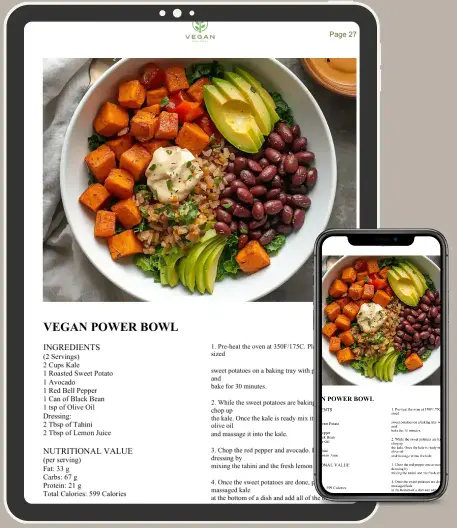
The Complete 28-Day Vegan Meal Plan + Grocery List
- 28-day structured calendar — breakfast, lunch, dinner & snack, every single day
- Every meal meets protein, iron & B12 — no guesswork, no gaps
- 4 weekly grocery lists — categorised, budget-friendly, zero waste
- Saves 7+ hours weekly — print once, follow all month
- Bonus Nutrition Guide Toolkit — vegan tips, guides & family meal prep
Instant digital download · Printable PDF · Use today
Nutritional Targets by Family Member Age
The table below sets out the core nutritional targets for each age group in a typical family. Use this as your reference when evaluating whether your current vegan meal plan for families covers all age groups adequately. The targets shown are the standard recommended intakes for each group, not the elevated requirements applicable to athletes or individuals with specific health conditions.
The key insight from this table is that calcium requirements are actually highest during childhood and adolescence, not adulthood. This is the nutritional fact most often missed in family plant-based nutrition. A teenager aged nine to eighteen needs 1,300 mg of calcium per day, more than a pregnant adult at 1,000 mg. Bone mineralisation is most active between ages nine and eighteen, and insufficient calcium during this window cannot be fully recovered in adulthood.
For a family plant-based diet that supports this without separate cooking, the strategy is to ensure that calcium-rich plant foods appear at every meal across the day. Fortified plant milks, tofu set with calcium sulphate, white beans, kale, and bok choy are the core calcium contributors for a family plant-based calcium and protein strategy. The B12 guide covers the supplement approach for all age groups.
8 Family-Friendly Vegan Food Categories
A practical vegan meal plan for families does not require a long ingredient list. It requires the right categories of food, used consistently, so that every meal delivers an adequate nutritional profile for all age groups. The eight categories below form the complete foundation of a family plant-based shopping system.
A 7-Day Family Vegan Meal Plan Calendar
The meal plan below is designed for a typical family of four: two adults and two children aged between five and twelve. All meals share the same core ingredients and preparation. The adult versions typically use larger portions, more seasoning, and additional toppings. The children’s versions use the same base with milder seasoning, smaller portions, and familiar textures.
This family plant-based meal plan weekly framework is built around ingredients that appear across multiple days: lentils, chickpeas, tofu, brown rice, spinach, and sweet potato. When these core items are batch-cooked on Sunday, each dinner listed above takes under 20 minutes of active preparation.
The meals above are also designed to support a plant-based school lunch system. Monday’s leftover lentil soup, Tuesday’s leftover rice and chickpeas, and Wednesday’s pasta all work as packed lunches without modification. This doubles the utility of each dinner cook and removes the need to prepare school lunches separately every morning.
The Sunday Batch-Cook System for a Family
A vegan meal plan for families functions most sustainably when it is backed by a single weekly preparation session. Professional kitchens run on the principle of mise en place: everything prepared and in place before service begins. The family kitchen equivalent is a two-hour Sunday batch cook that front-loads the week’s preparation and eliminates daily decision-making.
The Sunday Family Batch-Cook: 2 Hours, 5 Outputs
The full vegan batch cooking guide covers this preparation system in detail. For families, the key additional principle is to cook in quantities that feed two to three meals, not just one. The incremental effort of doubling a recipe is minimal, but the time saving across the week is significant.
This approach mirrors the professional kitchen model I used across 20-plus years in commercial kitchens: cook the foundations in large volumes and compose individual dishes from those foundations. A family of four using this batch-cook system spends an average of 15 to 20 minutes of active kitchen time on weeknight dinners, compared to 45 to 60 minutes when cooking from scratch each evening.
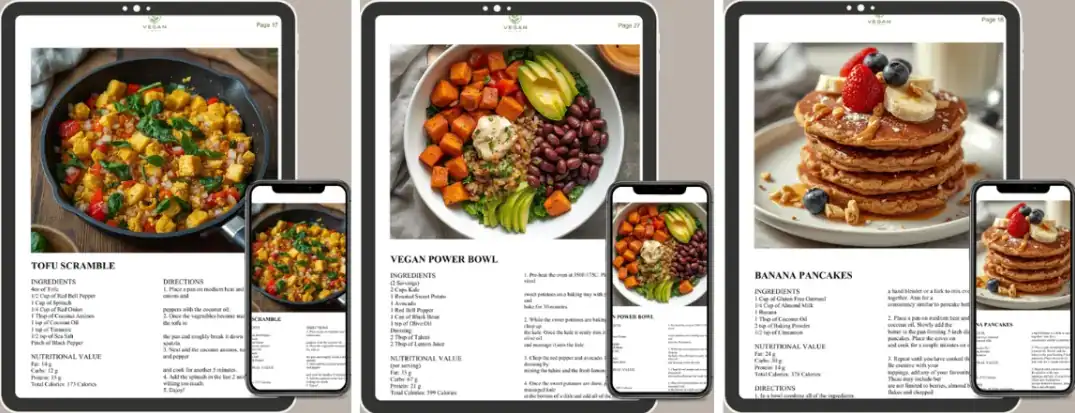
The Ultimate 28-Day Vegan Meal Plan + Grocery List
Everything you need to eat well for a full month — planned, photographed, and ready to print.
- Complete 28-day daily calendar
- 40+ nutritionist-approved recipes
- 4 weekly grocery lists
- Protein, iron & B12 at every meal
- Saves 7+ hours of planning per week
Shopping List Structure for 4 People, 1 Week
A vegan meal plan for families works practically when the shopping list is structured by category rather than by meal. Buying in category-based quantities rather than recipe-specific amounts reduces waste, reduces cost, and creates natural flexibility when meals need to be swapped.
Weekly Budget Allocation by Category (Family of 4)
The family plant diet on a budget principle is that legumes and vegetables together should represent roughly half of the weekly shopping spend. These are the most nutrient-dense, calorie-sufficient, and cost-effective components of a plant-based family diet. When the budget is under pressure, legumes and frozen vegetables absorb the reduction better than any other category without compromising nutritional value.
A complete weekly family plant-based shopping list also needs five staples that do not change week to week: iodised salt, nutritional yeast, apple cider vinegar or lemon juice, a good olive oil, and a reliable spice base (cumin, turmeric, garlic powder, smoked paprika). These five items cost very little per week and transform the nutritional and flavour profile of every batch-cooked base ingredient in the system. The complete plant protein guide covers sourcing and cost per gram for the whole family.
Filling Nutrition Gaps for Vegan Children
Vitamin B12 for Vegan Children
B12 deficiency in vegan children is entirely preventable but carries serious consequences if missed. Neurological damage from B12 deficiency in children can be irreversible if not addressed before symptoms appear. A B12 supplement specifically formulated for children’s doses, or consistent daily consumption of B12-fortified foods at every meal, is non-negotiable for all vegan children. Read the full B12 guide for age-specific dosing guidance.
Vitamin D for Plant-Based Children
Vitamin D is synthesised through sun exposure, but in climates with limited winter sunlight, children on any diet type are at risk of insufficiency from October to April. For vegan children, who do not consume the vitamin D-fortified dairy products that provide background intake for most children, a daily vitamin D3 supplement sourced from lichen (the vegan form) is recommended throughout the year in lower-sunlight regions.
Calcium During Bone Development
The family vegan toddler and adult meals approach requires particular attention to calcium at every meal for children aged one through eighteen. Calcium-set tofu, fortified plant milks, white beans, kale, and bok choy are the primary sources. Children aged nine to eighteen need 1,300 mg per day, which requires active inclusion of calcium-rich foods at every meal rather than incidental consumption. A glass of fortified plant milk with each meal and calcium-set tofu in at least two evening meals per week covers approximately 60 to 70 percent of the daily requirement.
Iron for Growing Children
Plant diet iron for vegan children requires the same absorption strategy as for adults, but with greater urgency due to the role of iron in cognitive development and immune function. Always pair iron-rich foods with a vitamin C source at the same meal. Spinach with tomato sauce, lentils with lemon juice, and beans with bell pepper are all practical combinations that increase absorption significantly. Check with a healthcare provider about iron status annually for all vegan children, particularly those under five. See the complete vegan nutrient deficiency guide for the full list of markers to test.
For families with children who have specific nutritional needs, the dedicated children’s plant-based nutrition guide covers the evidence in detail. The guidance above applies to healthy children without existing conditions. Children with any medical diagnosis should always have dietary strategy confirmed by a qualified healthcare provider.
A Chef’s Perspective: MENA Family Meze Traditions
In over 20 years cooking professionally across the Middle East and Mediterranean, I have observed something that nutritional science is only recently formalising: traditional MENA family food culture was already operating as a complete plant-based nutrition system long before the term plant-based existed.
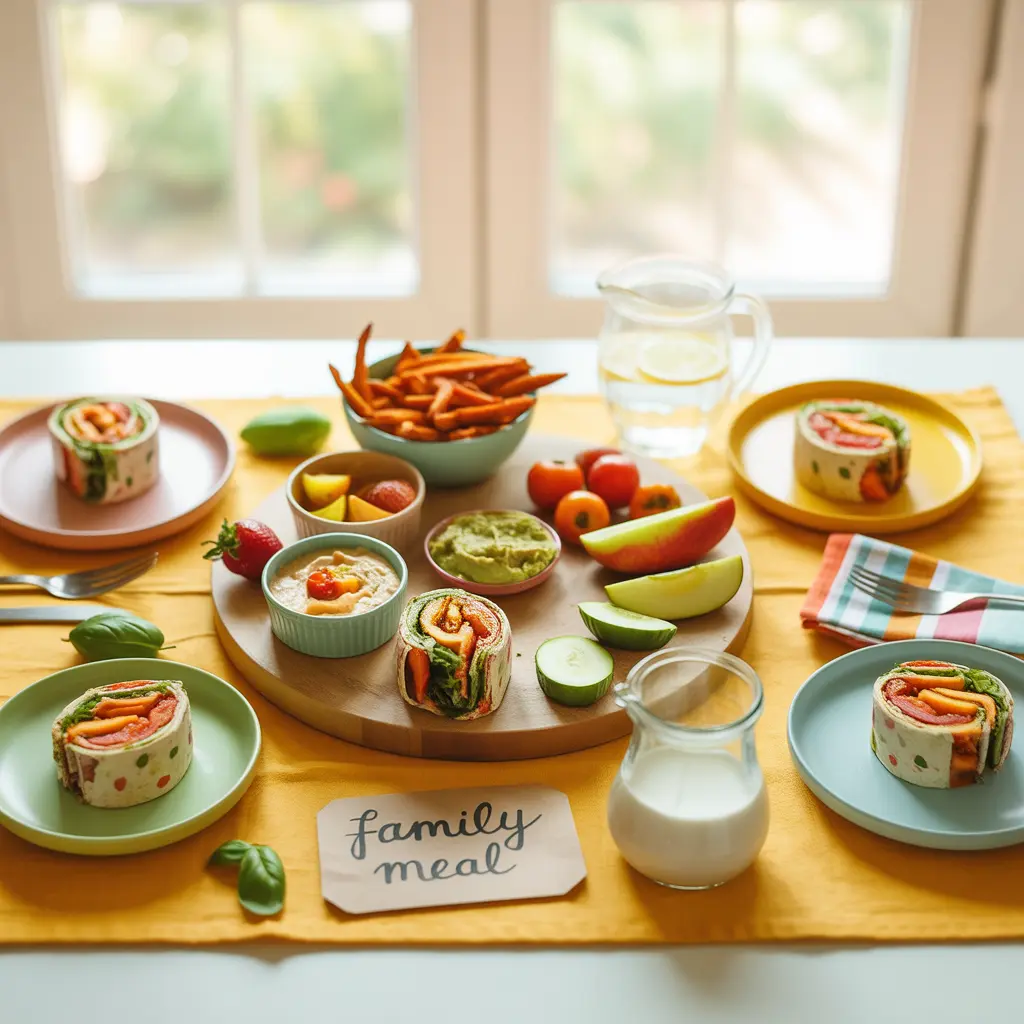
The meze table, which is the traditional MENA family sharing format, is a perfect model for a vegan meal plan for families. A meze spread typically includes hummus (legumes, sesame, olive oil), tabbouleh (whole grain bulgur, herbs, lemon), fattoush (seasonal vegetables, citrus), stuffed grape leaves (rice, herbs, olive oil), and a yoghurt-based dip that in a vegan family becomes a cashew or tofu-based alternative. Every major nutritional category is present. Every age group can eat from the same table. Portion sizes and textures can be adjusted without separate cooking.
The practical lesson from this tradition for family plant-based cooking is to think in spreads rather than plates. When the table has four to six dishes simultaneously rather than one main and two sides, every age group finds something that works for their texture preference, appetite size, and nutritional need. This format also reduces the picky-eater problem considerably, because no child is presented with a single item they must eat. They compose their own plate from the options available.
My professional advice is to build two meze-style family dinners per week into your vegan meal plan for families, using the batch-cooked foundations from Sunday. Hummus, a grain salad, roasted vegetables, a legume stew, and some fresh bread require no active cooking on the night and feed four people across all ages with full nutritional coverage. The Ultimate 28-Day Vegan Meal Plan + Grocery List (Complete Solution) is built on this exact principle: 36 chef-tested recipes designed for real family kitchens, with every meal meeting protein, iron, and B12 needs, using simple recipes built from common supermarket ingredients.
Vegan Meal Plan for Families: The Complete Plant-Based Family Nutrition Guide — Raising children on a well-planned vegan diet can support healthy growth at all stages when key nutrients are prioritised: protein, calcium, iron, vitamin B12, vitamin D, iodine, and omega-3 fatty acids. For evidence-based clinical guidance, refer to the Harvard T.H. Chan School of Public Health — Vegetarian & Vegan Diets and the NIH/PubMed Review on Plant-Based Diets in Children and Adolescents. Both resources provide science-backed frameworks for balanced plant-based family nutrition.
Frequently Asked Questions
Is a vegan meal plan for families nutritionally complete for children?
Yes, with appropriate planning. The Academy of Nutrition and Dietetics and the Dietitians of Canada both confirm that a well-planned plant-based diet is appropriate for all stages of life, including infancy and childhood. The key qualifications are ensuring B12 supplementation, adequate calcium from fortified foods and calcium-rich vegetables, vitamin D supplementation in low-sun climates, and annual iron monitoring for all vegan children.
How do I adapt a vegan meal plan for families with picky eaters?
The most effective strategy is building meals around a shared base with variable toppings and additions. Cook one pot of lentils or rice, then allow each family member to customise their bowl with different sauces, toppings, and sides. Meze-style spreads also work well for picky eaters because they provide choice without separate cooking. Exposing children to a wide variety of whole plant foods repeatedly and without pressure is the most evidence-supported approach to expanding acceptance over time.
What is the most affordable way to run a vegan meal plan for families?
The most cost-effective vegan meal plan for families is built around dried legumes, frozen vegetables, bulk whole grains, and seasonal produce. Dried lentils cost a fraction of tinned and cook from dried in 20 minutes. Frozen spinach, peas, and edamame are nutritionally equivalent to fresh and significantly cheaper. A well-structured plant-based family diet on a budget typically costs less per person than an equivalent omnivorous diet when built correctly around these foundations.
Do vegan children need more protein than adults?
Vegan children need proportionally more protein per kilogram of body weight than adults, but their absolute daily requirement is lower. A toddler needs approximately 11g per day, a school-age child 19 to 25g, and a teenager up to 52g. Because plant proteins have slightly lower digestibility than animal proteins, it is recommended that vegan children consume 10 to 15 percent more protein than the standard reference intakes to account for this difference. Legumes, tofu, and fortified soy milk are the most reliable plant-based family protein sources.
Can toddlers follow a vegan meal plan for families?
Yes, but toddler nutrition requires specific attention that differs from older children and adults. Toddlers aged one to three have small stomachs and high caloric density needs. Fat should not be restricted. Fortified full-fat soy milk is the recommended plant milk for this age group. B12, vitamin D, and iodine supplementation or consistent fortified food intake are essential. Always consult a paediatric dietitian when planning a plant-based diet for children under two.
How do I include non-vegan family members in a plant-based meal plan?
The most practical approach is to build shared bases and serve protein components separately. A rice bowl night where everyone uses the same rice, roasted vegetables, and sauce, but non-vegan members add their own protein alongside the plant protein options, allows full table participation without separate cooking. Most families transitioning partially to plant-based eating find that the whole-table format quickly becomes standard as the plant-based options are genuinely satisfying and familiar.
Which supplements does a vegan family need?
For all family members of all ages: B12 (either as a direct supplement or through consistent fortified foods), and vitamin D (particularly in winter months or low-sunlight climates). For breastfed infants of vegan mothers: B12 and vitamin D are essential as breast milk may be insufficient in both. For children under five: discuss omega-3 DHA supplementation with a paediatrician. Iodised salt and iodine-fortified plant milks address iodine for most family members without a separate supplement.
How much calcium do vegan children need, and how do I provide it?
Children aged one to three need 700mg daily. Children aged four to eight need 1,000mg. Children and teenagers aged nine to eighteen need 1,300mg, the highest requirement of any age group. Meeting 1,300mg from plant foods requires calcium-set tofu, fortified plant milk at every meal, white beans, kale, and bok choy consumed consistently. A registered dietitian can assess whether a calcium supplement is needed if food intake is insufficient.
How do I handle a vegan meal plan for families when one child refuses vegetables?
Incorporating vegetables through texture rather than presentation is the most reliable approach. Blended spinach into lentil soup or tomato pasta sauce, grated courgette in oat pancakes, mashed sweet potato mixed with lentil patties, and pureed carrot in bean soups all deliver vegetable nutrition without the texture and appearance that some children refuse. Keeping visible vegetables at the table alongside these incorporated options also maintains exposure, which is the key long-term strategy for acceptance.
Is the meal plan above suitable for a vegan family on a tight budget?
Yes. The seven-day plan above is built entirely from budget-accessible ingredients. Swapping tinned chickpeas for dried chickpeas cooked in bulk, using frozen spinach instead of fresh, and buying brown rice in 2kg bags rather than small packets reduces the weekly cost significantly without changing the nutritional profile. A vegan meal plan for families on a budget of under £60 or $70 per week for four people is achievable with these substitutions in most countries.
How do I make a vegan meal plan for families work for school lunches?
The best school lunch strategy for a vegan family is cooking once, eating twice. Every dinner in the seven-day plan above produces enough for packed lunches the following day with no additional preparation. Lentil soup in a thermos flask, rice and bean bowls in a container, pasta with tomato-lentil sauce, and hummus with raw vegetables and whole grain crackers are all school-appropriate plant-based lunches that come directly from the previous night’s dinner batch. The school lunch guide covers 30 specific ideas for plant-based packed lunches.
What is the simplest way to start a vegan meal plan for families from scratch?
Start with three vegan dinners per week rather than a full transition. Choose three dinners from the seven-day plan above that your family is most likely to accept: the lentil soup, the chickpea curry, and the pasta are the most universally accepted starting points. Build a shopping list around those three dinners and do one batch cook on Sunday. Once three dinners are routine, add more. This gradual approach produces long-term consistency far more reliably than an all-at-once transition.
Making the Family Plant-Based Kitchen Work
A vegan meal plan for families does not require complexity, specialist ingredients, or separate cooking for different ages. It requires a clear nutritional framework, a weekly batch-cook system, and a set of meals that the whole family recognises as genuinely satisfying. The approach outlined in this guide delivers all three.
The families who succeed long-term with plant-based eating are not the ones who follow the most rigid protocol. They are the ones who build a reliable rotating set of 10 to 15 meals the whole family accepts, shop from a consistent weekly list, and front-load the week’s preparation on Sunday. That system is more powerful than any individual recipe.
If you want the structural foundation for this system already built and tested, the Ultimate 28-Day Vegan Meal Plan + Grocery List (Complete Solution) removes every planning decision for the first 28 days. It includes 36 chef-tested recipes with a photo for every recipe, four weekly grocery lists, and complete 28-day calendar, with simple recipes built from common supermarket ingredients and every meal meeting protein, iron, and B12 needs. It is the complete system that makes a vegan meal plan for families work immediately rather than after months of trial and error.
