
Nutritional Disclaimer: This content is for informational purposes only and does not constitute medical advice. Persistent fatigue may have underlying medical causes. Always consult a healthcare provider or registered dietitian before making significant dietary changes.
Vegan Foods for Energy: What to Eat to Stay Powered All Day on Plants
TL;DR
Vegan foods for energy work by fueling ATP production, stabilizing blood glucose, and correcting the six nutrient gaps most responsible for plant-based fatigue: iron, B12, magnesium, vitamin D, zinc, and complex carbohydrates. This guide covers the energy science behind ATP and mitochondria, the top 20 plant energy foods ranked, a morning protocol from wake-up to lunch, the afternoon crash fix, a 3-day energy reset plan, MENA energizing kitchen traditions, and 12 FAQs. Plants provide every nutrient the body needs for sustained energy. The key is knowing which ones, in what combinations, and at what times of day.
How the Body Produces Energy: ATP, Mitochondria, Glucose
Vegan foods for energy are most effective when chosen with an understanding of how the body actually makes energy. All human energy runs on one molecule: ATP (adenosine triphosphate). Every movement, thought, heartbeat, and cellular function requires ATP.
Three systems produce ATP, each relying on specific nutrients that plants can supply in full:
- Glycolysis: Glucose from carbohydrates is broken down into pyruvate in the cytoplasm. Fast but inefficient. Produces 2 ATP per glucose molecule. Relies on B vitamins as cofactors.
- Krebs Cycle: Pyruvate enters the mitochondria. Iron, magnesium, and B vitamins are essential cofactors at multiple steps. Produces electron carriers that feed the next stage.
- Oxidative Phosphorylation: The electron transport chain generates 30-32 ATP per glucose molecule. Requires coenzyme Q10, iron, and copper. This is where 90% of your energy is made.
Why Blood Glucose Stability Is the Master Energy Switch
Every plant-based energy strategy starts with blood glucose. When glucose rises too fast (refined carbs), insulin spikes and then overshoots, causing a crash below baseline. When glucose is stable (complex carbs, fiber, protein), energy is sustained for 3-5 hours per meal.
The best vegan foods for energy are those that deliver glucose slowly. Legumes, oats, sweet potatoes, and whole grains are not just healthy foods. They are precision energy delivery systems with low glycemic index profiles that sustain ATP production without the spike-and-crash cycle.
The Mitochondria-Nutrient Connection
Mitochondria are the power plants of every cell. Their efficiency depends directly on nutrient status. Iron deficiency reduces oxygen transport to mitochondria. Magnesium deficiency blocks ATP synthesis at the molecular level. B12 deficiency impairs myelin sheath integrity, slowing nerve signal transmission and creating cognitive fatigue. All three are common in poorly planned plant diets. All three are fully correctable through targeted vegan foods for energy and strategic supplementation. Full diagnostic guide at why am I tired on a vegan diet.
The 6 Energy-Stealing Nutrient Gaps on a Vegan Diet
Fatigue on a plant-based diet is almost always traceable to one or more of six specific nutrient deficiencies. Each one disrupts a different step in the energy production chain. Identifying and correcting the right gap is the fastest route to sustained plant-based energy.
1. Iron: The Oxygen Carrier
Why it drains energy: Iron is required for haemoglobin, which carries oxygen to every cell. Low iron means every cell is oxygen-starved, including the mitochondria that produce ATP.
Vegan iron energy foods:
- Lentils: 6.6mg per cup cooked
- Tofu: 3.4mg per 100g
- Pumpkin seeds: 4.2mg per 30g
- Dark leafy greens + vitamin C
2. Vitamin B12: The Nerve Energiser
Why it drains energy: B12 is essential for myelin sheath production (nerve signal speed), red blood cell formation, and DNA synthesis. Deficiency creates neurological fatigue and megaloblastic anaemia.
Only reliable vegan sources:
- Cyanocobalamin supplement: 250mcg daily
- Fortified nutritional yeast
- Fortified plant milks
3. Magnesium: The ATP Activator
Why it drains energy: ATP itself cannot be used by the body without binding to magnesium first. Every ATP molecule is technically Mg-ATP. Magnesium deficiency means unused ATP, regardless of how much you produce.
Best vegan magnesium energy foods:
- Pumpkin seeds: 156mg per 30g
- Hemp seeds: 210mg per 30g
- Dark leafy greens, black beans
4. Vitamin D: The Cellular Switch
Why it drains energy: Vitamin D receptors exist on mitochondria. Deficiency directly reduces mitochondrial function and is strongly associated with unexplained fatigue, muscle weakness, and low mood.
Only reliable vegan sources:
- Algae-based D3: 2,000 IU daily minimum
- UV-exposed mushrooms (variable)
- Fortified plant milks (inadequate alone)
5. Complex Carbohydrates: The Fuel Tank
Why it drains energy: Low-carb or refined-carb vegan diets fail to provide sustained glucose for the Krebs cycle. Without slow-release carbohydrates, the body downregulates energy output to conserve fuel.
Best vegan slow-release energy foods:
- Oats: GI 55, 4-5 hour sustained release
- Sweet potato: GI 44-61, rich in potassium
- Lentils: GI 29, highest fiber-to-carb ratio
6. Zinc: The Enzyme Activator
Why it drains energy: Zinc is a cofactor in over 300 enzymatic reactions including those in the Krebs cycle. Zinc deficiency reduces enzyme activity across the entire energy metabolism chain, producing generalised fatigue and cognitive slowness.
Best vegan zinc sources:
- Hemp seeds: 3mg per 30g
- Pumpkin seeds: 2.2mg per 30g
- Lentils soaked and cooked: 2.5mg per cup
For a full blood test framework to identify which gaps apply to you personally, the vegan nutrient deficiencies guide covers every energy-relevant marker and the optimal ranges for each. The vegan supplements guide covers the exact forms and doses for B12, vitamin D, and iron supplementation.
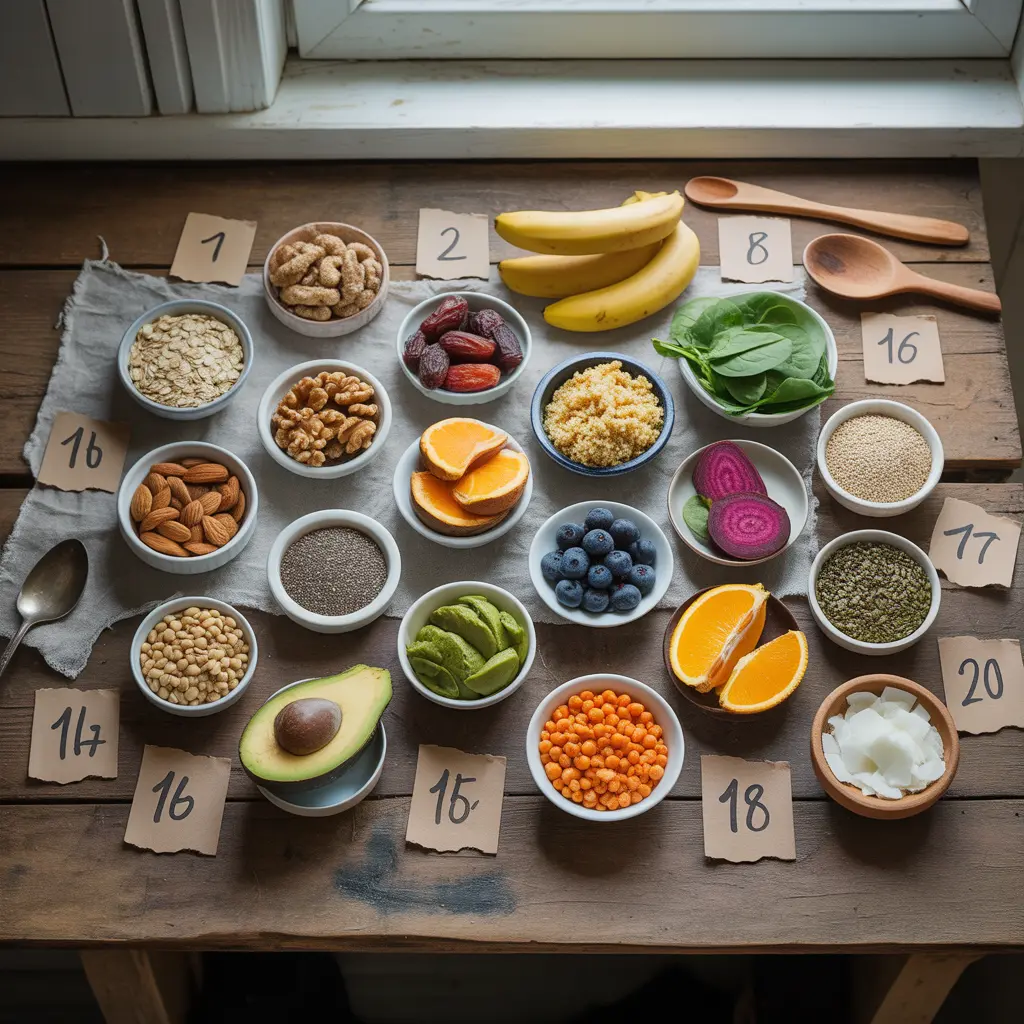
Top 20 Vegan Energy Foods Ranked by Energy-to-Calorie Ratio
The ranking below scores vegan foods for energy not just by calorie count but by the combination of: sustained glucose release (low GI), micronutrient density for ATP cofactors, protein content for blood sugar stabilisation, and fiber for slow digestion. Foods that score high provide energy that lasts. Foods that score low cause spikes and crashes.
Lentils, oats, hemp seeds, and pumpkin seeds dominate the top four positions because they simultaneously address the two most common energy killers on a plant diet: iron deficiency and magnesium deficiency. Any plant-based energy breakfast foods strategy should anchor around at least two Tier 1 foods per morning meal.
What’s Inside the 28-Day Vegan Meal Plan
Morning Energy Protocol: What to Eat from Wake-Up to Lunch
The first four hours of the day determine energy trajectory for the rest of it. Getting vegan energy breakfast foods right is the single highest-leverage dietary intervention for all-day stamina and mental clarity.
The 5-Window Morning Energy Framework
The Iron-Vitamin C Pairing Rule
Non-heme iron from plants absorbs at 2-20% efficiency versus 15-35% for heme iron. Vitamin C consumed in the same meal increases non-heme iron absorption by up to 300%. Every iron-rich vegan meal should include a vitamin C source:
- Lentil soup + squeeze of lemon juice
- Spinach salad + orange segments or bell pepper
- Pumpkin seeds + kiwi or strawberries
- Tofu stir-fry + broccoli and tomato
This single pairing principle resolves a large proportion of vegan iron energy fatigue. See the complete vegan iron sources guide for the full absorption optimization framework.
What to Avoid in the Morning for Sustained Energy
- Refined carbohydrates alone: white toast, sugary cereals, fruit juice without fiber. All produce glucose spikes followed by rapid crashes within 90 minutes.
- Coffee on an empty stomach: cortisol peaks naturally at 8-9am. Adding caffeine at cortisol peak blunts the caffeine effect and disrupts the cortisol rhythm.
- Tea with iron-rich meals: tannins in tea and coffee inhibit non-heme iron absorption by up to 60%. Drink tea 1 hour before or after iron-containing meals.
- Skipping breakfast: the 4-hour glucose window means a 7am start with no food creates a glucose deficit by 9-10am, driving the mid-morning energy slump most people blame on not sleeping well.
For plant-based energy snacks that bridge the gap between meals, the high protein vegan snacks guide covers 20 options designed specifically for blood sugar stability between meals.
Afternoon Energy Crash: Why It Happens and the Plant-Based Fix
The 2-3pm energy slump is not a vegan-specific problem. It is a universal human circadian event, an endogenous dip in alertness driven by the sleep-wake cycle. But on a poorly structured plant diet, nutritional factors amplify it significantly.
The Three Causes of Afternoon Fatigue on a Plant Diet
- Post-lunch glucose crash: A high-glycemic lunch (white rice, white bread, sugary sauces) causes a large insulin response that overshoots, pushing glucose below baseline by 2-3pm.
- Iron-related oxygen deficit: Afternoon fatigue is often where low-grade iron deficiency becomes symptomatic. Muscles and brain receive less oxygen as haemoglobin declines through the day.
- Dehydration: Even 1-2% dehydration reduces cognitive performance and perceived energy. Many people confuse afternoon thirst for hunger or fatigue.
The Afternoon Plant-Based Fix: 4 Steps
- Lunch anchor: Always include legumes or tofu at lunch. Protein + fiber from plant foods slows gastric emptying, preventing the post-lunch glucose crash entirely.
- 2pm snack timing: Eat a small protein and fat snack at 2pm regardless of hunger. Almonds + a piece of fruit, or hummus with vegetables. This pre-empts the circadian dip rather than reacting to it.
- Hydration check: Drink 500ml of water at 1:30pm. Most afternoon fatigue is dehydration presenting as tiredness.
- Avoid refined sugar: A 3pm biscuit or chocolate causes a short energy spike then a deeper crash by 4pm. Replace with plant-based energy snacks: dates with almond butter, or a small handful of trail mix.
Vegan Caffeine Alternatives for Afternoon Energy
These plant-based options provide sustained alertness without the caffeine crash:
- Matcha (1 tsp in water): 25-35mg caffeine plus L-theanine. The L-theanine produces calm focused energy without the jitteriness of coffee. One of the most evidence-supported vegan caffeine alternatives for energy.
- Maca root powder (1 tbsp): An adaptogen from the Andes. Increases energy and stamina through adrenal support rather than stimulation. No caffeine, no crash.
- Ashwagandha (300-500mg extract): Reduces cortisol, improving afternoon energy by preventing the adrenal fatigue cycle. Review the full evidence at Examine.com.
- Beet juice (200ml): Nitrates from beets are converted to nitric oxide, increasing oxygen delivery to muscles and brain within 90 minutes. Popular in vegan pre-workout foods routines for exactly this reason.
The 3-Day Energy Reset Meal Plan
This 3-day structured protocol is designed to reset energy levels by simultaneously correcting the six nutrient gaps, stabilising blood glucose, and establishing the eating rhythm that sustains plant-based energy throughout the day. Each day builds on the previous.
Day 1: Iron and B12 Focus
- Breakfast: Overnight oats with hemp seeds, pumpkin seeds, and sliced kiwi (vitamin C for iron absorption). B12 supplement taken with meal.
- Snack: Handful of almonds + orange
- Lunch: Red lentil soup with lemon + spinach + whole grain bread
- Snack: Hummus with bell pepper strips
- Dinner: Tempeh stir-fry with broccoli, edamame, brown rice, tamari
Iron delivered: approx 22mg. B12: supplemented. Energy outcome: corrects the deepest energy deficit most plant-based eaters carry.
Day 2: Magnesium and Complex Carbs Focus
- Breakfast: Cooked oats + 2 tbsp hemp seeds + banana + dark cocoa powder (magnesium-dense)
- Snack: Pumpkin seeds + dates (2)
- Lunch: Quinoa bowl with chickpeas, roasted sweet potato, tahini dressing, rocket
- Snack: Almond butter on oatcakes
- Dinner: Black bean mujaddara (lentils, rice, caramelized onion) with cucumber and mint
Magnesium delivered: approx 380mg. Glycemic load: low throughout. Energy outcome: activates ATP synthesis and stabilises blood glucose for the full day.
Day 3: Adaptogen and Brain Energy Focus
- Breakfast: Smoothie with banana, maca powder, almond butter, oat milk, ground flaxseed, and matcha
- Snack: Walnuts + blueberries
- Lunch: Tofu and edamame grain bowl with avocado, sesame, nori strips, and brown rice
- Snack: Beet juice 200ml + handful of almonds
- Dinner: Chickpea and spinach curry with turmeric, ginger, and whole grain naan
Adaptogen + nitrate + DHA-precursor loading. Energy outcome: cognitive energy, adrenal balance, and sustained afternoon alertness without stimulants.
After the 3-day reset, the morning protocol from Section 4 maintains the energy foundation ongoing. For a complete structured approach to plant-based energy and metabolism, the vegan metabolism guide covers the full metabolic science and food strategy.
Chef Section: MENA Energising Food Traditions
Twenty years in professional MENA and Mediterranean kitchens reveals a dietary culture that solved the energy problem long before modern sports nutrition existed. The foods that powered entire civilisations through demanding physical and intellectual work are exactly the foods that nutritional science now identifies as optimal plant-based energy sources.
Three MENA Energy Traditions Worth Adopting
1. Ful Medames: The Original Pre-Workout Meal
Slow-cooked fava beans dressed with olive oil, cumin, lemon, and fresh herbs. Eaten as breakfast across Egypt, Sudan, and the wider MENA region for thousands of years.
- One cup delivers: 13g protein, 9g fiber, 4.5mg iron, 1.5mg zinc
- The lemon juice in traditional ful recipes is not accidental. It activates vitamin C-enhanced iron absorption.
- Cumin adds digestive support and trace iron of its own. Every element of the traditional recipe is nutritionally justified.
As a vegan energy breakfast food, ful medames outperforms almost any Western breakfast option on every energy-relevant nutrient metric.
2. Date and Nut Energy Culture
Dates with nuts are the original functional snack of the MENA region. In a professional kitchen context, this combination is the ideal mid-service energy solution during long shifts:
- Dates: natural sugars (glucose and fructose) for immediate energy. High potassium for muscle function. Moderate fiber for sustained release.
- Almonds or walnuts alongside: protein and fat that slow the date sugar absorption, turning a fast-release fruit into a slow-release energy snack.
- 2 dates + 12 almonds delivers approximately 200 calories, 5g protein, and 3g fiber. The ideal plant-based energy snack structure.
3. Spiced Legume Soups as Energy Recovery
Harira (Moroccan tomato and lentil soup), shorbat adas (Levantine red lentil soup), and shorba (North African chickpea soup) are not comfort foods. They are precision recovery meals.
- The tomato base delivers vitamin C, multiplying iron absorption from the legumes
- Turmeric provides curcumin, which reduces the inflammatory fatigue cycle common in high-demand physical work
- Cinnamon in Moroccan harira is not just flavour. It is the most studied dietary compound for post-meal blood glucose stabilisation
These soups are the MENA region’s answer to vegan foods that fight fatigue. Eaten at the end of a fasting day or at the midpoint of a long shift, they restore iron, electrolytes, and slow-release carbohydrates simultaneously.
The Pro Kitchen Energy Plate
After two decades in professional kitchens where 14-hour shifts are standard, the energy plate that holds up all day looks like this:
- Morning: Overnight oats + hemp + pumpkin seeds + citrus
- Midday: Lentil or chickpea base + whole grain + dark greens
- Afternoon: 2 dates + 12 almonds + 500ml water
- Evening: Spiced legume soup or tempeh with roasted vegetables
No stimulants required. No energy drinks. Just the right plant foods at the right times.
Energy Foods by Time of Day
Timing determines how effectively any food contributes to energy. The infographic below maps the best vegan foods for energy to the four energy windows of a typical day.
Vegan Foods for Energy: Matched to Each Time of Day
Morning (6-9am): Slow-Release Foundation
- Rolled oats with hemp seeds
- Pumpkin seeds + ground flaxseed
- Banana or kiwi (vitamin C)
- Fortified plant milk (B12, D3)
- Green tea or matcha
Mid-Morning (10-11am): Blood Sugar Bridge
- Apple or pear with almond butter
- Hummus + vegetable sticks
- Small handful walnuts + dates (2)
- Edamame (100g)
Afternoon (2-4pm): Anti-Crash Protocol
- Beet juice 200ml (nitrate boost)
- Matcha + L-theanine (calm focus)
- Almond butter on oatcakes
- Trail mix: seeds + dried fruit
- Maca smoothie (adaptogen)
Evening (6-8pm): Recovery and Restoration
- Lentil or chickpea main dish
- Tempeh or tofu for protein repair
- Dark leafy greens (iron + Mg)
- Walnuts post-dinner (melatonin)
- Tart cherry juice (sleep quality)
Putting It All Together: Vegan Foods for Energy Work When Planned
Vegan foods for energy are not a separate category of special superfoods. They are the everyday plant foods eaten strategically: at the right times, in the right combinations, with the right nutrient pairings.
The six gaps that steal energy on a plant diet are all correctable. Iron with vitamin C. Magnesium from seeds and greens. B12 supplemented daily. Vitamin D3 from algae. Complex carbohydrates at every meal. Zinc from soaked legumes and seeds.
The result is sustained, consistent, all-day energy that does not depend on caffeine, sugar, or stimulants. Plants provide every molecule needed for ATP production, mitochondrial function, and blood glucose stability. Vegan foods for energy are simply plants, eaten intelligently.
FAQ: 12 Questions About Vegan Foods for Energy
Calories are not the same as energy. Fatigue on a sufficient-calorie plant diet almost always traces to one or more of these six causes:
- Iron deficiency reducing oxygen delivery to mitochondria
- B12 deficiency causing neurological fatigue and anaemia
- Magnesium deficiency blocking ATP activation
- Vitamin D deficiency impairing mitochondrial function
- Refined carbohydrates causing glucose instability
- Zinc deficiency reducing Krebs cycle enzyme activity
Full diagnostic guide at the vegan fatigue guide.
For quick energy that also sustains:
- Banana: delivers both fast-acting fructose and slower starch. Natural B6 for energy metabolism.
- Dates (2-3): rapid glucose without refined sugar. Pair with nuts to slow absorption.
- Matcha: caffeine plus L-theanine for focused energy within 20 minutes
- Beet juice: nitrate-to-nitric-oxide conversion boosts oxygen delivery within 60-90 minutes
B12 is one of the main causes but rarely the only one. B12 deficiency causes megaloblastic anaemia (large, inefficient red blood cells), neurological fatigue, and cognitive slowing. However, iron deficiency, magnesium insufficiency, and vitamin D deficiency are equally or more common in unsupplemented vegans. A blood panel covering all four is the only reliable diagnostic tool. Supplementing B12 alone will not resolve fatigue if iron or magnesium is also depleted.
The best vegan pre-workout foods depend on workout timing:
- 2-3 hours before: oats + banana + hemp seeds. Slow-release glucose + magnesium + protein.
- 60 minutes before: banana + almond butter. Fast carbs + fat for sustained fuel.
- 30 minutes before: beet juice 200ml. Nitrates boost oxygen to working muscles within 60-90 minutes.
Avoid high-fiber meals (large legume portions) within 90 minutes of training to prevent digestive discomfort during exercise.
Iron is the core component of haemoglobin, the protein that carries oxygen in red blood cells. Low iron means:
- Fewer functional red blood cells (anaemia)
- Less oxygen delivered to mitochondria in every cell
- Reduced ATP production efficiency
- Compensatory increase in heart rate and breathing to maintain oxygen supply
The result is exhaustion disproportionate to activity level. The solution is iron-rich vegan foods paired with vitamin C at every meal. See the complete vegan iron sources guide.
No. With a well-structured diet covering the six nutrient gaps, no energy supplements are necessary. The exceptions are:
- B12: always supplemented, not negotiable on a vegan diet
- Vitamin D3: supplemented if sun exposure is limited (most people in northern climates)
- Algae DHA/EPA: supplemented as plant conversion of ALA to DHA is insufficient
- Iron: supplemented only if blood ferritin is confirmed low by a doctor
Energy drinks with stimulants create dependency and worsen the fatigue cycle over time. Full supplement framework at the vegan supplements guide.
Brain energy depends on three nutrient groups:
- DHA from algae oil: neuronal membrane fluidity and neurotransmitter synthesis. Most important single nutrient for cognitive function.
- Complex carbohydrates: the brain runs almost entirely on glucose. Slow-release carbs from oats, legumes, and sweet potato maintain cognitive fuel without spikes.
- B vitamins (B6, B9, B12): required for dopamine, serotonin, and acetylcholine synthesis. Nutritional yeast, lentils, chickpeas, and leafy greens deliver the full B-complex profile.
See the vegan brain health diet guide for the complete cognitive nutrition protocol.
Yes. Even on a plant-based diet where magnesium-rich foods are consumed, absorption is inhibited by phytic acid in legumes and grains. Practical solutions:
- Soak legumes for 8-12 hours before cooking (reduces phytic acid by 30-50%)
- Eat hemp seeds and pumpkin seeds daily (lower phytic acid relative to magnesium content)
- Supplement with 200-400mg magnesium glycinate at night (best-absorbed form)
Signs of low magnesium energy: muscle cramps, poor sleep, afternoon fatigue, and difficulty concentrating even after adequate sleep.
Plant-based endurance foods prioritize glycogen loading, iron maintenance, and electrolyte balance:
- Pre-training glycogen loading: oats, sweet potato, quinoa, brown rice
- Iron maintenance: lentils, tofu, pumpkin seeds daily with vitamin C
- Electrolytes during training: coconut water, banana, dates
- Post-training recovery: tempeh or edamame for protein, tart cherry juice for anti-inflammatory recovery
- Nitrate loading: beet juice 2-3 hours before long training sessions
Timeline varies by deficiency type:
- Magnesium correction: improved sleep and muscle energy within 1-2 weeks
- Blood glucose stabilisation: sustained energy improvement within 3-5 days of eliminating refined carbs
- Vitamin D optimisation: 4-8 weeks to see measurable improvement in fatigue markers
- Iron deficiency anaemia: 8-12 weeks of consistent supplementation and dietary correction
- B12 neurological fatigue: weeks to months depending on severity and duration of deficiency
Yes, with targeted attention to the nutrients that decline with age:
- Protein needs increase with age. Target 1.2-1.6g per kg body weight using tempeh, lentils, and hemp seeds.
- B12 absorption declines with age due to reduced intrinsic factor. Supplement at higher doses (500-1000mcg) after 60.
- Vitamin D requirements increase. Target serum levels above 75 nmol/L.
- Coenzyme Q10, produced less efficiently with age, supports mitochondrial energy production. Consider supplementation.
The vegan diet for over 50 guide covers the complete age-specific energy nutrition framework.
Significantly. Three meal timing principles have the strongest impact on plant-based energy:
- Breakfast within 90 minutes of waking: establishes cortisol-glucose balance for the morning. Skipping delays this and causes mid-morning cognitive fog.
- Protein at every meal: protein slows carbohydrate absorption, extending the energy window of each meal by 60-90 minutes.
- No more than 4-5 hours between eating occasions: beyond this window, blood glucose drops below baseline and energy declines sharply. A planned snack at the 3-hour mark prevents rather than reacts to the crash.
Still spending hours figuring out what to eat?
What’s included in your download
- 40+ nutritionist-approved recipes
- Complete 28-day calendar
- Meets protein, iron & B12 needs
- Family & meal prep friendly
- Vibrant photo for every recipe
- Simple, common ingredients
Instant PDF download. No subscriptions. No waiting.