
TL;DR: Vegan Bone Health at a Glance
- The fear that a vegan diet weakens bones is one of nutrition’s most persistent myths. Bone health is governed by at least eight nutrients simultaneously, and calcium from dairy is only one of them.
- The largest meta-analysis on vegan diets and bone health (2020, covering 40 studies and 37,000 participants) found modestly lower bone mineral density in vegans, but no statistically significant increase in fracture risk when dietary protein and calcium were adequate.
- Vegans have a structural bone health advantage through lower dietary acid load: plant-based diets produce a more alkaline systemic pH than animal-protein-heavy diets, reducing the calcium drawn from bone to buffer excess dietary acid.
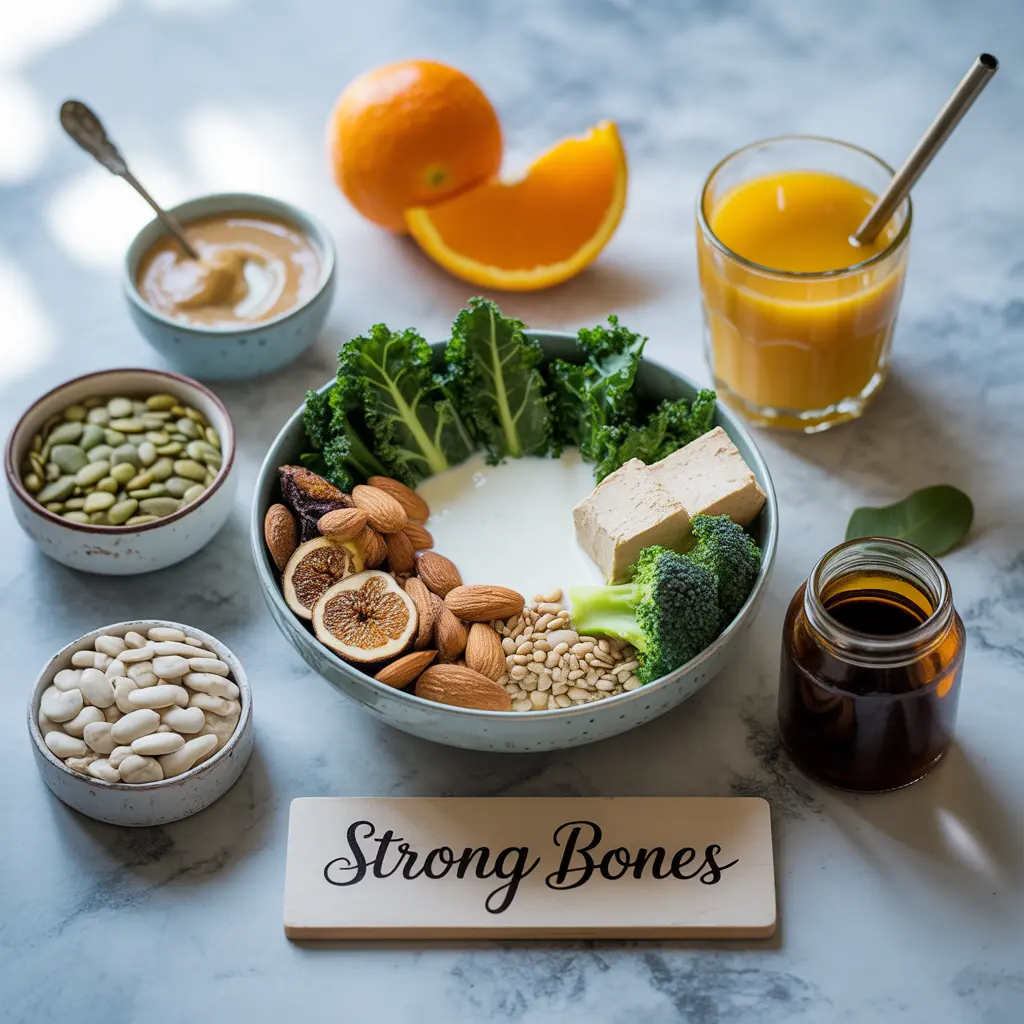
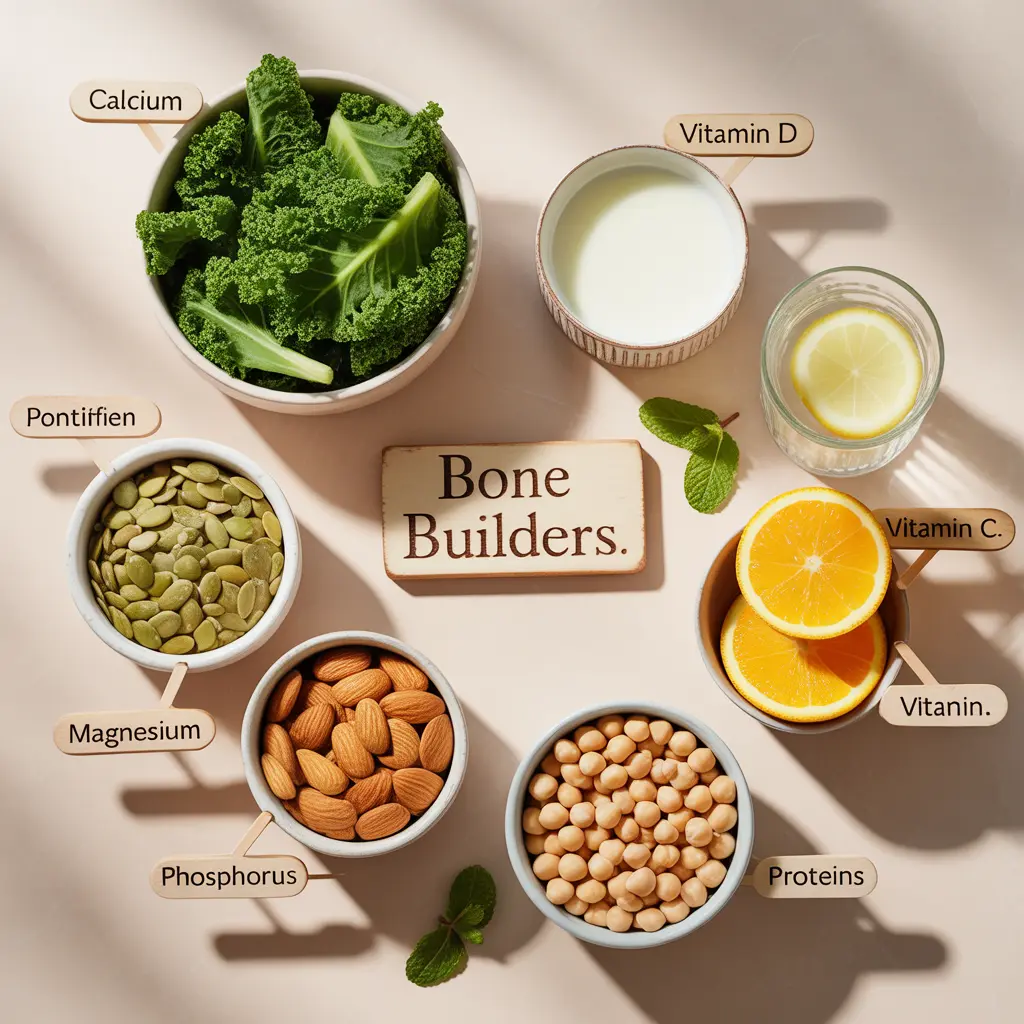
- The six nutrients governing bone density on a vegan diet are: calcium, vitamin D, vitamin K2, protein, magnesium, and silicon. Calcium is the most discussed. Vitamin K2 is the most overlooked and arguably the most impactful.
- Calcium absorption from kale and bok choy (40%) significantly exceeds that from cow’s milk (32%). The source of calcium matters as much as the quantity.
- Vitamin D deficiency is so widespread globally that it represents the primary bone health risk factor for vegans and omnivores alike. Testing and supplementing is the single most impactful bone health action for most people.
Vegan Diet for Bone Health: Beyond Calcium and Osteoporosis Prevention
The single most common objection to long-term vegan eating is a question about bones. “But where do you get your calcium?” carries the implicit assumption that strong bones require dairy, and that without dairy, bone density is inevitably compromised. This belief is so culturally embedded that it persists even in the face of a striking epidemiological paradox: the countries with the highest dairy consumption in the world also have among the highest rates of osteoporosis and hip fracture.
Norway, Sweden, Denmark, and the United States consume the most dairy per capita globally and rank among the top nations for osteoporosis prevalence and hip fracture rates. Japan, which historically consumed minimal dairy, had among the lowest hip fracture rates globally until Westernisation of the diet occurred in the late 20th century, after which fracture rates began rising in parallel with increased animal protein consumption. This is not coincidence. It is a signal that bone health is governed by a far more complex nutritional system than the calcium-from-dairy paradigm allows.
The 2020 meta-analysis in Nutrition Reviews (40 studies, 37,000 participants) found that vegans had modestly lower bone mineral density at the lumbar spine and femoral neck. Crucially, in studies that controlled for adequate dietary protein and calcium intake, the difference was substantially reduced and fracture risk was not statistically significantly elevated. Inadequate nutrition, not the plant-based diet itself, is the operative variable.
The Biology of Bone: A Living, Dynamic Organ
Bone Is Not Inert Scaffolding
Bone is a metabolically active tissue undergoing continuous remodelling every day. Approximately 5 to 10% of the adult skeleton is simultaneously being broken down by osteoclasts and rebuilt by osteoblasts in a process called bone turnover. This perpetual remodelling serves multiple critical functions:
- Mineral reservoir function: bone is the primary reservoir for calcium, phosphorus, and magnesium. When blood calcium falls, parathyroid hormone (PTH) triggers osteoclast activity to release calcium into the bloodstream. Dietary calcium adequacy directly determines whether bone is a net calcium sink or net calcium source throughout the day.
- Endocrine function: osteocalcin, produced by osteoblasts, regulates glucose metabolism, insulin sensitivity, muscle function, and testosterone production. Bone health is therefore a systemic metabolic concern, not merely a structural one.
- Haematopoiesis: red blood cells, white blood cells, and platelets are produced in bone marrow, making bone health directly relevant to immune function and oxygen-carrying capacity.
Peak Bone Mass: The Lifelong Investment
Approximately 80% of peak bone mass is established by age 18, with the final 20% accumulated through the mid-20s. The bone mineral density achieved at peak is the primary lifetime determinant of fracture risk. For vegans, this means that the nutrients governing bone formation must be prioritised from childhood and adolescence onward, not merely during the peri-menopausal years when osteoporosis awareness typically begins.
🛑 Tired of the “What do I eat?” stress?
Download the 28-Day Success System get 40+ recipes + Professional Photos, shopping lists.
Debunking the 5 Biggest Myths About Vegan Bone Health
The 6 Nutrients That Actually Build and Maintain Bone
1. Calcium: The Mineral Foundation
Calcium is the most abundant mineral in the human body, comprising 99% of the body’s calcium in bones and teeth. When dietary supply is insufficient, PTH triggers bone resorption to maintain blood calcium regardless of the skeletal cost.
Absorption efficiency by source:
- Broccoli (100g raw): 47mg calcium at 61% absorption = 28.7mg absorbed. The highest efficiency of any food including dairy.
- Kale (200g cooked): 300mg at 40% absorption = 120mg absorbed. More per milligram absorbed than dairy.
- Bok choy (200g cooked): 316mg at 40% absorption = 126mg absorbed.
- Fortified soy milk (300ml): 360mg at 32 to 38% absorption = 115 to 137mg absorbed.
- Calcium-set tofu (150g): 300 to 500mg at 31 to 38% = 93 to 190mg absorbed. Must verify “calcium sulphate” on label.
- Tahini (30g): 128mg with good bioavailability. Easily added to any dressing or sauce.
2. Vitamin D: The Calcium Absorption Gatekeeper
Without adequate vitamin D, intestinal calcium absorption drops to passive diffusion at 10 to 15%, regardless of calcium quantity from food. With optimal vitamin D, active transport drives absorption to 30 to 40%.
Vitamin D’s roles in bone extend far beyond calcium absorption:
- Osteoblast regulation: the vitamin D receptor (VDR) is expressed on osteoblasts, and vitamin D signalling directly drives bone-forming cell differentiation and activity
- PTH suppression: adequate vitamin D suppresses parathyroid hormone, reducing osteoclast stimulation that causes bone resorption
- Muscle function and fall prevention: vitamin D deficiency causes muscle weakness independent of bone effects, dramatically increasing fall risk. Hip fractures most commonly result from falls, making this a direct fracture prevention mechanism
3. Vitamin K2: The Most Overlooked Bone Nutrient
Vitamin K2 is the most underappreciated bone nutrient in vegan diets. While vitamin K1 from leafy greens is abundant in plant-based eating, K2 performs an entirely different and critically important function: it activates osteocalcin, the protein that directs calcium into bone rather than into arterial walls.
K2 is found primarily in fermented animal products (hard cheese, egg yolks, organ meats). The one plant-based source is natto (fermented soybeans), containing 1,000mcg MK-7 per 100g. MK-7 has a 72-hour half-life in the bloodstream, meaning a single weekly natto serving maintains meaningful K2 tissue levels. For vegans who cannot eat natto, MK-7 supplementation at 90 to 180mcg daily is the evidence-based alternative.
A 2019 RCT in Osteoporosis International found that 180mcg daily MK-7 over 36 months significantly improved bone mineral density at the lumbar spine and femoral neck in postmenopausal women, with an effect size comparable to bisphosphonate pharmaceutical therapy in mild-to-moderate osteopenia.
4. Protein: The Structural Matrix of Bone
Bone is approximately 35% organic matrix, and 30% of the total is collagen. Calcium mineral crystals (hydroxyapatite) deposit within this collagen scaffold. Without adequate collagen, bone becomes brittle despite apparently normal calcium: bone fracture risk rises independently of bone mineral density in severe protein deficiency.
Protein supports bone through three mechanisms simultaneously: collagen matrix provision (glycine, proline, lysine for bone collagen cross-linking); IGF-1 stimulation (dietary protein increases IGF-1, which directly drives osteoblast differentiation and new bone formation); and calcium retention (adequate protein improves intestinal calcium absorption efficiency and reduces urinary calcium losses).
Lysine is the most critical and most limiting essential amino acid for bone collagen synthesis in plant proteins. Legumes (lentils, chickpeas, edamame, tofu, tempeh) are the primary plant lysine sources. Daily legume consumption is simultaneously the most important protein strategy and the most important bone collagen strategy in a plant-based diet.
5. Magnesium: The Silent Bone Builder
Magnesium is a structural component of hydroxyapatite crystals and plays roles in bone metabolism entirely independent of calcium:
- Vitamin D activation: magnesium is a required cofactor for the enzymatic conversion of inactive vitamin D to active calcitriol. Magnesium deficiency therefore produces functional vitamin D deficiency even when serum 25(OH)D appears normal.
- Osteoblast stimulation: magnesium activates the Wnt signalling pathway in osteoblasts, the same pathway through which mechanical loading from exercise drives bone formation.
- Crystal integrity: the magnesium-to-calcium ratio in bone determines hydroxyapatite crystal size and structural stability. Adequate magnesium produces larger, more structurally robust crystals.
Plant-based diets are generally strong magnesium sources: magnesium is the central atom of the chlorophyll molecule, making every dark green plant food a magnesium source. Hemp seeds (210mg per 100g) and pumpkin seeds (262mg per 100g) are the densest plant sources per gram of food.
6. Silicon: The Forgotten Bone Matrix Mineral
Silicon (as orthosilicic acid) stimulates Type I collagen gene expression in bone cells and promotes the cross-linking chemistry that provides structural organisation to the bone organic matrix. The Framingham Heart Study offspring cohort found that higher dietary silicon intake was significantly associated with greater bone mineral density at the hip and lumbar spine in both men and premenopausal women.
Whole grains, particularly steel-cut oats and barley, are the richest dietary silicon sources. Refined grains lose 85 to 90% of their silicon during processing, providing another direct nutritional argument for whole grain over refined grain in a bone health-focused plant-based diet.

+ Grocery List
The Dietary Acid Load Advantage: Why Plants Protect Bone
How Dietary Acid Load Affects Bone
The human body maintains blood pH within an extremely narrow range (7.35 to 7.45). When dietary metabolism produces net acid, the body requires alkali to neutralise it. Available alkali sources are either dietary (from fruits and vegetables) or skeletal (calcium phosphate dissolved from bone). When dietary acid load exceeds dietary alkali supply, osteoclasts increase bone resorption to release the alkaline calcium salts needed for pH regulation. Over years and decades, chronic excess dietary acid load produces measurably greater bone mineral loss.
Alkali-Producing Foods (Negative PRAL: Bone Protective)
Acid-Producing Foods (Positive PRAL: Bone Challenging)
Ingredient Spotlights: The Top 5 Vegan Bone-Building Foods
1. Kale: The Gold Standard Vegan Calcium Source
Kale is the most nutritionally complete bone-building food available in a plant-based diet, addressing more simultaneous bone health mechanisms than any other single food.
- Highly bioavailable calcium: 40% absorption rate exceeding dairy (32%) and dramatically exceeding spinach (5%). 200g cooked kale delivers 300mg total calcium, of which 120mg is absorbed: equivalent to a 375ml glass of whole cow’s milk.
- Vitamin K1: 817mcg per 100g raw, the highest K1 concentration of any commonly eaten food. Partial conversion to K2 occurs in some tissues, providing supplementary osteocalcin activation.
- Sulforaphane from glucosinolates: activates Nrf2 antioxidant pathways protecting osteoblasts from the oxidative stress that impairs bone formation. Particularly relevant to ageing-related bone loss where oxidative stress is a primary driver.
- Strongly alkaline PRAL: reduces the overall dietary acid load that triggers calcium mobilisation from bone.
Preparation note: Steam rather than boil (boiling leaches calcium into the water). Massaging raw kale with lemon juice for 5 minutes breaks down cellular structure and improves digestibility without heat loss.
2. Fortified Soy Milk: Calcium and Osteoblast Stimulation Together
Fortified soy milk has a bone health evidence base that extends beyond calcium and vitamin D to the direct bone biology of soy isoflavones. Genistein and daidzein bind oestrogen receptor beta (ERbeta) expressed on osteoblasts, stimulating bone-forming cell differentiation and activity. A 2021 meta-analysis in Critical Reviews in Food Science and Nutrition found that soy isoflavone consumption was associated with significantly greater lumbar spine bone mineral density in postmenopausal women, with the benefit increasing with duration of consumption. The 500ml daily soy milk habit delivers both the calcium and the isoflavone dose required to produce measurable benefit.
3. Natto: The K2 Powerhouse That Changes Bone Biology
Natto is fermented soybeans produced by Bacillus subtilis natto. It is the single most potent natural vitamin K2 source in the human food supply, by an enormous margin. 100g delivers 1,000mcg of MK-7, compared to 0.2 to 2mcg from most other plant sources. MK-7’s 72-hour half-life means that even 50g twice weekly maintains meaningful K2 tissue levels continuously. The nattokinase enzyme produced during fermentation additionally provides documented fibrinolytic and cardiovascular benefits alongside the bone K2 effect. For vegans who find natto’s strong flavour and sticky texture challenging, an MK-7 supplement of 90 to 180mcg daily achieves the same osteocalcin activation outcome.
4. Calcium-Set Tofu: The Versatile Bone-Mineral Food
Calcium-set firm tofu coagulated with calcium sulphate is the most calcium-dense plant food available per gram of food weight after fortified plant milks. However, the calcium content varies by a factor of 5 to 10 depending on the coagulant used. Nigari-set tofu (magnesium chloride coagulant) contains only 40 to 100mg calcium per 150g. Calcium-set tofu (calcium sulphate, E516) contains 300 to 500mg. Always check the ingredients label. The combination of bioavailable calcium, complete soy protein for collagen synthesis, and soy isoflavones for osteoblast stimulation makes verified calcium-set tofu one of the most comprehensively bone-protective plant foods available.
5. Steel-Cut Oats: Silicon, Beta-Glucan, and Alkaline Synergy
Oats are a remarkable bone health food whose contribution is almost entirely overlooked in standard bone nutrition guidance. Steel-cut oats contain 20mg silicon per 80g dry, the richest bioavailable silicon source in a standard diet. Silicon is a structural component of bone collagen cross-linking chemistry and is required for the organisational integrity of the bone organic matrix. The Framingham cohort data links higher dietary silicon directly to greater bone mineral density. Beta-glucan additionally feeds Bifidobacterium species whose metabolic products improve calcium absorption efficiency in the colon through the gut-bone axis. Steel-cut oats retain significantly more silicon than rolled or instant oats, which lose silicon during the processing that flattens and pre-cooks the grain.
The Ultimate 28-Day
Vegan Meal Plan
A nutritionist-approved, chef-crafted complete solution — every meal, every day, every grocery list. Ready to use from Day 1.
Tired of wondering “what do I eat today?” — This plan does the thinking for you. Every breakfast, snack, lunch, and dinner is mapped out for 4 full weeks, with simple ingredients, detailed instructions, and beautiful photos to guide you every step of the way.
Every meal covered, every day
What’s inside
Everything you get
“This completely changed the way I eat. I stopped stressing about meals, started saving money, and I genuinely enjoy every recipe. The photos alone are worth it — everything looks so good!”
Money-Back
Guarantee
The 12 Best Vegan Foods for Bone Health
- Calcium-set firm tofu: highest plant calcium density per gram; complete protein; soy isoflavones stimulate osteoblasts. Verify calcium sulphate on label.
- Kale: 40% calcium bioavailability; vitamin K1; sulforaphane osteoblast protection; strongly alkaline PRAL.
- Fortified soy milk: 360mg calcium per 300ml; soy isoflavones; vitamin D; complete protein. Non-negotiable daily bone health habit.
- Natto: 1,000mcg MK-7 per 100g; the only plant food delivering therapeutic bone K2. Eat twice weekly or supplement MK-7 daily.
- Bok choy: 300mg calcium per 200g cooked at 40% bioavailability; very low oxalates; vitamin K1.
- Broccoli: highest calcium absorption efficiency of any food (61%); sulforaphane; negative PRAL. Most efficient calcium delivery per milligram absorbed.
- Steel-cut oats: richest dietary silicon source; beta-glucan gut-bone axis benefit; alkaline PRAL; protein for collagen synthesis.
- Tahini: 128mg calcium per 30g; magnesium; zinc. The most frictionless daily calcium addition to any meal.
- Lentils: lysine-rich protein for bone collagen; magnesium; alkaline PRAL; resistant starch gut-bone axis benefit.
- Hemp seeds: complete protein including lysine; magnesium (210mg per 100g); omega-3 ALA reduces the inflammatory cytokines that activate bone-destroying osteoclasts.
- Almonds: 264mg calcium per 100g; magnesium; vitamin E protecting osteoblasts from oxidative damage; low PRAL.
- Dried figs: 241mg calcium per 100g; potassium reducing urinary calcium losses; strongly alkaline PRAL; the sweetest bone-building food on this list.
7-Day Vegan Bone Health Meal Plan
Every day delivers a minimum of 1,000mg calcium, 40g protein, silicon from oats or barley, at least one kale or bok choy serving, and fortified soy milk as the daily calcium anchor. Natto features twice for K2; MK-7 supplement covers the other five days.
Day 1: Maximum Calcium Day
Bone nutrients: calcium 500mg, silicon 20mg, protein 30g, magnesium 120mg
Bone nutrients: calcium 650mg, protein 22g, K1 from bok choy, soy isoflavones
Bone nutrients: calcium 330mg, lysine for collagen, magnesium 80mg, alkaline PRAL
Day 2: Natto K2 Day
Bone nutrients: K2 (MK-7) 1,000mcg, calcium 200mg, protein 28g
Bone nutrients: calcium 400mg from broccoli at 61% absorption, protein 22g
Days 3 to 7: The Bone-Building Rotation
Continue the pattern: daily steel-cut oats with soy milk, one bok choy or kale serving per day, calcium-set tofu or fortified soy milk at one meal minimum, tahini as a daily sauce component, and natto once more during the week. MK-7 supplement (90 to 180mcg) on all non-natto days.
- Day 3: Overnight oats with fortified soy milk and dried figs. Tahini-dressed kale salad with chickpeas. Tempeh with bok choy and garlic over noodles.
- Day 4: Tofu scramble with kale and nutritional yeast on whole grain toast. Lentil mujaddara with fortified soy milk smoothie. Broccoli and white bean pasta with almonds.
- Day 5: Steel-cut oats with hemp seeds and almonds. Calcium-set tofu and bok choy miso soup. Chickpea curry with brown rice and tahini stirred through the sauce.
- Day 6: Oat porridge with figs, walnuts, and soy milk. Kale and lentil salad with tahini dressing. Second natto day over rice with edamame and ginger.
- Day 7: Tofu smoothie with fortified soy milk and hemp seeds. Broccoli and tofu stir-fry over barley (high silicon grain). Lentil and tahini soup with whole grain bread.
Reference Tables
Calcium Bioavailability Comparison: Plant vs Dairy
The 6 Bone Nutrients: Targets, Sources, and Supplement Guidance
Chef Tips: Maximising Calcium Bioavailability in Plant-Based Cooking
Calcium Absorption Kitchen Rules
In twenty years of professional cooking across Lebanon, Dubai, and Saudi Arabia, the kitchen principle I apply to calcium-rich dishes is consistent: the way an ingredient is prepared determines how much of it the body actually receives. These are the four rules that change the calcium output of a plant-based kitchen:
- Steam, do not boil, calcium-rich vegetables: calcium is water-soluble. Boiling kale, bok choy, and broccoli in large quantities of water leaches 20 to 30% of their calcium content. Steaming retains 95% or more. If boiling is necessary, use the cooking water as a soup base to recover leached minerals.
- Always pair iron and calcium-rich plant foods with vitamin C: lemon juice over lentil soup, tomatoes in chickpea dishes, red bell peppers in tofu stir-fries. Vitamin C creates the acidic gut environment that maximises both iron and calcium absorption from plant foods simultaneously.
- Add tahini after cooking, not during: tahini’s calcium and bioactive lignan content are best preserved at its natural pH. Stir tahini into finished sauces and dressings rather than cooking it into dishes from the start.
- Cook oat porridge in soy milk, not water: this single substitution adds 360mg calcium, 10g complete protein, soy isoflavones, and vitamin D to a meal being eaten anyway. Zero additional preparation effort. Maximum nutritional return.
The Levantine Bone-Building Kitchen Heritage
Traditional Levantine cuisine is, entirely by non-nutritional design, one of the most bone-protective culinary architectures in the world. Tahini in every dressing and dip (128mg calcium per 30g delivered habitually through flavour). Lemon juice with every dish (acidity enhancing mineral absorption). Legumes at every main meal (lysine for collagen, alkaline PRAL, magnesium). Abundant dark leafy greens (vitamin K1, bioavailable calcium). Extra virgin olive oil as a finishing element (oleocanthal reducing the inflammation-driven osteoclast activation that contributes to bone loss).
The hip fracture paradox becomes immediately understandable through this lens. A diet built on tahini, lemon, legumes, leafy greens, and olive oil provides bioavailable calcium, protein for collagen, alkaline PRAL, and anti-inflammatory polyphenols simultaneously. Dairy was never part of this equation in traditional Levantine eating, and the bone health of these populations reflects it.
Exercise: As Important as Every Nutrient on This Page
Optimal bone nutrition produces the maximum potential for bone mineral density. Whether that potential is realised depends critically on mechanical loading from exercise. Weight-bearing exercise stimulates osteoblasts through the Wnt signalling pathway, depositing new bone mineral in the areas under greatest mechanical stress. Resistance training and high-impact aerobic exercise (running, jumping) produce bone density improvements in some populations comparable to bisphosphonate pharmaceutical therapy. A plant-based diet optimised for bone health combined with three to four weekly weight-bearing exercise sessions is the most evidence-supported non-pharmaceutical approach to bone density maintenance available.
5 Mistakes That Quietly Weaken Bones on a Vegan Diet
Mistake 1: Using Spinach as a Primary Calcium Source
This is the most consequential and most common dietary error in vegan bone nutrition. Spinach’s 5% calcium absorption rate makes it nutritionally irrelevant for this purpose. Build calcium intake around kale, bok choy, broccoli, calcium-set tofu (label verified), fortified soy milk, tahini, and almonds. Eat spinach for iron, folate, and vitamin K1, but never as a calcium strategy.
Mistake 2: Not Supplementing Vitamin K2
Most vegans supplementing B12, vitamin D, and algae DHA still overlook K2 entirely. Without K2, absorbed calcium is not reliably directed into bone. It accumulates in arterial walls instead. Unless natto is eaten at least twice weekly, an MK-7 supplement of 90 to 180mcg daily is the most impactful bone health addition most vegans are not making. Our vegan supplements guide covers K2 alongside all evidence-based vegan supplementation priorities.
Mistake 3: Insufficient Protein Intake
Bone health discussions focus almost entirely on calcium and vitamin D. Protein is rarely mentioned despite being the structural material of the bone collagen matrix. A vegan eating adequate calcium but insufficient protein (below 1.0g per kg bodyweight) builds a poorly structured bone matrix that cannot be fully mineralised regardless of calcium supply. Daily legume consumption for lysine-rich protein and hemp seeds or tofu to close protein gaps is the foundation. Our protein guide covers age-specific targets in full.
Mistake 4: Relying on Nigari-Set Tofu Without Checking the Label
Tofu calcium content varies by a factor of 5 to 10 depending on the coagulant used. Nigari-set tofu (magnesium chloride) contains 40 to 100mg calcium per 150g. Calcium-set tofu (calcium sulphate, E516) contains 300 to 500mg per 150g. Many vegans eat tofu believing it is a significant calcium source without knowing their specific brand delivers minimal calcium. Always check the ingredients label for calcium sulphate before counting any tofu toward daily calcium totals.
Mistake 5: Ignoring the Exercise Component
A well-nourished but sedentary vegan will still lose bone density with age at a faster rate than a physically active vegan with slightly less optimal nutrition. The bone-building potential created by optimal nutrition must be activated by mechanical loading. Resistance training (strength training) and weight-bearing aerobic exercise at minimum three times weekly produce the osteoblast stimulation that deposits new bone mineral and are non-negotiable components of a complete bone health strategy.
Frequently Asked Questions About Vegan Diet and Bone Health
Do vegans have weaker bones than meat eaters?
The 2020 meta-analysis in Nutrition Reviews (40 studies, 37,000 participants) found that vegans had modestly lower bone mineral density at the lumbar spine and femoral neck. However, in studies where dietary protein and calcium intake were adequate, this difference was substantially reduced and overall fracture risk was not statistically significantly elevated. Inadequate nutrition produces lower bone density regardless of dietary pattern. Well-nourished, appropriately supplemented vegans do not face the significant bone density disadvantage implied by the broadest comparison between all vegans and all omnivores.
What is the best calcium source for vegans?
By absorbed calcium efficiency, broccoli leads at 61% absorption rate: the highest of any food. For practical daily calcium mass, fortified soy milk (360mg per 300ml), calcium-set tofu (300 to 500mg per 150g, label verified), and 200g cooked kale or bok choy (200 to 300mg total) combined reliably deliver over 1,000mg daily. Never rely on spinach for calcium: its 5% absorption rate from oxalic acid binding makes it nutritionally negligible for this purpose despite appearing on most plant calcium lists.
What is vitamin K2 and do vegans need to supplement it?
Vitamin K2 (specifically MK-7 menaquinone) activates osteocalcin, the protein that directs calcium into bone rather than into arterial walls. Without adequate K2, absorbed calcium deposits in soft tissue, producing arterial calcification and osteoporosis simultaneously. K2 is found primarily in fermented animal products and in natto (fermented soybeans, 1,000mcg MK-7 per 100g). Vegans who do not eat natto at least twice weekly should supplement with 90 to 180mcg MK-7 daily. This is one of the most consequential and most overlooked vegan supplementation decisions for long-term bone health.
Does a high-protein plant diet harm bones?
No. The “protein leaches calcium from bone” belief arose from early research that was subsequently overturned by more comprehensive analysis. Higher protein intake is consistently associated with greater bone mineral density and lower fracture risk when calcium intake is adequate. The 2017 meta-analysis in Osteoporosis International confirmed this positive association regardless of protein source. Protein provides the lysine, glycine, and proline for type I collagen that forms the bone organic matrix: inadequate protein directly compromises this structural foundation.
Is dairy necessary for strong bones?
No. The countries with the highest dairy consumption have among the highest osteoporosis and hip fracture rates globally. Dairy calcium is bioavailable at 32%, which is actually lower than kale (40%) and significantly lower than broccoli (61%). The more important variables are total calcium adequacy, vitamin D status, vitamin K2, protein, and magnesium: none of which require dairy as the source. Traditional plant-based populations maintaining low or no dairy intake have historically shown lower fracture rates than high-dairy Western populations when examined before dietary Westernisation occurred.
What is dietary acid load and why does it matter for bone?
Dietary acid load (Potential Renal Acid Load, PRAL) is the net acid or alkali produced by food metabolism. When acid exceeds the alkali available from food, osteoclasts dissolve bone to release alkaline calcium phosphate for pH buffering. Animal proteins produce very high PRAL values (beef +13, Parmesan +34). Most plant foods produce alkaline or neutral values. A plant-based diet produces substantially lower total dietary acid load, directly reducing the calcium mobilisation from bone that contributes to osteoporosis. This acid load advantage is one of the most bone-protective mechanisms of plant-based eating that almost never appears in standard calcium-focused discussions.
How much calcium do vegans need daily?
The standard adult daily recommendation is 1,000mg (rising to 1,200mg for women over 50 and men over 70). This is achievable from: 300ml fortified soy milk (360mg), 150g calcium-set tofu verified by label (300 to 500mg), and 200g cooked kale or bok choy (200 to 300mg). Tahini adds 128mg per 30g and almonds add 264mg per 100g as supporting sources. The combination of these foods consistently reaches 1,000mg without supplementation for vegans who deliberately include them daily.
Can soy isoflavones improve bone density?
Yes, with specific relevance for postmenopausal women. Genistein and daidzein bind oestrogen receptor beta expressed on osteoblasts, stimulating bone-forming cell activity. A 2021 meta-analysis in Critical Reviews in Food Science and Nutrition found soy isoflavone consumption was associated with significantly greater lumbar spine BMD in postmenopausal women, with the benefit increasing with duration. The effect partially compensates for the oestrogen decline that drives post-menopausal bone loss. Consuming 500ml of fortified soy milk daily provides both the calcium and the isoflavone dose that produces this measurable benefit.
Does weight-bearing exercise help vegan bone health?
Yes, and it is as important as any nutritional intervention. Mechanical loading from weight-bearing exercise creates signals in bone that stimulate osteoblasts to deposit new bone mineral at the loaded skeletal sites. Resistance training and high-impact aerobic exercise produce bone density improvements comparable to bisphosphonate pharmaceutical therapy in some populations. Optimal vegan bone health requires both the nutritional substrate and the mechanical loading signal simultaneously. Nutrition without exercise produces the potential for bone density. Exercise activates that potential.
Is oat milk as good as soy milk for bone health?
No, particularly on protein and isoflavone grounds. Oat milk contains approximately 0.5g protein per 100ml versus 3.3g for soy milk. The soy isoflavones with direct osteoblast-stimulating activity are absent in oat milk. Both are typically fortified to similar calcium and vitamin D levels, so the mineral contribution is comparable. However, for bone health specifically, fortified soy milk is significantly superior because the soy protein contributes to bone collagen matrix synthesis and the isoflavones independently stimulate osteoblast differentiation: two bone-specific benefits that oat milk cannot provide.
How should vegans monitor their bone health?
Annual blood tests are the minimum: serum 25(OH)D (target 75 to 150 nmol/L), serum calcium, serum phosphorus, and serum magnesium. For women over 50 and men over 60, or anyone with osteoporosis risk factors, a DEXA bone density scan is the definitive bone mineral density assessment tool and should be discussed with a healthcare provider. Our vegan blood test guide covers all key markers and target ranges in detail.
What is the single most important thing a vegan can do for bone health?
Test and correct vitamin D status. Vitamin D deficiency impairs all calcium absorption regardless of source, impairs osteoblast function through VDR signalling, reduces PTH regulation efficiency, and weakens muscles increasing fall risk. It affects 40 to 80% of adults globally regardless of diet. Getting a serum 25(OH)D test and supplementing with lichen-derived vitamin D3 to achieve 75 to 150 nmol/L produces more bone health benefit than any single dietary change. After that: supplement MK-7 for K2, eat daily low-oxalate greens and fortified soy milk for calcium, and engage in regular weight-bearing exercise. In that order of impact.
Still spending hours figuring out what to eat?
What’s included in your download
- 40+ nutritionist-approved recipes
- Complete 28-day calendar
- Meets protein, iron & B12 needs
- Family & meal prep friendly
- Vibrant photo for every recipe
- Simple, common ingredients
Instant PDF download. No subscriptions. No waiting.