
⚡ TL;DR: Vegan Collagen Boosters at a Glance
- Vegans cannot eat animal collagen. But they can do something more powerful: trigger their own body’s collagen synthesis with specific plant nutrients that drive the production process from within.
- Collagen is not absorbed from food as intact collagen. It is assembled by the body from amino acids. The rate-limiting factor is not collagen intake but nutrient availability for the enzymes that build it.
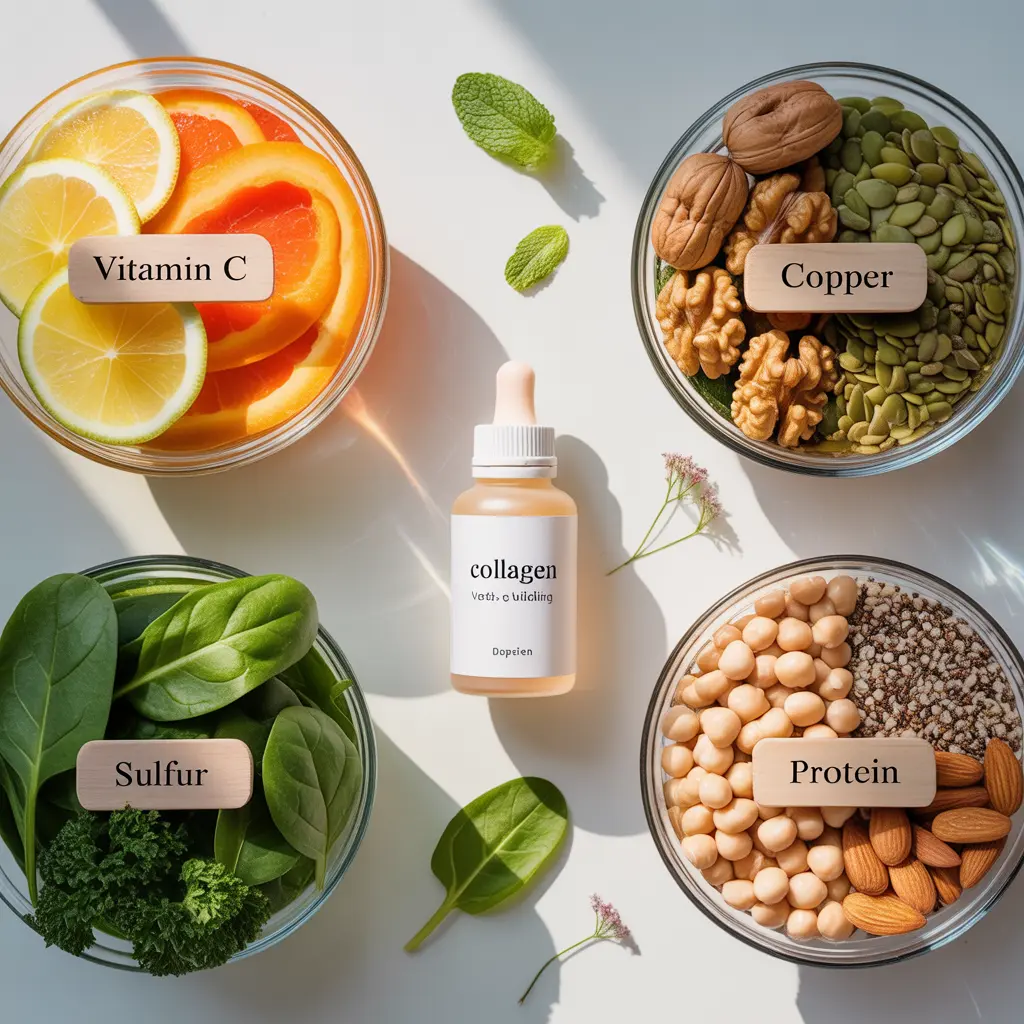
- The four nutrients that directly govern collagen synthesis are: vitamin C, lysine, proline, and copper. All four are abundant in plant foods.
- The 12 plant foods in this guide activate collagen synthesis through three simultaneous pathways: amino acid provision, enzymatic cofactor supply, and protection of existing collagen from oxidative degradation.
- Animal collagen supplements activate collagen synthesis no more effectively than any other dietary protein source when total amino acid intake is matched. The supplement industry’s collagen marketing obscures this fact.
- Vitamin C deficiency is the primary reason collagen synthesis fails. A single serving of bell pepper, guava, or kiwi exceeds the full daily vitamin C requirement for collagen production.
Vegan Collagen Boosters: 12 Plant Foods That Rebuild Skin, Joints, and Hair
The collagen supplement industry is built on a fundamental misconception about human physiology. Collagen is the most abundant protein in the human body, comprising 30% of total protein mass and forming the structural scaffold of skin, tendons, ligaments, cartilage, bone, and blood vessels. And it cannot be meaningfully obtained by eating collagen.
This is not a fringe claim. It is basic protein biochemistry. When you consume any protein, including collagen, the digestive system breaks it down into individual amino acids and short peptide fragments. These are then used as raw materials for whatever proteins the body needs to build at that moment, guided by cellular signalling rather than by what you ate. Eating collagen does not instruct the body to make more collagen any more than eating muscle tissue makes you more muscular.
This guide cuts through the supplement industry noise and delivers the actual science: the precise biochemical pathway collagen synthesis follows, the four nutrients that govern its rate, the twelve plant foods that supply them most effectively, and the five habits that silently destroy collagen faster than any nutritional strategy can rebuild it.
The Biochemistry of Collagen Synthesis: A Complete Deep Dive
🔬 What Collagen Actually Is
Collagen is a family of fibrous structural proteins defined by their triple helix structure: three polypeptide chains wound around each other in a right-handed supercoil. This geometry is what gives collagen its extraordinary tensile strength. A single collagen fibril has a tensile strength comparable to steel wire of equivalent diameter. This strength is the structural basis of skin’s resistance to tearing, cartilage’s load-bearing capacity, and tendon’s ability to transmit the mechanical forces of muscle contraction to bone.
There are at least 28 distinct collagen types. The most relevant for dietary and cosmetic purposes are:
- Type I: the most abundant collagen in the body. Found in skin, bone, tendons, ligaments, and corneas. This is the collagen that degrades most visibly with age, producing wrinkles, sagging, and joint stiffness.
- Type II: the primary structural protein of cartilage. Degradation of Type II collagen is the central mechanism of osteoarthritis.
- Type III: found alongside Type I in skin, blood vessels, and internal organs. Provides the elasticity component of skin that allows it to return to shape after stretching.
⚗️ The Collagen Synthesis Pathway: Step by Step
Understanding this pathway is the key to understanding why vegan collagen boosters work. Every step has specific nutrient dependencies. Supply those nutrients and the pathway runs efficiently. Restrict them and collagen production slows or stops, regardless of how much protein you eat.
🧬 The Collagen Synthesis Pathway
(Requires vitamin C + iron)
(Requires copper)
Step 3 is the most critical rate-limiting point in the entire pathway. Hydroxylation of proline and lysine residues is absolutely required for the triple helix to form. Without hydroxylated residues, the three polypeptide chains cannot align and wind correctly. The enzyme that catalyses this step, prolyl hydroxylase, is entirely dependent on vitamin C as a cofactor. No vitamin C means no functional prolyl hydroxylase. No prolyl hydroxylase means no triple helix. No triple helix means no collagen.
This is not a marginal effect. Scurvy, the disease of severe vitamin C deficiency, is a collagen synthesis failure disease. The gum degradation, wound healing failure, blood vessel fragility, and joint pain of scurvy are all manifestations of collapsed collagen production from a single nutrient deficiency. The clinical lesson is direct: vitamin C is the single most important nutrient for collagen synthesis in the human body.
📊 Why Collagen Supplements Are Largely Marketing
Hydrolysed collagen supplements deliver pre-digested collagen peptides (primarily glycine-proline-hydroxyproline tripeptides). Research shows these peptides are absorbed into the bloodstream intact. However, once in circulation, they are used as amino acid substrate indistinguishably from any other protein source. They do not selectively target skin fibroblasts or cartilage chondrocytes. They do not carry a signal that instructs the body to make more collagen.
A 2019 systematic review in the Journal of Drugs in Dermatology found modest positive effects from collagen supplementation on skin hydration and elasticity. The critical methodological issue: none of the reviewed trials controlled for vitamin C status. A participant with adequate vitamin C who takes a collagen supplement providing additional glycine and proline will see improved skin outcomes. The cause is the amino acid substrate, not the collagen form. The same participant consuming adequate protein from any source alongside adequate vitamin C would achieve the same result.
For vegans, this is clarifying. Rather than searching for vegan collagen alternatives, the evidence-based strategy is to ensure optimal availability of the four nutrients that govern the synthesis pathway directly.
The 4 Rate-Limiting Nutrients Every Vegan Collagen Builder Needs
🧪 Three Supporting Nutrients That Compound the Effect
- Zinc: required for the activity of matrix metalloproteinases, enzymes that remodel existing collagen during tissue repair. Zinc deficiency impairs wound healing specifically through this mechanism. Sources: pumpkin seeds (7.5mg per 100g), hemp seeds (9.9mg per 100g), lentils, chickpeas.
- Silicon (silica): trace mineral that stimulates the gene expression of Type I collagen in skin fibroblasts. Found in oats, barley, green beans, and horsetail herb. Research from the Archives of Dermatological Research found that orthosilicic acid (the bioavailable form) significantly increased skin elasticity and nail strength.
- Sulphur compounds: found in cruciferous vegetables (broccoli, kale, Brussels sprouts). Sulphur is structurally present in the amino acids methionine and cysteine, both involved in the cross-linking chemistry that stabilises mature collagen fibres. Glucosinolates in crucifers also activate Nrf2, the transcription factor that upregulates the body’s antioxidant enzyme network protecting existing collagen from degradation.
What Destroys Collagen: The 5 Biggest Threats to Your Collagen Levels
Optimising vegan collagen boosters in the diet is only half the equation. The other half is eliminating the factors that degrade collagen faster than any food can rebuild it. These five are the most evidence-supported collagen destroyers:
☀️ 1. Ultraviolet Radiation (UV)
UV radiation is the single most potent external collagen destroyer. UVA penetrates deep into the dermis and activates matrix metalloproteinases that directly cleave Type I and Type III collagen fibres. Research estimates that 80% of visible facial skin ageing is attributable to cumulative UV exposure rather than intrinsic chronological ageing. Daily SPF use is the single most effective anti-ageing intervention available, outperforming every nutritional strategy including collagen supplementation.
🍬 2. Advanced Glycation End Products (AGEs)
When dietary sugar reacts with collagen proteins in a process called glycation, it forms advanced glycation end products (AGEs) that stiffen and cross-link collagen fibres abnormally, making skin leathery, reducing elasticity, and impairing the normal collagen remodelling cycle. High refined sugar intake is a primary dietary mechanism of accelerated skin and joint collagen degradation. A whole-food plant-based diet with minimal refined sugar is inherently protective against this mechanism.
🚬 3. Smoking
Nicotine and the oxidative compounds in cigarette smoke directly inactivate prolyl hydroxylase (the same enzyme that vitamin C activates for collagen synthesis), reduce local tissue vitamin C levels, and activate collagenase enzymes that cleave existing collagen. Smokers show measurably reduced dermal collagen density and accelerated skin ageing independent of all other lifestyle factors.
😓 4. Chronic Psychological Stress
Cortisol, the primary stress hormone, suppresses the activity of the Wnt/beta-catenin signalling pathway that drives collagen gene expression in fibroblasts. Chronically elevated cortisol reduces fibroblast collagen synthesis at the transcriptional level, meaning even optimal nutritional status cannot fully compensate for prolonged high-stress states. The mechanism explains why psychological stress is a recognised risk factor for poor wound healing and accelerated skin ageing.
🍺 5. Excess Alcohol
Alcohol metabolism generates reactive oxygen species that directly oxidise collagen fibres, and chronically suppresses proline hydroxylase activity. Alcohol also depletes zinc and vitamin C, the two nutrients most critical for collagen synthesis, through increased urinary excretion. The combined effect of oxidative damage and nutrient depletion makes excess alcohol consumption one of the most efficiently collagen-destructive dietary patterns available.
Ingredient Spotlights: The Top 5 Vegan Collagen-Boosting Foods
🫑 1. Red Bell Peppers: The Vitamin C Powerhouse
Red bell peppers are the most vitamin C-dense commonly consumed food on earth. A single 100g serving delivers 190mg of vitamin C, more than twice the standard daily recommended intake for adults. In the context of vegan collagen boosters, this is the single most impactful food available:
- Vitamin C: 190mg per 100g. One medium red pepper (150g) provides 285mg, roughly 3.5 times the daily requirement for collagen synthesis. Prolyl hydroxylase is saturated at approximately 100mg daily. Anything above this concentration maximally activates the enzyme.
- Capsanthin and capsorubin: carotenoids unique to red bell peppers that act as antioxidants, specifically protecting collagen from the free radical damage associated with UV exposure and oxidative stress
- Quercetin: a flavonoid that inhibits matrix metalloproteinase-1, the primary enzyme responsible for collagen degradation in the dermis
- Vitamin A (as beta-carotene): a cofactor for the retinoid signalling pathway that drives fibroblast collagen gene expression
Chef application: Raw red pepper retains 100% of its vitamin C. Vitamin C is heat-sensitive and water-soluble. Roasting reduces it by approximately 30%. Boiling reduces it by 50% or more. For maximum collagen-boosting effect, eat red pepper raw in salads, dips, and as a snack alongside hummus.
🌿 2. Kale: The Collagen Synthesis Multi-Tool
Kale activates collagen synthesis through more simultaneous mechanisms than any other single plant food. Per 100g raw:
- Vitamin C: 120mg, a substantial direct cofactor contribution to prolyl hydroxylase activity
- Vitamin K1: 817mcg, a cofactor for carboxylation reactions involved in bone collagen mineralisation
- Sulphur compounds (glucosinolates): broken down to sulforaphane and indoles that activate Nrf2 and upregulate the body’s antioxidant enzyme network, protecting existing collagen from oxidative degradation
- Copper: 0.29mg per 100g, contributing to the lysyl oxidase activity required for collagen cross-linking
- Lutein and zeaxanthin: 18mg combined per 100g, carotenoids that protect skin cells from UV-induced collagenase activation
Kale addresses all three pathways simultaneously: it provides vitamin C for synthesis, copper for cross-linking, and antioxidants for protection of existing collagen. No other single food does all three with this nutritional density.
🌻 3. Sunflower Seeds: The Copper and Vitamin E Dual Source
Sunflower seeds are the highest-copper plant food available in a standard diet. 100g provides 2.5mg copper, nearly three times the daily requirement for lysyl oxidase activity. Beyond copper:
- Vitamin E (alpha-tocopherol): 35mg per 100g, the highest vitamin E content of any plant food. Vitamin E is the primary fat-soluble antioxidant protecting collagen fibres in cell membranes and connective tissue from lipid peroxidation
- Selenium: supporting glutathione peroxidase, the antioxidant enzyme system that neutralises hydrogen peroxide, a direct collagen oxidant
- Zinc: 5mg per 100g, supporting matrix metalloproteinase regulation and wound healing collagen remodelling
- Proline precursors: sunflower seeds contain relatively high glutamic acid levels that the body can convert to proline, providing additional raw material for collagen assembly
🍋 4. Amla (Indian Gooseberry): The Most Vitamin C-Dense Food on Earth
Amla (Phyllanthus emblica) is not commonly eaten in Western cuisines but is available as a powder, juice, and supplement globally. It provides the highest natural vitamin C concentration of any documented food: 600 to 900mg per 100g fresh fruit. What makes amla particularly effective as a vegan collagen booster beyond raw vitamin C content:
- Tannins and polyphenols that stabilise vitamin C molecules against oxidation, making amla vitamin C more bioavailable and longer-lasting in tissue than ascorbic acid supplements
- Emblicanin A and B: hydrolysable tannins with demonstrated inhibitory effects on matrix metalloproteinase-1, directly reducing collagen degradation rates in the dermis
- Gallic acid and ellagic acid: polyphenols that reduce UV-induced collagenase activation at the gene expression level
One teaspoon of amla powder (5g) in water or a smoothie delivers approximately 45mg stabilised vitamin C alongside a comprehensive polyphenol complement. This is the most targeted single vegan collagen booster supplement available from natural food sources.
🥝 5. Kiwi Fruit: The Complete Collagen Synthesis Package
Two kiwi fruits provide more complete collagen synthesis support than a collagen supplement. Per two medium kiwis (150g combined):
- Vitamin C: 140mg, exceeding the prolyl hydroxylase saturation threshold
- Copper: 0.18mg, contributing to lysyl oxidase activity
- Actinidin: a cysteine protease unique to kiwi fruit that enhances protein digestion, improving the amino acid availability from protein-containing foods eaten in the same meal
- Quercetin and kaempferol: flavonoids that inhibit MMP-1 collagenase activity, protecting existing skin collagen from enzymatic degradation
- Fibre (inulin): feeding gut microbiome species that produce short-chain fatty acids supporting the intestinal barrier integrity relevant to systemic inflammation that degrades collagen
The 12 Best Vegan Collagen Boosters With Exact Nutrient Data
Every food here directly supplies one or more of the four rate-limiting collagen synthesis nutrients or provides compounds that protect existing collagen from degradation. The pathway each targets is identified for each entry.
1. Red Bell Peppers
The most direct single-food intervention for vitamin C-dependent collagen synthesis. Eat raw daily. One medium red pepper covers the full daily vitamin C requirement for collagen production with zero preparation required.
2. Kale
The only food that activates all three collagen pathways simultaneously: vitamin C for synthesis, copper for cross-linking, sulforaphane for protection of existing collagen. Lightly steam rather than boil to retain 85% of vitamin C.
3. Sunflower Seeds
The richest plant copper source available. Essential for lysyl oxidase activity and collagen cross-linking. Two tablespoons daily as a snack or salad topping meets the full copper requirement. The vitamin E simultaneously protects assembled collagen from lipid peroxidation.
4. Kiwi Fruit
Two kiwis daily provide collagen synthesis support through vitamin C, MMP-1 inhibition, and improved amino acid extraction from dietary protein. Eat whole and raw. One of the most practically convenient high-vitamin-C daily habits available.
5. Legumes (Lentils, Chickpeas, Black Beans)
The primary dietary source of lysine, the essential amino acid most limiting in plant-based diets for collagen synthesis. Daily legume consumption is the most reliable strategy for maintaining adequate lysine for hydroxylation reactions. Pair with a vitamin C source at the same meal to maximise the synthesis window.
6. Hemp Seeds
Hemp seeds provide the widest amino acid breadth of any plant seed, including meaningful glycine and proline content alongside exceptional zinc levels for collagen remodelling. Three tablespoons daily on any meal delivers the amino acid and zinc contribution simultaneously.
7. Pumpkin Seeds
One of the most zinc-dense plant foods available. Zinc controls matrix metalloproteinase activity, balancing collagen degradation during normal tissue remodelling. A 30g daily serving provides 2.25mg zinc and 0.4mg copper, a meaningful dual contribution to collagen cross-linking and remodelling enzyme function.
8. Amla (Indian Gooseberry)
The most potent natural vegan collagen booster available by vitamin C concentration. One teaspoon of amla powder in a daily smoothie provides the most targeted collagen synthesis support from a single ingredient. Available as powder, capsule, or juice from health food stores and online retailers globally.
9. Broccoli
Broccoli combines direct vitamin C synthesis support with sulforaphane-mediated protection of existing collagen. Steam for 3 to 4 minutes maximum. Overcooking destroys both the vitamin C and the myrosinase enzyme that converts glucosinolates to active sulforaphane. Lightly steamed broccoli is meaningfully more effective as a collagen booster than well-cooked broccoli.
10. Guava
Guava provides the highest vitamin C of any tropical fruit. 100g exceeds the prolyl hydroxylase saturation threshold more than twice over. The lycopene content simultaneously protects dermal collagen from UV-induced oxidative degradation. An underused but extraordinarily effective vegan collagen booster in regions where guava is accessible.
11. Tempeh
Tempeh is one of the few plant proteins with meaningful proline and lysine content alongside copper. This combination makes it uniquely effective as a collagen synthesis protein source compared to other legumes and grains. The fermentation process improves bioavailability of all these nutrients by reducing phytate interference with copper and zinc absorption.
12. Cacao (Dark Chocolate, 85%+)
Raw cacao and very dark chocolate are among the richest copper sources available in any dietary category. The flavanols epicatechin and catechin inhibit matrix metalloproteinases and reduce the vascular collagen degradation associated with cardiovascular ageing. 20 to 30g of 85%+ dark chocolate or one tablespoon of raw cacao powder provides a meaningful copper and flavanol contribution. Use raw cacao powder rather than processed cocoa for maximum flavanol and copper retention.
The Daily Vegan Collagen Protocol: A 7-Day Framework
This framework is designed to hit all four rate-limiting nutrients every single day. Each day provides vitamin C above the prolyl hydroxylase saturation threshold, adequate lysine from legumes, copper from seeds, and antioxidant protection for existing collagen.
📅 Day 1: Maximum Vitamin C Focus
- Breakfast: Smoothie with 1 teaspoon amla powder, kiwi, spinach, and fortified soy milk
- Lunch: Chickpea and red bell pepper salad with tahini-lemon dressing and hemp seeds
- Dinner: Lentil dal with steamed broccoli and sunflower seed topping
- Collagen nutrients delivered: Vitamin C 400mg+, Lysine 3g, Copper 1.5mg, Zinc 12mg
📅 Day 2: Copper and Cross-Linking Focus
- Breakfast: Oat porridge with 1 tablespoon raw cacao powder, hemp seeds, and kiwi slices
- Lunch: Tempeh and kale stir-fry with sesame seeds and lemon
- Dinner: Black bean and quinoa bowl with roasted red peppers and pumpkin seeds
- Collagen nutrients delivered: Vitamin C 220mg, Lysine 2.8g, Copper 3.2mg, Zinc 15mg
📅 Day 3: Antioxidant Protection Focus
- Breakfast: Mixed berry smoothie bowl with ground flaxseeds and sunflower seeds
- Lunch: Kale and white bean soup with broccoli and whole grain bread
- Dinner: Tempeh tikka masala with cauliflower and fresh coriander
- Collagen nutrients delivered: Vitamin C 250mg, Lysine 2.5g, Copper 2.0mg, Vitamin E 22mg
📅 Day 4 to Day 7
Rotate the same principle: at every day include at minimum one raw vitamin C-rich food (pepper, kiwi, or guava), one legume-based protein source for lysine, one seed serving for copper, and one dark leafy green for combined vitamin C, copper, and sulforaphane. The specific combinations are flexible. The nutrient architecture is fixed.
Reference Tables
The 12 Vegan Collagen Boosters: Nutrients and Pathways at a Glance
Daily Vegan Collagen Nutrient Targets vs Top Sources
Chef Tips: Cooking to Preserve Vitamin C and Bioactive Compounds
🔥 Tip 1: Heat Is the Enemy of Vitamin C
Vitamin C is one of the most heat-labile vitamins in human nutrition. The degradation curve is steep and fast:
- Raw: 100% vitamin C retained
- Light steaming (3 to 4 minutes): 85 to 90% retained
- Roasting at 200°C for 20 minutes: 60 to 70% retained
- Boiling in water: 50 to 60% retained (and the water-soluble vitamin leaches into the cooking water)
- Prolonged simmering in soups: 30 to 50% retained in the liquid (drink the soup: the vitamin C is in the broth)
The practical application: never rely on cooked vegetables as your sole vitamin C source for collagen synthesis. Include at least one raw vitamin C food daily: raw red bell pepper as a snack or dipped in hummus, raw kiwi at breakfast, guava eaten whole, or tomatoes in a fresh salad. Pair the raw vitamin C source with a legume-based meal at the same eating occasion to maximise the synthesis window.
🫚 Tip 2: Fat Improves Carotenoid Absorption
Carotenoids (lycopene in guava, beta-carotene in kale and red peppers, lutein in kale) that protect existing collagen from UV and oxidative damage are fat-soluble. They require dietary fat for absorption. This means:
- Eating raw red pepper on its own provides vitamin C effectively but delivers minimal carotenoid absorption
- Eating raw red pepper dipped in hummus (tahini fat) or dressed with olive oil delivers both the vitamin C and the carotenoids efficiently
- Kale dressed with tahini-lemon dressing or sautéed in olive oil makes its lutein and beta-carotene bioavailable as well as its vitamin C available
- A small amount of fat (5 to 10g) is sufficient to maximise carotenoid absorption from a meal
In professional Levantine kitchens across the MENA region, every vegetable dish is finished with a drizzle of extra virgin olive oil. This is not merely flavour. It is the fat delivery mechanism that makes the carotenoids in those vegetables nutritionally active. Apply this same principle to every collagen-boosting plant food in this guide.
🫙 Tip 3: Eat Vitamin C and Lysine at the Same Meal
Collagen synthesis is an active process that requires amino acid substrate and enzymatic cofactors simultaneously. Eating vitamin C at breakfast and lysine (from legumes) at dinner means that the peak availability windows of these two co-dependent nutrients do not overlap. For maximum synthesis efficiency:
- Add fresh lemon juice or sliced kiwi to a legume-based lunch
- Include raw red pepper in a chickpea or lentil salad
- Finish a tempeh dinner bowl with a side of fresh tomatoes or a vitamin C-rich dressing
- Blend amla powder into a smoothie containing tofu or hemp seeds
5 Mistakes That Sabotage Vegan Collagen Production
❌ Mistake 1: Relying on Cooked Vegetables for All Vitamin C
Vitamin C losses of 30 to 70% during cooking mean that a diet without daily raw vitamin C-rich foods routinely falls below the prolyl hydroxylase activation threshold, regardless of how many vegetables are eaten. The fix is simple: one raw red pepper, two kiwis, or a serving of guava daily as a snack or salad component. No cooking required.
❌ Mistake 2: Eating Vitamin C and Lysine at Different Meals
Collagen synthesis requires the simultaneous availability of vitamin C (for enzymatic hydroxylation) and lysine (as the amino acid substrate being hydroxylated). Eating these nutrients at separate meals reduces the efficiency of the synthesis window. Pair a vitamin C-rich food with every legume-based meal to maximise the hours per day during which the synthesis pathway is actively running.
❌ Mistake 3: Not Eating Enough Legumes for Lysine
Lysine is the essential amino acid most consistently limiting in plant-based diets for collagen synthesis. Grains, seeds, and nuts are all low in lysine. Legumes (lentils, chickpeas, black beans, edamame, tofu, tempeh) are the primary plant lysine sources. Eating legumes fewer than once per day on a plant-based diet creates a structural lysine deficit that directly limits the rate of collagen synthesis regardless of how much vitamin C or copper is consumed. For a comprehensive approach to plant lysine intake, our complete vegan protein sources guide covers the full amino acid profile of all major plant proteins.
❌ Mistake 4: Ignoring the Collagen Destroyers
The most efficiently targeted vegan collagen boosting routine produces modest results if the five primary collagen destroyers discussed earlier (UV, AGEs from refined sugar, smoking, chronic stress, excess alcohol) are not managed simultaneously. UV protection through daily SPF use and reducing refined sugar intake are the two highest-return interventions for preserving existing collagen that most people underestimate relative to nutritional strategies.
❌ Mistake 5: Buying Vegan Collagen Supplements Instead of Optimising Diet
No plant contains collagen. Products marketed as vegan collagen are either synthetic collagen precursor supplements (amino acids, vitamin C, and copper sold at a premium) or algae-derived precursors without clinical evidence of superior efficacy to diet. The evidence-based approach is to optimise dietary intake of the four rate-limiting nutrients through whole food sources. This delivers the same nutritional substrate at a fraction of the cost, with additional fibre, phytonutrients, and bioactive compounds that no supplement formulation replicates. For guidance on which supplements are genuinely worth considering on a plant-based diet, our vegan supplements guide covers evidence-based priorities.
Frequently Asked Questions About Vegan Collagen Boosters
Can vegans build collagen without eating collagen?
Yes. The human body assembles collagen from amino acids, primarily glycine, proline, and lysine. It does not use intact dietary collagen as a building block. All that is required is adequate supply of these amino acids alongside vitamin C (for hydroxylation), copper (for cross-linking), and zinc (for remodelling). All four are available in abundance from plant foods. A well-planned vegan diet with daily legumes, seeds, and vitamin C-rich foods supports collagen synthesis as effectively as any omnivorous diet.
What is the most important nutrient for vegan collagen production?
Vitamin C is definitively the most important single nutrient. It is the non-substitutable cofactor for prolyl hydroxylase, the enzyme that catalyses the hydroxylation of proline residues required for triple helix formation. Without adequate vitamin C, the collagen synthesis pathway stops at Step 3 regardless of how much protein, copper, or zinc is available. One medium raw red bell pepper daily exceeds the full requirement for prolyl hydroxylase saturation.
Do vegan collagen supplements work?
Products marketed as vegan collagen boosters typically contain a combination of vitamin C, lysine, proline, glycine, and copper, which are the rate-limiting nutrients for collagen synthesis. These supplements work in the sense that they supply useful nutrients. However, the same nutrients obtained from whole food sources (red bell peppers, legumes, seeds, kale) deliver identical or superior results with additional fibre, phytonutrients, and bioactive compounds. There is no clinical evidence that packaged vegan collagen supplements produce superior collagen synthesis outcomes compared to an optimised whole-food plant-based diet.
Which plant food has the most collagen-building potential?
Red bell peppers and guava are the most potent single foods for directly activating the collagen synthesis pathway through vitamin C delivery. Kale is the most comprehensively effective single food, activating synthesis (vitamin C), cross-linking (copper), and protection of existing collagen (sulforaphane, lutein) simultaneously. For amino acid provision, lentils and tempeh are the most effective plant lysine sources. A diet that includes red bell pepper or kiwi daily, legumes once or twice daily, and seeds regularly covers every rate-limiting nutrient without supplementation.
How long does it take to see results from vegan collagen boosters?
Skin collagen turnover occurs at a rate of approximately 1 to 4% per year in adults, meaning measurable changes in skin structure require sustained dietary optimisation over months rather than weeks. However, resolution of deficiency states (particularly vitamin C deficiency) produces visible improvements in skin hydration, wound healing, and nail strength within 4 to 8 weeks. For most people, the most visible early change is improved skin hydration from restored proteoglycan synthesis, which depends on the same fibroblast activity as collagen production.
Is copper deficiency common on a vegan diet?
Copper deficiency is not common in well-planned vegan diets because plant foods are generally good copper sources. However, very high zinc supplementation (above 25mg daily) competitively inhibits copper absorption and can induce functional copper deficiency even with adequate dietary intake. Vegans taking high-dose zinc supplements should ensure copper intake from food sources such as sunflower seeds, cacao, sesame seeds, and cashews is consistent. The optimal zinc-to-copper dietary ratio is approximately 8:1 to 12:1.
Does vitamin C from supplements work as well as from food for collagen synthesis?
Ascorbic acid supplements provide identical vitamin C activity to food-derived vitamin C for prolyl hydroxylase activation. However, food sources of vitamin C come with additional compounds (bioflavonoids, polyphenols, tannins in amla) that stabilise vitamin C against oxidation, extend its tissue half-life, and provide MMP inhibition and antioxidant protection that isolated ascorbic acid does not. Whole food sources are therefore superior for total collagen-supportive effect, though supplements are an effective fallback when dietary intake is insufficient.
Can diet reverse skin ageing caused by collagen loss?
Diet can slow the rate of collagen loss, optimise new collagen synthesis, and improve skin hydration and elasticity. Reversal of existing structural collagen loss in aged skin requires clinical interventions (retinoids, radiofrequency, laser). However, research shows that consistent vitamin C intake combined with adequate dietary protein produces measurable improvements in skin elasticity and hydration in adults over 40 within 12 weeks. The most realistic dietary expectation is maintaining collagen synthesis at close to its genetic maximum while minimising degradation, producing visible skin quality improvements over 3 to 6 months.
Is lysine deficiency a real concern for plant-based eaters?
Lysine is the essential amino acid most likely to be limiting in plant-based diets because the primary plant food categories high in lysine are legumes, and many plant-based eaters do not eat legumes daily. Grains (wheat, rice, oats), nuts, and seeds are all relatively low in lysine. A vegan eating legumes (lentils, chickpeas, tofu, tempeh, edamame) daily is almost certainly meeting lysine requirements. A vegan whose diet is predominantly grain and nut-based without daily legumes may have suboptimal lysine for collagen synthesis. Our vegan protein deficiency guide covers lysine requirements and daily planning in detail.
What role does gut health play in vegan collagen production?
Gut microbiome health affects collagen synthesis through three pathways: the gut barrier integrity maintained by short-chain fatty acids from fermentable fibre directly reduces systemic inflammation, and chronic systemic inflammation activates matrix metalloproteinases that degrade collagen. Adequate gut microbiome diversity also supports vitamin C absorption efficiency and reduces the oxidative stress markers that activate collagenase activity in skin fibroblasts. A high-fibre, legume-rich, diverse plant-based diet that maintains gut microbiome health is therefore collagen-protective through both direct nutritional mechanisms and indirect inflammatory regulation.
Are any plant foods high in glycine for collagen building?
Glycine is the most abundant amino acid in collagen, comprising approximately 33% of its sequence. It is classified as conditionally non-essential because the body can synthesise it from serine. However, research suggests that at high collagen synthesis demand, dietary glycine becomes limiting. Plant foods with meaningful glycine content include: sesame seeds (1.5g per 100g), pumpkin seeds (1.5g per 100g), hemp seeds (1.3g per 100g), peanuts (1.6g per 100g), and lentils (0.9g per 200g cooked). Seeds are consistently the best plant glycine sources and their daily inclusion covers the dietary glycine contribution for collagen synthesis.
Does sugar really destroy collagen?
Yes. The process is called glycation. Glucose molecules attach to collagen fibre amino acids through a non-enzymatic reaction, forming advanced glycation end products (AGEs) that abnormally cross-link collagen fibres. Unlike the enzymatic cross-linking produced by lysyl oxidase (which creates organised, strong collagen networks), glycation cross-linking creates rigid, brittle collagen that loses elasticity and cannot be normally remodelled. High refined sugar intake measurably accelerates this process, producing stiffer, more fragile skin and joint collagen. A whole-food plant-based diet that minimises refined sugars and relies on whole fruits for sweetness is inherently protective against glycation-mediated collagen degradation.
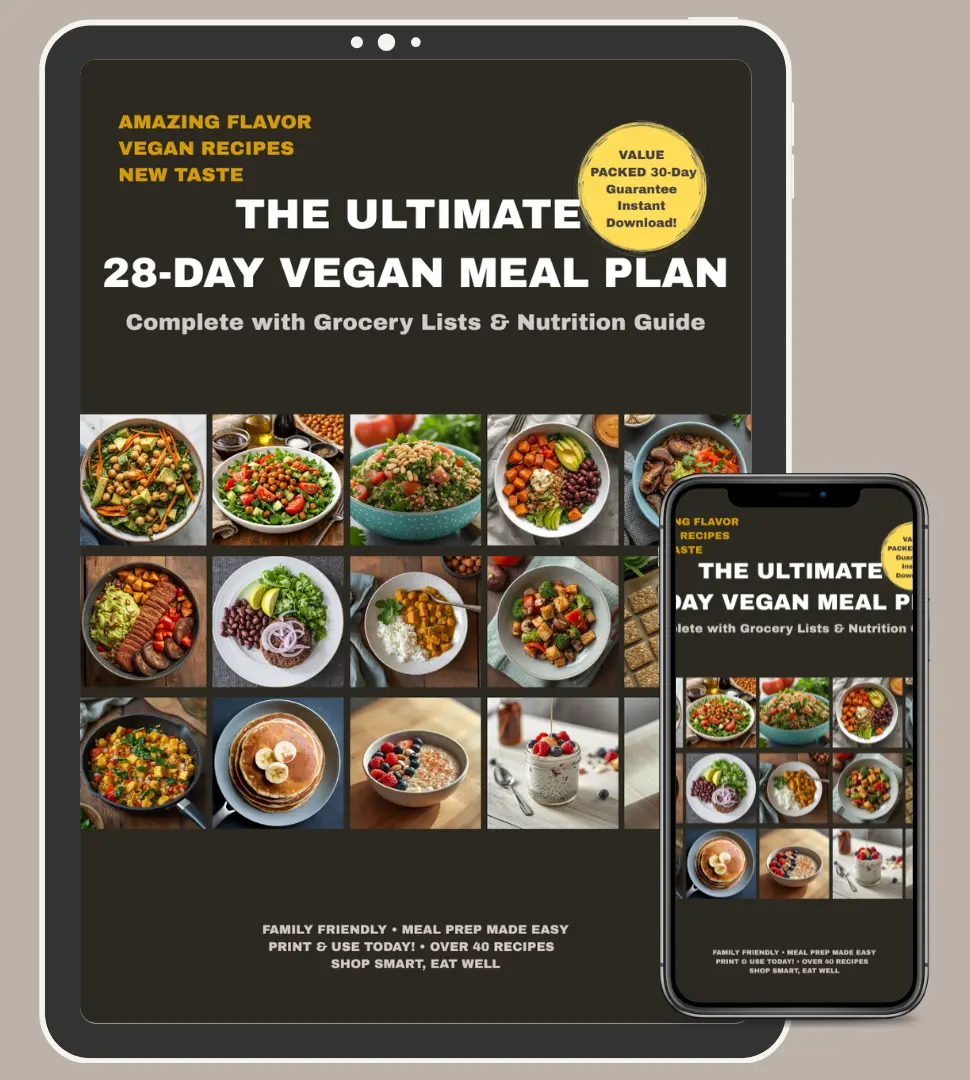
Still spending hours figuring out what to eat?
What’s included in your download
- 40+ nutritionist-approved recipes
- Complete 28-day calendar
- Meets protein, iron & B12 needs
- Family & meal prep friendly
- Vibrant photo for every recipe
- Simple, common ingredients
Instant PDF download. No subscriptions. No waiting.