
Section 1: Debunking the Protein Myth: Plant Power for Muscle Synthesis
The most pervasive myth obstructing potential progress is the belief that plant protein is inferior for building muscle. Modern exercise science and nutritional research conclusively debunks this outdated notion.
The foundational truth for any effective vegan bodybuilding meal plan is this: when total daily protein intake and the specific amino acid leucine are adequately matched, rates of muscle protein synthesis (MPS) on plant protein are statistically equal to those on animal protein. Numerous studies, including direct comparisons of soy protein isolate to whey and pea protein to casein, demonstrate no significant difference in lean mass accrual over time when calories and protein are sufficient.
The antiquated concept of “incomplete proteins” is a persistent misunderstanding. While it is accurate that individual plant foods may have varying proportions of the nine essential amino acids, all are present across the plant kingdom.
The human body maintains a dynamic amino acid pool; by simply consuming a varied selection of protein sources throughout the day—a natural practice within any well-constructed vegan bodybuilding meal plan—you effortlessly provide all essential building blocks. There is no physiological requirement to meticulously combine proteins in a single meal. Empirical proof resides in the world’s top physique stages.
Elite vegan bodybuilders like IFBB Pro Nimai Delgado, champion Torre Washington, and powerhouse Jehina Malik stand as living testament that exceptional muscular development, density, and conditioning are not only possible but can be maximized on a strategically designed vegan bodybuilding meal plan. Their success is built on precision nutrition, not animal products, providing the ultimate confidence for your own journey.
Section 2: Protein Requirements & Strategic Sourcing for Maximum Hypertrophy
For sustained muscle hypertrophy, precise protein intake is non-negotiable. The current evidence-based consensus for athletes in a growth phase prescribes an optimal range of 1.6 to 2.2 grams of protein per kilogram of body weight. For an 82 kg (180 lb) lifter, this translates to a daily target of 131 to 180 grams.
To prudently compensate for the marginally lower digestibility score of many plant proteins (approximately 80-90% versus 90-95% for animal proteins) and to ensure a robust surplus of amino acids, aiming for the upper end of this range (2.0-2.2 g/kg) is a wise and effective strategy within your comprehensive vegan bodybuilding meal plan.
Beyond total daily intake, the per-meal leucine threshold is critical. Leucine is the primary amino acid trigger for initiating MPS. Each substantial feeding within your vegan bodybuilding meal plan should target ~2.5 to 3.0 grams of leucine. This threshold is readily achieved through thoughtful portioning of concentrated plant protein sources, check this as well for good resources.
Critical High-Protein Staples for Your Vegan Bodybuilding Meal Plan (protein per 100-calorie serving):
- Seitan (Vital Wheat Gluten): ~20g protein. The unparalleled leader in protein density, perfect for creating hearty, meat-like textures.
- Textured Vegetable Protein (TVP): ~17g protein. An extraordinarily cost-effective, versatile soy crumble ideal for chili, bolognese, and taco fillings.
- Extra-Firm Tofu: ~11g protein. A complete protein with a neutral flavor profile, excellent for scrambles, stir-fries, and baking.
- Tempeh: ~10g protein. Fermented soy offering enhanced digestibility, a nutty flavor, and beneficial fiber.
- Edamame / Soybeans: ~10g protein. Perfect as a snack or addition to salads and bowls.
- Lentils & Split Peas: ~8g protein. Staple legumes that also provide slow-digesting carbohydrates and significant iron.
- Vegan Protein Powder (Pea/Rice/Blend): ~20-25g protein. An indispensable tool for convenience, post-workout nutrition, and reliably hitting daily targets.
A successful vegan bodybuilding meal plan strategically distributes total protein across 4-6 meals or feedings, with each containing 30-50 grams. This practice creates a consistent “pulse” of amino acids in the bloodstream, chronically stimulating the MPS machinery and repeatedly hitting the leucine threshold throughout the waking hours. This rhythmic anabolic signaling is the operational core of a growth-oriented vegan bodybuilding meal plan.
Section 3: The Bulking Vegan Bodybuilding Meal Plan: Engineering a Caloric Surplus for Growth
This detailed sample vegan bodybuilding meal plan is engineered for an 82 kg (180 lb) athlete in a dedicated lean bulking phase. The objective is a sustained, modest caloric surplus of 300-500 calories above maintenance to fuel muscle protein synthesis and support new tissue growth while minimizing unnecessary fat gain. This vegan bodybuilding meal plan is built on whole-food foundations, emphasizes nutrient timing, and guarantees high bioavailable protein at every meal.
3,000-Calorie Bulking Vegan Bodybuilding Meal Plan (Approximate Macros: 195g P / 375g C / 85g F)
- Meal 1 (7:00 AM – Breakfast): Anabolic Proats. 1 cup dry rolled oats cooked with water, immediately mixed with 1.5 scoops vanilla pea protein powder (to boost protein and create a creamy texture), 1 large sliced banana, 2 tbsp almond butter, and a dash of cinnamon. Macros: 50g P, 85g C, 18g F.
- Meal 2 (10:30 AM – Mid-Morning): Mass-Gain Green Shake. In a blender, combine 2 cups unsweetened soy milk (for additional protein), 1 scoop vanilla protein powder, 2 tbsp natural peanut butter, 1 cup frozen spinach (for micronutrients), 1/2 cup frozen blueberries, and 1 tbsp ground flaxseed. Blend until smooth. Macros: 45g P, 30g C, 22g F.
- Meal 3 (1:00 PM – Lunch): Tempeh & Quinoa Power Bowl. 200g of tempeh, marinated in soy sauce and maple syrup then baked until crispy, served over 1.5 cups of cooked quinoa. Accompanied by 2 cups of roasted broccoli and sweet potato cubes, 1/4 of a sliced avocado, and a generous drizzle of lemon-tahini dressing. Macros: 50g P, 90g C, 25g F.
- Meal 4 (4:00 PM – Pre-Workout): Simple Carbohydrate Fuel. 2 slices of dense whole-grain toast topped with 2 tbsp of peanut butter and one whole banana. This provides easily accessible energy for the upcoming training session with minimal digestive burden. Macros: 15g P, 75g C, 18g F.
- Meal 5 (7:00 PM – Post-Workout): Rapid Recovery Shake. 2 scoops of chocolate vegan protein powder blended with 1.5 cups of oat milk and one banana. This combination delivers a fast-digesting protein source and high-glycemic carbohydrates to rapidly replenish glycogen and kickstart the repair process. Macros: 50g P, 70g C, 8g F.
- Meal 6 (9:30 PM – Evening): Slow-Release Protein Pudding. 1 scoop of a casein-style vegan protein powder (or a standard blend) mixed with just enough water or unsweetened almond milk to create a thick pudding. This provides a slow trickle of amino acids throughout the night, supporting overnight recovery. Macros: 25g P, 5g C, 2g F.
Daily Totals: Approximately 3,000 calories, 195g protein (2.38 g/kg), 355g carbohydrates, 93g fat. This structured vegan bodybuilding meal plan delivers the consistent energy surplus and nutrient density required for progressive muscular growth.
For individuals with exceptionally high metabolic rates or those struggling to gain weight (“hardgainers”), this core vegan bodybuilding meal plan can be seamlessly scaled to 3,500 or 4,000 calories. Effective strategies include: adding an extra scoop of protein powder to two meals, increasing grain portions by half a cup, incorporating an additional tablespoon of nut butter or half an avocado, or including a calorie-dense snack like homemade trail mix or date-based energy balls. The fundamental architecture of the vegan bodybuilding meal plan remains robust and adaptable.
Section 4: Foundational Training Principles: The Stimulus for Growth
A perfect vegan bodybuilding meal plan provides the building materials, but it is the mechanical tension from resistance training that provides the stimulus for growth. These principles are universal and must underpin your training regimen.
- Progressive Overload: The unequivocal cornerstone of hypertrophy. You must systematically increase the demands placed on your musculoskeletal system over time. This is achieved by adding weight to the bar, performing more repetitions with the same weight, increasing total sets (volume), or improving workout density (completing the same work in less time). Meticulous workout logging is essential to track and plan this progression.
- Volume: The primary driver of muscle growth is weekly training volume, measured in hard sets per muscle group. A range of 10-20 working sets per muscle group per week is a well-supported target for growth. For example, this could mean 15 total sets for the chest, spread across two separate weekly sessions.
- Frequency: Training each major muscle group at least twice per week is generally superior to once-weekly training for maximizing MPS frequency and growth rates. A Push/Pull/Legs (PPL) split performed twice over a six-day training week is an exceptionally efficient and effective template to pair with your vegan bodybuilding meal plan.
- Intensity of Effort: To stimulate the high-threshold motor units responsible for growth, sets must be taken close to muscular failure. For most working sets, reaching 1-3 repetitions in reserve (RIR) is optimal. The 6-12 rep range should form the bulk of your hypertrophy work, utilizing weights that challenge you within this bracket.
Sample 6-Day PPL Split Aligned with a Vegan Bodybuilding Meal Plan:
- Day 1: Push (Chest/Shoulders/Triceps) – Barbell Bench Press, Seated Dumbbell Overhead Press, Incline Dumbbell Press, Cable Tricep Pushdowns.
- Day 2: Pull (Back/Biceps) – Weighted Pull-ups, Barbell Rows, Lat Pulldowns, Face Pulls, Dumbbell Bicep Curls.
- Day 3: Legs (Quad-Dominant) – Back Squats, Leg Press, Bulgarian Split Squats, Leg Extensions.
- Day 4: Push (Variation) – Incline Barbell Bench, Arnold Press, Machine Chest Flyes, Lateral Raises.
- Day 5: Pull (Variation) – Romanian Deadlifts, Chest-Supported T-Bar Rows, Seated Cable Rows, Preacher Curls.
- Day 6: Legs (Posterior-Dominant) – Hip Thrusts, Lying Leg Curls, Walking Lunges, Standing Calf Raises.
- Day 7: Full Rest / Active Recovery – Light walking, stretching, or complete rest to supercompensate.
This disciplined training approach, consistently fueled by your targeted vegan bodybuilding meal plan, creates the essential mechanical and metabolic environment for muscular adaptation.
Section 5: The Essential Supplement Stack: Optimizing Your Vegan Bodybuilding Meal Plan
While whole foods form the bedrock of your vegan bodybuilding meal plan, a select few supplements are proven to fill nutritional gaps, enhance performance, and provide logistical convenience. They are supplements to, not replacements for, a solid vegan bodybuilding meal plan.
Tier 1: Absolute Essentials
- High-Quality Vegan Protein Powder: A blend of pea and rice protein offers a complete amino acid profile that mimics the effectiveness of whey. It is indispensable for meeting elevated daily protein targets conveniently, especially post-workout. Use 1-2 scoops daily as part of your vegan bodybuilding meal plan.
- Creatine Monohydrate (5g daily): The most extensively researched performance supplement. It increases phosphocreatine stores in muscles, leading to measurable improvements in strength, power output, training volume, and muscle cell volumization. All supplemental creatine is synthetically produced and vegan.
- Vitamin B12 (500-1000 mcg daily): A non-negotiable supplement, as there are no reliable unfortified plant sources. Critical for neurological function, red blood cell formation, and energy metabolism.
- Vitamin D3 (2000-4000 IU daily): Essential for immune function, testosterone optimization, and bone health. Choose a vegan D3 sourced from lichen.
Tier 2: Highly Beneficial for Performance
- Algae-Based Omega-3 (250-500 mg DHA/EPA daily): Provides the crucial long-chain omega-3s DHA and EPA directly, bypassing the inefficient conversion from ALA. This reduces exercise-induced inflammation, supports joint health, and aids cognitive function.
- Beta-Alanine (3-6g daily, split doses): Increases intramuscular carnosine levels, which buffers hydrogen ions (acid) during high-intensity exercise. This delays muscular fatigue, often allowing for 1-2 additional reps per set.
Integrating this stack supports the goals of your vegan bodybuilding meal plan by ensuring no nutritional deficiencies hinder recovery and by providing a direct ergogenic boost to your training capacity.
Section 6: The Cutting Phase: Adapting Your Vegan Bodybuilding Meal Plan for Fat Loss
The objective of a cutting phase is to shed body fat while preserving the maximum amount of hard-earned lean muscle mass. This requires a strategic shift in your vegan bodybuilding meal plan. You must implement a moderate calorie deficit (typically 300-500 calories below maintenance), but paradoxically, you should increase protein intake further to 2.2-2.4 g/kg. This elevated protein serves as a protective measure, reducing the catabolic (muscle-breaking) signals associated with a calorie deficit and enhancing satiety.
2,400-Calorie Cutting Vegan Bodybuilding Meal Plan (Approximate Macros: 185g P / 250g C / 70g F)
- Meal 1: Savory Tofu Scramble. 200g of crumbled extra-firm tofu sautéed with spinach, mushrooms, and turmeric. Served with 1 slice of whole-grain toast. Macros: 35g P, 20g C, 15g F.
- Meal 2: Lean Protein Shake. 1.5 scoops of protein powder mixed with water and 1 cup of mixed berries for fiber and micronutrients. Macros: 35g P, 20g C, 3g F.
- Meal 3 (Pre-Workout): High-Protein Salad. 150g of seasoned, baked tempeh over a very large bed of mixed greens, bell peppers, and cucumbers, dressed with 1 tbsp of olive oil and vinegar. Macros: 30g P, 15g C, 18g F.
- Meal 4 (Post-Workout): Focused Recovery Shake. 1.5 scoops of protein powder blended with 1 banana for quick carbs to replenish glycogen without excessive calories. Macros: 35g P, 40g C, 3g F.
- Meal 5: Volumetric Dinner. A large portion of steamed broccoli and cauliflower (high volume, low calorie), with 1 cup of cooked lentils and 1/2 cup of quinoa for sustained energy and protein. Macros: 30g P, 75g C, 5g F.
- Meal 6: Nighttime Protein. A serving of protein fluff (made by blending protein powder with liquid) or a small casein-style pudding. Macros: 25g P, 5g C, 2g F.
Key Cutting Strategies within Your Vegan Bodybuilding Meal Plan:
- Prioritize Volume: Fill half your plate with non-starchy vegetables (broccoli, leafy greens, zucchini) to physically fill the stomach and manage hunger on fewer calories.
- Time Carbohydrates: Consume the majority of your daily carbohydrate allotment in the meals surrounding your workout (pre- and post-training). This fuels performance and recovery when the body best utilizes them.
- Maintain Training Intensity: While total training volume may decrease slightly, it is critical to maintain the intensity (weight on the bar) to signal to your body that the muscle is still needed.
- Stay Hydrated: Increased water intake can help manage hunger cues and support metabolic processes.
This adapted vegan bodybuilding meal plan is specifically designed for muscle preservation in a calorie-restricted state, proving the flexibility of a well-structured plant-based approach.
Section 7: Recovery: The Non-Negotiable Component of Growth
Your vegan bodybuilding meal plan and training provide the stimulus and raw materials, but muscular repair and supercompensation occur during recovery. Neglecting this pillar will nullify the efforts of even the most perfect vegan bodybuilding meal plan.
- Sleep (7-9 Hours of Quality Sleep): This is the most powerful recovery tool. The majority of growth hormone secretion, crucial for tissue repair and growth, occurs during deep sleep (stages 3 & 4). Chronic sleep deprivation elevates cortisol, impairs glucose metabolism, and drastically reduces performance and recovery capacity.
- Stress Management: Psychological stress elevates cortisol, a catabolic hormone that can break down muscle tissue and promote fat storage, particularly abdominal fat. Incorporate daily practices such as meditation, diaphragmatic breathing, or leisurely walks in nature to mitigate this.
- Scheduled Deloads: Every 4-6 weeks of intense training, implement a deload week. Reduce training volume by 40-60% while maintaining moderate intensity. This allows the nervous system, joints, and connective tissues to recover fully, preventing overtraining and fostering supercompensation in the following training block.
- Listen to Biofeedback: Persistent joint pain, a sustained drop in strength, unrelenting fatigue, disrupted sleep, or a loss of motivation are clear signs you need more rest. Adjust your training and scrutinize your vegan bodybuilding meal plan for adequacy.
Related Post: Vegan Protein Deficiency
Section 8: Common Pitfalls to Avoid on Your Vegan Bodybuilding Meal Plan Journey
- Inconsistent Tracking: “Eating by feel” is notoriously inaccurate. For at least the first 8-12 weeks, use a digital food scale and a tracking app like Cronometer to ensure your vegan bodybuilding meal plan is hitting its calorie and macro targets. This data is invaluable.
- Over-Reliance on Processed Foods: While vegan meats and cheeses are convenient, a vegan bodybuilding meal plan built primarily on whole foods like lentils, tofu, tempeh, and beans will be superior in micronutrient density, fiber, and overall health.
- Sporadic Protein Intake: Going 6-8 hours without a protein source misses opportunities to stimulate MPS. The rhythmic feeding schedule outlined in your vegan bodybuilding meal plan is intentional—adhere to it.
- Neglecting Micronutrient Status: Schedule annual blood work to monitor key markers: Vitamin B12, Vitamin D (25-OH-D), Iron/Ferritin, and a complete blood count. This provides objective data to fine-tune your vegan bodybuilding meal plan and supplement regimen.
- Mistaking Activity for Progress: Adding excessive cardio or daily two-hour gym sessions can undermine recovery and muscle growth. Remember that growth happens during rest, fueled by your vegan bodybuilding meal plan. Training should be intense but efficient, and cardio should be used judiciously for cardiovascular health, not as a primary fat-loss tool at the expense of muscle.
By meticulously constructing and adhering to a detailed vegan bodybuilding meal plan, executing a principled training program, and honoring the pillars of recovery, you possess a complete, evidence-based system for building a powerful, muscular, and healthy plant-based physique. This comprehensive vegan bodybuilding meal plan and its accompanying framework provide the definitive roadmap; your consistent application and effort will determine the magnitude of your results.
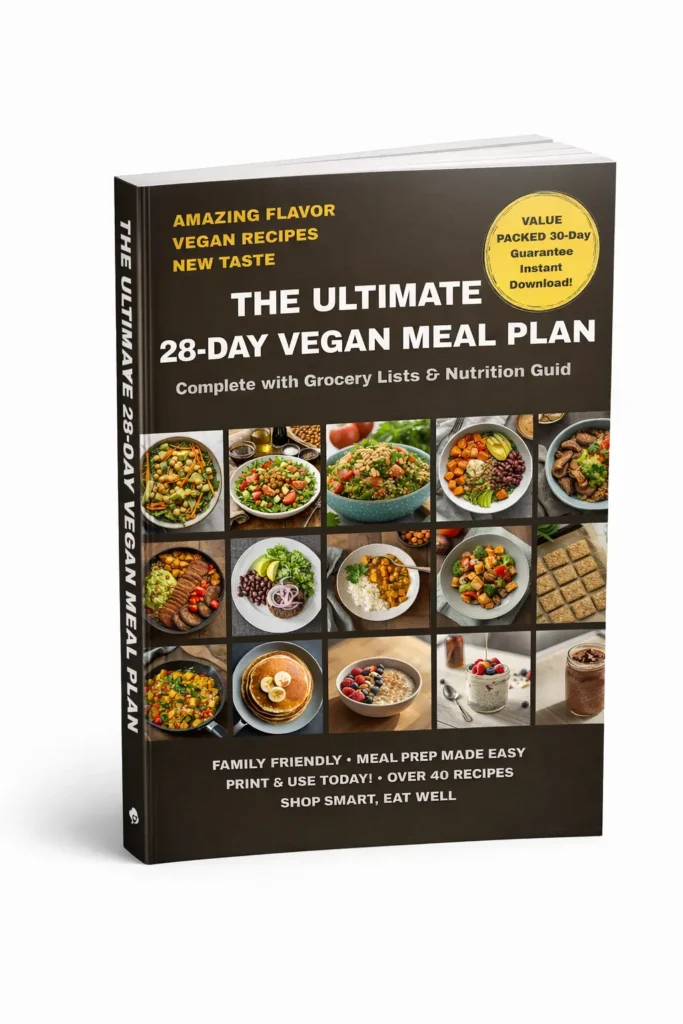
P.S. To guide you through your first month, here’s my free 28-Day Vegan Meal Plan complete with shopping lists and nutrition guides. Download it here.
Want to try before you buy?
Enter your email below to get 2 free recipes instantly: