
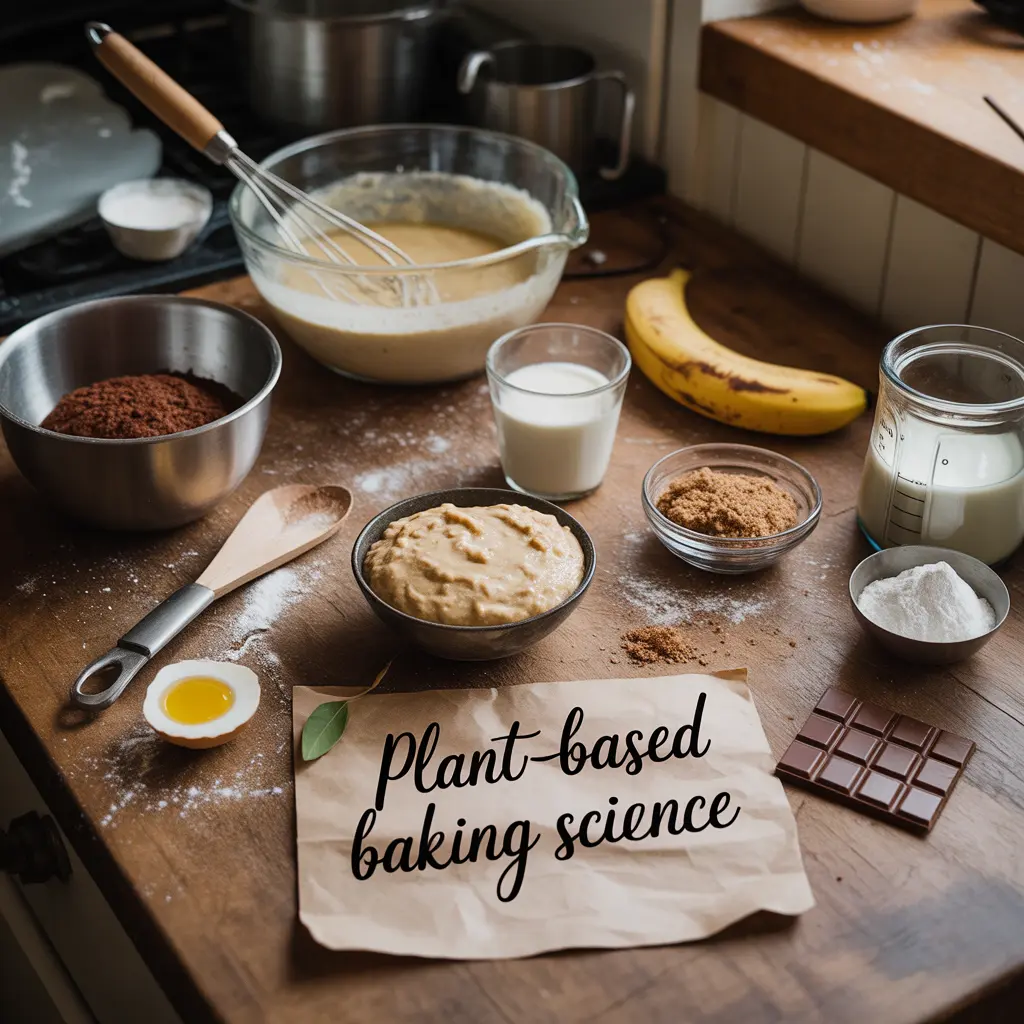
🌱 Introduction: Mastering Plant-Based Baking Science
Mastering vegan baking requires understanding the science behind what eggs and dairy actually do in recipes, then replacing each function with precise plant-based alternatives.
Whether you are baking cookies, cakes, bread, or pastries, eggs serve five distinct roles: binding ingredients together, providing leavening for rise, emulsifying fats and liquids, adding moisture, and contributing to structure through protein coagulation.
Dairy similarly provides fat for tenderness, protein for structure, and acidity for leavening activation.
This comprehensive guide breaks down the complete science of vegan baking, providing exact substitution ratios, functional explanations, and troubleshooting solutions for every common challenge.
Vegan baking has become one of the most searched plant-based cooking topics globally, and for good reason.
People want to create delicious baked goods without animal products, but they need more than just substitution lists.
They need to understand the why behind each replacement.
When you understand that eggs provide binding, leavening, emulsifying, moisture, and structure, you can strategically select plant-based alternatives for each function.
Flax eggs excel at binding and moisture but provide minimal leavening.
Aquafaba shines at leavening and emulsifying but lacks the protein structure of whole eggs.
Chickpea flour provides protein structure and binding but can impart a bean flavor if not properly cooked.
This guide provides the complete framework for vegan baking success.
You will learn the five functions of eggs, the three roles of dairy, eight essential substitutes with exact ratios, a master cheat sheet optimized for Instagram sharing, six essential recipes with scientific explanations, and troubleshooting solutions for common failures.
Whether you are a beginner baker or an experienced cook transitioning to plant-based baking, this resource equips you with the knowledge to create exceptional baked goods without eggs or dairy.
For those seeking comprehensive meal planning that includes baking-friendly recipes, explore our vegan pantry meals guide.
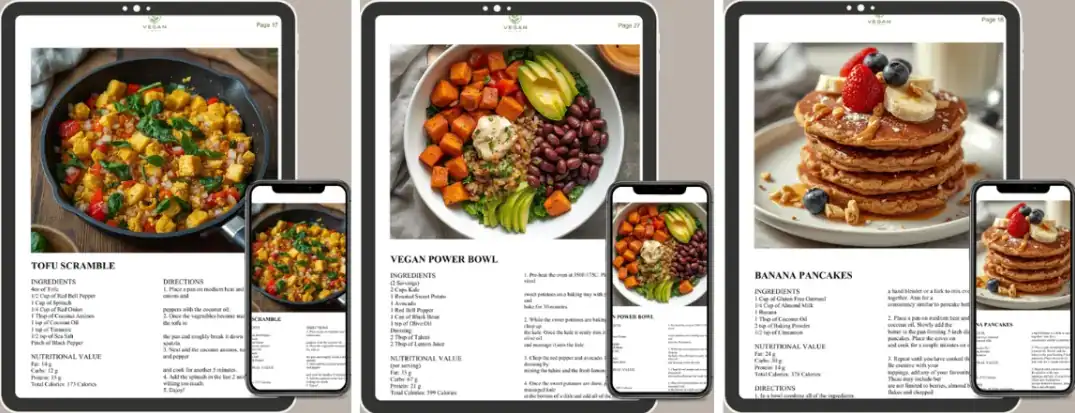
Ultimate 28-Day Vegan Meal Plan,
Easy Grocery List + 40 Recipes
• Comprehensive Guide
• 4-Week Structured Calendar
• Categorized Weekly Grocery Lists
• Chef-Verified Nutritional Tips
• Family Friendly Meal Prep
• Print & Use Today
🥚 What Eggs Actually Do in Baking: 5 Distinct Functions
Understanding the specific roles eggs play in baking is the foundation of successful vegan baking.
Each function requires a different plant-based strategy for replacement.
Function 1: Binding
Egg proteins, primarily albumin and globulin, coagulate at temperatures between 140 and 180 degrees Fahrenheit.
This coagulation creates a protein network that holds ingredients together, preventing baked goods from falling apart.
Without adequate binding, cookies crumble, bars fall apart, and muffins disintegrate when you try to remove them from the pan.
Plant-based binding agents include flax eggs, chia eggs, chickpea flour, and commercial egg replacers.
Each provides different binding strengths and works best in specific applications.
Function 2: Leavening
Eggs contribute to leavening through two mechanisms: air incorporation and steam expansion.
When eggs are beaten, they trap air bubbles that expand during baking, creating lift and lightness.
Whole eggs provide moderate lift, while egg whites provide maximum aeration for soufflés and angel food cakes.
The water content in eggs also converts to steam during baking, further contributing to rise.
Without adequate leavening, baked goods emerge dense, flat, and heavy.
Aquafaba, the liquid from cooked chickpeas, is the premier plant-based leavening agent, whipping to stiff peaks just like egg whites.
Function 3: Emulsifying
Egg yolks contain lecithin, a powerful emulsifier that allows fat and water to mix uniformly.
This creates smooth, homogeneous batters and prevents separation during baking.
Without proper emulsification, batters can appear greasy, separate in the pan, or produce baked goods with uneven texture.
Custards, cakes, and creamy fillings particularly depend on the emulsifying power of eggs.
Plant-based emulsifiers include aquafaba, silken tofu, and commercial emulsifying agents.
Function 4: Moisture
Eggs are approximately 75 percent water, making them significant contributors to the liquid content of batters.
This moisture affects crumb tenderness, shelf life, and overall eating quality.
Without adequate moisture, baked goods emerge dry, tough, and stale-tasting within hours.
Plant milks, fruit purées, and additional water or oil can replace the moisture function of eggs.
The key is maintaining the proper liquid-to-dry ratio for your specific recipe.
Function 5: Structure
Egg proteins coagulate during baking, setting the final structure of baked goods.
This protein framework provides support for gas expansion and maintains the shape of cakes, breads, and pastries.
Without adequate structure, baked goods collapse after removal from the oven or fail to hold their shape.
Chickpea flour, silken tofu, and commercial egg replacers provide the protein structure needed for successful vegan baking.
For more information on egg substitutes, see our comprehensive guide on best vegan egg substitute baking cooking.
Understanding these five functions allows you to strategically select plant-based alternatives that replicate each role.
Successful vegan baking often requires combining multiple substitutes to achieve all five functions.
For example, a cake might use aquafaba for leavening and emulsifying, plus chickpea flour for structure and binding.
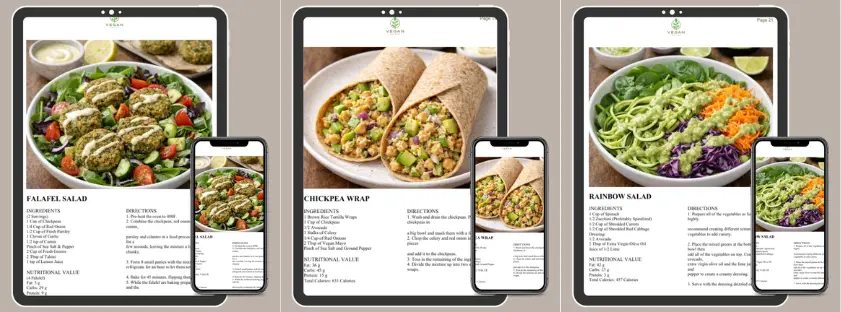
28-Day Vegan Meal Plan
+ Grocery List
Complete Solution · Nutritionist-Approved · Print & Use Today
Read on any device · No apps needed
🥛 What Dairy Does in Baking: Fat, Protein, Acid
Dairy products serve three critical functions in baking that must be understood for successful plant-based replacement.
Fat: Butter, Cream, Whole Milk
Dairy fat creates tenderness by coating flour proteins, preventing excessive gluten development that leads to tough textures.
Butter, with approximately 80 percent fat content, contributes rich flavor through milk solids and fatty acids.
Fat also provides moisture and desirable mouthfeel in finished baked goods.
Pie crusts, cookies, cakes, and pastries particularly depend on dairy fat for their characteristic texture and flavor.
Vegan butter, coconut oil, and other plant fats can replace dairy fat, though flavor profiles differ.
Protein: Milk, Cream
Dairy proteins, primarily casein and whey, contribute to structure and enhance browning through the Maillard reaction with lactose.
Milk proteins improve the nutritional profile of baked goods and support proper crumb development.
Breads, cakes, and custards benefit from the structural support of dairy proteins.
Plant milks vary in protein content, with soy milk providing the most comparable protein levels to dairy milk.
Acidity: Buttermilk, Yogurt, Sour Cream
Acidic dairy products activate baking soda for leavening, tenderize gluten for softer crumb, and add tangy flavor complexity.
Quick breads, muffins, and biscuits particularly depend on the acid function of buttermilk or yogurt.
Plant-based buttermilk, made by adding lemon juice or vinegar to plant milk, replicates this function effectively.
For comprehensive dairy alternatives, see our guide on vegan dairy alternatives guide.
Understanding these three dairy functions enables strategic plant-based substitution that maintains texture, flavor, and leavening.
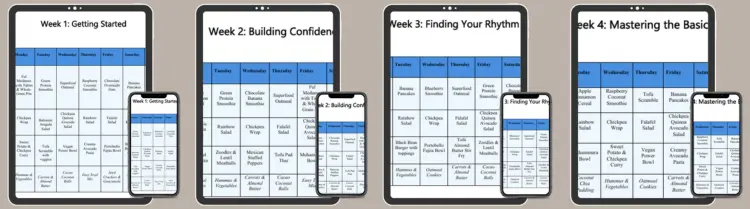
Psst..just to add: reading about anti-inflammatory eating and actually eating that way every day are two very different things. The 28-Day Vegan Meal Plan gives you 40+ recipes, a full shopping list, and a 28-day calendar. No subscription.
Get the Plan →🥄 The Complete Vegan Baking Substitute Guide by Function
Mastering vegan baking requires matching each egg and dairy function with the right plant-based alternative.
This spotlight guide provides exact ratios, best applications, and pro tips for eight essential substitutes.
🥛 Plant Milk
Provides moisture, protein, and browning support in all baked goods.
Soy milk has the highest protein content for structure. Oat milk offers neutral flavor and excellent moisture retention.
- Cakes and muffins
- Breads and rolls
- Custards and creams
⚡ Baking Powder + Vinegar
Creates immediate leavening reaction for lift in cakes and quick breads.
The acid in vinegar activates baking soda, producing carbon dioxide bubbles that expand during baking.
- Quick breads
- Muffins and cupcakes
- Pancakes and waffles
🟣 Plant Buttermilk
Provides acidity for leavening activation and gluten tenderization.
Made by adding lemon juice or vinegar to plant milk, then letting it curdle for 10 minutes.
- Buttermilk biscuits
- Scones and muffins
- Quick breads
🔴 Agar Agar
Plant-based gelatin substitute for setting pies, tarts, and custards.
Derived from seaweed, agar must be boiled to activate and sets firmer than gelatin.
- No-bake cheesecakes
- Fruit tarts and pies
- Panna cotta style desserts
For comprehensive pantry ingredient guidance, see our vegan pantry staples list.
Understanding these eight substitutes empowers you to adapt any traditional recipe for vegan baking success.
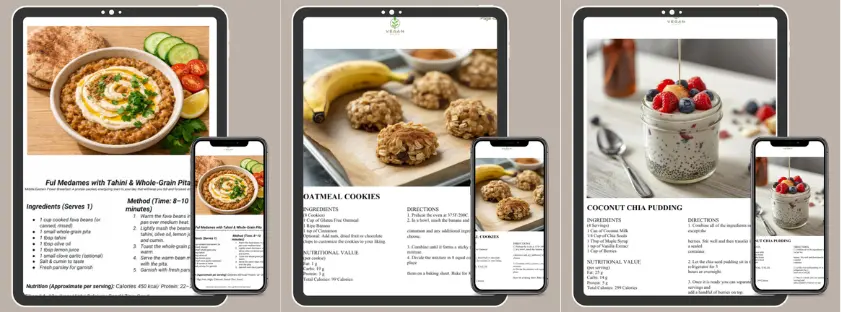
| Plan Comparison | Standard Search | Your 28-Day Plan |
|---|---|---|
| Structured 4-Week Calendar | — | ✓ Included |
| Ready-to-Use Grocery Lists | — | ✓ Included |
| 40+ Professional Recipes | Random Results | ✓ Included |
| Nutrition & Transition Guide | — | ✓ Included |
| Chef-Verified Methods | — | ✓ Included |
| High-Quality Recipe Photos | — | ✓ Included |
📊 Plant-Based Baking Cheat Sheet: Substitution Ratios
This master cheat sheet provides exact ratios for every essential vegan baking substitute.
Designed for Instagram sharing: large fonts, bold colors, minimal text, high contrast.
Save this cheat sheet for quick reference during your next vegan baking session.
For budget-friendly baking ingredients, explore our guide on cheap vegan meals on a budget.
🧁 6 Essential Vegan Baked Goods with the Science Explained
These six foundational recipes demonstrate how to apply substitution science in practice.
Each includes the key technique that ensures success.
🍪 Vegan Chocolate Chip Cookies
Science: Flax eggs provide binding; vegan butter creates tenderness through fat coating flour proteins.
Key technique: Chill dough 30 minutes before baking to control spread and develop flavor.
Base ratio: 2 flax eggs + 1 cup vegan butter + 3 cups flour + 1 cup chocolate chips.
🎂 Vanilla Sponge Cake
Science: Aquafaba provides leavening through trapped air; plant buttermilk activates baking soda for additional lift.
Key technique: Whip aquafaba to stiff peaks before gently folding into batter to preserve air bubbles.
Base ratio: ½ cup aquafaba + 1 cup plant milk + 1 tbsp vinegar + 2 cups flour.
🍌 Banana Bread
Science: Mashed banana provides natural moisture and binding; baking soda reacts with banana acidity for lift.
Key technique: Use overripe bananas for maximum sweetness and moisture; do not overmix batter.
Base ratio: 3 mashed bananas + 1 tsp baking soda + 2 cups flour + ½ cup oil.
🥧 Flaky Pie Crust
Science: Cold vegan butter creates steam pockets during baking, separating flour layers for flakiness.
Key technique: Keep all ingredients ice-cold; mix minimally to prevent gluten development.
Base ratio: 1½ cups flour + ½ cup cold vegan butter + ¼ cup ice water + pinch salt.
🍫 Chocolate Brownies
Science: Chickpea flour or flax eggs provide dense structure; oil contributes to fudgy texture.
Key technique: Do not overmix; underbake slightly for fudgy center; cool completely before cutting.
Base ratio: 2 flax eggs + ½ cup oil + 1 cup cocoa powder + 1 cup sugar + 1 cup flour.
🥐 Dinner Rolls
Science: Yeast provides leavening through carbon dioxide production; plant milk and oil tenderize crumb.
Key technique: Allow proper proofing time; create steam in oven for soft crust; cool on wire rack.
Base ratio: 2¼ tsp yeast + 1 cup warm plant milk + 2 tbsp oil + 3 cups flour + 2 tbsp sugar.
For more protein-rich baking options, see our guide on vegan protein sources.
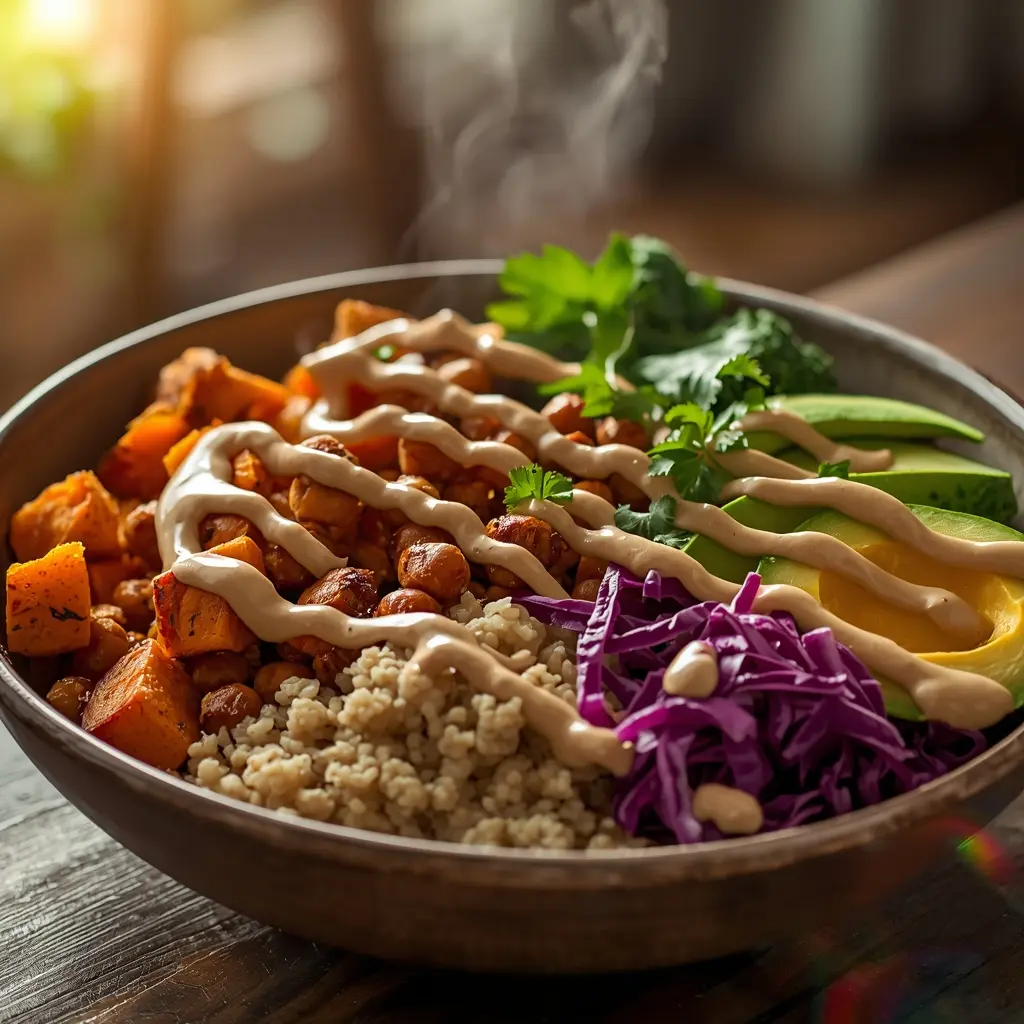
28-Day Vegan Meal Plan + Grocery list.
Transform your lifestyle with our comprehensive guide. This isn’t just a recipe book; it’s a complete system designed for success:
- The Vegan Guide: Essential transition tips and nutritional benefits.
- 40+ Chef Recipes: Breakfast, lunch, and dinner with high-quality photos.
- 4-Week Meal Plan: A fully structured day-by-day calendar.
- Grocery Lists: Categorized weekly lists to save you time and money.
- Photos: High-Quality Recipe Photos.
- Nutritions: Vegan Nutrition Guide Toolkit.
🔧 Troubleshooting: Why Vegan Baked Goods Fail and the Fixes
Even experienced bakers encounter challenges when adapting recipes for vegan baking.
Understanding common failure points and their solutions saves time and ingredients.
Problem 1: Crumbly, Falls Apart
Cause: Insufficient binding agents to hold ingredients together.
Fix: Add 1 extra flax egg or 2 tbsp chickpea flour; increase mixing time slightly to develop binding network.
Prevention: Always let flax or chia eggs gel for 15 minutes before using.
Problem 2: Dense, No Rise
Cause: Inadequate leavening or overmixing deflating air bubbles.
Fix: Increase baking powder by ½ tsp; fold aquafaba gently to preserve air; check expiration dates on leavening agents.
Prevention: Measure leavening agents precisely; avoid overmixing batters with aquafaba.
Problem 3: Gummy, Wet Center
Cause: Too much moisture or underbaking preventing proper structure setting.
Fix: Reduce plant milk by 2 tbsp; extend baking time 5-10 minutes; use toothpick test for doneness.
Prevention: Follow recipe liquid ratios precisely; allow baked goods to cool in pan 10 minutes before removing.
Problem 4: Dry, Tough Texture
Cause: Overmixing developing gluten or insufficient fat for tenderness.
Fix: Mix wet and dry ingredients separately before combining; add 2 tbsp vegan butter or oil; reduce flour by 2 tbsp.
Prevention: Mix just until combined; use cake flour for tender crumb in delicate baked goods.
Problem 5: Flat, No Spread
Cause: Dough too cold preventing proper spread or insufficient leavening.
Fix: Let dough warm 10 minutes at room temperature; add ½ tsp baking powder; verify oven temperature with thermometer.
Prevention: Follow chilling instructions precisely; use room temperature ingredients unless recipe specifies cold.
Problem 6: Greasy, Oily Mouthfeel
Cause: Too much fat or poor emulsification preventing proper incorporation.
Fix: Reduce oil by 2 tbsp; add 1 tbsp aquafaba for emulsification; chill dough before baking to solidify fat.
Prevention: Measure fats precisely; ensure proper emulsification by mixing wet ingredients thoroughly.
For more technique guidance, see our vegan cooking techniques tips resource.
👨🍳 Chef Anass: MENA Pastry and Baking Without Eggs
In my two decades working across Lebanon, Dubai, and Saudi Arabia, I have worked extensively with traditional MENA pastries that naturally contain no eggs.
These time-tested recipes rely on alternative binding and leavening methods that align perfectly with modern vegan baking principles.
Traditional Eggless MENA Baking Techniques
Semolina-Based Binding: Many Arabic pastries use semolina flour instead of eggs for structure. The coarse texture absorbs moisture and creates a dense, satisfying crumb. Maamoul and basbousa demonstrate this principle beautifully.
Nut and Seed Pastes: Tahini and ground nuts provide fat, protein, and binding without eggs. These ingredients create rich, moist textures in cookies and cakes while adding distinctive flavor profiles.
Syrup Soaking for Moisture: Instead of relying on eggs for moisture, MENA baking often uses sugar syrup soaked into baked goods. This technique keeps pastries moist for days and adds sweetness without dairy.
Yeast Leavening for Bread: Traditional Arabic breads like pita and manakish use yeast exclusively for leavening, never eggs. Proper proofing and high-heat baking create the signature puff and soft interior.
Professional Insight for Modern Vegan Baking
One technique I use professionally is combining multiple binding agents: a flax egg for structure plus 2 tbsp tahini for fat and emulsification.
This creates cookies with perfect texture and rich flavor that rivals traditional egg-based recipes.
The key is understanding that vegan baking is not about finding one perfect egg replacement, but combining plant ingredients to replicate multiple functions simultaneously.
Cultural Wisdom Meets Modern Science
MENA baking traditions prove that exceptional pastries do not require eggs or dairy.
These recipes have sustained communities for centuries using plant-based ingredients.
Modern vegan baking simply applies scientific understanding to these time-tested principles.
For more regional inspiration, explore our collection of middle eastern vegan recipes.
❓ Frequently Asked Questions
🎯 Final Thoughts on Vegan Baking Mastery
Mastering vegan baking requires understanding the science of what eggs and dairy do, then replacing each function with precise plant-based alternatives.
This guide has provided the complete framework: the five functions of eggs, the three roles of dairy, eight essential substitutes with exact ratios, a master cheat sheet, six essential recipes with scientific explanations, and troubleshooting solutions for common failures.
Whether you are baking cookies, cakes, bread, or pastries, success comes from combining the right substitutes for each function.
Start with simple recipes like chocolate chip cookies using flax eggs, then progress to complex applications like meringues with aquafaba.
With practice and understanding, vegan baking delivers results that rival or exceed traditional baking.
Your journey to plant-based baking mastery begins with a single substitution.
Embrace the power of plants to create exceptional baked goods through the science of vegan baking.
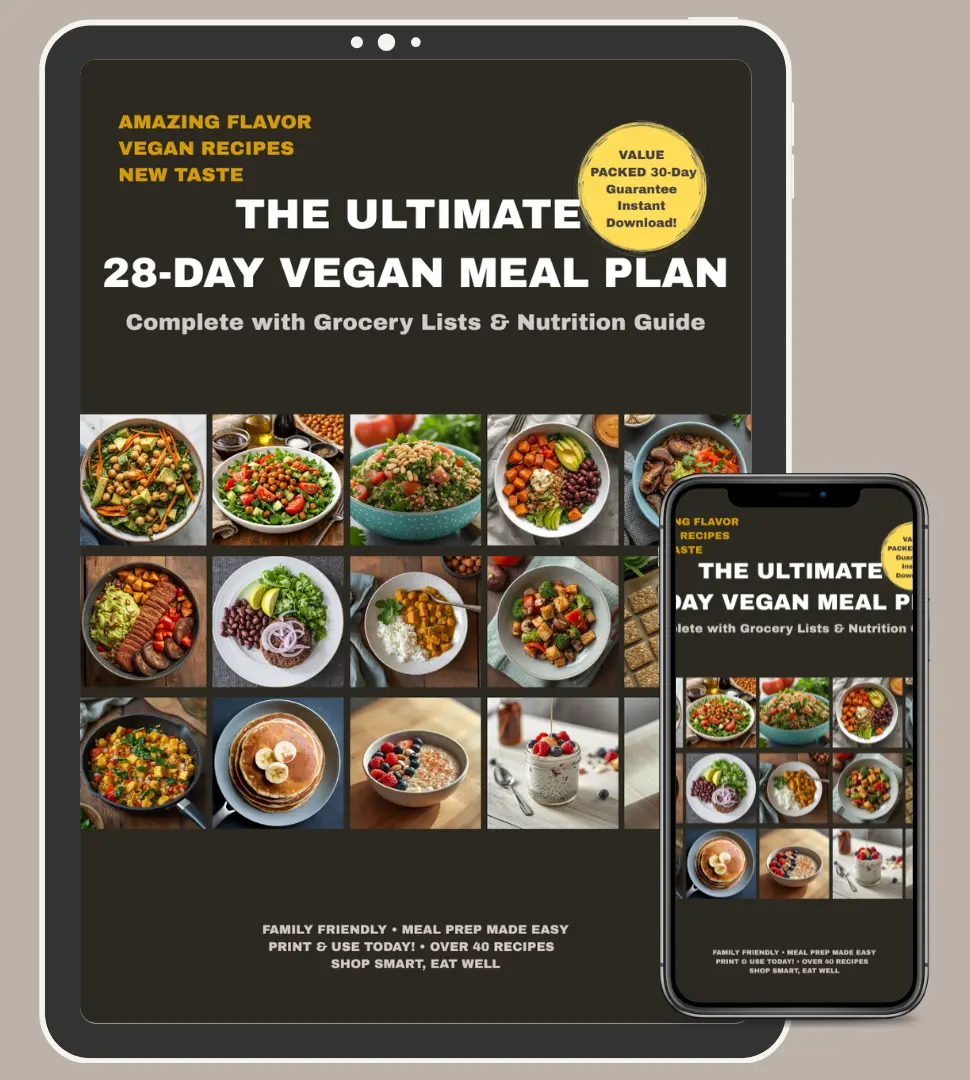
Still spending hours figuring out what to eat?
What’s included in your download
- 40+ nutritionist-approved recipes
- Complete 28-day calendar
- Meets protein, iron & B12 needs
- Family & meal prep friendly
- Vibrant photo for every recipe
- Simple, common ingredients
Instant PDF download. No subscriptions. No waiting.