
Section 1: The Pediatric Reality Check: Science, Not Speculation
The foremost question for any parent is: “Is a vegan diet safe and healthy for my child?” The answer, backed by leading global health authorities, is a resounding yes—when planned appropriately. The Academy of Nutrition and Dietetics, the world’s largest organization of food and nutrition professionals, states that “appropriately planned vegetarian, including vegan, diets are healthful, nutritionally adequate, and may provide health benefits for the prevention and treatment of certain diseases.
These diets are appropriate for all stages of the life cycle, including pregnancy, lactation, infancy, childhood, adolescence, older adulthood, and for athletes.” This statement provides the foundational confidence needed to pursue a healthy vegan diet for kids. Similarly, the World Health Organization recognizes well-planned plant-based diets as supportive of health across the lifespan.
This professional consensus is crucial for dispelling common societal concerns about protein, calcium, and growth. Children raised on a diverse, whole-food, plant-based diet often have dietary patterns that exceed standard nutritional recommendations for fiber, antioxidants, and vitamins A, C, and E, while typically having lower intakes of saturated fat and cholesterol. However, the keyword is “well-planned.” A healthy vegan diet for kids requires attention to specific nutrients primarily Vitamin B12, Vitamin D, Iron, Calcium, and Omega-3s (DHA). Proactive supplementation and strategic food choices are part of that plan.
It is highly recommended to consult with a pediatrician or a registered dietitian who understands plant-based nutrition to create a personalized roadmap and establish a baseline. Annual blood work to monitor key markers like B12, ferritin (iron stores), and Vitamin D is a prudent part of managing a healthy vegan diet for kids. Beyond the science, parents must navigate the social landscape—school lunches, birthday parties, and skeptical grandparents.
The journey involves balancing the desire to make things easy for your child with the equally important task of building their resilience and confidence in their family’s choices. This guide provides the evidence-based framework and practical strategies to successfully raise thriving children on a healthy vegan diet for kids.
Section 2: Age-Specific Nutrition: From Infancy to Adolescence
A healthy vegan diet for kids must evolve with a child’s developmental stages, meeting their changing caloric, protein, and micronutrient needs.
Infants (0-12 months): For the first 6 months, breastmilk or infant formula is the sole source of nutrition. Vegan mothers who breastfeed must ensure their own diets are supplemented with B12, Vitamin D, and DHA, as these directly affect milk quality. If formula is needed, soy-based infant formulas are widely available and nutritionally complete; always choose one approved by your pediatrician. Around 6 months, iron-rich foods are introduced.
Start with iron-fortified infant cereal. First foods can include mashed avocado, cooked sweet potato, mashed banana, and smooth, thinned nut butters. Avoid honey (risk of botulism) and choking hazards. Liquid B12 and Vitamin D drops are typically recommended by pediatricians for all infants, vegan or not.
Toddlers (1-3 years): This is a period of rapid growth and exploration. Calorie needs range from 1,000-1,400 per day. Protein needs (about 13g) are easily met. A healthy vegan diet for kids at this stage focuses on energy-dense, nutrient-rich foods presented in safe, manageable forms. A sample day: Breakfast could be oatmeal mashed with banana and a swirl of almond butter.
A morning snack of hummus on soft crackers. Lunch might be small pasta shapes with a lentil and vegetable tomato sauce. An afternoon snack of apple slices dipped in tahini, and dinner a soft tofu scramble with whole grain toast. The key is variety, repetition, and patience.
Young Children (4-8 years): Calorie needs increase to 1,200-2,000 daily, and protein to about 19g. This age often brings the “picky eater” phase, which is developmentally normal. The strategy for a healthy vegan diet for kids here is exposure without pressure.
Involve them in cooking—washing vegetables, stirring batter. Make food fun with shapes and colors. The “one-bite rule” can be helpful, but forcing creates negative associations. It can take 10-15 exposures to a new food before a child accepts it.
Pre-Teens & Teens (9-18 years): Needs vary dramatically by activity level and gender, ranging from 1,800 to 3,200+ calories. Protein needs jump to 34-52g per day. A healthy vegan diet for kids in this phase must be satiating and support growth spurts and, often, athletic endeavors. Active teens may benefit from protein intake at the higher end of the range (1.2-1.8g per kg of body weight).
This is also the age of social autonomy. Educate them on the why and how of their diet so they can navigate lunchrooms and friends’ houses with confidence. Provide resources and trust them to make informed choices. Chick this Good resources as well.
Section 3: Critical Nutrients: The Pillars of a Healthy Vegan Diet for Kids
A proactive approach to these key nutrients ensures a healthy vegan diet for kids is not just adequate, but optimal.
Protein: Contrary to popular myth, meeting protein needs on a vegan diet is straightforward. Combining various plant proteins throughout the day provides all essential amino acids. Toddlers need only about 2 cups of beans or lentils per week, supplemented by nut butters and whole grains, to meet requirements. For older children, servings of tofu, tempeh, legumes, and seitan make it easy.
Calcium: This is a priority nutrient for bone development. Needs range from 700 mg/day for young children to 1,300 mg for teens. The most reliable source in a healthy vegan diet for kids is fortified plant milk. One cup typically provides 300-500 mg. Aim for 3 cups daily. Other excellent sources include calcium-set tofu (check for calcium sulfate in ingredients), fortified orange juice, tahini, almonds, and leafy greens like kale and collards (though the absorption from greens is good, the volume needed is large).
Iron: Plant-based (non-heme) iron is abundant but requires a helper for optimal absorption. Excellent sources include lentils, chickpeas, tofu, spinach, and iron-fortified cereals. The crucial strategy is to always pair these with a source of Vitamin C, which can increase iron absorption by up to six times. Serve lentil soup with a squeeze of lemon, fortified cereal with strawberries, or a tofu stir-fry with bell peppers. Annual testing of ferritin (iron stores) is recommended, as hemoglobin alone may not reveal early depletion.
Vitamin B12: This is non-negotiable. There are no reliable, unfortified plant sources. A healthy vegan diet for kids must include a regular B12 source. Options include daily B12-fortified foods (like certain plant milks, cereals, and nutritional yeast) in sufficient, consistent amounts, or a supplement. For reliability and ease, a chewable or sublingual B12 supplement is often the best choice. Dosage varies by age but is typically in the range of 10-50 mcg daily for children.
Vitamin D: This is a universal concern, not just a vegan one. While some plant milks are fortified, and sunlight can produce Vitamin D, supplementation is often necessary, especially in northern latitudes or during winter. A daily supplement of 600 IU (15 mcg) is recommended for children over 1, with some experts suggesting up to 1000 IU.
Omega-3 DHA: DHA is crucial for brain and eye development. While the body can convert ALA (from flax, chia, walnuts) to DHA, the conversion rate is inefficient. To ensure sufficiency, include 1 tablespoon of ground flaxseed daily in a child’s oatmeal or smoothie. For optimal assurance, consider a microalgae-derived DHA supplement designed for children, providing about 100-200 mg of DHA.
Section 4: Family Meal Planning: One Kitchen, One Love
The most sustainable approach is the “one meal” philosophy: the family shares the same vegan meal. This normalizes the diet for children and simplifies cooking. If other family members are not vegan, they can add animal products to their own plates as a side, while the core meal remains plant-based.
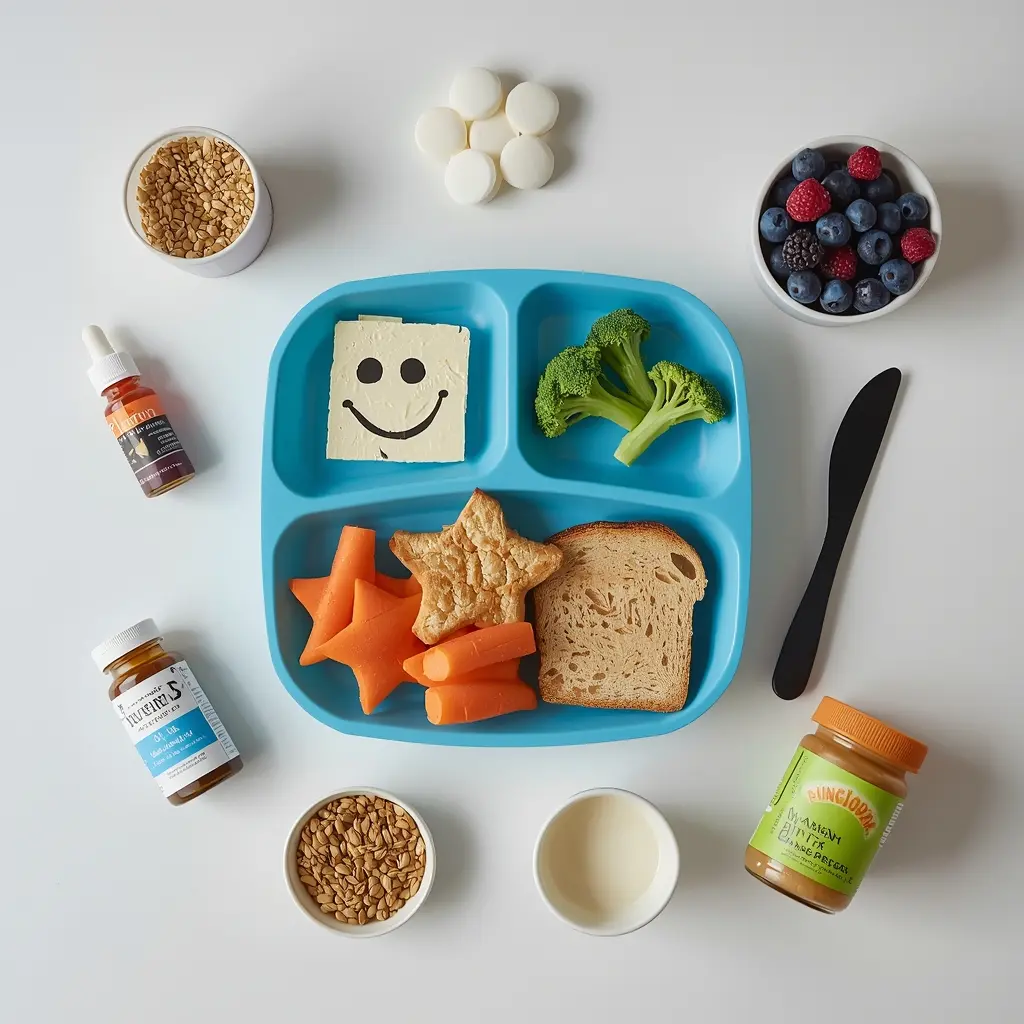
Kid-Friendly Meal Ideas for a Healthy Vegan Diet for Kids:
- Breakfasts: Banana-oat blender pancakes, fortified cereal with berries and plant milk, tofu scramble with peppers, smoothie “popsicles.”
- Lunches (Packable): Sunflower seed butter & jam sandwiches (nut-free for school), mini hummus and veggie wraps, thermos of vegan chili or pasta, “lunchable” style boxes with crackers, chickpea salad, and fruit.
- Dinners: Build-your-own taco or baked potato bar, “cheesy” pasta made with nutritional yeast and butternut squash sauce, lentil “meatballs” with spaghetti, vegetable and tofu fried rice, black bean burgers with sweet potato fries.
- Snacks: Apple slices with nut/seed butter, energy balls (dates, oats, cocoa), roasted chickpeas, popcorn with nutritional yeast, frozen peas or edamame.
The goal is to center meals around familiar formats and flavors while consistently introducing new whole-food ingredients.
Section 5: Navigating Social Situations: The Art of Grace and Preparation
A healthy vegan diet for kids exists within a social world. Preparation turns potential challenges into non-issues.
School: Request the cafeteria menu in advance. Many schools now offer plant-based options. If not, packing a lunch is the simplest solution. Communicate clearly and politely with school staff about your child’s dietary needs, framing it as a medical/ethical necessity to ensure they are not offered non-vegan foods.
Birthday Parties: The golden rule: never send a hungry child. Feed them before they go. For the party itself, proactive communication is key. A simple message to the host: “Just a heads-up, [Child’s Name] eats a plant-based diet. I’m happy to send along a vegan cupcake for them so you don’t have to worry about it!” This is almost always warmly received. You can also offer to bring a vegan dish to share, helping to normalize the food.
Grandparents & Extended Family: This requires a blend of education and boundary-setting. Explain your decision calmly, focusing on health and personal values. Provide a list of foods your child can eat, and offer to bring dishes to gatherings. If met with resistance, be kind but firm: “This is an important choice for our family’s health. We’d love your support.” For persistent issues, limit unsupervised meals until respect is established.
Sleepovers & Playdates: Teach your child simple, polite phrases: “I don’t eat meat or cheese, but I love fruit and crackers!” For sleepovers, communicate directly with the host parent and offer to provide easy-to-serve food, like a vegan pizza or snacks. Making it easy for others encourages inclusion.
Section 6: Handling Questions & Building Resilience
Children will face questions from peers. Equip them with simple, confident responses suitable for their age. A young child can say, “My family eats plants. I love my peanut butter sandwiches!” An older child might say, “I’m vegan. It’s better for animals and the planet.” Role-play these conversations at home. If bullying occurs, take it seriously and involve teachers. Connecting with other vegan families provides invaluable community support and normalcy for your child.
Section 7: The Picky Eater Phase: Patience and Persistence
Picky eating is a normal developmental stage, unrelated to veganism. The strategies for a healthy vegan diet for kids during this phase are consistent: keep offering a variety of foods without pressure, involve them in food preparation, make meals colorful and fun, and model enthusiastic eating yourself. The goal is to maintain a positive relationship with food. Sneaking vegetables into sauces or smoothies can ensure nutrient intake, but continue to offer them in their whole form as well.
Related Post: 15 Best Vegan Protein Sources
Section 8: When to Seek Professional Guidance
While a healthy vegan diet for kids is absolutely viable, professional guidance is invaluable. Consult a registered dietitian specializing in pediatrics and plant-based nutrition for a personalized plan. Schedule annual check-ups with a supportive pediatrician, including blood work for B12, ferritin, and Vitamin D. Red flags that warrant immediate attention include unexplained fatigue, poor growth or weight gain, frequent illnesses, or developmental delays. In these cases, a healthcare professional can help identify if the issue is dietary or something else.
Raising children on a healthy vegan diet for kids is a journey of love, education, and mindful planning. It fosters an early appreciation for wholesome food, compassion, and environmental stewardship. By focusing on nutrient density, celebrating delicious food, and navigating social dynamics with grace, you can confidently support your child’s journey to a vibrant, healthy life on plants. This guide to a healthy vegan diet for kids provides the roadmap—your family provides the love and joy.
P.S. For a no-stress way to start, I created a 28-Day Vegan Meal Plan that comes with all the grocery lists and nutrition info you’ll need. Get it here.
Want to try before you buy?
Enter your email below to get 2 free recipes instantly: