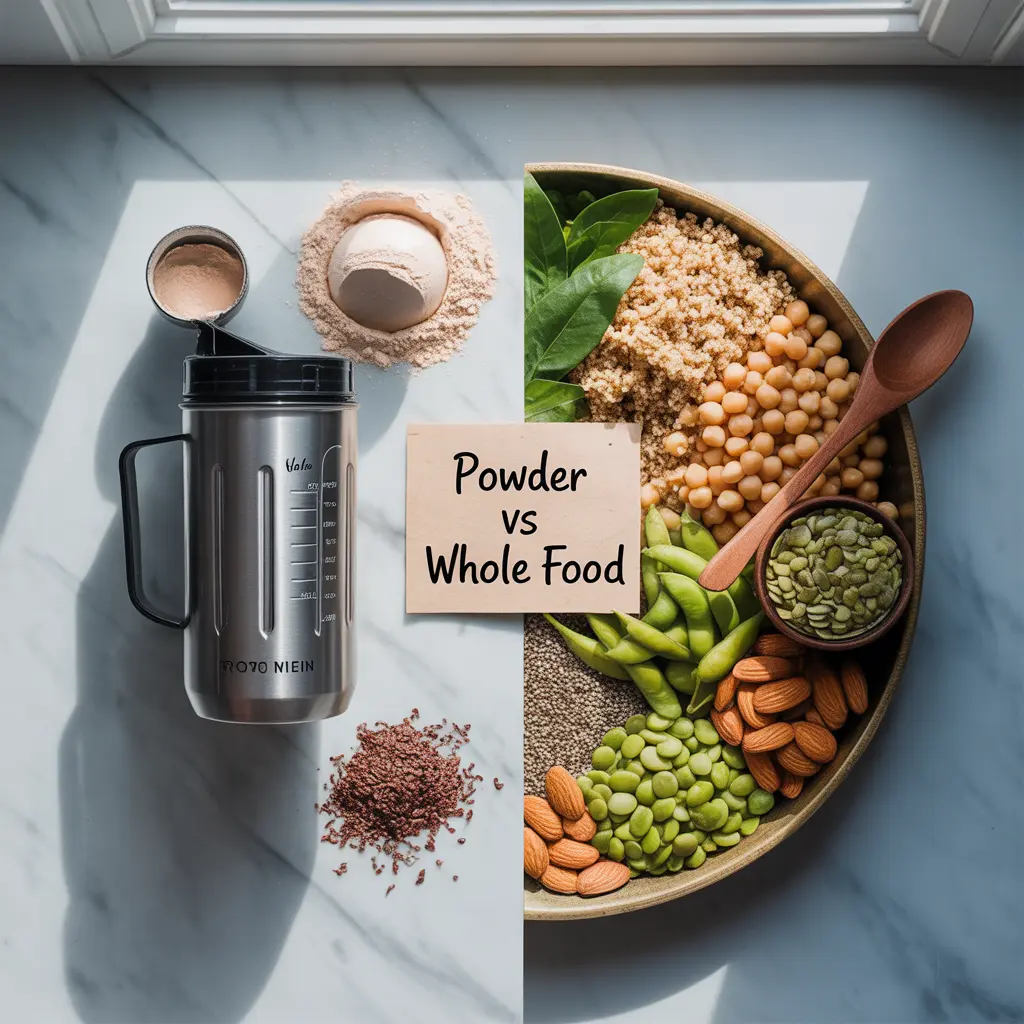
- Whole food protein wins on nutritional completeness, fiber, micronutrients, satiety, and long-term health outcomes. It should always form the foundation of a plant-based diet.
- Vegan protein powder wins on speed, convenience, and protein density per serving. It is a legitimate and useful tool when whole food sources are genuinely insufficient or impractical.
- The vegan protein powder vs whole food protein debate is a false either-or choice. The optimal approach for most people combines both strategically.
- Not all vegan protein powders are equal. Pea and rice protein blended together provides a complete amino acid profile that rivals whey. Single-source powders have amino acid gaps.
- If you are hitting your daily protein target through whole foods alone, you do not need a powder. If you are consistently falling short, a high-quality vegan protein powder is a smart, well-researched solution.
- Why the Vegan Protein Powder vs Whole Food Protein Question Matters
- The 8 Proven Differences That Define the Debate
- Complete Comparison: Nutrition, Cost, Convenience, and Performance
- The Best Whole Food Protein Sources Ranked
- How to Choose a Vegan Protein Powder That Actually Works
- Which Is Better for Your Specific Goal?
- Red Flags to Avoid When Buying Vegan Protein Powder
- Frequently Asked Questions
- The Verdict: What You Should Actually Do
The vegan protein powder vs whole food protein debate is one of the most searched questions in the plant-based fitness and nutrition world. Walk into any health food store and the powder wall is enormous. Open any vegan nutrition group online and someone is asking whether they really need a supplement or whether whole foods are enough. The confusion is understandable because both sides of this argument have real, legitimate points.
The truth is more nuanced than most content on this topic admits. Vegan protein powder vs whole food protein is not a battle where one side wins outright. It is a question of context, goals, budget, lifestyle, and nutritional completeness. This guide covers all of it with real data, honest comparisons, and a clear, practical verdict for every type of person reading this.
If you are still figuring out your baseline protein needs before diving into this comparison, our guide on vegan protein deficiency and how much you actually need is the right starting point.
Why the Vegan Protein Powder vs Whole Food Protein Question Matters More Than Most People Think
Protein is the most frequently under-consumed macronutrient on plant-based diets. Study after study on vegan and vegetarian populations consistently shows average protein intake falling below optimal levels for muscle maintenance, immune function, satiety, and metabolic health. This is not because plant foods lack protein. It is because the foods most new vegans default to, pasta, bread, rice, salads, and fruit, are not protein-rich.
The vegan protein powder vs whole food protein question matters because the answer determines how you build your daily eating strategy. Get it wrong and you spend money on supplements you do not need, or you undereat protein from whole foods and lose muscle mass while believing you are eating well.
Get it right and you have a clear, personalized protein framework that fits your budget, your schedule, and your specific health or performance goals. That is what this guide delivers.
The 8 Proven Differences That Define the Vegan Protein Powder vs Whole Food Protein Debate
Difference 1: Nutritional Completeness
This is the most important difference in the entire vegan protein powder vs whole food protein comparison, and it consistently favors whole foods. A serving of lentils does not just provide protein. It provides iron, folate, zinc, fiber, resistant starch, and a range of polyphenols. A serving of tempeh provides protein alongside bioavailable zinc, magnesium, gut-supporting prebiotic fiber, and isoflavones with cardiovascular and bone health benefits.
A scoop of vegan protein powder provides protein. Full stop. Most powders contain minimal fiber, minimal micronutrients, and no meaningful amounts of the bioactive compounds that make whole plant foods genuinely health-promoting beyond their protein content.
Verdict: Whole food wins decisively on nutritional completeness. This is non-negotiable.
Difference 2: Amino Acid Profile and Completeness
Both vegan protein powders and whole food proteins vary significantly in their amino acid completeness. In the vegan protein powder vs whole food protein comparison, this is where careful selection matters on both sides.
Single-source vegan protein powders are often nutritionally incomplete. Pure rice protein is low in lysine. Pure pea protein is lower in methionine and cysteine. These gaps are significant for muscle protein synthesis and overall health.
The solution in powder form is a pea and rice protein blend, which combined provides all nine essential amino acids in proportions comparable to whey protein. In whole food form, tofu, tempeh, edamame, and quinoa are complete proteins. Most legumes are incomplete but become complete when combined with grains, which happens naturally in traditional cooking across every culture on earth.
Verdict: Both can be complete with the right choices. Always choose pea plus rice blend in powder. Eat tofu, tempeh, and edamame as your whole food foundations.
Difference 3: Digestibility
The DIAAS score (Digestible Indispensable Amino Acid Score) is the most accurate current measure of protein quality in humans. In the vegan protein powder vs whole food protein comparison, the DIAAS data produces a result that surprises most people.
Pea protein isolate achieves a DIAAS of 0.82 to 0.93, which is excellent. But firm tofu achieves a DIAAS of approximately 0.93, which is equivalent or superior to many protein powders. Tempeh scores 0.88. These are whole, unprocessed soy foods that rival the digestibility of commercial protein supplements.
The practical implication: if you are choosing between tofu and protein powder for digestibility reasons, tofu is at least equal and comes with significantly more nutritional value.
Difference 4: Satiety and Weight Management
In the vegan protein powder vs whole food protein comparison for weight management, whole food wins by a meaningful margin. Solid food requires more chewing and more digestive processing, which triggers stronger satiety hormones including cholecystokinin and peptide YY. The fiber in whole food proteins further slows gastric emptying and prolongs the feeling of fullness.
A protein shake containing 25g of protein digests within 60 to 90 minutes and returns hunger relatively quickly. A meal of 150g of tempeh with vegetables containing 28g of protein keeps you full for three to four hours. The calorie counts may be similar but the hunger management is dramatically different.
For weight loss, the vegan protein powder vs whole food protein decision is clear: eat your protein, do not drink it, unless there is a compelling practical reason to do otherwise.
Difference 5: Cost Per Gram of Protein
The budget reality of the vegan protein powder vs whole food protein comparison is frequently misunderstood. Most people assume protein powder is cost-effective because it feels like a concentrated product. The data tells a different story for whole food sources.
Dried lentils cost approximately $0.01 to $0.02 per gram of protein, making them among the cheapest protein sources on earth regardless of dietary category. Dried chickpeas and black beans are similarly priced. Even firm tofu at $0.04 to $0.06 per gram of protein is competitive with or cheaper than most mid-range vegan protein powders.
Premium vegan protein powders from reputable third-party tested brands cost $0.05 to $0.10 per gram of protein. Budget bulk pea protein can get as low as $0.03 per gram, which is competitive. But for cost-conscious eaters, the vegan protein powder vs whole food protein comparison consistently favors whole plant foods as the primary protein strategy.
Difference 6: Heavy Metal Safety
This is the least discussed but most important safety consideration in the vegan protein powder vs whole food protein debate. Multiple independent laboratory analyses, most notably the Clean Label Project’s 2018 study of 134 protein powder products, found that many popular protein powders contained detectable levels of heavy metals including arsenic, lead, cadmium, and mercury.
Plant-based protein powders, particularly those made from brown rice protein, tested higher for arsenic and cadmium than whey-based products in several analyses. This is not a reason to avoid vegan protein powder entirely, but it is a compelling reason to buy only products that carry independent third-party testing certifications including NSF Certified for Sport, Informed Sport, or Labdoor verification.
Whole food plant proteins do not carry this risk at normal dietary serving sizes. This is a genuine advantage of whole food over powder that deserves more attention in the vegan protein powder vs whole food protein conversation.
Difference 7: Convenience and Practicality
This is where vegan protein powder wins without contest in the practical side of the vegan protein powder vs whole food protein comparison. A protein shake takes under two minutes to prepare. It requires no cooking, no refrigeration during preparation, no dishes, and no advance planning. It fits into a gym bag, a work bag, and a travel case.
These advantages are genuinely meaningful for people with demanding schedules, frequent travel, or post-workout windows where a full meal is not practical. Dismissing the convenience advantage of protein powder in a realistic vegan protein powder vs whole food protein assessment would be intellectually dishonest.
The key is to use this advantage for what it actually is: a convenience tool for specific situations, not a daily replacement for nutritionally complete whole food meals.
Difference 8: Environmental Impact
For the majority of people reading this, veganism is at least partly motivated by environmental values. The vegan protein powder vs whole food protein comparison has a clear environmental dimension that is rarely discussed.
Producing protein powder requires growing the source crop, processing it to isolate the protein, drying and packaging the powder, and shipping a processed product globally. Each of these steps adds to the carbon and water footprint compared to eating the source food in its whole form. Pea protein has the lowest environmental footprint among protein powders. Brown rice protein and soy protein concentrate have higher footprints due to processing requirements.
Whole plant foods, particularly legumes, have the lowest protein carbon footprint of any category including all processed plant supplements. Lentils fix atmospheric nitrogen and actually improve soil health. This environmental consistency with vegan values is another reason whole food should form the primary base of any plant-based protein strategy.
The table below is the most comprehensive side-by-side comparison of vegan protein powder vs whole food protein available in one place. Every meaningful category is covered with honest data. Screenshot it and use it as your permanent reference when making decisions about your protein strategy.
| Category | Vegan Protein Powder | Whole Food Protein | Winner | Practical Implication |
|---|---|---|---|---|
| Protein per serving | 20 to 30g per scoop (typically 30g scoop) | 8 to 25g per 100g depending on food (tofu 8g, tempeh 19g, seitan 25g) | Powder (density) | Powder delivers more protein in less physical volume, useful when appetite is low |
| Complete amino acid profile | Pea plus rice blend: complete. Single-source pea or rice: incomplete. | Tofu, tempeh, edamame, quinoa: complete. Most legumes: low in methionine. | Tie (depends on choice) | Always choose pea plus rice blend in powder. Combine legumes with grains in whole food meals. |
| Digestibility (DIAAS score) | Pea protein: 0.82 to 0.93. Rice protein: 0.59. Blended: approximately 0.9+ | Tofu: 0.93. Tempeh: 0.88. Lentils: 0.59. Seitan: 0.25 (low in lysine) | Tie | Tofu and tempeh rival the best protein powders in digestibility. Most people do not know this. |
| Fiber content | 0 to 2g per serving. Most powders are essentially fiber-free. | Lentils: 8g/100g. Tempeh: 7g/100g. Chickpeas: 7g/100g. Black beans: 8g/100g. | Whole food (decisive) | Fiber supports satiety, gut health, cholesterol, and blood sugar. Powder provides none of this. |
| Micronutrient density | Usually fortified with synthetic vitamins. Rarely provides meaningful amounts of minerals. | Lentils: iron, folate, zinc. Tofu: calcium, iron, zinc. Tempeh: zinc, magnesium, B vitamins. | Whole food (decisive) | Whole foods build nutritional completeness. Powder builds protein totals only. |
| Satiety per gram of protein | Low to medium. Liquid form digests quickly, returns hunger faster. | High. Solid food with fiber, fat, and protein together produces sustained fullness. | Whole food | For weight management, whole food protein keeps you fuller longer per calorie. |
| Speed of absorption | Fast. Liquid form enters bloodstream quickly. Peak amino acids within 60 to 90 minutes. | Slower. Solid food digests over 2 to 4 hours, providing a sustained amino acid release. | Powder (post-workout) | Post-workout, fast absorption gives a mild anabolic advantage. Irrelevant for sedentary use. |
| Leucine content | Pea protein: high leucine (around 8g per 100g protein). Good for muscle protein synthesis. | Tofu and tempeh: moderate leucine. Seitan: lower leucine. Edamame: moderate. | Powder (slight edge) | Leucine is the primary trigger for muscle protein synthesis. Pea protein has a real advantage here. |
| Cost per gram of protein | $0.03 to $0.08 per gram of protein depending on brand and quality. | Lentils: $0.01 to $0.02/g. Tofu: $0.04 to $0.06/g. Tempeh: $0.06 to $0.10/g. | Whole food (lentils, legumes) | Lentils and beans are the most cost-effective protein sources available anywhere. |
| Preparation time | Under 2 minutes. Scoop, blend, drink. | 15 to 45 minutes for most cooked sources. Batch cooking reduces this significantly. | Powder (convenience) | Powder is genuinely more convenient for busy schedules and post-workout windows. |
| Calorie efficiency | 120 to 140 kcal per 30g scoop at 20 to 25g protein. Very high protein-to-calorie ratio. | Lentils: 116 kcal per 100g at 9g protein. Tofu: 76 kcal at 8g. Seitan: 120 kcal at 25g. | Powder and seitan (tied) | Seitan rivals protein powder on calorie efficiency. Most people underuse seitan as a result. |
| Gut health impact | Neutral to mildly negative at high doses. Some people experience bloating from pea protein. | Strongly positive. Fiber in whole food proteins feeds gut bacteria and improves microbiome diversity. | Whole food (decisive) | Regular whole food protein consumption is one of the most important gut health strategies available. |
| Heavy metal risk | Real concern. Multiple independent tests (Clean Label Project) have found arsenic, lead, and cadmium in popular protein powders. Always buy third-party tested. | Minimal risk at normal serving sizes. Whole foods dilute any trace mineral exposure across a full meal. | Whole food | Always verify your protein powder carries NSF, Informed Sport, or Labdoor third-party certification. |
| Ingredient transparency | Variable. Some powders contain artificial sweeteners, gums, fillers, and flavoring agents with long-term unknown effects. | Complete transparency. You know exactly what you are eating. | Whole food | Choose unflavored or naturally flavored powders with the shortest ingredient lists. |
| Muscle building research | Strong evidence that pea protein produces comparable muscle gain to whey in resistance-trained individuals when leucine is sufficient. | Strong evidence that whole food plant protein from tofu, tempeh, and legumes supports muscle synthesis effectively when total intake is adequate. | Tie | Total daily protein is the primary driver of muscle building. Source matters less than quantity and consistency. |
| Long-term health evidence | Limited long-term data on protein powder consumption. No major red flags but evidence base is much thinner than whole foods. | Decades of research: high whole food plant protein intake associated with lower cardiovascular risk, lower cancer risk, better metabolic health. | Whole food (decisive) | The health evidence is built on whole food plant diets, not supplemented ones. |
| Portability | Excellent. Single-serve sachets, shaker bottle, mix anywhere. | Limited. Cooked food requires containers, refrigeration, and preparation. | Powder | Travel, work, and post-gym are the strongest use cases for powder over whole food. |
| Appetite impact for weight loss | Moderate. Protein shake reduces hunger but less effectively than a solid whole food meal of equal protein. | High. Solid food with fiber and protein together produces significantly stronger satiety signals. | Whole food | For weight loss, replace one whole food meal with a shake only when no alternative is practical. |
| Best for vegans new to plant-based eating | Useful as a short-term bridge while learning to cook and plan whole food protein meals consistently. | Ideal long-term foundation once cooking routines and meal prep habits are established. | Whole food (long-term) | Use powder as a learning tool, not a permanent shortcut. |
| Environmental impact | Higher than whole foods due to processing, packaging, and extraction. Pea protein is lower impact than soy or rice-based alternatives. | Lower. Whole plant foods have the smallest carbon footprint of any protein category, including processed plant foods. | Whole food | For those who care about environmental alignment with their vegan values, whole food protein is the clear choice. |
This table covers the complete picture. The vegan protein powder vs whole food protein comparison is not a simple win for either side across every category. The honest answer is that they serve different purposes and work best when combined intelligently. The right question is not which is better universally, but which is better for you, right now, in this specific situation.
For the complete picture of whole food plant protein sources with full nutrition data and serving guidance, our vegan protein sources guide ranks every major plant protein option with real numbers.
According to NDPI’s research on vegan protein powders, pea protein is currently the most well-studied and highest-performing plant-based protein powder, with multiple randomized controlled trials showing it produces comparable gains in muscle mass and strength to whey protein when total daily protein targets are met.
| Your Goal | Best Primary Choice | Best Supporting Choice | Daily Protein Target | Key Reason |
|---|---|---|---|---|
| Building muscle (active training) | Whole food: tofu, tempeh, seitan, edamame as daily base | Vegan protein powder post-workout or when daily target falls short | 1.6 to 2.2g per kg body weight | Total daily protein drives hypertrophy. Powder fills gaps efficiently after training. |
| Losing weight | Whole food: high-volume, high-fiber protein sources (lentils, tofu, edamame) | Powder only when a meal is genuinely not possible. Avoid replacing meals with shakes. | 1.2 to 1.6g per kg body weight | Whole food protein produces stronger satiety, preventing the compensatory eating that undermines calorie deficits. |
| General health and longevity | Whole food exclusively where possible | Powder as occasional convenience only | 0.8 to 1.2g per kg body weight | Long-term health evidence is built on whole food plant diets, not supplemented ones. |
| Athletic endurance | Whole food: carbohydrate-rich protein sources (lentils, quinoa, tempeh) | Powder post-training for fast recovery. Consider adding carbohydrate to the shake. | 1.2 to 1.6g per kg body weight | Endurance athletes need carbohydrate alongside protein. Whole food sources combine both naturally. |
| Budget eating | Whole food always: lentils, chickpeas, black beans, tofu | Bulk unflavored pea protein if needed (cheapest powder option) | Minimum 0.8g per kg | Lentils and legumes are the cheapest protein sources available anywhere on the planet. |
| Post-surgery or illness recovery | Powder may be primary if appetite and ability to eat solid food is reduced | Soft whole foods: silken tofu in smoothies, lentil soups, edamame | 1.2 to 2.0g per kg (higher with muscle wasting) | Reduced appetite and swallowing difficulty make liquid protein genuinely medically useful. Consult a dietitian. |
| Vegan over 50 | Whole food as primary base, prioritizing tofu, tempeh, lentils daily | Powder to bridge gaps where anabolic resistance makes higher intake necessary | 1.2 to 1.6g per kg minimum | Anabolic resistance increases with age. Consistent high protein from both sources together is the most effective strategy. |
| Busy schedule, frequent travel | Batch-cooked whole food meals at home as the default | Powder as a reliable on-the-go backup when batch meals are not available | Based on individual goals above | Powder’s portability is its strongest genuine advantage. Use it in the situations where whole food access is genuinely limited. |
For a complete system for hitting protein targets daily using primarily whole foods without complex meal planning, our guide on how to get 100g of protein on a vegan diet shows you exactly how to structure this across a full week.
And if you are building your protein strategy around a structured meal plan rather than ad hoc decisions, our 30-day vegan meal prep plan has the full protein allocation already calculated for every meal.
As explored in depth in NutritionFacts.org’s research on protein, whole food plant sources of protein consistently outperform isolated protein supplements on health outcome measures, particularly for cardiovascular health and all-cause mortality, while providing equivalent muscle-building results when total daily intake is equated.
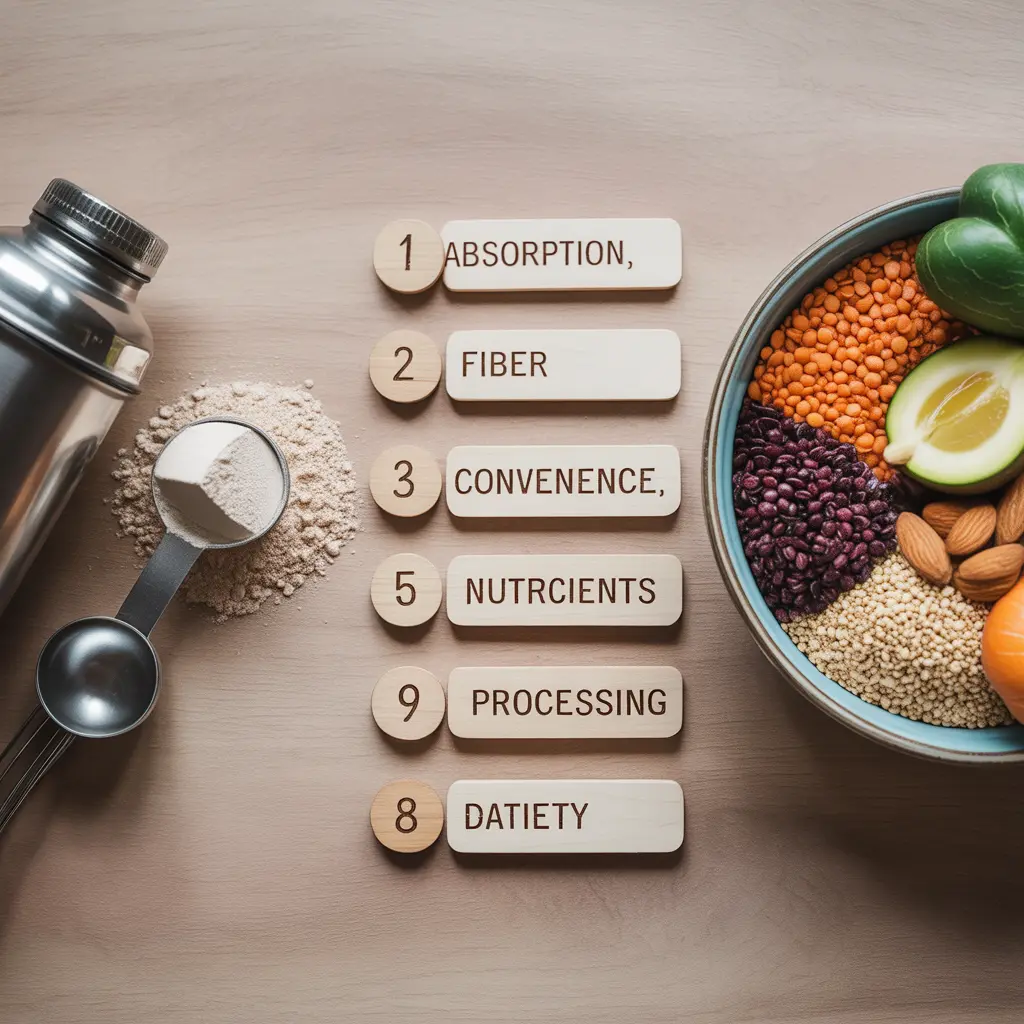
The Best Whole Food Protein Sources Ranked for the Vegan Protein Powder vs Whole Food Protein Decision
Understanding the vegan protein powder vs whole food protein comparison requires knowing exactly what whole food sources are genuinely available to you. Here are the top performers ranked by protein per 100g cooked weight:
Seitan: 25g protein per 100g. The highest whole food protein density available in plant-based eating. Rivalling chicken breast. Unsuitable for anyone with celiac disease or gluten sensitivity but extraordinary for everyone else.
Tempeh: 19g protein per 100g. Complete or near-complete amino acid profile. High in bioavailable zinc and magnesium due to fermentation. The most nutritionally dense soy product available.
Edamame: 11g protein per 100g. Complete protein. High in choline for brain health. Available frozen everywhere and ready in five minutes of steaming. Massively underused as a protein staple.
Black beans: 9g protein per 100g cooked. High fiber, high iron, high folate. One of the most nutritionally complete legumes available and one of the cheapest.
Lentils: 9g protein per 100g cooked. Highest iron content of any legume. Fast-cooking. No soaking required. The most accessible whole food protein source in the vegan protein powder vs whole food protein comparison.
Firm tofu: 8g protein per 100g. Complete protein when calcium-set. Up to 350mg calcium per 100g. Versatile across every cuisine. The most widely available plant protein globally.
When you look at these numbers in the context of the vegan protein powder vs whole food protein debate, it becomes clear that reaching 80 to 120g of protein daily through whole foods is entirely achievable with deliberate meal planning. A 150g serving of seitan at dinner alone provides 37g of protein. That is more than a standard protein powder serving.
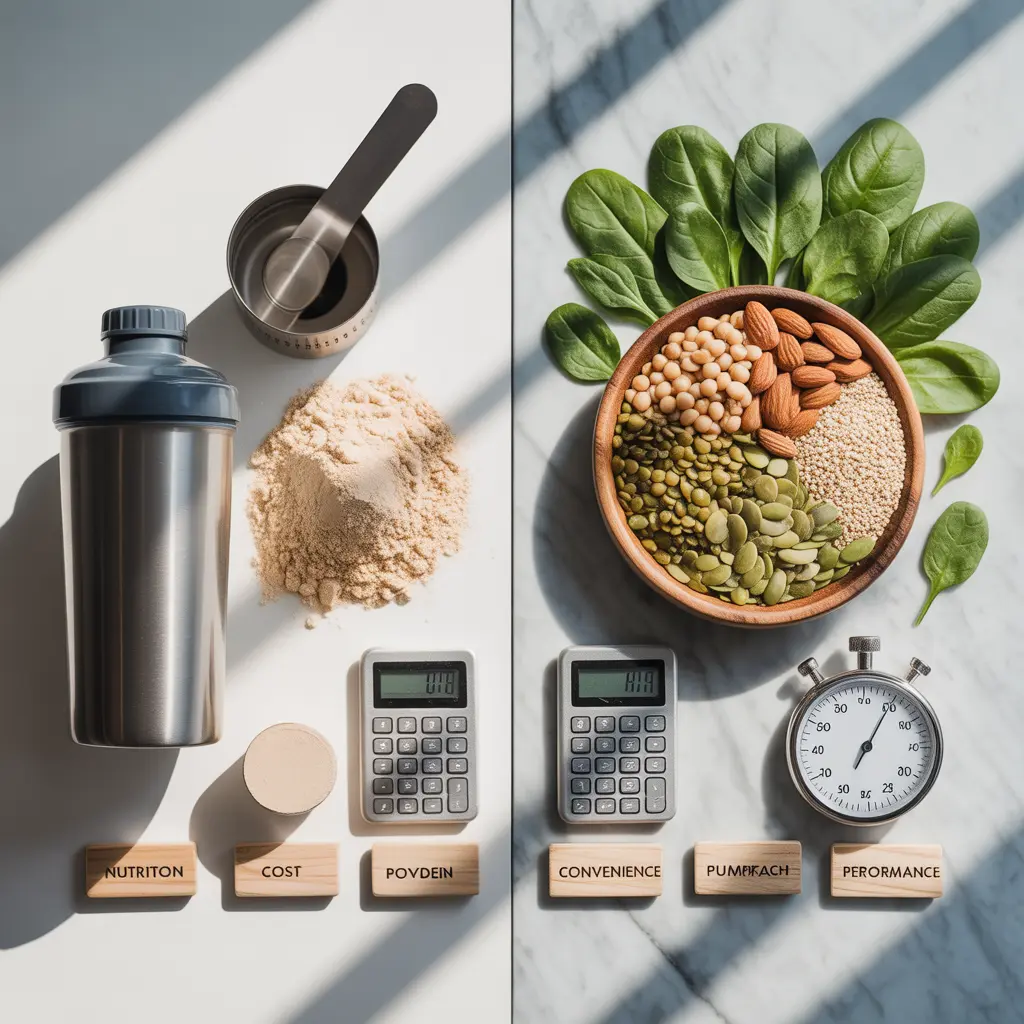
How to Choose a Vegan Protein Powder That Actually Works
If the vegan protein powder vs whole food protein analysis leads you to conclude that a powder is genuinely useful for your situation, choosing correctly is critical. The market is flooded with products ranging from genuinely excellent to actively problematic.
Step 1: Choose a Pea and Rice Protein Blend
Single-source pea or rice protein powders have amino acid gaps. A 70 to 80 percent pea and 20 to 30 percent rice blend provides a complete amino acid profile that rivals whey on every measure. This is the most important powder selection criterion in the entire vegan protein powder vs whole food protein evaluation process.
Step 2: Verify Third-Party Testing
Only buy vegan protein powder certified by NSF Certified for Sport, Informed Sport, or verified by Labdoor independent testing. These certifications confirm the product contains what the label claims, does not contain banned substances, and has been screened for heavy metals. No certification means no purchase.
Step 3: Read the Ingredient List
A high-quality vegan protein powder has a short ingredient list. The shorter, the better. Look for: pea protein isolate, brown rice protein concentrate, natural flavoring, and perhaps a sweetener. Avoid: artificial sweeteners, carrageenan, excessive gums, synthetic dyes, and proprietary blends that hide individual ingredient doses behind a combined total.
Step 4: Check the Leucine Content
Leucine is the primary amino acid that triggers muscle protein synthesis. Per 25g of protein, a high-quality pea and rice blend should provide at least 2g of leucine. This is the threshold associated with maximal anabolic signaling. Some lower-quality plant protein blends fall below this threshold, which limits their effectiveness for muscle building in the vegan protein powder vs whole food protein comparison.
Red Flags to Avoid When Buying Vegan Protein Powder
The supplement industry is less regulated than the food industry. In the context of the vegan protein powder vs whole food protein decision, knowing what to avoid is as important as knowing what to look for.
Proprietary blends. These list ingredients without revealing individual amounts. You cannot evaluate dosing, quality, or effectiveness. Avoid any powder that uses proprietary blend language on the label.
Very high protein claims per serving. If a 30g scoop claims 28g of protein, that is 93 percent protein by weight, which is chemically implausible for a clean product. Nitrogen spiking (adding cheap amino acids like taurine or glycine to inflate the protein reading on amino acid tests) is a documented problem in the powder industry. Legitimate pea and rice blends provide 20 to 24g of protein per 30g scoop.
No third-party testing certification. As covered above, this is a non-negotiable red flag in any vegan protein powder vs whole food protein supplement evaluation.
Single-source rice protein as the primary protein. Rice protein alone is low in lysine and consistently tests higher for arsenic contamination than pea protein. It should always be the secondary protein in a blend, not the primary one.
Frequently Asked Questions About Vegan Protein Powder vs Whole Food Protein
Is vegan protein powder as effective as whey for building muscle?
Yes, when you choose the right type. In the vegan protein powder vs whole food protein context, pea and rice protein blends have been directly compared to whey in randomized controlled trials. Studies show equivalent gains in muscle mass and strength when total daily protein intake is matched. The key is choosing a complete pea plus rice blend rather than a single-source powder, and consistently hitting your daily protein target. See our vegan bodybuilding meal plan for the full muscle-building protein strategy.
Do I need vegan protein powder if I eat tofu and lentils every day?
Probably not. If your daily meals consistently include tofu, lentils, tempeh, edamame, and other plant protein sources and you are meeting your daily protein target through whole foods, vegan protein powder adds no nutritional benefit. Track your protein intake for seven days using Cronometer. If you are consistently hitting your target through whole foods in the vegan protein powder vs whole food protein comparison, save the money.
What is the best vegan protein powder to buy?
Look for a pea and rice protein blend with third-party testing certification from NSF, Informed Sport, or Labdoor. Short ingredient list, no proprietary blends, and at least 20g of protein per 30g scoop. In the vegan protein powder vs whole food protein comparison, the powder you choose matters as much as whether you choose to use one at all. Brands that consistently rank highly in independent testing include Naked Pea, KOS, and Garden of Life Sport.
Can I replace meals with vegan protein shakes?
Not as a regular habit. In the vegan protein powder vs whole food protein debate, replacing whole food meals with shakes consistently trades fiber, micronutrients, satiety, and long-term health benefits for convenience. The exception is recovery from illness or surgery where appetite and solid food tolerance are genuinely limited. For everyday use, a shake works best as a supplement to whole food meals, not as a replacement for them.
Is vegan protein powder safe to use every day?
Yes, for most healthy adults, one to two servings of a high-quality third-party tested vegan protein powder daily is safe. The primary safety consideration in the vegan protein powder vs whole food protein comparison is heavy metal accumulation from poor-quality powders at high doses over extended periods. Always buy certified products and do not rely on powders for more than 30 to 40 percent of your daily protein intake. Keep whole foods as your primary protein foundation.
The Verdict: What You Should Actually Do
The vegan protein powder vs whole food protein debate ends with a clear, practical verdict that most content on this topic avoids giving. Here it is:
Build your protein foundation entirely from whole foods. Tofu, tempeh, seitan, edamame, lentils, chickpeas, and black beans should provide 70 to 80 percent of your daily protein. These foods are nutritionally superior, cost-effective, more satiating, gut-supportive, and backed by decades of health outcome research.
Add a vegan protein powder strategically when whole foods are genuinely insufficient. Post-workout within 30 to 60 minutes when a meal is not practical. When traveling and whole food access is limited. When your daily protein target is consistently falling short despite good meal planning. Always choose a certified pea and rice blend.
Never use protein powder as a daily meal replacement. Every time you swap a whole food meal for a shake, you lose fiber, micronutrients, satiety, gut health benefits, and the cumulative long-term health advantages of a whole food plant-based diet.
The vegan protein powder vs whole food protein question has a clear hierarchy. Whole foods first, always. Powder as a smart, selective supplement when the situation genuinely calls for it. That combination, executed consistently, covers everything your body needs from protein on a plant-based diet.