
Vegan Supplements: The Proven Daily Stack That Works
Vegan supplements are the single most misunderstood and misapplied tool in plant-based nutrition. Some vegans take nothing and risk preventable deficiencies. Others spend $100+ monthly on bottles their bodies do not need and cannot use. The confusion is expensive, wasteful, and dangerous. This guide gives you the complete evidence-based supplement protocol: the five essential supplements every vegan requires, the four conditional supplements based on your specific diet and blood work, exact dosing by form and timing, absorption science, and a goal-based stack that costs under $15 monthly for the complete foundation.
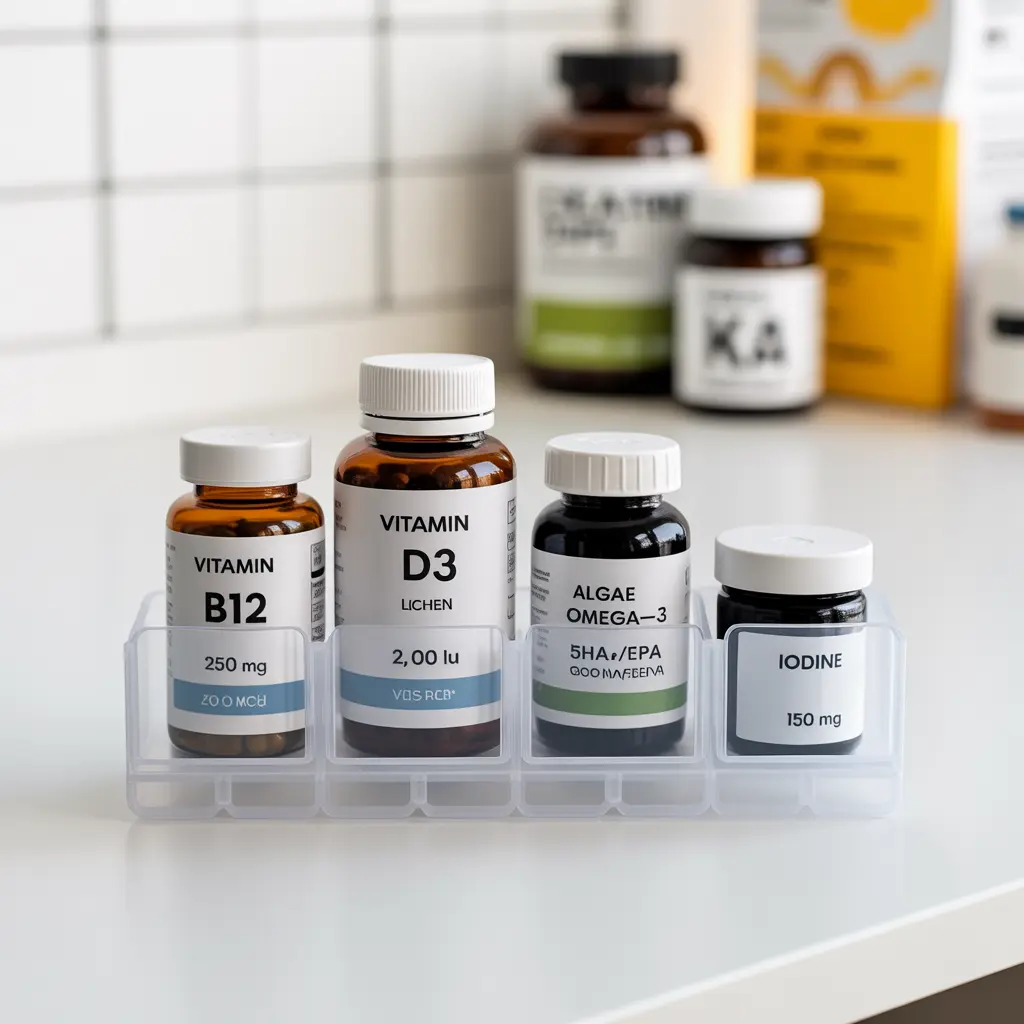
This guide to vegan supplements covers the five non-negotiable supplements (B12, vitamin D3, EPA/DHA omega-3, iodine, and magnesium for many), four conditional supplements based on individual needs (iron, zinc, calcium, and creatine), exact dosing protocols with forms and timing, absorption blockers and enhancers, a blood test guide, and a complete stack organised by health goal. The essential daily stack costs $8 to $15 per month. No vegan should skip B12. No vegan should guess about the rest.
Why Supplements Are Non-Negotiable on a Vegan Diet
The scientific consensus on vegan supplements is clear and uncontroversial among nutrition researchers: certain nutrients are either absent from plant foods (B12), inadequately synthesised from plant precursors (EPA/DHA), or present in forms with substantially lower bioavailability (iron, zinc). A systematic review of vegan nutrition (Pawlak et al., 2013, Nutrition Reviews) documented that 80-90% of unsupplemented vegans have serum B12 levels below optimal range, with measurable neurological and haematological consequences.
These figures are not arguments against vegan diets. They are arguments for strategic supplementation. The difference between a deficient vegan and a thriving vegan is not the dietary pattern. It is the presence or absence of a small number of targeted supplements. The cost of complete protection is under $15 per month. The cost of deficiency includes fatigue, neurological damage, bone loss, and increased cardiovascular risk from elevated homocysteine.
The 5 Essential Vegan Supplements (Everyone Needs These)
The hierarchy of vegan supplements begins with five nutrients that cannot be reliably obtained from a whole-food plant-based diet without supplementation or extraordinary dietary measures. The ranking below shows priority level based on deficiency prevalence and clinical consequences.
1. Vitamin B12 (Cyanocobalamin) — Non-Negotiable
No plant food provides reliable B12. The B12 supplementation protocol requires either 25-50mcg daily or 2,000mcg weekly. Cyanocobalamin is the preferred form over methylcobalamin due to superior stability and evidence base. B12 deficiency causes peripheral neuropathy, cognitive impairment, and elevated homocysteine (a cardiovascular risk factor independent of cholesterol). Every vegan must supplement B12. This is not optional.
2. Vitamin D3 (Vegan Lichen Source) — Essential for Most
Vitamin D3 from lichen is the vegan equivalent of lanolin-derived D3. The recommended daily intake is 600 IU (15mcg) for adults up to 70, and 800 IU (20mcg) for older adults. However, most adults require 1,000-2,000 IU daily to maintain optimal serum levels (30-50 ng/mL), particularly in winter or at latitudes above 37 degrees. Vitamin D regulates calcium absorption, immune function, and mood. Deficiency is common across all dietary patterns, but vegans have fewer dietary sources.
3. EPA/DHA Omega-3 (Algal Oil) — Essential for Brain Health
Plant-based ALA from flax and chia converts to EPA at 5-10% and to DHA at 2-5%. Algal oil provides pre-formed EPA and DHA identical to fish oil, sourced from marine algae. Recommended intake: 200-300mg combined EPA/DHA daily for general health, 500-1,000mg for pregnancy or neurological conditions. DHA is critical for brain structure, retinal function, and anti-inflammatory signalling.
4. Iodine — Essential for Thyroid Function
Iodine from iodised salt or kelp supports thyroid hormone production. The RDA is 150mcg for adults. Half a teaspoon of iodised salt provides this. If you avoid salt or use sea salt exclusively, supplement with 150mcg potassium iodide or 1-2 drops of liquid kelp (standardised to 150mcg per drop). Excess iodine from uncontrolled kelp supplements is dangerous. Use standardised doses only.
5. Magnesium — Recommended but Conditional on Diet
Whole plant foods (legumes, nuts, seeds, leafy greens) are rich in magnesium. However, soil depletion and food processing reduce content. Magnesium status in vegans is often adequate but varies widely. Supplement 200-300mg daily if you experience muscle cramps, poor sleep, constipation, or have a high-stress lifestyle. Magnesium glycinate or citrate are preferred over oxide (poor absorption).
The 4 Conditional Supplements (Need Depends on Your Diet)
Not all vegan supplements are universal. The following four supplements are necessary only for specific individuals based on blood work, life stage, or dietary patterns.
1. Iron — Only If Blood Tests Confirm Deficiency
Vegan iron sources (lentils, beans, tofu, pumpkin seeds, dark leafy greens) provide adequate iron for most adults. However, menstruating women, pregnant women, endurance athletes, and individuals with gastrointestinal conditions have higher requirements. Never supplement iron without a blood test confirming low ferritin. Excess iron is pro-oxidant and damages tissues. The therapeutic dose for deficiency is 25-50mg elemental iron with vitamin C. Re-check ferritin after three months to avoid overload.
2. Zinc — For Low Dietary Intake or Poor Absorption
Zinc from plant foods has lower bioavailability due to phytates. Vegans who consume high-phytate diets (large amounts of unprocessed grains and legumes without soaking or sprouting) may have suboptimal zinc status. Signs include hair thinning, poor wound healing, and frequent infections. Supplement 15-30mg zinc picolinate or citrate daily, ideally taken away from high-phytate meals. Re-check status after three months.
3. Calcium — For Low Intake or High Risk of Deficiency
Vegans consuming calcium-set tofu, fortified plant milks, tahini, kale, and almonds typically meet the 1,000mg RDA. Those avoiding all fortified products may fall short. Supplement 300-500mg calcium citrate (not carbonate, which requires stomach acid for absorption) if dietary intake is consistently below 600mg daily. The bone health protocol for vegans emphasises calcium intake alongside vitamin D.
4. Creatine — For Cognitive or Athletic Performance Goals
Creatine is stored in muscle and brain. Vegans have lower baseline creatine stores than omnivores because dietary creatine comes exclusively from animal products. Supplementing 3-5g daily of creatine monohydrate improves strength output, high-intensity exercise performance, and working memory in vegans. This is optional for general health but highly beneficial for athletes and older adults concerned with cognitive decline.
Dosing, Timing and Form: Getting It Right
The efficacy of vegan supplements depends not only on what you take but on dose, chemical form, and timing relative to meals. The wrong form or timing can reduce absorption by 50-80%.
Form Matters: What to Buy and What to Avoid
- B12: Cyanocobalamin (methylcobalamin is less stable and less studied). Sublingual tablets or capsules. 25-50mcg daily or 2,000mcg weekly.
- Vitamin D3: Vegan lichen-derived cholecalciferol (not D2 from ergocalciferol, which is less potent). Capsules or liquid drops. 1,000-2,000 IU daily.
- EPA/DHA: Algal oil in enteric-coated capsules to prevent fishy burps. Look for at least 200mg combined EPA/DHA per serving.
- Iodine: Potassium iodide drops or tablets at 150mcg. Avoid uncontrolled kelp products with variable iodine content.
- Magnesium: Glycinate (best absorption, no laxative effect) or citrate (good absorption, mild laxative effect). Avoid oxide.
- Iron: Ferrous bisglycinate (best tolerated) or ferrous sulfate (cheaper but more GI side effects). Always with vitamin C.
- Zinc: Zinc picolinate or citrate (best absorption). Avoid zinc oxide.
- Creatine: Creatine monohydrate powder or capsules. No advantage to “buffered” or “micronised” forms beyond convenience.
What Your Blood Test Should Show Before You Supplement
For vegan supplements targeting iron, zinc, B12, and vitamin D, blood testing before supplementation is the difference between precision medicine and guesswork. The complete vegan blood test guide covers optimal ranges and testing frequency in detail.
Essential Markers for Vegans (Test Annually)
- Serum B12: Optimal 300-800 pg/mL. Below 200 is deficient. Between 200-300 is borderline. Elevated B12 (>1,000) from supplementation is harmless but indicates excess dose.
- Vitamin D (25-hydroxy): Optimal 30-50 ng/mL. Below 20 is deficient. Below 30 is insufficient. Above 50 provides no additional benefit.
- Ferritin (iron stores): Optimal 30-100 mcg/L for premenopausal women, 50-150 for men and postmenopausal women. Below 15 is deficient. Ferritin above 200 suggests iron overload.
- Complete Blood Count (CBC): Checks for anaemia (low haemoglobin). MCV elevated suggests B12 or folate deficiency. MCV low suggests iron deficiency.
- Homocysteine: Optimal under 10 mcmol/L. Elevated homocysteine indicates B12 or folate deficiency and increases cardiovascular risk independent of cholesterol.
When to Test More Frequently
Pregnancy, known deficiency with supplementation, gastrointestinal disorders, or symptoms of deficiency warrant testing every 3-6 months. Otherwise, annual testing is sufficient for stable, well-supplemented vegans.
Tired of overthinking your meals?
What’s included in your download
- 28-Day Meal Plan
- 4 Weekly Grocery Lists
- Balanced Nutrtion, protein, iron, B12
- Under $1 Per Serving
- 90-Min Sunday Prep
- Vegan Swaps Guide
- Nutrition Toolkit
- Beginner Action Plan
- Dining Out Guide
- 36 Chef Recipes
Instant PDF download. No subscriptions.
Supplement Interactions and Absorption Blockers
Taking vegan supplements incorrectly can render them useless or even harmful. The chart below shows common blockers and enhancers for each key nutrient.
The Most Common Mistakes
Mistake 1: Taking iron with morning coffee. Coffee tannins reduce iron absorption by 50-80%. Take iron with vitamin C (orange juice, a bell pepper, or a vitamin C tablet) at least one hour before or two hours after coffee.
Mistake 2: Taking calcium and magnesium together in a single pill. They compete for absorption. Take them at separate meals or at opposite ends of the day.
Mistake 3: Taking vitamin D without dietary fat. Vitamin D is fat-soluble. A glass of water will not absorb it. Take with a meal containing at least 5-10g of fat.
Mistake 4: Taking B12 and high-dose vitamin C at the same time. Vitamin C degrades B12 in the digestive tract. Separate them by at least two hours.
28-Day Vegan Meal Plan + Grocery list.
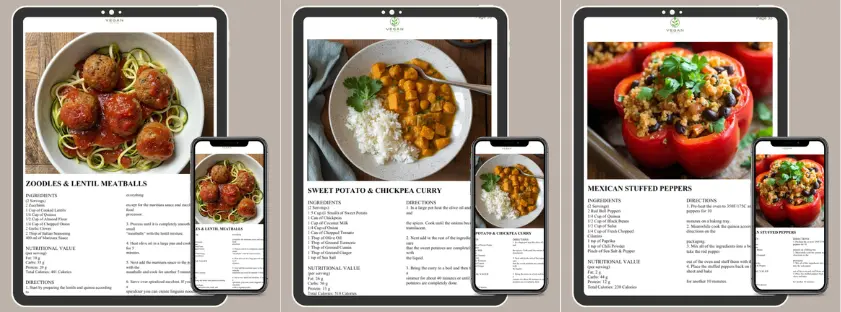
Transform your lifestyle with our comprehensive guide. This isn’t just a recipe book; it’s a complete system designed for success:
- 28-Day Meal Plan every meal, nothing to figure out
- 4 Weekly Grocery Lists sorted by aisle, saves money
- Balanced Macros protein, iron and B12 daily
- Under $1 Per Serving eat well on any budget
- 90-Min Sunday Prep one session, whole week fed
- Vegan Swaps Guide meat, dairy and eggs replaced
- Nutrition Toolkit protein targets and dining guide
- 36 Chef Recipes every meal photographed
The Complete Vegan Supplement Stack by Goal
Different goals require different vegan supplements. The stacks below start from the essential foundation (B12 + D3 + iodine + algal oil) and add conditional supplements based on the specific outcome.
Ingredient Spotlight: Cyanocobalamin (B12) — The Most Critical Single Supplement
No other supplement on this list is non-negotiable for every vegan. This one is. A 1,000mcg cyanocobalamin tablet taken twice weekly costs under $5 per year and completely eliminates B12 deficiency risk. The same investment in methylcobalamin or fortified foods may not provide the same protection.
Every vegan who supplements B12 adequately has normal B12 status. Every vegan who does not is at documented risk of deficiency. The evidence is as clear as any nutritional recommendation can be.
Foundation Stack (Every Vegan)
- B12 (cyanocobalamin): 25-50mcg daily or 2,000mcg weekly
- Vitamin D3 (lichen): 1,000-2,000 IU daily (1,500 IU average)
- Iodine: 150mcg daily (or ½ tsp iodised salt)
- EPA/DHA (algal oil): 200-500mg combined daily
- Monthly cost: $8-15
Athletic Performance Stack
- Foundation stack
- Creatine monohydrate: 3-5g daily
- Iron: only if ferritin below 30 mcg/L (test first)
- Zinc picolinate: 15-30mg if diet low in pumpkin seeds/legumes
- Monthly cost: $12-22
Pregnancy and Lactation Stack
- Foundation stack with higher DHA: 500-1,000mg algal oil daily
- Iron: 25-50mg elemental iron (most prenatal vitamins include this)
- Zinc: 15-20mg
- Calcium: only if dietary intake below 800mg daily
- Monthly cost: $15-25 (often covered by prenatal vitamin)
- Note: Consult your obstetrician before adding any supplement beyond a standard vegan prenatal.
Bone Health Stack (Older Adults)
- Foundation stack with higher D3: 2,000 IU daily
- Calcium citrate: 300-500mg if dietary intake below 800mg
- Magnesium glycinate: 200-300mg daily
- Vitamin K2 (MK-7): 100mcg daily (optional, emerging evidence)
- Monthly cost: $12-20
Cognitive Health and Mood Stack
- Foundation stack
- Creatine monohydrate: 5g daily (working memory and executive function)
- Magnesium glycinate: 300mg in evening (sleep quality)
- Monthly cost: $10-18
Chef’s Perspective: Food-First vs. Supplement Strategy Across MENA and the Mediterranean
In more than twenty years cooking across professional kitchens in MENA and Mediterranean regions, I have learned that the best supplement is a well-constructed meal. A bowl of lentil and tomato soup delivers iron and vitamin C together, quadrupling absorption without a pill. A daily tablespoon of ground flaxseed stirred into oatmeal provides ALA omega-3 without an algal oil capsule. A pinch of iodised salt in every pot of beans maintains thyroid function without a supplement.
This is not an argument against supplements. B12 cannot be obtained from plants. DHA conversion from ALA is too inefficient for most people to rely on flax alone. Iodine from sea salt is non-existent. The correct framework is food first, then supplement the gaps. My kitchen always has iodised salt on the pass, ground flaxseed in the dry store, and B12 supplements in the staff locker. The question is not “food or supplements”. The question is “which supplements are still necessary after optimising food”.
Three food-first rules that reduce supplement dependence: (1) Use iodised salt, not sea salt or pink Himalayan salt. (2) Add ground flaxseed or chia seeds daily to oatmeal, smoothies, or bread dough. (3) Pair iron-rich legumes with vitamin C-rich vegetables in every dish. These three rules eliminate the need for iodine, omega-3, and iron supplements for most people, leaving only B12 and D3 as universal requirements.
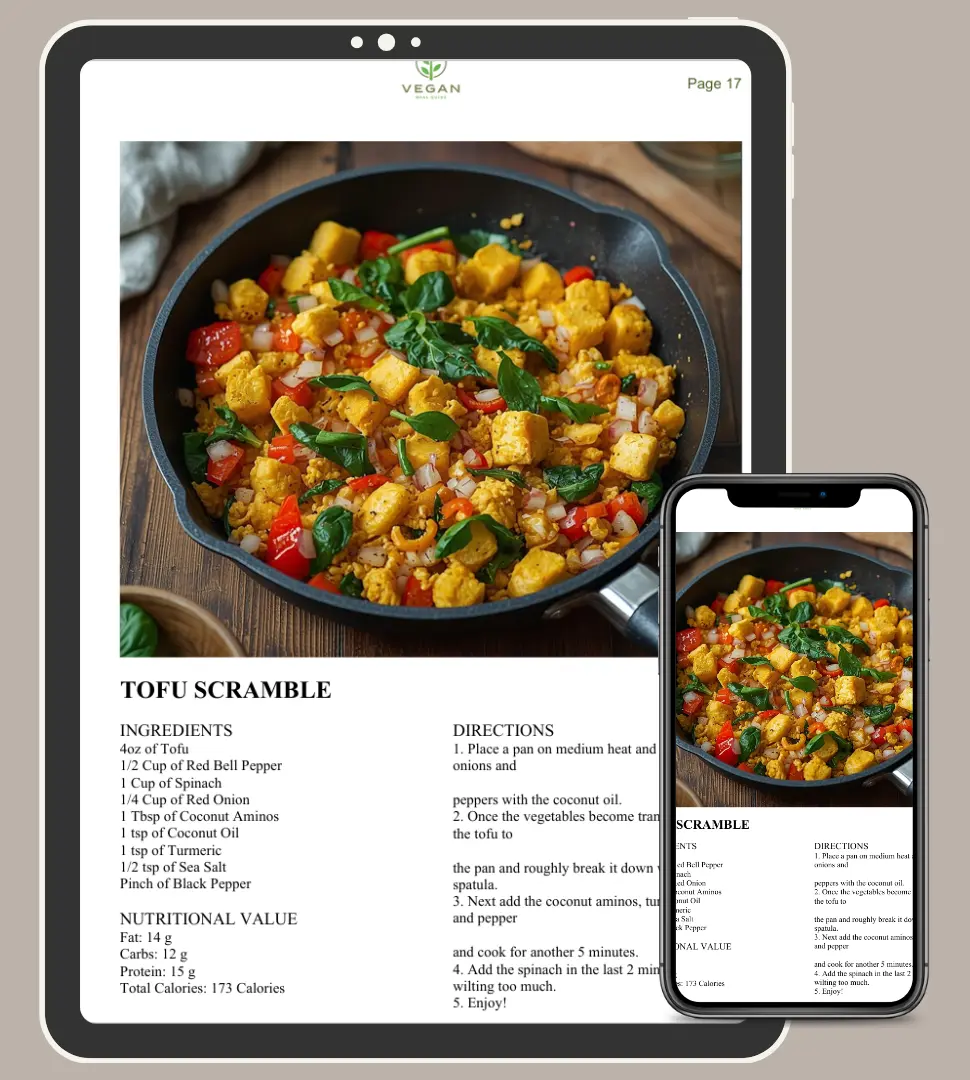
Everything I know about building nutrient-dense, flavourful vegan meals that minimise supplement dependence is applied directly inside the Ultimate 28-Day Vegan Meal Plan + Grocery List (Complete Solution), with nutritionist-approved recipes that ensure every meal meets protein, iron, and B12 needs, simple recipes with common supermarket ingredients, and family-friendly meal prep made easy.
Frequently Asked Questions About Vegan Supplements
Do all vegans really need to take B12 supplements?
Yes. This is the single most consistent finding in vegan nutrition research. No plant food provides reliable B12. Fortified foods (nutritional yeast, plant milks) have variable fortification levels and are consumed inconsistently. A cyanocobalamin supplement at 25-50mcg daily or 2,000mcg weekly completely eliminates deficiency risk at a cost of under $5 per year. There is no evidence-based argument against universal B12 supplementation for vegans.
What is the difference between D2 and D3 for vegans?
Vitamin D2 (ergocalciferol) is derived from yeast and is always vegan. Vitamin D3 (cholecalciferol) is typically derived from lanolin (sheep’s wool) and is not vegan. However, vegan D3 from lichen is now widely available and is the preferred form. D3 is approximately 3 times more potent than D2 on a per-IU basis and maintains serum levels longer. Vegans should take vegan D3 from lichen, not D2.
What is the easiest way to follow a complete vegan supplement routine?
The simplest approach is a combined B12 + D3 + iodine tablet taken daily with breakfast, plus an algal oil EPA/DHA capsule taken with your largest meal. This covers all essential gaps in under 10 seconds per day. The Ultimate 28-Day Vegan Meal Plan + Grocery List (Complete Solution) includes nutritionist-approved recipes that ensure every meal meets protein, iron, and B12 needs, but supplementation is still required for full protection.
Can I get enough omega-3 from flaxseed instead of algal oil?
Flaxseed provides ALA, which converts to EPA at 5-10% and to DHA at 2-5%. For general health, high ALA intake may be sufficient. For pregnancy, cognitive health, or inflammatory conditions, direct DHA from algal oil is recommended. If you choose ALA-only, consume 2-3 tablespoons of ground flaxseed or chia seeds daily. Whole flaxseed passes through undigested.
How do I know if my B12 supplement is actually working?
Blood testing is the only definitive answer. Three months after starting supplementation, request serum B12. Optimal range is 300-800 pg/mL. If levels are above 300, your dose and form are adequate. If below 300, increase dose or switch from methylcobalamin to cyanocobalamin. Many methylcobalamin supplements fail to raise B12 levels adequately in some individuals.
Can I take all my vegan supplements at the same time?
No. Iron and calcium block each other. Calcium and zinc block each other. B12 and high-dose vitamin C should be separated. Take B12, D3, and iodine together with breakfast. Take algal oil with a fat-containing meal (lunch or dinner). Take magnesium in the evening. Take iron and zinc on an empty stomach away from calcium, coffee, and tea. A single morning pill for everything will not work optimally.
Are vegan multivitamins worth buying?
Some are. A vegan multivitamin that contains B12, D3, iodine, and zinc at appropriate doses can simplify your routine. However, most vegan multis contain insufficient B12 (under 10mcg), D2 instead of D3, and no algal oil. Read labels carefully. A well-formulated vegan multi plus separate algal oil is a reasonable approach. The cheapest approach is separate B12, D3, and iodine tablets plus algal oil, costing $8-12 monthly.
Do I need to take iron supplements as a vegan woman?
Not automatically. Menstruating women have higher iron requirements, but many vegan women meet these through diet alone. Lentils (18g protein, 6.6mg iron per cup cooked), tofu (3.4mg per half block), pumpkin seeds (2.5mg per ounce), and fortified cereals add up. Test ferritin before supplementing. If ferritin is below 30 mcg/L, supplement 25-50mg iron with vitamin C. If ferritin is above 50, dietary sources are sufficient.
What are the signs of B12 deficiency in vegans?
Early signs: fatigue, pale skin, shortness of breath, heart palpitations. Later signs: tingling or numbness in hands and feet (peripheral neuropathy), memory problems, difficulty walking, mood changes (depression, irritability), and smooth tongue. B12 deficiency causes irreversible neurological damage if untreated. Do not wait for symptoms. Supplement preventively.
Can I get enough calcium from plants without supplements?
Yes, with intention. Calcium-set tofu (300-400mg per serving), fortified plant milk (300mg per cup), tahini (130mg per tablespoon), kale (100mg per cup cooked), and almonds (75mg per ounce) add up. A daily routine of fortified milk in oatmeal (300mg), calcium-set tofu in lunch (350mg), and tahini dressing on dinner (130mg) reaches 780mg before including other sources. The RDA is 1,000-1,200mg. Supplement only if dietary intake is consistently below 600-800mg.
Should I take creatine as a vegan athlete?
Yes, if your goal is maximal strength, power, or cognitive performance. Vegans have lower baseline creatine stores than omnivores. Supplementing 3-5g daily of creatine monohydrate increases muscle creatine stores to omnivore baseline or higher, improving high-intensity exercise capacity by 5-15% and working memory performance. Creatine is optional for general health but is one of the most evidence-supported supplements for athletic vegans.
How much should I expect to spend monthly on vegan supplements?
Essential stack (B12, D3, iodine, algal oil): $8-15 monthly. Essential plus creatine: $12-18. Essential plus creatine, magnesium, and zinc: $15-25. Any vegan spending over $30 monthly on supplements is almost certainly paying for unnecessary products, excessive doses, or premium branding. The cheapest effective routine: B12 ($0.03/day), D3 ($0.05/day), iodised salt ($0.01/day), algal oil ($0.15/day). Total under $8 monthly.
Supplements Are Tools, Not Shortcuts
Vegan supplements are not a substitute for a well-constructed diet. B12, D3, iodine, and algal oil fill the gaps that whole plant foods cannot cover. But the foundation of thriving vegan health remains a diet built on legumes, whole grains, vegetables, fruits, nuts, and seeds. Supplements correct deficiencies. They do not create health. Health comes from what you eat every day, cooked with skill and eaten with intention.
The Ultimate 28-Day Vegan Meal Plan + Grocery List (Complete Solution) gives you exactly that foundation, with 36 chef-tested recipes with a photo for every recipe, nutritionist-approved recipes that ensure every meal meets protein, iron, and B12 needs, easy weekly grocery lists, and a 30-day money-back guarantee, no questions asked.

💊 Complete Your Nutritional Insurance
Supplements are the finishing touch to a healthy whole-food diet. Use these resources to ensure your foundation is rock solid:
- 🧪 Validate Your Needs: Essential Blood Work Checklist
- 🔬 Deep Science: Vegan Nutrition Science Deep Dive
- 🧺 Whole Foods First: 50 Nutritious Staples for Your Pantry
- 📉 Efficiency: Protein System: Nutrition without Over-Supplementing
Want a meal plan that hits your micronutrient targets?
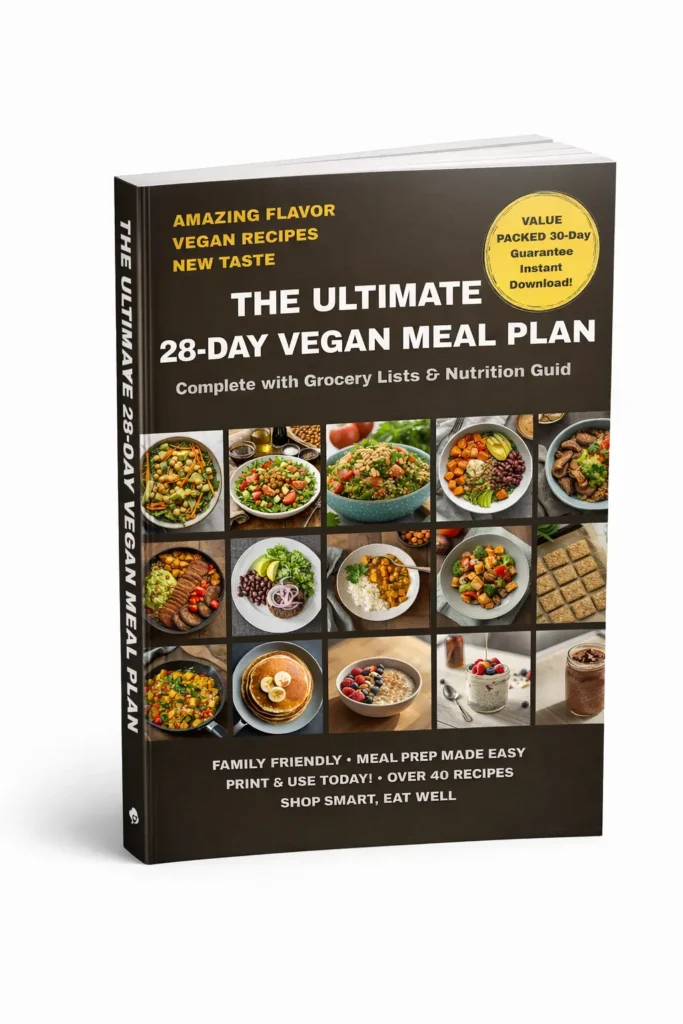
Get the 28-Day Micronutrient Success PlanP.S. To guide you through your first month, here’s my Ultimate 28-Day Vegan Meal Plan complete with shopping lists and nutrition guides. Download it here.
Want to try before you buy?
Enter your email below to get 2 free recipes instantly: