
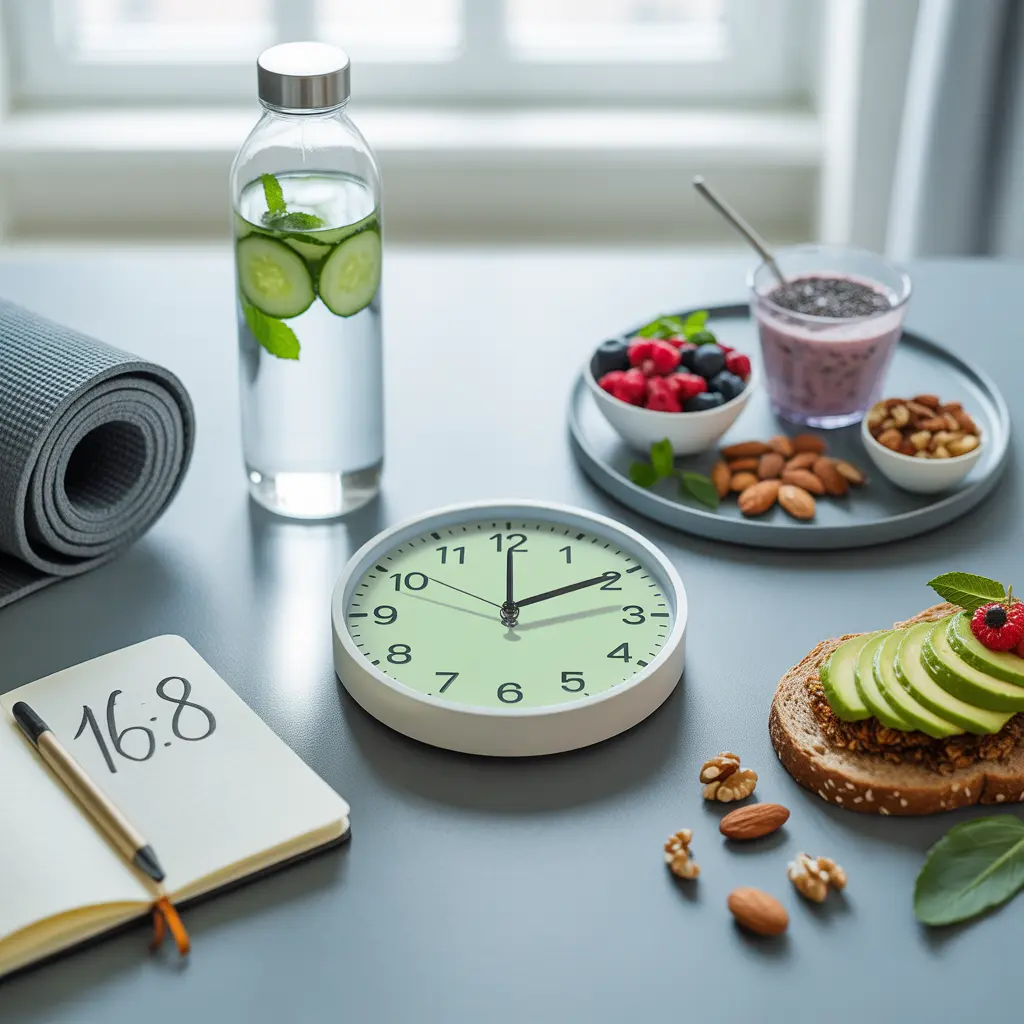
⚡ TL;DR: Vegan Intermittent Fasting at a Glance
- Vegan intermittent fasting combines the metabolic benefits of time-restricted eating with the nutrient density and anti-inflammatory properties of a whole-food plant-based diet. The combination is more powerful than either approach alone.
- The four evidence-supported IF protocols are: 16:8, 18:6, 5:2, and OMAD. The 16:8 is the most practical entry point for plant-based eaters.
- The biggest challenge of plant-based IF is hitting adequate protein in a compressed eating window. The solution is deliberate protein stacking across every meal.
- Intermittent fasting triggers autophagy (cellular self-cleaning), improves insulin sensitivity, reduces systemic inflammation, and activates AMPK and SIRT1 longevity pathways. A high-fibre vegan diet amplifies all four effects.
- Vegans have a structural advantage in IF: plant foods are lower in caloric density, higher in fibre, and produce stronger satiety signals during fasting periods than equivalent animal food-based diets.
- Breaking the fast correctly is the most critical meal of a vegan IF day. It sets the tone for protein synthesis, blood glucose stability, and satiety through the entire eating window.
Vegan Intermittent Fasting: The Complete Science-Backed Guide to Plant-Based IF
Vegan intermittent fasting is one of the most nutritionally synergistic dietary combinations available. Not because of trend or marketing, but because the specific metabolic mechanisms activated by fasting and the specific nutritional properties of whole plant foods amplify each other in measurable, documented ways.
Fasting activates autophagy, reduces insulin, triggers AMPK signalling, and shifts the body toward fat oxidation. A high-fibre, polyphenol-rich plant-based diet reduces systemic inflammation, feeds a diverse gut microbiome, stabilises blood glucose between meals, and produces stronger satiety signals from a lower caloric load. These effects are not additive. They are synergistic. A whole-food vegan diet makes the fasting state more comfortable, more productive, and more metabolically effective than a fasting approach built on animal proteins and refined foods.
This guide delivers everything needed to implement vegan intermittent fasting correctly: the complete science behind fasting physiology, the four evidence-supported protocols, the protein challenge solution, a 7-day 16:8 meal plan with exact macros, and the professional cooking strategies that make hitting nutritional targets in a compressed window straightforward rather than stressful.
The Deep Science: Autophagy, AMPK, Insulin Sensitivity, and the Fasting State
🔬 What Actually Happens During a Fast
The metabolic events of fasting follow a predictable, well-documented timeline. Understanding this timeline is what separates strategic vegan IF from simply skipping breakfast.
⏱ The Fasting Timeline: Hour by Hour
🧬 Autophagy: The Cellular Self-Cleaning Mechanism
Autophagy (from the Greek “self-eating”) is the cellular process by which damaged organelles, misfolded proteins, and intracellular debris are identified, encapsulated in autophagosomes, and broken down for recycling. It is the body’s primary quality control system for cellular health and is directly suppressed by insulin and mTOR signalling in the fed state.
Research that won the 2016 Nobel Prize in Physiology or Medicine (Yoshinori Ohsumi) established the molecular mechanisms of autophagy and its central role in cellular homeostasis, immunity, and longevity. The implications for IF are direct: fasting is the most reliable, non-pharmacological method of activating autophagy available. Meaningful autophagy requires a minimum of 12 to 14 hours of fasting. The 16-hour fast in the 16:8 protocol consistently produces the autophagy activation window that four-hour or eight-hour fasts do not.
⚡ AMPK: The Master Metabolic Switch
AMP-activated protein kinase (AMPK) is the primary cellular energy sensor and one of the most important signalling proteins in human metabolism. It is activated when cellular ATP falls relative to AMP during fasting or exercise, and it triggers a comprehensive metabolic shift:
- Increases fat oxidation by activating fatty acid transport into mitochondria
- Inhibits fat and cholesterol synthesis in the liver
- Improves insulin sensitivity by increasing GLUT4 transporter expression in muscle cells
- Suppresses mTOR, reducing protein synthesis during fasting to redirect resources toward repair and autophagy
- Activates SIRT1, the primary longevity-associated deacetylase that regulates mitochondrial biogenesis
Specific plant food compounds also activate AMPK independently of fasting: berberine (found in barberries), quercetin (onions, apples, kale), EGCG (green tea), and curcumin (turmeric) all have documented AMPK-activating properties. Drinking green tea or eating quercetin-rich foods during the fasting window (both are calories-free at typical quantities) may compound the AMPK activation from fasting itself.
📊 Insulin Sensitivity: The Most Impactful Vegan IF Benefit
Insulin resistance, the condition in which cells become less responsive to insulin signalling and require progressively higher insulin levels to achieve the same glucose uptake, is the central metabolic pathology underlying type 2 diabetes, metabolic syndrome, and a significant proportion of cardiovascular disease risk. Intermittent fasting is one of the most evidence-supported non-pharmacological interventions for improving insulin sensitivity.
A 2019 meta-analysis in Obesity Reviews covering 11 randomised controlled trials found that intermittent fasting reduced fasting insulin by 20 to 31% and improved HOMA-IR (a validated insulin resistance measure) by 19 to 25% over 8 to 24 weeks. Combined with the insulin-sensitising effect of a high-fibre plant-based diet (which reduces postprandial glucose and insulin excursions independently of caloric intake), vegan IF produces insulin sensitivity improvements that neither approach achieves alone at equivalent magnitude.
For context on how a plant-based diet manages blood glucose and insulin through food composition, our vegan diet for type 2 diabetes guide covers the mechanisms in depth.
The 4 IF Protocols: Which One Works Best for Vegans
⭐ Protocol 1: 16:8: The Vegan IF Default
Structure: Last meal at 8pm, first meal at 12pm (noon). Eating window: 12pm to 8pm. Or adjust to 10am to 6pm for those who exercise in the morning.
Why it works best for vegans: The 16-hour fast reliably crosses the autophagy activation threshold while leaving an 8-hour eating window that is long enough to consume adequate calories, protein, and micronutrients from whole plant foods without extreme meal compression. Plant-based eaters benefit from the high satiety-to-calorie ratio of whole plant foods, making the 16-hour fast significantly more comfortable than it sounds.
Protocol 2: 18:6: The Accelerated Protocol
Structure: Last meal at 6pm, first meal at 12pm. Eating window: 12pm to 6pm.
The protein challenge compounds here. A 6-hour window requires eating 80 to 100g of plant protein across 2 to 3 meals, each of which must be deliberately protein-anchored. This is achievable with the right foods but requires advance planning. Not recommended as a starting protocol for plant-based eaters unfamiliar with high-protein vegan meal construction. See the protein stacking section below before attempting 18:6.
Protocol 3: 5:2: The Flexibility Protocol
Structure: Eat normally on 5 days. On 2 non-consecutive fast days, restrict to 500 calories (women) or 600 calories (men).
Plant-based advantage on fast days: 500 calories of whole plant food is considerably more food by volume than 500 calories of any animal product-based diet. A fast day could include a large lentil soup (200 calories), a mixed salad with chickpeas (150 calories), and vegetable broth with miso (50 calories), totalling 400 calories with significant fibre, protein, and satiety. The volumetric eating principle makes vegan 5:2 fast days far more manageable than omnivorous versions.
Protocol 4: OMAD (One Meal a Day)
Structure: A single large meal eaten within approximately one hour per day.
The vegan OMAD challenge is substantial. Consuming 1,800 to 2,200 calories, 80 to 100g protein, adequate fibre, and all micronutrients in a single meal from plant sources requires extraordinary meal density and preparation. Possible but not recommended without extensive IF experience. The deep autophagy and metabolic benefits of OMAD are largely available from 18:6 without the nutritional compression risk that OMAD presents for plant-based eaters. This is not a beginner protocol.
The Protein Challenge: Hitting Your Targets in a Compressed Window
💪 Why Protein Is the Central IF Challenge for Vegans
The primary nutritional challenge of vegan intermittent fasting is not calories. It is not micronutrients. It is protein. Plant proteins are generally lower in caloric density than animal proteins, meaning that eating 80 to 100g of protein from plant sources within an 8-hour window requires deliberate, systematic meal construction rather than passive eating.
The target for most adults combining IF with muscle retention is 1.2 to 1.6g protein per kilogram of bodyweight daily. For a 70kg adult, that is 84 to 112g of protein consumed in an 8-hour window across 2 to 3 meals. Each meal must be protein-anchored. Snacking on fruit, nuts, and bread during the eating window without a protein anchor will consistently produce a daily protein deficit that undermines the muscle-preservation benefit of IF.
🏗️ The Protein Stacking Method for Vegan IF
The professional kitchen concept of mise en place applied to vegan IF protein looks like this: every meal in the eating window must begin with a protein anchor (20 to 35g) before any other component is planned. Then add a protein booster (+8 to 12g), a grain component for amino acid completion, and vegetables. Never plan a vegan IF meal around vegetables first and add protein later.
- Protein anchor: tempeh (21g per 100g), tofu (17g per 200g), lentils (18g per 200g), or chickpeas (15g per 200g): target 18 to 25g from this component alone
- Protein booster: 3 tablespoons hemp seeds (+10g) or 2 tablespoons nutritional yeast (+8g)
- Grain for amino acid completion: quinoa or brown rice (adds 5 to 8g and completes the amino acid profile)
- Vegetables: any and all: they are the volume, micronutrient, and fibre component, not the protein component
This formula reliably produces 31 to 43g protein per meal from plant sources.
📋 Daily Protein Distribution in an 8-Hour Window
For a 16:8 protocol with eating window 12pm to 8pm, a three-meal structure delivering 85 to 100g protein looks like this:
- 12:00pm (Break fast): 30 to 35g protein: the largest protein meal, consumed when the body is in peak synthetic readiness post-fast
- 4:00pm (Mid-window): 25 to 30g protein: sustains muscle protein synthesis through the afternoon
- 7:30pm (Last meal): 25 to 30g protein: pre-sleep protein for overnight muscle repair during the fasting sleep window
For the full science on plant protein requirements, amino acid completeness, and daily distribution, our guide to getting 100g protein as a vegan covers every aspect of the distribution strategy.
Ingredient Spotlights: The 5 Best Plant Foods for Vegan IF
🥩 1. Tempeh: The IF Protein Champion
For vegan intermittent fasting specifically, tempeh is the single most valuable protein source available. The reasons compound each other:
- Protein density: 21g per 100g, the highest of any whole plant food. In a compressed eating window where every bite must count nutritionally, tempeh delivers more protein per gram of food weight than any plant alternative.
- Fermentation: the fermentation process reduces phytates and trypsin inhibitors, improving protein digestibility to levels approaching animal proteins. Digestibility matters more in IF because there is no opportunity to distribute protein correction across a full day.
- Tryptophan content: a precursor to serotonin and melatonin, supporting the sleep quality during the overnight fast window that determines recovery and growth hormone release
- Satiety per calorie: the dense, chewy texture of tempeh produces strong mechanical satiety signals, extending the comfortable fasting period beyond the last meal
🫘 2. Lentils: The Fast-Friendly Legume
Red lentils are the most time-efficient high-protein plant food in existence for vegan IF. 15 minutes from dry to a 200g cooked serving delivering 18g protein, 15g fibre, and 6.6mg iron. The fibre profile of lentils is particularly valuable for IF:
- Resistant starch: feeds gut microbiome species producing GLP-1, the gut hormone that suppresses appetite for 4 to 6 hours after eating. This directly extends the comfortable fasting window following a legume-based break-fast meal.
- Beta-glucan-equivalent viscous fibre: slows gastric emptying, extending the postprandial satiety period that bridges the gap between meals in the eating window
- Low glycaemic index (32): prevents the insulin spike and subsequent blood glucose drop that triggers hunger 2 to 3 hours after a high-glycaemic meal, which would make the fasting window very uncomfortable
🌿 3. Hemp Seeds: The Non-Negotiable IF Protein Booster
Three tablespoons of hemp seeds added to any IF meal is the single fastest way to close a protein gap in a compressed eating window. 10g of complete protein added silently to any dish in under 5 seconds, with no preparation, no cooking, and no change to the meal’s flavour profile. For vegan IF specifically:
- Complete amino acid profile including all nine essential amino acids, meaning hemp seeds complement any legume or grain they accompany without requiring additional pairing calculation
- Magnesium content: 210mg per 100g, supporting muscle relaxation and sleep quality during the overnight fast window
- Omega-3 ALA: 2.5g per 30g, reducing the systemic inflammation that rises during caloric restriction protocols
🍵 4. Green Tea: The Fasting Window Amplifier
Green tea is the most evidence-supported beverage for enhancing the metabolic effects of vegan intermittent fasting during the fasting window. It contains zero significant calories and:
- EGCG (epigallocatechin gallate): activates AMPK independently of fasting, compounding the AMPK signal from the fasted state. Research shows EGCG enhances fat oxidation during the fasted state by 10 to 16% compared to fasting without EGCG
- L-theanine: an amino acid that promotes calm alertness and reduces the cortisol elevation associated with prolonged fasting, making the fasting window more cognitively comfortable
- Caffeine: extends the fasting state’s cognitive performance benefits and stimulates the sympathetic nervous system to increase fat mobilisation
- Autophagy support: emerging research suggests EGCG activates TFEB, the transcription factor that drives autophagosome formation, independently of fasting
Fasting window guidance: Black coffee and green tea (unsweetened) are the only beverages that do not break the fast while actively supporting its metabolic effects. Water, sparkling water, and herbal teas are fasting-compatible but do not add metabolic benefit beyond hydration.
🥑 5. Avocado: The Break-Fast Stabiliser
Breaking an extended fast with a high-monounsaturated-fat food before introducing high-carbohydrate foods is supported by emerging research on post-fast glucose management. Avocado serves this role exceptionally well for vegan IF:
- Oleic acid: slows gastric emptying after the fast, preventing the rapid glucose absorption and insulin spike that can occur when breaking a fast with carbohydrate-heavy foods
- Plant sterols: 57mg per 150g, contributing to bile acid sequestration and LDL management that supports cardiovascular health during IF protocols
- Fibre: 9g per 150g, immediately begins gut microbiome feeding and GLP-1 secretion that supports satiety through the early eating window
- Potassium: 700mg per 150g, replenishing electrolytes depleted during extended fasting alongside sodium from whole food sources
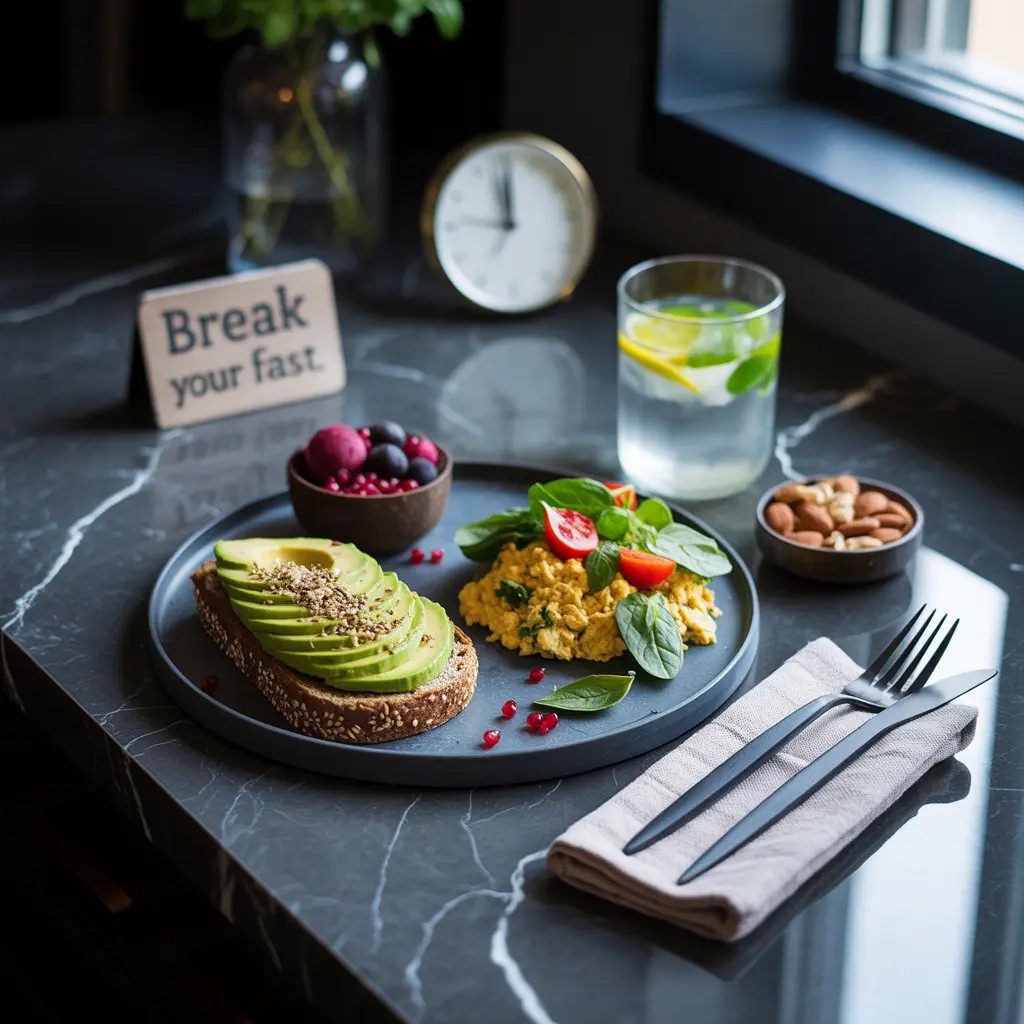
How to Break the Fast: The Most Important Meal of Your IF Day
🌅 Why the Break-Fast Meal Is Decisive
After 16 hours without food, the body is in an elevated state of metabolic readiness. Insulin sensitivity is at its peak. AMPK is active. Growth hormone is elevated. The liver is receptive to glycogen replenishment. Muscle cells are primed for protein uptake. What you eat in the first 30 minutes of the eating window determines whether these optimal conditions translate into recovery and synthesis or into a blood glucose crash and hunger cycle.
✅ The Optimal Vegan Break-Fast Structure
- Fat first: a small amount of avocado, tahini, or hemp seeds before or alongside the main meal slows gastric emptying and blunts the initial insulin response
- Protein anchor (25 to 35g): tofu scramble, tempeh bowl, or lentil dish as the primary component: this maximises muscle protein synthesis in the post-fast anabolic window
- Complex carbohydrate: quinoa, oats, or sweet potato: provides glycogen replenishment without the rapid glucose spike of refined carbohydrates
- Fibre and vegetables: steamed greens, raw vegetables, or leafy salad: extends satiety and begins gut microbiome feeding for the afternoon period
- Vitamin C source: lemon juice in the dressing, raw bell pepper on the side, or kiwi alongside: supports iron absorption from the plant-based protein sources consumed at the break-fast meal
7-Day Vegan 16:8 Meal Plan With Exact Macros
Eating window: 12:00pm to 8:00pm daily. Fasting window: 8:00pm to 12:00pm. Black coffee and green tea permitted during fasting hours. Water unrestricted throughout.
📅 Day 1: High Protein Break-Fast Focus
12:00pm: Tofu Scramble Bowl
200g firm tofu scrambled with turmeric, black salt, smoked paprika, and nutritional yeast (2 tbsp). Serve over 150g quinoa with steamed kale, half avocado, and cherry tomatoes. 3 tablespoons hemp seeds scattered over.
4:00pm: Chickpea and Quinoa Power Bowl
200g canned chickpeas, 150g quinoa, roasted red peppers, avocado, tahini-lemon dressing, and 2 tablespoons hemp seeds.
7:30pm: Tempeh Tikka Masala with Brown Rice
150g tempeh in spiced tomato-coconut sauce, served with 185g brown rice, steamed broccoli, and fresh coriander. Nutritional yeast stirred through the sauce.
Day 1 Total: Protein 94g · Calories 1,460 · Fibre 42g
📅 Day 2: Lentil and Legume Focus
12:00pm: Red Lentil Soup with Whole Grain Bread
200g red lentils simmered with cumin, turmeric, and lemon. Served with whole grain bread, avocado slices, and 3 tablespoons hemp seeds stirred through the soup.
4:30pm: Edamame Soba Bowl with Miso Dressing
200g edamame, 100g cooked soba noodles, steamed bok choy, nori, and miso-sesame dressing. 2 tablespoons hemp seeds and sesame seeds to finish.
7:30pm: Black Bean and Tofu Enchilada Bowl
100g tofu scrambled with 150g black beans, cumin, chipotle, and smoked paprika. Served over brown rice with salsa, avocado, and lime.
Day 2 Total: Protein 89g · Calories 1,370 · Fibre 46g
📅 Day 3 to Day 7: The Rotation Principle
Days 3 through 7 follow the same three-meal structure with the same protein architecture. Rotate through the following protein anchors to prevent monotony and ensure nutritional variety:
- Day 3: Break fast with tempeh bowl, mid-window with white bean pasta, evening with mujaddara and hemp seeds
- Day 4: Break fast with silken tofu smoothie + lentil soup side, mid-window with chickpea fatteh, evening with seitan chilli
- Day 5: Break fast with overnight oats (soy milk + hemp seeds), mid-window with smashed chickpea sandwich + edamame side, evening with lentil dal
- Day 6: Break fast with tofu scramble wrap, mid-window with miso tofu noodle bowl, evening with chickpea and kale stew
- Day 7: Break fast with hemp seed oats + kiwi, mid-window with tempeh tacos, evening with stuffed peppers with lentils and quinoa
Every meal follows the protein anchor + protein booster + grain + vegetable formula. Every day targets 80 to 100g protein within the 8-hour window.
Reference Tables
Vegan IF Protocol Comparison
Top Vegan Protein Sources Ranked for IF Efficiency
Chef Tips: Maximising Nutrition in a Compressed Eating Window
🔪 Tip 1: The Sunday IF Prep System
The most important thing I have learned from cooking professionally across Lebanon, Dubai, and Saudi Arabia is that quality eating under time pressure requires preparation done in advance, not improvisation in the moment. For vegan IF, where 8 hours must deliver a day’s complete nutrition, Sunday preparation is not optional.
- Pre-cook two grains (quinoa and brown rice): ready in 30 minutes, covers grain base for every meal Monday through Friday
- Marinate and pre-bake a full block of tempeh: slice, marinate in tamari and smoked paprika Saturday evening, bake Sunday morning. Refrigerate for 5 days. 10 seconds to add to any meal.
- Open and drain 3 tins of legumes: one lentil, one chickpea, one black bean. Refrigerate. Ready for instant use across 6 meals.
- Make 500ml tahini-lemon dressing: keeps 7 days. Dresses every meal without thinking.
- Pre-portion 7 daily hemp seed servings: 7 small containers, 3 tablespoons each. Pick one up and scatter it. Done.
Total Sunday active time: 40 minutes. Output: a complete IF eating window that takes under 5 minutes to assemble per meal from Monday through Friday.
🌿 Tip 2: The Levantine IF Meal Architecture
Traditional Levantine eating patterns were naturally time-restricted long before IF research existed. The main meal of the day in Lebanese, Syrian, and Palestinian culinary tradition is midday, with a lighter evening meal and minimal morning food. Ful medames at midday, a legume stew in the early afternoon, and a light vegetable plate in the evening maps almost exactly onto a 16:8 eating window of 12pm to 8pm.
The nutritional logic of this traditional pattern is also sound for IF: the largest, most protein-dense meal at the break-fast time (when insulin sensitivity is highest and anabolic signalling is strongest post-fast), a moderate protein meal mid-afternoon, and a lighter but protein-adequate evening meal that enables overnight recovery without digestive burden during the fasting sleep window.
💧 Tip 3: Electrolyte Management During the Fasting Window
Extended fasting reduces insulin, and lower insulin reduces renal sodium reabsorption, leading to accelerated excretion of sodium, potassium, and magnesium through urine. This produces the fatigue, headaches, and poor concentration that many people experience in early IF adaptation and incorrectly attribute to “low blood sugar.”
The vegan IF solution:
- During the fast: add a small pinch of high-quality sea salt to water, or drink vegetable broth with no added calories. Miso broth (1 teaspoon miso in hot water) provides sodium and trace minerals during the fasting window without breaking the fast.
- At the break-fast meal: avocado (700mg potassium per 150g), hemp seeds (magnesium), and legumes (potassium and magnesium) replenish all three key electrolytes simultaneously.
- During the eating window: a diverse plant-based diet naturally provides abundant potassium and magnesium. The electrolyte issue is specific to the fasting window.
5 Mistakes That Sabotage Vegan IF Results
❌ Mistake 1: Breaking the Fast With High-Glycaemic Food
Fruit juice, sweetened oat milk, white bread, or sweetened smoothies taken as the first food after a 16-hour fast cause a dramatic insulin spike that abruptly terminates the AMPK and autophagy activity of the fasting period and triggers a blood glucose crash 60 to 90 minutes later. The result is intense hunger, poor concentration, and the paradox of being hungrier after eating than before. Break every fast with a fat source (avocado, tahini) or protein anchor (tofu, tempeh, legumes) before any significant carbohydrate. The insulin response is blunted, the metabolic transition is smooth, and satiety extends for 3 to 4 hours.
❌ Mistake 2: Not Tracking Protein in the Early Weeks
Most people overestimate their protein intake when they start vegan IF. The compressed window creates the illusion of eating enough because meals feel substantial. But legumes, grains, and vegetables together often deliver only 40 to 55g daily protein without deliberate protein anchoring. Track protein for the first two to three weeks of vegan IF using any food tracking app to establish a baseline. Once the protein-stacking formula is internalised, tracking can be discontinued. For the full daily protein planning framework, our vegan protein deficiency guide covers age-specific targets and meal distribution.
❌ Mistake 3: Starting With 18:6 or OMAD
Jumping directly to an 18-hour or 23-hour fast as a new IF practitioner almost universally produces an unsustainable experience: intense hunger, social restriction around meals, muscle loss from inadequate protein in a very compressed window, and rapid abandonment of the protocol. Start with 14:10 for one week, progress to 16:8, establish comfort and nutritional competence at 16:8 for four to eight weeks, and only then consider 18:6 if desired. The metabolic benefits of 16:8, maintained consistently for months, substantially outperform 18:6 attempted and abandoned within weeks.
❌ Mistake 4: Drinking Sweetened Plant Milk or Juice During the Fasting Window
Sweetened oat milk (7g sugar per 250ml), fruit juice, energy drinks, or sweetened sparkling water all break the fast by triggering an insulin response. Even small insulin elevations suppress autophagy and AMPK activation. During the fasting window: water, sparkling water, black coffee, unsweetened green tea, unsweetened herbal tea, and plain miso broth only. All other beverages, including unsweetened plant milks above trace quantities, should wait for the eating window.
❌ Mistake 5: Not Planning the Eating Window in Advance
The eating window of a well-executed vegan IF day must be planned in advance, not improvised at noon when hunger arrives. Without a plan, the path of least resistance is high-carbohydrate, low-protein snacking that fills calories without building the nutritional density the compressed window demands. Spending five minutes each evening planning the next day’s three IF meals, with protein totals verified, eliminates this problem. The Sunday batch prep system described in the chef tips section makes this daily planning almost entirely automatic. For a complete pre-planned system, the 30-day vegan meal prep plan builds this exact planning habit progressively over four weeks.
Frequently Asked Questions About Vegan Intermittent Fasting
Is vegan intermittent fasting effective for weight loss?
Yes. Vegan intermittent fasting produces weight loss through two compounding mechanisms: caloric restriction from the shortened eating window, and the metabolic shift toward fat oxidation during the extended fasting period. Research on IF consistently shows 3 to 8% body weight reduction over 8 to 24 weeks. A whole-food plant-based diet amplifies this through higher fibre content and lower caloric density, producing greater satiety per calorie and more comfortable fasting periods than omnivorous IF approaches.
Does intermittent fasting cause muscle loss on a vegan diet?
Muscle loss during IF is primarily a function of inadequate protein intake, not fasting itself. Research shows that IF with adequate protein (1.2 to 1.6g per kilogram of bodyweight daily) preserves lean mass as effectively as continuous eating with equivalent protein. For vegans, this means deliberately protein-anchoring every meal in the eating window using tempeh, tofu, lentils, chickpeas, and hemp seeds. IF also increases growth hormone secretion during the fasting period, which is anabolic and muscle-protective independently of protein intake.
Does coffee break a fast?
Black coffee (no milk, no sugar, no sweetener) does not meaningfully break a fast. It contains essentially zero calories, does not trigger an insulin response, and may enhance the metabolic effects of fasting by increasing noradrenaline (which stimulates fat oxidation) and by containing chlorogenic acids that activate AMPK. Adding plant milk (even unsweetened, above trace quantities) or any sweetener introduces calories and potentially an insulin response that diminishes autophagy. Black coffee and unsweetened green tea are the only beverages that actively support the fasting state.
What is the best time to exercise on vegan IF?
There is no universal answer, but two windows produce the best outcomes for most people. Fasted morning training (before the eating window opens) maximises fat oxidation during the workout and produces the strongest AMPK activation. However, it also means training in a depleted glycogen state, which can impair high-intensity performance. Alternatively, training in the late eating window (1 to 2 hours before the last meal) means training with available glycogen and allows the post-exercise protein meal to occur within the optimal anabolic window. Choose based on performance goals: fat loss and endurance benefit from fasted training, strength and hypertrophy benefit more from fed training.
How do I get enough B12 during vegan IF?
B12 needs do not change with an IF protocol. The simplest approach is to ensure that nutritional yeast (B12-fortified) is used as a protein booster in at least one or two meals per eating window, and to take a B12 supplement during the eating window, not during the fasting period. B12 supplements can be taken with any meal in the eating window without affecting the fasting state. For full B12 supplementation guidance, our vegan supplements guide covers dosing, forms, and timing.
Can I drink green tea during the fasting window?
Yes. Unsweetened green tea is one of the best beverages to consume during the fasting window. It contains essentially zero calories, does not trigger an insulin response, and actively enhances the fasting state through EGCG-mediated AMPK activation and autophagy support. L-theanine in green tea reduces fasting-associated cortisol elevation and supports calm concentration during the fasting hours. Two to three cups of unsweetened green tea during the fasting window is evidence-supported as a fasting amplifier for vegan IF practitioners.
Is vegan IF safe for women?
The evidence on IF and female hormonal health is nuanced and requires careful individualisation. Short-duration IF protocols (14:10 to 16:8) are generally well-tolerated by most women. However, some research suggests that extended fasting in women with low body fat or high training volume can disrupt LH pulsatility, potentially affecting menstrual regularity. Women who are pregnant, breastfeeding, have a history of disordered eating, or are experiencing hormonal irregularities should consult a healthcare provider before starting IF. Starting conservatively with 14:10 and observing hormonal and energy responses over 4 to 6 weeks before extending the fasting window is the most evidence-consistent approach for women new to IF.
What breaks a fast?
Any substance that triggers an insulin response or provides significant caloric substrate breaks the metabolic state of fasting. This includes all food, milk (including plant milk), sweetened beverages, energy drinks, BCAAs, and protein supplements. It does not include: water, sparkling water, black coffee, unsweetened green tea, unsweetened herbal tea, or small quantities (under 1 teaspoon) of apple cider vinegar. The working definition of “breaking the fast” depends on the goal: if the goal is insulin management and autophagy, anything that raises insulin breaks it. If the goal is only caloric restriction, trace-calorie beverages do not break it.
How long does it take to adapt to vegan IF?
The adaptation period for vegan intermittent fasting is typically 2 to 4 weeks. During the first week, hunger in the late fasting window is common and expected as the body transitions from glucose-dependent metabolism to fat-oxidation-dominant metabolism. By week 2 to 3, most people report the fasting window becoming comfortable or even preferred. Plant-based eaters typically adapt faster than omnivores due to the high fibre content of their eating window meals producing stronger and longer-lasting satiety signals, effectively reducing hunger during the fasting period.
Can vegan IF improve gut health?
Yes, through two mechanisms. First, the extended fasting window activates the migrating motor complex (MMC), the intestinal “cleaning wave” that sweeps the small intestine of undigested material between meals. The MMC is suppressed by eating and fully activates only during fasting periods of 4 hours or more. Regular activation of the MMC is associated with reduced small intestinal bacterial overgrowth (SIBO) risk and improved gut motility. Second, a diverse whole-food plant-based diet in the eating window feeds gut microbiome species that produce short-chain fatty acids supporting the intestinal barrier and reducing systemic inflammation. Both effects are compounded by combining vegan eating with IF.
Should vegans take supplements while doing IF?
Standard vegan supplementation priorities (B12, vitamin D, algae DHA/EPA) should continue unchanged during an IF protocol, taken during the eating window with food for optimal absorption. Fat-soluble supplements (vitamin D, algae omega-3) should be taken with a fat-containing meal for maximum bioavailability. Avoid taking supplements during the fasting window as some (particularly oil-based supplements) may trigger a minor insulin response. Creatine, if used for performance, can be taken at any time as it does not affect the fasting state. For the full vegan supplementation framework, our vegan supplements guide covers priorities, dosing, and timing.
How does vegan IF affect cholesterol and cardiovascular markers?
Vegan IF consistently improves cardiovascular markers through multiple compounding mechanisms. IF reduces LDL cholesterol by 10 to 21% in most clinical studies, partially through AMPK-mediated suppression of hepatic cholesterol synthesis. A whole-food plant-based diet independently reduces LDL by 15 to 30% through soluble fibre bile acid sequestration, plant sterol cholesterol absorption blocking, and soy protein LDL receptor upregulation. Combined, the two approaches produce cardiovascular risk improvements that exceed either approach alone. Triglycerides also improve significantly from IF, particularly when the eating window diet is low in refined carbohydrates, which is the natural baseline of a whole-food plant-based diet. For the detailed cholesterol mechanism science, our vegan diet for high cholesterol guide covers every pathway in depth.
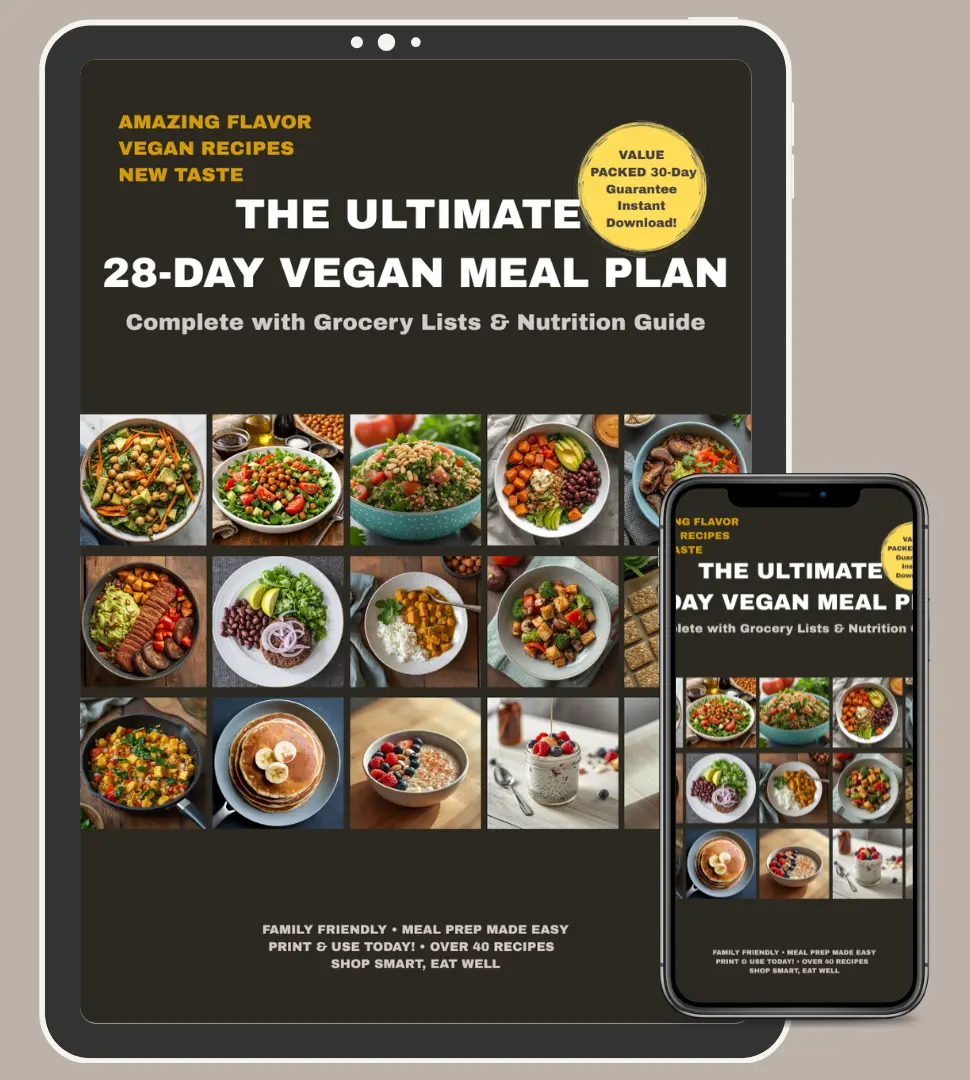
Still spending hours figuring out what to eat?
What’s included in your download
- 40+ nutritionist-approved recipes
- Complete 28-day calendar
- Meets protein, iron & B12 needs
- Family & meal prep friendly
- Vibrant photo for every recipe
- Simple, common ingredients
Instant PDF download. No subscriptions. No waiting.