Disclaimer: This content is for informational purposes only and does not constitute medical advice. Vitamin C is water-soluble and generally very safe at dietary levels. If you have kidney disease or a history of kidney stones (particularly oxalate stones), consult a healthcare provider before significantly increasing vitamin C intake or taking high-dose supplements.
Vegan Vitamin C Foods: The Complete Guide to Plant-Based Vitamin C Sources
TL;DR
Vitamin C is the one major nutrient where vegans have a clear advantage over the average omnivore. Plants are the richest dietary sources of vitamin C in the world. Guava contains 228mg per 100g. Red bell pepper contains 190mg per 100g. A single kiwi contains 93mg. The RDA of 75-90mg is easily exceeded by eating any two or three servings of fresh fruit and vegetables daily. The real vitamin C challenge is not whether plant foods contain enough of it — they do — it is how much survives cooking and storage. Vitamin C is the most heat-sensitive and water-soluble of all vitamins. Boiling vegetables destroys 50-90% of their vitamin C. Steaming retains 70-90%. Eating raw or adding acid at the end of cooking is the simplest preservation strategy. This guide covers the top 20 plant-based vitamin C foods ranked, cooking retention science, the iron-collagen-immunity synergy trio, the daily protocol, and 12 FAQ answers.
The Vegan Vitamin C Advantage
Vitamin C is the nutritional story where plant-based eating wins unambiguously. Unlike iron, zinc, omega-3, vitamin D, and B12 — where the vegan diet requires careful planning or supplementation — vitamin C is abundant, diverse, and readily available across the full spectrum of plant foods. The average well-planned vegan diet delivers two to four times the RDA of vitamin C without deliberate supplementation.
This matters practically because vitamin C is not a passive nutrient. It is the rate-limiting factor in collagen synthesis, the most effective enhancer of non-heme iron absorption from plant foods, and the primary water-soluble antioxidant protecting the skin, immune system, and cardiovascular system from oxidative damage. Being adequate in vitamin C amplifies the effectiveness of every other dietary nutrient strategy in this guide series.
Why Vitamin C Distribution Across the Day Matters More Than Total Dose
Vitamin C is water-soluble with a plasma half-life of approximately 30 minutes at higher concentrations. The kidneys excrete excess vitamin C efficiently, meaning that consuming 500mg in a single dose delivers a smaller net tissue saturation than consuming 100mg at five separate meals across the day. This is not a theoretical concern — it has direct practical implications for how vitamin C should be eaten on a plant-based diet.
The optimal strategy is vitamin C at every main meal rather than vitamin C exclusively at one meal. A single daily glass of orange juice in the morning and nothing else is significantly less effective for collagen synthesis, iron absorption, and immune function than a small vitamin C source at breakfast, lunch, and dinner simultaneously. This is covered in the protocol in Section 6.
The iron absorption connection is especially important on a vegan diet because vitamin C is the primary dietary enhancer of non-heme iron absorption — the form of iron found in all plant foods. Eating vitamin C at the same meal as iron-rich plant foods increases iron absorption by 2-6 times. This is covered in detail in the vegan iron guide.
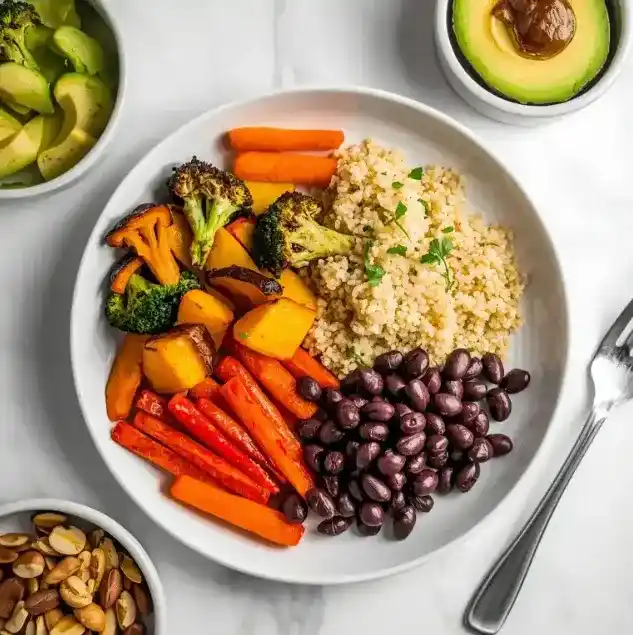
Top 20 Vegan Vitamin C Foods Ranked
The chart below ranks the top 20 plant-based vitamin C foods by milligrams per 100g of edible portion. These are raw values — cooking reduces vitamin C content significantly, as the next section covers. Prioritise raw or minimally cooked preparations of these foods for maximum vitamin C delivery.
 🏆 BEST VALUE
+ Grocery List
Cooking and Vitamin C: How Much Survives?
The single most important practical issue in vegan vitamin C nutrition is not which foods contain the most vitamin C — it is how much remains after cooking. Vitamin C is uniquely vulnerable among all vitamins: it is simultaneously water-soluble (leaches into cooking water) and heat-sensitive (destroyed by high temperature), making it the vitamin most dramatically reduced by standard cooking methods.
The Four Rules for Preserving Vitamin C in Cooking
- Cook for the shortest time possible. Every additional minute of heat exposure destroys more vitamin C. Crisp-tender vegetables retain significantly more than fully softened ones.
- Use as little water as possible. Vitamin C dissolves into cooking water and is lost when that water is discarded. Steam rather than boil. When boiling is unavoidable, use the cooking water in soups or sauces.
- Add acid at the end of cooking, not during. Lemon juice or vinegar added to vegetables at the point of serving slows vitamin C oxidation and contributes its own vitamin C content. Lemon juice squeezed over steamed broccoli at serving is more effective than lemon juice added during cooking.
- Eat raw high-vitamin-C foods daily. Build one raw vitamin C-rich food into each main meal as a complement to cooked components. Raw red bell pepper strips, sliced kiwi, fresh strawberries, or raw tomatoes at each meal maintains continuous vitamin C supply throughout the day.
Vitamin C and Storage: The Refrigeration Rule
Vitamin C oxidises slowly at room temperature and faster when cut surfaces are exposed to air. Key storage facts:
- Whole fruit and vegetables: refrigerate immediately after purchase. Room-temperature storage loses 15-25% of vitamin C per day in cut produce.
- Cut vegetables: use within 24 hours after cutting. Pre-cut supermarket vegetables have already lost significant vitamin C before purchase.
- Frozen vegetables: often retain more vitamin C than fresh supermarket produce. Blanching at the point of freezing inactivates the oxidase enzymes that degrade vitamin C, then freezing stops further degradation. Frozen broccoli, peas, and spinach are excellent vitamin C sources when fresh produce is not available.
- Orange juice: loses 50% of its vitamin C within one week of opening even when refrigerated. Fresh-squeezed is significantly higher than stored carton juice.
The Vitamin C Synergy Trio: Iron, Collagen, and Immunity
Vitamin C’s most significant roles extend well beyond preventing deficiency. Three specific biological functions make adequate daily vitamin C particularly important on a plant-based diet.
Non-Heme Iron Absorption Enhancement
The most practically important vitamin C synergy for vegans. All plant iron is non-heme iron — the form that absorbs at only 2-20% efficiency without enhancement. Vitamin C consumed at the same meal as iron-rich plant foods converts ferric iron (Fe³⁺) to ferrous iron (Fe²⁺), the more soluble form that intestinal transport proteins can absorb. This conversion increases non-heme iron absorption by 2-6 times depending on the dose of vitamin C present.
- Squeeze lemon juice over lentil soup: absorb 3x more iron from the same meal
- Add raw red bell pepper to spinach salad: 2-4x more iron from the spinach
- Eat kiwi or strawberries with breakfast oats and seeds
- Full framework: vegan iron guide
Collagen Synthesis (Skin and Joints)
Vitamin C is the non-negotiable cofactor for prolyl hydroxylase and lysyl hydroxylase — the enzymes that hydroxylate proline and lysine residues in collagen to form stable triple-helix structures. Without adequate vitamin C, collagen fibres cannot form properly. This is why scurvy (severe vitamin C deficiency) produces wound breakdown and structural collapse. At adequate levels, vitamin C enables the continuous collagen synthesis that maintains skin elasticity, joint integrity, and tissue repair.
- Collagen synthesis requires continuous vitamin C — not just once daily
- Distribute vitamin C across three meals for continuous collagen production support
- Full skin collagen framework: vegan collagen guide
- Skin-specific: vegan skin diet guide
Immune Function and Antioxidant Defence
Vitamin C is the primary water-soluble antioxidant in the body and is preferentially accumulated in immune cells at concentrations 10-50 times higher than plasma levels. Neutrophils and lymphocytes use vitamin C to neutralise the oxidative burst they generate when destroying pathogens. Vitamin C also stimulates the production and function of interferon and lymphocytes. Supplemental vitamin C reduces cold duration (but not incidence) by approximately 8% in the general population and by 50% in people under extreme physical stress.
- Stress and illness deplete vitamin C rapidly — increase intake during illness
- Smokers require 35mg extra per day due to oxidative vitamin C destruction
- Immunity and anti-ageing connection: vegan anti-ageing guide
Still spending hours figuring out what to eat?
What’s included in your download
- 40+ nutritionist-approved recipes
- Complete 28-day calendar
- Meets protein, iron & B12 needs
- Family & meal prep friendly
- Vibrant photo for every recipe
- Simple, common ingredients
Instant PDF download. No subscriptions. No waiting.
Top 6 Vitamin C Foods: Spotlight Cards
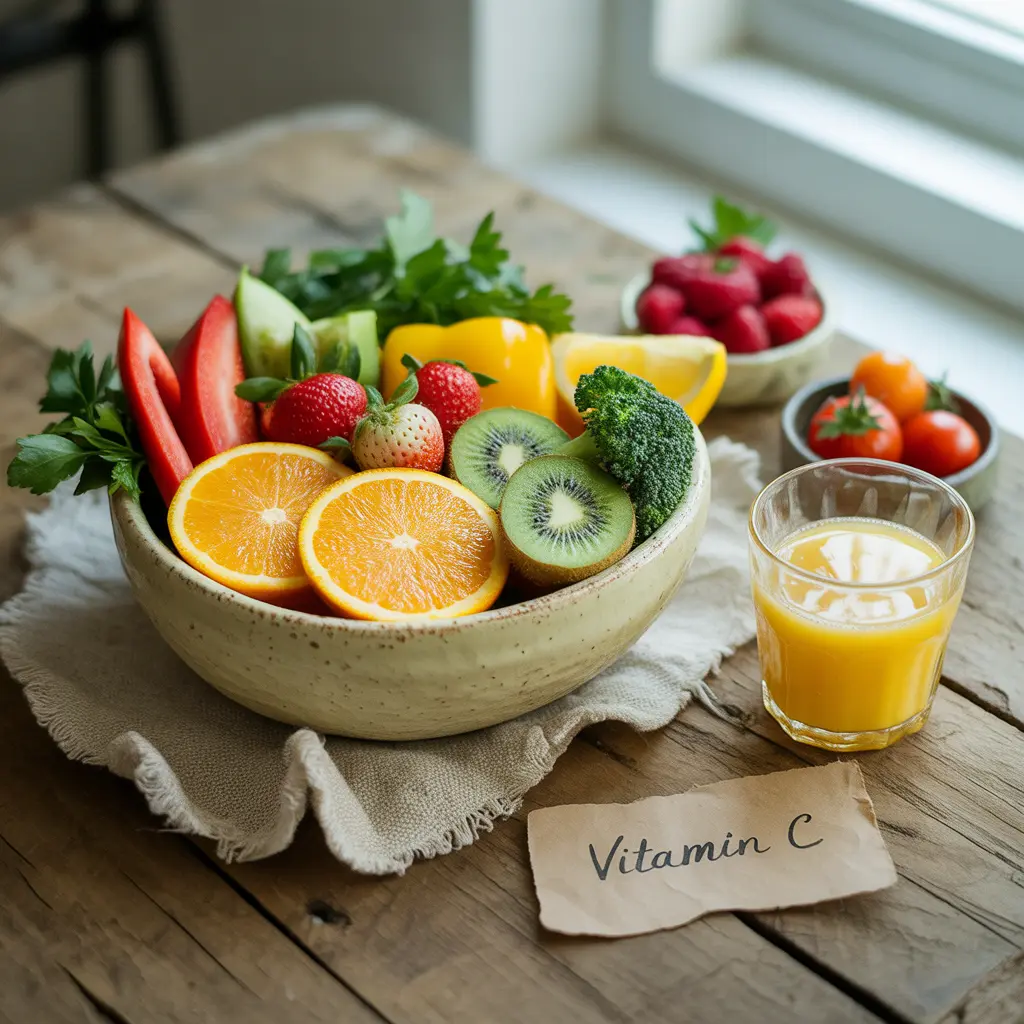
These six foods are the most practical, accessible, and vitamin-C-dense choices for building daily vitamin C into a plant-based diet. Each is highlighted for its specific advantages beyond raw vitamin C content.
1. Red Bell Pepper
Vitamin C: 190mg per 100g raw (152mg per medium pepper)
The most practical high-vitamin-C food for daily use. Inexpensive, widely available, versatile raw or lightly cooked, and consistent year-round. One medium raw red pepper eaten as a snack or added raw to lunch delivers 170% of the daily RDA. Yellow peppers are comparable (166mg). Green peppers are significantly lower (80mg) — the ripeness difference is real. Always choose red or yellow for vitamin C goals.
2. Guava
Vitamin C: 228mg per 100g (highest whole food source)
The most vitamin-C-dense whole food on earth, exceeding even red bell pepper. Less commonly available in northern supermarkets but increasingly found in Asian, Caribbean, and Middle Eastern grocery stores year-round. Eaten whole (including skin and seeds for fiber), guava delivers vitamin C alongside lycopene, folate, and potassium. One medium guava (100g) delivers 250% of the adult RDA in one fruit.
3. Kiwi Fruit
Vitamin C: 93mg per 100g (93mg per medium kiwi)
One kiwi exceeds the daily RDA for vitamin C (75mg women, 90mg men). Kiwi is particularly valuable because it is typically eaten raw, preserving all of its vitamin C. Kiwis also contain actinidin, a protease enzyme that improves protein digestion — making them a useful addition to high-protein plant-based meals. Studies show daily kiwi consumption specifically improves platelet aggregation and reduces oxidative DNA damage markers.
4. Broccoli
Vitamin C: 89mg per 100g raw, 50-60mg per 100g lightly steamed
The most nutritionally complete vegetable in the vitamin C category because broccoli simultaneously delivers sulforaphane (Nrf2 activation, liver protection), vitamin K, folate, calcium, and protein alongside its vitamin C. For people managing NAFLD, immunity, or skin health, broccoli covers more nutritional bases per gram than any other vegetable. Lightly steam for 3-4 minutes to preserve most vitamin C while activating sulforaphane production.
5. Strawberries
Vitamin C: 85mg per 100g (about 8 medium strawberries)
Among the most polyphenol-dense fruits alongside their vitamin C content. Anthocyanins, quercetin, and ellagic acid in strawberries independently support skin health, cardiovascular protection, and anti-inflammatory function. Fresh strawberries retain essentially all their vitamin C; frozen strawberries (particularly if frozen at peak ripeness) are nutritionally comparable. Adding a small handful to breakfast oats or smoothies is the lowest-effort daily vitamin C habit for most people.
6. Papaya
Vitamin C: 87mg per 100g raw
Papaya is underrated as a vitamin C source relative to its accessibility. It delivers 87mg per 100g alongside papain (a digestive enzyme that supports protein digestion), beta-carotene, lycopene, and folate. Available in tropical and Asian grocery stores year-round and increasingly in mainstream supermarkets. Eaten ripe and raw, papaya is one of the most vitamin-C-dense common tropical fruits and is particularly valuable for adding diversity to a plant-based vitamin C strategy beyond standard temperate fruit.
Psst..just to add: The 28-Day Vegan Meal Plan gives you 40+ recipes, a full shopping list, and a 28-day calendar. No subscription.
Get the Plan →The 7-Step Daily Vitamin C Protocol
This protocol is designed to maintain consistent vitamin C availability throughout the day rather than delivering one large dose at a single meal. The two-hour plasma half-life of vitamin C means that meal-distributed intake is significantly more effective than one high-dose source.
Breakfast: Raw Vitamin C Source with Every Morning Meal
Build a raw vitamin C food into breakfast as a non-negotiable daily habit. The easiest options require no preparation: one kiwi halved and scooped, a handful of strawberries, or a small portion of fresh mango. This delivers 60-93mg vitamin C early in the day, begins iron absorption enhancement for any iron-rich breakfast foods (oats, seeds), and contributes to morning collagen synthesis.
- One kiwi: 93mg vitamin C, exceeds female daily RDA in one action
- Handful strawberries (80g): 68mg vitamin C
- Half mango (100g): 36mg vitamin C
- Any of the above alongside oats and pumpkin seeds: iron absorption increases 2-4x
Lunch: Raw Red or Yellow Bell Pepper in the Meal
Half a raw red bell pepper sliced into a grain bowl, salad, hummus plate, or lentil dish delivers 95mg vitamin C. This is the single highest-impact low-effort lunch vitamin C habit because red bell pepper is inexpensive, requires no cooking, and integrates into almost any lunch format. The vitamin C at this meal enhances iron absorption from the legumes, tofu, or greens in the same dish.
Add Lemon Juice to Every Cooked Dish at Serving
Fresh lemon juice squeezed over food at the point of serving does three things simultaneously: adds vitamin C from the lemon itself (31mg per 50ml), enhances the absorption of minerals from the dish through its acidity, and slows vitamin C oxidation in the vegetables in the dish. This habit is universal across MENA and Mediterranean cooking and is one of the highest-leverage single food actions for daily nutrition across every meal.
- Squeeze over lentil soup: adds vitamin C + dramatically improves iron absorption from lentils
- Over steamed broccoli: brightens flavour and preserves remaining vitamin C
- In tahini-based dressings: traditional MENA application that is nutritionally optimal
Dinner: Steamed or Lightly Cooked Broccoli or Brussels Sprouts
Including a cruciferous vitamin C vegetable at dinner provides the third meal-distributed vitamin C dose. Steam for 3-4 minutes maximum. The cruciferous choice also delivers sulforaphane (liver protection), vitamin K (bone health), and folate alongside vitamin C. Add lemon juice at serving to boost vitamin C further and enhance mineral absorption from the rest of the dinner.
Use Frozen Vegetables When Fresh Is Unavailable
Frozen broccoli, frozen peas, and frozen spinach are nutritionally comparable to or better than fresh supermarket produce that has been stored and transported for days. Blanching before freezing inactivates the enzymes that oxidise vitamin C during storage. Use frozen cruciferous vegetables without guilt when seasonal or budget constraints make fresh impractical. The collagen synthesis connection to consistent daily vitamin C is at the vegan collagen guide.
Increase Vitamin C During Illness or High Stress
Vitamin C is depleted rapidly by both physical illness and psychological stress. The body’s inflammatory response consumes large amounts of ascorbate in neutrophil oxidative burst reactions. During illness, cold symptoms, or periods of high workload or stress, increase vitamin C intake by adding an extra raw vitamin C food or 200-500mg supplemental vitamin C daily. This is the context where higher-dose vitamin C has the strongest evidence for reducing cold duration and severity.
Supplement Only If Consistent Dietary Intake Falls Short
For vegans eating diverse plant foods daily, supplemental vitamin C is rarely necessary. The exception is people with very restricted diets (low fruit and vegetable intake), smokers (who need 35mg extra daily), people recovering from surgery or illness, and anyone in the early weeks of a plant-based transition before dietary habits are established. A 200-500mg supplement is more than adequate. Supplements above 1,000mg daily provide no additional benefit for most people and may cause gastrointestinal discomfort. The complete vegan supplementation framework is at the vegan supplements guide.
Chef Section: MENA Citrus and Vitamin C Cooking
Twenty years of professional MENA and Mediterranean kitchen experience reveals a culinary tradition where vitamin C delivery is embedded into the structural architecture of the cuisine rather than treated as a nutritional afterthought. The MENA kitchen does not add lemon juice to food as a health intervention. It adds lemon juice to food because the dish tastes flat without it. The nutritional consequence — consistent, meal-distributed vitamin C delivery at every plate — is incidental to the culinary logic but is precisely what a nutritionist would prescribe.
Four MENA Vitamin C Cooking Traditions
1. Lemon as the Universal Finishing Acid
In every professional MENA kitchen, lemon juice is the finishing element applied to virtually every dish at serving. Hummus is not plated without a squeeze of lemon. Lentil soup is not served without a slice of lemon alongside. Grilled vegetable dishes, grain salads, fattoush, tabbouleh, stuffed grape leaves — all are finished with lemon juice immediately before serving, never during cooking. This preserves the vitamin C in the lemon itself (cooking destroys it) and provides an acidity that simultaneously enhances mineral absorption from the dish. A professional MENA plate that includes one tablespoon of fresh lemon juice as a finishing element delivers approximately 7mg vitamin C from the lemon alone plus the mineral absorption enhancement effect on every non-heme mineral in the dish.
2. Sumac as the Dried Vitamin C Spice
Sumac (the dark red dried berry ground into a tangy powder) is used throughout Levantine, Turkish, and Iranian cooking as a souring spice that functions similarly to lemon juice in dishes where liquid acid is impractical. Fattoush salad, labneh plates, grilled vegetables, and rice dishes are finished with sumac in the same way Western cooking uses black pepper — as a universal finishing element. Sumac contains vitamin C alongside its malic and tartaric acid content. Its sourness enhances flavour complexity and mineral bioavailability simultaneously. From a professional kitchen perspective, sumac is the most culinarily interesting vitamin C spice available and one of the most underused flavour tools in non-MENA cooking.
3. Pomegranate as a Vitamin C Fruit in Savoury Cooking
Fresh pomegranate seeds (arils) contain 10mg vitamin C per 100g alongside their exceptional polyphenol content (punicalagins) and are used throughout MENA cooking as a savoury garnish rather than a sweet ingredient. Scattered over grain salads, lentil dishes, roasted cauliflower, and aubergine preparations, fresh pomegranate arils add vitamin C, polyphenols, visual appeal, and a bright acid note to savoury dishes in a way that crosses the fruit-vegetable category boundary. Pomegranate molasses, used as a cooking ingredient, retains less vitamin C after concentration but delivers high polyphenol density and acidity for mineral absorption enhancement.
4. Fresh Herb Abundance as a Vitamin C Strategy
MENA cooking uses fresh herbs in quantities that most Western cuisines use as garnishes. Tabbouleh is a salad primarily composed of fresh flat-leaf parsley, with bulgur as a minor component. Chermoula is a North African sauce of coriander, parsley, lemon, and garlic that coats fish, vegetables, and grains in fresh herb vitamin C. Fresh mint in Lebanese fattoush, fresh dill in Persian herb rice, fresh coriander in Yemeni saltah — the professional MENA kitchen treats fresh herbs as primary ingredients, not finishing garnishes. Fresh parsley contains 133mg vitamin C per 100g. A 50g addition of fresh parsley to a dish (entirely reasonable in tabbouleh) delivers 66mg vitamin C from what most people consider decoration.
The MENA Vitamin C Day: A Professional Kitchen Total
- Breakfast: oat porridge with kiwi + handful strawberries + 1 tbsp lemon juice over everything (93mg + 68mg + 7mg = 168mg vitamin C)
- Lunch: fattoush salad (raw tomatoes + cucumber + raw red bell pepper + half a cup fresh parsley + sumac + lemon dressing) (95mg + 66mg + 15mg = 176mg vitamin C from this salad alone)
- Dinner: lentil soup finished with fresh lemon + steamed broccoli with sumac + pomegranate arils garnish (31mg + 54mg + 10mg = 95mg vitamin C)
- Daily total: approximately 439mg vitamin C — nearly 5x the adult RDA, distributed across three meals, entirely from whole foods.
- Iron absorption from the lentil and legume meals: enhanced 3-5x by consistent vitamin C pairing throughout the day.
-
Complete 28-day calendarEvery breakfast, lunch, dinner & snack planned
-
40+ nutritionist-approved recipesVibrant photo for every single dish
-
Easy weekly grocery listsShop smart, spend less, waste nothing
-
Protein, iron & B12 at every mealNutritionally complete — no guesswork
-
Saves 7+ hours weeklyPrint it once, follow it all month
-
Bonus: Nutrition Guide ToolkitVegan tips, guides & family meal prep
Putting It Together: Vegan Vitamin C Foods as a Daily System
Vegan vitamin C foods is the nutritional category where plant-based eating is structurally superior to omnivore diets without any deliberate effort. Guava, red bell pepper, kiwi, broccoli, strawberries, and papaya contain more vitamin C per gram than any animal food. The challenge is entirely one of execution: preserving vitamin C through appropriate cooking methods, distributing it across three meals rather than concentrating it in one, and pairing it with iron-rich plant foods to amplify the non-heme iron absorption that is the most practically important nutritional synergy in plant-based eating.
The MENA culinary tradition embedded this system into cooking practice centuries before nutrition science understood why. Fresh lemon as the universal finishing acid, sumac as the drying souring spice, fresh herbs used as primary ingredients rather than garnishes, and pomegranate as both fruit and savoury condiment — these practices collectively deliver vitamin C at every meal in a form that simultaneously enhances the nutritional value of every other mineral in the same dish.
A vegan diet that includes one raw vitamin C food at every main meal, finishes cooked dishes with fresh lemon juice, and uses fresh herbs generously will reach 200-400mg vitamin C daily without supplementation and without deliberate tracking. That level of consistent vitamin C intake supports collagen synthesis, iron absorption, and immune function far more effectively than any supplement taken without attention to meal distribution or food-form delivery.
FAQ: 12 Questions About Vegan Vitamin C Foods
For most vegans eating a varied diet with regular fruit and vegetable consumption, no. The RDA of 75-90mg is easily exceeded by eating two or three servings of vitamin C-rich plant foods daily. One medium kiwi or one cup of strawberries provides the daily RDA in a single food. Supplementation is worth considering for: smokers (who need 35mg extra per day), people with very restricted diets low in fresh produce, those recovering from surgery or illness (when demand is elevated), and anyone in the initial weeks of a plant-based transition before dietary habits are established. A 200-500mg supplement is adequate for all of these situations — higher doses provide no additional benefit for most people.
Guava, at 228mg per 100g, is the highest vitamin C whole food available from any source — plant or animal. Red bell pepper (190mg per 100g) is the most practical highest-vitamin-C food for daily use given its availability, cost, and versatility. Among foods that are almost always eaten raw (preserving all their vitamin C), kiwi (93mg per fruit), blackcurrants (177mg per 100g), and strawberries (85mg per 100g) are the most accessible consistently high-vitamin-C options. The important caveat is that guava and blackcurrants are not available in all regions year-round — red bell pepper and kiwi are the most universally accessible high-vitamin-C plant foods globally.
Not all, but a significant proportion. The retention depends on the cooking method, duration, and whether water is involved. Steaming for 3-4 minutes retains 70-90% of vitamin C — close to raw. Boiling retains only 30-60% because vitamin C dissolves into the water. Microwaving retains 65-85%. The practical rules: steam rather than boil, cook for the shortest time that achieves the desired texture, use cooking water in soups or sauces to recover leached vitamin C, and add lemon juice at serving to contribute fresh vitamin C and slow oxidation of what remains in the cooked food.
Plant iron (non-heme iron, Fe³⁺) absorbs poorly because ferric iron is relatively insoluble at the intestinal pH. Vitamin C in the digestive tract converts ferric iron to ferrous iron (Fe²⁺) through a chemical reduction reaction. Ferrous iron is significantly more soluble and is the substrate for the DMT1 intestinal iron transporter that carries iron across the gut wall into circulation. This conversion increases non-heme iron absorption by 2-6 times depending on the vitamin C dose present at the meal. The practical implication: eating vitamin C with every iron-rich plant food meal (lentils, spinach, tofu, pumpkin seeds) is one of the highest-leverage nutritional habits available for preventing iron deficiency on a vegan diet. Full detail at the vegan iron guide.
Whole food vitamin C and supplemental ascorbic acid are essentially bioequivalent for the core functions of vitamin C — the body absorbs and uses both equally at equivalent doses. The advantage of whole food sources is that they deliver vitamin C alongside bioflavonoids, polyphenols, and co-factors that enhance the bioavailability and tissue retention of vitamin C in ways that isolated ascorbic acid does not. Strawberries, for example, deliver quercetin and anthocyanins alongside vitamin C that support the same antioxidant and anti-inflammatory pathways through different mechanisms. Whole food vitamin C also delivers in a format that distributes across the day naturally with meals, which is more effective than a single supplement dose for collagen synthesis and iron absorption purposes.
From whole food sources alone, vitamin C toxicity is essentially impossible. The kidneys excrete excess vitamin C efficiently, and the bioavailability of dietary vitamin C decreases at higher intakes — the body absorbs less per gram as intake rises. The tolerable upper limit of 2,000mg daily applies to supplemental vitamin C, not food. At supplemental doses above 2,000mg daily, gastrointestinal discomfort (diarrhoea, cramping) is the most common adverse effect rather than any organ toxicity. People with a history of kidney stones (particularly calcium oxalate stones) should be more cautious with high-dose supplemental vitamin C, as it can increase urinary oxalate.
Yes, often comparable to or better than fresh supermarket produce. Frozen vegetables and fruits are typically processed at peak ripeness, when vitamin C content is highest. Blanching before freezing inactivates the polyphenol oxidase enzymes that degrade vitamin C during storage. Once frozen, further vitamin C loss is minimal. Fresh produce from a supermarket, by contrast, may have been harvested days or weeks before purchase and stored during transport, losing significant vitamin C along the way. The practical conclusion: frozen broccoli, frozen peas, frozen berries, and frozen spinach are excellent, affordable, and nutritionally consistent vitamin C sources for daily use alongside fresh seasonal produce.
Vitamin C serves two distinct skin functions. First, as the essential cofactor for prolyl and lysyl hydroxylase — the enzymes that stabilise collagen triple-helix structures — vitamin C is required for all collagen synthesis in skin, tendons, and connective tissue. Without adequate vitamin C, collagen fibres are structurally weak and skin loses elasticity and repair capacity. Second, vitamin C is the primary water-soluble antioxidant in skin tissue, neutralising UV-generated reactive oxygen species that would otherwise damage collagen and elastin fibres. The skin-diet connection and the full collagen framework are covered in the vegan skin diet guide and the vegan collagen guide.
Indirectly, through two mechanisms. First, vitamin C is required for the collagen and connective tissue that forms healthy skin barrier function, reducing the likelihood of pore occlusion and bacterial proliferation. Second, vitamin C inhibits tyrosinase, the enzyme involved in excess melanin production, which can reduce the post-inflammatory hyperpigmentation (dark spots) that persists after acne lesions heal. Vitamin C is not a primary acne treatment, but adequate daily intake supports skin repair and reduces scarring duration. The primary dietary acne interventions — zinc, omega-3, and low-glycaemic eating — are covered at the vegan acne guide.
Fresh lemon juice squeezed over cooked lentils at serving is the most practical and culinarily appropriate option, delivering 31mg vitamin C per tablespoon with zero food prep complexity. This is standard practice in MENA lentil cooking for flavour reasons that simultaneously achieve iron absorption enhancement. Raw tomatoes added to lentil salads, raw red bell pepper strips alongside a lentil dish, or fresh parsley chopped into lentil soup at serving are equally effective alternatives. The minimum vitamin C dose for meaningful iron absorption enhancement is approximately 25-50mg at the same meal — achievable from any of these options.
The RDA is 75mg for adult women and 90mg for adult men. However, many nutrition authorities suggest that the optimal daily intake for antioxidant protection, collagen synthesis, and immune function is 200-500mg — the amount at which plasma vitamin C reaches tissue saturation. This level is achievable from diet alone with a well-planned vegan diet: the MENA day example in this guide reaches 439mg from food entirely. Practical targets:
- Minimum (RDA): 75-90mg — met by one medium kiwi or a handful of strawberries
- Optimal for tissue saturation: 200-500mg — met by the three-meal distribution protocol in this guide
- Supplemental range if dietary intake is inadequate: 200-500mg supplement
Yes. Vitamin C’s immune roles extend well beyond cold prevention. It is required for neutrophil migration to infection sites, for the oxidative burst that neutrophils use to destroy pathogens, and for T-cell and B-cell proliferation during immune activation. It also supports the regeneration of vitamin E (the primary fat-soluble antioxidant), creating a synergistic antioxidant network that protects immune cell membranes. In people who are vitamin C deficient, even modest supplementation significantly improves natural killer cell activity, lymphocyte proliferation, and immunoglobulin levels. For vegans specifically, adequate vitamin C is important because it also enhances absorption of iron and zinc from plant foods — both of which are independently critical for immune function. The anti-inflammatory dietary framework relevant to immune health is at the vegan anti-inflammatory guide.