
Vegan Nutrient Deficiencies: The Complete Prevention Guide for Every Plant-Based Eater
Vegan nutrient deficiencies are real, preventable, and far more manageable than most new plant-based eaters fear. The six highest-risk deficiencies on a plant diet are B12, vitamin D, omega-3 DHA, iron, zinc, and iodine. Each has specific dietary and supplementation strategies that make long-term prevention entirely achievable. This guide covers the science behind each deficiency, the exact symptoms to watch for, the best plant-based food sources, and a complete daily prevention protocol that eliminates guesswork from plant-based nutrition.
The Reality of Vegan Nutrient Deficiencies: Risk vs. Fear
Vegan nutrient deficiencies are the number one concern of people considering or newly starting a plant-based diet, and the concern is not unfounded. Plant foods do not provide vitamin B12. They provide iron and zinc in forms with lower bioavailability than animal sources. They provide no DHA directly unless algae oil is consumed. And iodine is variable and often absent without deliberate dietary attention. These are real, documented gaps that require active management.
What the fear often gets wrong is the scale of risk for a well-informed, deliberately managed plant-based diet. The same populations who avoid meat entirely often show equal or better health outcomes across most biomarkers, specifically because of the nutritional attention they bring to their diet. These gaps are a risk profile to be understood and addressed, not a reason to avoid plant-based eating.
The distinction that matters is between incidental veganism (eating plants without nutritional strategy) and informed plant-based eating (addressing each known deficiency risk proactively through diet, supplementation, and blood testing). This guide is built entirely on the second approach: prevention before the fact, not management after it.
For the foundational science behind plant-based nutrition, the complete vegan nutrition guide covers macronutrient and micronutrient profiles in depth. For testing your current nutrient status, the vegan blood test guide defines exactly which markers to check and at what frequency.
The 6 Highest-Risk Vegan Nutrient Deficiencies Explained
Understanding each of the six critical deficiencies requires knowing the biology behind why plant diets create the gap, what symptoms look like in practice, and what the evidence-based prevention strategy is.
B12 and vitamin D are the only two nutrients on this list where dietary adjustment alone is insufficient for most people. B12 has no reliable plant food source. Vitamin D synthesis depends on sun exposure that modern lifestyles do not reliably provide. Both must be supplemented. Every other deficiency can be addressed primarily through informed dietary choices.
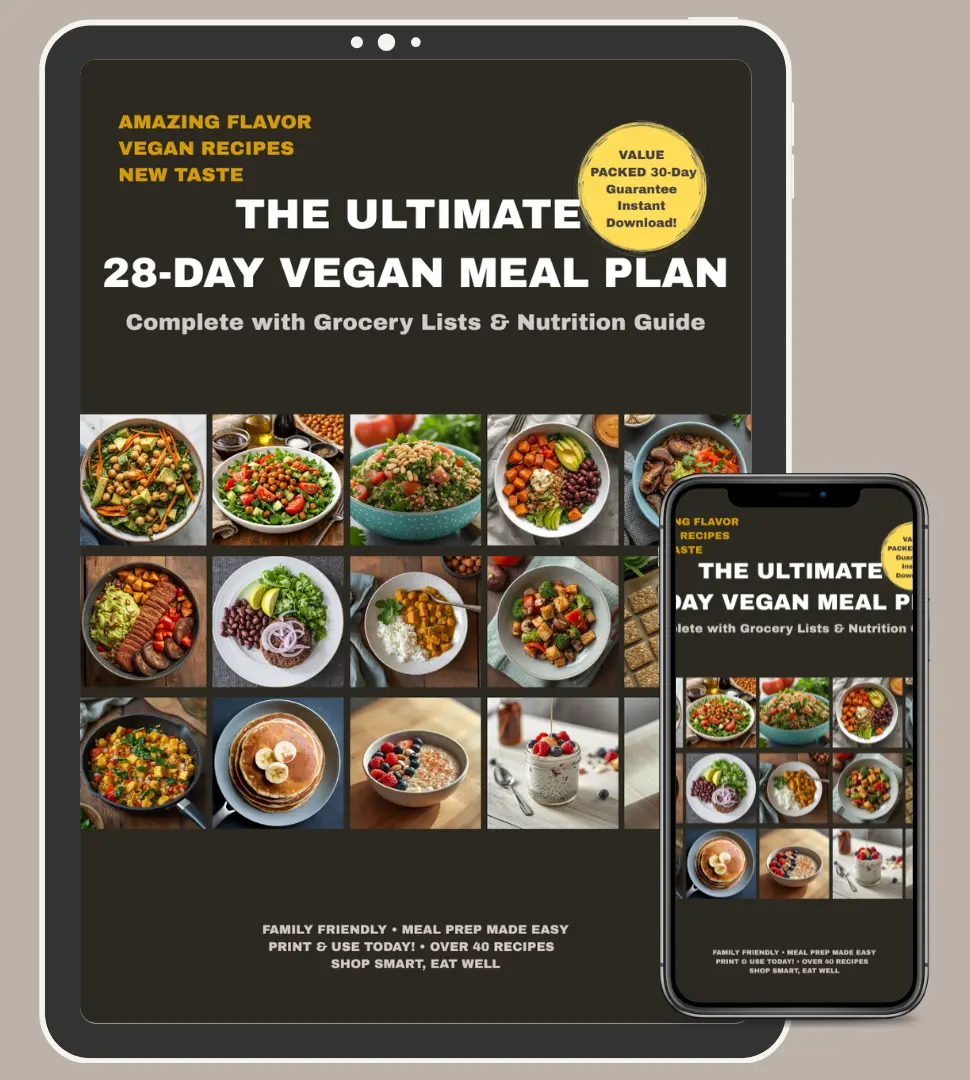
Building a daily diet that actively prevents vegan nutrient deficiencies takes structured planning. The Ultimate 28-Day Vegan Meal Plan + Grocery List, (Complete Solution) ensures every meal meets protein, iron, and B12 needs. Over 40 nutritionist-approved recipes, complete 28-day calendar with shopping lists, and a bonus Vegan Nutrition Guide Toolkit.
Top Plant Food Sources for Each Critical Nutrient
Consistent inclusion of the highest-density plant sources for each critical nutrient is the dietary foundation of deficiency prevention. The following cards cover the most potent plant foods for each of the six risks, with bioavailability notes.
The vegan supplements guide covers exact forms, doses, and timing for all six nutrients. The vegan iron sources guide provides the full breakdown of high-iron plant foods and absorption-enhancing methods.
Absorption Science: Why Bioavailability Is the Hidden Variable on a Plant Diet
The most overlooked variable in plant-based nutrition is not what you eat but how much your body absorbs. Bioavailability varies dramatically between plant and animal sources and is strongly influenced by what you eat alongside each nutrient-rich food.
Iron is the clearest example. Non-haem iron from plants has a baseline absorption rate of 2-20%, versus 15-35% for haem iron from animal sources. This gap can be largely closed by eating vitamin C simultaneously (which converts ferric iron to the absorbable ferrous form) and avoiding tea, coffee, and calcium-rich foods at the same meal. A lentil dish with lemon and broccoli delivers substantially more absorbed iron than the same dish alone.
Zinc bioavailability is similarly reduced by phytic acid in legumes and seeds. Soaking overnight, sprouting, and fermenting all reduce phytate content. Spreading zinc sources across multiple meals rather than one large serving also improves total daily absorption.
28-Day Vegan Meal Plan +
Grocery list.
Always pair iron-rich plant foods with a vitamin C source at the same meal. Add lemon juice to lentil dishes, include broccoli or bell pepper alongside iron-rich grains, squeeze orange juice over a spinach salad. This simple habit, applied consistently, can prevent iron-related vegan nutrient deficiencies in most people without any need for iron supplementation. For a full breakdown of iron absorption enhancement strategies, see the vegan iron sources guide.
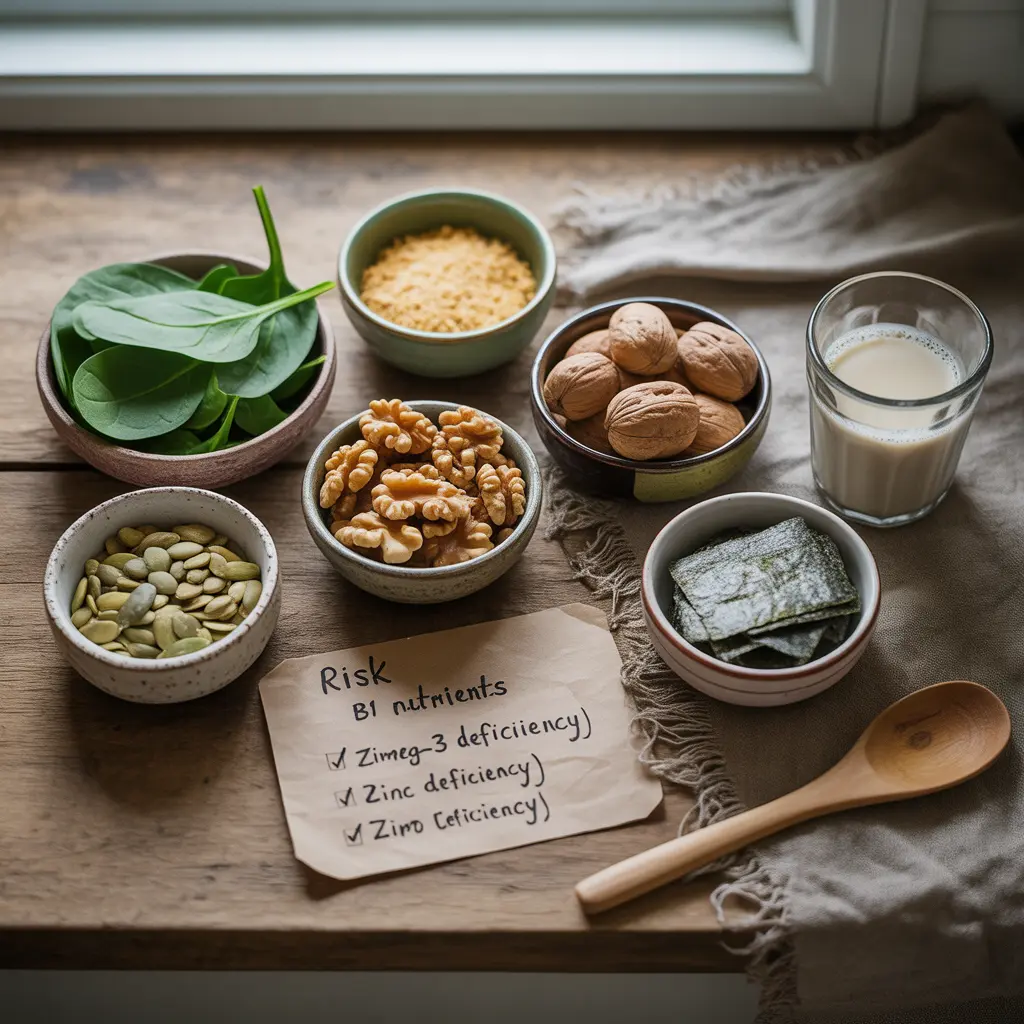
Calcium bioavailability varies widely: almonds absorb at about 20%, fortified plant milks match dairy at 30-32%, and kale and bok choy reach 40-60%, outperforming dairy. Spinach, despite high calcium content, absorbs poorly due to oxalic acid. Choosing high-bioavailability sources changes the practical strategy entirely.
ALA from flaxseed, chia, and walnuts converts to the active DHA and EPA forms at only 5-10% efficiency, dropping further under high dietary omega-6 conditions and in older adults. Direct algae-sourced DHA supplementation is the only fully reliable omega-3 prevention strategy on a plant diet.
B12 stands in a category of its own: it cannot be reliably obtained from any plant food in sufficient amounts, and no dietary strategy changes this. This is the one action every plant-based eater must take without exception. For the complete evidence base on supplementation, Examine.com provides comprehensive, citation-backed research.
Vegan Nutrient Deficiencies: Prevention Map
Your 7-Step Daily Protocol for Preventing Vegan Nutrient Deficiencies
This protocol converts the deficiency science into a daily framework that is practical, affordable, and comprehensive. Applied consistently, it covers every high-risk gap without requiring obsessive nutrient tracking.
▼
▼
▼
▼
▼
▼
See the vegan supplements guide for exact supplement recommendations and the vegan blood test guide for the testing framework. The ultimate 30-day vegan meal prep plan builds these dietary strategies into ready-to-cook daily meals.
20 Years of MENA and Mediterranean Cooking: How Traditional Cuisines Solve Nutrient Density Instinctively
Two decades in professional MENA and Mediterranean kitchens revealed something remarkable: the traditional cuisines developed nutrient-density strategies over centuries that map directly onto modern deficiency prevention science. The food pairings and techniques were not designed by nutritionists, but they solve the same problems.
The clearest example is the lemon-on-legumes habit. In virtually every professional kitchen across the Mediterranean and MENA region, citrus was added to lentil dishes and chickpea stews as a standard practice considered a flavour necessity. What the science confirms is that this habit simultaneously maximised iron absorption. The cooks did not know about non-haem iron bioavailability. The nutritional outcome was the same regardless.
The second is the tahini habit. Sesame paste appears across MENA cooking in dozens of forms: sauce, dip, marinade, soup enricher. Tahini provides zinc, calcium, and protein in concentrated form. Eaten daily in small quantities, as is traditional, it provides a meaningful zinc contribution alongside legumes and seeds.
The third principle is dietary diversity as the default. Professional MENA and Mediterranean cooking never relies on one or two staples. A typical meal contains lentils, multiple vegetables, herbs, seeds, olive oil, and citrus simultaneously. This variety is the most efficient insurance against nutrient gaps: different foods cover different deficiencies and absorption-enhancing compounds appear together naturally.
The Middle Eastern vegan recipes guide and the vegan diet nutrition and science guide translate these principles into everyday cooking.
Every meal in the Ultimate 28-Day Vegan Meal Plan + Grocery List, (Complete Solution) is nutritionist-approved and designed so every meal meets protein, iron, and B12 needs. Simple recipes with common ingredients, vibrant photo for every recipe, and an easy grocery list. Save 7+ hours weekly on meal planning.
Conclusion: Vegan Nutrient Deficiencies Are Preventable, Not Inevitable
Vegan nutrient deficiencies are the most cited reason people hesitate before adopting or committing to a plant-based diet. The six highest-risk deficiencies, B12, vitamin D, DHA, iron, zinc, and iodine, are all real, but they are all addressable. B12 and vitamin D require daily supplementation. DHA requires algae oil. Iron, zinc, and iodine are manageable through informed food choices and strategic pairing. Annual blood testing confirms the protocol is working and allows targeted adjustments.
The gap between a poorly planned vegan diet and a nutritionally optimised one is not large. It is two to three supplements, a consistent lemon-on-legumes habit, a weekly serving of nori, and a pumpkin seed routine. These vegan nutrient deficiencies do not require heroic dietary effort to prevent. They require information, consistency, and the periodic reality check of a blood test. Apply the seven-step protocol in this guide and the most feared barrier to plant-based nutrition becomes one of its most manageable aspects.
The Ultimate 28-Day Vegan Meal Plan + Grocery List, (Complete Solution) builds complete nutrition into 28 days of ready-to-cook meals. Over 40 nutritionist-approved recipes, helpful vegan tips and guides, and a complete 28-day calendar with shopping lists. Print and use today.
Frequently Asked Questions About Vegan Nutrient Deficiencies
1. What are the most common vegan nutrient deficiencies?
The six highest-risk deficiencies are B12, vitamin D, omega-3 DHA, iron, zinc, and iodine. B12 and DHA require supplementation for virtually all plant-based eaters. The others can be managed primarily through informed dietary choices.
2. Do all vegans become nutrient deficient?
No. Plant-based eaters who supplement B12 and D3, include algae oil DHA, and eat a diverse diet rich in legumes, seeds, and greens can maintain excellent nutrient status long-term. Deficiency results from an unplanned diet, not plant-based eating itself.
3. How do I know if I have a nutrient deficiency from being vegan?
Blood testing is the only reliable confirmation. Test serum B12 or active B12, ferritin, 25(OH)D, and serum zinc as a minimum. Symptoms like fatigue or hair loss are non-specific and can reflect multiple causes.
4. Is B12 deficiency dangerous for vegans?
Yes. Untreated B12 deficiency causes progressive, potentially irreversible neurological damage. Symptoms can take years to appear while damage occurs silently. Daily methylcobalamin supplementation of 250mcg or more is the only fully reliable prevention.
5. Can I get enough iron on a vegan diet?
Yes, with strategy. Pairing iron-rich plant foods (lentils, chickpeas, tofu) with vitamin C at the same meal increases non-haem iron absorption by up to 300%, making iron deficiency entirely preventable for most people on a plant diet.
6. What is the best vegan source of omega-3 fatty acids?
Algae oil is the best source: it provides direct DHA, the active form the brain and heart require. ALA from flaxseed, chia, and walnuts converts at only 5-10% efficiency. A 250-500mg algae oil supplement daily is the gold standard.
7. How do vegans prevent zinc deficiency?
Eat pumpkin seeds, hemp seeds, cashews, lentils, and tahini daily. Soak legumes overnight to reduce phytate and improve zinc absorption by 20-30%. Test annually and supplement if blood levels are low.
8. Is vitamin D deficiency more common in vegans?
Vitamin D deficiency is similarly common across vegans and omnivores in low-sunlight regions since the primary source is sun exposure. The main dietary gap: oily fish, which vegans do not eat. Lichen-sourced D3 at 1,000-2,000 IU daily in autumn and winter is the recommended strategy.
9. Do vegans need to worry about calcium deficiency?
Calcium deficiency is lower risk on a plant diet than often assumed, provided the right sources are chosen. Kale, bok choy, fortified plant milks, almonds, and calcium-set tofu all provide meaningful calcium with good bioavailability. Avoid relying on spinach as a calcium source as its oxalic acid content severely reduces absorption.
10. How often should vegans get blood tests for nutrient deficiencies?
Annual testing is recommended. Test active B12, ferritin, 25(OH)D, and serum zinc as a minimum. Test sooner if experiencing fatigue, hair loss, or brain fog. See the vegan blood test guide for full details.
11. Can children on a vegan diet develop nutrient deficiencies?
Yes, with higher risk due to nutrient demands during growth and brain development. B12, D3, DHA, iron, zinc, and iodine all require careful monitoring. Consultation with a paediatric dietitian is strongly advisable for parents of vegan children.
12. What is the single most important thing to do to prevent vegan nutrient deficiencies?
Supplement B12 daily without exception. It is the only deficiency that cannot be addressed through any dietary strategy, carries severe neurological consequences if untreated, and is 100% preventable with an inexpensive daily methylcobalamin supplement.
Still spending hours figuring out what to eat?
What’s included in your download
- 40+ nutritionist-approved recipes
- Complete 28-day calendar
- Meets protein, iron & B12 needs
- Family & meal prep friendly
- Vibrant photo for every recipe
- Simple, common ingredients
Instant PDF download. No subscriptions. No waiting.