Disclaimer: This article is for informational and educational purposes only. Nutritional needs vary by individual. Consult a registered dietitian for personalised guidance if you have a health condition, allergy, or specific dietary requirement.
Vegan Meal Prep for Beginners: The Complete Plant-Based Weekly Planning Guide
Why Vegan Meal Prep Works Better Than Any Other Approach
Vegan meal prep for beginners has a structural advantage that most guides overlook: plant-based foods are inherently more prep-friendly than animal proteins. Cooked chicken stored for four days in the fridge dries out. Cooked lentils stored for four days develop deeper, more complex flavour as the spices penetrate the legume. Cooked grains stored for three days absorb any dressing or sauce they sit in. Roasted vegetables keep their texture and intensify in sweetness. Plant foods, unlike most animal proteins, do not degrade in quality during refrigerated storage within sensible timeframes.
This is not a minor practical point. It is the structural reason why a vegan meal prep approach, where batch cooking happens once and components are assembled into different meals across the week, works so much more reliably than an omnivore equivalent. The food gets better, not worse, as the week progresses. A lentil dal on day four is more flavourful than on day one. A tahini-dressed grain bowl on day three tastes better than freshly made. This quality trajectory makes vegan meal prep for beginners genuinely rewarding rather than a discipline exercise in eating mediocre food.
Beyond the food quality argument, the financial case for vegan meal prep is compelling. Research consolidated at NutritionFacts.org consistently supports whole-food plant-based eating as the most cost-effective and health-positive dietary pattern. Dried lentils, chickpeas, and grains are among the cheapest foods per calorie available anywhere. A batch of 500g dried lentils cooked Sunday produces approximately 1.5kg of cooked lentils, providing five to six generous meal servings for under two dollars. The same protein calories from any processed convenience food, vegan or otherwise, cost five to ten times more. For the full financial picture of plant-based eating on a budget, the cheap vegan meals guide on this site covers cost-per-meal strategies that integrate directly with the prep approach in this guide.
-
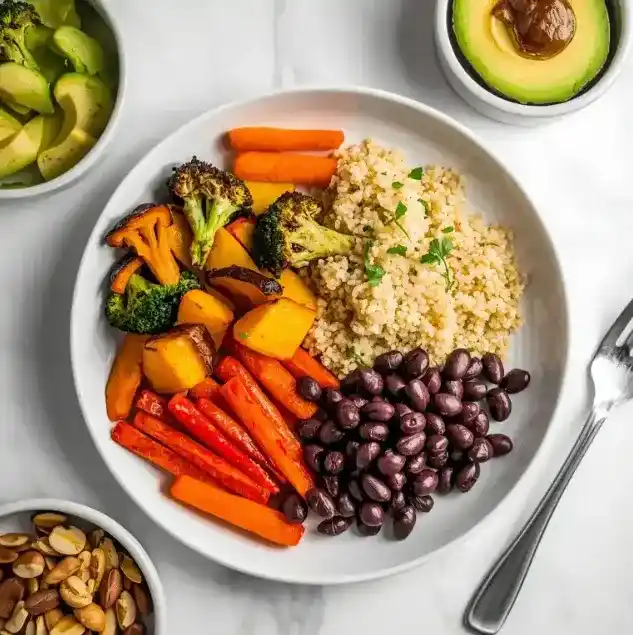
Complete 28-day calendarEvery breakfast, lunch, dinner & snack planned
-
40+ nutritionist-approved recipesVibrant photo for every single dish
-
Easy weekly grocery listsShop smart, spend less, waste nothing
-
Protein, iron & B12 at every mealNutritionally complete — no guesswork
-
Saves 7+ hours weeklyPrint it once, follow it all month
-
Bonus: Nutrition Guide ToolkitVegan tips, guides & family meal prep
Build the Foundation: The Beginner Vegan Prep Pantry
Vegan meal prep for beginners works most reliably when the pantry is stocked with a small set of versatile foundational ingredients rather than a long shopping list of speciality items. These four categories cover every component needed for a week of varied, nutritious plant-based meals.
The Beginner Pantry Shopping List: Week One
For a first-week vegan meal prep setup, buy: 500g dried red lentils, 2 cans chickpeas, 400g firm tofu, 500g brown rice or quinoa, 400g whole wheat pasta, 1 large sweet potato, 1 head broccoli, 1 cauliflower, 1 bag frozen spinach, 1 jar tahini, olive oil, tamari or soy sauce, 1 lemon, garlic bulb, and a basic spice set (cumin, coriander, turmeric, smoked paprika). This shopping basket costs approximately 20 to 30 dollars depending on location and produces four to five days of lunches and dinners for one person. The vegan pantry staples guide on this site covers the full pantry setup in detail, including which items to buy in bulk for maximum savings.
The key principle in building a vegan meal prep pantry is prioritising dried and frozen over fresh where practical. Dried legumes cost a fraction of canned, store for months, and cook in 20 to 40 minutes. Frozen vegetables retain full nutritional value and eliminate the waste from fresh produce that does not get used before it deteriorates. A well-stocked vegan prep pantry makes the decision to cook simple: everything needed is already in the kitchen, and the shopping list for week two is a short top-up rather than a new expedition.
The Component Method: Cook Once, Eat Many Ways
The foundational insight of vegan meal prep for beginners is the shift from cooking complete recipes to cooking components that combine in different ways across the week. This is the single most important structural change a beginner can make, and it is what distinguishes meal prep that works from meal prep that leads to eating the same dish five days in a row until enthusiasm collapses.
The Component Framework: Four Layers, Infinite Combinations
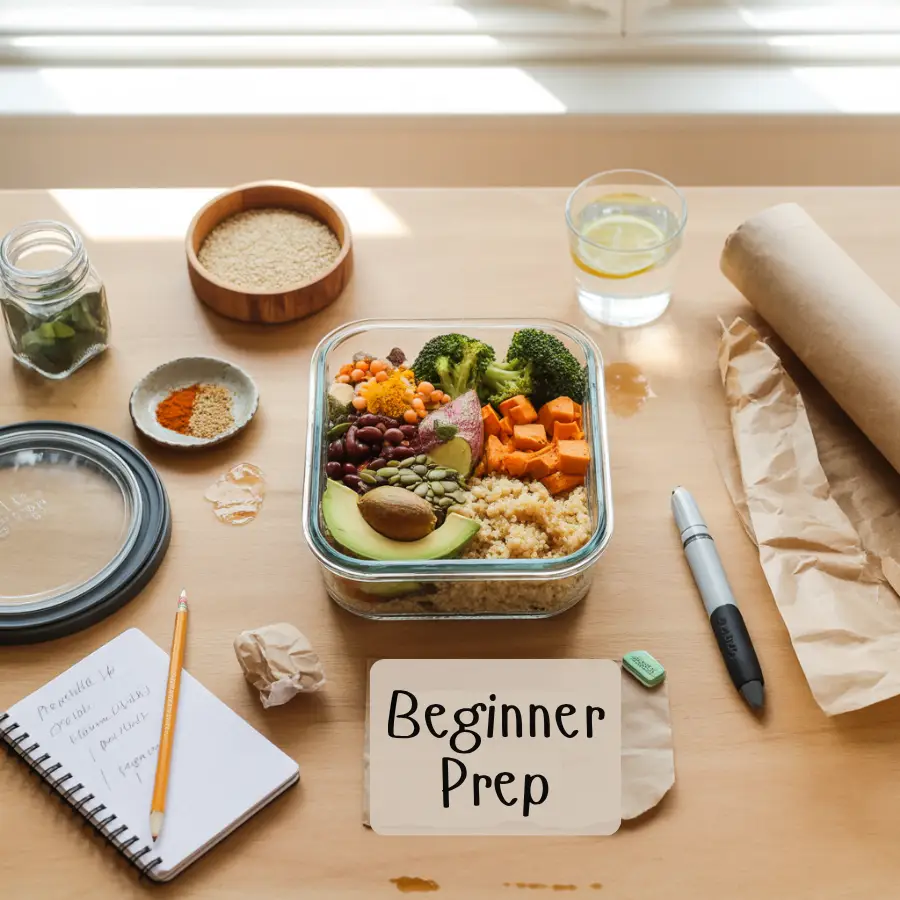
Layer 1: A grain. Cook one large batch of brown rice, quinoa, or whole wheat pasta. This forms the carbohydrate base of every lunch and dinner.
Layer 2: A protein. Cook one large pot of lentils or chickpeas, and bake or pan-fry one block of tofu or tempeh. This covers protein needs for every meal.
Layer 3: Roasted vegetables. Roast two large trays of whatever vegetables are seasonal and available: sweet potato, broccoli, cauliflower, red onion, courgette. These become the vegetable element of every meal.
Layer 4: Two sauces or dressings. A tahini-lemon sauce and a spiced tomato sauce cover almost every flavour direction. Tahini dressing makes a grain bowl or salad. Spiced tomato transforms the same lentils into a curry, a stew, or a pasta sauce depending on what is added.
Combined differently each day, these four layers produce genuinely different meals: a grain bowl Monday, a wrap Tuesday, a soup Wednesday (by blending the lentils with stock), a pasta Thursday, a grain salad Friday. The components are the same. The meals feel entirely different.
The sauce layer deserves specific attention because it is what prevents meal prep monotony. Two contrasting sauces, one creamy (tahini, cashew, or avocado-based) and one tomato-based (spiced passata, harissa, or curry sauce), cover essentially every flavour direction a plant-based meal can take. Making both on Sunday takes 10 minutes combined and transforms the week’s eating from repetitive to varied. The vegan cooking techniques guide covers sauce-making, flavour-building, and the technical skills that make simple components taste exceptional.
Nutritional Completeness Within the Component System
One concern beginners sometimes have about the component method is whether assembly meals cover nutritional needs as thoroughly as planned recipes. The answer is yes, provided the component selection follows the framework: legume protein covers lysine and fibre, whole grain covers complex carbohydrates and additional protein, roasted vegetables cover vitamins, antioxidants, and phytonutrients, and the sauce layer provides healthy fat for fat-soluble vitamin absorption. This structure maps directly to the balanced whole-food plant-based eating framework explored in the whole food vegan diet guide, which provides the nutritional science behind why this combination approach consistently covers macronutrient and micronutrient needs.
5 Beginner-Proof Vegan Meal Prep Templates
Each template below is a complete prep unit: one primary protein component, one grain, one vegetable preparation, and the assembly logic that produces varied meals across four to five days. All five are designed for beginners with minimal kitchen experience.
Batch cook: 500g red lentil dal (lentils, canned tomatoes, cumin, coriander, garlic, turmeric). Cook 400g brown rice. Roast 2 trays sweet potato and broccoli. Make tahini-lemon dressing.
Meals from this: Dal over rice (Mon), grain bowl with roasted veg + tahini (Tue), dal thinned into soup (Wed), rice stuffed peppers (Thu), dal wraps with avocado (Fri).
Batch cook: Bake 600g cubed tofu (tamari, garlic, smoked paprika). Simmer 2 cans chickpeas in spiced tomato. Cook quinoa 400g. Roast cauliflower and red onion. Make miso-ginger dressing.
Meals from this: Tofu grain bowl (Mon), chickpea curry with quinoa (Tue), tofu wrap with roasted veg (Wed), chickpea and quinoa salad (Thu), tofu stir-fry with greens (Fri).
Batch cook: Spiced black beans (2 cans, cumin, chilli, lime). Cook farro or brown rice. Roast sweet potato, corn, and peppers. Make avocado-lime dressing and salsa.
Meals from this: Taco bowls (Mon/Tue), black bean soup (Wed), rice and bean burritos (Thu), grain salad with salsa dressing (Fri). Latin-inspired week, maximum flavour from minimum effort.
Batch cook: Marinate and bake 400g sliced tempeh (tamari, ginger, maple, sesame). Cook soba noodles or rice. Steam broccoli and edamame. Make peanut sauce and sesame dressing.
Meals from this: Tempeh noodle bowl (Mon), tempeh rice bowl with peanut sauce (Tue), tempeh salad with sesame dressing (Wed), noodle soup with edamame (Thu), tempeh wraps (Fri). Highest protein week of the five.
Batch cook: Large pot of lentil and vegetable soup (5 to 6 servings). Cook whole wheat pasta. Roast a full tray of mixed root vegetables. Prepare hummus from 2 cans chickpeas.
Meals from this: Soup with bread (Mon/Tue), pasta with roasted veg and hummus (Wed), grain bowl with roasted roots (Thu), soup thinned and blended for a smooth version (Fri). Maximum warmth, ideal for colder weeks.
The tempeh week delivers the highest protein per meal of the five templates at 30 to 40g per serving. For those with specific protein targets, the broader meal protein framework and how to reach 100g or more daily is covered in the guide to getting 100g protein on a vegan diet on this site, which maps directly onto the batch cooking approach in these templates.
Storage Rules: What Keeps, What Freezes, What Doesn’t
The most common beginner mistake in vegan meal prep is either over-preparing and wasting food, or under-preparing and running out mid-week. Understanding storage behaviour of plant-based components prevents both problems.
Container Strategy: The Most Practical Beginner Storage Setup
Research on food safety via PubMed confirms cooked legumes stored airtight at fridge temperature remain safe and nutritionally intact for four to five days. Glass containers with airtight lids are worth the investment for beginners. They go from fridge to microwave without transfer, stack efficiently, do not absorb odours, and make the fridge visible and organised. Four large 1-litre containers (for batch components) and four medium 500ml containers (for individual meal portions) is the minimum effective setup. Label everything with masking tape and a marker: food name and date prepared. This simple habit eliminates the mystery container problem that derails most beginner meal prep attempts after two weeks. A fully organised vegan kitchen setup, including storage, equipment, and pantry design, is covered in the vegan kitchen essentials guide on this site.
The Freshness Strategy: Prep in Two Batches
Rather than preparing the full week on Sunday, consider a two-batch approach: Sunday prep covers Monday through Wednesday, Wednesday evening prep covers Thursday through Saturday. This two-batch system keeps food fresher than a single Sunday prep that is expected to last five days, reduces the volume cooked at any one time, and allows for mid-week flavour pivots based on what sounds appealing. It is particularly useful for beginners who have not yet developed confidence in storage timing. For busy professionals specifically, the timing strategies for fitting prep into a full working week are covered in the meal prep for busy professionals guide.
The Sunday Prep Timeline: 90 Minutes to a Full Week
This timeline is designed for a complete beginner vegan meal prep session using the lentil base week template. The sequencing is critical: start what takes longest first, then fill waiting time with faster tasks. Everything runs simultaneously rather than sequentially, which is how 90 minutes produces a full week of food.
The simultaneous cooking discipline, running the rice, vegetables, and lentils at the same time rather than one after another, is what keeps the session at 90 minutes rather than three hours. This is the fundamental skill of efficient vegan meal prep for beginners: understanding which tasks are active (requiring attention) and which are passive (running unattended), and filling passive windows with active tasks. With two or three prep sessions under your belt, this sequencing becomes automatic. The full strategic approach to week-long meal preparation is explored in the 30-day vegan meal prep plan on this site.
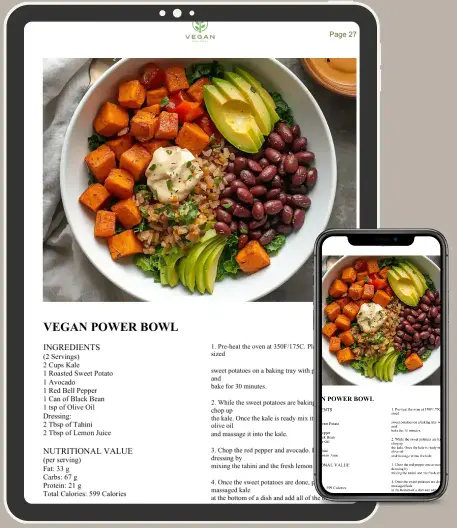
28-Day Vegan Meal Plan
+ Grocery List
Complete Solution · Nutritionist-Approved · Print & Use Today
Read on any device · No apps needed
7-Step Vegan Meal Prep Protocol for Beginners
Choose one template and commit to it for the first two weeks. The biggest beginner mistake is trying to cook too many different things in the first session. Pick one of the five templates above, shop for exactly those ingredients, and follow the session structure. Do the same template the following week. By week three, the process is familiar enough to introduce variation. Consistency builds confidence faster than variety in the early stages of vegan meal prep for beginners.
Shop on Saturday, prep on Sunday morning. Saturday shopping means Sunday prep begins with fully stocked ingredients and no decision fatigue about what to make. Morning prep sessions are more productive than afternoon or evening because energy and focus are higher. Prep before the weekend’s social commitments rather than fitting it around them. A 90-minute Sunday morning session that finishes before noon leaves the rest of the weekend completely free.
Use the component method, not complete recipe cooking. Cook four components (grain, protein, vegetable, sauce) rather than five different complete dishes. Components combine into different meals each day, which prevents the monotony that kills most people’s meal prep habits within three weeks. The combination approach also reduces the cognitive load of prep: four components are far easier to manage simultaneously than five separate recipes with different timing requirements.
Double your legume batch and freeze half. Dried lentils and chickpeas take the same effort to cook in 500g as in 250g. Cooking double and freezing half gives you a week two protein foundation with zero additional effort. Frozen cooked legumes defrost overnight in the fridge or in minutes in warm water. This single habit saves 20 to 25 minutes every other prep session and ensures the freezer always has a protein component available for unplanned days when prep does not happen. The full freezer meal strategy for vegan beginners is covered in the vegan freezer meals guide on this site.
Prepare two contrasting sauces every Sunday. One creamy sauce (tahini-lemon, cashew-based, or avocado dressing) and one tomato or miso-based sauce. Alternating between them day to day makes the same components taste genuinely different. A grain bowl with tahini dressing on Monday and the same components with spiced tomato on Tuesday are different eating experiences despite sharing the same legume and grain. Sauces store for 5 to 7 days in the fridge and take 5 to 10 minutes to prepare.
Track your nutrition for the first month to build intuition. Vegan meal prep for beginners works nutritionally when the component system covers protein, carbohydrate, fat, and fibre across the day. But beginners often underestimate protein specifically, because plant protein numbers feel unfamiliar. Using a nutrition tracking app for the first four weeks confirms whether your prep sessions are meeting your targets. Once the pattern is established, tracking becomes unnecessary. A comprehensive overview of vegan nutritional targets and how to meet them is available through the detailed nutrition resources on this site.
Build a prep ritual around the session, not just the food. The most sustainable vegan meal prep for beginners is the one that feels enjoyable rather than obligatory. Play music or a podcast during the session. Make a cup of tea or coffee before you start. Keep the prep space clear and organised before beginning. These small rituals signal to your brain that the prep session is a pleasurable weekly habit rather than a chore, which is what determines whether you are still doing it in month four rather than having abandoned it in week three.
Chef’s Perspective: MENA Batch Cooking Traditions That Inspired This System
In over twenty years of professional cooking across Lebanon, the Gulf, and Saudi Arabia, I have cooked in traditions that are essentially structured batch cooking operations, producing components that feed families across multiple meals through the week. The MENA domestic kitchen did not think of this as “meal prep,” it thought of it as cooking. But the logic is identical.
The Lebanese tradition of making a large pot of ful medames or lentil soup at the start of the week and eating from it across different meal contexts is exactly the component method I describe in this guide. The same pot of lentils becomes soup for lunch, a filling for flatbread wraps for dinner, a base for a grain bowl the next day, and a thinned broth with extra vegetables on the fourth day. No two meals taste the same because the context and additions change, but the cooking effort was concentrated once.
Hummus in a MENA household is rarely made in single servings. It is made in a large batch, kept in the fridge, and used as a spread for flatbread, a dip for vegetables, a sauce base under roasted cauliflower, or a topping for rice dishes across a week of eating. Tahini dressing is mixed in a large jar and used on everything. The spice pastes, harissa, chermoula, and baharat blends, are prepared in quantity and stored, becoming the flavour architecture of every meal without requiring fresh preparation each time.
This is the wisdom I build from when teaching vegan meal prep: cook with the generosity and efficiency of a MENA home kitchen. Cook more than you need for one meal. Build your sauces and seasonings in advance. Trust that plant food improves with a day or two in the fridge. The flavour traditions of Lebanon, Saudi Arabia, and the wider region were built around legumes, grains, and plant foods cooked in bulk and eaten with intelligence and creativity across the week. That is exactly what vegan meal prep for beginners is.
Frequently Asked Questions About Vegan Meal Prep for Beginners
How long does vegan meal prep take for a beginner?
A complete beginner vegan meal prep session following the Sunday timeline in this guide takes 90 minutes to 2 hours, producing four to five days of lunches and dinners. This time reduces to 60 to 75 minutes with two or three sessions of practice, as the sequencing of simultaneous cooking becomes familiar. First-time preppers should budget 2 hours and resist the temptation to add more components than the template calls for. Complexity is the enemy of sustainability in early vegan meal prep for beginners.
How many meals can I make from one vegan meal prep session?
A single 90-minute session following one of the five templates in this guide produces components for 8 to 10 meal occasions, covering lunches and dinners for four to five days for one person. For two people, the same session covers two to three days. The component method means the number of distinct meal combinations exceeds the number of components: four components typically generate five to six genuinely different meal experiences when assembled differently each day with different sauces and toppings.
What equipment do I need for vegan meal prep as a beginner?
The minimum effective equipment for vegan meal prep for beginners is: one large pot (5 litres) for cooking legumes and grains, two large baking trays for roasting vegetables, four large airtight containers for component storage, a sharp chef’s knife, and a chopping board. Everything else is optional. A food processor speeds up hummus and sauce making. A blender makes soup smoother. But none of these are necessary to execute the beginner prep templates in this guide. Start with what you have, and add equipment only when a specific limitation becomes genuinely frustrating.
Will meal-prepped vegan food taste good by day four?
Yes, and often better than day one. This is the structural advantage of plant-based foods in meal prep. Cooked lentils and chickpeas absorb spices and develop deeper flavour over 48 to 72 hours in the fridge. Roasted vegetables keep their texture and intensify in sweetness. Whole grains develop a pleasant chew. Tahini dressings mellow and become more complex. The only components that do not improve with time are fresh greens (use within two days) and avocado (prepare fresh). Plan to eat the fresh-component meals at the start of the week and the slow-improving components later in the week for maximum food quality.
Is vegan meal prep actually cheaper than buying food daily?
Substantially cheaper. A week of lunches and dinners from the lentil base template costs approximately 15 to 25 dollars in ingredients, depending on location, covering 8 to 10 meal occasions. The equivalent in purchased lunches and takeaway dinners costs 50 to 120 dollars in most cities. The per-meal cost from vegan batch cooking of dried legumes and whole grains is among the lowest of any dietary approach. Per-meal costs from batch cooking dried legumes and whole grains are consistently among the lowest of any dietary approach.
What if I get bored eating the same components every day?
The component method is designed to prevent this. The same lentils and rice become a bowl, a wrap, a soup, and a salad across the week by changing the sauce, toppings, and assembly format. Two contrasting sauces prepared each Sunday create the most effective flavour variation. Beyond this, rotating between the five templates across five weeks provides a completely different flavour direction each week. If monotony is still a concern, the addition of one wildcard ingredient bought fresh mid-week, avocado, fresh herbs, a different sauce, pickled vegetables, changes the character of all remaining meals significantly with minimal additional effort.
Can I do vegan meal prep if I have very little cooking experience?
Yes. The five beginner templates in this guide require only four basic cooking skills: boiling grains, simmering lentils, roasting vegetables in the oven, and making a simple dressing. None require advanced technique. Red lentils are particularly forgiving: they cook in 20 to 25 minutes, require no soaking, and produce a reliable result even with inconsistent heat management. Roasted vegetables are equally forgiving: cut into similar-sized pieces, toss in oil and salt, put in a hot oven, pull them out when they look golden. These are genuinely beginner-safe cooking operations, and the beginner vegan diet guide on this site covers the foundational knowledge needed before starting a prep routine.
How do I keep meal prep interesting week after week?
Rotate between the five templates across consecutive weeks. After five weeks, you have a full rotation and can begin again with the same templates but different seasonal vegetables. Change the spice profile of the same components across weeks: the same lentils taste completely different spiced with cumin and coriander one week versus harissa one week versus Chinese five-spice the next. Introduce one new sauce or dressing monthly. Follow seasonal availability for vegetables, which naturally rotates the flavour profile without deliberate planning. Sustained engagement comes from rotating between the five templates and experimenting with different spice profiles each week.
What are the most important nutrients to check when meal prepping as a vegan?
The five beginner templates cover protein, complex carbohydrates, healthy fat, and dietary fibre well when followed as designed. The nutrients that require specific attention beyond the component system are: vitamin B12 (must supplement, not available from plant foods reliably), vitamin D (supplement year-round in most climates), and iodine (use iodised salt or supplement). Omega-3 from flaxseed, chia, or hemp seeds can be added to any meal prep template as a daily tablespoon. For a complete map of nutrient gaps to manage on a vegan diet, B12, vitamin D, and iodine are the three essential supplements for any plant-based meal prep approach.
Should I meal prep breakfast as well as lunch and dinner?
For beginners, focus lunch and dinner prep first. Once that is established (two to three weeks), add breakfast prep. Overnight oats are the simplest vegan breakfast prep option: combine rolled oats, plant milk, chia seeds, and toppings in jars on Sunday, and breakfast is ready to grab from the fridge every morning. They keep four days easily. A batch of high-protein smoothie packs (frozen fruit, spinach, hemp seeds, flaxseed portioned into bags) provides a second breakfast option. Batch-cooked porridge (stovetop oats) also keeps three days in the fridge and reheats in two minutes. Breakfast prep adds 15 to 20 minutes to the Sunday session and eliminates morning decision fatigue entirely.
How do I scale vegan meal prep for two people or a family?
For two people, double every component quantity in the template. The prep time increases by approximately 15 to 20 minutes due to larger volumes and more chopping, not because the methods change. For families with children, keep the spice level moderate and serve components with simple toppings that children self-select. Lentil dal, brown rice, and roasted sweet potato works for all ages. The component method works particularly well for families because adults can assemble more complex bowls while children eat simpler combinations from the same components. For families, doubling all template quantities and keeping spice levels moderate covers all ages from the same prep session.
What is the single biggest mistake beginners make with vegan meal prep?
Preparing too many different things in the first session. Beginners who try to cook five different complete dishes, each with its own recipe, shopping list, and timing, spend three or four hours in the kitchen, feel exhausted, and do not repeat the experience the following week. The templates in this guide are designed around four components that run simultaneously, keeping the session to 90 minutes. The second most common mistake is not labelling containers, which leads to mystery-fridge syndrome by day three. Both mistakes are structural rather than skill-based, and both are solved by following the component method and the Sunday timeline exactly as designed for the first two to three sessions before adding complexity.
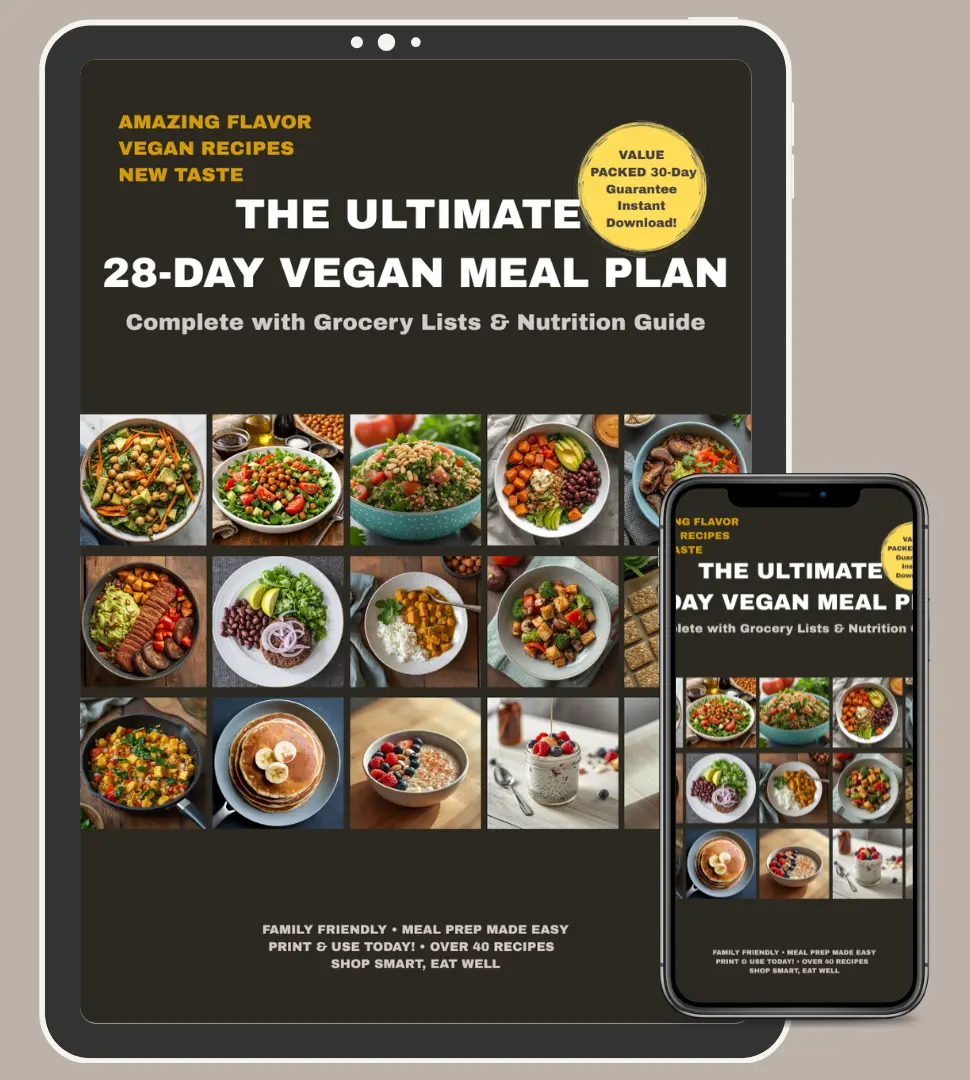
Still spending hours figuring out what to eat?
What’s included in your download
- 40+ nutritionist-approved recipes
- Complete 28-day calendar
- Meets protein, iron & B12 needs
- Family & meal prep friendly
- Vibrant photo for every recipe
- Simple, common ingredients
Instant PDF download. No subscriptions. No waiting.
Conclusion: Vegan Meal Prep for Beginners Is a Skill, Not a Chore
The shift from thinking about vegan meal prep for beginners as a weekly obligation to thinking about it as a weekly skill is what determines long-term sustainability. The first two sessions feel effortful. By session four, the sequencing is automatic and the 90-minute timeline feels short. By session eight, the prep session is something many people actively look forward to, both for the meditative quality of the cooking process and for the satisfaction of opening a well-stocked fridge on a Monday morning.
The five templates in this guide provide a full rotation that covers five weeks before repetition. The component method ensures that variety comes from assembly creativity rather than increased cooking complexity. The storage rules keep food safe and flavourful. And the Sunday timeline keeps the entire operation contained to a single morning session that leaves the rest of the week free from cooking decisions.
Vegan meal prep for beginners is the single most effective habit for making a plant-based diet affordable, nutritious, and sustainable over the long term. The system works best when it draws from a well-stocked pantry, builds on the whole-food plant-based principles covered in the whole food vegan diet guide, and scales naturally as cooking confidence grows. Start with one template, master the Sunday session, and let the habit build from there. Evidence-based vegan nutritional guidance is available through VeganHealth.org to support the nutritional completeness of your prep approach. Vegan meal prep for beginners, done this way, is one of the most worthwhile kitchen habits you can develop.