
Section 1: The Complete Vegan Nutrition Guide Framework: Cutting Through the Noise
Navigating vegan nutrition often feels like drinking from a firehose of conflicting information. This complete vegan nutrition guide is designed to cut through that noise with a principle of strategic focus. The truth is, if you eat a varied diet of whole plant foods, beans, grains, vegetables, fruits, nuts, and seeds, you will automatically meet 95% of your nutritional needs. The remaining 5% requires deliberate attention, not daily panic. This complete vegan nutrition guide distills that critical 5% into the “Big 8”: Protein, Vitamin B12, Iron, Calcium, Omega-3s, Vitamin D, Iodine, and Zinc.
Forget tracking 20+ micronutrients daily. Instead, this complete vegan nutrition guide promotes a sustainable “set and verify” system: implement smart habits and a minimal supplement routine, then use annual blood work for confirmation. This shift from daily anxiety to quarterly verification is the core philosophy of this complete vegan nutrition guide, transforming nutrition from a source of stress into a pillar of confident health.
Section 2: Protein Demystified: Moving Beyond the Hype
Let’s begin this complete vegan nutrition guide by dismantling the biggest myth. The Recommended Dietary Allowance (RDA) for protein is 0.8 grams per kilogram of body weight. For a 150-pound (68 kg) person, that’s just 54 grams. Active individuals or those building muscle may aim for 1.2-1.6 g/kg. The average vegan consuming adequate calories easily hits 60-80 grams daily. This complete vegan nutrition guide provides a ranked list of the most protein-dense vegan foods per 100-calorie serving, so you know where to focus:
- Seitan (Vital Wheat Gluten): ~20g protein. The champion for density, but unsuitable for those with celiac disease or gluten sensitivity.
- Nutritional Yeast (Fortified): ~18g protein. A powerful flavor and nutrient booster, not a primary calorie source.
- Lentils & Split Peas: ~8g protein. The workhorse legumes, perfect for soups, stews, and curries.
- Tempeh: ~10g protein. Fermented soy with enhanced digestibility and a hearty texture.
- Firm & Extra-Firm Tofu: ~11g protein. Incredibly versatile, absorbing any flavor profile.
- Black Beans & Kidney Beans: ~7g protein. Staple proteins for bowls, burritos, and chili.
- Edamame: ~9g protein. A perfect snack or addition to salads and stir-fries.
- Pumpkin Seeds (Pepitas): ~5g protein. A crunchy topping rich in zinc and iron.
To make protein intake effortless, follow this simple daily template from your complete vegan nutrition guide:
- Breakfast (Target 20g): A tofu scramble with spinach, or a smoothie with soy milk and a scoop of pea protein powder.
- Lunch (Target 25g): A substantial bean-based meal like a three-bean chili or a quinoa and chickpea salad.
- Dinner (Target 30g): A centerpiece with tempeh, seitan, or a large serving of lentils, accompanied by vegetables and a grain.
- Snacks (Target 10g): A handful of roasted chickpeas, peanut butter on apple slices, or a serving of edamame.
This approach yields ~85 grams with minimal effort. The conclusion from this complete vegan nutrition guide is clear: protein deficiency on a calorie-adequate, whole-food vegan diet is extraordinarily rare. Supplements like protein powders are convenient for athletes but are not a necessity for general health.
Section 3: Vitamin B12: The Non-Negotiable Pillar of Health
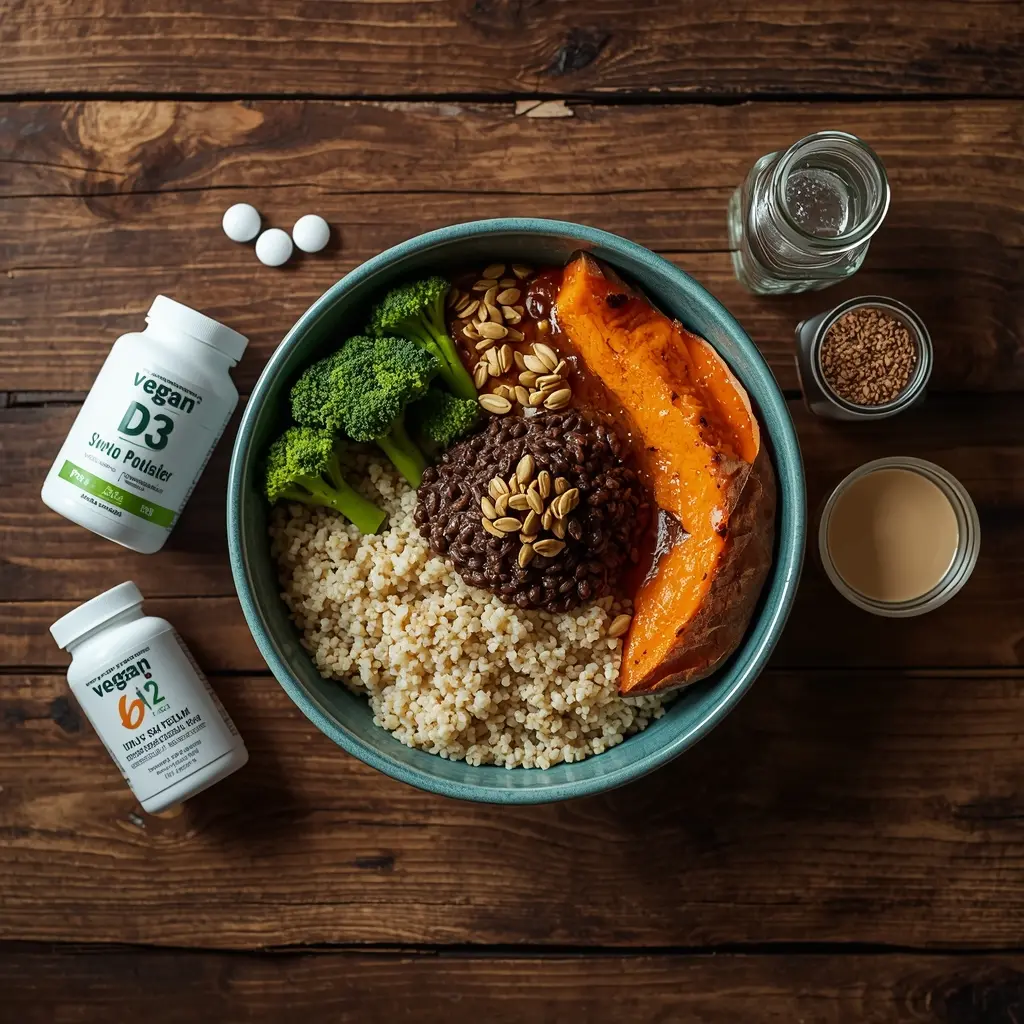
This section of the complete vegan nutrition guide contains the most critical information: Vitamin B12 supplementation is not optional; it is mandatory for long-term health. The RDA is 2.4 micrograms (mcg) daily, but absorption through the gut is limited. Therefore, this complete vegan nutrition guide recommends taking a supplement that provides 250-500 mcg daily or a larger dose of 2,000-2,500 mcg weekly. The form cyanocobalamin is well-researched, stable, and cost-effective.
The science is straightforward: Vitamin B12 is synthesized by microorganisms. Animals accumulate it from bacterial contamination of their feed or environment, or via direct supplementation in modern farming. When you choose a plant-based diet, you bypass the animal intermediary. While some vegan foods are fortified with B12 (certain plant milks, breakfast cereals, nutritional yeast), relying solely on them is risky due to inconsistent fortification levels. A direct supplement is the only guaranteed method.
A high-quality B12 supplement costs approximately $10 for a full year’s supply, a trivial investment for preventing irreversible neurological damage. Deficiency symptoms, including chronic fatigue, brain fog, numbness, and tingling in the extremities, can take years to surface, by which time damage may be permanent. This complete vegan nutrition guide mandates annual blood testing, checking serum B12 levels or the more sensitive marker methylmalonic acid (MMA). The final word in this complete vegan nutrition guide: Supplementing with B12 is safe, essential, and the most responsible choice for any vegan.
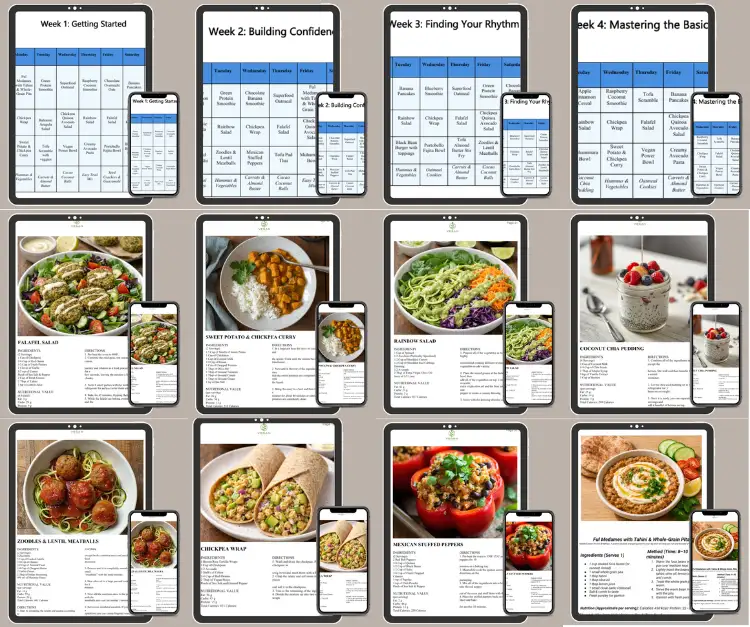
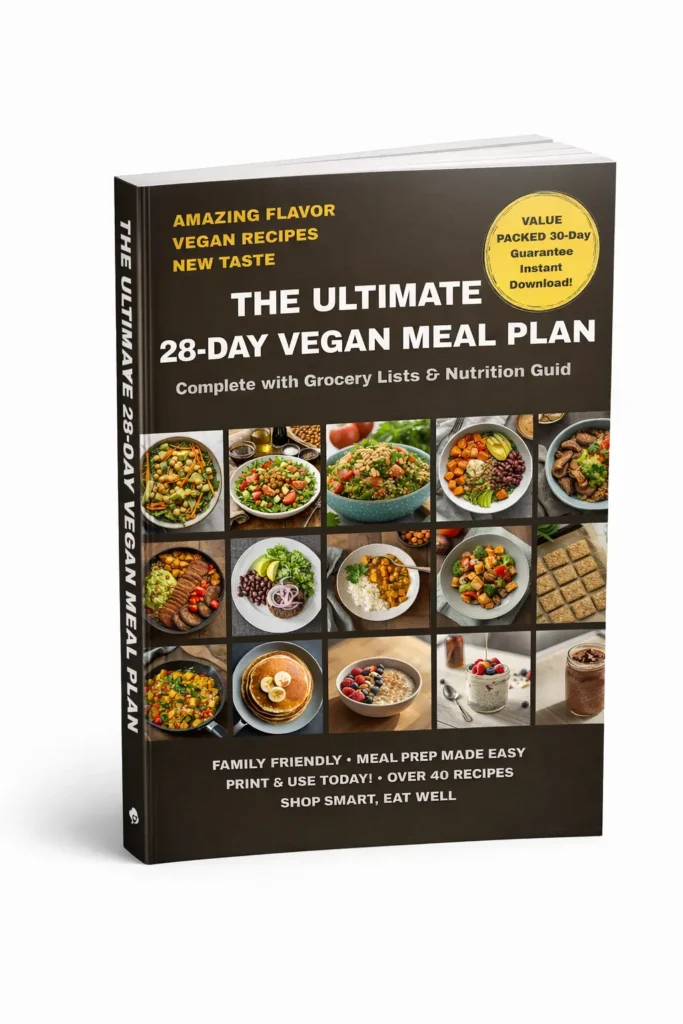
28-Day Vegan Meal Plan + Grocery list.
Transform your lifestyle with our comprehensive guide:
- 28-Day Meal Plan
- 4 Weekly Grocery Lists
- Balanced Macros
- Under $1 Per Serving
- 90-Min Sunday Prep
- Vegan Swaps Guide
- Nutrition Toolkit
- 36 Chef Recipes
Section 4: Iron: Mastering Absorption, Not Just Intake
Iron requirements differ: 8 mg daily for men and post-menopausal women, and 18 mg for menstruating women. Plant-based iron is called non-heme iron. While its absorption rate (2-20%) is more variable than the heme iron found in meat, this complete vegan nutrition guide provides the master strategy: maximize intake and strategically enhance absorption.
Top Iron Sources (per standard serving):
- Cooked Lentils (1 cup): 6.6 mg
- Cooked Spinach (1 cup): 6.4 mg
- Firm Tofu (1/2 cup): 6.2 mg
- Pumpkin Seeds (1/4 cup): 5.2 mg
- Canned Chickpeas (1 cup): 4.7 mg
- Blackstrap Molasses (1 tbsp): 3.5 mg
- Dark Chocolate (70%, 1 oz): 3.4 mg
- Cooked Quinoa (1 cup): 2.8 mg
The pivotal insight from this complete vegan nutrition guide is the power of Vitamin C. Consuming vitamin C-rich foods with your iron-containing meals can increase absorption by 2-3 times. Simple pairings make all the difference: add bell peppers to a lentil curry, squeeze lemon juice over a spinach salad, or have an orange with your iron-fortified cereal.
Conversely, be mindful of inhibitors. Tannins in coffee and tea and the calcium in supplements can significantly hinder iron absorption if consumed simultaneously. This complete vegan nutrition guide advises consuming these beverages and supplements at least one to two hours apart from your main iron-rich meals.
An “Iron-Optimized Day” from this complete vegan nutrition guide:
- Breakfast: Fortified oatmeal with sliced strawberries (iron + vitamin C).
- Lunch: Large spinach salad with chickpeas, red bell peppers, and a lemon-tahini dressing (iron + vitamin C).
- Dinner: Hearty lentil and tomato pasta sauce over whole wheat spaghetti (iron + vitamin C).
- Snack: A square of dark chocolate with a clementine.
This approach effortlessly exceeds 18 mg with superior bioavailability. For monitoring, this complete vegan nutrition guide recommends an annual test for serum ferritin, which measures your iron stores, not just the hemoglobin in your blood. Only supplement with iron if a blood test confirms a deficiency (low ferritin), as excess iron can be harmful.
Section 5: Calcium: Building Bones Without Dairy
Adults require 1,000 mg of calcium daily, increasing to 1,200 mg for women over 50 and men over 70. This complete vegan nutrition guide highlights the best, most absorbable plant-based sources:
- Fortified Plant Milks & Juices: ~300 mg per cup. Always check the label, as fortification levels vary.
- Calcium-Set Tofu: 350-450 mg per 1/2 cup. This is a game-changer. You must check the ingredients list for “calcium sulfate” as the coagulant.
- Cooked Collard Greens: 268 mg per cup. Remarkably bioavailable.
- Tahini (Sesame Seed Paste): 128 mg per 2 tablespoons.
- Cooked Kale & Bok Choy: 150-180 mg per cup.
- Almonds: 97 mg per 1/4 cup.
- White Beans: 161 mg per cup.
A Sample 1,200 mg Day from this complete vegan nutrition guide:
- Breakfast: Smoothie made with 1 cup fortified soy milk and a handful of kale (~400mg).
- Lunch: Large salad with 2 cups of raw bok choy and 2 tbsp tahini dressing (~250mg).
- Dinner: Stir-fry with 1/2 cup calcium-set tofu, broccoli, and fortified soy sauce over brown rice (~450mg).
- Snack: A handful of almonds (~100mg).
Crucially, vitamin D is required for efficient calcium absorption, which is why the next nutrient in this complete vegan nutrition guide is so important. Also, limit high sodium intake, as it can increase calcium excretion. This complete vegan nutrition guide suggests that if you do not regularly consume fortified plant milk or calcium-set tofu, a 500-600 mg calcium citrate supplement may be prudent, a good resources are here.
Section 6: Omega-3 Fatty Acids: The Brain and Heart Essentials
This part of the complete vegan nutrition guide clarifies a common point of confusion. Plants provide the essential omega-3 fat called ALA (alpha-linolenic acid). The body can convert ALA into the longer-chain EPA and DHA, which are critical for brain function, eye health, and reducing inflammation. However, the conversion rate is inefficient, estimated at 5-10% for EPA and 2-5% for DHA.
Strategy 1: Prioritize Daily ALA Intake.
The Adequate Intake (AI) for ALA is 1.6 g for men and 1.1 g for women. Excellent sources include:
- Ground Flaxseed: 2.4 g per tablespoon. This is the cheapest, easiest hack. Grind fresh and store in the fridge.
- Chia Seeds: 5 g per 2 tablespoons.
- Hemp Seeds: 3 g per 3 tablespoons.
- Walnuts: 2.5 g per 1/4 cup.
Strategy 2: Consider a Direct Algae Oil Supplement.
For optimal health, particularly for brain development, cognitive function, and cardiovascular protection, this complete vegan nutrition guide strongly recommends a direct source of EPA and DHA. Algae oil supplements provide these long-chain omega-3s directly, bypassing the inefficient conversion process. They are the original source from which fish accumulate their omega-3s. A dose of 250-500 mg of combined EPA/DHA daily is a wise investment, especially for pregnant and breastfeeding individuals. This complete vegan nutrition guide also emphasizes managing your omega-6 to omega-3 ratio by reducing intake of processed oils (corn, sunflower, soybean) and increasing daily omega-3s.
Section 7: Vitamin D: The Sunshine Vitamin You Probably Need to Supplement
The RDA for Vitamin D is 600 IU (15 mcg) for adults under 70, and 800 IU (20 mcg) for those older. Many experts now suggest 1,000-2,000 IU daily for optimal health. This complete vegan nutrition guide is blunt: it is nearly impossible to get sufficient vitamin D from food alone. While some mushrooms are exposed to UV light to increase their vitamin D2 content, and plant milks are often fortified, these are unreliable primary sources.
Your skin can synthesize vitamin D from direct sunlight (UVB rays). However, factors like living north of the 37th parallel (especially in winter), having darker skin, wearing sunscreen, and spending most days indoors make synthesis insufficient for most people. Therefore, this complete vegan nutrition guide recommends supplementation for the vast majority of individuals, vegan or not. Choose a vegan vitamin D3 supplement (derived from lichen), as it is more effective at raising and maintaining blood levels than D2. A dose of 1,000-2,000 IU daily is safe and effective. Test your 25-hydroxyvitamin D level annually, aiming for 30-50 ng/mL (75-125 nmol/L).
Section 8: Iodine: The Tiny Mineral with a Massive Impact
Iodine is essential for thyroid hormone production, which regulates metabolism. The RDA is 150 mcg daily. This complete vegan nutrition guide issues a clear warning: do not rely on seaweed as your primary iodine source. Iodine content in seaweed is astronomically variable. A single serving of kelp can contain thousands of micrograms, far exceeding the 1,100 mcg upper limit and potentially disrupting thyroid function.
The simplest and safest solution presented in this complete vegan nutrition guide is to use iodized table salt in your cooking. Just 1/2 teaspoon provides approximately 150 mcg. If you exclusively use sea salt, kosher salt, or Himalayan pink salt (which contain negligible iodine), you must take a 150 mcg potassium iodide supplement. Iodine deficiency can lead to hypothyroidism and goiter, making this a small but critical part of your routine.
Section 9: Zinc: The Guardian of Immunity and Cell Function
Zinc supports immune function, wound healing, and DNA synthesis. The RDA is 11 mg for men and 8 mg for women. Excellent plant-based sources include:
- Pumpkin Seeds: 2.9 mg per 1/4 cup.
- Hemp Seeds: 3.0 mg per 3 tablespoons.
- Lentils: 2.5 mg per cooked cup.
- Chickpeas: 2.5 mg per cooked cup.
- Cashews: 1.9 mg per 1/4 cup.
- Oats: 2.3 mg per cooked cup.
The challenge, as noted in this complete vegan nutrition guide, is that zinc absorption can be inhibited by phytates, found in legumes, grains, nuts, and seeds. You can improve bioavailability through food preparation techniques: soak beans and grains before cooking, choose fermented soy products like tempeh, and consume leavened bread like sourdough. Simply eating a varied diet that includes nuts and seeds daily typically provides sufficient zinc. A daily serving of pumpkin seeds is an excellent habit. Consider a 10-15 mg supplement only if you avoid nuts, seeds, and whole grains.
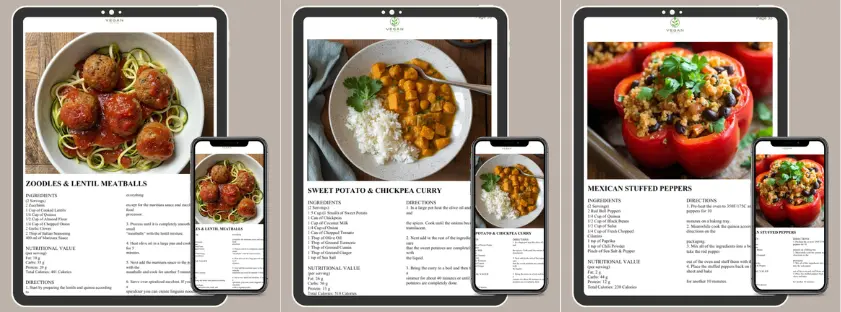
Tired of overthinking your meals?
What’s included in your download
- 28-Day Meal Plan
- 4 Weekly Grocery Lists
- Balanced Nutrtion, protein, iron, B12
- Under $1 Per Serving
- 90-Min Sunday Prep
- Vegan Swaps Guide
- Nutrition Toolkit
- Beginner Action Plan
- Dining Out Guide
- 36 Chef Recipes
Instant PDF download. No subscriptions.
Section 10: The “Set It and Forget It” Weekly Checklist
This complete vegan nutrition guide provides a simple, foolproof system to ensure nutritional coverage without obsessive tracking:
Daily Non-Negotiables (The Pillars):
- B12 Supplement: Take your chosen dose (daily or weekly).
- Vitamin D3 Supplement: 1,000-2,000 IU with a meal.
- Ground Flaxseed: 1 tablespoon in a smoothie, oatmeal, or salad.
- Iodized Salt: Use in cooking, or take your iodine supplement.
Daily Dietary Habits (Automatic with a Varied Diet):
- Include a serving of legumes (beans, lentils, tofu, tempeh) in at least two meals.
- Pair iron-rich foods (leafy greens, lentils) with a source of vitamin C (citrus, bell peppers).
- Include a calcium source (fortified plant milk, calcium-set tofu, leafy greens) at one meal.
- Consume a small serving of nuts or seeds.
Weekly Self-Check (Every Sunday):
- Did I eat a variety of colorful vegetables?
- Did I have beans or lentils most days?
- Did I include leafy greens at least 4 times?
- Do I need to restock any staples or supplements?
Quarterly (Every 3 Months):
- Review and reorder your supplement supply.
- If feeling unusually fatigued, consider a basic blood test.
Annually (The Verification):
- Schedule a comprehensive blood panel: Complete Blood Count (CBC), Serum B12, Ferritin (iron stores), 25-Hydroxy Vitamin D.
- Adjust your supplement regimen based on the results.
Section 11: The Smart Supplement Stack: A Tiered Approach
This complete vegan nutrition guide organizes supplements by priority and necessity:
Tier 1: Absolutely Essential (The Foundation)
- Vitamin B12: Cyanocobalamin, 500 mcg daily or 2,500 mcg weekly. Cost: ~$10/year.
- Vitamin D3: Vegan D3 from lichen, 2,000 IU daily. Cost: ~$12/year.
*Total Tier 1 Cost: ~$22/year ($1.83/month).*
Tier 2: Strongly Recommended for Optimal Health
3. Algae Oil (EPA/DHA): 250-500 mg of combined EPA/DHA daily for direct brain and heart support. Cost: ~$200/year.
Alternative: 1 tbsp daily ground flaxseed for ALA. Cost: ~$60/year.
Tier 3: Situational (Based on Diet & Blood Work)
4. Iodine: 150 mcg potassium iodide if not using iodized salt. Cost: ~$8/year.
5. Zinc: 10-15 mg if avoiding nuts/seeds or if blood levels are low. Cost: ~$10/year.
6. Iron: Only supplement if a blood test confirms low ferritin. Always take with vitamin C and away from coffee/tea. Cost: ~$10/year.
The Reality Check from this complete vegan nutrition guide: A foundational, health-protecting regimen (B12 + D3) costs less than a coffee per month. Investing in optimal health (adding algae oil) is comparable to a modest gym membership. Avoid generic “vegan multivitamins”; they often contain insufficient B12 and D and unnecessary amounts of other nutrients. Targeted supplementation is more effective and cost-efficient.
Section 12: Debunking the Top Vegan Nutrition Myths
This complete vegan nutrition guide confronts pervasive myths with evidence-based facts:
- Myth 1: “Vegans are protein-deficient.”
Reality: Protein deficiency (kwashiorkor) is exceptionally rare in the developed world and is a condition of calorie insufficiency, not veganism. Plant-based athletes regularly meet high protein demands. - Myth 2: “Plant iron is useless.”
Reality: While non-heme iron has variable absorption, the body regulates its uptake based on need. Consuming it with vitamin C makes it highly bioavailable. Many vegans have normal ferritin levels. - Myth 3: “You need fish for omega-3s.”
Reality: Fish contain EPA/DHA because they consume algae. Vegans can get it directly from the same source, algae oil, without the contaminants (mercury, PCBs) found in fish. - Myth 4: “Soy causes feminization and breast cancer.”
Reality: The phytoestrogens in soy (isoflavones) are structurally different and far weaker than human estrogen. Extensive research, including large population studies, shows soy consumption is associated with a reduced risk of breast cancer and has no adverse effects on male hormones. - Myth 5: “You must combine proteins (like rice and beans) at every meal.”
Reality: This is an outdated concept from the 1970s. The body maintains a pool of amino acids. As long as you eat a variety of protein sources throughout the day, you will get all essential amino acids. - Myth 6: “Nutritional yeast is a natural source of B12.”
Reality: Nutritional yeast is only a source of B12 if it is fortified. Always check the label. It is a delicious flavor enhancer but should not be your sole B12 source.
Section 13: Putting It All Together: Nutrient-Dense Meal Examples
This complete vegan nutrition guide concludes with practical, delicious examples of how to assemble days that hit all your targets.
The High-Protein Day (120g+):
- Breakfast: Scrambled tofu with black beans, salsa, and whole wheat toast. (~35g)
- Lunch: Lentil soup with a seitan-based “chicken” salad sandwich. (~40g)
- Dinner: Tempeh “meatballs” with chickpea pasta and marinara sauce, side of steamed broccoli. (~45g)
- Snack: A protein shake made with pea protein powder. (~25g)
The Iron-Optimized Day (25mg+):
- Breakfast: Fortified cereal with soy milk and sliced strawberries. (Iron + C)
- Lunch: Large spinach salad with chickpeas, roasted red peppers, pumpkin seeds, and lemon-tahini dressing. (Iron + C)
- Dinner: Lentil and potato curry with tomatoes and kale, served over quinoa. (Iron + C)
- Snack: Dark chocolate and an orange. (Iron + C)
The Calcium-Abundant Day (1,500mg):
- Breakfast: Smoothie with fortified soy milk, kale, banana, and almond butter.
- Lunch: “Caesar” salad made with chopped kale, white beans, and a creamy tahini-lemon dressing.
- Dinner: Stir-fry with calcium-set tofu, bok choy, and broccoli in a ginger-garlic sauce, served over brown rice.
- Snack: Fortified plant-based yogurt.
The Balanced “Everything” Day (Hits All Targets):
- Breakfast: Oatmeal made with fortified soy milk, topped with ground flaxseed, walnuts, and blueberries.
- Lunch: Quinoa bowl with black beans, roasted sweet potatoes, avocado, and a lime-cilantro dressing.
- Dinner: Baked Moroccan-spiced chickpeas and cauliflower over couscous, with a side salad.
- Snack: Apple slices with peanut butter.
This complete vegan nutrition guide empowers you with knowledge, structure, and practical tools. By focusing on the essential “Big 8,” establishing simple daily habits, using targeted supplementation, and verifying with annual blood work, you can achieve and maintain exemplary health on a plant-based diet. Let this complete vegan nutrition guide be your reference, replacing confusion with confidence and ensuring your vegan journey is not only compassionate but also optimally nourishing.
🚀 Master Your Vegan Protein
Now that you know the best sources, take your nutrition and performance to the next level with these expert deep-dives:
- ✅ Daily Planning: The 100g/Day Lazy Protein System
- ✅ Deep Science: Vegan Nutrition: The Deep Dive & Myths Debunked
- ✅ Muscle Building: Science-Based Bodybuilding & Training Guide
- ✅ Dosages: Complete Supplement Guide: What You Actually Need
Ready to put this into action?
Get the Full 28-Day Vegan Meal PlanDownload Your Complete Vegan Nutrition Guide Toolkit:
- “The Master Nutrient Cheat Sheet” – A one-page PDF summarizing all “Big 8” targets and top sources.
- “The 7-Day Habit Tracker” – A printable sheet to build your supplement and food routine.
- “Blood Work Decoder” – A guide to understanding your lab results.
- “Nutrient-Dense Meal Blueprints” – 10 templates for building perfect plates.
- “Supplement Buyer’s Guide” – Brand-agnostic advice on what to look for.
P.S. For a no-stress way to start, I created a 28-Day Vegan Meal Plan that comes with all the grocery lists and nutrition info you’ll need. Get it here.
Want to try before you buy?
Enter your email below to get 2 free recipes instantly: