Disclaimer: This article is for informational and educational purposes only and does not constitute medical or sports nutrition advice. Consult a qualified healthcare professional or registered dietitian before starting any new supplement protocol, particularly if you have a kidney condition or take medication.
Vegan Creatine Foods: The Complete Guide to Plant-Based Creatine Sources

The Honest Truth: No Plant Contains Creatine
Most guides on vegan creatine foods begin by listing plant foods with “creatine-like” compounds or precursor nutrients. This guide starts differently: with full transparency. There are no vegan creatine foods. Creatine (methylguanidino-acetic acid) is synthesised and stored in animal muscle tissue and is present in meaningful quantities only in red meat, poultry, and fish. Creatine content in these foods ranges from approximately 2g per kilogram in chicken to 4.5g per kilogram in raw beef. No vegetable, legume, grain, seed, nut, or fruit contains creatine in any nutritionally relevant amount.
Understanding this clearly is not discouraging. It is empowering. It means that vegan athletes and anyone interested in the cognitive and performance benefits of creatine have a straightforward, complete solution: vegan-certified creatine monohydrate supplementation, derived from the chemical synthesis of sarcosine and cyanamide without any animal inputs. The supplement is structurally and functionally identical to creatine from food. What vegan creatine foods strategy actually means in practice is: optimise the precursor amino acids your body uses to make creatine endogenously, and supplement to close the gap that synthesis alone cannot fill.
What “Vegan Creatine Foods” Actually Means
The phrase refers to two things. First, foods that provide glycine, arginine, and methionine, the three amino acid precursors the body uses to synthesise creatine in the liver and kidneys. Second, foods that support the metabolic environment in which creatine phosphate is most efficiently used: adequate magnesium (for ATP synthesis), carbohydrates (for insulin-mediated creatine uptake), and antioxidants (to reduce exercise-induced oxidative stress). A vegan creatine strategy addresses both, alongside targeted supplementation.

Why the Vegan Creatine Gap Matters
The vegan creatine foods gap is one of the most consistently documented nutritional differences between plant-based and omnivore dietary patterns. Multiple studies confirm that vegans and vegetarians have significantly lower muscle creatine stores, lower plasma creatine, and lower urinary creatinine excretion than matched omnivore controls. This is not a subtle difference: the research shows a 20 to 30% deficit in muscle phosphocreatine stores in vegans compared to meat-eaters eating similar total protein.
The practical implications of lower creatine stores extend beyond athletic performance. Creatine is not merely a sports supplement. It plays roles in brain energy metabolism, neuroprotection, cardiac muscle function, and bone mineral density maintenance. The brain uses approximately 20% of the body’s total energy and relies on the creatine-phosphocreatine system as a rapid energy buffer during cognitive demand. Multiple studies confirm that vegans and vegetarians score lower on certain cognitive performance tests related to working memory and information processing speed, and that creatine supplementation specifically improves these scores in this population. The cognitive case for addressing the vegan creatine gap is as strong as the athletic case.
The creatine status of vegans also has implications for fatigue. Phosphocreatine is the fastest energy resynthesis system the body has, regenerating ATP in under a second during intense activity or cognitive demand. When phosphocreatine stores are chronically below saturation, fatigue onset is earlier, recovery between efforts is slower, and the ceiling on high-intensity performance is lower. For vegans experiencing unexplained fatigue or slower exercise recovery, creatine status is worth investigating alongside the more commonly checked iron, B12, and vitamin D. The vegan nutrient deficiencies guide on this site covers the full landscape of nutrients warranting attention on a plant-based diet.
How the Body Makes Creatine: The Precursor Pathway
Understanding endogenous creatine synthesis explains both why vegans have lower stores and which plant foods best support the body’s own production. Creatine synthesis is a two-step enzymatic process occurring primarily in the kidneys and liver, requiring three amino acids as inputs and two enzymes to complete the assembly.
The rate-limiting step is Step 1: the availability of arginine and glycine for the AGAT reaction. Arginine is a conditionally essential amino acid: the body can synthesise it from citrulline, but dietary supply significantly influences circulating levels. Glycine is technically non-essential but synthesis capacity is limited. Methionine is an essential amino acid that must come from diet.
Vegans eating a varied whole-food plant diet generally have adequate arginine (from legumes, pumpkin seeds, and whole grains) and reasonable methionine (from soy, oats, and nuts). Glycine is the most likely limiting precursor in plant-based diets, as glycine is most abundant in collagen-containing animal tissue. This is why legumes and seeds, which contribute measurable glycine, are the most relevant vegan creatine precursor foods to prioritise. The vegan protein sources guide on this site covers complete amino acid provision from plant foods in detail.
The Ceiling on Endogenous Synthesis
Even with optimal precursor amino acid intake, the body’s endogenous creatine synthesis is limited to approximately 1 to 2g per day by enzyme capacity. Meat-eating diets provide an additional 1 to 3g of dietary creatine on top of this synthesis. To saturate muscle creatine stores requires approximately 2 to 3g net creatine input daily above what synthesis alone provides. This is the gap that no plant food can close without supplementation, and it is why creatine monohydrate supplementation is the practical conclusion of every honest vegan creatine foods discussion.
Vegan Creatine Precursor Foods Ranked
Since no plant provides creatine directly, this ranking assesses plant foods by their combined contribution to the three creatine precursor amino acids: arginine, glycine, and methionine. Foods that provide strong coverage across all three rank highest. This is the most meaningful “vegan creatine foods” ranking that can honestly be constructed. Supporting your body’s endogenous synthesis with optimal precursor nutrition is the first pillar of the vegan creatine strategy, with supplementation as the essential second pillar.
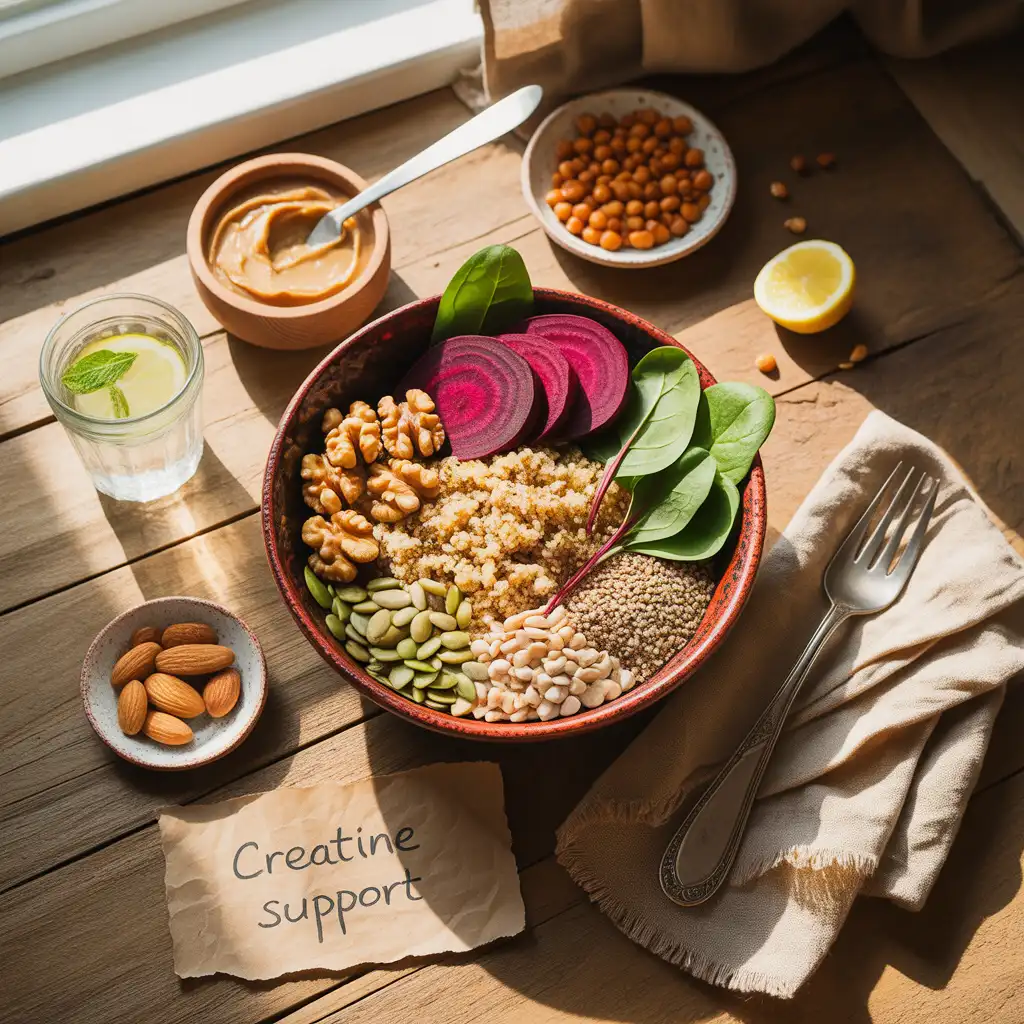
Pumpkin seeds are the top vegan creatine precursor food because they deliver all three precursor amino acids in meaningful quantities within a 30g serving, alongside the highest zinc content of any common plant food, which supports the enzymatic reactions of the creatine synthesis pathway. A tablespoon of pumpkin seeds daily is the single simplest vegan creatine precursor habit you can build. For the full nutritional profile of seeds and how they fit into daily plant-based eating, the vegan zinc guide covers the zinc content of seeds alongside their broader mineral contribution.
Primary substrate for AGAT reaction in kidneys. Legumes and seeds are the richest plant arginine sources. Arginine is also a precursor to nitric oxide, supporting blood flow and creatine transporter efficiency during exercise.
The most limiting precursor in plant-based diets. Glycine is most abundant in collagen, so animal-free diets have lower glycine exposure. Tofu, tempeh, and sesame provide the best plant glycine sources. Supports the AGAT reaction directly.
Essential amino acid providing the methyl group for creatine methylation via SAMe. Soy foods are the richest plant methionine sources. Brazil nuts provide exceptional methionine but selenium content limits daily intake. Oats and sunflower seeds contribute reliably.
The Evidence for Creatine Supplementation
Creatine monohydrate is the most extensively researched ergogenic aid in sports science. The evidence base encompasses strength and power output, high-intensity exercise capacity, cognitive function, recovery, and health outcomes across multiple populations. This is not a niche supplement with preliminary data. It is a mainstream nutritional intervention with decades of controlled trial evidence.
The cognitive evidence deserves particular attention for vegans who may not be athletes. A landmark study by Rae and colleagues, published in PubMed, conducted a double-blind, placebo-controlled crossover trial of creatine supplementation in vegetarians. Participants showed significant improvements in working memory and intelligence test scores. The effect size was considerably larger than typically seen in omnivore populations, directly attributed to the lower baseline creatine status. If you are a vegan experiencing cognitive fatigue, brain fog, or slower mental processing, addressing creatine status is a legitimate and underexplored nutritional strategy.
The safety profile is excellent. Over 500 studies confirm no adverse effects on kidney or liver function in healthy individuals. The widely circulated concern that creatine damages kidneys is not supported by evidence: it is a misconception arising from creatinine (a creatine metabolite) increasing in blood tests in ways that look like reduced kidney filtration but are not. Evidence summaries for creatine safety and dosing are comprehensively covered at Examine.com, one of the most reliable independent nutrition research databases.
Why Vegans Respond Better to Creatine Than Omnivores
This is the most important and least discussed insight in the entire vegan creatine conversation. Creatine supplementation produces larger performance and cognitive improvements in vegans and vegetarians than in omnivores. This is not marketing. It is a consistent research finding with a clear mechanistic explanation.
The Vegan Creatine Response Advantage
When muscle creatine stores are already near-saturated (as in omnivores eating meat daily), supplemental creatine has limited additional space to fill. Muscle creatine uptake is saturated at approximately 160 mmol/kg dry muscle mass. An omnivore eating 200g of beef daily may already be at 140 to 150 mmol/kg. A vegan synthesising only 1 to 2g endogenously may be at 110 to 120 mmol/kg. The room available for supplementation-driven uptake is 20 to 40% greater in vegans. This larger starting deficit translates directly into larger measurable improvements when creatine stores are raised through supplementation. The vegan creatine disadvantage (lower baseline) creates a vegan creatine advantage (larger supplementation response).
Multiple studies comparing creatine supplementation responses between vegetarians and omnivores confirm this pattern. Burke and colleagues found vegetarians had significantly larger improvements in total work capacity during a high-intensity cycling protocol after creatine loading compared to omnivore counterparts, despite starting from the same supplementation protocol. The vegetarian group’s lower baseline creatine stores created more headroom for functional improvement. For vegan athletes and active individuals, this means creatine supplementation is not merely worthwhile: it is arguably more worthwhile than for any other dietary group. This connects directly to the broader vegan athletic performance discussion in the vegan athlete performance guide on this site.
Vegan Creatine Supplement Guide: What to Buy and How to Take It
Choosing a Vegan Creatine Supplement
Form: Creatine monohydrate is the only form with sufficient evidence. Creatine HCl, buffered creatine, creatine ethyl ester, and other patented forms have limited or no evidence of superior efficacy. Monohydrate is also the cheapest. Do not pay a premium for novel forms.
Vegan certification: Creatine monohydrate is synthesised chemically from sarcosine and cyanamide, neither of which is animal-derived. However, some manufacturers process creatine through equipment shared with animal-derived products. Look for third-party vegan certification or products explicitly confirming no animal contact in the manufacturing process.
Third-party testing: For athletes subject to anti-doping regulations, choose a creatine product with Informed Sport or NSF Certified for Sport certification to ensure no banned substance contamination.
Dose: 3 to 5g per day of creatine monohydrate is the evidence-backed maintenance dose. Loading protocols (20g per day for 5 to 7 days) achieve faster saturation but are not necessary: the same endpoint is reached in 3 to 4 weeks at 3 to 5g per day.
Timing and Absorption Optimisation
Creatine uptake into muscle cells is mediated by the creatine transporter (CrT), which is enhanced by insulin signalling. Consuming creatine with carbohydrates, or with a mixed carbohydrate and protein meal, significantly improves muscle uptake compared to creatine taken in water alone. The practical protocol is to take 3 to 5g creatine monohydrate dissolved in water or juice with your largest carbohydrate-containing meal of the day. Post-workout timing, when muscle creatine transporter activity is elevated and a recovery meal is already planned, is particularly effective. The vegan athlete guide covers the full nutrition timing framework for plant-based performance.
7-Step Vegan Creatine Performance Protocol
Start with 3 to 5g of vegan-certified creatine monohydrate daily. This is the foundation. No precursor food strategy closes the vegan creatine gap without direct supplementation. Choose a pure creatine monohydrate product with third-party vegan certification. Dissolve in water, juice, or a smoothie. Consistency over weeks is more important than perfect timing on any given day.
Take creatine with a carbohydrate-containing meal for optimal uptake. Insulin released after carbohydrate intake upregulates the creatine transporter. Taking creatine with oat porridge, rice and lentils, or a fruit smoothie with tofu protein creates the insulin signal needed for efficient muscle creatine loading. Post-workout timing alongside a recovery meal is the most effective protocol.
Eat pumpkin seeds and tofu daily for creatine precursor amino acids. These two foods provide the most comprehensive coverage of arginine, glycine, and methionine across all plant foods. A 30g handful of pumpkin seeds and a 150g serving of firm tofu at any point in the day supports endogenous synthesis at its maximum capacity alongside your supplement. Small contributions compound meaningfully over time.
Ensure adequate total protein intake to support creatine synthesis. Endogenous creatine synthesis competes with other amino acid demands. Insufficient total protein creates a precursor deficit that limits synthesis. Aim for 1.2 to 1.8g protein per kilogram body weight from diverse plant sources including legumes, soy foods, seeds, and whole grains. This also supports the muscle protein synthesis that makes creatine supplementation most effective. The complete vegan protein guide covers all plant sources in full.
Include magnesium-rich foods to support ATP synthesis and creatine kinase activity. Creatine operates within the ATP-phosphocreatine energy system. Magnesium is an essential cofactor for ATP synthesis and creatine kinase function. Low magnesium impairs the energy system that creatine feeds into. Dark leafy greens, legumes, pumpkin seeds, and dark chocolate are the best plant magnesium sources. The vegan magnesium guide covers this in detail.
Hydrate consistently and increase water intake during the first weeks of supplementation. Creatine draws water into muscle cells as part of its volumising effect. This is beneficial for muscle function but requires adequate fluid intake to avoid intracellular dehydration. Add 500ml to 1 litre of additional water daily during the first 4 weeks of creatine supplementation. This is especially important in hot climates and during periods of high training load.
Maintain supplementation long-term without cycling off. The historical practice of cycling creatine on and off is not supported by evidence. Stopping creatine allows muscle stores to decline back to baseline over 4 to 6 weeks. For vegans, the baseline is the 20 to 30% deficit state. There is no evidence that continuous creatine use at 3 to 5g per day produces any harm or diminished returns. Long-term consistent supplementation maintains the performance and cognitive advantages continuously.
Creatine and Brain Health: The Case for Non-Athletes
Even if you do not train or compete, the cognitive case for addressing the vegan creatine gap is compelling. The brain consumes approximately 20% of total body energy and uses the creatine-phosphocreatine system as a rapid energy buffer during cognitive demand. Vegans’ lower baseline creatine status may partly explain the cognitive function differences observed between dietary groups in some studies. Supplementing 3g daily has been shown to improve working memory and reduce mental fatigue in tasks requiring sustained concentration. For knowledge workers, students, and anyone managing cognitive load, this is a low-risk, high-evidence nutritional intervention worth considering. The vegan brain health guide on this site covers the full nutritional framework for cognitive performance.
Chef’s Perspective: MENA Plant Protein Traditions and Performance Nutrition
In over twenty years of professional cooking across Lebanon, the Gulf, and Saudi Arabia, I have cooked plant-centred meals for athletes, labourers, pilgrims, and families who built extraordinary physical capacity on diets with little or no meat. The MENA culinary tradition is rich in the precursor amino acid foods that support creatine synthesis, even if no one in those kitchens was thinking about phosphocreatine.
Consider the traditional Gulf breakfast of ful medames (slow-cooked fava beans) with sesame paste, lemon, and olive oil, served with whole grain flatbread. This combination delivers arginine and glycine from the fava beans, methionine from the sesame, complex carbohydrates from the bread for sustained energy, and adequate protein for muscle function. It is a performance nutrition breakfast constructed centuries before sports dietetics existed as a discipline.
The MENA tradition of using tahini, ground sesame paste, across sweet and savoury preparations is particularly notable from a creatine precursor perspective. Sesame seeds are one of the better plant glycine sources, and glycine is the most limiting creatine precursor amino acid in plant-based diets. A Lebanese meal that includes hummus (chickpeas and tahini), tabbouleh (parsley and wheat), and a side of lentil soup has inadvertently assembled a comprehensive creatine precursor amino acid profile. The creatine itself still needs to come from a supplement. But the precursor environment that MENA plant cooking creates is about as good as plant-based food can achieve.
For athletes I have cooked for following plant-based programmes, I build the pre- and post-training meal structure around legumes as the primary protein base, whole grains for glycogen, seeds for precursor amino acids and healthy fat, and generous use of lemon and herbs for the micronutrient and antioxidant layer. The creatine supplement goes in a glass of pomegranate juice alongside the post-training meal. Simple, culturally coherent, and evidence-aligned.
Frequently Asked Questions About Vegan Creatine Foods
Do any plant foods contain creatine?
No. Creatine is found only in animal muscle tissue. No vegetable, legume, grain, seed, nut, or fruit contains creatine in any nutritionally relevant quantity. Trace amounts below 0.02mg per 100g have been detected in some berries and nuts in laboratory conditions, but these amounts are nutritionally meaningless compared to the 1 to 4g found per kilogram of animal muscle tissue. The honest answer to “what are vegan creatine foods” is that they do not exist, and the best strategy is creatine monohydrate supplementation alongside optimising creatine precursor amino acids from plant sources.
How much creatine do vegans need to supplement?
The evidence-backed maintenance dose is 3 to 5g of creatine monohydrate per day. For vegans starting with a 20 to 30% deficit in muscle creatine stores, some sports nutrition researchers suggest the higher end of this range (4 to 5g) to achieve saturation more quickly. A loading protocol of 20g per day divided into four 5g doses for 5 to 7 days can accelerate saturation but is not necessary: the same stores are achieved in 3 to 4 weeks at the maintenance dose. After 4 to 6 weeks of consistent daily supplementation, muscle creatine stores should be fully saturated.
Is creatine monohydrate vegan?
Vegan creatine foods cannot provide creatine directly, but creatine monohydrate as a supplement is fully vegan: synthesised chemically from sarcosine and cyanamide, neither of which is animal-derived. However, manufacturing processes vary. Some facilities process creatine alongside gelatin capsules or other animal-derived products on shared equipment. If strict vegan certification matters to you, look for products with third-party vegan certification or brands that explicitly confirm no animal ingredients and no shared animal-product manufacturing. Unflavoured creatine monohydrate powder is more likely to be free of additives than flavoured or capsule formulations.
Does creatine cause kidney damage?
No, in healthy individuals. This is one of the most persistent and evidence-free concerns in sports nutrition. Over 500 studies, including long-term supplementation trials, confirm no adverse kidney effects at doses of 3 to 20g per day in people with healthy kidney function. The misconception arises because creatine supplementation increases urinary creatinine (a metabolite), which in isolation looks like reduced kidney filtration rate. However, kidney function markers beyond creatinine remain normal. If you have pre-existing kidney disease, consult a physician before supplementing, as creatine metabolism does increase renal processing demands in compromised kidneys.
Will creatine supplementation help vegan athletes?
Yes, and more than it helps omnivore athletes. The larger baseline creatine deficit in vegans creates proportionally more room for supplementation-driven improvement. Research specifically in vegetarian and vegan populations confirms larger improvements in high-intensity exercise capacity, strength, and lean mass compared to omnivore cohorts given the same supplementation protocol. For vegan athletes, creatine monohydrate supplementation is arguably the highest-impact, most evidence-backed nutritional intervention available after ensuring adequate total protein, B12, vitamin D, and omega-3 status.
Can creatine improve cognitive function in vegans?
Yes. The evidence for cognitive improvement is particularly strong in vegan and vegetarian populations specifically because of the lower baseline creatine status. The brain uses the creatine-phosphocreatine system as a rapid energy buffer during cognitively demanding tasks. When brain creatine is below saturation, cognitive performance under demand is impaired. The landmark Rae et al. double-blind crossover trial confirmed statistically significant improvements in working memory and intelligence test performance in vegetarians supplementing creatine. This finding has been replicated in subsequent studies. The cognitive case for supplementation is as strong as the athletic case for vegans.
What is the best way to take creatine as a vegan?
Take 3 to 5g of unflavoured creatine monohydrate powder dissolved in water, juice, or a smoothie alongside a carbohydrate-containing meal. The carbohydrate triggers insulin release, which upregulates the creatine transporter in muscle cell membranes and improves uptake by 25 to 60% compared to creatine taken with water alone. Post-workout timing alongside a recovery meal of grains and legumes is ideal. If you train in the morning, take creatine with your post-workout oat porridge or rice bowl. Consistency is the priority: the same time each day with a meal produces optimal results.
Do I need to cycle off creatine?
No. The practice of cycling creatine, taking it for 8 to 12 weeks then stopping for 4 weeks, has no evidence behind it. It originated from bro-science culture rather than research. Stopping creatine causes muscle stores to return to baseline within 4 to 6 weeks. For vegans, that baseline is 20 to 30% below saturation. There is no biological downside to continuous long-term creatine supplementation at 3 to 5g per day in healthy individuals. Long-term studies up to five years of continuous use confirm no safety concerns.
Why do vegans have lower creatine stores than omnivores?
Because dietary creatine comes exclusively from animal muscle tissue, which vegans do not consume. The body synthesises 1 to 2g of creatine per day from glycine, arginine, and methionine, but this endogenous production cannot fully saturate muscle creatine stores without dietary creatine input. Omnivores eating a standard diet typically consume 1 to 3g of preformed dietary creatine daily in addition to their endogenous synthesis. This combined input saturates muscle stores. Vegans’ endogenous synthesis alone leaves stores chronically below saturation by approximately 20 to 30%, as consistently confirmed across multiple controlled studies.
Is there a difference between creatine monohydrate and other forms?
Creatine monohydrate has more evidence behind it than all other forms combined. Creatine HCl, buffered creatine (Kre-Alkalyn), creatine ethyl ester, and other proprietary forms are marketed as superior in absorption or efficacy, but head-to-head trials do not support these claims. Creatine ethyl ester is actually less effective than monohydrate due to rapid degradation in the gut. Creatine HCl may cause less water retention and bloating in some individuals, but produces the same end result at equivalent doses. Monohydrate is the cheapest, most researched, and most effective form per gram of actual creatine delivered.
How long does it take for creatine supplementation to work in vegans?
At a maintenance dose of 3 to 5g per day, muscle creatine stores reach saturation in 3 to 4 weeks. Performance and cognitive improvements become measurable at this point. With a loading protocol (20g per day for 5 to 7 days), saturation is achieved within the first week and improvements are measurable sooner. Given the larger baseline deficit in vegans, the magnitude of improvement when saturation is achieved tends to be greater than in omnivores. Most vegan athletes and non-athletes report noticeable differences in exercise recovery, strength endurance, and mental clarity within 3 to 4 weeks of consistent supplementation.
Can older vegans benefit from creatine supplementation?
Yes, and the evidence for older populations is particularly compelling. Muscle creatine stores decline with age alongside muscle mass. Creatine supplementation in older adults consistently shows benefits for lean mass preservation, functional strength, bone mineral density markers, and cognitive function. For older vegans who already face the 20 to 30% creatine deficit from dietary exclusion, supplementation addresses both the age-related decline and the dietary gap simultaneously. Several trials specifically in older vegetarians confirm improvements in strength, mobility, and cognitive measures, making creatine one of the highest-priority supplements for older vegans alongside B12, vitamin D, and algae omega-3.
The Complete 28-Day Vegan Meal Plan + Grocery List
- 28-day structured calendar — breakfast, lunch, dinner & snack, every single day
- Every meal meets protein, iron & B12 — no guesswork, no gaps
- 4 weekly grocery lists — categorised, budget-friendly, zero waste
- Saves 7+ hours weekly — print once, follow all month
- Bonus Nutrition Guide Toolkit — vegan tips, guides & family meal prep
Instant digital download · Printable PDF · Use today
Conclusion: The Vegan Creatine Strategy That Actually Works
The vegan creatine foods conversation is unique because it begins with an honest admission: no plant food contains creatine. Acknowledging this is the starting point of a strategy that actually works, rather than a strategy built on wishful thinking about plant precursors substituting for the real thing. They cannot, and the research confirms this clearly.
What a well-structured vegan creatine approach does achieve is meaningful. Optimising the three precursor amino acids through pumpkin seeds, tofu, tempeh, legumes, and whole grains maximises the body’s endogenous synthesis at its biological ceiling of 1 to 2g per day. Creatine monohydrate supplementation at 3 to 5g per day closes the remaining gap, bringing muscle and brain creatine stores to full saturation. The performance and cognitive gains from this saturation are larger in vegans than in omnivores, because the deficit being filled is larger. The vegan creatine disadvantage, properly addressed, becomes a vegan creatine advantage.
For broader performance nutrition context on a plant-based diet, the vegan athlete guide covers the full performance nutrition framework. The vegan brain health guide addresses cognitive nutrition beyond creatine. Clinical evidence for creatine is comprehensively summarised at PubMed and Examine.com. Vegan-specific nutritional guidance is available through VeganHealth.org. The strategy is clear, the evidence is solid, and vegan creatine foods, properly understood, point directly toward the most effective solution available.