
Medical Disclaimer: This content is for informational and educational purposes only. It does not constitute medical advice, diagnosis, or treatment. Always consult your physician, endocrinologist, or registered dietitian before changing your diet or supplements, especially if you have a diagnosed thyroid condition or take thyroid medication.
Vegan Thyroid Diet: The Complete Guide to Plant-Based Thyroid Health
TL;DR
The vegan thyroid diet is safe and effective when built around six critical nutrients: iodine, selenium, zinc, iron, vitamin D, and tyrosine. The main plant-specific concerns (goitrogens in cruciferous vegetables, soy timing, low iodine) are manageable with straightforward strategies. Cooking cruciferous vegetables neutralizes most goitrogen activity. Soy poses no thyroid risk with adequate iodine. Brazil nuts deliver the most potent selenium dose of any food. This guide covers thyroid biology, the six key nutrients, goitrogens debunked, iodine and selenium sources ranked, the Hashimoto’s plant-based protocol, MENA spice kitchen strategies, and 12 FAQs.
Thyroid Function: T4 to T3 Conversion and Why It Matters
The vegan thyroid diet is grounded in one core biological process: the conversion of inactive T4 (thyroxine) into active T3 (triiodothyronine). Every major symptom of thyroid dysfunction, including fatigue, weight gain, brain fog, and cold sensitivity, traces back to disruptions in this conversion chain.
The Thyroid Hormone Pathway: From TSH to Active T3
Why Plant-Based Eaters Face Specific Thyroid Risk Points
Three structural features of a vegan diet create thyroid-relevant nutritional gaps:
- Iodine: Removed from the equation when dairy and seafood are eliminated. Seaweed is inconsistent. Many vegans are iodine-deficient.
- Selenium: Soil depletion in many regions means Brazil nuts and seeds deliver variable amounts. Brazil nuts from selenium-rich soil (Bolivia) are the gold standard.
- Goitrogens: Crucifers, soy, and millet contain compounds that interact with thyroid iodine uptake, particularly when iodine is already low.
None of these are insurmountable. The plant-based thyroid health strategies in this guide address each directly. The first step is identifying the six nutrients most critical to thyroid function on a vegan diet.
The 6 Critical Thyroid Nutrients on a Plant Diet
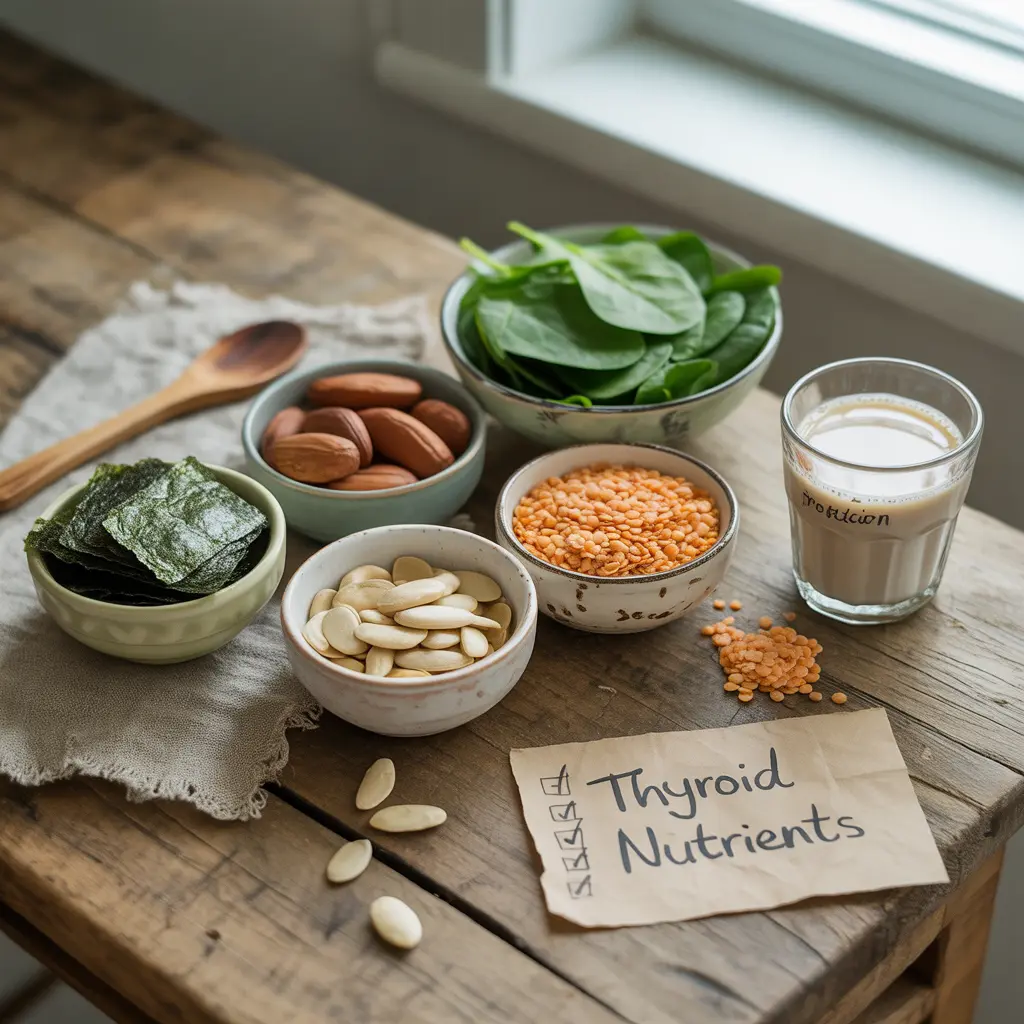
Plant-based thyroid health depends on getting six specific nutrients right. Each plays a distinct role in the T4/T3 pathway. Each has vegan-specific sourcing challenges worth understanding.
1. Iodine
Role: Raw material for T4 and T3 synthesis. No iodine = no thyroid hormone production.
Vegan gap: Dairy and fish are the primary iodine sources in omnivore diets. Both are eliminated on a plant diet.
Best vegan sources:
- Iodized salt (1/4 tsp = ~95mcg)
- Nori seaweed (highly variable, 16-2,984mcg per sheet)
- Iodine supplement 150mcg daily (most reliable)
2. Selenium
Role: Powers the deiodinase enzymes that convert T4 to active T3. Also protects the thyroid gland from oxidative damage.
Vegan gap: Soil selenium levels vary enormously. Plant foods from low-selenium soils deliver negligible amounts.
Best vegan sources:
- 1-2 Brazil nuts from Bolivia (up to 95mcg each)
- Sunflower seeds (22mcg per 30g)
- Supplement: 55mcg selenomethionine
3. Zinc
Role: Required for TSH receptor binding and T3/T4 conversion. Low zinc = elevated TSH with normal T4.
Vegan gap: Phytic acid in legumes and grains reduces zinc absorption by 35-50%. Soaking and sprouting helps significantly.
Best vegan sources:
- Pumpkin seeds (2.2mg per 30g)
- Hemp seeds (3mg per 30g)
- Lentils, soaked and cooked (2.5mg per cup)
4. Iron
Role: Iron-dependent thyroid peroxidase (TPO) enzyme is required for T4 synthesis. Iron deficiency impairs TPO activity directly.
Vegan gap: Non-heme iron from plants is less bioavailable than heme iron. Absorption is enhanced significantly by pairing with vitamin C.
Best vegan sources:
- Lentils + lemon juice (6.6mg per cup, enhanced absorption)
- Tofu (3.4mg per 100g)
- Pumpkin seeds + bell pepper salad
5. Vitamin D
Role: Vitamin D receptors exist on thyroid tissue. Deficiency is strongly associated with Hashimoto’s autoimmune activity and elevated TPO antibodies.
Vegan gap: Algae-derived D3 is the only reliable vegan form. D2 has inferior biological activity.
Best vegan sources:
- Algae-based vitamin D3: 2,000 IU daily minimum
- UV-exposed mushrooms (limited and variable)
- Fortified plant milks (100 IU per cup, insufficient alone)
6. Tyrosine
Role: Amino acid backbone of both T4 and T3. The thyroid gland attaches iodine atoms to tyrosine molecules to construct thyroid hormones.
Vegan gap: Not typically deficient on a well-planned vegan diet, but low-protein diets can limit availability. Adequate total protein solves this.
Best vegan sources:
- Soy foods: tofu, tempeh, edamame (highest tyrosine density)
- Pumpkin seeds, lentils, quinoa
- Almonds, peanuts
For a deeper dive into how these deficiencies manifest on a plant diet, the vegan nutrient deficiencies guide provides blood marker targets and symptom checklists for each nutrient above.
Goitrogens: The Cruciferous Vegetable Question Answered
Goitrogens are compounds that interfere with iodine uptake by the thyroid gland. They appear in foods commonly eaten on a vegan diet, which has led to significant confusion and unnecessary fear. The evidence is more nuanced than headlines suggest.
What Are Goitrogens and Where Are They Found?
Goitrogenic compounds fall into two categories:
- Glucosinolates in cruciferous vegetables (broccoli, kale, cauliflower, cabbage, Brussels sprouts). Converted to goitrins in the gut. Inhibit thyroid peroxidase enzyme activity.
- Isoflavones in soy (genistein, daidzein). Can mildly inhibit thyroid peroxidase when iodine is insufficient.
- Flavonoids in millet and cassava. Most relevant in populations with very high millet consumption and low iodine intake.
The Cooking Solution
Cooking deactivates the majority of goitrogenic activity in cruciferous vegetables.
- Boiling for 30 minutes reduces glucosinolate content by up to 60-70%
- Steaming reduces glucosinolates by 30-40%
- Fermentation (sauerkraut, kimchi) partially reduces goitrogenic activity while adding probiotic benefit
- Raw consumption retains full goitrogenic potential but still poses minimal risk when iodine is adequate
The Real Risk: Iodine Deficiency First
This is the critical point most people miss:
Goitrogens Are Only a Problem When Iodine Is Already Low
Population studies consistently show that cruciferous vegetable consumption does not impair thyroid function in iodine-sufficient individuals. Research reviewed at Examine.com found no association between crucifer intake and hypothyroidism when iodine is adequate. The goitrogen concern is real but conditional. Fix the iodine first. Then eat your kale freely.
Safe: Eat Freely
- Cooked broccoli, kale, cauliflower
- Steamed Brussels sprouts
- Fermented cabbage (sauerkraut)
- Roasted bok choy
- Soy foods with adequate iodine intake
Moderate: Monitor Quantity
- Large daily servings of raw kale smoothies
- Raw crucifer juice in large amounts
- High millet as the primary grain when iodine is low
- Soy foods taken within 4 hrs of thyroid medication
See the full anti-inflammatory vegan diet guide for more on maximizing cruciferous vegetable benefits while managing potential interactions with thyroid and autoimmune conditions.
Soy and Thyroid: The Evidence Settled
Soy and thyroid health is the single most misunderstood topic in the vegan thyroid diet conversation. Decades of concern have followed soy isoflavones due to their mild thyroid peroxidase inhibition in lab studies. The clinical picture is substantially more reassuring.
What the Research Actually Shows
A comprehensive meta-analysis reviewed at PubMed found that soy consumption does not significantly affect thyroid hormone levels in individuals with adequate iodine intake. The conditional risk is this: soy isoflavones combined with iodine deficiency can impair thyroid function. The solution is not to avoid soy. It is to ensure iodine adequacy.
Three Practical Rules for Soy in the Vegan Thyroid Diet
- Ensure iodine is covered first. Supplement with 150mcg iodine daily or use iodized salt consistently. With iodine adequate, moderate soy (1-3 servings daily) is safe for thyroid function.
- Space soy from thyroid medication by 4 hours. Soy can reduce absorption of levothyroxine if consumed simultaneously. This is a timing issue, not a soy-thyroid interaction at the hormonal level.
- Favour fermented soy. Miso, tempeh, and natto have reduced isoflavone activity post-fermentation. For individuals with Hashimoto’s who want to be conservative, fermented soy is the starting point.
Soy Is Safe When:
- Iodine intake is adequate (150mcg+)
- Taken 4+ hours away from thyroid medication
- Consumed as whole food (tofu, tempeh, edamame)
- Thyroid function is tested regularly
Soy Warrants Caution When:
- Iodine intake is unconfirmed or low
- Taking levothyroxine without spacing
- Using high-dose isoflavone supplements
- Hashimoto’s is active with elevated antibodies
The vegan supplements guide covers the exact iodine supplement forms and dosing that establish the safety baseline needed for soy to be consumed freely on a plant-based thyroid health protocol.
The Hashimoto’s Plant-Based Approach
Hashimoto’s thyroiditis is an autoimmune condition in which the immune system attacks thyroid tissue, causing progressive thyroid destruction. It is the most common cause of hypothyroidism in developed countries. The Hashimoto’s vegan diet strategy targets both the autoimmune driver and the resulting nutrient deficiencies simultaneously.
The Two Pillars of Hashimoto’s Vegan Nutrition
Pillar 1: Reduce Autoimmune Trigger Load
The anti-inflammatory, plant-based autoimmune thyroid approach focuses on reducing systemic inflammation that drives antibody production:
- Eliminate gluten on a trial basis (3-6 months). Research at PubMed shows overlap between celiac/gluten sensitivity and Hashimoto’s autoimmunity
- Reduce ultra-processed foods, refined oils, and high-sugar intake
- Maximize anti-inflammatory plant compounds: curcumin, omega-3 ALA and algae DHA, polyphenols from berries and green tea
- Prioritize gut health: the gut-thyroid axis means leaky gut drives autoimmune thyroid flares
Pillar 2: Correct the Six Critical Nutrient Deficiencies
Hashimoto’s patients specifically show elevated rates of deficiency in selenium, vitamin D, iron, and zinc. These are not coincidences. Each deficiency amplifies autoimmune activity.
Test First: Know Your Baseline
- TSH, Free T4, Free T3
- TPO antibodies and thyroglobulin antibodies
- Vitamin D (25-OH), selenium, ferritin, zinc
- Full blood panel: see vegan blood test guide
Selenium Protocol: Priority #1
- 2 Brazil nuts daily OR selenomethionine 55-200mcg supplement
- Clinical trials show selenium supplementation reduces TPO antibody levels by 21-40% in Hashimoto’s patients
- Do not exceed 400mcg/day total from all sources
Vitamin D to Target Level
- Target serum 25(OH)D above 75 nmol/L for autoimmune thyroid conditions
- Algae-derived D3 at 2,000-4,000 IU daily (confirm with testing)
- Pair with vitamin K2 (MK-7) to direct calcium properly
Gut Health Optimization
- Add fermented foods daily: miso, tempeh, sauerkraut, kimchi (vegan)
- 30 plant varieties weekly to build microbiome diversity
- Prebiotic fiber from chicory root, onions, garlic, leeks, asparagus
- Full guide: vegan gut health
Anti-Inflammatory Stack Daily
- Curcumin with black pepper (bioavailability multiplied 20x with piperine)
- Algae-based DHA/EPA 250-500mg
- Ginger in cooking or tea: gingerols are potent NF-kB inhibitors
- Berries and green tea: quercetin reduces thyroid peroxidase autoimmune activity
Monitor and Retest at 12 Weeks
- Recheck TSH, Free T3/T4, TPO antibodies, and nutrient markers
- Track symptoms: energy, weight stability, temperature regulation, brain clarity
- Adjust supplementation based on results with your healthcare provider
The full anti-inflammatory vegan diet approach is foundational for Hashimoto’s management. Autoimmune thyroid conditions are driven by inflammation and the plant-based dietary pattern has the most robust anti-inflammatory evidence base of any dietary approach studied to date.
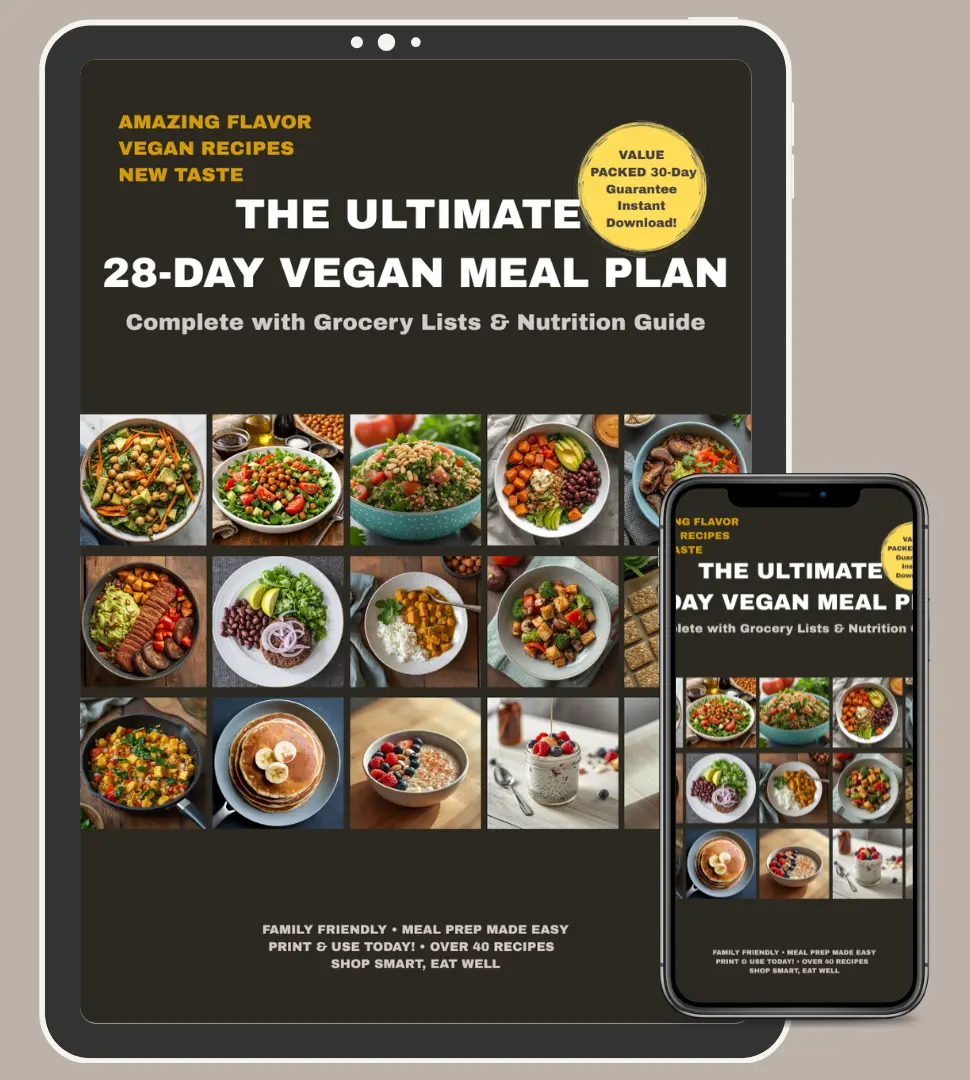
takes the guesswork out of eating well. The Ultimate 28-Day Vegan Meal Plan + Grocery List, (Complete Solution) provides a complete 28-day calendar with shopping lists easy and tasty plant foods. Over 40 recipes. Simple ingredients. Shop Smart, Eat Well.
Chef Section: MENA Spices and Thyroid-Supportive Cooking
After two decades in professional MENA and Mediterranean kitchens, one thing stands out about traditional spice-forward cooking: the spice cabinet is a pharmacopoeia. The compounds that make MENA cuisine aromatic and complex are the same compounds that modern nutritional science identifies as anti-inflammatory, thyroid-supportive, and gut-protective.
The MENA Spice Toolkit for Thyroid Health
- Turmeric (Kurkum): Curcumin is the most studied anti-inflammatory plant compound. Used in rice dishes, lentil soups, and spice blends across MENA cooking. Always combine with black pepper to activate absorption. Directly relevant to Hashimoto’s vegan diet anti-inflammatory protocols.
- Cumin: Inhibits thyroid peroxidase autoimmune antibody activity in early research. Used in every legume dish, from mujaddara to ful medames. Rich in iron which supports TPO enzyme function.
- Ginger: Gingerols are powerful NF-kB inhibitors, reducing the inflammatory signaling that drives autoimmune flares. Fresh ginger in lentil soups, tagines, and herbed rice dishes is standard MENA kitchen use.
- Nigella Sativa (Black Seed / Habbatus Sauda): Thymoquinone in black seed has demonstrated thyroid-protective effects in early clinical studies. A staple spice across Arabian Peninsula, North African, and Levantine cooking. Sprinkle on flatbreads, into soups, and onto roasted vegetables.
- Cinnamon: Improves insulin sensitivity, which matters for thyroid patients who frequently have concurrent blood sugar dysregulation. Used throughout MENA sweet and savory cooking.
Two Thyroid-Supportive MENA Recipes
Brazil Nut and Pumpkin Seed Dukkah
Dukkah is an Egyptian nut and spice blend used as a dip with olive oil and bread or sprinkled over salads and vegetables. Traditional versions use hazelnuts. This thyroid-optimized version uses Brazil nuts for selenium and pumpkin seeds for zinc and magnesium.
- Toast 8 Brazil nuts, 4 tablespoons pumpkin seeds, 2 tablespoons sesame seeds, 1 teaspoon coriander, 1 teaspoon cumin
- Pulse coarsely in a food processor
- Season with sea salt and black pepper
- Per 30g serving: approximately 70-90mcg selenium, 2mg zinc, 80mg magnesium
Golden Lentil and Black Seed Soup (Shorbat Adas)
Red lentil soup is eaten across the Arabian Peninsula, Egypt, and the Levant. This version layers thyroid nutrients deliberately:
- 1 cup red lentils, 1 large onion, 3 garlic cloves, 1 tsp turmeric, 1 tsp cumin, 1/2 tsp black seed (nigella), 1/2 tsp ginger, lemon juice, iodized salt
- Simmer until lentils collapse into a creamy base
- Finish with lemon juice (enhances non-heme iron absorption from lentils by 67%) and a swirl of olive oil
- Thyroid nutrients per bowl: 6mg iron, 2.5mg zinc, 180mcg folate, curcumin, gingerols, thymoquinone
Iodine in MENA Cooking: A Professional Note
Sea salt is traditionally used across MENA cooking, and sea salt is not iodized. This is a real-world gap in the vegan thyroid diet for anyone cooking in this culinary tradition.
The professional solution: keep a separate jar of iodized salt for table use and personal seasoning. Cook with sea salt for flavor quality. Add iodized salt at the table or take a dedicated iodine supplement. This preserves culinary authenticity while closing the nutritional gap that makes goitrogens and soy interactions problematic.
Chef’s Summary: Build the Thyroid Plate
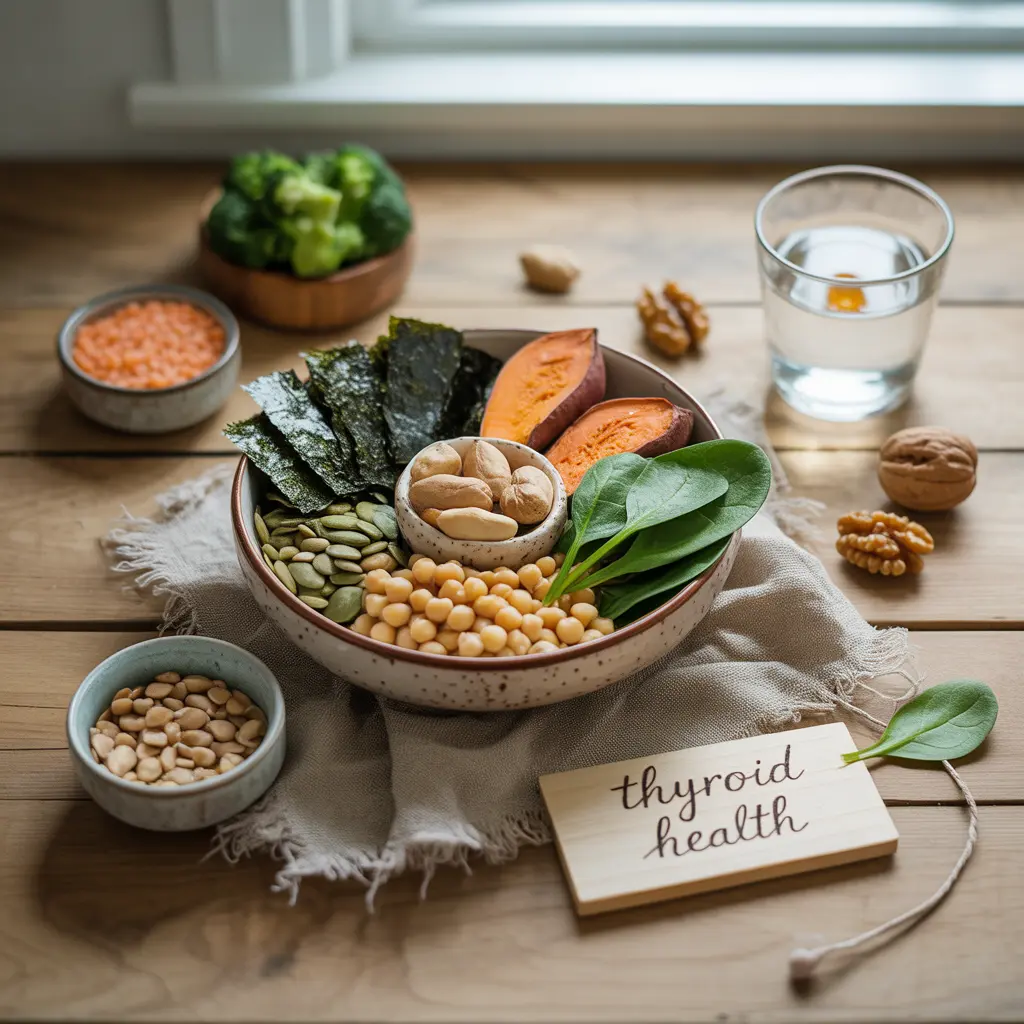
A thyroid-supportive MENA vegan plate looks like this: lentil or chickpea base (iron, zinc, tyrosine) + cooked leafy green (iron, calcium, anti-inflammatory) + turmeric and cumin seasoning (curcumin, anti-inflammatory iron) + tahini drizzle (selenium, zinc, lignan) + lemon finish (vitamin C for iron absorption) + 2 Brazil nuts on the side (selenium target met). This is not a supplement protocol. It is dinner.
FAQ: 12 Questions About the Vegan Thyroid Diet
A poorly planned vegan diet can contribute to hypothyroidism through iodine and selenium deficiency. A well-planned vegan thyroid diet does not cause thyroid dysfunction. The key is proactively addressing the two nutrients most likely to be insufficient: iodine (supplement 150mcg daily or use iodized salt consistently) and selenium (2 Brazil nuts daily or 55mcg selenomethionine supplement).
No. Cooked kale is not a thyroid problem. Raw kale in very large quantities (multiple cups daily, as green juice or smoothie) alongside iodine deficiency is the scenario that warrants monitoring. A serving or two of cooked kale daily is safe for thyroid function in iodine-sufficient individuals. Kale also delivers calcium, vitamin K, iron, and powerful anti-inflammatory compounds that support overall plant-based thyroid health.
Not necessarily. Follow these three rules:
- Ensure iodine intake is adequate (150mcg+ daily)
- Space soy foods at least 4 hours away from levothyroxine medication
- Prefer fermented soy (tempeh, miso) which has lower isoflavone activity
With these conditions met, moderate soy consumption (1-2 servings daily) is compatible with Hashimoto’s vegan diet management.
Iodine deficiency is often asymptomatic until thyroid dysfunction develops. Testing options:
- Spot urine iodine test (reflects recent intake, not long-term status)
- 24-hour urine iodine (more accurate but inconvenient)
- TSH and thyroid ultrasound (identifies thyroid enlargement from iodine deficiency)
For most plant-based eaters, the pragmatic approach is to supplement 150mcg iodine daily as prevention. See the vegan blood test guide for full thyroid testing recommendations.
Ranked by reliability and dose:
- Brazil nuts (Bolivian origin): 70-190mcg per nut. 1-2 daily. Most potent vegan selenium source by a significant margin.
- Sunflower seeds: 22mcg per 30g. Soil-dependent.
- Tofu: 12-15mcg per 100g.
- Selenomethionine supplement (55mcg): Most reliable if Brazil nut origin is uncertain.
Do not combine Brazil nuts and selenium supplements on the same day. Toxicity threshold is 400mcg daily.
Yes, through two mechanisms. First, correcting the nutrient deficiencies that impair T4-to-T3 conversion directly improves metabolic rate. Second, the high fiber content of a well-structured plant-based diet supports blood sugar stability and reduces the insulin resistance that frequently accompanies hypothyroidism. Track the vegan metabolism guide alongside thyroid treatment for comprehensive support. Weight management on a vegan thyroid weight gain plan requires treating the thyroid condition first, then supporting metabolism with diet.
Core supplement stack for vegan hypothyroidism diet support:
- Iodine: 150mcg daily (potassium iodide)
- Selenium: 55mcg selenomethionine (or 2 Brazil nuts daily)
- Vitamin D3: 2,000 IU algae-derived, adjusted to blood levels
- B12: 250mcg cyanocobalamin daily (non-negotiable on any vegan diet)
- Algae DHA/EPA: 250-500mg (for anti-inflammatory support)
- Zinc: 8-15mg if dietary intake is insufficient
Full breakdown in the vegan supplements guide.
Seaweed is unreliable as a primary iodine source for three reasons:
- Iodine content varies 100-fold between seaweed types, batches, and growing locations
- Kombu can deliver 1,000-3,000mcg per gram, far exceeding safe limits and potentially suppressing thyroid function (Wolff-Chaikoff effect)
- Nori averages only 16-37mcg per sheet, insufficient to meet 150mcg daily needs
Iodized salt or a dedicated iodine supplement is the only reliable strategy for vegan iodine thyroid management.
Yes, when cooked and when iodine intake is adequate. Boiling reduces glucosinolate goitrogenic activity by 60-70%. Steaming reduces it by 30-40%. Daily cooked broccoli, kale, or cauliflower is safe and nutritionally valuable for cruciferous vegetables thyroid vegan nutrition when iodine is covered. Reserve concern for very large quantities of raw crucifer juice or smoothies consumed alongside confirmed iodine deficiency.
Evidence suggests yes, through multiple mechanisms:
- Selenium supplementation reduces TPO antibody titers by 21-40% in clinical trials
- Vitamin D optimization is associated with reduced autoimmune thyroid activity
- Anti-inflammatory dietary patterns reduce the systemic inflammation that drives antibody production
- Gut microbiome diversity, strongly supported by high-fiber plant-based eating, modulates immune reactivity
A plant-based autoimmune thyroid approach addresses all four mechanisms simultaneously. Results require 12+ weeks of consistent implementation.
Thyroid dysfunction is one of four primary causes of fatigue on a vegan diet, alongside iron deficiency anemia, B12 deficiency, and vitamin D deficiency. They are also often concurrent. Vegan thyroid fatigue presents as heavy, unrelenting tiredness, cold intolerance, brain fog, and weight gain that is disproportionate to calories. The vegan fatigue guide provides the diagnostic framework to distinguish thyroid-driven fatigue from other nutritional causes. Always test: TSH, Free T3/T4, ferritin, B12, and 25-OH vitamin D simultaneously.
The core nutrient strategy is the same, but two differences matter:
- Iron: Women of reproductive age need 18mg daily (vs 8mg for men). Post-menopausal women and men share the same 8mg target. Iron deficiency impairs thyroid function and is far more common in women.
- Iodine: Requirements increase to 220-290mcg during pregnancy. For pregnant vegans, iodine supplementation is non-negotiable and should be discussed with a healthcare provider before and during pregnancy.
Hypothyroidism affects women eight times more commonly than men, making the vegan thyroid diet a particularly high-value nutritional framework for women at every life stage.
Still spending hours figuring out what to eat?
What’s included in your download
- 40+ nutritionist-approved recipes
- Complete 28-day calendar
- Meets protein, iron & B12 needs
- Family & meal prep friendly
- Vibrant photo for every recipe
- Simple, common ingredients
Instant PDF download. No subscriptions. No waiting.