
Medical Disclaimer: This content is for informational purposes only and does not constitute medical advice. Vitamin D deficiency is a medical condition. If you suspect deficiency, consult a healthcare provider for testing (serum 25-OH vitamin D) before starting high-dose supplementation, particularly during pregnancy or with medical conditions affecting calcium metabolism.
Vegan Vitamin D Foods: The Complete Guide to Plant-Based Vitamin D Sources
TL;DR
Vegan vitamin D foods require an honest answer: almost no whole plant food contains meaningful, reliable vitamin D. The two exceptions are UV-exposed mushrooms (vitamin D2, moderate bioavailability) and fortified foods including plant milks, cereals, and margarines (D2 or D3 depending on brand). The critical distinction is D2 versus D3: D3 from algae-derived supplements raises serum vitamin D twice as effectively as D2 from most plant sources. Sunlight is the most powerful natural vitamin D source but is blocked by latitude, season, cloud cover, skin tone, sunscreen, and clothing. The conclusion for every vegan in most of the world: supplement algae-derived D3 at 2,000 IU daily minimum, eat UV mushrooms and fortified foods daily, and test serum 25-OH vitamin D annually. This guide covers every vegan vitamin D food source, the D2 vs D3 debate settled, the sunlight strategy, and the complete vegan vitamin D protocol.
The Honest Vitamin D Situation for Vegans
Vegan vitamin D foods is a topic that demands honesty before optimism. Vitamin D is unique among nutrients: the human body is designed to obtain it primarily from UV-B radiation on skin, not from food. This evolutionary design means the food supply, plant or animal, is a poor vitamin D source compared to adequate sun exposure. But in the modern world, adequate sun exposure is unavailable to most people for most of the year due to latitude, lifestyle, and sun protection.
The vegan challenge is compounded by the fact that the most reliable non-supplement dietary sources of vitamin D in omnivore diets are fatty fish and egg yolks. Neither is an option. What remains for vegans are UV-exposed mushrooms and fortified foods, both of which are useful but insufficient as standalone strategies without supplementation for most people.
Why Vitamin D Matters Beyond Bone Health
Most people associate vitamin D exclusively with bone health. The full biological picture is considerably broader and explains why deficiency has consequences across every major body system:
- Immune regulation: vitamin D receptors (VDR) are present on virtually every immune cell. D deficiency is associated with increased susceptibility to infection, autoimmune activation, and inflammatory disease.
- Testosterone production: clinical trials confirm that vitamin D supplementation raises testosterone levels in deficient men. Low vitamin D is one of the most correctable causes of low testosterone.
- Mental health: vitamin D receptors are found throughout the brain. Deficiency associates with increased depression risk, seasonal affective disorder, and cognitive decline. See the vegan diet and depression guide.
- Insulin sensitivity: vitamin D improves insulin receptor function and is an independent predictor of type 2 diabetes risk.
- Muscle function: VDR in muscle cells regulates protein synthesis. Deficiency contributes to muscle weakness, fall risk in older adults, and impaired athletic recovery.
- Calcium absorption gating: without adequate vitamin D, dietary calcium absorption drops from 30-50% to 10-15%, making calcium supplementation or high dietary calcium largely ineffective. This connects directly to bone health and the vegan calcium framework covered in the vegan calcium foods guide.
The complete deficiency framework covering all major vegan micronutrients is at the vegan nutrient deficiencies guide.

UV Mushrooms: The One Real Plant Vitamin D Source
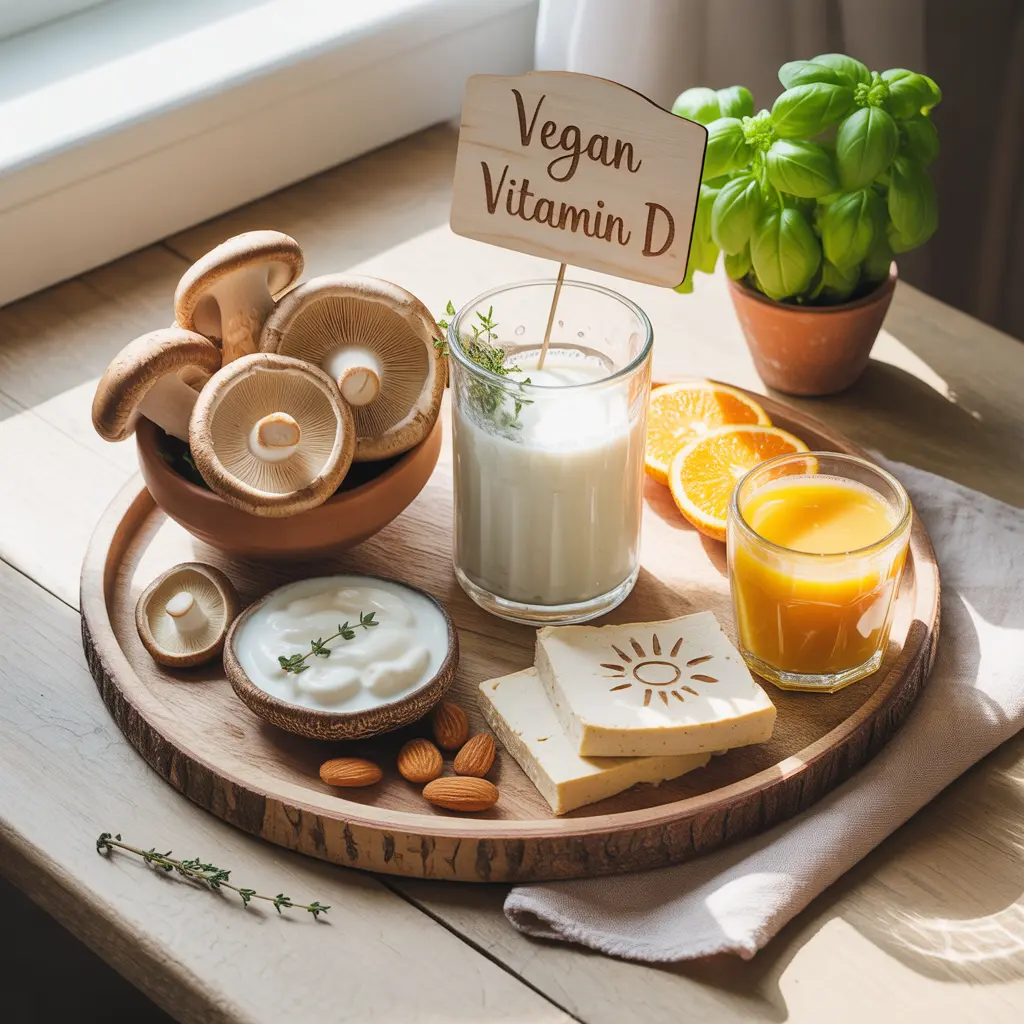
Mushrooms are the only whole plant food that can provide meaningful vitamin D. They contain ergosterol, a compound that converts to vitamin D2 (ergocalciferol) when exposed to UV-B radiation, exactly as human skin converts 7-dehydrocholesterol to vitamin D3. The critical difference: this conversion only happens if the mushrooms are intentionally exposed to sunlight or UV light, either in the growing environment or post-harvest.
The UV Mushroom Method: How to Maximise Vitamin D
Most commercially grown mushrooms are cultivated indoors without UV exposure and contain almost no vitamin D. To convert standard mushrooms into a vitamin D source:
- Expose gills-up to direct sunlight for 30-60 minutes between 10am and 2pm. The gills (the underside of the cap) contain the highest ergosterol concentration and should face the sun.
- A single 100g serving of mushrooms exposed to one hour of midday UV can produce 400-1,000 IU of vitamin D2.
- Dried mushrooms that have been sun-dried retain significant D2 content for months. Shiitake mushrooms dried in sunlight are particularly effective.
- The UV treatment can be done in advance and the mushrooms refrigerated. D2 content remains stable for at least several days after treatment.
- Some commercial brands now sell UV-treated mushrooms with D content on the label. Look for these in health food stores.
The full nutritional profile of mushrooms and their other health benefits is covered at the mushroom nutrition guide.
Maitake Mushrooms (UV-Exposed)
Vitamin D2: up to 600 IU per 50g (UV-exposed)
Without UV: near zero
Maitake mushrooms have one of the highest ergosterol contents of any edible mushroom, making them the most responsive to UV treatment. Also contain beta-glucans with immune-modulating evidence.
Shiitake Mushrooms (UV-Exposed)
Vitamin D2: up to 400 IU per 50g (UV-exposed)
Without UV: 3-5 IU per 50g
The most widely used mushroom for intentional UV treatment. Responds well to even brief sun exposure. Traditional sun-dried shiitake from East Asian cooking contains naturally accumulated D2 from outdoor drying.
Portobello Mushrooms (UV-Exposed)
Vitamin D2: up to 375 IU per 50g (UV-exposed)
Without UV: 5-10 IU per 50g
Large surface area makes portobello excellent for UV treatment. Place gills-up for 30 minutes of midday sun. The high ergosterol content of the large cap converts efficiently.
White Button Mushrooms (UV-Exposed)
Vitamin D2: up to 200 IU per 50g (UV-exposed)
Without UV: 1-3 IU per 50g
The most accessible and affordable mushroom. Lower ergosterol content than maitake or shiitake but practical for daily use due to availability and price. Buy regularly, treat with UV at home, use throughout the week.
Fortified Vegan Vitamin D Foods Ranked
Fortified foods are the second dietary route to vitamin D for vegans. The vitamin D content of fortified products varies widely by brand and country, so always check the label of the specific product you buy. The figures below are typical values across major markets.
The critical practical point: even combining two cups of fortified plant milk (200 IU), a serving of UV mushrooms (400 IU), and a fortified cereal (200 IU) delivers approximately 800 IU daily. The recommended minimum of 600 IU (RDA) may be met, but the 2,000 IU target for serum optimisation in most adults requires supplementation on top of dietary sources. Dietary vitamin D is valuable but is not a substitute for algae D3 supplementation in most vegan scenarios.
D2 vs D3: The Bioavailability Debate Settled
The distinction between vitamin D2 (ergocalciferol) and vitamin D3 (cholecalciferol) is the most important practical detail in vegan vitamin D nutrition. Most plant-derived vitamin D — from mushrooms and many fortified foods — is D2. Most algae-derived supplements provide D3. They are not equivalent.
The Plant-Derived Form
- Found in: UV-exposed mushrooms, most D-fortified plant foods
- Origin: from ergosterol in fungi and yeasts
- Vegan status: always vegan
- Raises serum 25-OH vitamin D effectively
- Shorter half-life in the body than D3
- Less efficient at raising and maintaining serum levels in clinical comparisons
- Approximately 50-70% as effective as D3 at equivalent doses in most studies
- Still valuable: better than no vitamin D. UV mushrooms and D2-fortified foods count.
The Superior Bioavailable Form
- Found in: algae-derived supplements (vegan D3), some fortified foods now using algae D3
- Origin: from lichen or algae for vegan versions
- Vegan status: algae-derived versions are fully vegan
- Raises serum 25-OH vitamin D significantly more effectively than D2
- Longer half-life and better tissue storage
- The form the body produces from sunlight (identical compound)
- Preferred form in clinical recommendations
- Always choose algae-derived D3 for vegan supplementation
The Clinical Evidence on D2 vs D3
Multiple randomised controlled trials reviewed at PubMed confirm that D3 raises serum 25-OH vitamin D levels approximately twice as effectively as D2 at equal doses. A meta-analysis found D3 supplementation increased serum levels by an average of 40 nmol/L compared to 25 nmol/L for D2 at equivalent dosing. When choosing a fortified plant milk or supplement, actively seek out products using algae-derived D3. The packaging will specify. An increasing number of plant milk brands now use algae D3 specifically because of this bioavailability advantage. Look for “cholecalciferol” or “algae D3” on the ingredients list rather than “ergocalciferol.”
Sunlight Strategy: When, How Long, and What Blocks It
Sunlight remains the most powerful natural vitamin D source by far. A light-skinned person in adequate summer sun can produce 10,000-20,000 IU of vitamin D3 in 15-30 minutes of full-body exposure. No food or supplement replicates this efficiency. The challenge is that this production is blocked by more factors than most people realise.
Why Sunlight Alone Is Not a Reliable Strategy for Most Vegans
Even in sunny climates, sunlight-only vitamin D strategies fail for predictable reasons. Office workers, shift workers, people with dark skin at high latitudes, those using daily SPF, people over 65 (reduced skin synthesis efficiency), and anyone during winter months cannot rely on sun exposure alone. The conservative and evidence-based position is: use sunlight opportunistically where possible, eat UV mushrooms and fortified vegan foods daily, and supplement algae D3 year-round. Testing serum 25-OH vitamin D annually confirms whether the strategy is working.
Life Stage Requirements and Risk Groups
Vitamin D requirements vary across life stages and several groups have significantly elevated needs that require deliberate attention on a vegan diet.
Infants and Young Children (0-5 years)
Breast milk is low in vitamin D regardless of maternal status. All breastfed infants need vitamin D supplementation from birth. Formula-fed infants receive D-fortified formula but may still need additional supplementation depending on sunlight exposure. Rickets (vitamin D deficiency bone disease) remains a concern globally and is entirely preventable with adequate D supplementation.
- 0-12 months: 400 IU daily from drops
- 1-5 years: 600-1,000 IU daily depending on sun exposure
- Use liquid vitamin D drops in D3 form (algae-derived vegan options available)
Teenagers (6-18 years)
Bone mineralisation is rapid during adolescence. The 45% of peak bone mass deposited in teenage years requires adequate vitamin D for calcium absorption efficiency. Teen vegans at northern latitudes who do not supplement are at meaningful risk of suboptimal bone development. See the vegan teen nutrition guide.
- Target: 600-2,000 IU daily depending on sun exposure and latitude
- Summer sunlight can often maintain adequate levels without supplementation in low latitudes
- Winter supplementation is essential regardless of latitude above 40°N or 40°S
Pregnancy and Breastfeeding
Maternal vitamin D status determines fetal bone development, immune programming, and brain development. Deficiency in pregnancy associates with gestational diabetes, pre-eclampsia, and reduced fetal bone density. Breastfeeding mothers need adequate D to ensure breast milk content. See the vegan pregnancy guide.
- Target: 1,000-2,000 IU daily minimum throughout pregnancy and breastfeeding
- Test serum 25-OH D in first trimester and supplement accordingly
- Algae D3 is the recommended vegan form for pregnancy
Adults Over 50
Skin synthesis efficiency declines by 75% between ages 20 and 70. Older adults produce significantly less vitamin D from equivalent sun exposure. Simultaneously, kidney activation of vitamin D to its active form (calcitriol) becomes less efficient. The result is that adults over 50 need higher supplemental doses to achieve the same serum levels as younger adults. See the vegan seniors guide.
- Target: 2,000-4,000 IU daily from algae D3
- Test serum 25-OH vitamin D annually and adjust dose accordingly
- Vitamin D works with calcium and K2 for bone density: ensure all three are adequate
People with Dark Skin at Northern Latitudes
Melanin in skin acts as a natural UV filter. Higher melanin content means the skin requires longer sun exposure to produce the same amount of vitamin D. People with darker skin tones living at latitudes above 40°N or 40°S (which includes most of Europe, Canada, and the northern USA) may produce almost no vitamin D from sunlight for 6-8 months of the year. Year-round supplementation is especially important for this group.
- Target: 2,000-4,000 IU algae D3 daily year-round
- Test serum 25-OH D twice yearly initially to calibrate the right dose
The complete blood testing framework for all critical vegan nutrients is at the vegan blood test guide.
The 7-Step Vegan Vitamin D Protocol
This protocol builds a layered vitamin D strategy that combines all available plant sources with the supplementation and testing framework required to maintain optimal serum levels across all seasons and life stages.
Supplement Algae-Derived D3 Daily (Non-Negotiable)
This is the foundational step. No dietary strategy reliably replaces it for most vegans in most of the world.
- Adults: 2,000 IU algae D3 daily minimum. Increase to 4,000 IU in winter months or if serum levels are below 75 nmol/L.
- Take with the largest fat-containing meal of the day. Vitamin D is fat-soluble and absorbs 32% better with dietary fat.
- Look for “algae-derived D3” or “cholecalciferol from lichen/algae” on the label.
- The complete supplement framework is at the vegan supplements guide.
UV Mushrooms at Least 4x Weekly
Buy mushrooms weekly. On Sunday, expose 200-300g to direct midday sunlight for 30-60 minutes, gills facing up. Use throughout the week in cooking. This adds 800-2,000 IU of D2 across the week from food alone. The D2 form is less efficient than D3 but still contributes meaningfully alongside supplementation.
Choose Algae D3-Fortified Plant Milk
When buying plant milk, actively select brands fortified with algae D3 (cholecalciferol) rather than D2 (ergocalciferol). Two cups daily from a D3-fortified milk adds 200-400 IU in a highly bioavailable form. Shake the carton before use: vitamin D settles along with calcium.
Get 10-20 Minutes of Midday Sunlight Daily (Where Available)
Between April and September at latitudes below 50°N, midday sunlight between 10am and 2pm with exposed face, arms, and legs produces meaningful vitamin D without significant skin damage risk. Apply sunscreen after 10-20 minutes. Do not rely on this in winter or at high latitudes, but maximise it when available.
Check Fortified Food Labels Actively
Many vegan cereals, margarines, and yogurt alternatives are now fortified with vitamin D. Build a habit of checking labels when shopping. Brands change their formulations. Products that were D-fortified two years ago may have changed. Products that were not fortified may have added it. The label is the only reliable source of truth.
Pair Vitamin D with Vitamin K2 and Magnesium
Vitamin D3 requires vitamin K2 (MK-7 form, 90-200mcg daily) to direct calcium into bone rather than arteries. Magnesium is required for vitamin D activation in the liver and kidney: magnesium deficiency impairs the conversion of supplemental D3 to its active form (calcitriol). All three nutrients work as a team for bone health. Ensure magnesium and K2 are adequate alongside D3. The vegan magnesium framework is at the vegan magnesium guide and the vegan bone health guide covers all three together.
Test Serum 25-OH Vitamin D Annually
The only way to confirm the strategy is working. Target serum level: 75-150 nmol/L (30-60 ng/mL). If below 50 nmol/L: increase supplementation to 4,000 IU daily and retest in 3 months. If below 25 nmol/L: consult a healthcare provider for a supervised repletion protocol. Request this test alongside the standard vegan blood testing panel.
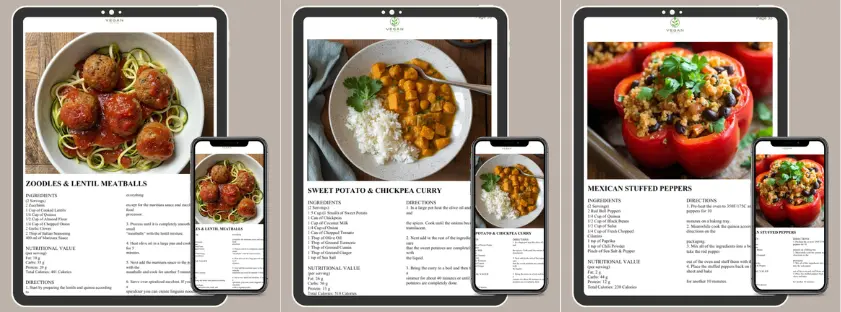
28-Day Vegan Meal Plan
+ Grocery List
Complete Solution · Nutritionist-Approved · Print & Use Today
Read on any device · No apps needed
Chef Section: UV Mushroom Cooking in MENA Tradition
Twenty years of professional MENA and Mediterranean kitchen experience reveals that the culinary traditions of this sun-drenched region naturally produced UV-exposed mushrooms long before nutritional science understood why. Outdoor drying of mushrooms, herbs, and vegetables in direct sunlight is a preservation technique used across North Africa, the Levant, and the Gulf. What the cooks understood intuitively as flavour concentration, nutritional science now understands as ergosterol-to-D2 conversion. The professional kitchen insight: the same technique that creates the intensely savoury flavour of sun-dried mushrooms also maximises their vitamin D content.
Four MENA Mushroom Cooking Applications
1. Sun-Dried Mushroom Powder: The Universal Seasoning
UV-treat a large batch of mushrooms by sun exposure for one to two hours. Slice thinly and dry completely in the sun or a low oven. Grind to a fine powder. This powder becomes a vitamin D-delivering umami seasoning that integrates invisibly into soups, lentil dishes, grain bowls, and stews. A tablespoon of concentrated sun-dried mushroom powder stirred into a lentil soup provides both the glutamate-driven savouriness that makes MENA dishes distinctively satisfying and a concentrated D2 contribution from the ergosterol accumulated during the UV treatment and drying process.
2. Braised Portobello in Pomegranate and Cumin
The standard MENA technique for large mushrooms: UV-treat portobello caps gills-up for 45 minutes before cooking. Braise in a small amount of olive oil with cumin seeds, garlic, pomegranate molasses, and fresh lemon until concentrated and glossy. The UV treatment that happens before cooking does not degrade the D2 content because cooking temperatures below 180°C do not destroy vitamin D. The finished dish delivers the full D2 content accumulated during UV treatment alongside pomegranate polyphenols and the immune-modulating beta-glucans native to portobello.
3. Shiitake in Ful Medames
Adding UV-treated shiitake mushrooms to the classic MENA fava bean breakfast is a natural flavour and nutrition integration. The umami depth of shiitake complements the earthy fava base perfectly. UV-treat fresh shiitakes for 30 minutes before adding to the slow-cooked beans. The result is a breakfast that delivers protein, iron, magnesium, and vitamin D2 simultaneously, covering multiple nutritional priorities in the single most important meal of the MENA culinary day.
4. The Professional Kitchen UV Treatment Station
In a professional kitchen approach, mushroom UV treatment is a weekly prep task rather than an ad hoc activity. Every Sunday, the week’s mushroom allocation is placed gills-up on trays in direct sunlight for 45-60 minutes, then refrigerated. This single weekly action ensures that every mushroom used in cooking throughout the week carries the full D2 load from the UV treatment. The flavour of UV-treated mushrooms is marginally more intense than untreated equivalents due to slight surface dehydration. It is a pure benefit: better flavour and better nutrition from one simple weekly habit.
The MENA Vitamin D Day: A Professional Kitchen Template
- Breakfast: fortified oat milk porridge with UV-treated shiitake mushroom powder stirred in (200 IU D2 from milk + 150 IU D2 from mushroom powder)
- Lunch: braised UV portobello with lentil tabbouleh (300 IU D2 from portobello)
- Snack: fortified oat milk in afternoon tea (100 IU D2)
- Supplement: 2,000 IU algae D3 with dinner (the fat-containing meal)
- Daily total: approx 750 IU from food + 2,000 IU from algae D3 = 2,750 IU total
- Plus 10-20 minutes midday sunlight when available in spring-summer
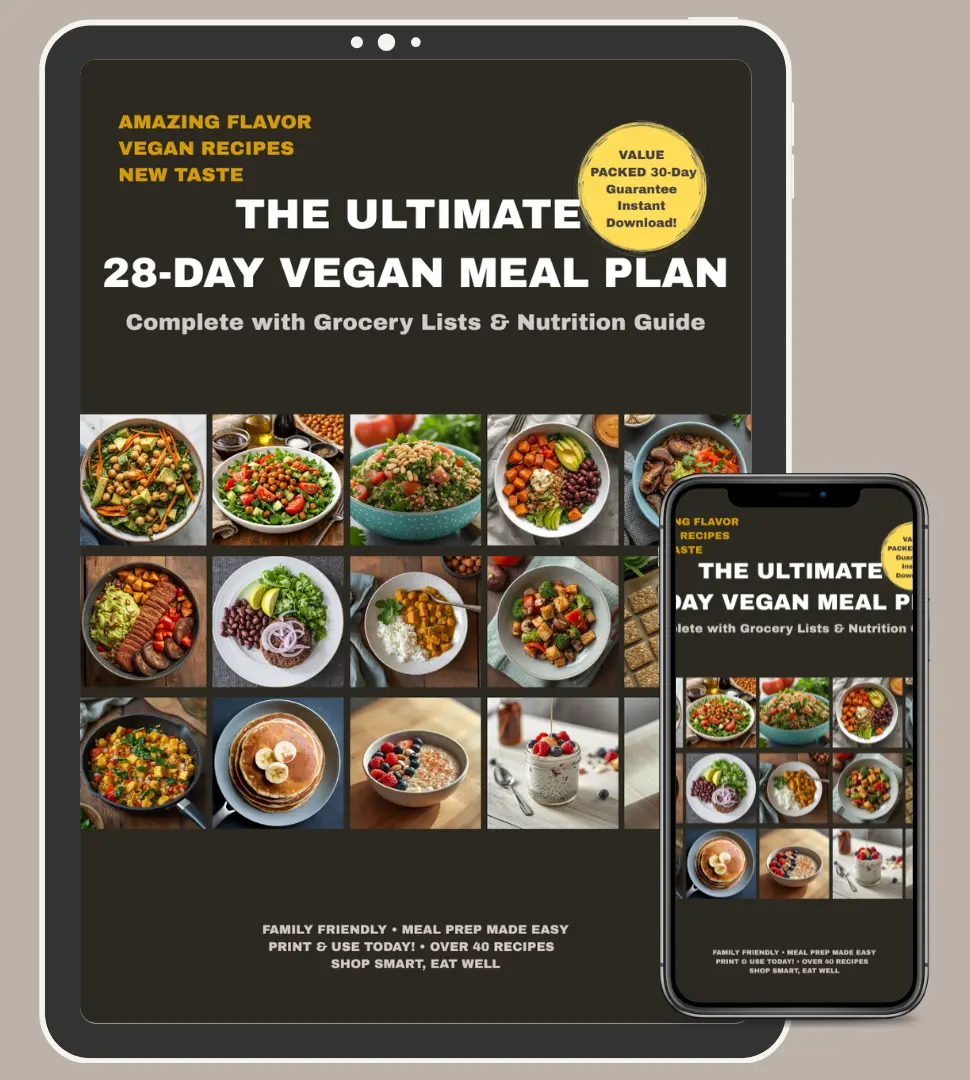
Ultimate 28-Day Vegan Meal Plan
+ Easy Grocery List & 40+ Recipes
The complete done-for-you plant-based nutrition system
Putting It Together: Vegan Vitamin D Foods Require Strategy, Not Luck
Vegan vitamin D foods cannot be approached casually. The honest position, supported by clinical evidence and population studies, is that most vegans in temperate climates who do not supplement are vitamin D insufficient. The consequences span every major body system: bones, immunity, testosterone, mood, insulin sensitivity, and muscle function. None of these outcomes are acceptable when the solution is straightforward.
The three-part strategy is simple: supplement algae-derived D3 at 2,000-4,000 IU daily depending on latitude and season, eat UV-treated mushrooms and D3-fortified plant foods daily to add a meaningful dietary contribution on top, and test serum 25-OH vitamin D annually to confirm the strategy is producing optimal levels. UV mushrooms are not a replacement for supplementation but they are a genuine and practical vegan vitamin D food that adds meaningful daily D2 to the total load.
Vegan vitamin D foods, used strategically and backed by algae D3 supplementation, produce serum vitamin D levels equivalent to or better than omnivore diets when managed correctly. The advantage of the plant-based approach is that algae-derived D3 supplements the same compound the body makes from sunlight, making it physiologically indistinguishable from natural production. The strategy works. It simply requires knowing what it is.
FAQ: 12 Questions About Vegan Vitamin D Foods
For most vegans in most of the world, no. Even a well-planned vegan diet with UV mushrooms, fortified plant milks, and fortified cereals delivers approximately 600-1,000 IU daily from food. The recommended optimum for serum vitamin D maintenance is 2,000 IU or more for adults in temperate climates. The gap between dietary supply and optimal intake requires supplementation. The exception is vegans who get consistent midday sunlight exposure (10-30 minutes of skin exposure, summer months, latitudes below 40°N) which can produce 5,000-10,000 IU per session. For everyone else, algae D3 supplementation is the necessary completion of a vegan vitamin D strategy.
Yes, this is one of the most well-validated food science facts in nutrition. Mushrooms contain ergosterol in their cell walls. When ergosterol is exposed to UV-B radiation (in sunlight or UV lamps), it converts to pre-vitamin D2, which then thermally converts to vitamin D2 (ergocalciferol). The same photochemical process that creates vitamin D3 in human skin creates vitamin D2 in mushrooms. Studies reviewed at Examine.com confirm that 100g of mushrooms exposed to one hour of midday summer sunlight can produce 400-1,000 IU of vitamin D2. The key conditions: gills must face up, sunlight must be direct (not through glass), and exposure should be during UV-B peak hours (10am-2pm).
D3 is clearly superior for raising and maintaining serum vitamin D levels. Multiple clinical trials confirm D3 raises 25-OH vitamin D approximately twice as effectively as D2 at equivalent doses. D3 also has a longer half-life in the body and maintains serum levels more stably between doses. For vegans, algae-derived D3 supplements provide the same compound the body makes from sunlight, making them the preferred form. When choosing fortified plant foods, seek out those using algae D3 (cholecalciferol) rather than D2 (ergocalciferol). D2 still contributes meaningfully and UV mushrooms remain valuable, but the supplement foundation should always be algae D3.
Algae-derived vitamin D3 (cholecalciferol) in a softgel or liquid form with a small amount of fat for absorption. Key selection criteria:
- Form: D3 (cholecalciferol) not D2 (ergocalciferol)
- Source: algae or lichen derived — this will be stated on the label
- Dose: 2,000 IU minimum daily. Available in 1,000 IU, 2,000 IU, and 4,000 IU doses.
- Format: softgel in olive oil carrier is optimal for absorption. Liquid drops also absorb well.
- Take with the largest fat-containing meal of the day
Vitamin D deficiency is often clinically silent for years before symptoms appear. When they do appear:
- Bone-related: bone pain (especially lower back, hips, legs), stress fractures, reduced bone density on DEXA scan
- Muscle-related: generalised muscle weakness, muscle aches, poor exercise recovery, fall risk in older adults
- Immune-related: frequent infections, slow healing, worsened autoimmune symptoms
- Neurological: low mood, fatigue, cognitive fog, seasonal affective disorder (winter)
- Metabolic: impaired insulin sensitivity, unexplained weight gain
These symptoms are non-specific and overlap with many conditions. A serum 25-OH vitamin D test is the only way to confirm deficiency.
The amount depends heavily on skin tone, latitude, season, and time of day. General guidelines:
- Light skin at 40°N latitude in summer (10am-2pm): 10-15 minutes arms and face exposed
- Medium skin at same location: 20-30 minutes
- Dark skin at same location: 40-60 minutes
- Any skin tone above 50°N in winter: essentially zero production regardless of exposure duration
- Through glass or with SPF 15+: zero production regardless of other factors
The practical recommendation: maximise incidental sun exposure during spring-summer but do not rely on sunlight as a primary vitamin D strategy. Supplement year-round and use sun exposure as a bonus contribution.
Toxicity from dietary sources alone is essentially impossible. Vitamin D toxicity (hypercalcaemia) requires sustained supplemental doses above 10,000 IU daily for extended periods in most adults. The body also self-regulates sun-derived vitamin D production: excess is automatically converted to inactive metabolites. At the recommended 2,000-4,000 IU daily supplementation, toxicity risk is negligible. The upper tolerable limit set by major health authorities is 4,000 IU daily for adults, though many clinicians consider 6,000-10,000 IU safe for short-term repletion under medical supervision. For routine supplementation, 2,000-4,000 IU daily provides the optimal serum range without any risk.
Not significantly. Vitamin D2 in mushrooms is heat-stable at typical cooking temperatures. Studies show that cooking mushrooms at up to 180°C for standard cooking times (sauteing, roasting, braising) retains 70-90% of the D2 content produced by UV treatment. Boiling in water causes some leaching into the cooking liquid, but if the liquid is consumed (as in a soup or stew), the total D2 content is largely retained in the dish. This means UV-treated mushrooms used in cooking deliver their D2 effectively without requiring raw consumption.
Clinical evidence supports a link between vitamin D deficiency and depression, particularly seasonal depression. Vitamin D receptors are found throughout the brain, including in regions that regulate mood and dopamine production. Studies show that vitamin D supplementation in deficient individuals reduces depressive symptoms, with the effect strongest in those who were most deficient at baseline. For vegans, who are statistically more likely to be vitamin D deficient and may also be B12 deficient (another mood-affecting nutrient), addressing both deficiencies is a dual-strategy for mood support. The full depression nutrition framework is at the vegan diet and depression guide.
Vitamin D is the gatekeeper of calcium absorption. It regulates the production of calbindin, the intestinal protein that transports calcium across the gut wall into circulation. Without adequate vitamin D (serum 25-OH above 50 nmol/L), calcium absorption efficiency falls from 30-50% to 10-15%. This means even a well-designed vegan calcium diet — with calcium-set tofu, fortified plant milks, and low-oxalate greens — is largely wasted if vitamin D is deficient. The vegan calcium-vitamin D relationship is one of the most important nutritional synergies in plant-based eating. Both must be adequate for either to work. See the vegan calcium foods guide and the vegan bone health guide for the full framework.
The primary test is serum 25-hydroxyvitamin D (25-OH vitamin D), also written as calcidiol. This measures stored vitamin D and reflects the body’s true vitamin D status. Target ranges:
- Deficient: below 25 nmol/L (10 ng/mL) — requires supervised repletion
- Insufficient: 25-50 nmol/L — increase supplementation immediately
- Adequate (minimum): 50-75 nmol/L — bone health protected
- Optimal: 75-150 nmol/L — full immune, metabolic, and bone benefits
- Excessive (rare): above 250 nmol/L — reduce supplementation
Test annually (autumn is the best time to capture the post-summer peak and plan winter supplementation). Request alongside parathyroid hormone (PTH) for complete calcium-vitamin D assessment.
Yes, when the form is equivalent. Vitamin D3 from fortified plant milk absorbs with the same efficiency as D3 from a supplement capsule when consumed with a fat-containing meal. The practical difference is dose: a cup of fortified plant milk delivers 80-200 IU while a supplement delivers 1,000-4,000 IU. Both deliver the same compound at the same absorption rate, but supplements deliver 10-20x the dose. For this reason, fortified foods are valuable daily contributors to total vitamin D intake but cannot practically replace supplementation at the doses required to maintain optimal serum levels. The combination approach (fortified foods + UV mushrooms + algae D3 supplement + sunlight when available) produces the most reliable and highest serum vitamin D outcome available from a vegan dietary strategy.
Still spending hours figuring out what to eat?
What’s included in your download
- 40+ nutritionist-approved recipes
- Complete 28-day calendar
- Meets protein, iron & B12 needs
- Family & meal prep friendly
- Vibrant photo for every recipe
- Simple, common ingredients
Instant PDF download. No subscriptions. No waiting.