

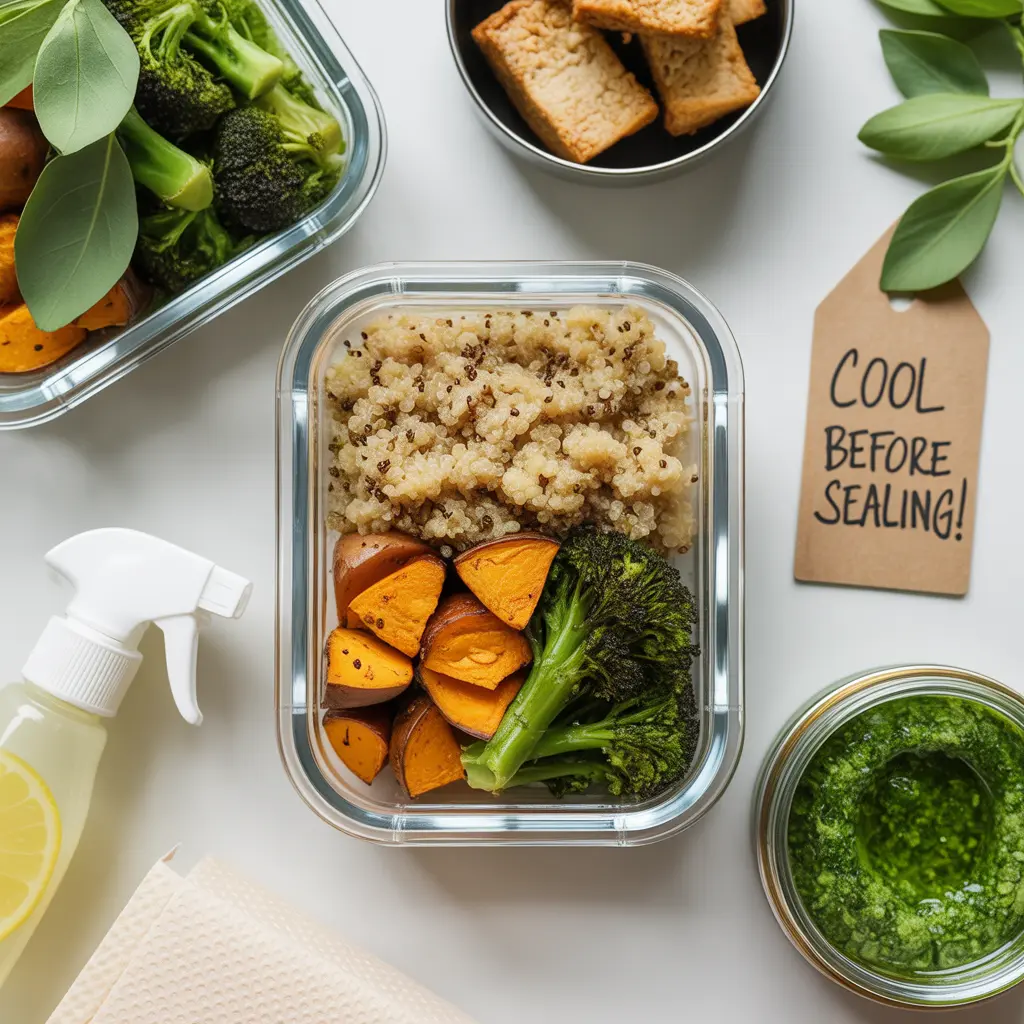
Creating vegan meal prep that stays fresh tasty is the holy grail of efficient, healthy eating. We’ve all faced the disappointment of a soggy Wednesday salad or a bland, rubbery Thursday stir-fry. But this decline isn’t inevitable, it’s a scientific challenge with a precise solution. This guide is your definitive manual on the food chemistry and practical techniques required to make vegan meal prep that stays fresh tasty from your Sunday cooking session all the way through to Friday’s lunch. We will move beyond basic recipes and delve into the “why” and “how” of ingredient behavior, storage physics, and flavor preservation. Forget about mediocre leftovers; it’s time to master the art of vegan meal prep that stays fresh tasty for the long haul.
Why Most Vegan Meal Prep Fails: The Science of Sogginess & Blandness
Understanding the enemy is the first step to victory. The common failure to create vegan meal prep that stays fresh tasty boils down to three core scientific processes: enzymatic degradation, starch retrogradation, and moisture migration. Let’s break down why your food transforms in the fridge and how you can stop it.
Moisture Migration: The Primary Culprit
The number one destroyer of texture in prepped meals is uncontrolled water movement. Different food components have varying water activity levels. Sauces release moisture, crispy elements absorb it, and vegetables leach water as their cell walls break down. This migration turns a crisp broccoli floret into a steamed, limp version of itself and transforms a fluffy grain into a gummy paste. Controlling this exchange is the foundational skill for vegan meal prep that stays fresh tasty.
Starch Retrogradation: The Grain Hardener
This is the scientific term for why your rice or quinoa turns hard and dry. When starchy foods cool, the molecules realign and crystallize. While reheating can partially reverse this, it often leaves a grainy, unpleasant texture. This process is a major hurdle for anyone seeking vegan meal prep that stays fresh tasty, especially in grain-based bowls.
Flavor Volatility & Flattening
The bright, aromatic compounds in garlic, herbs, and spices are volatile, they evaporate and break down over time. What starts as a vibrant curry can become a flat, one-note stew by day three. Furthermore, flavors can meld in unappealing ways, muting contrasts. Learning to protect and strategically reintroduce these flavors is key to vegan meal prep that stays fresh tasty throughout the week.
The Mindset Shift: From “Leftovers” to “Prepped Components”
The psychological shift is crucial. Stop thinking of your containers as “finished meals sitting in wait.” Instead, view them as “prepped components for final assembly.” This assembly-line mentality, where you combine elements at the last minute, is the professional chef’s secret to consistent quality and the core philosophy behind successful vegan meal prep that stays fresh tasty.
Check my Post on Kitchen Complete Setup Guide.
The Five Scientific Pillars of Vegan Meal Prep That Stays Fresh Tasty
To systematically combat degradation, you must build your prep routine on these five non-negotiable scientific principles. Mastering them is what separates frustrating failure from reliably delicious vegan meal prep that stays fresh tasty.
Pillar 1: Strategic Fat Management & Emulsification
Fats carry flavor but can also cause sogginess and separation. An oil-based dressing will wilt greens and pool unappetizingly. The Solution: For salads, always store dressing separately. For grain bowls, use thick, emulsified sauces, like a tahini-lemon sauce or a blended cashew cream, that cling to food without weeping oil. You can emulsify a simple vinaigrette with a teaspoon of Dijon mustard or white miso paste, creating a stable condiment perfect for vegan meal prep that stays fresh tasty.
Pillar 2: Precision Acid Timing
Acids (citrus juice, vinegar) are flavor brighteners but are also potent denaturing agents. They break down plant cell walls, leading to mushiness. The Golden Rule: Acid is a finishing element, not a storage one. Pack lemon wedges or small bottles of vinegar separately. Know your vegetables: bell peppers and carrots can handle a pre-marinate, while leafy greens and cucumbers will turn to mush. This discipline is essential for vegan meal prep that stays fresh tasty with crisp textures.
Pillar 3: The Osmosis of Salt
Salt draws water out of cells via osmosis. Salting your zucchini or cucumber too early creates a puddle of water in your container. The “Salt Line” Strategy: Salt cooked items (grains, roasted veggies, beans) generously during cooking. Salt fresh, high-moisture vegetables only immediately before eating. The exception is pasta: salting the cooking water heavily is critical, and it actually helps the pasta maintain a better texture in storage, a key hack for vegan meal prep that stays fresh tasty.
Pillar 4: Aggressive Moisture Control Protocols
You must become a moisture warden. Your Toolkit Includes: 1) The Paper Towel Shield: Place a folded, dry paper towel on top of grains or under greens to absorb condensation; replace every two days. 2) The Airtight Sauce Jail: Store wet sauces in the smallest possible container to minimize surface area and air exposure. 3) The Cool-Down Rule: Never seal hot food. Let all components cool completely to room temperature before lidding to prevent trapped steam from creating a soggy sauna. This active defense is what makes vegan meal prep that stays fresh tasty a reality.
Pillar 5: Intelligent Temperature Zoning
Not all food benefits from being ice-cold. The Reheating Protocol: Allow grain- and bean-based containers to sit on the counter for 15-20 minutes before reheating. This reduces “thermal shock,” where a microwave creates lava-hot spots while the center remains frozen. For fresh elements like salad greens or avocado, keep them fiercely cold in a separate container and combine post-reheat. This zoning strategy is the final, critical practice for vegan meal prep that stays fresh tasty.
Ingredient-Specific Mastery: A Guide for Vegan Meal Prep That Stays Fresh Tasty
A blanket approach fails. Each ingredient family demands its own protocol to ensure your vegan meal prep that stays fresh tasty. Here is your comprehensive manual.
Grains & Pasta: The Starch Masters
- The Challenge: Retrogradation leads to hard, dry grains.
- The Fix: Undercook by about 15% (e.g., if rice takes 20 minutes, cook for 17). Store with a single tablespoon of water or vegetable broth in the container. Reheat with a damp paper towel over the top.
- The Pro Exception: For fried rice, you want day-old, dried-out rice from the fridge, it fries without clumping.
- Freshness Window: 5-7 days refrigerated; 3 months frozen (with extra liquid).
Beans & Lentils: The Hydration Challenge
- The Challenge: They continue to absorb liquid, becoming mushy.
- The Fix: Store beans slightly al dente and keep them a bit “under-sauced.” Reserve some of the flavorful cooking liquid and add it back when reheating to refresh them.
- Texture Trick: A splash of apple cider vinegar during reheating can brighten flavor and slightly firm the texture.
- Freshness Window: 5 days refrigerated; 6 months frozen (in liquid).
Tofu: The Moisture Menace
- The Challenge: It releases water, becoming soggy and slimy.
- The Champion Method (Baked): Press tofu thoroughly for 25+ minutes, cube, and bake at 400°F until golden and chewy. This dry, stable texture is ideal for vegan meal prep that stays fresh tasty.
- The Crispy Method: Store crispy, baked, or air-fried tofu completely separate from any sauce. Add sauce only after reheating (preferably in an air fryer to re-crisp).
- Never Meal Prep: Silken tofu. It’s a fresh-only ingredient.
Tempeh: The Flavor Sponge
- The Challenge: Can become dry and bitter.
- The Pre-Treatment: Steam slices for 10 minutes before marinating. This removes bitterness and opens pores.
- The Advantage: Tempeh’s flavor improves over 2-3 days as the marinade deeply penetrates. Store it submerged in its marinade.
Vegetables: A Category-by-Category Breakdown for Vegan Meal Prep That Stays Fresh Tasty
- Leafy Greens (Spinach, Kale, Lettuce): Wash and dry thoroughly. Store with a dry paper towel in a loosely sealed container, never dressed. For salads, use the mason jar method: dressing at the bottom, then hard veggies (carrots, chickpeas), then greens on top, utterly untouched by moisture.
- Cruciferous Vegetables (Broccoli, Cauliflower): Slightly undercook and “shock” in an ice bath to halt cooking. Roasting is superior to steaming for storage longevity.
- Root Vegetables (Carrots, Potatoes, Beets): Your meal prep heroes. Roast or steam them fully. They retain texture and flavor beautifully for a full 7 days, making them a cornerstone of reliable vegan meal prep that stays fresh tasty.
- High-Moisture Veggies (Peppers, Onions, Zucchini): Cook on high heat to caramelize and drive off excess water. Drain any liquid from the pan before storing. A paper towel at the container’s base can catch residual moisture.
- The Tomato Rule: Never store pre-cut raw tomatoes. They turn to mush. Use cherry tomatoes whole, or add freshly sliced tomatoes on the day of eating. Cooked tomato sauce, however, improves with time and freezes excellently.
This granular, ingredient-specific knowledge is what empowers you to craft vegan meal prep that stays fresh tasty across a diverse menu all week long, Good Place to get more Information.
Container Assembly Strategies for Vegan Meal Prep That Stays Fresh Tasty
How you pack is as crucial as how you cook. Choose your strategy based on your meal and texture priorities.
Strategy 1: The Bento Box (Maximum Texture Integrity)
- Method: Use divided containers. Grains in one section, protein in another, cooked veggies in a third, sauce in a tiny cup.
- Why it Works for Freshness: Zero cross-contamination. Everything remains in its ideal state. This is the undisputed champion method for ensuring vegan meal prep that stays fresh tasty with perfect, distinct textures.
- Best For: Meals with crispy tofu, fresh garnishes, or anything where sogginess is the enemy.
Strategy 2: The Layered Bowl (Optimized Convenience)
- Method: In a single container: 1) Base of grains, 2) Layer of beans/lentils (acts as a moisture barrier), 3) Cooked vegetables, 4) Delicate greens (like spinach) on the very top. Sauce on the side.
- Why it Works: The layers protect the most delicate items. It’s space-efficient and quick to pack.
- Best For: Hearty grain bowls, buddha bowls, or stews where some mixing is acceptable in pursuit of vegan meal prep that stays fresh tasty.
Strategy 3: The Hot/Cold Split (Absolute Freshness)
- Method: Two containers. Container A: All reheatable items (grains, proteins, roasted veggies). Container B: All fresh, cold items (salad greens, diced tomatoes, avocado, fresh herbs).
- Why it Works: This completely prevents wilting and sogginess. You combine the contents after reheating Container A.
- Best For: Salad-based meals, taco/burrito fillings, or when using supremely delicate produce in your vegan meal prep that stays fresh tasty.
Strategy 4: The Freezer-Powered Rotation (Long-Term Solution)
- Method: Cook in larger batches. Refrigerate 3-4 meals for the coming days. Portion and freeze the remainder. Thaw overnight in the fridge before eating.
- Why it Works: Freezing pauses degradation. You effectively reset the clock, ensuring you never eat anything older than 3-4 days from the fridge. This is a strategic approach to always having vegan meal prep that stays fresh tasty on hand.
The Art of the Revival: Reheating for Vegan Meal Prep That Stays Fresh Tasty
Reheating is not merely warming; it’s an act of culinary rescue. The wrong method can ruin your careful prep.
The Microwave (Used Correctly):
- Power Down: Never use 100% power. Use 50-70% power for a longer, gentler reheat that avoids rubbery textures.
- The Steam Tent: Always cover the dish with a damp paper towel. This creates a humid microclimate that rehydrates grains and prevents drying, a must for vegan meal prep that stays fresh tasty.
- Stir & Pause: Stop halfway to stir thoroughly, ensuring even heating.
- Avoid: Microwaving anything intended to be crispy.
The Oven/Toaster Oven (Texture Savior):
- Method: 350°F. Spread food in a thin layer if possible. Reheat uncovered for 10-20 minutes.
- The Crisp Finish: For the last 2-3 minutes, use the broil function to re-crisp the tops of roasted veggies or baked tofu.
- Rehydrate: Sprinkle a teaspoon of water or broth over grains before heating.
The Air Fryer (The Game-Changer for Crispiness):
- Method: 350°F for 4-7 minutes.
- Why it Reigns: It miraculously revives the crisp exterior of baked tofu, falafel, and roasted vegetables, making them taste freshly made. It is arguably the best single investment for achieving vegan meal prep that stays fresh tasty with perfect texture.
The Stovetop (For Sauces & Stir-Fries):
- Method: Use a non-stick pan on medium. Add a small splash of water or broth to create steam, cover briefly to heat through, then uncover to allow excess moisture to evaporate and flavors to re-concentrate.
The Cold Meal Advantage:
- Some dishes are designed to be eaten cold: pasta salad, quinoa salad, three-bean salad. For these, let them sit out for 20-30 minutes before eating to take the harsh edge off the chill and allow flavors to express themselves fully, showcasing a different facet of vegan meal prep that stays fresh tasty.
The 30-Second Fresh Finish: Guaranteeing Vegan Meal Prep That Stays Fresh Tasty
This final step is what elevates a good prepped meal to a great one. After reheating, implement your “fresh finish.”
- The Herbal Lift: Keep pre-chopped hardy herbs (parsley, cilantro) in a small jar with a damp paper towel. A generous sprinkle before eating adds a burst of aroma and freshness.
- The Acidic Spark: A final squeeze of lemon or lime, or a dash of chili-infused vinegar, cuts through accumulated flavors and brightens the entire dish.
- The Crunch Restoration: Add toasted nuts, seeds, or croutons from your pantry. This restores the lost textural contrast that is vital for vegan meal prep that stays fresh tasty.
- The Umami Adjust: A light dusting of nutritional yeast, a drizzle of tamari, or a dot of sesame/chili oil adds depth and complexity.
The Chef’s Final Trick: Always taste your meal after reheating, before the fresh finish. Diagnose: Bland? Add salt or umami. Flat? Add acid. Dry? Add a fat (avocado, tahini drizzle). This mindful adjustment is the ultimate secret to consistently delicious vegan meal prep that stays fresh tasty, every single day.
By internalizing this science-first framework, from strategic cooking and intelligent storage to mindful reheating and finishing, you transform meal prep from a chore of diminishing returns into a reliable system for vibrant, delicious, and satisfying food all week long. This is the true path to mastering vegan meal prep that stays fresh tasty.
P.S. To make your transition to vegan eating smooth and stress-free, I created a complete 28-day starter kit with meal plans and shopping lists. You can find it here.
Want to try before you buy?
Enter your email below to get 2 free recipes instantly: