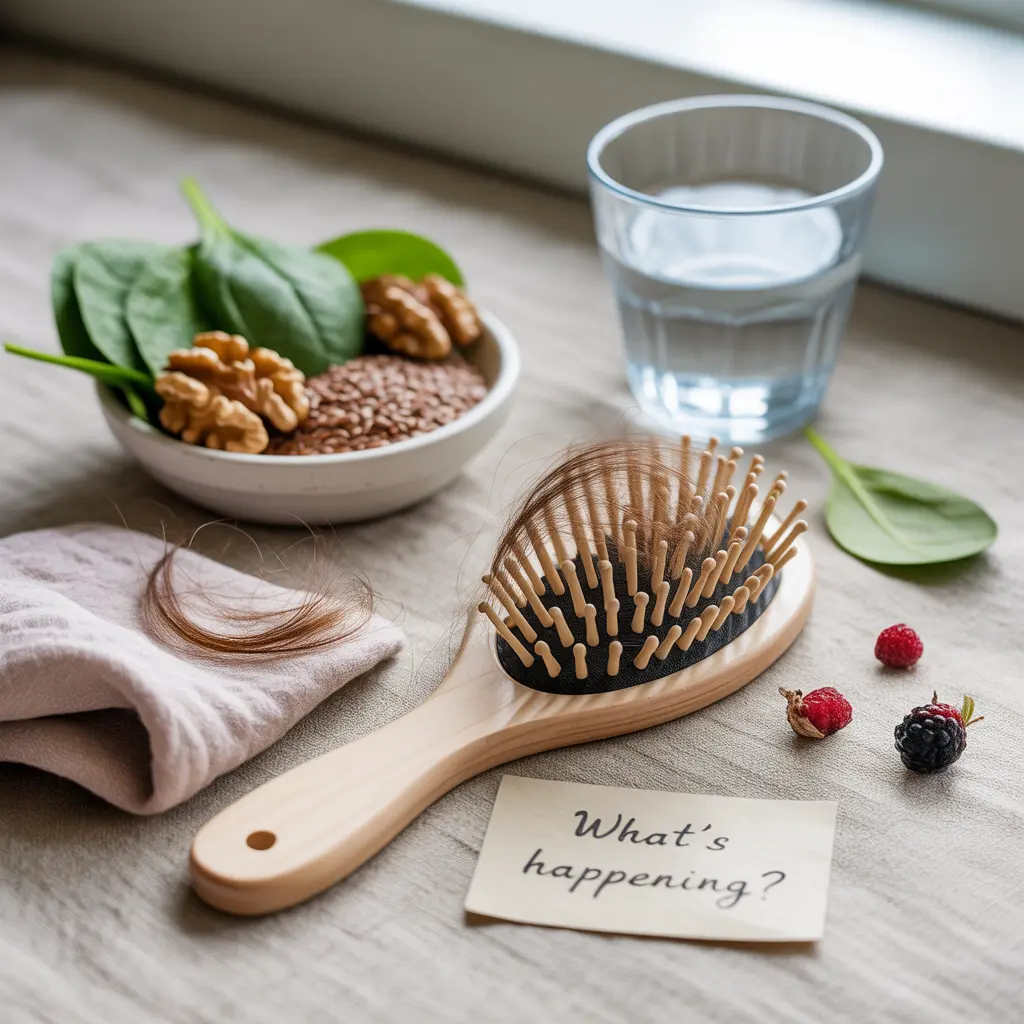
- Vegan hair loss is real, common, and almost always caused by one or more specific, fixable nutritional deficiencies, not by veganism itself.
- Iron deficiency is the single most common driver of vegan hair loss, especially in women. Low ferritin is the critical marker to test, not just hemoglobin.
- Zinc, protein, biotin, iodine, selenium, and vitamin D deficiencies all independently cause hair thinning and shedding on a plant-based diet.
- Telogen effluvium, the sudden shedding triggered by the metabolic stress of a major dietary change, typically resolves on its own within 3 to 6 months once nutritional gaps are corrected.
- A blood test is the fastest path to identifying your specific cause. Do not guess and supplement blindly.
- Understanding Vegan Hair Loss: What Is Actually Happening
- Telogen Effluvium: The Most Misunderstood Type
- The 7 Proven Nutritional Causes of Vegan Hair Loss
- Complete Nutrient Reference for Vegan Hair Health
- Best Foods for Stopping Vegan Hair Loss
- What Not to Do When Experiencing Vegan Hair Loss
- The Honest Regrowth Timeline
- Frequently Asked Questions
- Your Action Plan
If you have noticed your hair thinning or shedding more than usual after going vegan, you are not imagining it. Vegan hair loss is one of the most commonly reported experiences in the plant-based community, particularly in the first three to twelve months after transitioning. It is alarming, it feels personal, and it makes many people question whether their diet is working for them at all.
Here is what you need to know upfront: vegan hair loss is almost never caused by veganism itself. It is caused by specific, identifiable nutritional gaps that are entirely fixable. The same hair loss would happen on any diet that produced the same deficiencies. Veganism just creates a set of conditions where those deficiencies are more likely if the diet is not carefully planned.
This guide covers every proven cause of vegan hair loss, the exact blood tests to request, the specific foods and supplements that address each cause, and a realistic timeline for when you can expect to see new growth.
If you suspect fatigue alongside your hair loss and want to understand the full picture of common nutritional deficiencies on a plant-based diet, our guide on why you are tired on a vegan diet covers the overlapping nutrient issues in depth.
UNDERSTANDING VEGAN HAIR LOSS: WHAT IS ACTUALLY HAPPENING
Hair grows in a continuous cycle with three main phases: anagen (active growth), catagen (transition), and telogen (resting and shedding). At any given time, roughly 85 to 90 percent of your hair follicles are in the active growth phase, with the remaining 10 to 15 percent in the resting phase.
When the body experiences significant stress, whether from illness, surgery, extreme calorie restriction, or a major dietary change, it redirects resources away from non-essential functions. Hair growth is considered non-essential. The body does not need to grow hair to survive.
The result is that a large proportion of actively growing hair follicles simultaneously shift into the telogen (resting and shedding) phase. Two to four months later, all that hair sheds at once. This is called telogen effluvium, and it is the most common pattern of vegan hair loss in new plant-based eaters.
Understanding this mechanism matters because it explains two important things. First, the shedding you notice is not happening to hair that was growing recently. It is happening to hair that stopped growing two to four months ago when the initial dietary stress occurred. Second, if you fix the underlying cause quickly, the new hair is already growing beneath the surface. You just cannot see it yet.
TELOGEN EFFLUVIUM: THE MOST MISUNDERSTOOD TYPE OF VEGAN HAIR LOSS
Telogen effluvium is the pattern of vegan hair loss that most frequently frightens people into abandoning their plant-based diet prematurely. The shedding is sudden, heavy, and diffuse, meaning it comes from all over the scalp rather than in a specific pattern. It typically peaks around two to four months after the triggering event and then gradually resolves over the following three to six months.
The critical point: telogen effluvium is temporary when the underlying cause is corrected. It is not the beginning of permanent hair loss. The follicles are dormant, not dead. Once nutritional adequacy is restored, they reactivate and resume the growth phase.
However, telogen effluvium can become chronic if the nutritional deficiency that triggered it is not addressed. Chronic telogen effluvium, defined as diffuse shedding lasting more than six months, typically means the underlying deficiency is ongoing. This is why identifying and correcting your specific cause matters so much.
The most common triggers of telogen effluvium in the context of vegan hair loss are iron deficiency (especially low ferritin), insufficient protein intake, zinc deficiency, and the metabolic stress of a major calorie restriction during a dietary transition.
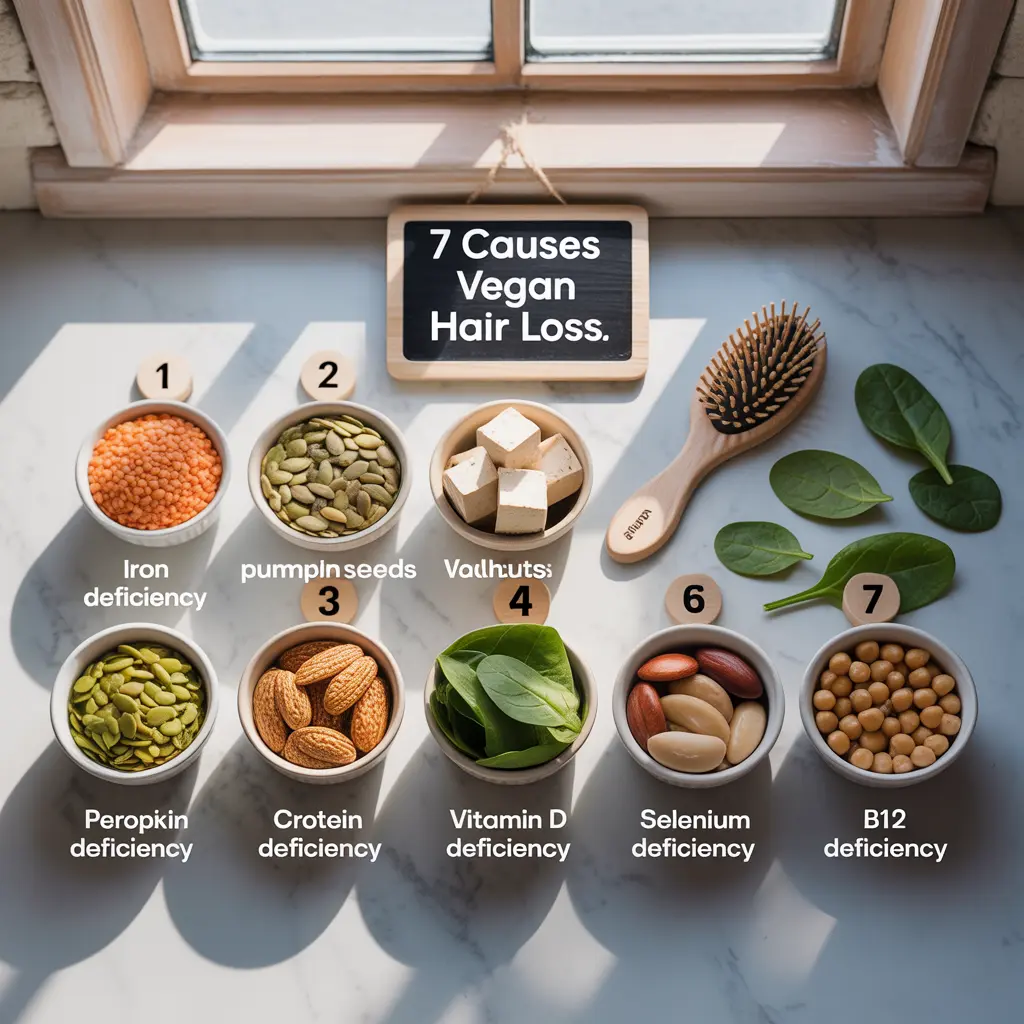
THE 7 PROVEN NUTRITIONAL CAUSES OF VEGAN HAIR LOSS
CAUSE 1: IRON DEFICIENCY AND LOW FERRITIN
Iron deficiency is the single most well-documented nutritional cause of hair loss, particularly in women. The critical distinction that most people and even many doctors miss is the difference between hemoglobin and ferritin.
Hemoglobin is the iron-carrying protein in red blood cells. You can have normal hemoglobin and still have vegan hair loss from iron deficiency. Ferritin is the stored form of iron used by the hair follicle matrix. When ferritin drops below 30 to 40 ng/mL, the hair follicle cycle is disrupted and shedding begins, often months before any anaemia develops.
Always request serum ferritin specifically when investigating vegan hair loss. A hemoglobin result in the normal range does not rule out iron-related hair shedding.
Plant-based iron (non-heme iron) is less bioavailable than animal iron. Always pair iron-rich foods with vitamin C to improve absorption. Avoid tea and coffee within one hour of iron-rich meals. Never supplement iron without a confirmed low ferritin result on a blood test.
CAUSE 2: ZINC DEFICIENCY
Zinc regulates every stage of the hair follicle cycle. It controls the oil glands around follicles, prevents follicle shrinkage, and is essential for protein synthesis in hair cells. Zinc deficiency on a vegan diet is more common than many people expect because plant foods contain phytic acid, which binds to zinc and significantly reduces how much the body absorbs.
Beyond vegan hair loss, zinc deficiency produces a recognizable pattern of additional symptoms: slow wound healing, frequent colds and infections, loss of taste and smell acuity, white spots on fingernails, and skin problems around the nose and mouth. If you have vegan hair loss alongside two or more of these symptoms, zinc deficiency is a strong candidate.
Soaking and sprouting legumes, and choosing fermented soy products like tempeh over unfermented ones like tofu, meaningfully reduces phytic acid and improves zinc bioavailability.
CAUSE 3: INSUFFICIENT PROTEIN
Hair is approximately 95 percent keratin, a structural protein. When daily protein intake falls below what the body needs for essential functions, hair production is among the first processes to be down-regulated. The body has no physiological requirement to grow hair. It does have a requirement to maintain organ function, immune defence, and metabolic processes.
The timing of this type of vegan hair loss is a useful diagnostic clue. Protein-related shedding typically appears two to three months after a sustained period of low protein intake, not immediately. If your hair loss started roughly three months after you went vegan, inadequate protein in those first months is a very likely contributing factor.
For vegan hair health, target a minimum of 1.2 to 1.6g of protein per kilogram of body weight daily. For most adults this means 80 to 110g of protein per day from high-quality whole plant sources.
CAUSE 4: BIOTIN DEFICIENCY
Biotin is essential for the enzyme reactions that produce keratin. True biotin deficiency producing vegan hair loss is less common than iron or zinc deficiency but it does occur, particularly in people who consume large amounts of raw foods or who have gut health issues that impair biotin absorption.
Nutritional yeast is one of the richest dietary sources of biotin available and works as both a vegan hair loss prevention food and a general nutritional supplement in its own right. Two to three tablespoons daily provides meaningful biotin alongside B vitamins, zinc, and, in fortified varieties, B12.
One important note: high-dose biotin supplements (5,000mcg and above) interfere with thyroid blood tests, producing falsely abnormal results. If you are supplementing biotin and have a thyroid test scheduled, pause the supplement for at least 48 hours before the blood draw.
CAUSE 5: VITAMIN D DEFICIENCY
Vitamin D receptors are present in human hair follicles, and research consistently links low vitamin D levels with both diffuse hair thinning and alopecia areata (patchy hair loss). Vitamin D deficiency is one of the most prevalent nutrient deficiencies in the general population and is particularly common in plant-based eaters who do not supplement.
Vegan hair loss from vitamin D deficiency is easy to miss because the hair symptoms often appear alongside other low-grade vitamin D symptoms like fatigue, low mood, and frequent illness, which can be dismissed as general tiredness rather than a specific deficiency.
The optimal 25-hydroxyvitamin D blood level for hair follicle health appears to be in the range of 50 to 80 ng/mL. Many people with vegan hair loss who test their levels find they are in the 15 to 25 ng/mL range, which is significantly below optimal.
Supplement with vegan D3 from lichen at 1,000 to 2,000 IU daily, taken with food containing fat for best absorption. This is one of the most straightforward of all vegan hair loss fixes.
CAUSE 6: IODINE DEFICIENCY AND THYROID DYSFUNCTION
The thyroid connection to vegan hair loss is one of the most frequently missed causes in plant-based eaters. Both an underactive thyroid (hypothyroidism) and an overactive thyroid (hyperthyroidism) cause diffuse hair loss, and iodine deficiency is one of the primary dietary triggers of hypothyroidism.
Many vegans who switch from iodized table salt to sea salt, Himalayan pink salt, or other artisanal salts unknowingly eliminate their primary dietary iodine source. Sea salt and Himalayan pink salt contain virtually no iodine despite being perceived as healthier alternatives.
A distinctive sign of thyroid-related vegan hair loss, as opposed to nutritional deficiency hair loss, is thinning of the outer third of the eyebrows. If your eyebrow hair is also thinning alongside scalp hair, request a full thyroid panel from your doctor, not just TSH but free T3, free T4, and TPO antibodies as well.
CAUSE 7: SELENIUM DEFICIENCY
Selenium’s role in vegan hair loss operates primarily through thyroid function. The enzyme that converts inactive thyroid hormone T4 into the active form T3 is a selenoprotein, meaning it requires selenium to function. Adequate iodine without adequate selenium can still result in functional hypothyroidism and the hair loss that follows.
The elegantly simple fix: eat two Brazil nuts every single day. Two Brazil nuts provide approximately 96mcg of selenium, which exceeds the daily RDA of 55mcg and falls safely below the tolerable upper limit of 400mcg. This is one of the most cost-effective and effortless nutritional interventions available for preventing selenium-related vegan hair loss.
Do not be tempted to eat more. Selenium toxicity (selenosis) itself causes hair loss, brittle nails, and neurological symptoms at doses above 400mcg daily. Two Brazil nuts. No more.
🛑 Tired of the “What do I eat?” stress?
Download the 28-Day Success System and get 100+ recipes, shopping lists.
The table below is your complete reference guide for vegan hair loss. Every nutrient involved in hair follicle health is covered, with the specific deficiency signs, best plant food sources, testing guidance, and supplementation notes. Screenshot it and bring it to your next blood test appointment.
| Nutrient | How It Causes Vegan Hair Loss | Key Deficiency Signs | Best Vegan Food Sources | Blood Test to Request | Supplement If Needed | Timeline to See Improvement |
|---|---|---|---|---|---|---|
| Iron (Ferritin) | Ferritin (stored iron) is used by the hair follicle matrix. When ferritin drops below 30 to 40 ng/mL, hair enters the shedding phase even before anaemia develops. | Heavy shedding, diffuse thinning all over scalp, fatigue, cold hands and feet, pale gums, breathlessness | Lentils, tofu, pumpkin seeds, fortified cereals, blackstrap molasses, spinach, chickpeas, white beans | Serum ferritin AND full blood count (hemoglobin alone is insufficient) | Ferrous bisglycinate 25mg (gentle on stomach). Only with confirmed low ferritin. | 3 to 6 months of consistent supplementation to restore ferritin levels |
| Zinc | Zinc is essential for DNA synthesis in hair follicle cells and regulates the hair growth cycle. Deficiency accelerates follicle miniaturization and shedding. | Hair thinning and shedding, slow wound healing, frequent infections, loss of taste and smell, white spots on nails | Pumpkin seeds (10mg/100g), hemp seeds, cashews, chickpeas, oats, tempeh, tofu. Soak legumes to improve absorption. | Serum zinc (note: serum zinc is not fully reliable, symptom pattern matters too) | Zinc gluconate or zinc picolinate 15 to 25mg with food. Do not exceed 40mg daily. | 2 to 4 months |
| Protein | Hair is made of keratin, a protein. Insufficient dietary protein directly reduces the rate of hair production and triggers a protective shedding phase as the body prioritizes vital organs over hair growth. | Diffuse shedding 2 to 3 months after a period of low protein intake, dull and brittle hair, slow nail growth, muscle loss | Tofu, tempeh, seitan, edamame, lentils, chickpeas, black beans, vegan protein powder. Target 1.2 to 1.6g per kg body weight. | No specific blood test. Track protein intake for 7 days using Cronometer. | Vegan protein powder if whole food sources consistently fall short of daily target. | 2 to 4 months after consistently hitting protein targets |
| Biotin (Vitamin B7) | Biotin is required for keratin infrastructure. True deficiency is rare but does occur in vegans who rely heavily on raw foods. Raw egg whites (not a concern for vegans) and raw sweet potato contain avidin, which blocks biotin absorption. | Hair thinning and brittle hair, brittle nails, skin rashes around eyes and mouth, fatigue, neurological symptoms in severe cases | Nutritional yeast (very high), almonds, peanuts, sunflower seeds, sweet potato (cooked), oats, tempeh | Serum biotin test (not routinely offered, usually diagnosed by symptom pattern and dietary history) | Biotin 2,500 to 5,000mcg daily. Note: biotin supplements interfere with thyroid blood tests. Pause for 48 hours before testing. | 3 to 6 months |
| Vitamin D | Vitamin D receptors are present in hair follicles. Low vitamin D is associated with alopecia areata and diffuse hair loss. Deficiency is extremely common in vegans, especially in low-sunlight climates. | Hair thinning, fatigue, bone pain, low mood, frequent illness, muscle weakness, impaired wound healing | UV-exposed mushrooms, fortified plant milk. Dietary sources are insufficient: supplementation is essential. | 25-hydroxyvitamin D blood test. Optimal range for hair health: 50 to 80 ng/mL. | Vegan D3 (lichen-based) 1,000 to 2,000 IU daily. Take with a meal containing fat for best absorption. | 4 to 6 months to see hair-related improvement |
| Iodine and Thyroid Function | Iodine deficiency suppresses thyroid hormone production. Both hypothyroidism and hyperthyroidism cause diffuse hair loss. Thyroid dysfunction is one of the most frequently missed causes of vegan hair loss because it is not directly a nutritional deficiency on standard hair loss nutrient panels. | Hair loss all over the scalp including eyebrows (particularly outer third), fatigue, weight changes, cold sensitivity, dry skin, slow heartbeat, brain fog | Iodized table salt (daily), nori (2 to 3 times per week). Do not use sea salt or Himalayan pink salt as iodine sources. | Full thyroid panel: TSH, free T3, free T4, and thyroid antibodies (TPO Ab) | Low-dose iodine supplement if dietary iodine is consistently insufficient. Do not over-supplement iodine as excess is equally damaging to thyroid function. | Thyroid-related hair loss: 6 to 12 months after thyroid function is normalized |
| Selenium | Selenium is required for thyroid hormone conversion from inactive T4 to active T3. Without sufficient selenium, T4 accumulates but cannot convert, producing hypothyroid symptoms including hair loss despite adequate iodine intake. | Hair thinning, brittle hair, fatigue, thyroid dysfunction symptoms, weakened immunity, muscle weakness | 2 Brazil nuts per day provides full daily selenium RDA (55mcg). The simplest and most reliable food-based selenium fix available. | Serum selenium test. Also request full thyroid panel if selenium is suspected. | Only if not eating Brazil nuts consistently. Do not exceed 400mcg daily as selenium is toxic at high doses. | 3 to 5 months |
If you are experiencing vegan hair loss and have not yet had a blood test, use this table to prepare specifically for your appointment. Request ferritin (not just hemoglobin), serum zinc, 25-hydroxyvitamin D, and a full thyroid panel including TSH, free T3, and free T4. This panel covers all seven nutritional causes of vegan hair loss in one comprehensive screen.
For a step-by-step guide to reading your blood test results and understanding what each number means, our complete vegan blood test guide walks you through every marker in plain language.
According to National Library of Medicine, iron deficiency is the most well-documented nutritional cause of hair loss in women, with ferritin levels below 30 ng/mL consistently associated with telogen effluvium regardless of hemoglobin status.
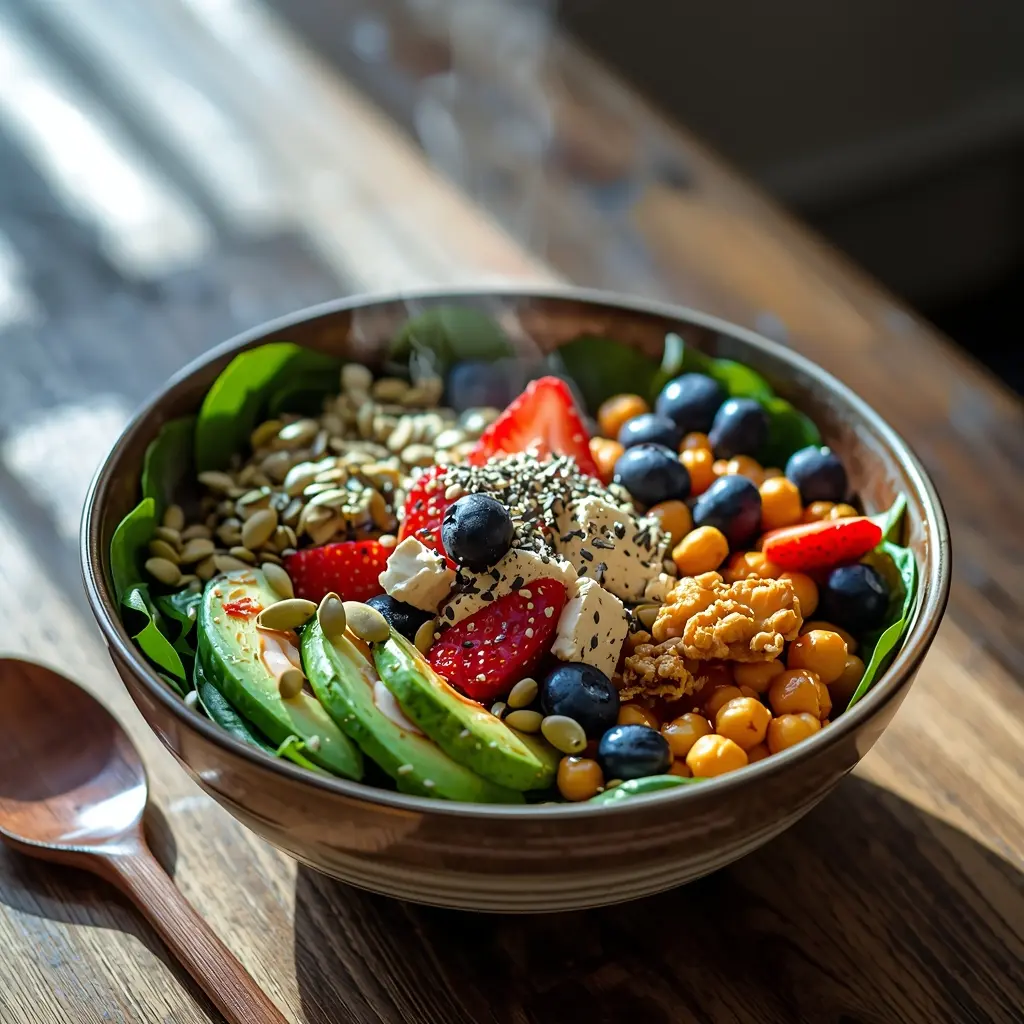
The foods in Table 2 are your daily building blocks for stopping vegan hair loss from the ground up. Build your meals around these consistently and the nutritional gaps that drive hair shedding begin to close within weeks.
| Food | Key Hair Nutrients | Daily or Weekly Target | Best Way to Use It | Absorption Tip |
|---|---|---|---|---|
| Lentils | Iron (3.3mg/100g cooked), Protein, Zinc, Folate, Biotin | 4 to 5 times per week, 150g cooked per serving | Soups, dals, salads, vegan Bolognese, stuffed peppers | Always add lemon juice or tomato (vitamin C) to the dish to significantly boost iron absorption |
| Pumpkin seeds | Zinc (10mg/100g), Iron, Protein, Magnesium, Selenium | Daily, 30g handful | On salads, in oats, as a standalone snack, blended into sauces | Eat with vitamin C-rich food (peppers, tomatoes, citrus) to boost both zinc and iron absorption |
| Tofu (calcium-set, firm) | Protein (8g/100g), Iron, Zinc, Calcium, Selenium | Daily, 150 to 200g | Pan-fried, baked, scrambled, in stir-fries and curries | Press before cooking. Marinate after pressing for maximum flavor and nutrient-dense eating |
| Tempeh | Protein (19g/100g), Zinc (bioavailable), Iron, Biotin, B vitamins | 3 to 4 times per week, 100 to 150g | Sliced and pan-fried, crumbled into tacos, added to grain bowls | Steam for 10 minutes before cooking to remove bitterness and open pores for marinade absorption |
| Nutritional yeast | Biotin (very high), B vitamins including B12 (fortified), Zinc, Protein | Daily, 2 to 3 tablespoons | Sprinkled on pasta, popcorn, salads, soups. Blended into sauces. | Choose a fortified brand that includes B12. Check label for per-serving micronutrient amounts. |
| Brazil nuts | Selenium (full daily RDA in 2 nuts) | Daily, exactly 2 nuts | As part of breakfast, in a small trail mix, or standalone snack | Do not eat more than 3 to 4 per day. Excess selenium is toxic and itself causes hair loss. |
| Blackstrap molasses | Iron (3.5mg per tablespoon), Calcium, Magnesium, Potassium, B6 | Daily, 1 tablespoon | Stirred into oats, smoothies, or warm water. Added to baked goods. | Pair with vitamin C for iron absorption. One of the most iron-dense plant foods per calorie available. |
| Nori (dried seaweed) | Iodine (essential for thyroid and hair health), Minerals, Small omega-3 | 2 to 3 times per week | As sushi wraps, crumbled on salads, eaten as a snack sheet | Do not exceed 3 to 4 sheets per day. Excessive seaweed intake can cause iodine toxicity. |
| Fortified plant milk | Vitamin D, Calcium, B12, Iodine (some brands) | Daily, 300 to 400ml | In oats, coffee, tea, smoothies, sauces, baking | Check label for iodine content. Some brands include it, most do not. Oat milk tends to be highest in iodine. |
| Edamame | Complete protein (11g/100g), Iron, Zinc, Choline, Folate | 4 to 5 times per week, 100 to 150g | Steamed as snack with sea salt, tossed into grain bowls, added to stir-fries | Buy frozen edamame for the most cost-effective and consistent supply. Steam from frozen in 5 minutes. |
Building your diet around these foods daily is the foundation of stopping vegan hair loss through food rather than relying on supplements. Supplements fill gaps. Food builds the system. For a full overview of getting adequate protein and key micronutrients through whole plant foods, our vegan protein sources guide and our vegan supplement guide cover both sides of this equation in detail.
As confirmed by NHS guidance on hair loss, nutritional deficiencies are among the most common and correctable causes of non-genetic diffuse hair loss, and addressing the underlying deficiency typically results in hair regrowth once the root cause is corrected.
WHAT NOT TO DO WHEN EXPERIENCING VEGAN HAIR LOSS
The most damaging thing most people do when they notice vegan hair loss is panic-supplement without testing. They buy a hair, skin, and nails supplement containing high doses of biotin, vitamin A, and various minerals and take it daily hoping for rapid results.
This approach causes several problems. High-dose vitamin A (retinol, not beta-carotene) actually causes hair loss at excessive doses. The tolerable upper limit for preformed vitamin A is 3,000mcg RAE daily, and many hair supplements provide doses dangerously close to or exceeding this. Over-supplementing zinc without a confirmed deficiency causes copper deficiency, which independently causes hair loss. Over-supplementing iodine disrupts thyroid function just as severely as iodine deficiency does.
The correct approach is always to test first, then supplement specifically for what your blood results show. Random supplementation wastes money, can actively make vegan hair loss worse, and makes it much harder to identify your actual root cause.
Also avoid: severely restricting calories while trying to fix vegan hair loss. Calorie restriction is a primary trigger of telogen effluvium. If you are simultaneously dealing with weight loss and hair loss on a vegan diet, correcting the calorie and protein deficit must come first. Hair growth cannot be prioritized by the body when it is operating at an energy deficit.
THE HONEST REGROWTH TIMELINE
One of the most important things to understand about vegan hair loss recovery is the timeline. Hair follicles reactivate gradually, not all at once. New hair growth is typically very fine and short initially, often described as a halo of short new hairs around the hairline and parting. This is a positive sign, not a sign of more damage.
The realistic timeline for vegan hair loss recovery once the underlying cause is identified and corrected:
Iron deficiency: ferritin levels take 3 to 6 months to normalize even with supplementation. Hair shedding typically reduces noticeably within 2 to 3 months of starting supplementation and significant regrowth is visible within 6 to 9 months.
Zinc deficiency: shedding reduction within 2 to 3 months. Visible regrowth within 4 to 6 months.
Protein deficiency: once protein intake consistently meets targets, shedding reduction typically begins within 4 to 8 weeks. Visible new growth within 3 to 4 months.
Thyroid-related hair loss from iodine or selenium deficiency: the slowest to recover. Thyroid function normalization takes 3 to 6 months minimum. Hair regrowth typically begins 6 to 12 months after thyroid hormone levels are restored to optimal ranges.
Vitamin D deficiency: shedding reduction within 2 to 3 months of supplementation. Visible regrowth within 4 to 6 months.
The consistent thread across all types of vegan hair loss recovery: patience is non-negotiable. You fixed a nutrient deficiency that developed over months. The reversal follows a similarly gradual timeline. Track your progress in photos every four weeks rather than checking the drain after every shower.
FAQ SECTION
Is vegan hair loss permanent?
No. In the vast majority of cases, vegan hair loss is temporary and fully reversible. The most common pattern, telogen effluvium triggered by the stress of a major dietary change or a nutritional deficiency, resolves completely once the underlying cause is corrected. Hair follicles that are shedding due to a nutritional deficiency are dormant, not dead. Once nutritional adequacy is restored, they reactivate. The regrowth process takes 3 to 9 months depending on the specific deficiency involved.
Which nutrient deficiency causes the most vegan hair loss?
Iron deficiency, specifically low ferritin (stored iron), is the single most documented nutritional cause of vegan hair loss, particularly in women. The critical point: ferritin can be low enough to cause significant shedding while hemoglobin remains in the normal range. Always request a serum ferritin test specifically when investigating vegan hair loss, not just a standard hemoglobin or full blood count. See our vegan blood test guide for exactly what to request.
How long does vegan hair loss last?
Vegan hair loss from a one-time trigger like a dietary transition typically peaks 2 to 4 months after the triggering event and then resolves gradually over the following 3 to 6 months, assuming the nutritional cause is addressed. If shedding continues beyond 6 months without improvement, the underlying deficiency is likely still ongoing and a thorough blood panel is needed to identify it. Chronic vegan hair loss lasting over 6 months requires medical investigation.
Should I take a hair supplement for vegan hair loss?
Not without testing first. Generic hair supplements often contain high-dose biotin, vitamin A, and mixed minerals. Over-supplementing zinc causes copper deficiency. Excessive preformed vitamin A causes hair loss. High-dose biotin interferes with thyroid blood tests. The correct approach is to get a targeted blood panel, identify your specific deficiency, and supplement for that deficiency specifically rather than taking a broad-spectrum hair supplement. For guidance on what to test and what to take, see our complete vegan supplement guide.
Can going vegan make my hair grow faster once deficiencies are fixed?
Yes, once nutritional adequacy is restored, many people report noticeably improved hair quality, thickness, and rate of growth compared to their pre-vegan diet. A well-planned plant-based diet rich in antioxidants, anti-inflammatory foods, and diverse micronutrients provides exceptional conditions for hair follicle health. The key phrase is well-planned. A vegan diet that has corrected its iron, zinc, protein, and vitamin D status supports hair growth extremely effectively.
YOUR ACTION PLAN: START HERE TODAY
Vegan hair loss is fixable. The path forward is straightforward when you follow the right sequence:
- Book a blood test this week. Request serum ferritin, serum zinc, 25-hydroxyvitamin D, full thyroid panel (TSH, free T3, free T4, TPO antibodies), and full blood count. This single panel covers all 7 proven causes of vegan hair loss.
- Start these today regardless of test results: vegan D3 (1,000 to 2,000 IU daily), B12 if you are not already supplementing (1,000mcg methylcobalamin), and 2 Brazil nuts every single day for selenium.
- Hit your protein target. Calculate your body weight in kilograms multiplied by 1.4. That is your daily minimum protein in grams. Add high-quality plant protein to every meal until you consistently meet that number.
- Add vitamin C to every iron-rich meal. A squeeze of lemon, half a bell pepper, or a handful of strawberries alongside lentils or pumpkin seeds meaningfully improves iron absorption every single time.
- Switch to iodized table salt if you are currently using sea salt or Himalayan pink salt. This single change costs nothing and eliminates one of the most common hidden causes of vegan hair loss almost immediately.
- Be patient and track progress in photos every 4 weeks. Hair recovery is slow. It is not a linear process. But if the nutritional cause is corrected, the follicles will reactivate and the hair will return.
Vegan hair loss is not a sign that your diet is failing you. It is a signal that your body needs specific nutrients it is not currently receiving. Every cause covered in this guide has a clear, evidence-based solution. You now have all of them.