

⚡ TL;DR: What Every Senior Vegan Needs to Know
- A vegan diet for seniors works extremely well for longevity, cardiovascular health, and weight management but requires intentional planning around six key nutrients.
- The six critical nutrients are: protein, B12, calcium, vitamin D, omega-3, and zinc.
- Protein needs actually increase after age 65. Most plant-based seniors eat too little. The target is 1.2 to 1.6g per kilogram of bodyweight daily.
- B12 deficiency is nearly universal in unsupplemented older vegans and can cause irreversible neurological damage. Supplementing is non-negotiable.
- Calcium absorption from food decreases with age. Vitamin D deficiency, extremely common in seniors, compounds this by impairing calcium uptake.
- The good news: plant-based seniors consistently show lower rates of cardiovascular disease, type 2 diabetes, and certain cancers than their omnivorous counterparts.
Vegan Diet for Seniors: The Complete Nutrition Guide for Healthy Ageing
A vegan diet for seniors is not just compatible with healthy ageing. When planned well, it is one of the most powerful dietary strategies available for extending healthspan, reducing chronic disease burden, and maintaining energy and cognitive function well into the eighth and ninth decade of life.
The evidence is consistent and compelling. The Adventist Health Studies, the largest long-term research programmes examining plant-based diets in adults over 60, found that vegan participants lived an average of 7.28 years longer than omnivorous counterparts. Plant-based seniors showed significantly lower rates of cardiovascular disease, type 2 diabetes, hypertension, and certain cancers. The anti-inflammatory, cholesterol-lowering, and blood glucose-stabilising properties of whole plant foods become more valuable, not less, as the body ages.
This guide covers everything a senior vegan needs: the six nutrients that require active management, the best foods, a 7-day framework built for older appetites, professional kitchen strategies for cooking with reduced energy and time, and the five most common mistakes that cause nutritional gaps in older plant-based eaters.
How Nutritional Needs Change After 65
📉 What Decreases With Age
Understanding the physiological changes of ageing is the foundation of good senior vegan nutrition planning. These changes are not speculative. They are well documented across the gerontology literature:
- Gastric acid production decreases by up to 40% in adults over 70. This reduces the absorption of B12, iron, calcium, zinc, and magnesium from food. Foods that were nutritionally adequate at 40 may be insufficient at 70 at the same serving size.
- Intrinsic factor secretion declines, directly impairing the primary absorption mechanism for vitamin B12. Crystalline B12 in supplements bypasses this pathway, making supplementation essential rather than optional.
- Skin synthesis of vitamin D decreases by up to 75% in adults over 70. The skin becomes less efficient at converting UVB radiation to vitamin D3, making sun exposure alone insufficient even in sunny climates.
- Appetite and thirst sensation reduce, increasing the risk of both inadequate calorie and fluid intake at a time when nutrient density per calorie needs to increase.
- Muscle mass declines at 1 to 2% per year after age 60 in a process called sarcopenia. Adequate dietary protein combined with resistance exercise is the primary intervention for slowing this process.
📈 What Increases With Age
- Protein requirement increases to 1.2 to 1.6g per kilogram of bodyweight daily (from 0.8g in younger adults). This is because protein synthesis efficiency decreases, meaning more dietary protein is needed to produce the same anabolic response.
- Calcium requirement increases to 1,200mg daily for women over 50 and men over 70. Bone density loss accelerates after menopause and in men over 70, requiring sustained high calcium intake to slow the process.
- Vitamin D requirement increases to 800 to 1,000 IU daily for adults over 70, from 600 IU in younger adults.
- Fibre benefits increase. Gut motility slows with age, making fibre even more important for preventing constipation, maintaining gut microbiome diversity, and regulating blood glucose and cholesterol.
The 6 Critical Nutrients Every Senior Vegan Must Address
💪 1. Protein: The Sarcopenia Defence
Why it matters more after 65: Sarcopenia, the age-related loss of muscle mass, is the leading cause of falls, reduced mobility, and loss of independence in older adults. The primary modifiable risk factor is inadequate dietary protein. After 65, the body requires significantly more protein than standard recommendations to achieve the same muscle protein synthesis response.
The target for a senior vegan is 1.2 to 1.6 grams of protein per kilogram of bodyweight daily. For a 70-year-old weighing 65kg, that is 78 to 104 grams of protein per day.
Best senior-appropriate plant protein sources: tempeh (21g per 100g), tofu (17g per 200g), lentils (18g per 200g cooked), edamame (17g per 200g), chickpeas (15g per 200g), and hemp seeds (10g per 30g). Soft textures matter for seniors with dental issues: lentil soup, silken tofu, and blended bean dips are high-protein formats that require minimal chewing.
🔴 2. Vitamin B12: Non-Negotiable Supplementation
This is the most critical nutrient for any senior vegan. B12 deficiency causes irreversible neurological damage including peripheral neuropathy, cognitive decline, and subacute combined degeneration of the spinal cord. The neurological damage can progress for years before symptoms are obvious.
Three reasons why senior vegans are at particularly high risk:
- No dietary B12 in plant foods without fortification. No exceptions.
- Reduced intrinsic factor and gastric acid production impairs food-bound B12 absorption.
- Crystalline B12 in supplements bypasses the intrinsic factor pathway and is absorbed even with low gastric acid. This makes supplements far superior to food-bound B12 for older adults.
The supplementation protocol for senior vegans:
- Daily supplement: 25 to 100mcg cyanocobalamin or methylcobalamin
- Alternatively: 1,000mcg two to three times per week
- B12 blood tests every 12 months to monitor status
- Target serum B12: above 300 pmol/L (many labs flag 200 as normal, but neurological symptoms begin as low as 250)
For full guidance on vegan B12 supplementation, our vegan supplements guide covers all forms, doses, and timing strategies.
🦴 3. Calcium: Building the Bone Reserve
Calcium requirements increase with age as bone turnover accelerates and dietary absorption efficiency decreases. The target for women over 50 and men over 70 is 1,200mg daily.
The best plant-based calcium sources for senior vegans:
- Fortified plant milk (300ml): 360mg calcium, equivalent to dairy milk
- Firm tofu set with calcium sulphate (150g): 300 to 500mg calcium
- Cooked kale or bok choy (200g): 200mg calcium with high bioavailability (low oxalate content)
- Tahini (30g): 128mg calcium, easily added to dressings and dips
- White beans (200g cooked): 130mg calcium alongside protein
- Fortified orange juice (200ml): 240mg calcium
☀️ 4. Vitamin D: The Absorption Enabler
Vitamin D deficiency affects an estimated 40 to 80% of older adults globally, regardless of diet. It is not a vegan-specific problem. But it compounds the calcium absorption challenge significantly: without adequate vitamin D, the intestine can only absorb 10 to 15% of dietary calcium. With optimal vitamin D, absorption rises to 30 to 40%.
For senior vegans, the only reliable source is supplementation:
- Target: 800 to 2,000 IU vitamin D3 daily (vegan D3 is derived from lichen)
- Test serum 25(OH)D levels annually. Target: 75 to 125 nmol/L
- Take with a fat-containing meal for maximum absorption (vitamin D is fat-soluble)
- Fortified plant milk provides 100 IU per 240ml but is insufficient as a sole source
🐟 5. Omega-3 Fatty Acids: Brain and Joint Health
Long-chain omega-3 fatty acids EPA and DHA are critical for cognitive function, joint inflammation management, and cardiovascular health. Their importance increases with age as neuroinflammation, arthritis, and cardiovascular risk all rise. Plant-sourced ALA (from flaxseeds, chia, walnuts, hemp) converts to EPA and DHA at a rate of only 5 to 15% in younger adults. This conversion rate decreases further with age.
The practical solution for senior vegans: algae-based DHA and EPA supplements, which provide the direct long-chain omega-3 without relying on the ALA conversion pathway. Target 250 to 500mg DHA and EPA combined daily. Continue eating ALA-rich plant foods for their independent anti-inflammatory benefits.
🔩 6. Zinc: Immunity and Wound Healing
Zinc absorption decreases with age due to reduced gastric acid and increased consumption of zinc-inhibiting phytates from a plant-rich diet. Zinc is critical for immune function, wound healing, taste and smell perception, and cognitive function. Deficiency in older adults accelerates immune decline and impairs the healing of minor injuries and infections.
Best zinc sources for senior vegans: hemp seeds (3mg per 30g), pumpkin seeds (2.5mg per 30g), lentils (2.5mg per 200g cooked), chickpeas (2.5mg per 200g), cashews (1.6mg per 30g), and whole grains (1 to 2mg per serving). Soaking legumes and grains before cooking reduces phytate content by 30 to 50%, meaningfully improving zinc bioavailability.
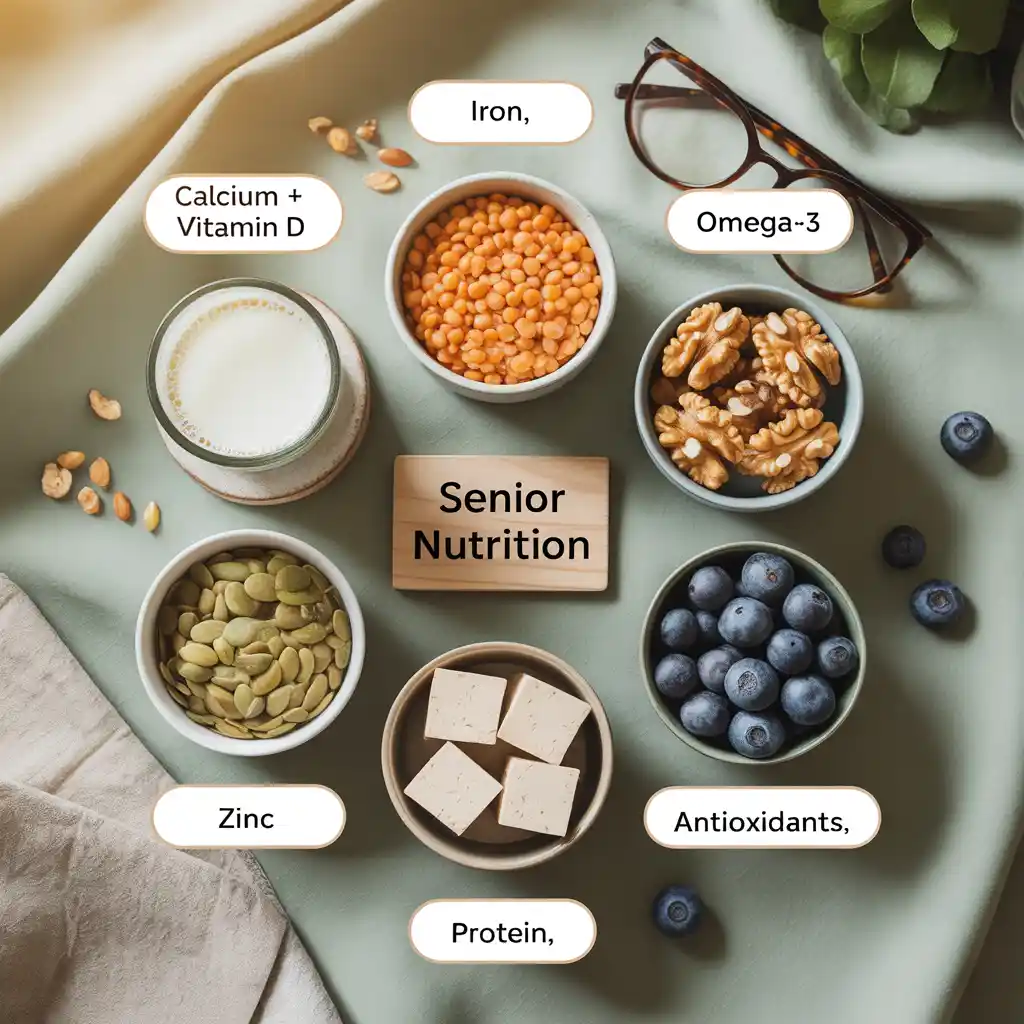
Ingredient Spotlights: The Top 5 Foods for Senior Vegans
🫘 1. Lentils: The Senior Superfood
Lentils deserve the title of the most important single food in a vegan diet for seniors. The combination of nutrients they deliver addresses four of the six critical senior vegan priorities simultaneously:
- Protein: 18g per 200g cooked, with a soft texture ideal for reduced dentition
- Iron: 6.6mg per 200g, supporting oxygen transport and energy levels
- Folate: 358mcg per 200g, supporting DNA repair and cognitive function
- Zinc: 2.5mg per 200g, supporting immune function
- Fibre: 15g per 200g, supporting bowel regularity which declines with age
Red lentils cook in 15 minutes with no soaking required, making them the most accessible high-nutrition food for seniors who may have limited energy for cooking. Soaking green or brown lentils overnight reduces phytates and improves mineral bioavailability.
🥛 2. Fortified Plant Milk: The Daily Nutrient Delivery System
300ml of fortified soy milk provides a nutritional profile that is almost perfectly targeted at senior vegan priorities:
- Calcium: 360mg (30% of the senior daily requirement in one drink)
- Vitamin D: 100 IU (variable by brand, but consistent in fortified versions)
- B12: 1 to 2mcg depending on fortification level
- Protein: 10g from soy, a complete protein
- Iodine: Many brands now fortify with iodine, addressing another senior vegan gap nutrient
Choosing correctly: Soy milk provides the highest protein of all plant milks. Oat milk is low in protein despite being high in beta-glucan. For senior vegans prioritising protein and calcium simultaneously, fortified soy milk is the evidence-supported choice. Always choose unsweetened varieties to avoid the VLDL-raising effect of added sugar in older adults.
🌿 3. Hemp Seeds: The Complete Nutrient Sprinkle
For a senior vegan who wants to boost the nutritional density of any meal without changing its format, hemp seeds are the single most effective ingredient available. 30g (3 tablespoons) provides:
- Complete protein: 10g with all essential amino acids including methionine
- Omega-3 ALA: 2.5g to support the algae DHA supplement
- Zinc: 3mg, supporting immune function in a form with better bioavailability than legume zinc
- Magnesium: 210mg per 100g, supporting muscle relaxation, sleep quality, and blood pressure regulation
- Gamma-linolenic acid (GLA): an omega-6 with anti-inflammatory properties relevant to arthritis management in older adults
Soft, no chewing required, mixes into any food silently. The most frictionless nutritional upgrade available for a senior vegan kitchen.
🟢 4. Kale and Bok Choy: The Bone-Building Greens
Dark leafy greens are essential in a vegan diet for seniors, but the choice of green matters significantly. Spinach and Swiss chard are high in oxalic acid which binds calcium and iron, reducing their absorption dramatically. Kale and bok choy are low-oxalate greens with excellent calcium bioavailability:
- Kale (200g cooked): 200mg calcium with 40% absorption rate (vs 5% from spinach)
- Bok choy (200g cooked): 300mg calcium with similar high bioavailability
- Vitamin K1: essential for bone mineralisation and blood coagulation; deficiency is common in seniors
- Lutein and zeaxanthin: carotenoids that protect against age-related macular degeneration, the leading cause of vision loss after 60
🌰 5. Walnuts: The Brain-Protective Nut
Walnuts occupy a unique position in senior vegan nutrition because they simultaneously address four age-specific priorities: cardiovascular health, cognitive function, inflammation management, and omega-3 intake. 30g daily provides:
- ALA omega-3: 2.5g, the highest of any tree nut
- Ellagitannins: metabolised by gut bacteria into urolithins, which have demonstrated neuroprotective effects in animal studies and emerging human research
- Polyphenols: reducing neuroinflammation, LDL oxidation, and systemic inflammatory markers
- Vitamin E: protecting neuronal cell membranes from oxidative damage associated with cognitive decline
A 2020 study published in Nutrients found that regular walnut consumption was associated with significantly better cognitive performance in adults over 65, independent of other dietary factors. Walnuts are among the most evidence-supported single foods for maintaining cognitive function in ageing populations.
The 12 Best Foods for a Vegan Diet After 65
These twelve foods address the specific nutritional priorities of senior vegan health: protein, B12, calcium, vitamin D, omega-3, zinc, folate, and bone density. Rotate them across every day for comprehensive nutritional coverage.
- Fortified soy milk: Calcium, B12, vitamin D, and soy protein in one daily drink
- Lentils: Protein, iron, folate, zinc, and fibre; soft texture; affordable; versatile
- Tempeh: Highest-density plant protein; fermented for improved digestibility; tryptophan for sleep support
- Hemp seeds: Complete protein; omega-3; zinc; magnesium; no chewing required
- Walnuts: Brain health, cardiovascular protection, ALA omega-3
- Kale and bok choy: Bioavailable calcium, vitamin K1, lutein for eye health
- Steel-cut oats: Beta-glucan for cholesterol management, which increases in relevance with age
- Calcium-set firm tofu: Complete protein, calcium, iron; silken variety requires no chewing
- Ground flaxseeds: ALA omega-3, soluble fibre, lignans with cardioprotective effect
- Chickpeas: Protein, zinc, fibre, resistant starch for gut microbiome health
- Nutritional yeast: B12-fortified protein booster, easily stirred into any dish
- Berries (blueberries, raspberries): Polyphenols for cognitive protection and cardiovascular health; anthocyanins reducing neuroinflammation
7-Day Senior Vegan Meal Framework
This framework is designed specifically for senior nutritional priorities. Every day delivers:
- Minimum 80g protein (adequate for a 65kg adult at 1.2g per kg)
- Legumes at least once per day for zinc, iron, and fibre
- Fortified soy milk or calcium-set tofu for calcium
- Flaxseeds or walnuts daily for ALA omega-3
- Soft textures at every meal where practical
📅 Day 1
- Breakfast: Steel-cut oat porridge with fortified soy milk, ground flaxseeds, blueberries, and walnuts
- Lunch: Red lentil soup with whole grain bread and avocado slices
- Dinner: Tempeh and bok choy stir-fry over brown rice with sesame seeds
- Supplements: B12 (daily), vitamin D (with dinner), algae DHA/EPA
📅 Day 2
- Breakfast: Smoothie with fortified soy milk, banana, spinach, ground flaxseeds, and hemp seeds
- Lunch: Chickpea and avocado wrap with tahini and steamed kale
- Dinner: Silken tofu miso soup with edamame, nori, and brown rice
- Supplements: B12, vitamin D, algae DHA/EPA
📅 Day 3
- Breakfast: Overnight oats with chia seeds, fortified soy milk, and raspberries
- Lunch: White bean and vegetable soup with whole grain roll
- Dinner: Lentil dal with whole grain roti, steamed bok choy, and 3 tablespoons hemp seeds stirred through
- Supplements: B12, vitamin D, algae DHA/EPA
📅 Day 4
- Breakfast: Warm oat porridge with nutritional yeast stirred in, topped with walnuts and blueberries
- Lunch: Hummus with roasted vegetables, whole grain pitta, and lentil tabbouleh
- Dinner: Chickpea Moroccan tagine with couscous and preserved lemon
- Supplements: B12, vitamin D, algae DHA/EPA
📅 Day 5
- Breakfast: Silken tofu scramble with nutritional yeast, turmeric, and steamed kale on whole grain toast
- Lunch: Black bean and quinoa bowl with avocado and ground flaxseed dressing
- Dinner: Lentil shepherd’s pie with sweet potato mash and steamed broccoli
- Supplements: B12, vitamin D, algae DHA/EPA
📅 Day 6
- Breakfast: Chia pudding made with fortified soy milk, topped with walnuts and strawberries
- Lunch: Tempeh sandwich on whole grain bread with avocado, tomato, and tahini
- Dinner: Tofu and edamame soba noodle bowl with miso broth and bok choy
- Supplements: B12, vitamin D, algae DHA/EPA
📅 Day 7
- Breakfast: Steel-cut oats with fortified soy milk, ground flaxseeds, and mixed berries
- Lunch: Chickpea and spinach soup with whole grain bread
- Dinner: Stuffed bell peppers with lentils, quinoa, walnuts, and fresh herbs
- Supplements: B12, vitamin D, algae DHA/EPA
Reference Tables
Senior Vegan: Daily Nutrient Targets vs Best Plant Sources
Soft-Texture Protein Sources: Ideal for Senior Vegans With Dental Concerns
Chef Tips: Cooking for Appetite, Digestion, and Ease
🍽️ Tip 1: The Diminishing Appetite Problem
In professional kitchens, we design menus for specific physiological states. Cooking for seniors requires understanding that appetite shrinks with age while nutritional requirements do not. The principle that solves this is nutrient density per bite, not per meal.
Practical application:
- Add 3 tablespoons hemp seeds to every breakfast bowl: adds 10g protein, 2.5g omega-3, and 3mg zinc with zero change to meal size or effort
- Use fortified soy milk instead of water in oat porridge: adds 7g protein and 360mg calcium to a meal that was already being eaten
- Stir 2 tablespoons nutritional yeast into every soup, dal, and sauce: adds 8g B12-fortified protein with zero change to the dish except a mild umami note
- Replace water with vegetable stock when cooking grains: adds trace minerals and micronutrients that become significant over daily repetition
🫙 Tip 2: The One-Pot Senior Kitchen
Having managed professional kitchens across Lebanon, Dubai, and Saudi Arabia, I can say with certainty that the most nutritionally dense cuisines in the world are predominantly one-pot cuisines. Adas bi hamod (Lebanese lentil and lemon soup), Levantine chickpea stews, Moroccan tagines: these are dishes where protein, complex carbohydrate, minerals, and phytonutrients cook together in one vessel, developing flavour through time rather than technique.
For senior vegans managing fatigue, reduced mobility, or simply less motivation for complex cooking, the one-pot format is the optimal approach:
- One pot, one chopping session, one washing-up task
- Scales perfectly: cook 4 to 6 portions at once, refrigerate for 4 days or freeze
- Legume-based stews and soups produce naturally soft textures with extended cooking, ideal for dental concerns
- The cooking liquid concentrates minerals leached from vegetables, meaning the broth component of soups is itself nutritionally valuable
🌿 Tip 3: Fermented Foods for Senior Gut Health
Gut microbiome diversity decreases significantly with age, contributing to reduced immune function, increased inflammation, and impaired nutrient absorption. Fermented plant foods are one of the most evidence-supported dietary interventions for restoring and maintaining senior gut microbiome health:
- Tempeh: fermented soy with live bacterial cultures in unpasteurised forms
- Miso: fermented soybean paste; add to soups, dressings, and marinades
- Sauerkraut and kimchi (vegan versions): lacto-fermented vegetables with high Lactobacillus content
- Kombucha: fermented tea providing diverse bacterial strains and organic acids that support gut lining integrity
5 Mistakes Senior Vegans Make Most Often
❌ Mistake 1: Treating B12 as Optional
The most consequential nutritional mistake in vegan ageing. Neurological B12 deficiency develops silently over years and can be irreversible by the time symptoms are obvious. Supplementing 25 to 100mcg B12 daily and testing blood levels annually costs almost nothing. The alternative is catastrophic for cognitive and neurological function. This is the single non-negotiable rule in a vegan diet for seniors.
❌ Mistake 2: Eating Too Little Protein
The RDA of 0.8g protein per kilogram was set for young adults. Senior vegans need 1.2 to 1.6g per kilogram. A 70-year-old eating the standard recommendation is chronically under-fuelling their muscle protein synthesis at precisely the age when muscle loss accelerates. Check our vegan protein deficiency guide for full age-specific targets and how to track intake.
❌ Mistake 3: Relying on Spinach for Calcium and Iron
Spinach is routinely recommended as a plant-based calcium and iron source. In practice, spinach’s oxalic acid content binds both minerals so effectively that the absorption rate falls to around 5% for calcium and 2% for iron. Switch to kale, bok choy, and broccoli for calcium, and pair iron sources (lentils, pumpkin seeds) with vitamin C-rich foods (lemon juice, bell peppers, tomatoes) to maximise non-haem iron absorption.
❌ Mistake 4: Not Supplementing Vitamin D
Sun exposure alone does not produce adequate vitamin D in adults over 65, even in sunny climates like Saudi Arabia and the Gulf region. The skin’s vitamin D synthesis efficiency falls by up to 75% with age. Supplementing 800 to 1,000 IU of vegan D3 daily and testing serum 25(OH)D annually is essential for calcium absorption, immune function, and bone density. For full supplementation guidance, our vegan blood test guide covers all markers worth monitoring annually.
❌ Mistake 5: Drinking Inadequate Fluids
Thirst sensation decreases significantly with age. Senior vegans eating a high-fibre plant-based diet are at particular risk for constipation, kidney stone formation, and urinary tract issues if fluid intake is insufficient. The fibre that makes a plant-based diet so beneficial for gut health requires water to function properly. Target 6 to 8 glasses of water or herbal tea daily, independently of thirst signals. Soups and stews (central to the one-pot cooking approach above) contribute meaningfully to fluid intake.
Frequently Asked Questions About Vegan Diet for Seniors
Is a vegan diet safe for seniors?
Yes, a well-planned vegan diet for seniors is not only safe but associated with significantly better long-term health outcomes than omnivorous diets in older adults. The Adventist Health Studies found plant-based seniors lived an average of 7 years longer with lower rates of cardiovascular disease, diabetes, and certain cancers. The essential requirement is active management of six key nutrients: protein, B12, calcium, vitamin D, omega-3, and zinc.
How much protein does a vegan senior need?
The protein requirement for adults over 65 is 1.2 to 1.6 grams per kilogram of bodyweight daily, significantly higher than the standard RDA of 0.8g per kg. This accounts for the anabolic resistance of ageing muscles, which require more dietary protein to produce the same muscle protein synthesis response. A 65kg senior needs 78 to 104g of protein daily. See our complete protein needs guide for age-specific calculations.
What B12 supplement should a senior vegan take?
Cyanocobalamin is the most stable and cost-effective form. For seniors, the recommended dosing is 25 to 100mcg daily or 1,000mcg two to three times per week. Crystalline B12 in supplement form is absorbed independently of intrinsic factor and gastric acid, making it far more reliable than food-bound B12 for older adults with reduced gastric function. Test blood B12 annually and target serum levels above 300 pmol/L.
How do senior vegans get enough calcium without dairy?
The most efficient approach is to combine fortified soy milk (360mg calcium per 300ml), calcium-set firm tofu (300 to 500mg per 150g), and low-oxalate dark greens (kale 200mg, bok choy 300mg per 200g cooked). This combination across a single day delivers close to the 1,200mg daily target without supplementation. Tahini (128mg per 30g) and white beans (130mg per 200g) contribute meaningfully as secondary sources. Adequate vitamin D supplementation is equally important as it governs calcium absorption efficiency.
Should senior vegans take omega-3 supplements?
Yes. Algae-based DHA and EPA supplements are recommended for senior vegans because the ALA-to-DHA conversion pathway becomes less efficient with age. Target 250 to 500mg DHA and EPA combined daily. Algae oil is the vegan source that provides direct long-chain omega-3 without relying on conversion. Continue eating ALA-rich plant foods (flaxseeds, walnuts, hemp seeds) for their independent anti-inflammatory benefits alongside the supplement.
Is soy safe for senior women?
Yes. Decades of research on soy and breast cancer risk have consistently found no increased risk from whole soy foods (tofu, tempeh, edamame, soy milk) at normal dietary intake levels. The largest meta-analyses on soy and cancer in postmenopausal women have found either a neutral or mildly protective association. The isoflavones in soy are phytoestrogens with a significantly weaker effect than endogenous oestrogen and do not stimulate oestrogen receptor-positive tumours at food intake levels.
How do senior vegans prevent bone loss?
Four dietary components directly support bone density: adequate calcium (1,200mg daily from fortified plant milk, calcium-set tofu, and low-oxalate greens), adequate vitamin D supplementation (800 to 1,000 IU daily) to govern calcium absorption, adequate protein (1.2 to 1.6g per kg) since protein is structural in bone matrix, and vitamin K1 from dark leafy greens to support calcium deposition into bone. Regular weight-bearing exercise is equally important and compounds the dietary intervention significantly.
What are the easiest high-protein meals for senior vegans?
The easiest formats are: red lentil soup (simmer red lentils with spices, 15 minutes, blend smooth), silken tofu miso soup (no cooking, pour hot stock over silken tofu and miso), overnight oats with hemp seeds and fortified soy milk (no cooking, prepared the night before), white bean dip (blend canned beans with lemon and garlic, 3 minutes), and hummus with whole grain pitta. All deliver 15 to 30g protein per serving with minimal preparation and soft textures suitable for dental concerns.
Can a senior start a vegan diet later in life?
Yes. The cardiovascular and metabolic benefits of transitioning to a plant-based diet are measurable at any age. Studies show LDL reduction, blood pressure improvement, and blood glucose stabilisation within weeks of adopting a whole-food plant-based diet, even in adults over 70. The priority in a later-life transition is ensuring B12 and vitamin D supplementation begins immediately, protein targets are deliberately planned, and fortified foods are incorporated from day one to ensure calcium and B12 adequacy.
Are there vegan foods that are bad for seniors?
A few specific concerns apply to older plant-based eaters. Coconut oil (87% saturated fat) raises LDL and should be avoided. High-oxalate foods like spinach and Swiss chard as primary calcium or iron sources provide far less of those nutrients than they appear to. Processed vegan foods containing palm oil should be minimised. Excessive raw brassicas (broccoli, kale, Brussels sprouts) can interfere with thyroid function in those already managing thyroid conditions. Alcohol accelerates calcium excretion, compounding bone density concerns.
How do senior vegans manage zinc deficiency?
Zinc deficiency in senior vegans is addressed first through food, then supplementation if blood tests confirm deficiency. The most bioavailable plant zinc sources are hemp seeds (3mg per 30g), pumpkin seeds (2.5mg per 30g), and lentils (2.5mg per 200g). Soaking legumes overnight reduces phytate content by 30 to 50%, significantly improving zinc absorption. If serum zinc is below 70 mcg/dL, supplementation of 8 to 11mg daily of zinc as zinc gluconate or zinc picolinate is appropriate under medical guidance.
How does a vegan diet benefit seniors specifically?
Beyond longevity, the specific benefits that become more pronounced with age include: lower cardiovascular risk from the absence of dietary saturated fat and cholesterol, better blood glucose regulation from high fibre and low glycaemic index foods reducing type 2 diabetes risk, lower systemic inflammation from polyphenol-rich fruits and vegetables, better gut microbiome diversity supporting immune function, and lower body mass index reducing joint load and metabolic disease burden. All of these factors directly improve the quality of daily life in older adults, not just reduce mortality statistics.