
Table of Contents
- Introduction — Why This Vegan Dairy Alternatives Guide Exists
- Plant Milks — The Complete Breakdown of Every Option
- The Plant Milk Decision Chart — Which Milk for Which Use
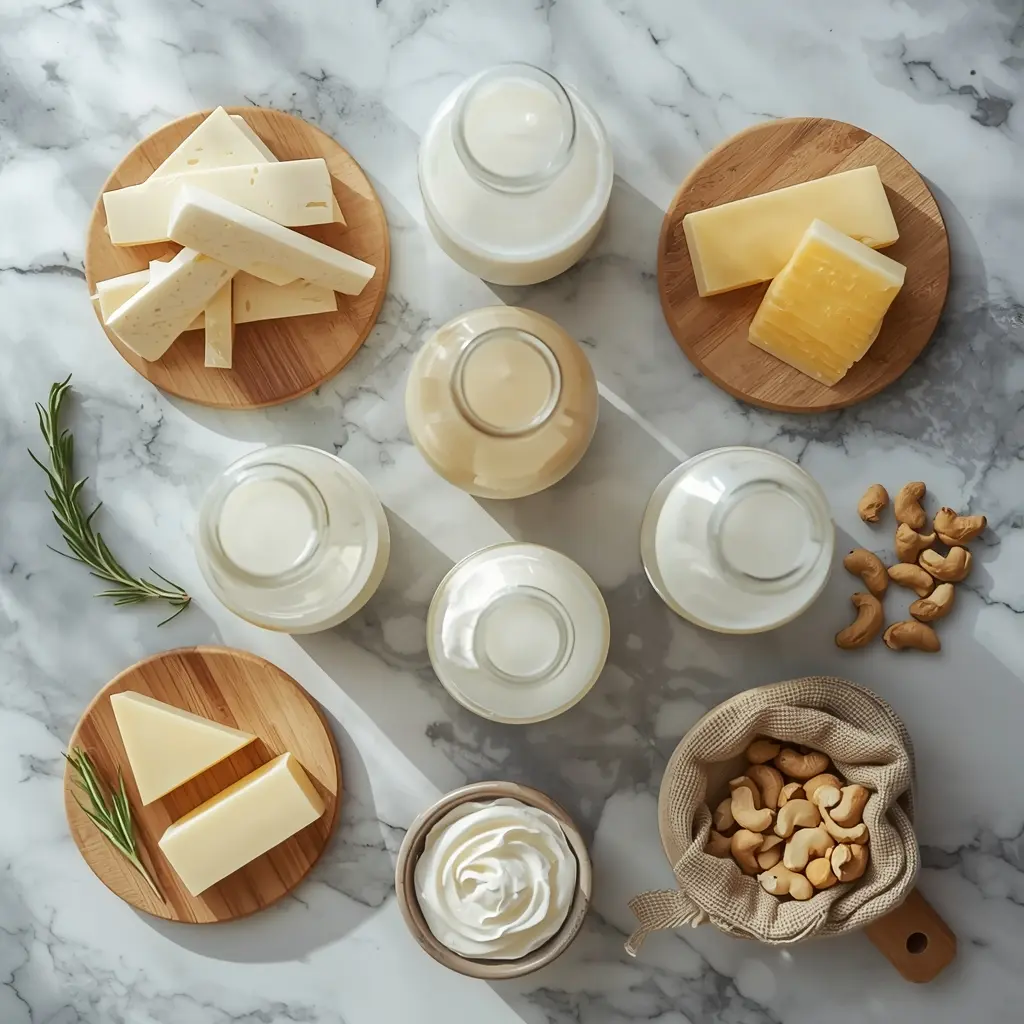
- Vegan Cheese — Store-Bought Comparison and DIY Basics
- Vegan Butter — The Complete Replacement Guide
- Vegan Cream — Every Type and When to Use Each
- Vegan Yogurt — Best Brands and How to Make Your Own
- Hidden Dairy in Processed Foods — What This Guide Covers That Others Miss
- Nutrition Comparison — How Vegan Dairy Stacks Up
- Conclusion — Your Complete Vegan Dairy Alternatives Guide Summary
1. Introduction — Why This Vegan Dairy Alternatives Guide Exists
Dairy is the number one reason people say they cannot go vegan. Not meat. Not eggs. Dairy. Specifically the cheese, the coffee creamer, the butter in every baked good, and the yogurt at breakfast that has been part of daily life for decades.
This vegan dairy alternatives guide exists to remove that excuse permanently. (1) Every single dairy product you currently use has at least one plant-based replacement that works as well or better in its primary application — and this guide maps every one of them to every use case so you always pick the right substitute the first time.
The problem with most vegan dairy content is that it treats all substitutes as interchangeable. It tells you to use oat milk without specifying that oat milk curdles in acidic coffee, that coconut cream is the only thing that whips properly, or that soy milk is the only plant milk with enough protein to behave like dairy milk in baking. This vegan dairy alternatives guide solves that by matching every substitute to every specific use case.
By the end of this guide you will have the complete picture — every plant milk ranked for every application, every vegan cheese brand compared honestly, every butter substitute tested for baking performance, and every cream replacement mapped to every recipe type that requires it.
💡 Why dairy is hard to replace: Dairy products perform four distinct functions in cooking — adding fat, adding protein, adding moisture, and creating specific textures through emulsification and heat behavior. No single plant product replicates all four simultaneously. This vegan dairy alternatives guide solves that by matching the right plant product to the right function for every recipe.
2. Plant Milks — The Complete Breakdown of Every Option
Plant milk is the most accessible starting point in any vegan dairy alternatives guide because it is the most widely available, most affordable, and most straightforward category of dairy replacement. (4)
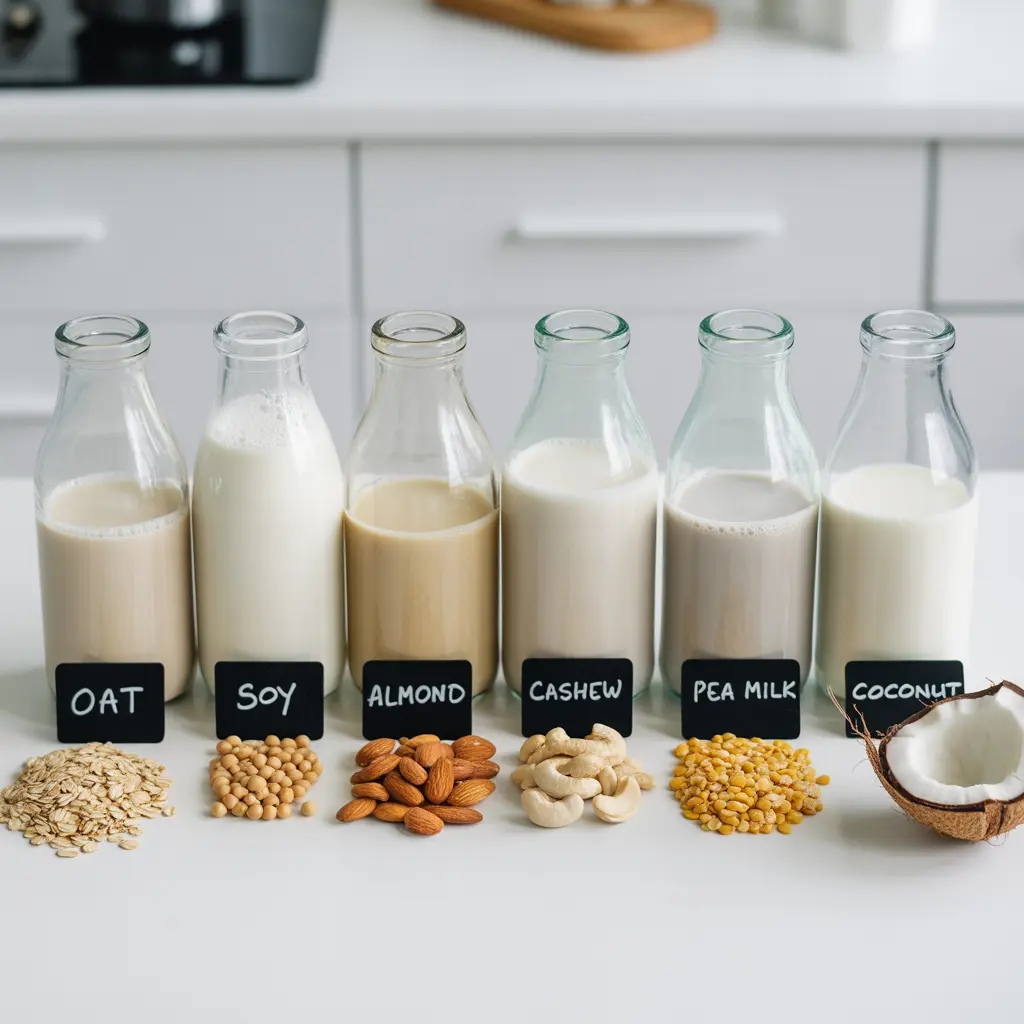
There are now at least eight mainstream plant milk options available in most supermarkets worldwide. They are not interchangeable. Understanding each one’s specific properties is the foundation of this vegan dairy alternatives guide.
Oat Milk
Oat milk is currently the most popular plant milk in the world and the one that comes closest to the neutral, slightly creamy experience of whole dairy milk for most applications.
Flavor: Mildly sweet, faintly oat-like, neutral enough for most uses Protein: 2–4g per cup (lower than dairy’s 8g) Fat: 2–5g per cup depending on brand Best for: Coffee, cereal, baking, pancakes, savory sauces Avoid for: Recipes requiring high protein milk behavior (custards, certain cheeses) Important caveat: Standard oat milk curdles slightly in very hot acidic coffee. Barista-edition oat milk contains added oil and stabilizers that prevent this — always buy barista edition for coffee use. Top brands: Oatly Barista, Minor Figures, Califia Farms Barista
Soy Milk
Soy milk is the gold standard of this vegan dairy alternatives guide for nutritional equivalence to dairy. It is the only plant milk with a protein profile that genuinely approaches cow’s milk.
Flavor: Slightly beany if low quality — neutral in good brands Protein: 7–8g per cup — closest to dairy milk’s 8g Fat: 3–4g per cup Best for: Baking, cooking, savory applications, high-protein uses, making tofu and vegan yogurt Top brands: Silk Organic, Edensoy, Alpro Soy
Almond Milk
Almond milk is the most widely sold plant milk in the United States, though it is significantly thinner and lower in nutrition than soy or oat milk.
Flavor: Lightly nutty, thin, slightly sweet Protein: 1g per cup — lowest of all plant milks Fat: 2–3g per cup Best for: Light cooking, cereals, smoothies, light baking Avoid for: Recipes requiring richness, protein-dependent applications, or heavy cream substitution Top brands: Blue Diamond Almond Breeze, Califia Farms Unsweetened
Coconut Milk (Carton vs Can)
There are two completely different coconut milk products and confusing them is one of the most common mistakes in any vegan dairy alternatives guide context.
Carton coconut milk: Thin, low fat, suitable for drinking and light cooking. Not the same as canned. Canned full-fat coconut milk: Rich, creamy, approximately 17–24% fat. The basis for vegan whipped cream, curries, ice cream, and any application requiring richness. Best for carton: Light smoothies, cereal, light baking Best for canned: Curries, soups, whipped cream, ice cream, custard, creamy sauces
Cashew Milk
One of the creamiest and most neutral plant milks, making it a favorite in this vegan dairy alternatives guide for cooking applications where a rich, neutral base is needed.
Flavor: Very mild, slightly sweet, remarkably neutral Protein: 1–2g per cup Fat: 2–4g per cup (feels richer than the numbers suggest due to cashew fat profile) Best for: Creamy soups, sauces, light desserts, coffee Top brands: Forager Project, Elmhurst Cashew
Pea Milk (Ripple)
The newest mainstream plant milk and one of the most nutritionally impressive additions to any vegan dairy alternatives guide. (9) Made from yellow split peas — not the green peas you eat — it has a remarkably clean flavor and a protein profile approaching soy milk.
Flavor: Neutral, clean, almost indistinguishable from light dairy milk for many users Protein: 8g per cup — equal to dairy milk Fat: 4.5g per cup Best for: Everything — it is the most versatile plant milk for those who want high protein Top brands: Ripple, Sproud
Rice Milk
The most hypoallergenic plant milk — suitable for people with nut, soy, and oat allergies — but thin and high in carbohydrates.
Flavor: Slightly sweet, watery, neutral Protein: 1g per cup Best for: People with multiple allergies, light cooking, cereal
Hemp Milk
Made from hemp seeds, with a pleasantly nutty flavor and a good omega-3 profile.
Flavor: Earthy, nutty, slightly grassy Protein: 2–3g per cup Best for: Smoothies, cereal, general drinking — not for cooking
3. The Plant Milk Decision Chart — Which Milk for Which Use
This is the most valuable single table in this entire vegan dairy alternatives guide. (10) It maps every plant milk to every use case so you never have to guess.
📸 Screenshot this table and save it to your phone — it is the only plant milk reference you will ever need and the single most practical page in this vegan dairy alternatives guide. Pull it up whenever you are in the supermarket or about to start a recipe.
| Use Case | Best Choice | Second Choice | Avoid | Why |
|---|---|---|---|---|
| Hot coffee (no curdling) | Oat milk Barista edition | Pea milk | Standard oat milk | Barista edition has stabilizers preventing curdling |
| Iced coffee / cold brew | Any plant milk | — | — | Cold prevents curdling — all work well |
| Cereal and granola | Oat milk | Almond milk | — | Neutral flavor, good texture |
| Smoothies | Any milk | — | — | Personal preference — all work |
| Baking cakes and muffins | Soy milk | Oat milk | Rice milk | Soy protein behaves most like dairy in baking |
| Pancakes and waffles | Oat milk | Soy milk | Almond milk | Oat milk gives best fluffiness |
| Creamy pasta sauces | Cashew milk | Oat milk | Almond milk | Cashew richness mimics cream perfectly |
| Curries and soups | Canned coconut milk | Cashew milk | Almond milk | Fat content creates authentic richness |
| Custard and pudding | Soy milk | Oat milk | Rice milk | Protein content helps setting |
| Whipped cream | Canned coconut cream | — | Everything else | Only fat-rich coconut cream whips properly |
| Mashed potato | Oat milk | Cashew milk | Almond milk | Neutral flavor, creamy texture |
| Cheese sauce | Cashew milk | Soy milk | Rice milk | Cashew richness is ideal for cheese sauce |
| Hot chocolate | Oat milk | Cashew milk | — | Both give creamy, indulgent results |
| High protein need | Pea milk | Soy milk | Almond milk | Both match dairy’s protein content |
4. Vegan Cheese — Store-Bought Comparison and DIY Basics
Cheese is the most emotionally charged category in any vegan dairy alternatives guide. (12) It is the food most people say they could never give up — and the category where vegan products have improved most dramatically in the last five years.
The honest truth: vegan cheese has gotten genuinely good. Not identical to dairy cheese in every application, but good enough that most people adapting to a vegan diet stop missing dairy cheese within 4 to 8 weeks as their palate adjusts.
Store-Bought Vegan Cheese — Complete Brand Comparison
| Brand | Best Product | Melts? | Best Use | Price Range | Verdict |
|---|---|---|---|---|---|
| Violife | Just Like Cheddar Slices | ✅ Yes | Grilled cheese, burgers, pizza | Mid | Best all-rounder — most widely available |
| Miyoko’s | Liquid Mozzarella | ✅ Excellent | Pizza, caprese, baking | Premium | Best melt performance on the market |
| Daiya | Shreds (cheddar/mozzarella) | ✅ Good | Pizza, casseroles, quesadillas | Mid | Widely available, reliable melt |
| Kite Hill | Cream Cheese style | ❌ No | Bagels, dips, cheesecake | Premium | Best cream cheese replacement |
| Treeline | Aged Cashew Cheese | ❌ No | Charcuterie boards, crackers | Premium | Best for entertaining — complex flavor |
| Follow Your Heart | Parmesan Shreds | ❌ No | Pasta, salads, pizza topping | Mid | Best parmesan substitute |
| Boursin Vegan | Garlic and Herb | ❌ No | Bread, crackers, stuffed pasta | Premium | Remarkable — nearly identical to dairy version |
The Melting Problem — Why Some Vegan Cheese Melts and Some Does Not
Understanding the science behind melting is essential to this vegan dairy alternatives guide cheese section. (13) Dairy cheese melts because of its specific casein protein structure and fat content. Most vegan cheeses use starch, coconut oil, and tapioca as their base — tapioca is what creates stretch and melt in products like Daiya and Violife.
For pizza specifically: use Miyoko’s Liquid Mozzarella for the best melt. Apply it cold, bake at high heat (230°C), and the result is a genuinely impressive stretchy melt.
DIY Cashew Cheese — The Foundation of This Vegan Dairy Alternatives Guide
Every vegan dairy alternatives guide worth reading includes a foundational cashew cheese recipe because homemade cashew cheese is cheaper, more versatile, and nutritionally superior to most commercial vegan cheeses. (14)
Basic Cashew Cream Cheese (Makes 400g)
- 2 cups raw cashews, soaked 4 hours or boiled 15 minutes
- 3 tablespoons lemon juice
- 2 tablespoons nutritional yeast
- 1 garlic clove
- ½ teaspoon salt
- 3–4 tablespoons water to blend
Blend until completely smooth. Refrigerate for 2 hours to firm. Use as cream cheese, dip base, or sauce foundation. Keeps refrigerated for 5 days or frozen for 3 months.
Variations:
- Add 1 tsp smoked paprika + ½ tsp cayenne for a smoky cheddar-style spread
- Add fresh herbs (chives, dill, parsley) for a boursin-style cheese
- Add 1 tbsp miso paste for a sharp, aged flavor
🔗 External Resource: For a comprehensive breakdown of every vegan cheese brand with independent taste testing, vegannews.co.uk maintains one of the most thorough ongoing vegan cheese comparison databases available.
5. Vegan Butter — The Complete Replacement Guide
Butter is used in two fundamentally different ways in cooking — as a spread and as a cooking/baking fat — and the best replacement differs for each application. This distinction is one of the most overlooked aspects of any vegan dairy alternatives guide. (15)
As a Spread
For spreading on bread, toast, and crackers, the best vegan butter replacements are:
Earth Balance Original: The most widely recommended vegan butter in this vegan dairy alternatives guide category for everyday spreading. (16) Made from a blend of palm, canola, soy, and olive oils. Tastes remarkably close to dairy butter, spreads directly from refrigerator, and is available in most supermarkets.
Miyoko’s European Style Cultured Butter: The premium option. Made from cultured cashew cream — it has a complex, slightly tangy flavor that closely mimics high-quality European dairy butter. More expensive but genuinely impressive.
Violife Plant Butter: Good all-purpose option with wide availability in Europe and the UK.
As a Cooking and Baking Fat
In cooking, butter primarily provides fat and flavor. In baking, it also provides structure through its specific solid-at-room-temperature fat profile — and this is where vegan dairy alternatives guide choices require more care. (17)
For sautéing and pan cooking: Any vegan butter works well. Coconut oil is also excellent for high-heat cooking due to its high smoke point.
For baking (cookies, cakes, pastry): The most important property is that baking butter must be solid at room temperature and melt predictably in heat. Coconut oil (refined, not virgin — to avoid coconut flavor) behaves most similarly to butter in baking and is the recommendation of this vegan dairy alternatives guide for baking applications where precise butter behavior matters.
Ratio for replacing butter in baking:
- 1 cup dairy butter = 1 cup vegan butter (direct substitution)
- 1 cup dairy butter = ¾ cup coconut oil (slightly less due to higher fat density)
- 1 cup dairy butter = ¾ cup olive oil (for moist cakes and quick breads only)
Margarine vs Vegan Butter — An Important Distinction
Many people use “margarine” and “vegan butter” interchangeably but this vegan dairy alternatives guide draws a clear distinction. Traditional margarine may contain dairy derivatives (some margarines use whey) and often contains hydrogenated trans fats. Always check labels. Purpose-made vegan butters like Earth Balance and Miyoko’s are specifically formulated without dairy and without trans fats.
6. Vegan Cream — Every Type and When to Use Each
Cream is one of the most versatile dairy products in cooking and one of the more nuanced categories in this vegan dairy alternatives guide because there are five distinct types of dairy cream that each require a different plant-based approach.
Heavy Whipping Cream
Best replacement: Full-fat canned coconut cream — refrigerated overnight so the fat separates and rises to the top. Scoop the solid fat only. Whip with an electric beater for 3 to 4 minutes until stiff peaks form. Add powdered sugar and vanilla if desired.
Important: Not all canned coconut cream whips well. Brands with the highest fat content and fewest additives work best — Savoy Coconut Cream and Aroy-D are consistently recommended in this vegan dairy alternatives guide for whipping performance. Avoid brands with added guar gum or carrageenan as these prevent proper whipping.
Single Cream and Pouring Cream
Best replacement: Oat cream (Oatly Creamy Oat) or cashew cream (blended cashews with water). Both pour beautifully over desserts and into soups.
Homemade cashew cream for pouring: Blend ½ cup soaked cashews with 1 cup water until completely smooth. Strain through a fine mesh sieve. The result is a rich, neutral pouring cream that works in any recipe calling for single cream.
Double Cream
Best replacement: Full-fat canned coconut cream used unwhipped — scooped directly from the can after refrigeration. The thick, cold coconut fat behaves almost identically to dairy double cream in texture and richness.
Soured Cream
Best replacement: Plain, unsweetened plant-based yogurt with a squeeze of lemon juice. Soy yogurt is the recommendation of this vegan dairy alternatives guide for soured cream applications because its protein content gives it the correct thick, stable consistency. A small amount of apple cider vinegar instead of lemon juice gives a sharper tang.
Homemade vegan soured cream: Blend ¾ cup soaked cashews, 2 tbsp lemon juice, 1 tbsp apple cider vinegar, ¼ tsp salt, and enough water to blend smooth. Refrigerate 2 hours to thicken. Indistinguishable from dairy soured cream as a topping or dip.
Crème Fraîche
Best replacement: Cashew cream with lemon juice — thicker than soured cream, less sharp. Blend 1 cup soaked cashews with 3 tbsp lemon juice, ¼ tsp salt, and minimal water to create a thick, spreadable result. This is the approach this vegan dairy alternatives guide recommends for using as a pasta sauce base or serving alongside desserts.
7. Vegan Yogurt — Best Brands and How to Make Your Own
Yogurt is one of the most straightforward categories in this vegan dairy alternatives guide because the commercial options have improved dramatically and are now genuinely excellent.
Store-Bought Vegan Yogurt — Brand Guide
| Brand | Base | Protein | Probiotic Strains | Best For | Verdict |
|---|---|---|---|---|---|
| Silk Soy Yogurt | Soy | 6g per cup | Live and active cultures | All-purpose, cooking, baking | Best overall — highest protein |
| Kite Hill Almond Yogurt | Almond | 2g per cup | Live cultures | Eating plain, parfaits | Best texture for eating plain |
| Forager Cashew Yogurt | Cashew | 3g per cup | Live cultures | Desserts, dips, dressings | Richest, creamiest option |
| Coconut Collaborative | Coconut | 1g per cup | Live cultures | Desserts, fruit parfaits | Best flavor for desserts |
| Alpro Soy Plain | Soy | 5g per cup | Live cultures | Cooking, baking, dressings | Best for cooking applications |
The protein note: For yogurt to function correctly as a soured cream substitute or cooking ingredient, protein content matters. This vegan dairy alternatives guide consistently recommends soy-based yogurt for any cooking application because its 5 to 6g of protein per cup most closely matches dairy yogurt’s behavior.
How to Make Your Own Vegan Yogurt
Homemade vegan yogurt is one of the most rewarding additions to this vegan dairy alternatives guide because it is significantly cheaper than commercial options and fully customizable in thickness and sourness.
Homemade Soy Yogurt (Makes 1 litre)
- Heat 1 litre of unsweetened soy milk to 43°C (110°F) — use a thermometer
- Add 2 tablespoons of store-bought plain vegan yogurt as a starter (for the live cultures)
- Pour into a clean glass jar, cover with a cloth, and place in a warm location — an oven with just the light on works perfectly
- Leave undisturbed for 8 to 12 hours — longer fermentation = thicker, more sour yogurt
- Refrigerate for 4 hours before eating to firm further
- Reserve 2 tablespoons as your starter for the next batch — the culture perpetuates indefinitely
🔗 External Resource: For the science behind plant-based probiotic fermentation and the specific bacterial strains in vegan yogurt, nutritionfacts.org has a comprehensive evidence-based overview that complements this vegan dairy alternatives guide perfectly. (27)
8. Hidden Dairy in Processed Foods — What This Guide Covers That Others Miss
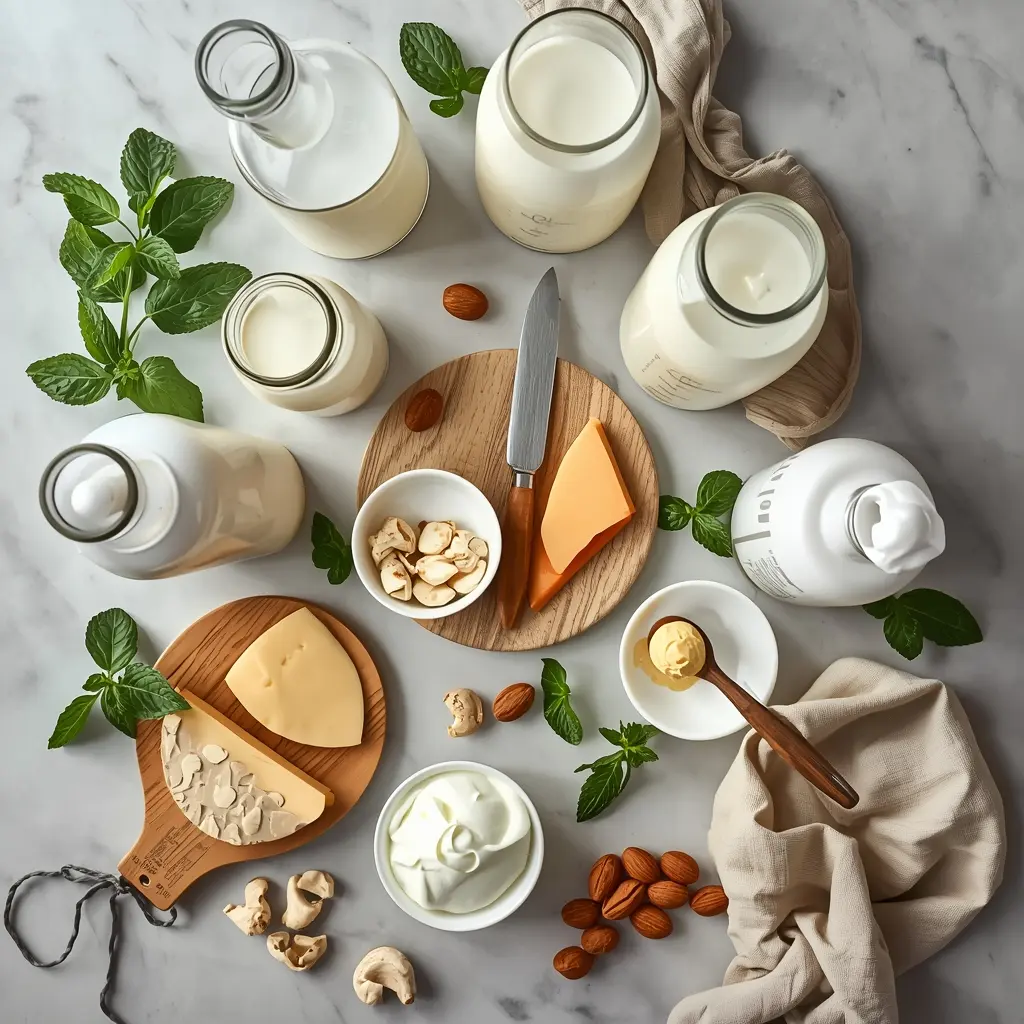
No vegan dairy alternatives guide is complete without addressing the dairy ingredients that hide in products that appear dairy-free at first glance.
The 8 Hidden Dairy Ingredients to Scan For
These are the ingredients that frequently appear in processed foods and are missed even by careful label readers — a critical addition to any vegan dairy alternatives guide.
| Hidden Ingredient | What It Is | Commonly Found In |
|---|---|---|
| Casein / Sodium Caseinate | Milk protein used as binder | Some non-dairy creamers, bread, processed meats |
| Whey | Milk byproduct | Protein bars, bread, crackers, cereal |
| Lactalbumin | Milk protein | Processed foods, protein powders |
| Lactose | Milk sugar | Medications, supplements, some chips |
| Ghee | Clarified butter | Indian foods, some popcorn, cooking sprays |
| Butter flavor / natural flavor | May be dairy-derived | Microwave popcorn, crackers, flavored chips |
| Rennet | Enzyme from calf stomach | Traditional cheeses marketed as vegetarian |
| Lactic acid starter culture | Usually vegan but occasionally dairy-derived | Vegan cheeses, fermented products |
This table represents the most overlooked area of this vegan dairy alternatives guide — because accidentally consuming hidden dairy is one of the most common frustrations for new vegans who believe they have made all the right swaps.
9. Nutrition Comparison — How Vegan Dairy Stacks Up
A credible vegan dairy alternatives guide must address the nutritional comparison honestly. The good news is that the nutritional picture is more favorable for plant alternatives than most people expect.
Calcium: The Most Common Concern
Dairy milk contains approximately 300mg of calcium per cup. This is the primary nutritional argument for dairy. However, this vegan dairy alternatives guide notes that fortified plant milks contain an identical 300mg of calcium per cup — and kale, bok choy, and fortified tofu actually have higher bioavailability rates of calcium than dairy.
Key point: Always buy fortified plant milks. Unfortified versions have significantly lower calcium content. Check the label for “calcium carbonate” or “tricalcium phosphate” in the ingredients — these are the added calcium compounds that bring plant milk to dairy equivalence.
Protein: Where Choices Matter
Dairy milk’s 8g of protein per cup is only matched by soy milk and pea milk among plant alternatives. This is why this vegan dairy alternatives guide consistently points soy milk users toward soy or pea milk for any protein-dependent application.
Fat Profile: Where Plants Win
Dairy fat is predominantly saturated fat — linked to elevated LDL cholesterol. Plant milk fats are predominantly unsaturated — actively beneficial for cardiovascular health. This is one of the clearest nutritional advantages covered in this vegan dairy alternatives guide.
| Nutrient per Cup | Whole Dairy Milk | Soy Milk | Oat Milk | Pea Milk |
|---|---|---|---|---|
| Calories | 149 | 80–100 | 90–120 | 70–100 |
| Protein | 8g | 7–8g | 2–4g | 8g |
| Fat | 8g (mostly saturated) | 4g (mostly unsaturated) | 2–5g (unsaturated) | 4.5g (unsaturated) |
| Calcium (fortified) | 300mg | 300mg | 300mg | 440mg |
| Vitamin D (fortified) | 120 IU | 100–120 IU | 100–120 IU | 100 IU |
| B12 | Natural | Fortified in some brands | Fortified in some brands | Fortified |
10. Conclusion — Your Complete Vegan Dairy Alternatives Guide Summary
This vegan dairy alternatives guide has covered every category, every substitute, every use case, and every brand comparison you need to replace dairy completely and confidently.
The key insight that ties this entire vegan dairy alternatives guide together: there is no single universal dairy replacement. There is a best replacement for each specific application — and now you have the complete map.
📸 Screenshot this final master reference table — it is the complete summary of this entire vegan dairy alternatives guide in one place. Save it to your phone and use it every time you cook.
| Dairy Product | Best Replacement | Second Choice | Key Rule |
|---|---|---|---|
| Dairy milk (coffee) | Oat milk Barista | Pea milk | Always barista edition for hot coffee |
| Dairy milk (baking) | Soy milk | Oat milk | Soy protein closest to dairy in baking |
| Dairy milk (cooking) | Cashew milk | Oat milk | Cashew for richness, oat for neutrality |
| Heavy cream | Full-fat canned coconut cream | Cashew cream | Refrigerate overnight before whipping |
| Single cream | Oat cream | Cashew cream | Both pour identically to dairy |
| Soured cream | Soy yogurt + lemon | Cashew cream + vinegar | Lemon juice is essential for tang |
| Crème fraîche | Cashew cream + lemon | Coconut cream | Thicker than soured cream — less water |
| Cream cheese | Kite Hill | Homemade cashew cheese | DIY is cheaper and more versatile |
| Mozzarella (melting) | Miyoko’s Liquid | Violife | Apply cold, high heat oven for best melt |
| Cheddar (slices) | Violife Just Like Cheddar | Daiya | Best for grilled cheese and burgers |
| Parmesan | Follow Your Heart | Nutritional yeast | Nutritional yeast is cheapest option |
| Butter (spreading) | Earth Balance | Miyoko’s Cultured | Miyoko’s is premium but exceptional |
| Butter (baking) | Vegan butter 1:1 | Refined coconut oil | Never use virgin coconut oil — too strong |
| Yogurt (eating) | Kite Hill Almond | Forager Cashew | Personal texture preference |
| Yogurt (cooking) | Silk Soy | Alpro Soy Plain | Protein content matters for cooking |
| Ice cream | Coconut-based | Cashew-based | Coconut richness most closely mimics dairy |
Going dairy-free is not a sacrifice. It is a transition — and like all transitions, it is smoothest when you have a complete vegan dairy alternatives guide mapping every step of the journey.
The dairy alternatives available today are genuinely excellent. Within 3 to 4 weeks of using this vegan dairy alternatives guide consistently, most people stop thinking about what they are missing and start appreciating what they have gained. Better cardiovascular health, no digestive discomfort from lactose, a dramatically more varied and interesting pantry, and the confidence that comes from knowing exactly what is in every meal you eat.
This vegan dairy alternatives guide is your permanent reference. Come back to it every time you encounter a new recipe, a new ingredient, or a new situation that requires a swap.
Want to try before you buy?
Enter your email below to get 2 free recipes instantly: