

Nutritional Disclaimer: This content is for informational purposes only and does not constitute medical advice. Always consult a registered dietitian or healthcare provider regarding calcium requirements, especially during pregnancy, breastfeeding, or if you have a bone health condition.
Vegan Calcium Foods: The Complete Guide to Plant-Based Calcium Sources
TL;DR
Vegan calcium foods can fully meet daily calcium requirements when chosen strategically. The key insight most guides miss: absorption rate matters more than content. Kale delivers 49% fractional absorption versus milk’s 32%. Bok choy, broccoli, and calcium-set tofu all outperform or match dairy when measured by actual calcium absorbed per serving. The challenge is oxalates in high-calcium plants like spinach, which reduce absorption to 5%. This guide covers the bioavailability science, the top 20 vegan calcium foods ranked by absorbed calcium, the oxalate and phytate problem explained, 8 spotlight foods, a daily 1,000mg protocol, and life stage targets. Vegan calcium foods are not a compromise. For those who choose correctly, they are a nutritional advantage.
The Calcium Absorption Myth: Why Plant Sources Compete with Dairy
The assumption that vegans cannot get enough calcium is one of the most persistent misconceptions in nutrition. It is built on a flawed premise: that calcium content equals calcium absorbed. It does not.
Fractional absorption is the percentage of calcium that actually crosses the gut wall and enters circulation. This number varies enormously between foods and completely changes the ranking of calcium sources. When measured by absorbed calcium per serving, plant foods are far more competitive than raw content figures suggest.
Why Absorption Rate Changes Everything
Consider this direct comparison:
- 100g raw kale: 150mg calcium content. At 49% absorption: 73.5mg absorbed calcium
- 100ml whole milk: 113mg calcium content. At 32% absorption: 36mg absorbed calcium
Kale delivers more than double the absorbed calcium of milk per 100g. Yet the conventional narrative treats dairy as the gold standard and plant calcium as inferior. The science does not support this.
The critical distinction is between two categories of plant calcium foods:
- Low-oxalate plants: kale, bok choy, broccoli, watercress, fortified plant milks, calcium-set tofu. High absorption, genuinely excellent calcium sources.
- High-oxalate plants: spinach, beet greens, Swiss chard, almonds (moderate). Oxalic acid binds calcium into insoluble calcium oxalate crystals that the body cannot absorb. These foods are nutritious for other reasons but should not be counted as calcium sources.
The Vitamin D Connection: Calcium Without D3 Is Wasted
Vitamin D3 is the gatekeeper of calcium absorption. Without adequate vitamin D, even low-oxalate plant calcium absorbs at only 10-15% efficiency. With optimal vitamin D (serum 25-OH above 50 nmol/L), absorption rises to 30-50%. On a vegan diet, vitamin D3 must be supplemented from algae-derived sources. No dietary calcium strategy is complete without it. See the complete supplement framework at the vegan supplements guide.
For the full context of how calcium fits alongside other critical vegan nutrients, the vegan nutrient deficiencies guide covers all major micronutrient gaps and their testing frameworks in one place.
The 8 Best Vegan Calcium Foods: Spotlight Cards
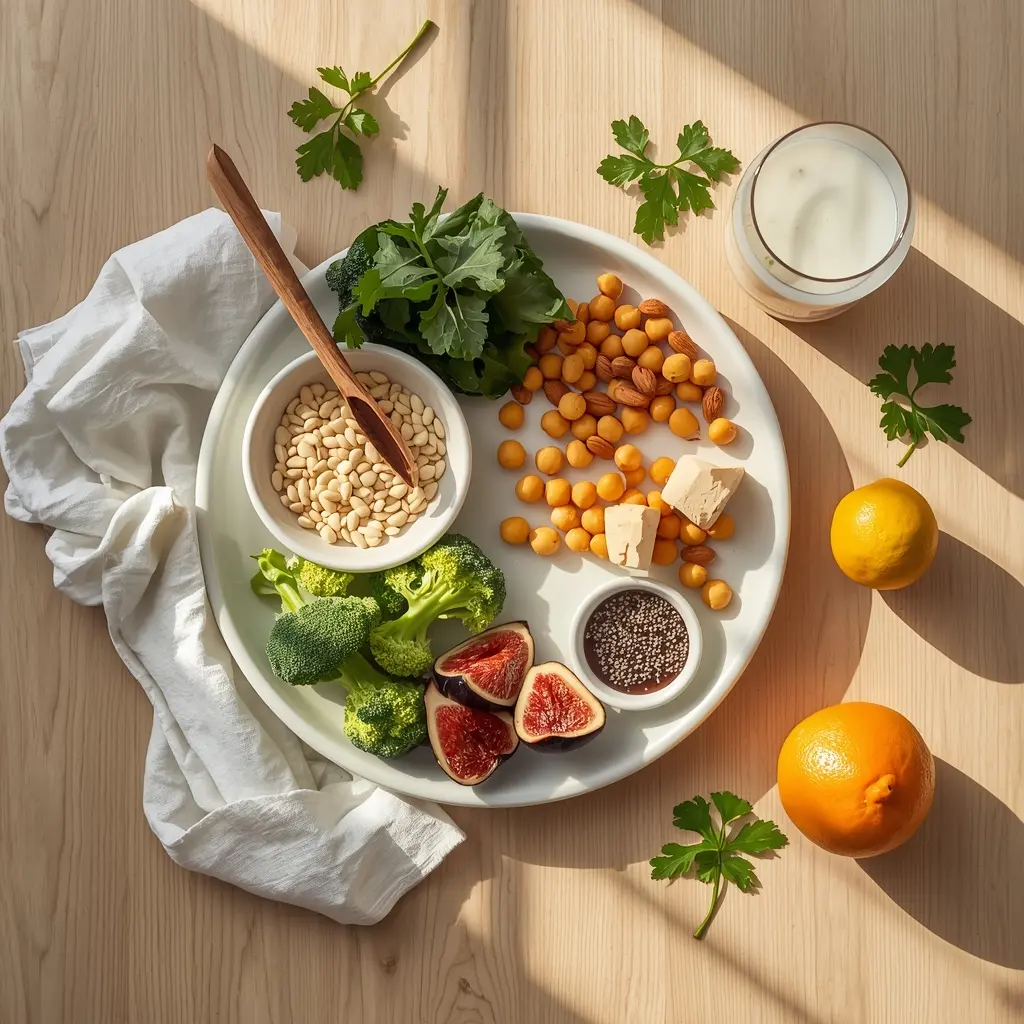
These eight foods represent the highest-value plant-based calcium sources: excellent absorption rates, practical serving sizes, and nutritional profiles that deliver calcium alongside other essential minerals.
1. Calcium-Set Tofu
Calcium content: 350mg per 100g (calcium sulfate set)
Absorption rate: ~31% (similar to dairy)
Absorbed per serving: approx. 109mg per 100g
- Check label: must say “calcium sulfate” or “nigari with calcium”
- Nigari-set tofu has negligible calcium. Calcium-set is the one to buy.
- Versatile: scrambles, stir-fries, curries, baked
2. Fortified Oat or Soy Milk
Calcium content: 300-350mg per 250ml cup
Absorption rate: ~31-36% (matches or exceeds dairy)
Absorbed per serving: 93-126mg per cup
- Most reliable daily calcium source on a plant diet
- Shake the carton before use: calcium settles to the bottom
- Choose brands with added vitamin D for synergistic absorption
3. Kale (Cooked)
Calcium content: 180mg per cup cooked
Absorption rate: 49%
Absorbed per serving: 88mg per cup
- Cooking reduces volume but concentrates calcium
- Steaming preserves more calcium than boiling
- Low oxalate: all calcium is bioavailable
4. Bok Choy (Cooked)
Calcium content: 160mg per cup cooked
Absorption rate: 54%
Absorbed per serving: 86mg per cup
- Highest fractional absorption of any common food
- Outperforms dairy per calorie by a significant margin
- Native to MENA and Asian cooking: stir-fried, braised, in soups
5. Broccoli (Cooked)
Calcium content: 62mg per cup cooked
Absorption rate: 53%
Absorbed per serving: 33mg per cup
- Lower total content than kale but exceptional absorption
- Combines with tofu and fortified milk well for a calcium-rich meal
- Also delivers sulforaphane with anti-inflammatory and cancer-preventive evidence
6. Fortified Tofu (Calcium Sulfate)
Calcium content: 200-500mg per 100g (varies by brand)
Practical note: Always check the label. The difference between calcium-set and nigari-set tofu is enormous.
- Some brands reach 500mg per 100g: exceptional value
- Best combined with vitamin D-rich foods for maximum absorption
- Firm tofu retains more calcium than silken in cooking
7. Almonds and Almond Butter
Calcium content: 76mg per 30g almonds / 43mg per 2 tbsp almond butter
Absorption rate: ~21% (moderate oxalate content)
Absorbed per serving: 16mg per 30g almonds
- Lower absorption than cruciferous vegetables
- Useful as a snack calcium contribution alongside primary sources
- Almond butter spreads calcium intake across the day conveniently
8. Tahini (Sesame Paste)
Calcium content: 130mg per 2 tbsp
Absorption rate: ~21% (similar to almonds)
Absorbed per serving: 27mg per 2 tbsp
- The most calcium-dense condiment available. Every tablespoon counts.
- Daily use in hummus, dressings, and sauces accumulates meaningful calcium
- Also delivers zinc, magnesium, and lignans
Top 20 Vegan Calcium Foods Ranked by Absorbed Calcium
This ranking is unique because it scores foods on absorbed calcium per serving, not raw calcium content. A food with 1,000mg calcium at 5% absorption is worth less than a food with 200mg at 50% absorption. The numbers beside each food reflect real calcium delivered to the body.
+ Grocery List
High vs. Low Bioavailability: The Oxalate and Phytate Problem
Plant calcium bioavailability is determined by two main inhibitors. Understanding them separates a calcium strategy that works from one that fails despite appearing well-designed.
High Bioavailability (30-54%)
Why these absorb well: Low oxalate, low phytate, or fermentation has neutralised antinutrients.
- Bok choy: 54%
- Broccoli: 53%
- Kale and collard greens: 49%
- Tempeh (fermented soy): 49%
- Calcium-set tofu: 31%
- Fortified plant milks: 31-36%
- Watercress: 53%
- Edamame (soy): 74% with isoflavone enhancement
Strategy: Build your daily calcium around these foods. They are the reliable core.
Moderate Bioavailability (15-30%)
Why these absorb moderately: Moderate oxalate or phytate content partially limits absorption but does not eliminate it.
- Almonds: 21%
- Tahini: 21%
- Cow’s milk: 32% (included for comparison)
- Sesame seeds: 16% (unhulled)
- Legumes (unsoaked): 15-20%
- Legumes (soaked 12 hrs): rises to 30-50%
Strategy: Count these as secondary contributors. Soaking legumes significantly improves their calcium contribution.
Low Bioavailability (5-10%)
Why these absorb poorly: Very high oxalate content binds calcium into insoluble crystals before it can cross the gut wall.
- Spinach: 5%
- Beet greens: 8%
- Swiss chard: 5%
- Rhubarb: 5%
Critical rule: Do not count these foods toward your calcium target. Despite appearing calcium-rich on paper, they deliver almost none to the body. They are excellent for other nutrients but not for calcium.
The Phytate Problem in Legumes and Grains
Phytic acid in legumes, whole grains, and seeds binds not just calcium but also iron, zinc, and magnesium. The good news is that phytate is dramatically reduced by:
- Soaking: 8-12 hours reduces phytic acid by 30-50%
- Sprouting: activates phytase enzyme, reducing phytate by 50-70%
- Fermentation: almost eliminates phytate (tempeh, miso, sourdough bread)
- Cooking: modest reduction; less effective than soaking alone
This is why tempeh delivers 49% calcium absorption while unprocessed soybeans absorb at a fraction of that. Fermentation is the most powerful phytate reduction technique available, and it is deeply embedded in the MENA and Mediterranean culinary traditions that this site draws from.
Vitamin K2: The Third Member of the Bone Health Trio
Calcium and vitamin D3 are the primary bone health nutrients. Vitamin K2 (MK-7 form) is the third essential member. K2 activates osteocalcin, the protein that anchors calcium into bone mineral matrix. Without K2, absorbed calcium may calcify in arteries rather than bones. Natto (fermented soy) is the richest plant source. A 90-200mcg MK-7 supplement is an excellent addition to any vegan calcium strategy. The complete bone health protocol is covered in the vegan bone health guide.
How to Reach 1,000mg Absorbed Calcium Daily on a Plant Diet
The target of 1,000mg daily refers to the RDA for calcium intake, not absorbed calcium. At typical plant food absorption rates of 30-50%, reaching this intake target from low-oxalate sources delivers adequate calcium to bone and tissues. The protocol below is built around practical daily anchors that make the target achievable without effort or supplementation in most cases.
Anchor 1: Fortified Plant Milk (2 cups daily)
Two 250ml cups of fortified oat or soy milk delivers 600-700mg calcium. This single habit covers 60-70% of the daily target. Shake the carton before every pour.
- Morning: 1 cup with breakfast (porridge, smoothie, or cereal)
- Evening: 1 cup in cooking or warm drink
- Choose brands with both calcium and vitamin D3 fortification
Anchor 2: Calcium-Set Tofu (100g at least 4x per week)
100g calcium-set tofu delivers 350mg calcium. Used in 4 meals per week it contributes an average of 200mg calcium per day to the running total.
- Check every tofu label. Only calcium sulfate-set tofu delivers significant calcium.
- Some premium brands reach 500mg per 100g
- Firm tofu retains more calcium than silken during cooking
Anchor 3: Low-Oxalate Greens (1-2 cups daily)
A daily serving of kale, bok choy, broccoli, or collard greens contributes 60-180mg high-bioavailability calcium with absorption rates exceeding dairy.
- Rotate between kale, bok choy, broccoli, and collard greens
- Steaming preserves more calcium than boiling in water
- Avoid counting spinach, beet greens, or Swiss chard as calcium sources
Anchor 4: Tahini (2-4 tbsp daily in food)
Daily tahini in hummus, dressings, and sauces adds 130-260mg calcium from a moderate-absorption source. It compounds over time.
- 2 tbsp in hummus: 130mg calcium
- Diluted tahini sauce over grain bowls: adds calcium to every meal
- Also delivers magnesium, zinc, and lignans alongside calcium
Supplement Only If Gaps Remain
With the above four anchors in place, most adults meet or exceed 1,000mg daily from food alone. Supplementation is needed only if:
- Fortified plant milks are not consumed daily
- Calcium-set tofu is rarely eaten
- Life stage demands are elevated (teens: 1,300mg, postmenopausal women: 1,200mg)
- Blood calcium or bone density markers are below optimal range
If supplementing: calcium citrate is preferred (better absorption, less stomach upset than carbonate). Maximum 500mg per dose; split doses absorb better than single large doses.
Pair Every Calcium Meal with Vitamin D
Vitamin D3 is the absorption multiplier. Without adequate vitamin D, the above protocol delivers 10-15% efficiency. With optimal D3 levels, the same foods deliver 30-54%. Supplement algae-derived D3 at 2,000 IU daily minimum.
Avoid the Calcium Blockers
Several common habits reduce calcium absorption and should be managed:
- High caffeine intake: increases urinary calcium excretion. More than 3-4 cups of coffee daily is a concern.
- High sodium diet: for every 2,300mg sodium excreted, the kidneys also excrete 40-60mg calcium
- Tea and coffee with calcium-rich meals: tannins modestly reduce absorption. Space by 30-60 minutes.
- Iron supplements with calcium: compete for absorption. Always separate by 2 hours.
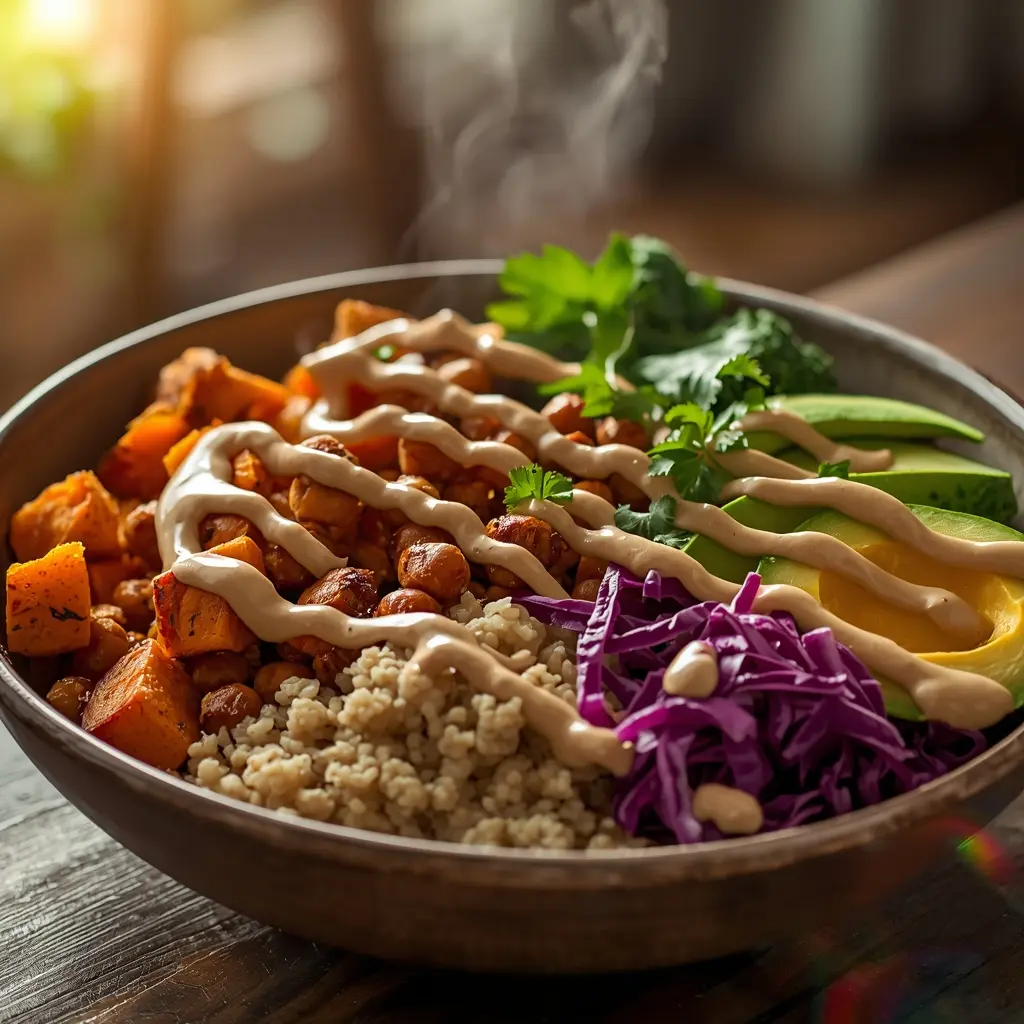
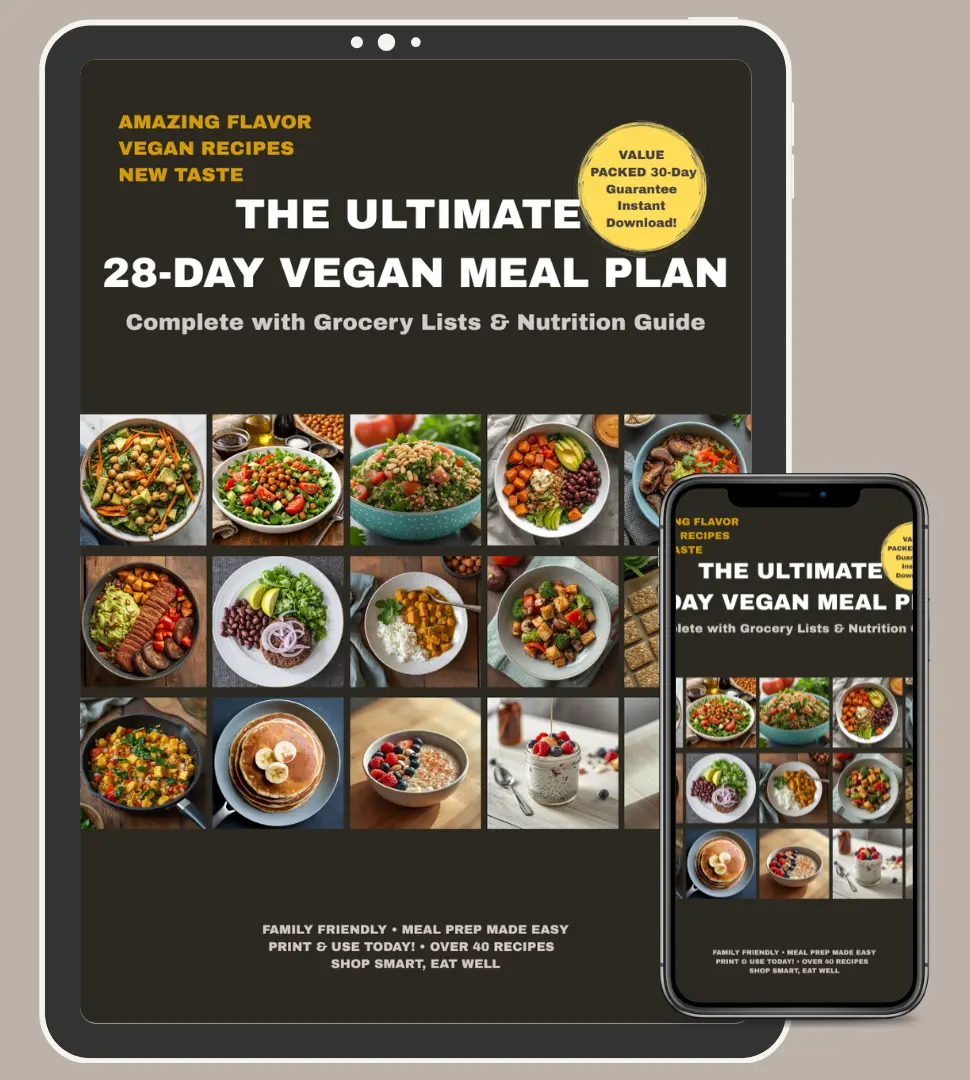
28-Day Vegan Meal Plan + Grocery list.
Transform your lifestyle with our comprehensive guide. This isn’t just a recipe book; it’s a complete system designed for success:
- The Vegan Guide: Essential transition tips and nutritional benefits.
- 40+ Chef Recipes: Breakfast, lunch, and dinner with high-quality photos.
- 4-Week Meal Plan: A fully structured day-by-day calendar.
- Grocery Lists: Categorized weekly lists to save you time and money.
- Photos: High-Quality Recipe Photos.
- Nutritions: Vegan Nutrition Guide Toolkit.
Calcium Through Life Stages
Calcium requirements are not uniform throughout life. Four periods have elevated demands that require deliberate dietary attention on a plant-based diet.
How to Test Your Calcium Status
Serum calcium levels are a poor indicator of bone calcium status because the body tightly regulates blood calcium by drawing from bones. More useful markers include:
- DEXA bone density scan: the gold standard for bone mineral density assessment
- Serum vitamin D (25-OH): low D is a proxy for impaired calcium absorption
- Urine calcium: very high or very low urinary calcium excretion both indicate problems
- Parathyroid hormone (PTH): elevated PTH signals the body is mobilising calcium from bone due to dietary insufficiency
The complete vegan blood test framework is covered at the vegan blood test guide.
Chef Section: MENA Calcium-Rich Traditional Dishes
Twenty years of professional MENA and Mediterranean kitchen experience yields a consistent observation: the traditional cooking of this region is calcium-rich by design. Long before nutritional science quantified it, these culinary traditions built calcium abundance into daily eating through tahini, sesame, legumes, and leafy greens.
Five MENA Kitchen Calcium Traditions
1. Hummus as a Daily Calcium Vehicle
The standard hummus recipe delivers calcium from three distinct sources in one dish:
- Chickpeas (soaked and cooked): 80mg calcium per cup, absorption enhanced by soaking
- Tahini (3-4 tbsp in a batch): 195-260mg calcium per batch serving
- Lemon juice: citric acid slightly enhances mineral absorption
A generous daily serving of hummus delivers 60-90mg absorbed calcium from a food most people eat as a condiment without ever thinking of it as a calcium source.
2. Ful Medames with Tahini Drizzle
Slow-cooked fava beans dressed with tahini, lemon, cumin, and garlic is the original MENA power breakfast. The calcium from the soaked and cooked fava beans combined with 2 tablespoons of tahini delivers approximately 180-200mg calcium per serving. The lemon ensures the citric acid environment that supports mineral absorption. This dish has been consumed for breakfast across North Africa and the Levant for thousands of years and delivers calcium, iron, magnesium, and zinc simultaneously.
3. Braised Bok Choy and Kale
The professional kitchen approach to leafy green calcium delivery: always braise rather than boil. Braising in a small amount of liquid with garlic, olive oil, and lemon concentrates rather than leaches the calcium. The MENA technique of wilting greens in olive oil with garlic, then finishing with lemon, is precisely the preparation method that maximises calcium retention while delivering the fat-soluble cofactors (vitamin D if present in oil-based sauces) that support absorption.
4. The Sesame Tradition in MENA Baking
Sesame seeds encrust bread, coat falafel, and top flatbreads across MENA cooking. While raw sesame seeds have moderate bioavailability, the grinding process that produces tahini ruptures the cell walls and dramatically improves calcium extraction. The traditional practice of using tahini rather than whole sesame seeds as the primary sesame format is nutritionally superior: ground sesame (tahini) absorbs at 21% versus whole seeds at 16%.
5. Za’atar: The Calcium Spice Blend
Za’atar, the dried thyme, sesame, sumac, and salt blend used on flatbreads, in olive oil dips, and as a condiment throughout MENA cooking, delivers calcium from the sesame component alongside the anti-inflammatory compounds in thyme and sumac. Two tablespoons of za’atar used daily provides approximately 50-70mg calcium in a form most people do not consider a nutritional intervention. It is flavour and nutrition simultaneously, which is the hallmark of traditional MENA cooking.
The MENA Calcium Day: A Professional Kitchen Template
- Breakfast: 2 cups fortified oat milk in porridge (600-700mg Ca) + za’atar flatbread
- Lunch: Hummus with raw vegetables + 100g calcium-set tofu in a grain bowl (350mg Ca)
- Dinner: Ful medames or lentil soup + braised bok choy + 2 tbsp tahini dressing (200-280mg Ca)
- Total calcium intake: 1,150-1,330mg daily. Target exceeded from food alone.
Putting It Together: Vegan Calcium Foods Are a Genuine Advantage
The evidence reviewed in this guide points to one clear conclusion: when vegan calcium foods are chosen with bioavailability in mind, plant-based eaters can meet or exceed dairy-based calcium targets with structurally superior food choices.
Bok choy absorbs at 54%. Kale at 49%. Calcium-set tofu at 31%. Fortified plant milks at 31-36%. All equal or exceed the 32% absorption rate of cow’s milk. The problem was never that plant foods lack calcium. The problem was that the wrong plant foods (spinach, beet greens) were being counted and the right ones (low-oxalate brassicas, fortified milks, calcium-set tofu) were being undervalued.
The practical strategy is simple: 2 cups fortified plant milk daily, calcium-set tofu regularly, low-oxalate greens at least once per day, and tahini used generously in everyday cooking. Pair with algae D3 supplementation and the vegan calcium foods protocol is complete, evidence-based, and achievable every single day.
FAQ: 12 Questions About Vegan Calcium Foods
Yes, completely. The critical strategy is choosing low-oxalate plant sources with high bioavailability. Calcium-set tofu, fortified plant milks, kale, bok choy, broccoli, and white beans all deliver absorbed calcium at rates equal to or exceeding dairy. Two cups of fortified plant milk plus 100g calcium-set tofu plus a daily serving of low-oxalate greens consistently delivers 1,000mg or more of dietary calcium. The misconception arises from counting high-oxalate foods like spinach as calcium sources, which they are not in practice.
No. Spinach contains high calcium on paper: 240mg per cooked cup. But its oxalate content is so high that only 5% of that calcium is absorbed. This delivers approximately 12mg of usable calcium. Spinach is an excellent food for iron, folate, and vitamin K, but it should not be counted toward daily calcium targets. Use kale, bok choy, broccoli, or collard greens instead for calcium. These absorb at 49-54%.
Fortification levels vary significantly by brand. The key is to check the label. Most quality fortified plant milks provide 300-350mg calcium per 250ml serving. Fortified soy milk tends to have the most consistent calcium fortification globally. Oat milk, almond milk, and rice milk are usually similarly fortified when calcium-added versions are chosen. Always choose varieties fortified with both calcium and vitamin D3. Shake the carton before use: calcium settles to the bottom and an unshaken carton delivers significantly less.
No. This is one of the most important practical distinctions in vegan calcium nutrition:
- Calcium-set tofu (calcium sulfate): 350-500mg per 100g. Excellent calcium source.
- Nigari-set tofu (magnesium chloride): very low calcium, often under 30mg per 100g
- Silken tofu: usually lower calcium than firm, regardless of setting agent
Check the ingredients label. “Calcium sulfate” or “calcium chloride” as a coagulant means significant calcium content. “Nigari” or “magnesium chloride” means minimal calcium.
Early and intermediate calcium deficiency is often symptom-free because the body mobilises calcium from bone to maintain stable blood levels. Warning signs that appear with longer-term deficiency include:
- Muscle cramps, particularly in calves and feet at night
- Dental problems: increased cavities, weakened enamel
- Bone pain or increased fracture risk
- Numbness or tingling in extremities (severe deficiency)
- Elevated parathyroid hormone (PTH) on blood tests
A DEXA scan and vitamin D blood test are the best diagnostic tools. Serum calcium is a poor indicator.
1,300mg daily from ages 9-18. This is the highest calcium requirement of any non-pregnant life stage because 45% of peak bone mass is built during adolescence. Practical targets for a teen:
- 3 cups fortified plant milk daily: 900-1,050mg calcium
- 1 serving calcium-set tofu: 350mg calcium
- Daily serving low-oxalate greens: 60-180mg calcium
The complete teenage vegan nutrition guide is at the vegan teen nutrition guide.
For most adults who consume fortified plant milks and calcium-set tofu daily, supplementation is not necessary. It becomes appropriate when:
- Dietary calcium consistently falls below 700-800mg daily
- Life stage requirements are elevated (teens, pregnancy, postmenopause)
- Vitamin D is deficient (impairs absorption of all dietary calcium)
- Bone density scans show deficits
If supplementing: calcium citrate (not carbonate) is preferred for those with reduced stomach acid. Never take more than 500mg in a single dose. Split supplementation across two meals for optimal absorption.
Studies reviewed at PubMed show that plant-based eaters who meet calcium and vitamin D targets maintain bone density equivalent to omnivores. The key phrase is “who meet targets.” Vegans who rely on unfortified foods without strategic planning tend to have lower bone density. The evidence is clear that vegan calcium foods from low-oxalate plants, fortified milks, and calcium-set tofu provide bone-building calcium that is fully equivalent to dairy calcium in well-planned diets. The bone health strategy is covered comprehensively in the vegan bone health guide.
During pregnancy, the placenta upregulates maternal calcium absorption (vitamin D-mediated) to supply fetal bone development. Maternal absorption efficiency may rise to 54% during the third trimester. Despite this adaptation, dietary calcium targets remain 1,000-1,300mg daily because the increased absorption compensates for increased fetal demand rather than creating a surplus. The priority in pregnancy is to maintain the full dietary supply so enhanced absorption has adequate calcium to work with. Full pregnancy nutrition at the vegan pregnancy guide.
Yes, but only when prepared correctly. Raw or unsoaked legumes have phytate levels that reduce calcium absorption to 15-20%. After soaking for 8-12 hours and cooking:
- White beans: 170mg calcium per cup at approximately 49% absorption after soaking
- Chickpeas: 80mg per cup at 69% after soaking (soy isoflavone-adjacent compounds enhance absorption)
- Tempeh (fermented soy): 111mg per 100g at 49% absorption
Fermented soy products like tempeh and miso have the best legume calcium absorption because fermentation eliminates most phytate.
Yes, when chosen correctly. Studies at Examine.com confirm equivalent calcium bioavailability between fortified soy milk and cow’s milk. Key conditions:
- The plant milk must be calcium-fortified (check label)
- The carton must be shaken before use (calcium settles)
- The product should ideally include vitamin D3 alongside calcium
- Soy milk and oat milk generally perform better than almond milk (which is naturally low in calcium)
Several excellent non-soy vegan calcium sources exist:
- Fortified oat milk or rice milk: 300-350mg per cup. The most practical dairy-free, soy-free calcium source.
- Kale and bok choy: 160-180mg per cooked cup with 49-54% absorption
- White beans and chickpeas (soaked): 80-170mg per cup with 49-69% absorption after soaking
- Tahini: 130mg per 2 tablespoons
- Calcium citrate supplement: if dietary sources are still insufficient
Without soy, the daily anchor shifts to fortified oat milk plus low-oxalate brassica vegetables plus legumes.
Still spending hours figuring out what to eat?
What’s included in your download
- 40+ nutritionist-approved recipes
- Complete 28-day calendar
- Meets protein, iron & B12 needs
- Family & meal prep friendly
- Vibrant photo for every recipe
- Simple, common ingredients
Instant PDF download. No subscriptions. No waiting.