- Vegan bloating won’t go away for most people because the root cause has not been identified and addressed. Cutting out random foods without a clear strategy rarely works.
- The most common causes are too much fibre added too quickly, unsoaked legumes, raw cruciferous vegetables, FODMAP foods, and an imbalanced gut microbiome struggling to adapt.
- Persistent vegan bloating won’t go away on its own if SIBO, food intolerances, or low digestive enzyme production are present. These require targeted interventions, not just dietary patience.
- Cooking methods matter enormously. The same foods that cause severe bloating raw or undercooked often cause none when properly prepared.
- Most cases of vegan bloating resolve completely within four to eight weeks when the correct cause is identified and addressed systematically.
- Why Vegan Bloating Won’t Go Away for So Many People
- Understanding the Gut Adaptation Phase
- The 9 Proven Causes of Persistent Vegan Bloating
- Complete Cause and Fix Reference Table
- Best and Worst Foods for Vegan Bloating
- How Cooking Methods Change Everything
- When Vegan Bloating Won’t Go Away Despite Diet Changes
- Frequently Asked Questions
- Your Action Plan
When vegan bloating won’t go away, it stops being a minor inconvenience and starts affecting your quality of life, your confidence in your dietary choices, and in some cases your work and social life. You feel permanently inflated. Nothing fits comfortably. Meals you should be enjoying become a source of anxiety. And the advice you find online, “it will pass,” “your gut needs time to adapt,” is frustratingly vague when weeks or months have gone by and vegan bloating still won’t go away.
The reality is that vegan bloating won’t go away when the specific cause has not been correctly identified. This guide closes that gap completely. Every proven cause is covered with its identifying signs, its specific fix, and a realistic timeline for relief. By the time you finish reading, you will know exactly which cause applies to you and exactly what to do about it.
If you are also experiencing fatigue alongside your digestive symptoms, the two are often connected through the same root nutritional issues. Our guide on why you feel tired on a vegan diet covers the overlap between gut function and energy levels in detail.
Why Vegan Bloating Won’t Go Away for So Many People
The fundamental reason vegan bloating won’t go away for most people is that they are treating the symptom rather than the cause. They cut out beans for a week, bloating improves, they add beans back, bloating returns, and they conclude that beans are the problem. But beans are not the problem. Improperly prepared beans in a gut microbiome not yet adapted to high fibre is the problem. That distinction determines whether the fix works or not.
There is also a critical timing confusion. The gut microbiome adapts to a high-fibre plant-based diet over four to eight weeks for most people. During that window, vegan bloating is both normal and temporary. However, vegan bloating won’t go away beyond that window if any of the following are true: the fibre increase happened too quickly, specific food preparation issues have not been addressed, an underlying condition like SIBO or coeliac disease is present, or the gut microbiome is in a state of dysbiosis that requires active rehabilitation rather than just patience.
Understanding which of these situations applies to you is the entire game. The nine causes in this guide give you the diagnostic framework to make that determination clearly and quickly.
Understanding the Gut Adaptation Phase
Before diagnosing specific causes, it is worth understanding why vegan bloating happens at all in the first weeks of plant-based eating. This context prevents panic and helps you distinguish between normal adaptation and a genuine persistent problem.
The human gut microbiome is a living ecosystem of trillions of microorganisms. Its composition changes in response to the food you eat. When you switch to a vegan diet, you dramatically increase your intake of fibre, resistant starch, and plant polyphenols. Your gut microbiome, shaped by your previous diet, may lack sufficient populations of the specific bacteria that efficiently ferment these plant compounds.
The result is excess gas production as existing bacterial populations work overtime fermenting fibres they are not optimally equipped to process. Over four to eight weeks, the beneficial fibre-fermenting bacteria proliferate in response to the consistent new food source, the microbiome composition shifts, and fermentation becomes more efficient and less gaseous.
This is the normal adaptation phase. Vegan bloating during this window is expected and temporary. The mistake most people make is either giving up before the adaptation is complete, or continuing to eat in a way that overloads the gut during the adaptation phase and extends the discomfort far beyond what is necessary.
If your vegan bloating won’t go away after eight to ten weeks of consistent plant-based eating, the adaptation phase is over. Something specific is preventing resolution and needs to be addressed directly.
The 9 Proven Causes of Persistent Vegan Bloating
Cause 1: Too Much Fibre Added Too Quickly
The most common reason vegan bloating won’t go away in new plant-based eaters is the speed of fibre increase. The average omnivore in Western countries consumes 15 to 20g of fibre per day. A whole food vegan diet provides 40 to 60g. Doubling or tripling fibre intake overnight is a significant metabolic shock to a gut microbiome adapted to much lower amounts.
The fix is not to eat less fibre. The fix is to increase fibre gradually, by no more than 5g per week, while simultaneously increasing water intake. Fibre absorbs water and if water intake does not increase alongside fibre, the result is harder, slower-moving stool that creates pressure and bloating from the inside.
Practical starting point: in your first two weeks as a vegan, prioritize tofu, tempeh, rice, oats, and cooked root vegetables over raw salads, large legume portions, and high-fibre smoothies. Build from a manageable baseline rather than jumping to maximum fibre from day one.
Cause 2: Unsoaked or Undercooked Legumes
Legumes contain oligosaccharides, specifically raffinose and stachyose, that human digestive enzymes cannot break down. When these compounds reach the large intestine intact, gut bacteria ferment them rapidly, producing large volumes of hydrogen and carbon dioxide gas. The result is significant, predictable, timed bloating appearing two to four hours after eating.
The solution is in the preparation, not the avoidance. Dried legumes should be soaked for 12 to 24 hours in cold water before cooking. The soak water is then discarded, which removes a significant proportion of the oligosaccharides. Canned legumes should be rinsed under cold running water for a full 60 seconds. During cooking, a strip of kombu seaweed added to the pot contains natural enzymes that break down the remaining oligosaccharides enzymatically.
Additionally, cooking legumes until they are truly soft, not just tender, completes the breakdown of complex starches that contribute to gas formation. Slightly undercooked legumes cause significantly more bloating than fully cooked ones, a detail many recipes fail to emphasise.
Cause 3: Raw Cruciferous Vegetables
Broccoli, cauliflower, Brussels sprouts, cabbage, and kale are nutritional powerhouses and essential components of any plant-based diet. They are also among the most potent gas-producers when eaten raw. Glucosinolates and raffinose in raw cruciferous vegetables pass through the small intestine undigested and ferment heavily in the large intestine.
Many new vegans heavily increase their raw vegetable consumption through large salads and green smoothies. If vegan bloating won’t go away and raw cruciferous vegetables form a significant part of the diet, this is a primary suspect requiring immediate investigation.
The fix is complete: cook all cruciferous vegetables. Steaming for eight to ten minutes, roasting at 200°C for 20 minutes, or sautéing in a pan with a small amount of oil breaks down the glucosinolates and deactivates the gas-producing compounds by 60 to 80 percent while preserving the majority of the nutritional value. This single change resolves bloating for a significant proportion of people who contact their doctor about vegan bloating that won’t go away.
Cause 4: High-FODMAP Foods
FODMAPs stand for Fermentable Oligosaccharides, Disaccharides, Monosaccharides, and Polyols. They are a group of short-chain carbohydrates that draw water into the intestine through osmosis and are rapidly fermented by gut bacteria, producing gas, distension, and in sensitive individuals, cramping and altered bowel habits.
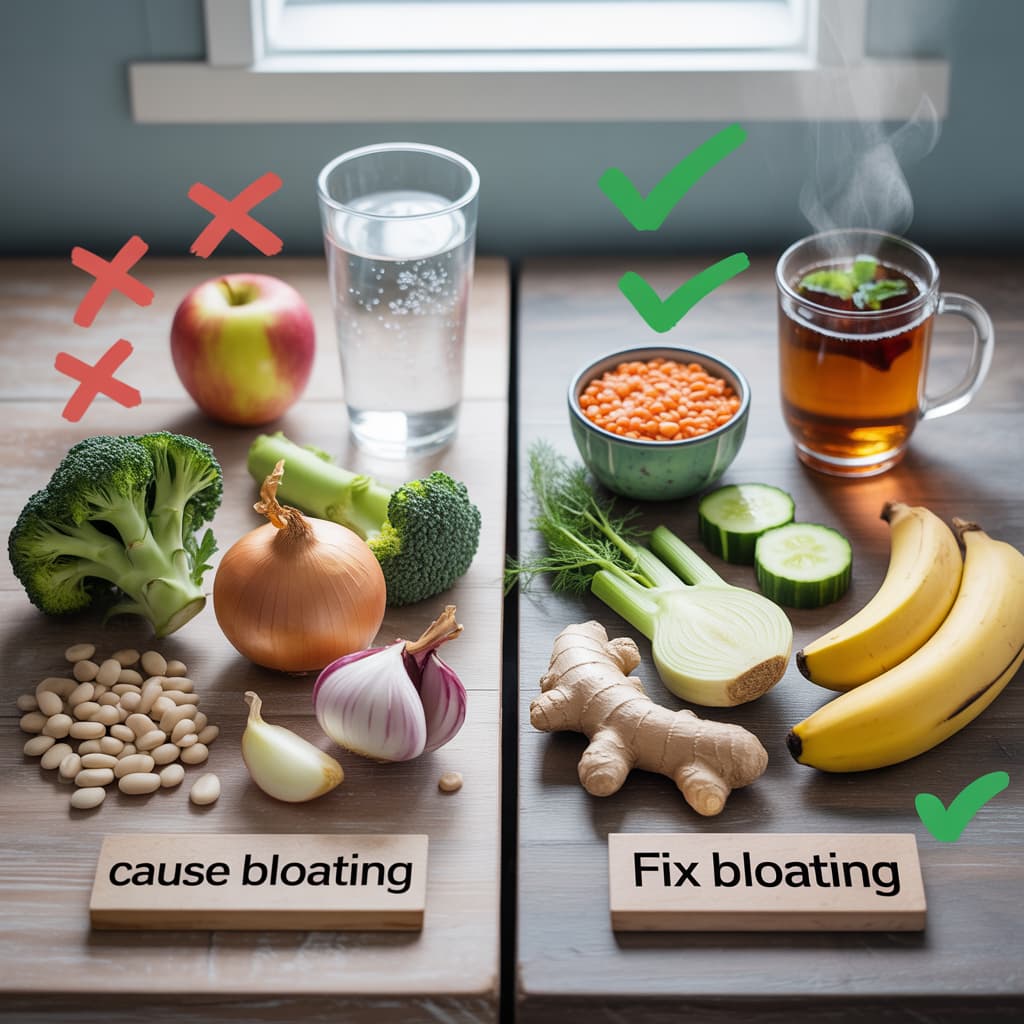
The challenge in the context of vegan bloating that won’t go away is that many of the healthiest vegan foods are high in FODMAPs. Garlic, onion, apples, watermelon, wheat, legumes, and certain mushrooms are all high-FODMAP foods that form central parts of most plant-based diets.
Not everyone reacts to all FODMAP groups equally. A proper low-FODMAP elimination and reintroduction protocol, ideally under the guidance of a dietitian experienced in plant-based nutrition, identifies which specific FODMAP groups are problematic for your individual gut. This is the only evidence-based approach to managing FODMAP-related vegan bloating that won’t go away, and it takes six to eight weeks to complete properly.
Cause 5: Gut Microbiome Dysbiosis
Dysbiosis refers to an imbalanced gut microbiome, one in which gas-producing bacterial species are overrepresented and beneficial fibre-fermenting bacteria are underrepresented. This is more common than most people realise, particularly after periods of antibiotic use, high-sugar processed food consumption, chronic stress, or previous low-fibre diets.
When someone with existing dysbiosis switches to a high-fibre vegan diet, the sudden increase in fermentable plant matter is processed primarily by the gas-producing bacteria that are already dominant. The result is persistent, severe bloating that does not improve with standard adaptation because the microbiome composition is not shifting in the right direction fast enough.
The intervention requires actively rebuilding the beneficial bacterial populations. Daily fermented foods are the most evidence-supported dietary intervention for microbiome rebalancing: tempeh, kimchi, sauerkraut, miso, and unsweetened kombucha. Prebiotic fibre from oats, slightly green bananas, Jerusalem artichoke, and garlic (cooked) feeds the beneficial bacteria you are trying to establish. A broad-spectrum multi-strain probiotic for eight weeks can accelerate the process.
Cause 6: Eating Too Fast and Swallowing Air
Aerophagia, the swallowing of air during eating and drinking, is one of the most under-recognised causes of vegan bloating that won’t go away. It is frequently invisible to the person experiencing it because it happens automatically and is not associated with any specific food.
Air swallowed during rapid eating, drinking through straws, chewing gum, talking with food in the mouth, or drinking carbonated beverages collects in the digestive tract and creates bloating that mimics food-related causes but is entirely behavioural in origin. The diagnostic clue is that bloating appears within minutes of eating, before food could possibly have reached the large intestine where fermentation occurs. Genuine food fermentation bloating develops two to six hours after eating.
Cause 7: Low Digestive Enzyme Production
Digestive enzymes produced by the pancreas and the lining of the small intestine are responsible for breaking down complex carbohydrates, proteins, and fats into absorbable components. When enzyme production is insufficient, complex plant compounds pass through the small intestine incompletely digested and are fermented by bacteria in the large intestine, producing the gas that causes bloating.
Low enzyme production is associated with chronic stress (stress directly inhibits pancreatic enzyme secretion), advancing age, certain medications, and a history of poor diet. A broad-spectrum digestive enzyme supplement taken with each main meal addresses this immediately, providing the enzymes the digestive system is failing to produce in sufficient quantities. Alpha-galactosidase specifically targets legume oligosaccharides and is the most relevant enzyme for vegan bloating that won’t go away in legume-heavy diets.
Cause 8: SIBO (Small Intestinal Bacterial Overgrowth)
SIBO is one of the more complex reasons vegan bloating won’t go away despite all dietary interventions. It occurs when bacteria normally found in the large intestine migrate and colonise the small intestine, fermenting carbohydrates early in the digestive process and producing gas much higher up in the gut than normal fermentation occurs.
The result is bloating that develops rapidly, within 60 to 90 minutes of eating, regardless of what has been eaten. SIBO-related vegan bloating that won’t go away is characterised by its speed of onset, its severity, and its complete unresponsiveness to standard dietary changes. SIBO requires medical diagnosis through a lactulose or glucose breath test and treatment through specific antimicrobial protocols prescribed by a gastroenterologist. Diet alone cannot resolve SIBO.
Cause 9: Undiagnosed Coeliac Disease or Gluten Sensitivity
Seitan, the wheat-gluten based meat alternative popular in vegan cooking, is pure gluten. Many vegans also consume significant amounts of wheat bread, pasta, and wheat-based sauces. If undiagnosed coeliac disease or non-coeliac gluten sensitivity is present, these foods trigger intestinal inflammation, villous atrophy in the case of coeliac disease, and significant digestive symptoms including severe bloating, diarrhoea, fatigue, and brain fog.
The critical point: do not self-eliminate gluten before getting a coeliac blood test. Eliminating gluten before the test produces false negative results, making diagnosis impossible. Request an anti-tTG IgA blood test and total IgA before making any dietary changes if you suspect this may be contributing to your vegan bloating that won’t go away.
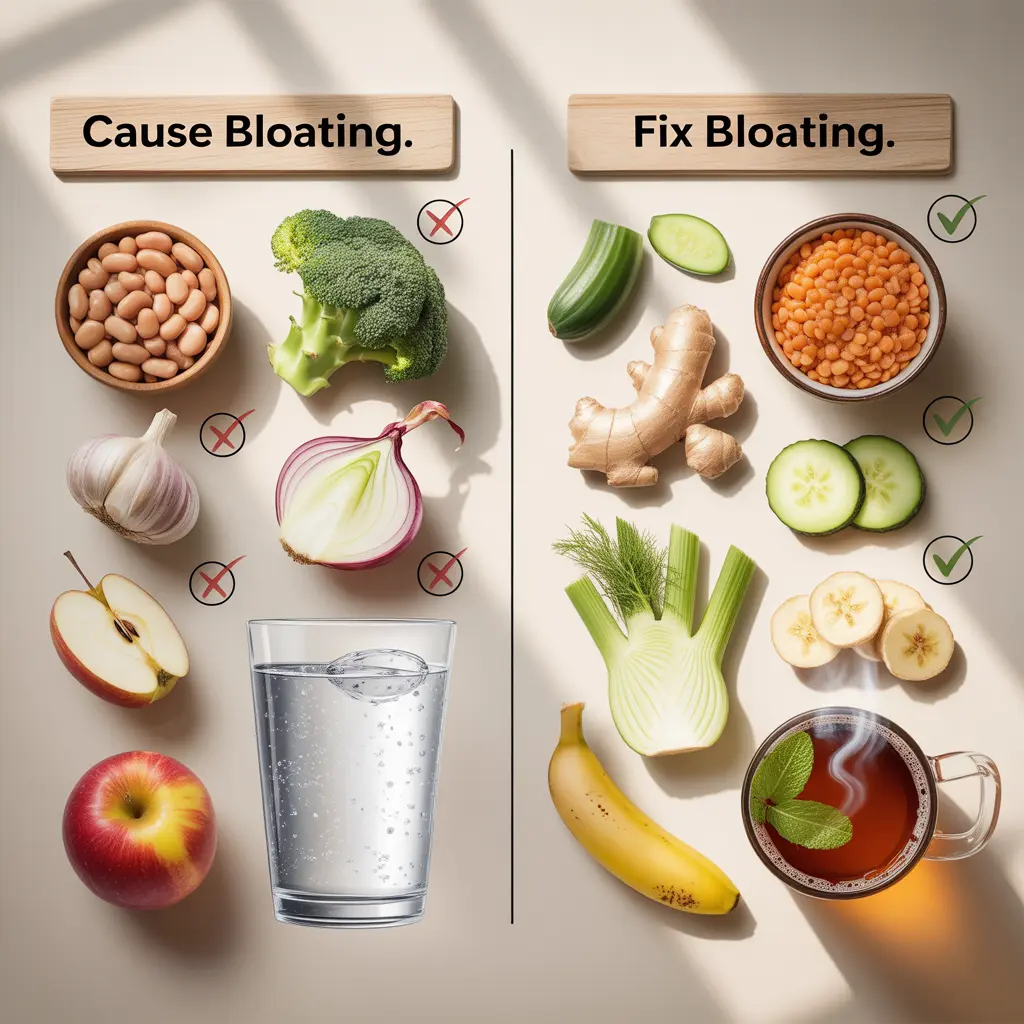
The two tables below give you everything you need to diagnose your specific cause of vegan bloating and fix it precisely. Table 1 is your complete cause-and-fix reference. Table 2 is your practical food guide. Screenshot both and use them as your daily eating reference while you work through the resolution process.
| Cause | How It Creates Bloating | Identifying Signs | Specific Fix | Timeline for Relief | Severity Level |
|---|---|---|---|---|---|
| Fibre increase too fast | Gut bacteria ferment sudden large amounts of fibre, producing gas faster than the colon can absorb it. The microbiome needs time to build the bacterial populations that process high fibre efficiently. | Bloating started within days of going vegan. Worst after high-fibre meals (lentils, beans, raw vegetables). Improves on days when eating is lighter. | Reduce fibre temporarily to your previous level, then increase by 5g per week maximum. Drink an additional 500ml of water per 5g of fibre added. Do not rush the transition. | 2 to 4 weeks when fibre is increased gradually | Common and temporary |
| Unsoaked or undercooked legumes | Legumes contain oligosaccharides (raffinose, stachyose) that human digestive enzymes cannot break down. Gut bacteria ferment them heavily, producing large amounts of hydrogen and carbon dioxide gas. | Bloating appears specifically 2 to 4 hours after eating beans, lentils, or chickpeas. Loud gurgling. Gas with a distinct fermented odour. Improves on legume-free days. | Soak dried legumes 12 to 24 hours and discard soak water. Rinse canned legumes thoroughly under cold water for 60 seconds. Cook until completely soft, not just tender. Add a strip of kombu seaweed during cooking to enzymatically break down oligosaccharides. | Immediate improvement with correct preparation | Very common, very fixable |
| Raw cruciferous vegetables | Broccoli, cauliflower, Brussels sprouts, cabbage, and kale contain glucosinolates and raffinose. Raw consumption means these compounds reach the large intestine intact, where bacterial fermentation produces significant gas. | Bloating worst after salads, raw broccoli, or kale smoothies. Often accompanied by cramping in the lower abdomen. Significant gas 3 to 6 hours after eating. | Steam, roast, or sauté all cruciferous vegetables before eating. Cooking breaks down the gas-producing compounds substantially. Add a small amount of apple cider vinegar or lemon juice to cooked crucifers to further aid digestion. | Immediate improvement when switching from raw to cooked | Common in new vegans who rely heavily on raw salads |
| High-FODMAP foods | FODMAPs are fermentable carbohydrates that draw water into the intestine and are rapidly fermented by gut bacteria. Not everyone reacts to all FODMAPs but some individuals, particularly those with IBS, are highly sensitive to specific FODMAP groups. | Bloating is variable and unpredictable, appearing after seemingly random meals. Accompanies IBS-type symptoms including diarrhoea, constipation, or alternating both. Worse with garlic, onion, wheat, apples, or high-fructose foods. | Follow a low-FODMAP elimination protocol for 6 weeks under dietitian guidance, then systematically reintroduce FODMAP groups one at a time to identify specific triggers. Do not remain on low-FODMAP permanently as it restricts gut microbiome diversity. | 2 to 6 weeks on elimination phase to identify triggers | Moderate. Requires systematic approach. |
| Gut microbiome imbalance (dysbiosis) | A microbiome dominated by gas-producing bacteria and lacking in fibre-fermenting beneficial bacteria processes plant foods inefficiently, producing excess gas and inflammation. Dysbiosis is common after antibiotics, high sugar diets, or periods of low fibre intake before going vegan. | Chronic bloating that does not clearly relate to specific foods. Fatigue alongside digestive discomfort. History of frequent antibiotic use or previous highly processed diet. Bloating improves during gut-healing protocols. | Introduce fermented foods daily: tempeh, kimchi, sauerkraut, miso, kombucha (unsweetened). Build prebiotic fibre gradually from oats, garlic, Jerusalem artichoke, and green banana. Consider a multi-strain probiotic for 8 weeks. | 4 to 12 weeks for meaningful microbiome rebalancing | Moderate to complex |
| Eating too fast and air swallowing | Swallowing air (aerophagia) during rapid eating, drinking through straws, chewing gum, or talking while eating directly fills the digestive tract with air. This is frequently misidentified as food-related bloating when it is actually behavioural. | Bloating appears within minutes of eating, before food could have reached the large intestine. Frequent belching. Worse on days of stress or rushed meals. Eating the same food slowly produces significantly less bloating. | Eat sitting down with no screens. Chew each bite 20 to 25 times. Put utensils down between bites. Eliminate straws. Stop chewing gum. Avoid carbonated drinks. Eat in calm, unstressed environments when possible. | Immediate improvement with behavioural changes | Common and completely fixable |
| Low digestive enzyme production | The pancreas and small intestine produce enzymes including amylase, lipase, and specific carbohydrase enzymes needed to break down complex plant carbohydrates. Stress, age, and poor diet history can reduce enzyme output, leaving plant compounds undigested in the large intestine where bacteria ferment them. | Bloating after diverse plant foods with no clear single trigger. Undigested food visible in stool. Greasy or floating stools. Chronic fatigue alongside digestive symptoms. Worse under stress. | Take a broad-spectrum digestive enzyme supplement with each main meal. Include alpha-galactosidase specifically (the enzyme in Beano) which breaks down legume oligosaccharides. Eat in a calm state: stress suppresses enzyme secretion acutely. | Immediate partial improvement with enzyme supplementation | Moderate. Often overlooked. |
| SIBO (Small Intestinal Bacterial Overgrowth) | Bacteria normally confined to the large intestine migrate into and colonise the small intestine, where they ferment carbohydrates early in the digestive process, producing gas much higher up in the gut. This creates bloating that is rapid, severe, and unresponsive to standard dietary changes. | Severe bloating within 60 to 90 minutes of any meal regardless of food type. Significant abdominal distension. History of food poisoning, chronic stress, or proton pump inhibitor use. No improvement from standard dietary changes. Confirmed or suspected by breath test. | Requires medical diagnosis via lactulose or glucose breath test. Treatment typically involves specific antibiotic or herbal antimicrobial protocols prescribed by a gastroenterologist or functional medicine doctor. Diet alone is insufficient. | 6 to 12 weeks with appropriate medical treatment | Complex. Requires medical investigation. |
| Gluten sensitivity or undiagnosed coeliac disease | Seitan is pure wheat gluten. Many vegans also consume significant amounts of wheat bread, pasta, and wheat-based products. Undiagnosed coeliac disease or non-coeliac gluten sensitivity produces intestinal inflammation, gas, and bloating that mimics other causes of vegan bloating but does not resolve with standard vegan bloating fixes. | Bloating specifically after seitan, wheat bread, pasta, or wheat-containing products. Associated with fatigue, brain fog, skin rashes, or joint pain. Family history of coeliac disease. Standard vegan bloating interventions have no effect. | Request a coeliac blood panel (anti-tTG IgA and total IgA) before eliminating gluten. Do not go gluten-free before testing as this produces false negative results. If tests are negative but symptoms persist, trial a gluten-free period under dietitian supervision. | 2 to 4 weeks on gluten-free diet to see significant improvement if gluten is the cause | Requires medical testing before dietary elimination |
Work through this table systematically starting with the causes most likely to apply to your situation based on the identifying signs column. Most people find their specific cause within the first two or three entries when they are honest about their symptoms and eating patterns.
If vegan bloating won’t go away after addressing the top three most likely causes based on your symptoms, the remaining causes on this table are your next diagnostic steps. For a broader understanding of how nutritional gaps and digestive symptoms connect on a plant-based diet, our guide on why you feel tired on a vegan diet covers the gut-nutrient absorption connection that underlies many of these digestive issues.
According to NutritionFacts.org’s research on gut health and plant-based diets, the human gut microbiome adapts significantly to a high-fibre plant-based diet over time, with most people seeing substantial improvements in digestive tolerance within four to eight weeks of a consistent whole food plant-based eating pattern when the transition is managed correctly.
| Food | Bloating Risk | Why | Best Preparation to Reduce Bloating | Safe Daily Amount |
|---|---|---|---|---|
| Lentils (red) | Low to Medium | Red lentils have lower oligosaccharide content than whole lentils and disintegrate during cooking, breaking down gas-producing starches naturally. | Rinse thoroughly. Cook until fully soft. Add cumin and ginger during cooking. These spices contain carminative compounds that reduce gas formation. | 150g cooked — safe for most people even in the adaptation phase |
| Chickpeas (canned) | Medium | Higher in raffinose and galactooligosaccharides than lentils. Canned versions are more digestible than home-cooked from dried due to prolonged industrial cooking. | Rinse under cold water for 60 full seconds. Roast in the oven until firm and slightly crispy: this further breaks down gas compounds. Avoid hummus in large quantities during the adaptation phase. | 80 to 100g cooked during adaptation. Increase slowly to 150g as tolerance builds. |
| Black beans | High (if unsoaked) | Very high in oligosaccharides. One of the most gas-producing legumes when not properly prepared. | Soak dried beans 24 hours, discard soak water, cook with kombu seaweed. Canned: rinse very thoroughly. Add epazote herb during cooking (traditional Mexican approach with proven effectiveness). | Start with 50g and build slowly. Introduce last in the adaptation phase. |
| Broccoli (raw) | Very High | Raw glucosinolates and raffinose pass to the large intestine intact and ferment heavily. | Never eat raw when vegan bloating won’t go away. Always steam or roast at minimum 180°C for 15 minutes. Cooking deactivates the primary gas-producing compounds by 60 to 80 percent. | 100 to 150g cooked daily is fine for most people. Avoid raw entirely until bloating is fully resolved. |
| Broccoli (steamed) | Low | Steaming breaks down the cell walls and denatures the gas-producing glucosinolates without eliminating the valuable fibre and micronutrients. | Steam 8 to 10 minutes until just tender but not mushy. Add a squeeze of lemon juice after cooking. Eat warm rather than cold from the refrigerator. | 150g daily is well tolerated by the vast majority of people |
| Onion and garlic (raw) | Very High (FODMAP) | Fructans in onion and garlic are among the most potent FODMAP triggers. Raw consumption is particularly problematic as cooking breaks down fructan chains. | Cook thoroughly in oil until translucent or caramelised. The Maillard reaction partially degrades fructans. Use garlic-infused oil rather than whole garlic: fructans do not pass into the oil so the flavour remains without the bloating trigger. | Small amounts of cooked garlic and onion tolerated by most. Raw onion and garlic to be avoided when vegan bloating won’t go away. |
| Tempeh | Low | Fermentation pre-digests much of the oligosaccharide content in the soybeans. Tempeh is one of the most gut-friendly legume-based foods available. | Steam for 10 minutes before any other cooking. Pan-fry or bake after marinating. The pre-steaming step further reduces any residual gas-producing compounds. | 100 to 150g daily is very well tolerated by most people including those with legume sensitivities |
| Tofu (firm) | Very Low | The pressing and curdling process used to make tofu removes most of the water-soluble oligosaccharides from soybeans. Tofu is the most digestively gentle soy product available. | No special preparation needed for bloating purposes. Press and cook as preferred. Works well in any cooking method. | 150 to 200g daily. One of the safest high-protein foods when vegan bloating won’t go away. |
| Oats | Low | The beta-glucan fibre in oats is well tolerated by most gut microbiomes and is prebiotic, feeding beneficial bacteria without producing the heavy fermentation associated with legume oligosaccharides. | Cooked oats are better tolerated than raw overnight oats for some people. Cook thoroughly. Avoid very large portions. Do not add large amounts of chia seeds, flaxseeds, and fruit all at once in the adaptation phase. | 80 to 100g dry (200 to 250g cooked) daily |
| Carbonated drinks | High | Carbon dioxide gas in carbonated water, sparkling water, kombucha in large amounts, and soda directly fills the digestive tract with gas. Simple but frequently missed cause of vegan bloating that won’t go away. | Switch to still water during the resolution phase. If you drink kombucha for gut health, limit to 100 to 150ml per day and drink slowly without rushing. | Avoid or eliminate entirely when vegan bloating won’t go away |
This food guide gives you a clear daily framework. During the first four weeks of addressing vegan bloating, build your meals primarily around tofu, tempeh, red lentils, cooked oats, and cooked vegetables. These are your digestive safe foods. Introduce higher-risk foods one at a time as your tolerance builds.
For a complete structured approach to plant-based eating that already accounts for digestive tolerance and gradual fibre introduction, our beginner vegan diet guide and first week vegan day-by-day guide provide the sequential food introduction framework that prevents the fibre overload that causes most early-stage vegan bloating.
The NHS guidance on bloating and digestive discomfort confirms that dietary changes, particularly rapid increases in fibre and changes to fermentable carbohydrate intake, are among the most common and reversible causes of bloating in otherwise healthy adults, and that most cases resolve with systematic dietary adjustment over four to eight weeks.
How Cooking Methods Change Everything When Vegan Bloating Won’t Go Away
One of the most powerful and underused tools for resolving vegan bloating that won’t go away is understanding how cooking transforms the digestibility of plant foods. The same food that causes severe bloating in one form can cause none at all in another.
Legumes: The Soaking and Cooking Protocol
For dried legumes, the complete protocol is: rinse thoroughly, soak in cold water for 12 to 24 hours, discard the soak water entirely, add fresh cold water, cook with a strip of kombu seaweed, bring to a boil and skim any foam that rises, reduce to a gentle simmer, and cook until the legumes are completely soft when pressed between two fingers. No resistance should remain.
Adding spices during cooking reduces gas production significantly. Cumin, ginger, fennel, and asafoetida are traditional carminative spices used across South Asian, Middle Eastern, and Latin American cuisines specifically for their gas-reducing properties. These are not folk remedies. They contain compounds including anethole in fennel and thymoquinone in cumin that directly reduce intestinal smooth muscle spasm and inhibit gas formation.
Cruciferous Vegetables: Heat Is Non-Negotiable
When vegan bloating won’t go away and raw cruciferous vegetables are part of the diet, the cooking method matters for both digestibility and nutritional preservation. Steaming preserves the most nutrients while achieving the necessary breakdown of glucosinolates. Roasting caramelises natural sugars and creates a more complex flavour while similarly deactivating gas-producing compounds. Boiling works but leaches water-soluble vitamins into the cooking water.
For kale specifically: massage raw kale with a small amount of olive oil and salt for two to three minutes before eating if you prefer it in salads. This mechanical process breaks down the tough cell walls and partially deactivates some of the gas-producing compounds, making it significantly more digestible than unmassaged raw kale.
Fermented Foods: The Daily Foundation
Fermentation is one of humanity’s oldest food preservation technologies and also one of the most effective tools for resolving vegan bloating that won’t go away from a microbiome perspective. Tempeh, miso, kimchi, sauerkraut, and kombucha all contain beneficial bacteria that support microbiome diversity and the organic acids produced during fermentation, particularly lactic acid, create an intestinal environment less hospitable to gas-producing bacterial overgrowth.
The prebiotic fibre in fermented foods also feeds the beneficial bacteria you are trying to establish. Making fermented foods a daily component of the diet, not an occasional addition, is one of the most effective long-term strategies for a gut that processes plant food efficiently without persistent bloating.
When Vegan Bloating Won’t Go Away Despite Diet Changes
Most cases of vegan bloating resolve with the dietary interventions described in this guide. But there are specific signs that indicate medical investigation is necessary and should not be delayed.
See a doctor urgently if vegan bloating won’t go away and is accompanied by any of the following:
Blood in your stool or rectal bleeding. This requires immediate medical evaluation regardless of any other context. It is never a normal symptom of dietary adjustment.
Unexplained significant weight loss. Losing weight without trying while experiencing persistent bloating is a red flag combination that requires gastroenterological investigation.
Severe or worsening abdominal pain. Mild cramping during the adaptation phase is normal. Severe, escalating, or persistent abdominal pain is not.
Bloating that has lasted more than twelve weeks without any improvement despite systematic dietary changes covering the causes in this guide. At this point, SIBO, coeliac disease, inflammatory bowel disease, or other gastrointestinal conditions need to be formally excluded.
Difficulty swallowing alongside bloating, which can indicate upper gastrointestinal structural issues unrelated to diet.
For comprehensive supplement guidance to support digestive health on a plant-based diet, our complete vegan supplement guide covers digestive enzymes, probiotics, and the broader supplement picture in detail.
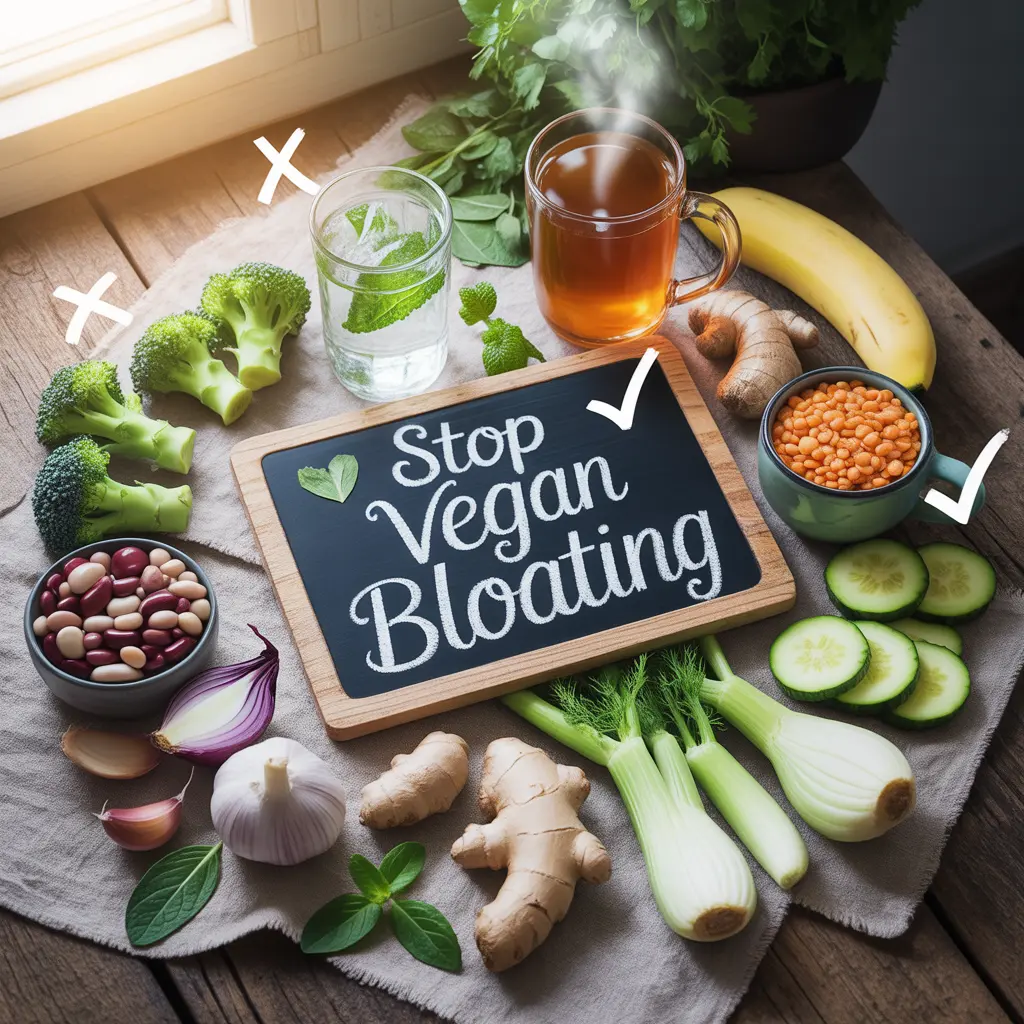
Frequently Asked Questions About Vegan Bloating Won’t Go Away
How long does vegan bloating normally last?
For most people, vegan bloating during the initial transition phase lasts four to eight weeks as the gut microbiome adapts to higher fibre intake. If vegan bloating won’t go away after eight to ten weeks of consistent plant-based eating, an underlying cause beyond normal adaptation is present and needs to be identified. The most common culprits are improperly prepared legumes, raw cruciferous vegetables, FODMAP sensitivity, or gut dysbiosis, all of which respond to specific targeted interventions rather than just time.
Which vegan foods cause the most bloating?
The highest-risk foods when vegan bloating won’t go away are: unsoaked black beans and chickpeas, raw broccoli, cauliflower and cabbage, raw onion and garlic, large amounts of wheat products (particularly for gluten-sensitive individuals), and carbonated drinks including sparkling water. The lowest-risk high-protein options are firm tofu, properly prepared tempeh, and red lentils. Building meals around these during the resolution phase while reintroducing higher-risk foods one at a time is the most effective approach. See our beginner vegan diet guide for the full food introduction sequence.
Does vegan bloating won’t go away mean I should stop being vegan?
No. Persistent vegan bloating that won’t go away is a sign that specific preparation, combination, or gut health issues need to be addressed, not that a plant-based diet is wrong for your body. Every cause covered in this guide has a specific, evidence-based fix. The vast majority of people who resolve their vegan bloating do so without abandoning plant-based eating. They resolve it by cooking legumes correctly, managing fibre increase speed, addressing gut microbiome imbalances, and in some cases investigating underlying conditions that would cause bloating on any diet.
Can digestive enzymes really help when vegan bloating won’t go away?
Yes, for a specific subset of people. If low digestive enzyme production is contributing to your vegan bloating that won’t go away, a broad-spectrum digestive enzyme supplement with alpha-galactosidase taken with each main meal produces immediate and noticeable improvement. Alpha-galactosidase specifically breaks down legume oligosaccharides that human enzymes cannot process. The improvement typically appears from the very first dose if enzyme insufficiency is the cause. If there is no improvement within two weeks of consistent use, enzyme insufficiency is probably not your primary cause.
What is the fastest fix when vegan bloating won’t go away?
The fastest single intervention when vegan bloating won’t go away is to switch all cruciferous vegetables from raw to cooked and rinse all canned legumes thoroughly for 60 seconds before eating. These two changes alone resolve bloating completely for a large proportion of people within 48 to 72 hours. If vegan bloating does not improve within one week of these changes, move to the next most likely cause based on your specific symptom pattern using the complete reference table in this guide. See also our vegan supplement guide for digestive enzyme and probiotic recommendations.
Your Action Plan: Resolve Vegan Bloating Step by Step
Vegan bloating won’t go away when you treat it as a single problem rather than one of nine distinct causes that each require a different solution. Here is your clear, sequenced action plan:
Step 1: This week. Switch all cruciferous vegetables to cooked only. Rinse all canned legumes for 60 seconds before using. Stop all carbonated drinks. Eat sitting down with no screens, chew slowly, and put utensils down between bites. These changes alone resolve vegan bloating for a significant proportion of people within days.
Step 2: If no improvement within one week. Reduce fibre to your previous intake level and rebuild at 5g per week maximum. Increase water by 500ml per day. Introduce cumin, ginger, and fennel into all legume cooking. Add a digestive enzyme supplement with alpha-galactosidase to every main meal.
Step 3: If vegan bloating won’t go away after two to three weeks. Begin adding fermented foods daily: tempeh, kimchi, sauerkraut, or miso at a minimum one serving per day. Start a multi-strain probiotic for eight weeks. If garlic and onion are dietary staples, switch to garlic-infused oil and cook all onion thoroughly before eating.
Step 4: If vegan bloating still won’t go away after six to eight weeks. Request a coeliac blood panel from your doctor before eliminating gluten. Discuss a low-FODMAP elimination protocol with a dietitian. Ask your doctor to consider a SIBO breath test if bloating is severe, rapid in onset, and unresponsive to all dietary interventions.
Vegan bloating that won’t go away has a cause. Every cause has a fix. Work through them systematically with the reference tables in this guide and you will find your answer.