
Table of Contents
- Introduction — Why Hidden Animal Ingredients Food Labels Trick Even Experienced Vegans
- The 12 Obvious Animal Ingredients Every Vegan Knows
- The Sneaky 30+ Hidden Animal Ingredients Food Labels Bury in the Fine Print
- The Gray Zone — Controversial Ingredients That Divide the Vegan Community
- E-Numbers: The Hidden Animal Ingredients Food Labels Hide Behind Codes
- How to Read Food Labels Fast — The 3-Step Vegan System
- The Best Apps for Checking Hidden Animal Ingredients Food Labels
- Free Download — The Vegan Hidden Ingredients Pocket Cheat Sheet
- Conclusion — Never Be Fooled by Hidden Animal Ingredients Food Labels Again
1. Introduction — Why Hidden Animal Ingredients Food Labels Trick Even Experienced Vegans
You check the label. No meat. No dairy. No eggs listed anywhere. You drop it in your cart feeling confident — and later discover you just ate something made with crushed beetles, fish bladder, or sheep secretions.
Hidden animal ingredients food labels contain are one of the most frustrating parts of being vegan. It is not enough to avoid the obvious. Food manufacturers use hundreds of animal-derived compounds in processed foods, and almost none of them are labeled clearly as animal products. (1)
Understanding hidden animal ingredients food labels carry is not about being paranoid. It is about being informed. Once you know what to look for, scanning a label takes less than 30 seconds and you will never be caught out again.
💡 Quick Fact: There are over 50 commonly used animal-derived ingredients that regularly appear on food labels without any obvious indication they come from animals. Most new vegans are aware of fewer than 10 of them.
This guide covers every single one. By the end, you will have a complete master list of hidden animal ingredients food labels use, a fast 3-step system for reading any label in seconds, and a free printable cheat sheet to keep in your wallet or phone.
Hidden animal ingredients food labels hide are responsible for more accidental non-vegan consumption than any other single factor — more than restaurant mistakes, more than social pressure, more than cravings. This is the guide that fixes that permanently. (2)
2. The 12 Obvious Animal Ingredients Every Vegan Knows
Before diving into the sneaky ones, let’s quickly confirm the obvious animal ingredients you are already avoiding. These are the 12 that appear on hidden animal ingredients food labels lists for beginners — and the ones most clearly recognizable.
The Obvious 12
- Milk / Dairy — appears as milk, cream, butter, cheese, lactose, whey, casein
- Eggs — appears as egg, egg white, egg yolk, albumin, globulin
- Meat — beef, pork, chicken, lamb, turkey, bacon, lard, gelatin from bones
- Fish — appears as fish, anchovies, sardines, fish sauce, fish extract
- Shellfish — shrimp, crab, lobster, oyster
- Honey — appears as honey, honeycomb, honey powder
- Gelatin — derived from animal bones and skin, appears in gummies, marshmallows, jello
- Lard — rendered pig fat, appears in baked goods and refried beans
- Tallow — rendered beef or mutton fat, appears in pastries and shortenings
- Rennet — enzyme from calf stomach lining, used in most traditional cheeses
- Bone Char — used to whiten refined sugar (not listed on labels — a gray area)
- Carmine / Cochineal — red dye from crushed beetles (covered in detail below)
These 12 are the foundation. If you are only checking for these on hidden animal ingredients food labels, however, you are missing at least 40 more that manufacturers use regularly. (3)
3. The Sneaky 30+ Hidden Animal Ingredients Food Labels Bury in the Fine Print
This is the section most people have never seen before. These are the hidden animal ingredients food labels in the fine print that trip up even long-term vegans. (4)
Dairy-Derived Hidden Ingredients
Casein and Caseinate Casein is a milk protein used as a binder and emulsifier in products ranging from bread to non-dairy cheese (yes, some “vegan” cheeses contain casein — always check). Appears as: sodium caseinate, calcium caseinate, milk protein.
Whey A byproduct of cheese production, whey appears in protein bars, bread, crackers, and cereals. Appears as: whey powder, whey protein, whey solids.
Lactose Milk sugar used as a filler in medications, supplements, and processed foods. Many people do not realise that hidden animal ingredients food labels on supplements and pills include lactose as a binding agent. (5)
Lactalbumin and Lactoglobulin Milk proteins that appear in processed meats, protein powders, and baked goods.
Animal-Derived Emulsifiers and Stabilizers
Lecithin (when not specified as soy or sunflower) Lecithin is commonly derived from egg yolk. When labels simply say “lecithin” without specifying the source, it is frequently animal-derived. Always look for “soy lecithin” or “sunflower lecithin” to confirm it is plant-based.
Stearic Acid A fatty acid derived from animal fat, used in chocolate, baked goods, and supplements. Plant-derived versions exist but are less common in processed foods. This is one of the most frequently encountered hidden animal ingredients food labels list in cheaper chocolate products. (6)
Glycerin / Glycerol Can be derived from animal fat or plant sources. When labels simply say “glycerin” without specifying “vegetable glycerin,” it is often animal-derived. Appears in baked goods, candy, and personal care products.
Mono and Diglycerides Used as emulsifiers in bread, margarine, and peanut butter. Frequently derived from animal fat. One of the most overlooked hidden animal ingredients food labels contain, because they sound chemical rather than animal-derived. (7)
Fish and Seafood-Derived Ingredients
Isinglass A fining agent derived from dried fish bladder, used to clarify beer and wine. Most conventional beers and wines use isinglass, which is why many vegans only drink products certified as vegan. Isinglass never appears on beer or wine labels — it is used in production and not required to be declared.
Omega-3 (when not specified as algae-derived) Many foods fortified with omega-3 use fish oil rather than algae oil. Look for “algae-derived DHA” or “algae oil” on labels — if it just says “omega-3 enriched” or “DHA,” it is almost certainly from fish. This is one of the most common hidden animal ingredients food labels on fortified plant milks and cereals carry. (8)
Anchovies Appear in Worcestershire sauce, Caesar dressing, some pasta sauces, and many Asian condiments. Often listed as “fish extract” or buried at the end of a long ingredient list.
Insect-Derived Ingredients
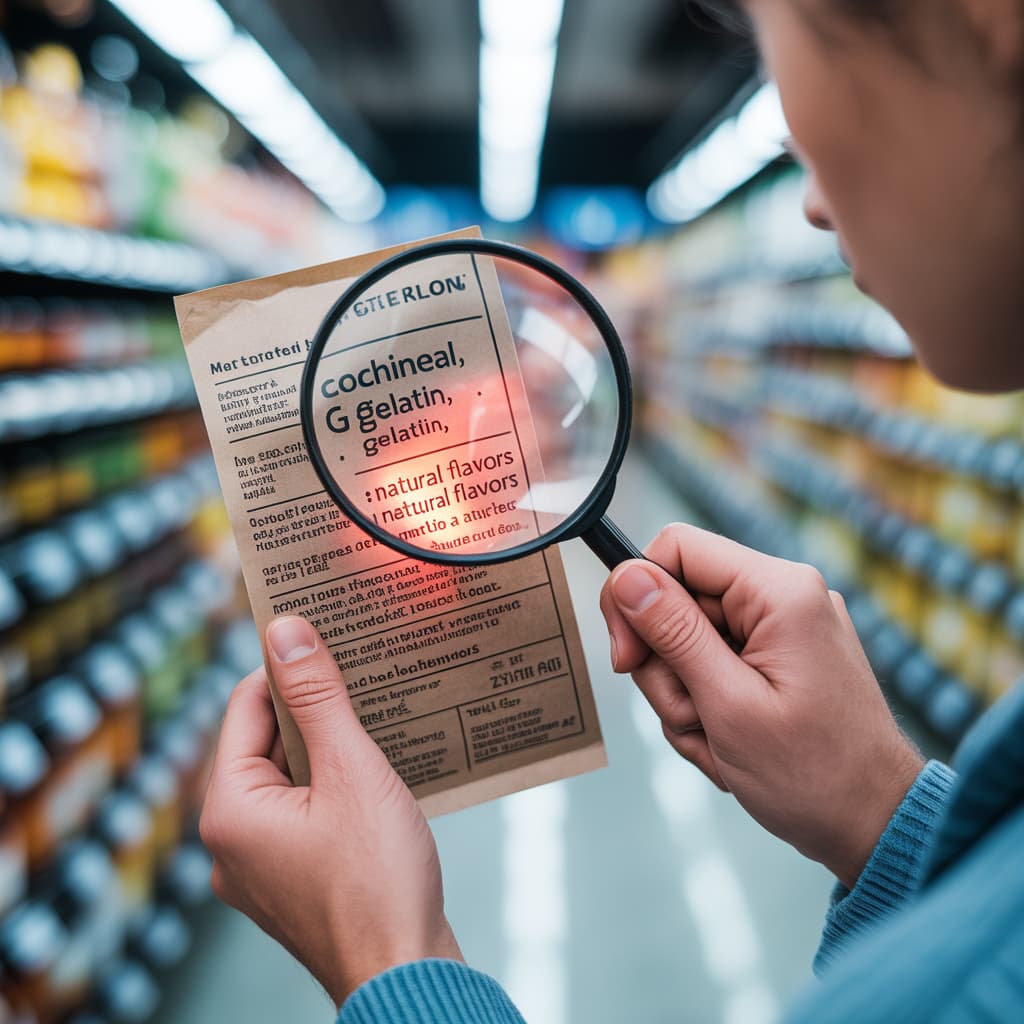
Carmine / Cochineal / Natural Red 4 / E120 This is the most well-known of the insect-derived hidden animal ingredients food labels use. Carmine is a red dye made from crushing female cochineal beetles. It takes approximately 70,000 beetles to produce 1 pound of dye. Appears in: red and pink yogurts, juices, candy, maraschino cherries, some cosmetics. Always listed as carmine, cochineal extract, natural red 4, or E120.
Shellac / E904 A resin secreted by the lac bug, used as a glaze on candy, pills, and some fruits in supermarkets. Appears as shellac, confectioner’s glaze, or E904. This is among the most surprising hidden animal ingredients food labels on candy and pharmaceutical products carry. (9)
Other Sneaky Animal-Derived Ingredients
Lanolin / Vitamin D3 (when not specified as lichen-derived) Lanolin is a waxy substance secreted by sheep skin. It is the source of most vitamin D3 supplements and is used in many fortified foods. Vegan D3 comes from lichen. If a food label says “fortified with vitamin D3” without specifying lichen, it is almost certainly lanolin-derived.
L-Cysteine / E920 An amino acid used as a dough conditioner in commercial bread and pastries. It is most commonly derived from duck or chicken feathers, though synthetic and plant versions exist. One of the most frequently missed hidden animal ingredients food labels on commercial bread carry. (10)
Collagen Protein derived from animal connective tissue, increasingly added to drinks, supplements, and snacks marketed as beauty or anti-aging products. Always animal-derived unless specifically labeled as “vegan collagen” (which uses plant-based boosters rather than actual collagen).
Albumin Protein found in egg white and blood serum. Used in wine fining and some baked goods. Appears as egg albumin, blood albumin, or serum albumin.
Pepsin A digestive enzyme derived from pig stomach lining. Used in some cheeses and supplements.
Trypsin and Pancreatin Enzymes derived from animal pancreas. Found in some digestive enzyme supplements — always check supplement labels for hidden animal ingredients food labels in the inactive ingredients section. (11)
Castoreum A secretion from beaver scent glands, occasionally used as a “natural flavor” in vanilla and raspberry flavored products. Rarely labeled as castoreum — appears under “natural flavors” on ingredient lists.
Keratin Protein derived from animal hair, hooves, and horns. Appears in hair and beauty products but also in some food supplements.
4. The Gray Zone — Controversial Ingredients That Divide the Vegan Community
Not every ingredient has a clear answer. These are the hidden animal ingredients food labels gray-zone items — the ones where vegans disagree and where you need to make your own informed decision. (12)
Natural Flavors
“Natural flavors” is one of the most legally vague terms in food labeling. By FDA definition, natural flavors can be derived from meat, fish, poultry, eggs, dairy, or plants — and manufacturers are not required to specify the source. When you see “natural flavors” on a label, there is no way to know without contacting the manufacturer directly.
This is one of the most frustrating hidden animal ingredients food labels issues for conscientious vegans. (13) The safest approach: if a product is certified vegan, natural flavors have been verified as plant-derived.
Refined Sugar
In the United States, refined white sugar is frequently processed through bone char — charred animal bones used as a decolorizing filter. The bone char does not end up in the final product, but it is used in processing. Organic sugar, raw sugar, and beet sugar do not use bone char.
Honey
Whether honey is vegan is one of the most debated topics in the community. Technically it is an animal product — produced by bees. Most strict vegans avoid it. Whether to include it in your personal definition of hidden animal ingredients food labels to avoid is a personal choice. (14)
Vitamin D2 vs D3
Vitamin D2 is always plant-derived (from yeast). Vitamin D3 is almost always lanolin-derived unless specifically labeled as lichen-sourced. Both are listed simply as “vitamin D” or “vitamin D3” on most labels.
Some Margarines and Spreads
Some margarines labeled as “dairy-free” contain fish-derived omega-3 or vitamin D3 from lanolin. Always read the full ingredient list even on products that appear obviously vegan.

5. E-Numbers: The Hidden Animal Ingredients Food Labels Hide Behind Codes
The E-number system is the European food additive coding system — and it is where some of the most disguised hidden animal ingredients food labels use appear. (15) Many shoppers see E-numbers as chemical additives without realizing some are animal-derived.
Animal-Derived E-Numbers to Know
| E-Number | Name | Animal Source | Found In |
|---|---|---|---|
| E120 | Carmine / Cochineal | Crushed beetles | Red/pink foods, juice, candy |
| E441 | Gelatin | Animal bones and skin | Gummies, marshmallows, capsules |
| E542 | Edible Bone Phosphate | Animal bones | Some baked goods |
| E901 | Beeswax | Bees | Candy glazes, some fruits |
| E904 | Shellac | Lac bug secretion | Candy, pill coatings |
| E920 | L-Cysteine | Duck/chicken feathers | Commercial bread |
| E966 | Lactitol | Milk-derived | Sugar-free products |
Memorizing these 7 E-numbers alone will help you spot hidden animal ingredients food labels contain far faster than reading every full ingredient name. (16)
🔗 External Resource: The full European Food Safety Authority database at efsa.europa.eu lists every approved E-number with its source — bookmark it for detailed research on any additive.
6. How to Read Food Labels Fast — The 3-Step Vegan System
Now that you know every hidden animal ingredients food labels carry, here is the fastest system for checking any product in under 30 seconds. (17)
Step 1 — Check for the Vegan Certification Logo First (5 seconds)
Look for the Vegan Society sunflower logo, Certified Vegan logo, or BeVeg certification. If any of these appear, the product has been independently verified and every ingredient — including hidden animal ingredients food labels might otherwise contain — has been confirmed as plant-derived. (18) You are done. Put it in the cart.
Step 2 — Scan the Allergen Box (10 seconds)
EU and UK regulations require manufacturers to bold the 14 major allergens in the ingredient list. Milk and eggs will always appear in bold if present. In the United States, the same applies under FALCPA. This catches the most common hidden animal ingredients food labels quickly. (19)
If the allergen box shows no milk, no eggs, and no fish — move to step 3.
Step 3 — Scan for the 10 Most Common Hidden Ingredients (15 seconds)
Run your eyes quickly down the ingredient list looking specifically for:
- Casein / caseinate / whey (dairy)
- Gelatin / collagen (animal bones)
- Carmine / E120 (beetles)
- L-cysteine / E920 (feathers)
- Isinglass (fish bladder — on alcohol labels)
- Stearic acid / glycerin (animal fat — if source unspecified)
- Natural flavors (flag for follow-up on uncertain products)
- Vitamin D3 (animal unless specified lichen)
- Omega-3 / DHA (fish unless specified algae)
- Shellac / E904 (lac bug)
This 3-step process covers the vast majority of hidden animal ingredients food labels carry and can be completed in under 30 seconds once you have practiced it a few times. (20)
7. The Best Apps for Checking Hidden Animal Ingredients Food Labels
Technology has made scanning for hidden animal ingredients food labels dramatically faster. (21) These apps do the work for you.
Is It Vegan? App
Scan any barcode and get an instant vegan verdict. The database covers hundreds of thousands of products and flags every hidden animal ingredients food labels issue automatically. (22) Free to use. Available on iOS and Android.
Vegan Scanner
Specifically designed to detect hidden animal ingredients food labels carry by scanning barcodes and cross-referencing against a database of animal-derived ingredients. (23) Particularly strong on European products.
Open Food Facts
A community-built open database of food products worldwide. Includes full ingredient lists, allergen data, and vegan/vegetarian flags. Excellent for researching hidden animal ingredients food labels on less mainstream products. (24) Completely free and open source.
Barnivore
Specifically for alcohol — the only dedicated resource for checking whether beers, wines, and spirits are vegan. Since isinglass and other fining agents never appear on alcohol labels, Barnivore is the only reliable way to check for hidden animal ingredients food labels in your drinks. (25)
🔗 External Resource: Barnivore.com has verified vegan status for over 60,000 alcoholic beverages worldwide — bookmark it before your next drinks purchase.

8. Free Download — The Vegan Hidden Ingredients Pocket Cheat Sheet
(📷 Image here — Alt text: “hidden animal ingredients food labels — vegan pocket cheat sheet printable guide”)
The fastest way to master hidden animal ingredients food labels is to have the complete reference in your pocket every time you shop. (26)
The free Vegan Hidden Ingredients Pocket Cheat Sheet includes:
- All 50+ hidden animal ingredients food labels commonly contain, organized by category
- The 7 animal-derived E-numbers to memorize
- The 3-step label reading system on a single card
- QR codes linking to the 4 best vegan scanning apps
- A “when in doubt” decision flowchart for gray-zone ingredients
- The complete list of hidden animal ingredients food labels on alcohol carry
📥 Download the free cheat sheet here → [LINK TO LEAD MAGNET]. Print it, laminate it, and keep it in your wallet. The full expanded version with 100+ ingredients, brand-specific guides, and restaurant scripts is included in [Your Ebook Name].
9. Conclusion — Never Be Fooled by Hidden Animal Ingredients Food Labels Again
Let’s bring together everything you now know about hidden animal ingredients food labels. (27)
The food industry is not trying to make vegan living easy. Manufacturers use animal-derived compounds as binders, emulsifiers, colorings, glazes, fining agents, and flavor enhancers — and the labeling laws do not require them to make it obvious. Hidden animal ingredients food labels carry are a systemic challenge, not a personal failing. (28)
But you now have the tools to beat the system completely:
- You know the obvious 12 animal ingredients and never miss them
- You know the sneaky 30+ that most vegans have never heard of
- You know the gray-zone ingredients and how to approach them
- You know the 7 animal-derived E-numbers to scan for instantly
- You have the 3-step system to check any label in 30 seconds
- You have the 4 best apps to scan any barcode in 2 seconds
Hidden animal ingredients food labels will never catch you off guard again. (29)
| Category | Key Ingredients to Watch |
|---|---|
| Dairy-derived | Casein, caseinate, whey, lactose, lactalbumin |
| Animal fat-derived | Stearic acid, glycerin, mono and diglycerides, tallow |
| Fish-derived | Isinglass, omega-3 (unspecified), anchovies, fish extract |
| Insect-derived | Carmine (E120), shellac (E904) |
| Other animal sources | L-cysteine (E920), lanolin (D3), gelatin, collagen, albumin |
| Gray zone | Natural flavors, bone char sugar, honey, unspecified vitamin D |
Every time you check a label using this system, you are making the conscious, informed choice that defines hidden animal ingredients food labels awareness at its best. (30) It gets faster every single time.
The first week you use this system, scanning a new product takes 30 seconds. By week four, you will recognize your regular products instantly and only need to scan new ones. By month three, reading hidden animal ingredients food labels will be completely automatic — as natural as reading the price tag. (31)
Hidden animal ingredients food labels awareness is one of the most empowering skills a new vegan can build. (34) Share this guide with every new vegan you know — it is the resource nobody gave them when they started.
And remember: every single time you successfully identify hidden animal ingredients food labels contain and choose differently, you are making a real, tangible difference. (35) That is worth every second spent reading labels.
🌱 Stop Accidentally Eating Animal Products
Get the complete system — including our hidden ingredients database, brand-specific guides, restaurant scripts, and the 30-day beginner meal plan — all in one place.
Join thousands of others starting their plant-based journey the right way.
Want to try before you buy?
Enter your email below to get 2 free recipes instantly: