
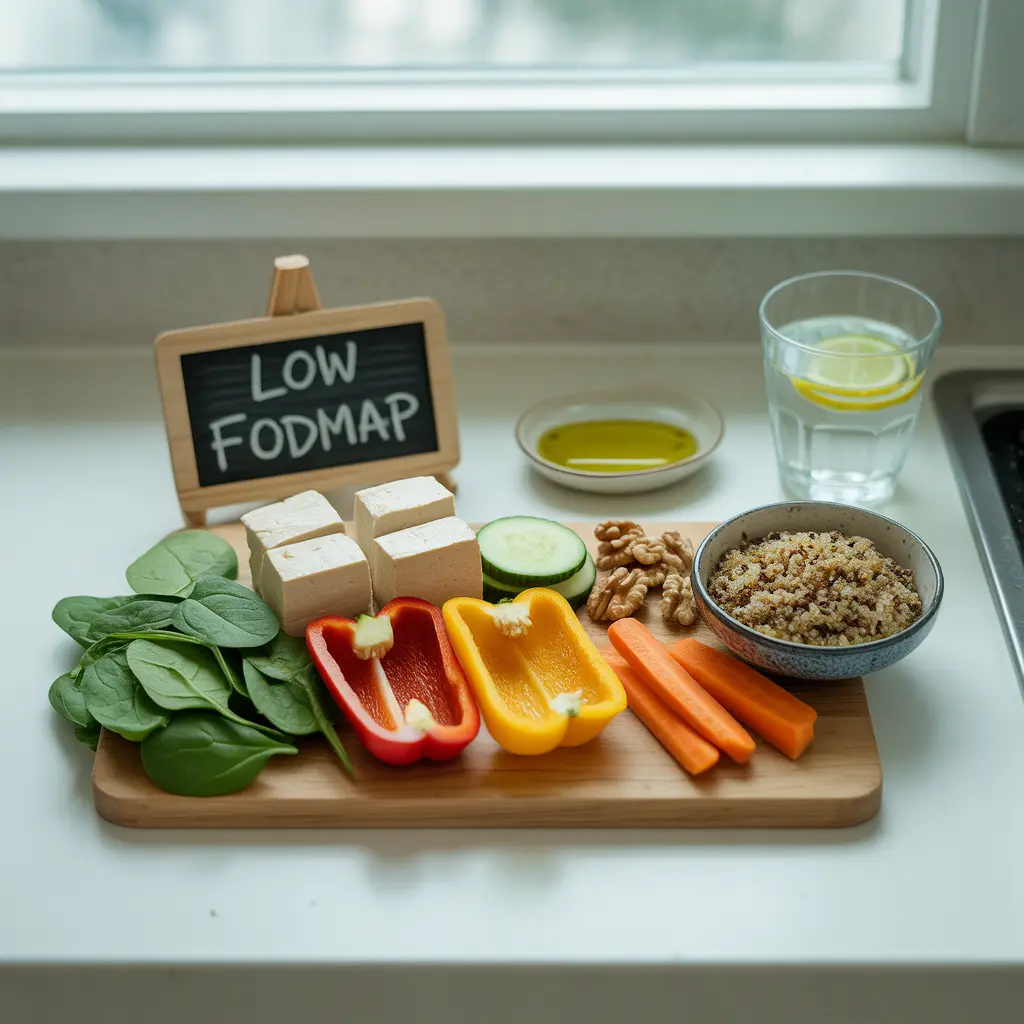
📌 TL;DR — The low FODMAP vegan diet bridges plant-based eating with IBS relief. FODMAPs are fermentable carbohydrates that trigger bloating, pain, and irregularity in sensitive individuals. Many vegan staples (beans, wheat, onion, garlic) are high FODMAP, but with strategic swaps and proper reintroduction, you can enjoy a thriving vegan diet without digestive distress. This guide covers the science, food lists, a 7-day meal plan, and chef techniques for flavorful gut-friendly cooking.
Low FODMAP Vegan Diet: The Complete IBS and Digestive Health Guide
Living with irritable bowel syndrome while following a plant-based lifestyle can feel impossible. Many core vegan foods trigger painful symptoms.
But a properly structured low FODMAP vegan diet offers a scientifically proven path to relief without abandoning your values. This guide combines gastroenterology research with practical plant-based eating.
You will get the tools to identify your triggers and enjoy abundant, gut-friendly meals. As a pro chef with 20 years of experience in MENA and Mediterranean cuisine, I have adapted traditional flavor-building techniques to work within low FODMAP constraints. Restriction does not mean bland food.
affected by IBS
symptom relief on low FODMAP
to understand
elimination-reintroduction
Research from Monash University, the pioneers of the low FODMAP protocol, shows that approximately 75% of IBS sufferers experience significant symptom reduction when following this approach.
The low FODMAP vegan diet applies these same principles to plant-based eating. It requires careful attention to legumes, grains, and alliums.
The good news is that with modern substitutes and traditional culinary wisdom, you can maintain a varied, satisfying vegan diet while supporting your digestive health.
What Is FODMAP? The Science Behind IBS Triggers
FODMAP stands for Fermentable Oligosaccharides, Disaccharides, Monosaccharides, and Polyols. These are short-chain carbohydrates that resist digestion in the small intestine.
When they reach the large intestine, gut bacteria ferment them rapidly, producing gas. For individuals with visceral hypersensitivity, this normal fermentation causes pain, bloating, distension, and altered motility.
The low FODMAP vegan diet reduces the intake of these fermentable substrates. This gives the gut a chance to reset and allows you to identify which specific categories trigger your symptoms.
The six FODMAP categories to know are:
- Fructans — found in wheat, onion, garlic
- Galacto-oligosaccharides (GOS) — found in legumes
- Lactose — milk sugar
- Excess fructose — found in some fruits
- Mannitol — a polyol found in mushrooms, cauliflower
- Sorbitol — a polyol found in stone fruits and artificial sweeteners
For vegans, fructans and GOS are the primary challenges. Understanding these categories is essential for successfully implementing a low FODMAP vegan diet.
Why Vegan Diets Can Trigger IBS Symptoms
Many vegans experience digestive distress not because plant-based eating is inherently problematic. The issue is that common vegan staples are high in fermentable carbohydrates.
Common triggers include:
- Legumes — chickpeas, kidney beans, lentils are rich in GOS
- Wheat-based products — seitan, pasta, bread contain fructans
- Alliums — onion and garlic are concentrated sources of fructans
- Certain nuts and fruits — cashews, pistachios, apples, pears contain polyols
This does not mean vegans with IBS must abandon their diet. A properly executed low FODMAP vegan diet identifies safe portions and substitutes.
Smart substitutions include:
- Canned legumes rinsed thoroughly become lower in FODMAPs
- Sourdough bread replaces wheat bread
- Garlic-infused oils replace garlic and onion
- Tofu and tempeh become primary protein sources
The key is precision and individualization. Working with a dietitian familiar with both plant-based nutrition and the low FODMAP protocol is ideal for long-term success.
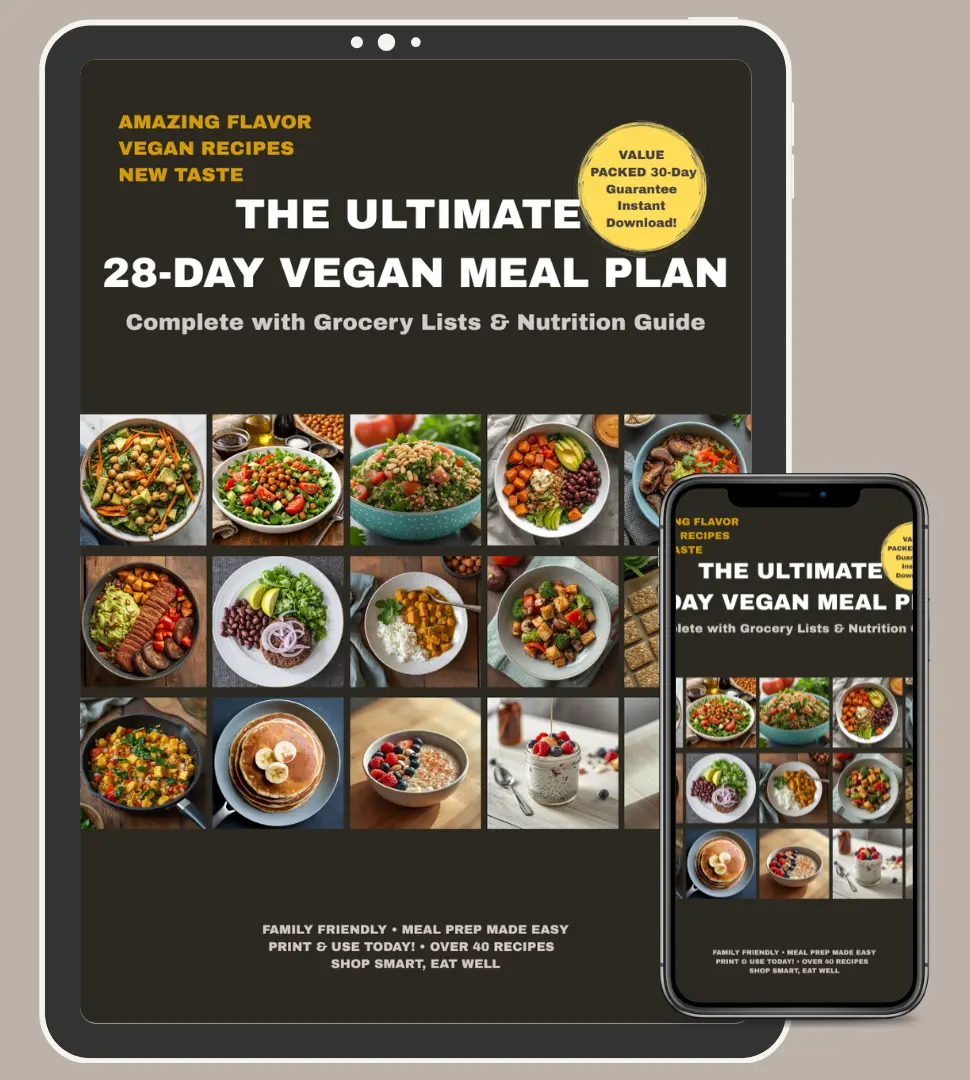
💡 Need a structured approach to gut-friendly plant-based eating? The Ultimate 28-Day Vegan Meal Plan + Grocery List, (Complete Solution) includes nutritionist-approved recipes. Every meal meets protein, iron, and B12 requirements, giving you a reliable foundation to build upon.
FODMAP Traffic Light System for Vegan Foods
Understanding which foods are safe, which require portion control, and which are best avoided during elimination is critical for a successful low FODMAP vegan diet.
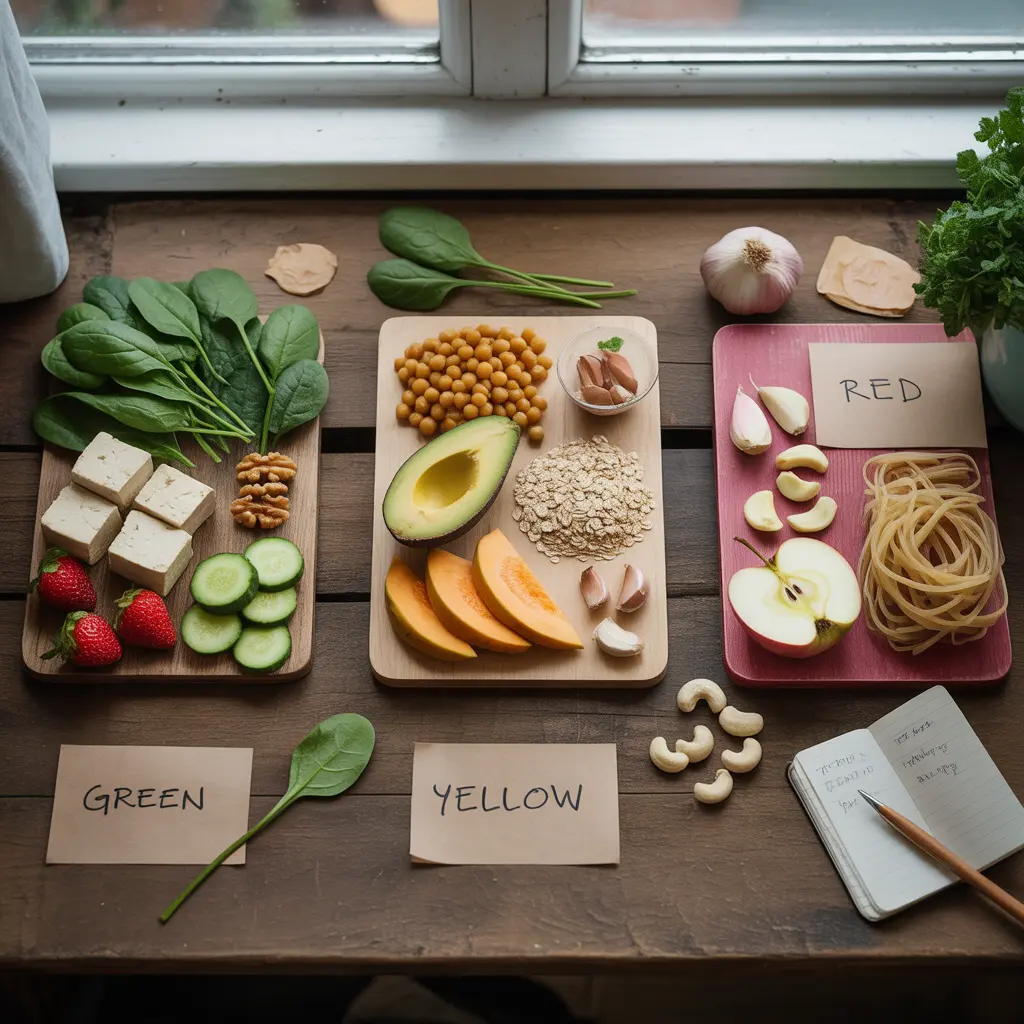
The traffic light system simplifies this complexity:
- 🟢 GREEN — low FODMAP, safe to eat freely
- 🟡 YELLOW — moderate FODMAP, safe in limited portions
- 🔴 RED — high FODMAP, avoid during elimination
🚦 Vegan FODMAP Traffic Light System
This traffic light system forms the backbone of the low FODMAP vegan diet.
Elimination phase (2-6 weeks): Strictly avoid red foods while eating freely from green foods. The goal is symptom resolution.
Reintroduction phase: Once symptoms stabilize, test one FODMAP category at a time to identify your personal triggers.
This process reveals which foods you can enjoy without restriction and which require moderation.
High vs. Low FODMAP Vegan Protein Sources Ranked
Protein adequacy is a common concern on any vegan diet, especially during elimination. This ranking helps you prioritize protein sources that align with the low FODMAP vegan diet while meeting nutritional needs.
Tofu and tempeh are exceptional protein sources for the low FODMAP vegan diet. Fermentation reduces FODMAP content, making them well-tolerated.
Canned legumes, when thoroughly rinsed and consumed in appropriate portions, provide valuable protein and fiber without triggering symptoms.
Additional protein options include:
- Hemp seeds — 10g protein per 3 tablespoons
- Pumpkin seeds — 7g protein per 1/4 cup
- Peanuts — limited to 32 nuts per serving
- Brown rice protein powder — 20g per serving
With these staples, meeting protein requirements on a low FODMAP vegan diet is entirely achievable.
🗓️ 7-Day Low FODMAP Vegan Meal Plan
This sample meal plan demonstrates how a low FODMAP vegan diet looks in practice. All meals use green-light ingredients with careful portion control.
Adjust based on your tolerance and the reintroduction phase. The plan prioritizes protein adequacy, fiber moderation, and flavor variety.
Breakfast: Oats with strawberries, maple syrup, and hemp seeds
Lunch: Firm tofu stir-fry with bell peppers, zucchini, carrot, tamari, served with brown rice
Dinner: Baked tempeh with roasted potatoes, spinach, and garlic-infused oil dressing
Breakfast: Smoothie with firm tofu, spinach, strawberries, and brown rice protein
Lunch: Quinoa bowl with canned lentils (rinsed, 1/2 cup), roasted eggplant, and tahini-lemon dressing
Dinner: Rice noodles with peanut sauce (peanut butter, tamari, lime), topped with shredded carrots and cucumber
Breakfast: Buckwheat porridge with blueberries and pumpkin seeds
Lunch: Tofu and vegetable soup with carrots, zucchini, and kale in low-FODMAP vegetable broth
Dinner: Stuffed bell peppers with brown rice, firm tofu, and spinach, baked with tomato sauce
Breakfast: Two-egg equivalent of Just Egg or scrambled tofu with spinach and nutritional yeast
Lunch: Sourdough toast with firm tofu “ricotta” (blended with lemon, nutritional yeast), roasted red peppers
Dinner: Tempeh tacos on corn tortillas with shredded cabbage, lime, and salsa (check for no onion/garlic)
Breakfast: Chia seed pudding made with almond milk, topped with sliced kiwi and walnuts
Lunch: Leftover tempeh tacos or tofu scramble wrap with spinach in a corn tortilla
Dinner: Baked salmon-style tofu (marinated with tamari, maple, ginger) with roasted carrots and brown rice
Breakfast: Gluten-free oats with peanut butter and banana (small, ripe)
Lunch: Quinoa salad with canned chickpeas (rinsed, 1/4 cup), cucumber, tomato, and lemon-herb dressing
Dinner: Stir-fried tempeh with bok choy, bell peppers, and tamari served over rice noodles
Breakfast: Smoothie bowl with frozen strawberries, firm tofu, spinach, topped with hemp seeds
Lunch: Sourdough sandwich with grilled tempeh, lettuce, tomato, and mustard
Dinner: Roasted vegetable and tofu sheet pan meal with potatoes, zucchini, and garlic-infused oil
This 7-day plan provides approximately 70-85 grams of protein daily. This meets requirements for most adults.
The low FODMAP vegan diet does not mean low nutrition. With strategic food selection, you can meet all micronutrient needs while managing digestive symptoms.
Key substitutions in this plan:
- Alliums replaced with garlic-infused oil and scallion greens
- Legumes portion-controlled and thoroughly rinsed
- Wheat replaced with sourdough or gluten-free alternatives
28-Day Vegan Meal Plan +
Grocery list.
🔄 Reintroduction Protocol: How to Identify Your Triggers
The elimination phase of a low FODMAP vegan diet is temporary. The true value comes from the structured reintroduction phase.
This process reveals which FODMAP categories you tolerate and in what quantities. This personalized knowledge allows you to expand your diet safely.
Step-by-Step Reintroduction Protocol
Step 1: After 2-6 weeks of elimination and symptom stability, choose one FODMAP category to test.
Categories: fructans, GOS, lactose, excess fructose, mannitol, sorbitol.
Step 2: Day 1: Eat a small test portion of a high-FODMAP food from that category.
Example: for fructans, eat 1 tablespoon of cooked onion or 1 slice of wheat bread.
Step 3: Days 2-3: Return to strict elimination. Monitor symptoms. No new test foods during this washout period.
Step 4: If no symptoms, repeat with a larger portion. If symptoms appear, that category is a trigger. Avoid it or find your tolerance threshold.
Step 5: Wait 3 days, then test the next category. Continue until all six categories are assessed.
Step 6: Build your personalized diet: unlimited green foods, tolerated foods in safe portions, and avoided triggers.
For vegans, fructans and GOS are the most common triggers:
- Fructans — onion, garlic, wheat
- GOS — legumes
Many people following a low FODMAP vegan diet find they tolerate small portions of canned lentils or chickpeas. Larger servings may trigger symptoms.
Others manage fructans well but react to polyols. The reintroduction phase gives you this clarity.
Important: Working with a registered dietitian experienced in both plant-based nutrition and the low FODMAP protocol is strongly recommended during this phase.
👨🍳 Chef Section: MENA and Mediterranean Low-FODMAP Flavour Techniques
As a pro chef with 20 years of experience in MENA and Mediterranean cuisine, I have spent years developing flavour without relying on high-FODMAP staples.
The low FODMAP vegan diet does not mean bland food. Mediterranean and Middle Eastern culinary traditions offer rich flavour-building techniques that work beautifully within low FODMAP constraints.
Garlic and Onion Alternatives:
- Garlic-infused olive oil is the single most valuable tool. Heat olive oil with crushed garlic cloves, then remove the garlic before cooking. You capture the aromatic compounds without the fructans.
- For onion flavour, use scallion greens or leek greens exclusively. Never use the white bulb.
- Asafoetida powder (hing) provides a garlic-onion-like depth when bloomed in oil. This classic Indian technique translates beautifully to Mediterranean cooking.
Herb Layering:
- Fresh herbs are naturally low FODMAP. Build layers: start with dried oregano and thyme during cooking, finish with fresh parsley, cilantro, or dill.
- Za’atar, a blend of thyme, sumac, and sesame seeds, adds complexity to roasted vegetables and tofu.
- Preserved lemons provide bright, salty depth to stews and grain bowls without triggering symptoms.
Umami Without Alliums:
- Nutritional yeast, tamari, and tomato paste form the umami foundation.
- Roasted red peppers (jarred, check no garlic added) add sweetness and depth.
- Sun-dried tomatoes, used in moderation, concentrate flavour.
- For a rich broth base, simmer kombu (seaweed) with vegetable scraps and spices, then strain. This technique yields depth that rivals long-simmered bone broths.
🥫 Ready to transform your gut health without sacrificing flavor? The Ultimate 28-Day Vegan Meal Plan + Grocery List, (Complete Solution) provides nutritionist-approved recipes you can adapt to low FODMAP needs. Every recipe includes complete nutritional information, making modifications easier. Save 7+ hours weekly on meal planning.
📚 Related Vegan Gut Health Resources (Internal Links):
🔗 The Complete Guide to Vegan Gut Health 🔗 Why Vegan Bloating Won’t Go Away and What to Do 🔗 The Brain-Gut Axis: Vegan Brain Health Diet 🔗 Top Vegan Protein Sources for Gut Health 🔗 Vegan Pantry Meals for Sensitive Digestion 🔗 Vegan Diet and Anxiety: The Gut Connection 🔗 Anti-Inflammatory Vegan Diet for Gut Healing🌐 Evidence-Based External Resources:
📗 Monash University FODMAP Research 📘 PubMed — Peer-Reviewed IBS Research 📙 VeganHealth.org — Plant-Based Nutrition Science❓ Frequently Asked Questions: Low FODMAP Vegan Diet
Navigating digestive health while maintaining a vegan lifestyle requires patience and precision, but it is absolutely possible. The low FODMAP vegan diet provides a science-backed framework for identifying your triggers while preserving the nutritional and ethical benefits of plant-based eating. With the right substitutes, cooking techniques, and personalized approach, you can enjoy abundant, flavorful meals without discomfort. Start with the elimination phase, work through reintroduction with professional guidance, and build your personalized gut-friendly vegan diet for long-term wellness.
Still spending hours figuring out what to eat?
What’s included in your download
- 40+ nutritionist-approved recipes
- Complete 28-day calendar
- Meets protein, iron & B12 needs
- Family & meal prep friendly
- Vibrant photo for every recipe
- Simple, common ingredients
Instant PDF download. No subscriptions. No waiting.