
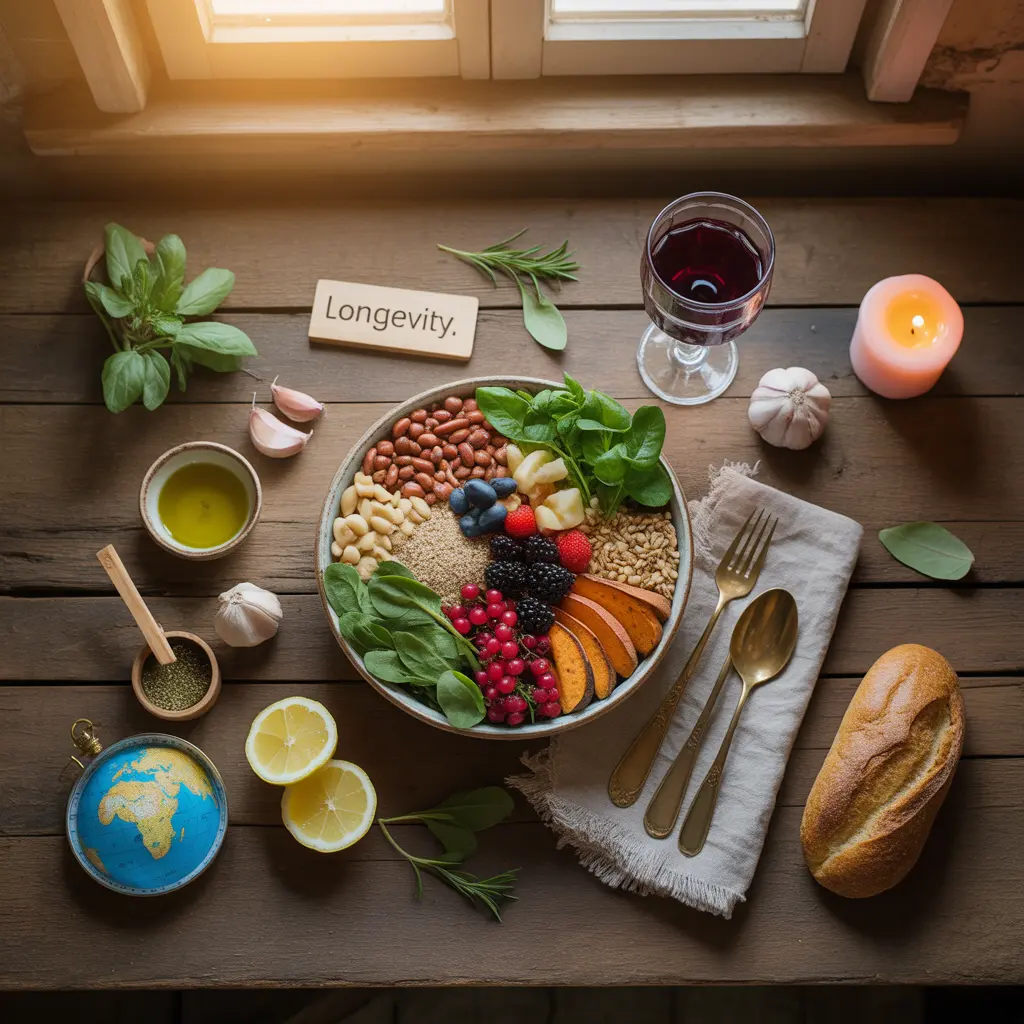
This guide summarises published research on Blue Zone dietary patterns and longevity. It is informational and does not constitute medical advice. Longevity is influenced by genetics, environment, social factors, and many elements beyond diet.
Blue Zones Diet: What the World’s Longest-Lived People Eat
You do not need to guess what diet produces the longest, healthiest lives on earth. Five populations have already answered the question with their lifespans. They eat 90 to 96% plant-based diets built around legumes, leafy greens, whole grains, nuts, and tubers. None of them are fully vegan. But the Seventh-day Adventist community in Loma Linda, California, the only Blue Zone studied as a vegan subgroup, shows that the vegan members outlive the vegetarian and meat-eating members of the same community. The Blue Zones diet vegan connection is not an ideological claim. It is what the data shows.
The Blue Zones concept, developed by Dan Buettner in collaboration with National Geographic and subsequently confirmed by demographic researchers, identifies five geographic regions where people consistently live to 100 at rates 10 times higher than the United States average. The question this raises is simple: what are these populations doing differently? The dietary pattern is the most consistent and most replicable answer. Understanding it in detail is the most evidence-grounded approach to longevity nutrition available.
The 5 Blue Zones: What They Actually Eat
The traditional Okinawan diet (pre-1950s, before Western dietary influence) was built almost entirely on purple sweet potato, which provided approximately 60% of daily calories. Tofu and other soy products contributed protein alongside small amounts of fish and extremely rare meat. Bitter melon (goya), seaweed, turmeric, and green tea provided the polyphenol and micronutrient density that supported the population’s famously low cancer mortality. The practice of hara hachi bu (eating until 80% full, a Confucian principle) produces a consistent mild caloric restriction that animal research links strongly to extended lifespan through mTOR pathway suppression and autophagy activation.
Sardinian centenarians in the mountainous Barbagia interior eat minestrone (legume and vegetable soup) almost daily, whole grain flatbread (carasau), pecorino cheese from grass-fed sheep in modest amounts, and Cannonau red wine, which has been found to contain 2 to 3 times the flavonoid content of other red wines. Meat appears mainly at Sunday and celebration meals. The lifestyle contribution is significant here: the steep mountain terrain requires daily vigorous walking that functions as continuous resistance exercise without deliberate gym attendance. Sardinia is notable for being the only Blue Zone with equivalent male and female longevity, suggesting the male social role (sustained purpose and community engagement into very old age) as a significant non-dietary factor.
The Loma Linda Blue Zone is unique because it has been studied scientifically through the Adventist Health Study 2 (AHS-2), a cohort of over 96,000 Seventh-day Adventists followed over decades. This study provides the most rigorous Blue Zone dietary data available. The key finding relevant to veganism: Orlich et al. (2013) confirmed in AHS-2 that vegan Adventists had the lowest all-cause mortality of all dietary subgroups studied, followed by lacto-ovo vegetarians, pescatarians, semi-vegetarians, and non-vegetarians in that order. The Seventh-day Adventist dietary guidelines, which many members follow, restrict meat and prohibit caffeine, creating a natural experiment in plant-based longevity within a genetically and culturally similar population. Daily nut consumption in Adventists is specifically linked to a 2 to 3 times reduction in fatal heart disease risk.
The Nicoya diet follows the traditional Mesoamerican dietary pattern: black beans and rice as the daily protein-carbohydrate foundation, supplemented by corn tortillas (which undergo nixtamalisation, increasing niacin and lysine bioavailability), tropical fruits, squash, and plantain. This simple combination provides complementary plant proteins from the bean-grain pairing, resistant starch from beans for gut microbiome health, and diverse polyphenols from tropical fruits. Nicoya has calcium-rich water that may contribute to bone health and cardiovascular outcomes. The population maintains exceptionally strong social ties and family structures into very old age, reflecting the general Blue Zone finding that social integration is a powerful independent longevity factor alongside diet.
Ikaria’s diet is a close variant of the traditional Mediterranean pattern: abundant wild greens foraged from the hillsides (providing nitrates, flavonoids, and micronutrients unavailable from cultivated greens), olive oil as the primary fat, legumes (lentils, chickpeas, black-eyed peas) at most meals, potatoes, and herbal teas made from locally foraged plants including rosemary, sage, and wild marjoram. These teas are mildly diuretic and may have blood pressure-lowering effects alongside their polyphenol content. Ikarians are noted for taking afternoon naps, reducing the physiological stress response that drives inflammatory cytokine production. The population’s remarkably low dementia rate despite longevity is one of the most intriguing findings in Blue Zone research, with the Mediterranean diet’s neuroprotective polyphenol and omega-3 content the proposed dietary mechanism.
The 5 Foods All Blue Zones Share
Across five populations on different continents with different culinary traditions, languages, and cultural practices, five specific food categories appear consistently. This overlap is the most important dietary finding of Blue Zone research because it identifies what is universal about longevity nutrition rather than what is culturally specific.

Psst.. Start your transformation now. Everything is done for you, 36 chef vegan recipes, 4 weekly grocery lists, and a full 28-day Meal Plan. Zero thinking, every meal decided. Balanced macros daily, one Sunday prep feeds your whole week. No subscription.
Get the Plan →The Honest Answer: Are Blue Zones Vegan?
No. None of the five Blue Zone populations are fully vegan. Every zone includes some animal product consumption: pork in Okinawa (though historically rare), pecorino and wine in Sardinia, some fish and occasional meat in Ikaria, small amounts of meat in Nicoya, and dairy and eggs in some Loma Linda Adventist households. This is the factual picture.
The practical implication is important. Blue Zone populations are not achieving longevity despite eating occasional meat. They are achieving longevity because 90 to 96% of their diet consists of the five food categories above. The small amounts of animal products in most zones do not meaningfully change the nutritional profile: the dietary pattern is plant-dominant by any measure. A vegan diet built on the same five food categories is aligned with or exceeds the Blue Zone pattern.
The Blue Zones Vegan Framework
- Legumes daily (lentils, chickpeas, black beans, tofu, tempeh)
- Leafy greens and diverse vegetables at every meal
- Whole grains as the primary grain base (not refined)
- Nuts and seeds daily (walnuts, almonds, pumpkin seeds)
- Tubers and sweet starchy vegetables as caloric anchor
- Minimal processed food
- EVOO as primary fat
- Herbs, spices, garlic, and onion for flavour and polyphenols
- Natural movement (walking, gardening, manual tasks daily)
- Strong social connections and community belonging
- Sense of purpose (ikigai in Okinawa, plan de vida in Costa Rica)
- Stress reduction (naps, prayer, ancestral ceremonies)
- Plant-dominant eating not tracked or counted, simply habitual
- Eating until 80% full (hara hachi bu principle)
7-Day Blue Zone Inspired Vegan Meal Plan
Each day in this plan draws from one or two Blue Zone culinary traditions, using the five shared food categories as the structural foundation. Every day includes at least one cup of legumes, leafy greens, whole grains, nuts or seeds, and a tuber or starchy vegetable.
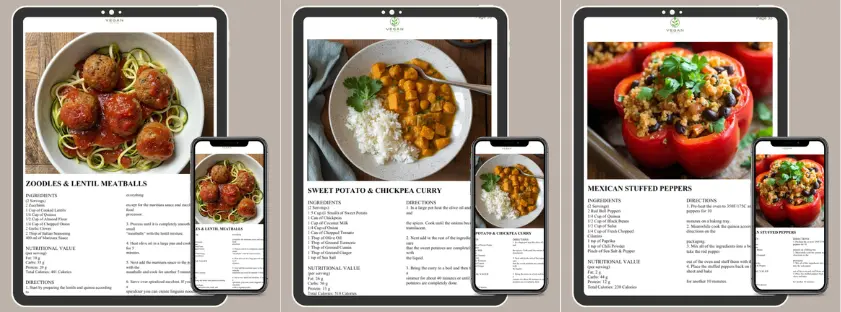
28-Day Vegan Meal Plan + Grocery list.
Transform your lifestyle with our comprehensive guide. This isn’t just a recipe book; it’s a complete system designed for success:
- 28-Day Meal Plan every meal, nothing to figure out
- 4 Weekly Grocery Lists sorted by aisle, saves money
- Balanced Macros protein, iron and B12 daily
- Under $1 Per Serving eat well on any budget
- 90-Min Sunday Prep one session, whole week fed
- Vegan Swaps Guide meat, dairy and eggs replaced
- Nutrition Toolkit protein targets and dining guide
- 36 Chef Recipes every meal photographed
Frequently Asked Questions
What do people in Blue Zones eat?
All five Blue Zone populations eat 90 to 96% plant-based diets built around five consistent food categories: legumes (at least one cup daily), dark leafy greens, whole grains, nuts and seeds, and tubers or starchy vegetables. The specific foods vary by region: sweet potato in Okinawa, fava beans in Sardinia, black beans in Costa Rica, lentils and chickpeas in Ikaria, and mixed legumes in Loma Linda. All five populations eat these plant foods as the daily dietary foundation, with small amounts of animal products appearing rarely or occasionally rather than as dietary anchors. The strongest longevity data within Blue Zones comes from the Loma Linda Adventist study, which shows vegan Adventists achieving the best longevity outcomes of all dietary subgroups studied.
Is the Blue Zones diet vegan?
Not fully, but very close. The five Blue Zone populations eat 90 to 96% plant-based diets, with animal products appearing in small, infrequent amounts. The Loma Linda Seventh-day Adventist community is the most plant-based Blue Zone, with a significant proportion of fully vegan members. The AHS-2 study of this community confirmed that vegan Adventists have the lowest all-cause mortality of all dietary subgroups studied. A fully vegan diet built on the same five food categories the Blue Zones share (legumes, leafy greens, whole grains, nuts, tubers) is aligned with or exceeds the Blue Zone dietary pattern and has the strongest available scientific support for longevity outcomes.
What is the single most important Blue Zone food?
Legumes. Buettner identifies legumes as the single most consistent food across all five Blue Zones, appearing daily in every population. Fava beans in Sardinia and Ikaria, soybeans in Okinawa, black beans in Costa Rica, and mixed legumes in Loma Linda. A daily cup of legumes provides protein, fibre, resistant starch for gut microbiome health, iron, folate, and low-glycaemic carbohydrate for stable blood glucose. The legume-longevity association persists across multiple dietary traditions and cultural contexts, making it the most consistently supported individual food component of longevity research. For all preparations, the vegan lentil recipes guide covers the full daily legume habit.
What is hara hachi bu?
Hara hachi bu is a Confucian principle practiced in Okinawa that translates approximately as “eat until 80% full.” It is a culturally embedded eating habit that produces consistent mild caloric restriction without counting, measuring, or tracking food. By stopping eating before feeling completely full, the Okinawan population maintains lower average caloric intake than populations that eat to satiation. Caloric restriction (without malnutrition) is one of the most reproducible longevity interventions across species in animal research, thought to operate through mTOR pathway suppression and increased autophagy. Implementing hara hachi bu practically requires eating slowly enough for the satiety signal to register before the meal ends, which the whole plant food diet naturally supports through fibre-mediated satiety and slower eating pace from chewing-intensive foods.
What does the Adventist Health Study show about veganism?
The Adventist Health Study 2 (AHS-2), a cohort study of over 96,000 Seventh-day Adventists followed over decades, is the most rigorous dietary longevity study conducted within a Blue Zone population. Orlich et al. (2013) found a dose-response relationship between plant-based eating and all-cause mortality: vegan Adventists had the lowest mortality, followed by lacto-ovo vegetarians, pescatarians, semi-vegetarians, and non-vegetarians in ascending mortality order. Vegan Adventists live on average 9.5 years longer than non-vegetarian Americans in the general population. The AHS-2 specifically confirms that the direction from omnivore toward plant-based eating consistently reduces mortality risk within a genetically and culturally similar population, making it one of the strongest controlled experiments in longevity nutrition.
Why do Blue Zone people live so long?
The longevity advantage in Blue Zones is multifactorial. Diet (90 to 96% plant-based, legume-anchored) accounts for an estimated 70 to 80% of the advantage. The remainder comes from consistent natural movement (walking, gardening, manual work rather than deliberate exercise), strong social integration and community belonging (the most powerful non-dietary longevity factor in the research), a clear sense of purpose (ikigai in Okinawa, plan de vida in Costa Rica), stress reduction practices (naps in Ikaria, prayer and Sabbath rest in Loma Linda), and absence of smoking. No single factor explains the longevity. The combination of plant-dominant diet, daily natural movement, and strong social connection appears to be the replicable pattern.
What is the Okinawan diet?
The traditional pre-1950s Okinawan diet was built on purple sweet potato (approximately 60% of calories), tofu, miso, seaweed, bitter melon, turmeric, and small amounts of pork consumed only at celebrations. It was 96% plant-based by caloric contribution. The diet was calorically low-density, meaning large volumes of food could be consumed without high caloric intake, naturally implementing the hara hachi bu principle. The purple sweet potato specifically provides anthocyanins that equal or exceed blueberry concentrations, resistant starch for gut microbiome health, and vitamin C alongside its caloric contribution. Post-World War II adoption of Western dietary patterns in Okinawa has largely eliminated the longevity advantage in younger generations, providing a natural experiment that confirms diet rather than genetics as the primary mechanism.
Can I follow the Blue Zones diet as a vegan?
Yes, and the evidence suggests you can improve on it. All five Blue Zone food categories (legumes, leafy greens, whole grains, nuts, tubers) are vegan. The non-vegan components of Blue Zone diets (small amounts of fish, occasional meat, dairy in some zones) are present in small quantities that do not meaningfully alter the nutritional profile. A vegan diet that daily includes legumes, leafy greens, whole grains, nuts, and tubers covers the entire Blue Zone food pattern while eliminating the small amounts of animal products that the AHS-2 data suggests slightly worsen longevity outcomes compared to vegan eating. For the complete nutritional adequacy of a vegan Blue Zone diet, the vegan supplements guide covers B12, DHA, and iodine supplementation.
What nuts are eaten in Blue Zones?
Walnuts feature most prominently, particularly in the Loma Linda Adventist research where daily walnut consumption was specifically associated with a 2 to 3 times reduction in fatal cardiovascular disease risk. Almonds appear across Mediterranean zones (Sardinia, Ikaria). Pine nuts and other tree nuts appear in Sardinian and Ikarian cooking. The AHS-2 research identified nuts as one of the two strongest dietary longevity predictors in the Adventist population (alongside legumes). The mechanism involves ALA omega-3 from walnuts, vitamin E, arginine for nitric oxide synthesis, polyphenols including ellagic acid, and magnesium for vascular health. A daily 30g mixed nut portion (walnuts and almonds emphasised) captures the Blue Zone nut habit. For full protein content and amino acid profiles across all plant proteins including legumes and nuts, the vegan protein sources guide covers every Blue Zone plant protein.
How does the Blue Zones diet compare to the Mediterranean diet?
The Ikarian and Sardinian Blue Zones are Mediterranean diet populations, meaning the Blue Zones diet in these regions is a version of the Mediterranean dietary pattern. The broader Blue Zones finding expands the Mediterranean diet evidence base by showing that similar food principles (legumes, olive oil, greens, whole grains, minimal meat) produce longevity outcomes across completely different geographical and cultural contexts (Okinawa, Costa Rica, California). The Mediterranean diet research and the Blue Zones research are mutually reinforcing: both identify the same food categories as the foundation of longevity nutrition. The vegan version of this pattern (eliminating dairy, fish, and occasional meat while maintaining all the plant food components) is supported by the Loma Linda AHS-2 data. The vegan diet for high cholesterol guide covers the cardiovascular protection mechanisms shared between the Mediterranean and Blue Zone dietary patterns.
What is the Blue Zones Power Nine?
Buettner distilled the common practices across Blue Zones into nine principles called the Power Nine: (1) move naturally (daily movement without structured exercise); (2) purpose (ikigai / plan de vida); (3) downshift (daily stress reduction practices); (4) 80% rule (hara hachi bu); (5) plant slant (90%+ plant-based diet); (6) wine at 5 (moderate, social wine consumption in most zones); (7) belong (religious or community participation); (8) loved ones first (family and close social bonds prioritised); (9) right tribe (social circles that reinforce healthy behaviours). The dietary elements are captured in principles 4 (caloric restriction), 5 (plant-dominant eating), and implicitly 6 (polyphenol-rich wine, replaceable with grape juice or pomegranate for a fully vegan approach). The vegan meal plan for beginners covers the plant slant principle in practical meal structure.
What is the easiest way to start eating like a Blue Zone?
One cup of legumes daily. This is the single most universal and most evidence-supported Blue Zone dietary habit, appearing in all five zones, and it is achievable by adding lentil soup, chickpea curry, or black beans to the daily meal structure without eliminating anything else. From there: increase daily leafy green consumption, switch refined grains to whole grains, add 30g walnuts as a daily snack, and eat a tuber (sweet potato, potato) several times per week. These five changes implement the entire Blue Zone food pattern. For the complete 28-day structure that builds these habits across a full month, the Ultimate 28-Day Vegan Meal Plan + Grocery List (Complete Solution) covers every week with easy grocery lists. The beginner vegan diet guide covers the foundational framework. For blood markers that confirm the dietary changes are having measurable effect, the vegan blood test guide covers the monitoring panel.
Quick Reference: The 5 Blue Zones
Five populations. 90 to 96% plant-based. Legumes every day. Wild greens at every meal. Whole grains as the foundation. Nuts daily. Tubers as the caloric anchor. Eaten slowly, with other people, without tracking. None of these populations counted macros, tracked calories, or followed a named dietary protocol. They simply ate the foods their culture had selected over centuries because those foods kept people well. That pattern, applied through a vegan lens, is the most evidence-grounded approach to longevity nutrition available. The Ultimate 28-Day Vegan Meal Plan + Grocery List (Complete Solution) builds this Blue Zones diet vegan pattern into 28 days with easy weekly grocery lists and nutritionist-approved recipes across 4 complete weeks.