Medical Disclaimer: This article is for informational and educational purposes only. Multiple sclerosis is a serious neurological condition requiring expert medical management. Nothing in this article constitutes medical advice, a treatment protocol, or a recommendation to alter prescribed medication. Always work with your neurologist and healthcare team before making significant dietary changes. Individual MS presentations vary greatly. Diet is a complement to medical care, not a replacement.
Vegan Diet for Multiple Sclerosis: The Complete Plant-Based Neurological Guide

Understanding MS: The Neurological Target
To understand why a vegan diet for multiple sclerosis can have meaningful biological relevance, you first need to understand what MS is and where it attacks. MS is a chronic autoimmune disease of the central nervous system in which the immune system mistakenly targets myelin, the protective fatty sheath that wraps around nerve fibres in the brain and spinal cord. Myelin functions like insulation on an electrical wire: it allows nerve signals to travel rapidly and efficiently. When myelin is damaged (demyelination), nerve conduction slows, becomes erratic, or stops entirely, producing the wide spectrum of symptoms that characterise MS: fatigue, mobility difficulties, vision disturbances, cognitive fog, spasticity, and pain.
MS affects approximately 2.8 million people globally. It is significantly more common in women (around 3:1 ratio to men), more prevalent at higher latitudes farther from the equator, and typically diagnosed between ages 20 and 50. The latitude pattern is one of the most important epidemiological clues in MS research: populations living farther from the equator receive less UVB radiation and consequently produce less vitamin D through skin synthesis. This geographic distribution directly informs the vitamin D hypothesis that has become central to understanding MS risk and progression.
There are four main types of MS, the most common being relapsing-remitting MS (RRMS), affecting approximately 85% of people at diagnosis. In RRMS, periods of new or worsening symptoms (relapses) are followed by periods of partial or complete recovery (remission). Over time, many people with RRMS transition to secondary progressive MS (SPMS), where gradual deterioration continues without clear relapse and remission cycles. Primary progressive MS (PPMS) involves continuous worsening from the outset and affects approximately 10 to 15% of people with MS.
Understanding the disease type matters for dietary strategy. Anti-inflammatory dietary interventions have most evidence in RRMS, where reducing the frequency and severity of inflammatory attacks is the primary goal. In progressive forms, neuroprotection becomes equally important alongside inflammation management. The vegan diet for multiple sclerosis addresses both objectives through complementary mechanisms.
-
Complete 28-day calendarEvery breakfast, lunch, dinner & snack planned
-
40+ nutritionist-approved recipesVibrant photo for every single dish
-
Easy weekly grocery listsShop smart, spend less, waste nothing
-
Protein, iron & B12 at every mealNutritionally complete — no guesswork
-
Saves 7+ hours weeklyPrint it once, follow it all month
-
Bonus: Nutrition Guide ToolkitVegan tips, guides & family meal prep
What the Research Shows About Plant-Based Diets and MS
The evidence base for dietary intervention in MS is smaller than in conditions like cardiovascular disease or type 2 diabetes, partly because MS’s heterogeneity makes dietary trials harder to design and interpret. However, what exists is consistent in direction, mechanistically well-supported, and growing rapidly as the gut-brain-immunity axis research matures.
The most comprehensive observational work comes from the OMS Global Registry, a longitudinal study of thousands of people with MS following plant-based dietary protocols. Data from this registry, published in PubMed, consistently shows that people following the OMS plant-based programme report better quality of life, lower fatigue scores, and slower reported disability progression compared to those not following dietary guidance. While observational data cannot prove causation, the consistency of the finding across multiple analyses is noteworthy.
A landmark intervention study, the RRMS dietary intervention trial by Wahls and colleagues, tested a plant-rich dietary approach in people with progressive MS. While not strictly vegan, the protocol heavily emphasised vegetables, fruit, and legumes while minimising animal fats. At three and six months, participants showed improvements in fatigue, quality of life scores, and metabolic markers. A smaller randomised trial published in 2022 specifically testing a plant-based diet versus the OMS diet against a control found significantly lower body mass index, lower inflammatory markers, and improved fatigue scores in the plant-based groups compared to the control at six months.
The Swank Diet: The Original Low-Saturated-Fat MS Protocol
Long before the OMS programme was formalised, neurologist Roy Swank published his landmark work on a low-saturated-fat diet and MS progression. Swank followed 144 MS patients for 34 years, the longest MS dietary intervention study ever conducted. His findings, published in 1990, showed that patients who kept saturated fat intake below 20g per day had significantly lower relapse rates and better disability outcomes than those eating higher saturated fat. Those who started the low-fat diet early in their disease course had the best outcomes. The Swank diet is not vegan but arrives at a very similar fat profile to a whole-food plant-based diet: very low in saturated fat, moderate in unsaturated fat, high in plant foods. A vegan diet for multiple sclerosis achieves the Swank saturated fat target almost automatically.
The mechanistic evidence is now arguably stronger than the clinical trial evidence. Saturated fat’s role in activating TLR4 inflammatory signalling, the gut microbiome’s direct connection to neuroinflammation, vitamin D’s role in immune regulation, and omega-3’s neuroprotective mechanisms all converge to explain why a vegan diet for multiple sclerosis should work, even in the absence of large long-term randomised controlled trials. More on each of these mechanisms follows in the sections below.
The Saturated Fat-Myelin Connection: The Core Dietary Mechanism
The most important dietary principle in MS management is the saturated fat hypothesis. This is not a fringe nutritional claim. It is the foundation of the Swank diet, the OMS programme, and multiple mechanistic research programmes studying MS pathology. Understanding why saturated fat matters for myelin helps explain why a vegan diet for multiple sclerosis is not merely a general anti-inflammatory strategy but a specifically targeted nutritional intervention.
- Activates TLR4 on microglia and macrophages
- Triggers NF-kB inflammatory signalling cascade
- Raises TNF-alpha, IL-1b, IL-6 cytokine levels
- Promotes pro-inflammatory M1 macrophage polarisation
- Increases blood-brain barrier permeability
- Alters gut microbiome toward pro-inflammatory species
- Reduces SCFA-producing bacteria that protect against neuroinflammation
- Reduced TLR4 activation, lower baseline neuroinflammation
- Suppressed NF-kB signalling in CNS immune cells
- Lower circulating inflammatory cytokines
- Promotes anti-inflammatory M2 macrophage polarisation
- Blood-brain barrier integrity better preserved
- Higher gut microbiome diversity, more SCFA producers
- Butyrate crosses blood-brain barrier, directly anti-neuroinflammatory
Toll-like receptor 4 (TLR4) is the key molecular link between dietary saturated fat and MS-relevant inflammation. TLR4 is expressed on microglia, the brain’s resident immune cells, as well as on peripheral macrophages. Saturated fatty acids, particularly palmitic and myristic acid found abundantly in dairy, meat, and palm oil, directly bind and activate TLR4. This activation triggers the NF-kB transcription pathway, which upregulates the production of TNF-alpha, interleukin-1 beta, and interleukin-6. All three of these cytokines are elevated in MS lesions and are directly implicated in the autoimmune attack on myelin.
Plant-based diets eliminate the primary dietary sources of palmitic and myristic acid almost completely. Red meat, dairy fat, processed meat, and poultry skin are the dominant saturated fat sources in Western diets. A whole-food vegan diet reduces saturated fat intake to below 10g per day for most people, compared to an average Western dietary intake of 30 to 50g. This reduction in TLR4 activation substrate is the most direct mechanistic argument for why a vegan diet for multiple sclerosis can reduce the inflammatory drive underlying myelin damage.
Why Coconut Oil is a Concern for MS on a Vegan Diet
Coconut oil is popular in plant-based communities and is technically vegan. It is also among the highest sources of saturated fat available: approximately 86% of its fat content is saturated, predominantly lauric and myristic acid. While the metabolic effects of coconut oil’s specific saturated fatty acid profile are debated in healthy populations, for people with MS who are specifically targeting the lowest possible saturated fat intake, coconut oil is counterproductive. A vegan MS diet should use olive oil and avocado as primary fat sources, not coconut oil or palm oil products.
Top Plant Foods for MS Neurological Support: Ranked by Evidence
The ranking below reflects the strength and specificity of evidence for each food category’s relevance to MS pathology, including anti-inflammatory effects, neuroprotection, myelin support, gut microbiome benefits, and vitamin D or omega-3 provision. This is not a general anti-inflammatory ranking but an MS-specific assessment. The anti-inflammatory vegan diet guide on this site covers the broader anti-inflammatory food framework that underlies this MS-specific approach.
Algae omega-3 ranks at the top because DHA is a structural component of neuronal cell membranes. Approximately 20% of the fatty acid content of the brain’s grey matter is DHA. When DHA is incorporated into microglial and neuronal membranes, it shifts the inflammatory balance toward resolution rather than amplification. EPA, the other long-chain omega-3, directly competes with arachidonic acid for inflammatory enzyme access, reducing the production of pro-inflammatory prostaglandins and leukotrienes. For a vegan following the MS dietary protocol, direct algae-derived DHA and EPA supplementation is non-negotiable. ALA from flaxseed and walnuts contributes meaningfully to the omega-3 to omega-6 ratio but cannot replace DHA and EPA in neuronal membranes at the conversion rates available to humans.
Dark leafy greens rank second for their combination of folate (essential for myelin synthesis), vitamin K (emerging neuroprotective evidence), magnesium (involved in nerve signal transmission), and a broad antioxidant spectrum including lutein that specifically concentrates in brain tissue. A daily serving of kale, spinach, or chard is arguably the most consistently supported green food habit for any neurological condition including MS. MS patients face higher fracture risk from falls and reduced mobility, making adequate calcium and vitamin D from these greens an additional practical benefit.
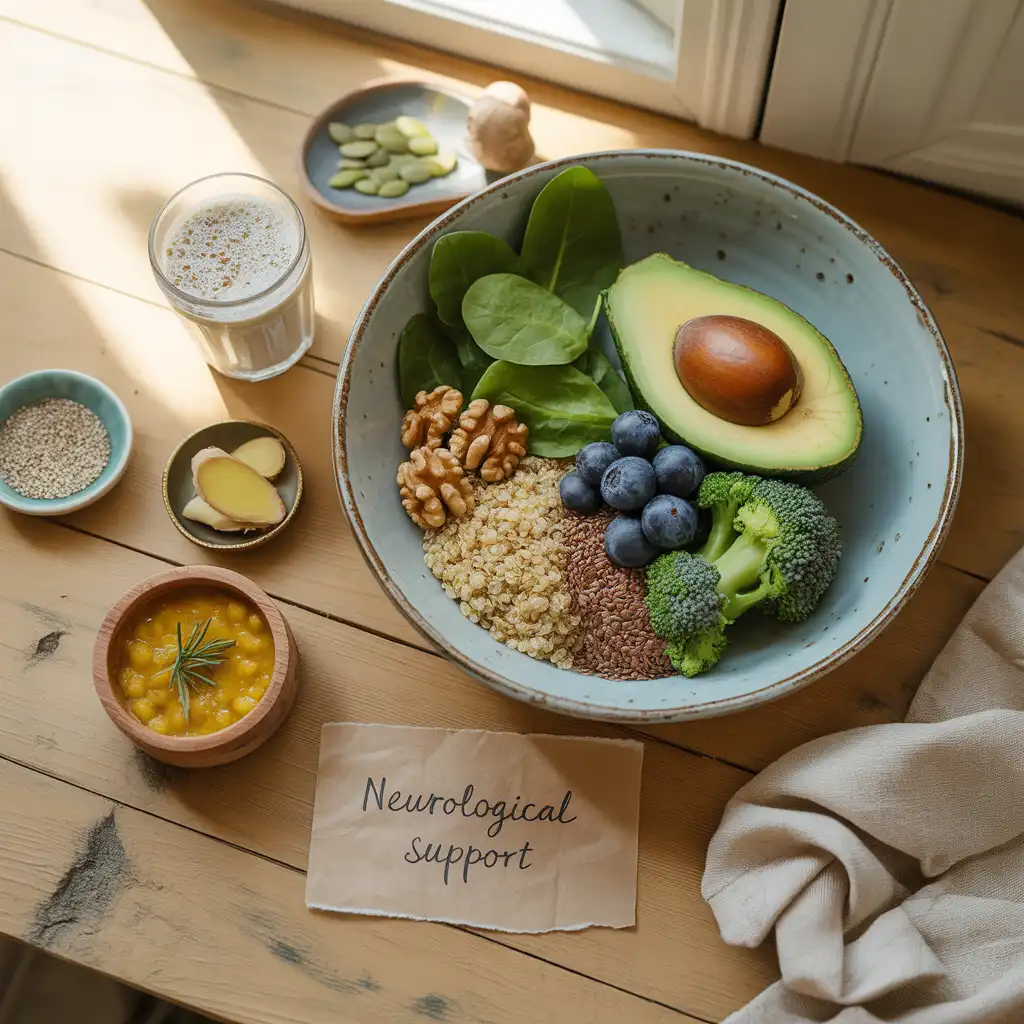
Spotlight: 6 Neuroprotective Plant Foods for MS
The richest plant ALA source and the only common plant food with significant lignans, which have immunomodulatory effects relevant to autoimmune conditions. Must be ground for absorption. 2 tbsp daily.
Anthocyanins cross the blood-brain barrier and directly reduce neuroinflammation. Human trials confirm cognitive benefits and reduced oxidative stress markers in brain tissue. A handful daily is meaningful.
Provides folate for myelin synthesis, vitamin K for neuroprotection, lutein for brain accumulation, and quercetin for neuroinflammation reduction. Among the most CNS-relevant leafy greens available.
High-fibre legume feeding butyrate-producing gut bacteria. Butyrate crosses the blood-brain barrier and directly suppresses microglial inflammatory activation. Also provides folate and magnesium for nerve function.
Curcumin has been shown in animal MS models to reduce demyelination markers and suppress Th17 cells, the immune cell subset most implicated in MS autoimmunity. Use daily with black pepper and fat for absorption.
Provide ALA omega-3, gamma-tocopherol (vitamin E), and ellagic acid. Research consistently shows walnut consumption associated with improved cognitive markers. Also provide melatonin, supporting sleep quality affected by MS.
Vitamin D: The Most Critical Nutrient in MS Management
No nutritional factor in MS research comes close to the evidence base for vitamin D. The relationship between vitamin D deficiency and MS risk, relapse rate, and disease severity is one of the most robustly documented nutritional associations in neurology. Understanding this relationship, why it exists, what it means for supplementation strategy, and how a vegan diet for multiple sclerosis addresses it, is essential knowledge for anyone with MS engaging with their diet.
The Vitamin D and MS Connection: Five Key Facts
- Geography: MS prevalence increases with latitude, precisely tracking lower UVB exposure and lower cutaneous vitamin D synthesis.
- Risk reduction: Studies show each 50 nmol/L increase in serum 25(OH)D is associated with approximately 39% lower relapse risk in established RRMS.
- Immune mechanism: Vitamin D directly suppresses Th1 and Th17 cell differentiation, the two immune cell types most responsible for the autoimmune attack on myelin in MS.
- Deficiency is near-universal: Surveys consistently find 70 to 90% of MS patients have serum vitamin D levels below 75 nmol/L, a level associated with adequate immune regulation.
- Vegan risk: Vegans have additional vitamin D vulnerability through dietary sources alone being inadequate without supplementation, making testing and targeted supplementation especially critical.
The immune mechanism is the most compelling evidence pathway. Vitamin D acts as a potent immunomodulator. Its active form, 1,25-dihydroxyvitamin D, binds to vitamin D receptors (VDRs) present on T lymphocytes, B cells, dendritic cells, and macrophages. On T cells, vitamin D suppresses the differentiation of naive T cells into Th1 and Th17 subtypes. These are the immune cells that produce the inflammatory cytokines (interferon-gamma and IL-17) most responsible for the autoimmune attack on myelin. Simultaneously, vitamin D promotes the development of regulatory T cells (Tregs), which actively suppress autoimmune activity. This dual effect, suppressing pathological immune activation while promoting regulatory immune function, is precisely what MS management needs.
For vegans with MS, the supplement strategy is clear but requires attention to detail. Dietary vitamin D sources for vegans are limited to D2-fortified foods and a small number of D3-fortified foods from lichen (vegan D3). The vegan vitamin D guide on this site covers food sources and supplementation in full. The key practical points for MS specifically are: get serum 25(OH)D tested before supplementing and retest every 6 months; target levels of 100 to 150 nmol/L (40 to 60 ng/mL) based on MS-specific research protocols; use vegan D3 (from lichen) rather than D2 (less stable and less potent); take with the largest fat-containing meal of the day for maximum absorption; and pair with vitamin K2 supplementation because high-dose D3 increases calcium absorption, which K2 then routes safely to bone rather than soft tissue. The selenium guide on this site also touches on thyroid interactions relevant to immune function, via the vegan selenium guide.
The OMS programme recommends high-dose vitamin D supplementation specifically for MS patients, targeting serum levels considerably above general population recommendations. This should be done in consultation with a neurologist or specialist physician who can monitor calcium levels and other markers at higher supplementation doses.
The Gut-Brain-Immunity Axis in MS: The Emerging Science
The gut-brain-immunity axis is one of the most rapidly advancing areas in MS research. Evidence accumulated over the past decade has established that the gut microbiome is not merely a digestive organ but an active participant in central nervous system immune regulation. For the vegan diet for multiple sclerosis, this axis is a critical piece of the mechanistic argument: plant-based diets profoundly reshape the gut microbiome in ways that are specifically relevant to MS neuroinflammation.
People with MS consistently show reduced gut microbiome diversity compared to healthy controls. Specific taxa found to be depleted in MS include Prevotella and Faecalibacterium prausnitzii, both major producers of short-chain fatty acids (SCFAs). Conversely, potentially pro-inflammatory bacteria such as Akkermansia muciniphila (in some MS contexts) and Methanobrevibacter are elevated. This dysbiosis is not merely correlational. Studies in germ-free mice colonised with MS patient microbiota develop more severe experimental autoimmune encephalomyelitis (EAE, the animal MS model) compared to mice colonised with healthy microbiota, providing mechanistic proof that the gut bacterial composition directly influences CNS autoimmune severity.
Plant-based diets are the most powerful dietary tool available for increasing gut microbiome diversity and SCFA production. High dietary fibre from legumes, whole grains, vegetables, and fruits feeds exactly the bacterial species depleted in MS. A consistent finding across dietary intervention studies is that switching to higher plant fibre intake increases Faecalibacterium prausnitzii abundance within weeks. This bacterium is a primary butyrate producer, and butyrate crosses the blood-brain barrier and directly suppresses microglial NF-kB activation. The gut-to-brain neuroprotective pathway is thus: plant fibre consumed, SCFA-producing bacteria fed, butyrate produced, butyrate enters CNS via MCT transporters, microglial inflammation suppressed. This mechanism is detailed further in the vegan gut health guide.
Fermented plant foods add another dimension. Natto, tempeh, miso, sauerkraut, and kimchi all introduce beneficial bacterial species directly while simultaneously providing metabolites that support gut barrier integrity. A compromised gut barrier, often called intestinal permeability, allows bacterial antigens to enter systemic circulation and activate peripheral immune responses that can worsen CNS autoimmunity. Maintaining gut barrier integrity through diverse plant fibre and fermented foods is thus directly relevant to the vegan diet for multiple sclerosis management strategy.
The OMS Programme: What It Recommends and Its Evidence Base
The Overcoming Multiple Sclerosis programme is the most comprehensive, evidence-informed, plant-based lifestyle programme specifically designed for people with MS. Founded by Professor George Jelinek, an emergency physician who was himself diagnosed with RRMS in 1999, OMS synthesises the available dietary, supplement, lifestyle, and mindfulness evidence into a structured protocol that thousands of people with MS follow worldwide.
The OMS approach is as close to a vegan diet for multiple sclerosis as a non-vegan protocol can be. The only food the OMS programme permits that a vegan diet excludes is seafood for omega-3 provision. A vegan following OMS principles replaces this with algae-derived DHA and EPA supplementation, achieving the same essential fatty acid provision from the original marine source without the animal product. In every other dimension, the OMS dietary framework and a well-structured whole-food plant-based vegan diet are essentially identical.
The OMS Global Registry data on long-term outcomes is the strongest available observational evidence for the lifestyle programme. Registry participants who closely adhere to the OMS diet report better physical, cognitive, and emotional quality of life scores than those with low adherence. The registry cannot prove that the diet alone drives these outcomes, as the OMS programme also includes meditation, exercise, and vitamin D supplementation as co-interventions. However, dietary adherence scores independently predict better outcomes in registry analyses, providing the closest available evidence that the dietary component specifically contributes to MS quality of life.
7-Step Vegan MS Nutrition Protocol
This protocol integrates the saturated fat reduction, vitamin D optimisation, omega-3 provision, gut microbiome support, and neuroprotective food strategy into a practical daily framework. It is designed to work alongside neurological medical care, not in place of it.
Eliminate all animal products and coconut oil to minimise saturated fat below 15g daily. This is the single most important dietary change in a vegan diet for multiple sclerosis. A whole-food plant-based diet built on vegetables, legumes, whole grains, seeds, and olive oil achieves this automatically. Check labels on any processed vegan products for coconut oil and palm oil. Both contain high saturated fat despite being plant-derived and counteract the primary goal. Replace cooking fats with extra virgin olive oil.
Supplement algae-derived DHA and EPA at 1,000 to 2,000 mg per day, combined. This is non-negotiable in a vegan MS protocol. ALA from flaxseed and walnuts is insufficient for the neuronal membrane DHA levels needed for MS neuroprotection. Choose an algae supplement providing both DHA and EPA, taken with a fat-containing meal for best absorption. Take with your vitamin D supplement for the fat-soluble nutrient synergy. The full omega-3 context is covered in the vegan omega-3 guide.
Get serum 25(OH)D tested and supplement vegan D3 to achieve 100 to 150 nmol/L. Most MS patients are deficient and most vegans are deficient. The two compound into a situation that demands targeted supplementation. Use lichen-derived D3 (not D2). Start with 2,000 to 4,000 IU daily and test again in 3 months. Work with your neurologist on dose: some OMS-following neurologists support higher doses in monitored patients. Pair with vegan K2 (MK-7 from fermented soybeans) to manage calcium routing at higher D doses.
Build every meal around dietary fibre for gut microbiome SCFA production. Target 35 to 40g of dietary fibre daily from diverse plant sources. Legumes at every meal or every other meal (lentils, chickpeas, black beans). Whole grains over refined. A wide variety of vegetables. Fruit including pectin-rich apples and berries. This fibre diversity is what maximises the SCFA-producing bacterial species depleted in MS. A single fibre source, even in high amounts, is less effective than diversity across multiple plant families.
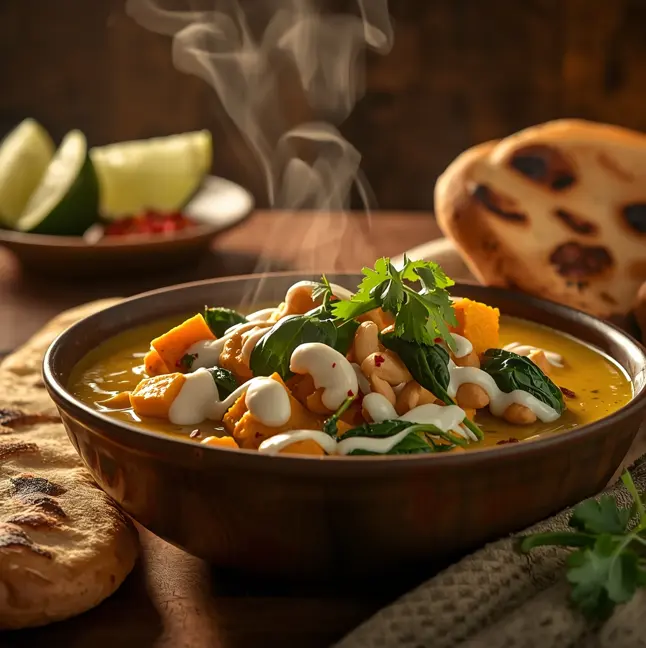
Use turmeric with black pepper and fat daily for curcumin neuroprotection. A teaspoon of turmeric in a fat-containing dish with a pinch of black pepper daily is the most practical format for consistent curcumin delivery. Golden lentil soup, turmeric-spiced chickpea stew, or a miso and turmeric broth all work. The Th17 suppression and NF-kB inhibition from curcumin are directly relevant to MS autoimmune mechanisms. Consistency matters more than dose.
Eat blueberries or mixed berries daily for blood-brain barrier-crossing anthocyanins. The blood-brain barrier penetration of anthocyanins is one of the most clinically relevant findings in nutritional neuroscience. Compounds that cross the BBB and reach neuronal tissue have the potential to act directly on neuroinflammatory processes. A daily handful of blueberries, or mixed berries including blackberries and blackcurrants (highest anthocyanin density), provides this consistently and palatably.
Include fermented plant foods daily to support gut barrier integrity and microbiome diversity. Miso, tempeh, sauerkraut (live cultures), and kimchi (vegan) all contribute directly to the gut microbiome environment that determines SCFA production and gut barrier integrity. A tablespoon of miso in soups or dressings, a serving of tempeh as a protein source, and live-culture sauerkraut as a condiment are simple daily habits. The vegan fermented foods guide on this site covers the full range of options.
MS Supplements Worth Discussing With Your Neurologist
- Alpha-lipoic acid (ALA supplement, not to confuse with ALA omega-3): Early MS trials show antioxidant and anti-neuroinflammatory activity.
- Biotin (vitamin B7) at high dose: Some progressive MS patients in trials have shown symptom stabilisation, though results are mixed.
- Magnesium: Involved in nerve signal transmission; common deficiency in plant-based diets eating insufficient greens and legumes. The magnesium guide covers food sources.
- B12 at optimal levels: B12 deficiency produces neurological symptoms that can overlap with MS. All vegans need B12 supplementation, and testing is important.
Chef’s Perspective: MENA Anti-Inflammatory Cooking for MS Support
In over twenty years of professional cooking across Lebanon, the Gulf, and Saudi Arabia, I worked with spice traditions that are now understood to be among the most potent anti-neuroinflammatory food ingredients identified by nutritional science. The spice philosophy of MENA cooking, built on turmeric, cinnamon, ginger, cumin, coriander, black pepper, and sumac, creates daily low-level exposure to compounds that specifically modulate the inflammatory pathways most relevant to autoimmune neurological conditions like MS.
The Lebanese spice blend baharat, combined with lentils or chickpeas slow-cooked in olive oil with caramelised onion, creates a meal that simultaneously delivers high fibre for gut microbiome health, olive oil monounsaturated fat instead of saturated fat, turmeric and black pepper for NF-kB inhibition, and aromatic compounds like cinnamon that have emerging anti-neuroinflammatory evidence. This is not a medicinal construction: it is simply what MENA home cooking looks like, and it happens to hit almost every mechanism relevant to the vegan diet for multiple sclerosis.
I also think about the MENA tradition of building meals around legumes rather than animal protein as particularly relevant here. Ful medames at breakfast, lentil soup at lunch, hummus and vegetable plate in the evening: this pattern delivers the gut fibre load that produces butyrate, the SCFA that crosses the blood-brain barrier and directly calms microglial inflammation. Modern neuroscience is increasingly documenting what MENA culinary tradition encoded centuries ago in its plant-centred dietary architecture.
One specific note for those cooking for someone with MS fatigue, which affects over 80% of people with the condition: MENA cooking lends itself beautifully to batch preparation. A large pot of lentil soup, a tray of roasted vegetables with olive oil and turmeric, or a batch of spiced chickpeas can be prepared once and eaten across three or four days with minimal daily effort. Managing fatigue and maintaining excellent nutrition at the same time is a practical design challenge, and the MENA tradition of slow-cooked, flavour-deep, nutrient-dense plant dishes is among the best solutions I know of.
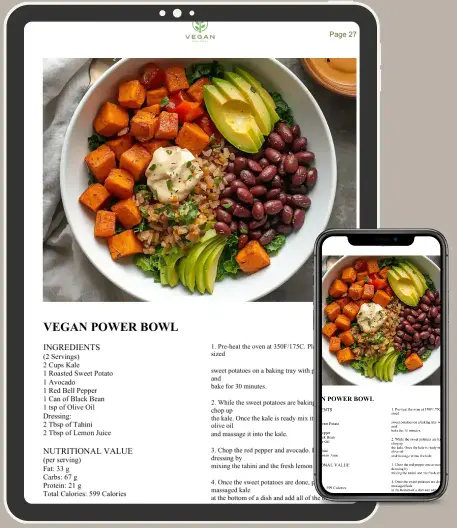
The Complete 28-Day Vegan Meal Plan + Grocery List
- 28-day structured calendar — breakfast, lunch, dinner & snack, every single day
- Every meal meets protein, iron & B12 — no guesswork, no gaps
- 4 weekly grocery lists — categorised, budget-friendly, zero waste
- Saves 7+ hours weekly — print once, follow all month
- Bonus Nutrition Guide Toolkit — vegan tips, guides & family meal prep
Instant digital download · Printable PDF · Use today
Frequently Asked Questions: Vegan Diet for Multiple Sclerosis
Can a vegan diet cure or reverse multiple sclerosis?
No. A vegan diet for multiple sclerosis is not a cure and makes no claim to reverse existing neurological damage. MS is a complex autoimmune condition requiring medical management, including disease-modifying therapies (DMTs) in many cases. What dietary intervention can offer is meaningful reduction in inflammatory drivers, improved gut-brain axis function, optimised vitamin D status, and neuroprotective food compound delivery that may reduce relapse frequency, slow progression, and improve quality of life as a complement to medical care. These are significant and worthwhile outcomes, but they are distinct from a cure.
What does the Overcoming Multiple Sclerosis programme recommend dietarily?
The OMS programme recommends eliminating all animal products except seafood, eliminating all tropical oils (coconut, palm), maintaining total saturated fat below 15 to 20g per day, taking high-dose vitamin D supplements in combination with sensible sun exposure, supplementing omega-3 (equivalent to fish oil dosing), and eating a diverse whole-food plant-based diet as the foundation. A vegan diet for multiple sclerosis is entirely compatible with OMS principles: the only animal product OMS permits that vegans exclude is seafood, and this is replaced by algae-derived DHA and EPA, which provides the same fatty acids from the same primary marine source.
Is vitamin D the most important supplement for MS on a vegan diet?
Vitamin D is almost certainly the single most important nutritional intervention for MS, whether vegan or not. The evidence base is the largest of any nutritional factor in MS research. Serum vitamin D levels correlate inversely with relapse risk, disease activity on MRI, and disability progression. Vegans face additional risk of deficiency due to limited dietary sources. Testing serum 25(OH)D before supplementing and maintaining levels in the 100 to 150 nmol/L range, as informed by MS-specific research, is the most evidence-backed nutritional decision a vegan with MS can make. Use vegan D3 from lichen, not D2, for superior potency and stability.
Why does saturated fat matter specifically for multiple sclerosis?
Saturated fat, particularly palmitic and myristic acid found in animal products and coconut oil, activates Toll-like receptor 4 (TLR4) on microglia and macrophages. This activation triggers the NF-kB inflammatory cascade, upregulating TNF-alpha, IL-1 beta, and IL-6. These three cytokines are directly elevated in MS lesions and drive the autoimmune attack on myelin. Reducing dietary saturated fat to below 15 to 20g daily measurably reduces TLR4 activation and downstream neuroinflammatory signalling. A whole-food plant-based diet achieves this reduction automatically, without special food engineering or supplementation.
Do I need to take omega-3 supplements as a vegan with MS?
Yes. DHA, a long-chain omega-3, is a structural component of neuronal cell membranes. Approximately 20% of brain grey matter fatty acid content is DHA. Plant foods provide ALA (alpha-linolenic acid), which the body converts to EPA and DHA at conversion rates of approximately 5 to 10% for EPA and below 1% for DHA. These conversion rates are insufficient to maintain the neuronal membrane DHA levels associated with reduced neuroinflammation in MS research contexts. Algae-derived DHA and EPA at 1,000 to 2,000 mg combined daily bypasses this conversion limitation and directly provides what the brain needs.
Is the gut microbiome really connected to MS?
Yes, and the evidence is now very strong. Multiple studies confirm that people with MS have reduced gut microbiome diversity and specific depletions of SCFA-producing bacteria compared to healthy controls. Germ-free animal studies show that transplanting MS patient microbiota to mice produces more severe autoimmune encephalomyelitis than healthy microbiota, proving the gut bacteria composition directly influences CNS autoimmune severity. The mechanism involves butyrate crossing the blood-brain barrier and suppressing microglial inflammatory activation. Plant-based diets are the most effective dietary tool for increasing the SCFA-producing bacterial species depleted in MS.
Can a vegan diet help with MS fatigue?
Fatigue is the most common and often most debilitating symptom of MS, affecting over 80% of patients. Multiple mechanisms link diet to fatigue in MS: systemic inflammatory load (reduced by plant-based eating), gut microbiome composition (improved by plant fibre), vitamin D status (fatigue is a direct symptom of deficiency), metabolic health, and sleep quality. Clinical studies using plant-based dietary protocols in MS report improved fatigue scores as one of the most consistently improved patient-reported outcomes. While diet alone cannot resolve all MS fatigue, optimising these nutritional levers can contribute meaningfully to fatigue management.
Are there any vegan foods to avoid with multiple sclerosis?
Coconut oil and palm oil should be minimised or avoided, as their high saturated fat content activates the same TLR4 neuroinflammatory pathway as animal product saturated fats. Ultra-processed vegan foods with long ingredient lists of additives and industrial fats are worth minimising. High-sugar processed vegan foods can drive metabolic inflammation. Some people with MS report individual food sensitivities that worsen symptoms; a structured elimination protocol under dietitian guidance can identify these. Gluten is sometimes reported as a trigger in a subset of MS patients, particularly those with concurrent intestinal permeability. This is highly individual and not a universal recommendation.
How long before dietary changes show an effect in MS?
Gut microbiome changes from dietary shifts begin within one to two weeks of significant fibre increase. Inflammatory marker changes (CRP, cytokines) are measurable within four to eight weeks. Quality of life and fatigue score improvements in dietary intervention trials are typically measured at three to six months. Vitamin D status takes six to twelve weeks to stabilise at a new supplementation level. Changes to relapse frequency are inherently longer-term assessments given the episodic nature of RRMS. Managing expectations is important: dietary intervention is a long-game strategy, not an acute treatment, and its effects accumulate over months and years of consistent adherence.
Is selenium important for MS on a vegan diet?
Selenium is an often-overlooked nutrient in MS management. It is an essential cofactor for glutathione peroxidase, the body’s primary selenoprotein antioxidant enzyme. Glutathione peroxidase protects neuronal tissue from oxidative damage, which is elevated in MS lesions. Multiple studies confirm lower serum selenium in MS patients compared to healthy controls. Vegans are additionally at higher risk of selenium deficiency due to variability in plant food selenium content depending on soil selenium levels. A single Brazil nut daily or two to three times weekly provides selenium, but the content is highly variable. A selenium supplement at 50 to 100 mcg per day is a reliable fallback, covered in the vegan selenium guide.
Should vegans with MS follow the Swank diet or the OMS programme?
Both programmes share the same core dietary principle (very low saturated fat, plant-centred eating) and both produce overlapping dietary outcomes for vegans. The OMS programme is more comprehensive, integrating vitamin D supplementation, omega-3 supplementation, meditation, and exercise alongside the diet. The Swank diet focuses primarily on saturated fat restriction. For vegans with MS, the OMS framework is the more complete and evidence-informed choice because it addresses multiple MS-relevant mechanisms simultaneously. A whole-food plant-based vegan diet following OMS dietary principles, with algae omega-3 replacing the seafood component, represents the most rigorous evidence-based dietary approach currently available.
What is the most important single change a vegan with MS can make nutritionally?
Get your serum 25(OH)D tested and optimise your vitamin D status. If your level is below 75 nmol/L, as it is for the majority of MS patients tested, correcting this deficiency with appropriately dosed vegan D3 has more evidence behind it than any other single nutritional intervention for MS. The second most important change is adding an algae-derived DHA and EPA supplement if you are not already taking one. Together, these two interventions address the two most robustly evidenced nutritional factors in MS management and are fully achievable within a vegan dietary framework.
Ultimate 28-Day Vegan Meal Plan
+ Complete Grocery List & Toolkit
Built by a professional chef with 10+ years in MENA & Mediterranean kitchens
- 36 chef-tested vegan recipes — full-colour photo for every single one
- Complete 28-day meal calendar — every breakfast, lunch, dinner & snack planned
- 4 weekly grocery lists — organised by supermarket section, nothing specialty
- Getting started guides — nutrition, vegan swaps, protein facts, foods list
- Pantry & nutrition hub — Middle Eastern ingredients, whole grains, substitutions
- Budget-friendly tips — eat well, spend less every week
- BONUS: Vegan Nutrition Toolkit — protein cheat sheet, dining out guide, meal prep tips, label reading & quick reference sheets
Conclusion: The Vegan Diet for Multiple Sclerosis as a Coherent Strategy
The vegan diet for multiple sclerosis is not wishful thinking. It is a scientifically coherent intervention that addresses multiple, independently validated mechanisms of MS pathology simultaneously. Reducing saturated fat eliminates the primary TLR4 activator driving microglial neuroinflammation. High plant fibre rebuilds the SCFA-producing microbiome depleted in MS and generates butyrate that crosses the blood-brain barrier to calm central immune activity. Algae omega-3 directly incorporates DHA into neuronal membranes, shifting the inflammatory balance toward resolution. Optimised vitamin D suppresses the Th1 and Th17 immune cells responsible for the autoimmune myelin attack. Polyphenols from berries and curcumin from turmeric reach brain tissue and modulate neuroinflammatory gene expression. Every mechanism points in the same direction.
None of this replaces neurological medical care or disease-modifying therapy. But the vegan diet for multiple sclerosis, structured thoughtfully around whole plant foods and targeted supplementation, represents the most comprehensive dietary contribution available to MS management. It addresses the same inflammatory and immune pathways that pharmaceutical MS treatments target, from a nutritional direction that has no toxicity profile, is accessible to everyone, and becomes more effective the longer it is maintained.
For further reading across the nutrient pillars most relevant to MS: the omega-3 guide, the vitamin D guide, the selenium guide, and the gut health guide all provide deep dives into the nutritional pillars of this protocol. The clinical evidence base is available through PubMed, accessible summaries through NutritionFacts.org, and vegan-specific nutritional guidance through VeganHealth.org.