
Data note: Environmental impact figures cited in this article are drawn from peer-reviewed life cycle assessments. Regional and seasonal variation exists. The most impactful change is consistently reducing beef and dairy consumption.
Environmental Impact of a Vegan Diet: The Real Numbers
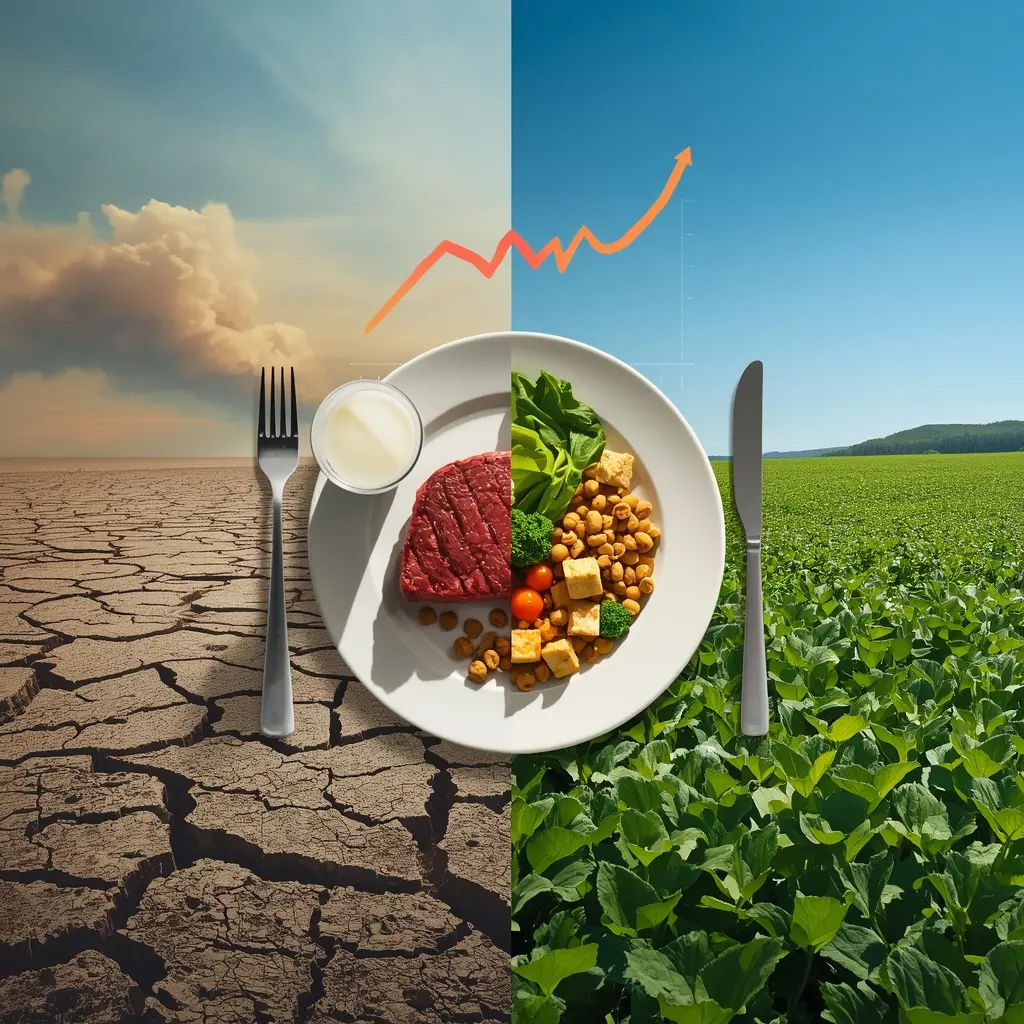
The environmental impact of a vegan diet is measurable and substantial. Peer-reviewed data shows 73% lower greenhouse gas emissions, 55% less freshwater use, and 50% less land use compared to the average omnivore diet. This guide breaks down the real numbers across carbon, water, land, and biodiversity, addresses the honest caveats that other articles skip, and shows exactly how one person’s plate changes the planet’s ledger.
The environmental impact of a vegan diet is one of the most cited and most misunderstood claims in nutrition science. You have heard the headlines. But you may not have seen the actual peer-reviewed numbers, the honest caveats, or the specific data that allows you to make the argument from evidence rather than belief. This guide gives you all three. You will walk away knowing the real carbon, water, land, and biodiversity figures, what the science actually shows, and how one person’s daily choices translate into measurable planetary change.
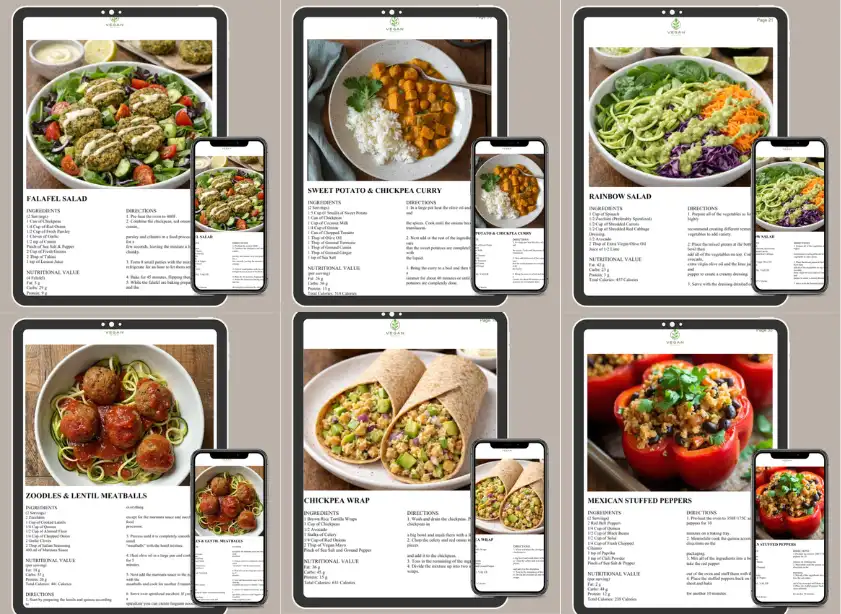
The Ultimate 28-Day Vegan Meal Plan + Grocery List (Complete Solution) makes the transition practical. It includes simple recipes with common supermarket ingredients and easy weekly grocery lists, 4 weeks covered, so you can align your plate with your values without overthinking it.
The 4 Environmental Metrics That Matter
Most conversations about the environmental impact of a vegan diet stop at carbon. That is a mistake. Four metrics tell the full story, and they do not always move in the same direction.
These four metrics, greenhouse gas emissions, freshwater use, land use, and biodiversity impact, are the framework for understanding the full environmental impact of a vegan diet. The sections that follow break down each one with the specific numbers and the peer-reviewed sources behind them. The vegan diet nutrition facts science guide covers the health side of the same evidence base.
Carbon: What the Numbers Actually Show
The headline number from Poore and Nemecek’s comprehensive life cycle assessment is that shifting from the average omnivore diet to a fully plant-based diet reduces an individual’s food-related greenhouse gas emissions by 73%. That is the number that circulates. But the story inside that number is where the real insight lives.
The emissions are not evenly distributed across all animal products. Beef and lamb account for a wildly disproportionate share of food-system emissions. Per gram of protein, beef produces approximately 60 times the greenhouse gas emissions of lentils. Dairy is roughly three times more carbon-intensive than oat or soy milk. Eliminating beef and dairy from a diet captures the vast majority of the carbon benefit of going fully vegan. A flexitarian who simply replaces beef and dairy with plant alternatives achieves most of the emissions reduction of a fully vegan diet. This is the most important nuance in the entire conversation.

Psst.. Start your transformation now. Everything is done for you, 36 chef vegan recipes, 4 weekly grocery lists, and a full 28-day Meal Plan. Zero thinking, every meal decided. Balanced macros daily, one Sunday prep feeds your whole week. No subscription.
Get the Plan →The ranking bar tells the story visually. The gap between beef and lentils is a factor of 60. The gap between dairy milk and oat milk is a factor of 3. The most impactful single food swap any individual can make, by an enormous margin, is replacing beef with legumes. The vegan protein sources guide covers the full range of plant proteins ranked by environmental footprint as well as nutrition.
Water: The Statistic Nobody Talks About
The environmental impact of a vegan diet on freshwater use is substantial but comes with an important counterintuitive caveat. Not all plant foods are low-water. A poorly planned vegan diet can use more water than a well-planned omnivore diet. The real water win comes from eliminating beef and dairy, not from eating any plant food indiscriminately.
The cheap vegan meals on a budget guide aligns almost perfectly with low-water eating. The cheapest plant proteins, lentils, beans, oats, and potatoes, are also the most water-efficient.
Land Use: The Most Important Number
Of the four metrics, land use may be the most consequential for long-term planetary health. The statistic that should reframe the entire conversation: 83% of global agricultural land is used for livestock, either directly as pasture or indirectly to grow animal feed. That land produces only 18% of global calories and 37% of global protein. The inefficiency is staggering.
If the world shifted to a fully plant-based food system, approximately 3.1 billion hectares of agricultural land would be freed from livestock production. That is an area roughly the size of the entire continent of Africa. That land could be rewilded, allowed to regenerate into forest and grassland, sequestering carbon and restoring habitat for biodiversity. The land-use efficiency of plant-based eating is not a marginal improvement. It is an order-of-magnitude difference. A vegan diet requires approximately one-quarter of the land area of the average omnivore diet to produce the same amount of protein and calories.
Biodiversity and Ocean Impact: The Least-Discussed Metric
The environmental impact of a vegan diet extends beyond carbon and land to the living systems that are harder to quantify but no less important. Animal agriculture is the leading driver of habitat destruction globally. The Amazon rainforest is not being cleared for soy lattes. It is being cleared for soy to feed livestock, primarily cattle. Over 75% of global soy production goes to animal feed, not direct human consumption.
In the oceans, the story is equally stark. Industrial fishing practices, bottom trawling in particular, destroy seafloor ecosystems that take centuries to recover. Bycatch, the unintended capture of non-target species, kills millions of marine animals annually, including dolphins, sea turtles, and sharks. A vegan diet removes direct participation in both terrestrial habitat destruction and ocean ecosystem degradation. The biodiversity benefit is harder to quantify in a single number than carbon emissions, but ecologists consider it equally significant. For the full picture of how diet intersects with global food systems, the Blue Zones diet vegan guide covers the traditional eating patterns that align with both human and planetary health.
The Honest Caveats: What a Vegan Diet Does NOT Fix
This section builds trust because it acknowledges what is true, even when it complicates the narrative. The environmental impact of a vegan diet is real and substantial, but it is not a blanket solution to every food-system problem.
Local vs Imported Plant Foods
Transportation emissions are real but vastly overstated in popular conversation. For most foods, transport accounts for less than 10% of total lifecycle emissions. What you eat matters far more than where it came from. A locally raised steak has a dramatically higher carbon footprint than lentils shipped from across the world. That said, air-freighted perishables, asparagus flown from Peru, berries in winter, are genuine exceptions. Eating seasonally and avoiding air-freighted produce is the smart environmental move, regardless of diet.
Food Waste
The most carbon-efficient meal is the one that gets eaten. Approximately one-third of all food produced globally is wasted. If food waste were a country, it would be the third-largest emitter of greenhouse gases after China and the United States. A vegan who wastes half their food has a worse environmental footprint than a careful omnivore. The single most impactful behavior change for any eater, regardless of diet, is reducing food waste.
Processing and Ultra-Processed Vegan Food
Not all vegan food is created equal. Ultra-processed vegan products, burgers, nuggets, and ready meals, have a higher environmental footprint than whole plant foods. The processing adds energy and emissions at every stage. A lentil soup made from scratch has a fraction of the footprint of a factory-made vegan burger patty. The closer you eat to whole plants, the larger the environmental benefit.
Monoculture and Soy
Soy is often cited as an environmental villain. But the soy driving deforestation is almost entirely for animal feed. Over 75% of global soy goes to livestock. The soy consumed directly by humans, as tofu, tempeh, edamame, and soy milk, is a tiny fraction of total production and is not driving deforestation. This is a crucial distinction that is almost always lost in public conversation.

28-Day Vegan Meal Plan + Grocery list.
Transform your lifestyle with our comprehensive guide. This isn’t just a recipe book; it’s a complete system designed for success:
- 28-Day Meal Plan every meal, nothing to figure out
- 4 Weekly Grocery Lists sorted by aisle, saves money
- Balanced Macros protein, iron and B12 daily
- Under $1 Per Serving eat well on any budget
- 90-Min Sunday Prep one session, whole week fed
- Vegan Swaps Guide meat, dairy and eggs replaced
- Nutrition Toolkit protein targets and dining guide
- 36 Chef Recipes every meal photographed
What One Person’s Plate Actually Changes
It is easy to feel that individual choices do not matter against the scale of global food systems. The data says otherwise. Here is what one person eating a vegan diet for one year achieves, based on the Poore and Nemecek life cycle assessment data.
Annual impact per person shifting from average omnivore to vegan diet (Poore & Nemecek data): approximately 1.5 tonnes CO₂eq avoided, 360,000 litres of water saved, and 3,000 square metres of land freed. Over a lifetime, those numbers compound into a genuinely meaningful environmental intervention. The beginner vegan diet guide covers the practical transition steps to make those numbers real.
The 5 Highest-Impact Food Swaps

Frequently Asked Questions About the Environmental Impact of a Vegan Diet
Is organic vegan better for the environment?
It depends on the metric. Organic agriculture typically uses less synthetic fertilizer and pesticide, which benefits biodiversity and soil health. However, organic yields are often lower, meaning more land is required to produce the same amount of food. For carbon emissions specifically, conventional legumes often have a lower footprint than organic because of higher yields per hectare. The largest environmental win is shifting from animal to plant protein, regardless of organic certification. The complete vegan nutrition guide covers organic vs conventional in more detail.
Does local matter more than vegan?
No. Transportation accounts for less than 10% of most foods’ total lifecycle emissions. What you eat matters far more than where it came from. A locally raised steak has a carbon footprint roughly 50 times higher than lentils shipped from across the world. Eat plants first. Eat local when you can, especially for perishable items that may be air-freighted. But do not let “local” distract from the much larger impact of food choice.
What about fishing vs factory farming?
Both have significant environmental impacts, but they affect different systems. Overfishing and bottom trawling devastate ocean ecosystems. Factory farming drives land use change, water pollution, and greenhouse gas emissions. A vegan diet removes participation in both. From a carbon perspective, beef and lamb are worse than most fish. From a biodiversity perspective, industrial fishing is catastrophic. The science is clear that plant-based eating is the lowest-impact choice across all metrics.
Is dairy really that bad?
Yes. Dairy is often overlooked in environmental conversations, but it is significant. Per gram of protein, cheese has a carbon footprint roughly half that of beef but several times higher than tofu or lentils. Dairy milk uses approximately three times the water and land of oat or soy milk. Eliminating dairy is one of the highest-impact changes after eliminating beef.
What about eggs?
Eggs have a lower environmental footprint than beef, lamb, or dairy, but a higher footprint than plant proteins like lentils or tofu. The difference is meaningful but not as dramatic as the beef-to-lentils gap. If eggs are the last animal product in an otherwise plant-based diet, the environmental impact is relatively small. The what happens to your body when you go vegan guide covers the health side of eliminating eggs.
Does one person make a difference?
Yes, measurably. One person shifting from an average omnivore diet to a vegan diet for one year avoids approximately 1.5 tonnes of CO₂eq, saves 360,000 litres of water, and frees 3,000 square metres of land. Over a lifetime, that is a meaningful environmental intervention. Individual choices also shift social norms and market demand, which scale the impact far beyond the individual.
Is vegan food more expensive, and does that matter environmentally?
Whole plant foods, lentils, beans, oats, potatoes, seasonal vegetables, are among the cheapest foods in any supermarket. Vegan eating becomes expensive only when it relies on processed alternatives and out-of-season specialty items. The cheapest diet is also the most environmentally friendly. The cheap vegan meals on a budget guide covers eating well for less while minimizing environmental impact.
What about the methane from cows specifically?
Methane is a potent but short-lived greenhouse gas. It traps approximately 80 times more heat than CO₂ over a 20-year period but breaks down in the atmosphere in about a decade, compared to centuries for CO₂. Reducing methane emissions from livestock is one of the fastest ways to slow near-term warming. Eliminating beef and dairy from the diet directly reduces methane emissions at the source.
Palm oil in vegan products: a real problem?
Yes. Palm oil production is a major driver of deforestation in Southeast Asia, threatening orangutans and other species. However, palm oil is also in a vast range of non-vegan products, from baked goods to cosmetics. The issue is not vegan vs non-vegan; it is sustainable vs unsustainable palm oil. Look for RSPO-certified sustainable palm oil, and minimize consumption of highly processed foods regardless of whether they are vegan.
What is the most impactful single food to eliminate?
Beef. By an enormous margin. Eliminating beef from your diet captures more environmental benefit than eliminating any other single food. Lamb is second. Dairy is third. Replacing beef and dairy with plant alternatives achieves approximately 80% of the environmental benefit of going fully vegan.
Does plant-based processed food count?
Yes, it counts as vegan, but its environmental footprint is higher than whole plant foods. Processing adds energy, packaging, and transportation emissions. A vegan burger patty from a factory has a larger footprint than a homemade lentil burger. The environmental benefit is still substantial compared to beef, but the hierarchy is clear: whole plants first, minimally processed foods second, ultra-processed vegan alternatives as occasional convenience.
What does the science say about flexitarian vs fully vegan?
A flexitarian diet that eliminates beef and dairy and reduces other animal products captures most of the environmental benefit of a fully vegan diet. The Poore and Nemecek data shows that even a 50% reduction in animal product consumption yields substantial environmental gains. The Ultimate 28-Day Vegan Meal Plan + Grocery List (Complete Solution) makes the fully plant-based option easy with complete 28-day calendar with shopping lists and simple recipes with common supermarket ingredients, but the science supports any meaningful reduction in animal product consumption.
The environmental impact of a vegan diet is not a matter of belief. It is a matter of peer-reviewed data. Across carbon, water, land, and biodiversity, the numbers are consistent and substantial. A 73% reduction in greenhouse gas emissions. Fifty-five percent less freshwater use. Fifty percent less land required to feed a person. The honest caveats matter, food waste, local vs imported, ultra-processed vegan food, but they do not change the fundamental finding: shifting from animal to plant protein is the single most impactful change an individual can make to reduce their environmental footprint. The Ultimate 28-Day Vegan Meal Plan + Grocery List (Complete Solution) makes that shift practical and delicious. It includes 36 chef-tested recipes with a photo for every recipe, complete 28-day calendar with shopping lists, and nutritionist-approved recipes that align your plate with the planet. The plan is backed by a 30-day money-back guarantee, no questions asked. The science is clear. The next move is yours.

🌍 Eat for the Planet, Thrive for Life
Adopting a plant-based diet is the most impactful way to reduce your footprint. Use these systems to make your sustainable lifestyle effortless:
- 📦 Reduce Packaging: 50 Staples to Buy in Bulk
- 📉 Low-Impact Budgeting: Budget Guide: Frugal & Sustainable Eating
- ⏱️ Kitchen Efficiency: Batch Cooking: Save Energy & Time
- 🔬 The Science: Vegan Nutrition Science: The Deep Dive
Ready to start your 28-day eco-friendly journey?
Get the Sustainable Meal PlanP.S. I’ve bundled everything for your first month into one Ultimate 28-Day Vegan Meal Plan, including grocery lists and nutrition guides. Grab your copy here.
Want to try before you buy?
Enter your email below to get 2 free recipes instantly: