Medical Disclaimer: This article is for informational and educational purposes only. Longevity research involves complex interactions between genetics, environment, and lifestyle. Dietary changes support health outcomes but do not guarantee lifespan outcomes for any individual. Always consult a qualified healthcare provider before making significant changes to your diet, especially if managing chronic conditions.
A vegan diet for longevity is not a fringe health claim. It is one of the most consistently supported findings in modern nutritional epidemiology. The EPIC-Oxford cohort (65,000 participants, followed for 14 years), the Adventist Health Study-2 (96,000 participants, ongoing since 2002), and the Nurses’ Health Study have all produced data pointing in the same direction: people who eat predominantly whole plant foods live longer, with fewer years of disease.
The distinction between lifespan and healthspan is central to the research. The goal is more years of cognitive clarity and physical function, not just more years. The evidence shows plant-based diets improve both simultaneously.
This guide synthesises the best available evidence, explains the biological mechanisms, draws from Blue Zone population data, and translates everything into a protocol that works in a real kitchen.
Ultimate 28-Day Vegan Meal Plan
+ Complete Grocery List & Toolkit
Built by a professional chef with 10+ years in MENA & Mediterranean kitchens
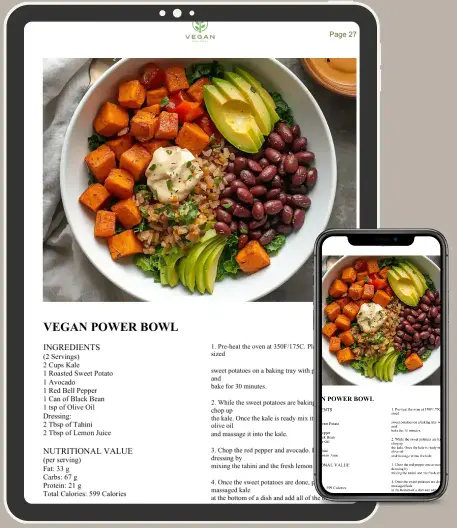
- 36 chef-tested vegan recipes — full-colour photo for every single one
- Complete 28-day meal calendar — every breakfast, lunch, dinner & snack planned
- 4 weekly grocery lists — organised by supermarket section, nothing specialty
- Getting started guides — nutrition, vegan swaps, protein facts, foods list
- Pantry & nutrition hub — Middle Eastern ingredients, whole grains, substitutions
- Budget-friendly tips — eat well, spend less every week
- BONUS: Vegan Nutrition Toolkit — protein cheat sheet, dining out guide, meal prep tips, label reading & quick reference sheets
What the Major Longevity Studies Show
The evidence base for a vegan diet for longevity is built across multiple study types, populations, and decades. No single study is definitive, but the convergence across independent datasets from different continents is the strongest signal available in nutritional research.
The Adventist Health Study-2: The Cleanest Dataset
The Adventist Health Study-2 is arguably the most methodologically rigorous dietary longevity dataset available. Adventists abstain from alcohol and tobacco, a homogenous lifestyle group that removes many confounding factors. Dietary pattern was the primary differentiating variable within this cohort.
The results across the Adventist data are consistent and striking (see Orlich et al., JAMA Internal Medicine 2013). Vegan Adventists lived approximately 7.3 years longer than omnivore Adventists, with significantly lower rates of type 2 diabetes, hypertension, obesity, and cardiovascular disease. The BMI advantage alone, vegan Adventists averaged a BMI of approximately 23.6 versus 28.8 for omnivores, accounts for a substantial portion of this benefit, demonstrating that the longevity effect operates through multiple simultaneous pathways.
The EPIC-Oxford Study: Scale and Duration
The EPIC-Oxford study followed 65,429 people for up to 14 years and found significantly lower cancer incidence, cardiovascular disease risk, and type 2 diabetes rates in vegetarians and vegans compared to regular meat eaters.
Important nuance: EPIC-Oxford found a slightly higher haemorrhagic stroke risk in vegetarians and vegans, most likely driven by suboptimal B12. This reinforces that a vegan diet for longevity requires deliberate B12 supplementation. The full longevity picture is strongly positive when the diet is well-managed.
Eight Biological Mechanisms of Plant-Based Longevity
Understanding why a vegan diet for longevity works requires knowing the biological pathways through which plant-heavy eating influences the ageing process. Eight mechanisms operate simultaneously when the diet is well planned.
Chronic low-grade inflammation is the central driver of virtually every age-related disease including cardiovascular disease, type 2 diabetes, cancer, dementia, and osteoarthritis. Plant-rich diets consistently lower CRP, IL-6, and TNF-alpha, the primary inflammatory biomarkers, through fibre-driven microbiome changes, polyphenol NF-kB inhibition, and the absence of the pro-inflammatory compounds found in processed and red meats. See the anti-inflammatory plant diet guide.
High IGF-1 is necessary in youth but becomes a longevity liability in mid-to-late life, promoting tumour development and accelerating cellular ageing. Vegans show 13% lower IGF-1 levels than omnivores. Lower IGF-1 activates FOXO transcription factors associated with longevity across species.
mTOR (mechanistic target of rapamycin) is the cellular growth-sensing pathway most directly linked to biological ageing. High mTOR activity, driven by abundant amino acids from animal protein and high caloric intake, suppresses autophagy, the cellular cleaning process that removes damaged proteins. Lower animal protein intake on a plant-based diet naturally reduces mTOR activation, allowing more frequent autophagy cycles and reducing cellular damage accumulation over decades.
Telomeres are the protective caps on chromosomes that shorten with each cell division. Their length is a reliable biological age marker, shorter telomeres correlate with earlier disease onset and shorter lifespan. Oxidative stress and inflammation are the primary accelerators of telomere shortening. A 2013 Ornish study found that comprehensive plant-based lifestyle changes produced a 10% increase in telomerase activity after 5 years, the first dietary intervention to demonstrate cellular age reversal.
Gut microbiome diversity declines with age, correlating with increased intestinal permeability, inflammation, and cognitive decline. Plant-rich diets produce significantly greater microbiome diversity, supporting Treg-inducing bacterial genera. Butyrate from fibre fermentation also maintains gut barrier integrity, reducing the chronic systemic inflammation of later life. See the vegan gut health guide.
Obesity is a confirmed risk factor for 13 cancer types and multiple chronic diseases. Vegan Adventists average a BMI of 23.6 versus 28.8 in omnivores, a 5-point difference highly significant for disease risk. Plant-based diets achieve this through higher fibre, lower caloric density, and absence of hyper-palatable ultra-processed foods that drive overconsumption.
Cardiovascular disease remains the leading cause of death globally, and it is the most directly addressable through diet. Plant-based diets lower LDL through reduced saturated fat and increased soluble fibre, reduce blood pressure through high potassium, and cut arterial stiffness through nitrate-rich vegetables and polyphenols. The 29% lower ischaemic heart disease risk in EPIC-Oxford is one of the largest diet-attributable cardiovascular benefit signals available. See the vegan cholesterol guide.
The MIND diet reduces Alzheimer’s risk by up to 53% in the most adherent group. Mechanisms include polyphenol protection of neuronal mitochondria, omega-3 support of myelin integrity, and reduced vascular disease. Adequate B12, folate, and nitrate-rich vegetables maintain cognitive blood flow into later life. The plant-based mental health guide covers the full cognitive nutrition picture.
The Ultimate 28-Day Vegan Meal Plan + Grocery List
Everything you need to eat well for a full month — planned, photographed, and ready to print.
- Complete 28-day daily calendar
- 40+ nutritionist-approved recipes
- 4 weekly grocery lists
- Protein, iron & B12 at every meal
- Saves 7+ hours of planning per week
The Longevity Food Pyramid: What Centenarians Actually Eat
The Blue Zones, Okinawa (Japan), Sardinia (Italy), Nicoya (Costa Rica), Ikaria (Greece), and Loma Linda (California), are the five regions with the world’s highest concentration of people living past 100. Their dietary patterns differ in specifics but converge on the same foundation. Understanding what centenarians actually eat, rather than what they theoretically eat, is the strongest real-world validation of the longevity mechanisms outlined above. For the full Blue Zone dietary analysis, the Blue Zones vegan guide covers each region in detail.
Blue Zone Dietary Pattern: What Centenarians Eat (% of Calories)
Source: Buettner D, Blue Zones: Lessons for Living Longer from the People Who’ve Lived the Longest. The Loma Linda Adventist community (Blue Zone) includes a large vegan subset that has the longest documented lifespan of any group in the dataset.
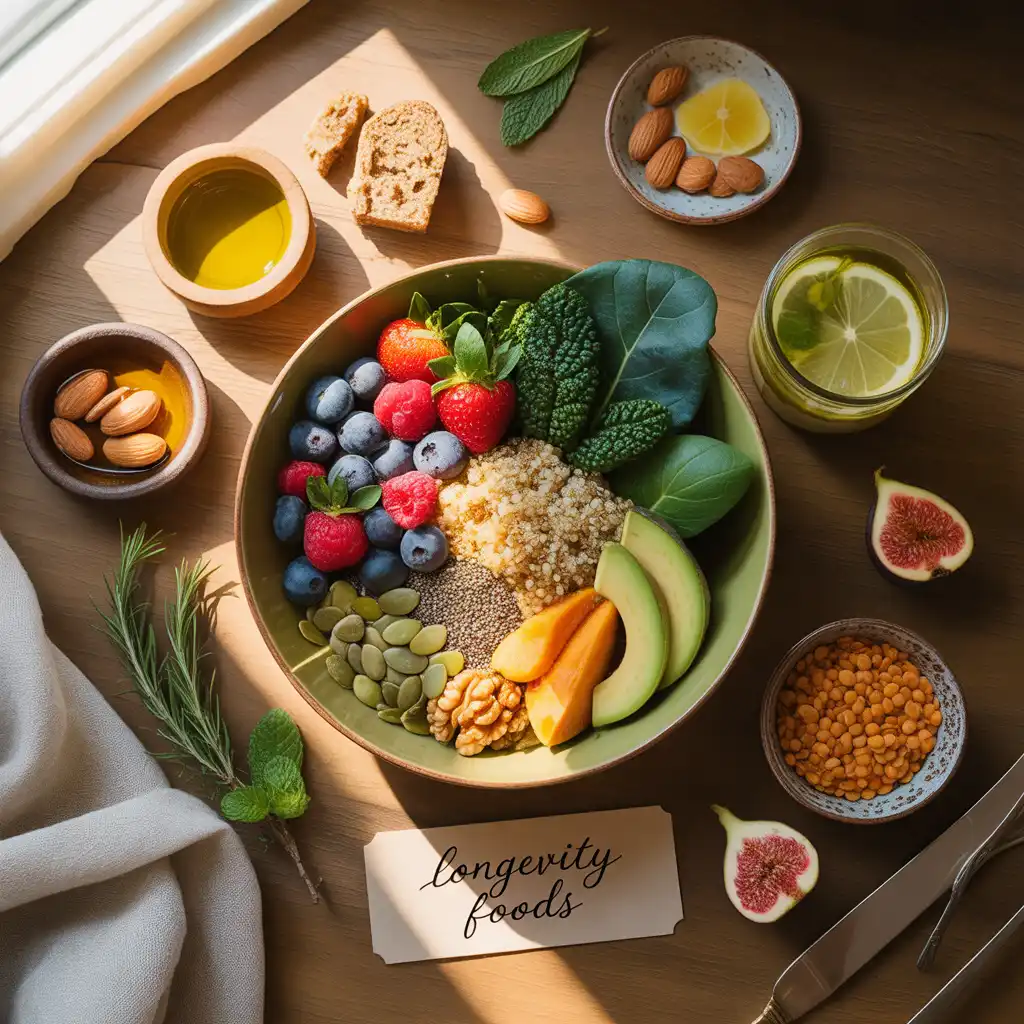
The pattern across all five Blue Zones is unmistakably plant-forward. Legumes appear at every meal in Okinawa, Sardinia, Nicoya, and Ikaria. The plant foods eaten for longevity are the simplest globally available ingredients: beans, lentils, leafy greens, sweet potatoes, whole grains, and seasonal fruit. Nutritional complexity comes from variety and preparation, not specialised products.
What Blue Zone Centenarians Avoid
Blue Zone populations consume almost no processed meat, minimal refined sugar, and very little packaged or ultra-processed food of any kind. The absence is not incidental. It is structurally part of why these diets produce exceptional longevity.
8 Spotlight Longevity Plant Foods
These eight foods appear consistently across longevity research, both in Blue Zone dietary analyses and in mechanism-level research on ageing biology. Each is selected for the strength and specificity of its evidence connection to longevity outcomes, not merely general healthfulness.

Longevity by Decade: How Plant-Based Eating Protects at Each Life Stage
A vegan diet for longevity does not produce its benefits all at once. The mechanisms operate on different timescales, and the dietary habits that matter most shift somewhat across life decades.
The consistent thread across all decades is whole plant food variety, legumes at every meal, and social engagement with food. Blue Zone research identifies purpose (ikigai in Okinawa) and community as co-equal longevity factors alongside dietary content.
The 7-Step Vegan Longevity Protocol
This vegan diet for longevity protocol synthesises the Blue Zone dietary patterns, the major cohort study findings, and the mechanism research into a practical daily framework.
-
1Eat one cup of legumes at every dinner, without exception
This habit is present in all five Blue Zones and is the most consistently evidenced longevity dietary practice available. Rotate type across the week: lentils, chickpeas, black beans, white beans. Different legume species provide different prebiotic fibres supporting different microbiome communities. A vegan diet for longevity without daily legumes is missing its most important component.
-
2Add one handful of nuts daily, walnuts first
The Adventist data on nut consumption is among the most robust single-food longevity findings available. A daily handful (28g) of walnuts, almonds, or pistachios is associated with two to three additional years of life expectancy. The caloric cost is approximately 160-200 calories. The longevity return is among the highest of any dietary change available. Add walnuts to your morning porridge, eat almonds as an afternoon snack, or scatter pistachios on grain bowls. This habit requires no recipe change, only a purchase decision.
-
3Eat 30 different plant foods per week, count and track
The gut microbiome diversity that underlies the fifth longevity mechanism requires variety above all else. Every distinct plant food, vegetables, fruits, legumes, whole grains, nuts, seeds, herbs, and spices, counts as one. Thirty per week is the research-validated target for maximum microbiome diversity. Diversity, not volume, is the critical variable. Three extra types of spice added to a dish, a new grain tried, a different bean used, these all count and they add up quickly when the habit is intentional.
-
4Supplement B12 without fail, the single non-negotiable
The EPIC-Oxford stroke finding, higher haemorrhagic stroke risk in vegetarians and vegans, is most likely driven by low B12 status and its effect on homocysteine elevation and potentially on haematocrit. A vegan diet for longevity that is genuinely longevity-supportive must include reliable B12 supplementation. This is the one dietary change that is categorically non-negotiable. Everything else in this protocol adds benefit. B12 supplementation prevents a specific and serious risk. Take 1,000-2,000 mcg of cyanocobalamin or methylcobalamin weekly, or 25-100 mcg daily.
-
5Use extra virgin olive oil generously as the primary cooking and dressing fat
The PREDIMED trial’s 30% cardiovascular event reduction from olive oil supplementation is one of the largest diet-attributable reductions in a randomised controlled trial in nutritional science history. Two to four tablespoons per day as a finishing oil on vegetables, legumes, grains, and salads provides oleocanthal and polyphenols consistently. Replace refined seed oils entirely. The longevity cultures of Sardinia and Ikaria are notable for their high, not low, fat intake from olive oil, this is an important corrective to the low-fat dietary advice of previous decades.
-
6Eliminate ultra-processed foods and added sugar
No Blue Zone population consumes significant quantities of ultra-processed food. The absence is not coincidental. Ultra-processed foods drive the chronic inflammation, gut microbiome disruption, weight gain, and vascular damage that define accelerated ageing in Western populations. Replacing refined grains with whole grains, sweetened snacks with fruit and nuts, and commercial convenience foods with legume-based home cooking addresses four of the eight longevity mechanisms simultaneously. The quality of plant foods matters as much as the choice to eat plants.
-
7Eat to 80% full, Okinawa’s hara hachi bu principle
Okinawans follow the principle of hara hachi bu, stopping eating when 80% full. This practice naturally reduces caloric intake by 20-25% compared to eating to fullness, activating mild caloric restriction pathways that are among the most consistently replicated longevity interventions across species. Whole plant foods with their high fibre and water content make this easier to practise than on a Western diet because the satiety signal arrives before overconsumption occurs. The combination of high-fibre vegan foods and the 80% rule is the most practical application of the caloric restriction longevity research available without actual food restriction.
A Chef’s Perspective: MENA and Mediterranean Longevity Traditions
In over 20 years cooking professionally across the Middle East and Mediterranean, I cooked daily within food traditions that longevity researchers now study with particular interest. The Sardinian and Ikarian Blue Zones share significant overlap with the Lebanese and broader Levantine culinary tradition: olive oil as the primary fat, legumes at the centre of every meal, vegetables cooked slowly and generously, and bread eaten with, rather than instead of, a substantial plant-based main.
The Lebanese meze table is, nutritionally speaking, a near-perfect execution of the vegan diet for longevity principles identified in population research: a pot of lentil soup, hummus made with generous olive oil and tahini, fattoush with seasonal vegetables and sumac, tabbouleh with fresh herbs, and baked sweet potato on the side. Five dishes from five different plant food categories, all prepared from scratch, all historically eaten at every table regardless of economic status. No supplements, no protocols, no tracking, just a food culture that incidentally aligned with everything the longevity data would later confirm.
The kitchens I worked in across Riyadh and Dubai showed a clear divergence: traditional Gulf cooking centred on legumes, whole grains, and vegetables, while contemporary urban cooking increasingly incorporated processed ingredients. The corresponding shift in chronic disease rates demonstrates that dietary pattern, not genetics, drives a significant proportion of longevity outcomes.
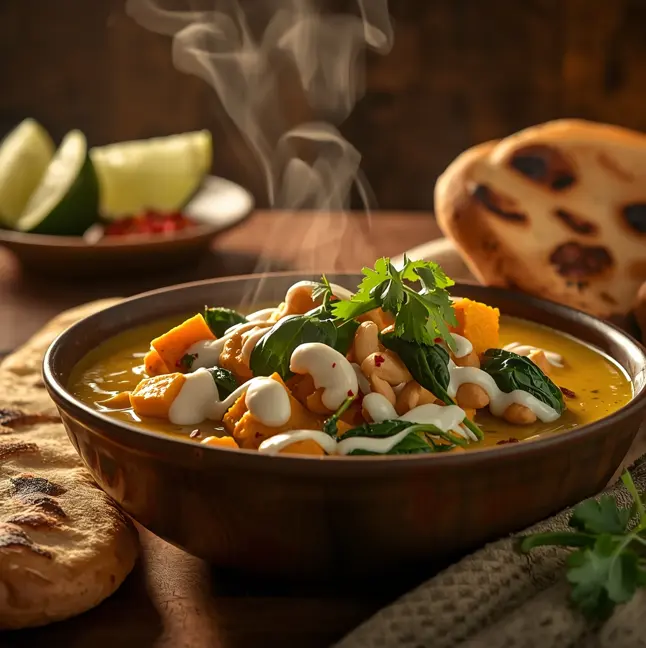
My practical recommendation for anyone building a vegan diet for longevity: cook from the traditional MENA playbook. A pot of slow-cooked lentils with cumin and lemon, finished with good olive oil and served with whatever vegetables are seasonal, this is not a longevity protocol. It is centuries of culinary tradition that the science has spent the last 30 years catching up to. The Ultimate 28-Day Vegan Meal Plan + Grocery List (Complete Solution) is built on exactly this approach: 36 chef-tested recipes using simple supermarket ingredients, meeting protein, iron, and B12 needs, with legume-forward cooking embedded throughout all 28 days.

28-Day Vegan Meal Plan
+ Grocery List
Complete Solution · Nutritionist-Approved · Print & Use Today
Read on any device · No apps needed
A growing body of research suggests that prioritizing plant-based proteins and whole foods can significantly enhance healthspan and long-term vitality. According to Harvard T.H. Chan School of Public Health, maintaining a diet rich in fruits, vegetables, and legumes is strongly associated with a higher likelihood of healthy aging and cognitive preservation. To further explore the biological impact of nutrition, research published by the National Institutes of Health (NIH) emphasizes that a diverse, plant-forward intake is essential for reducing systemic inflammation and protecting against the chronic conditions that impact longevity.
Frequently Asked Questions
Does a vegan diet for longevity actually make you live longer?
The population evidence consistently shows that people following a vegan diet for longevity purposes who eat predominantly whole plant foods have lower all-cause mortality, lower cancer incidence, and significantly lower cardiovascular disease risk than matched omnivore populations. The Adventist data suggests vegan Adventists live approximately 7 years longer than omnivore Adventists when all lifestyle factors are controlled. These are association studies, not controlled experiments, but the consistency across multiple independent datasets over multiple decades is the strongest type of evidence available in nutritional epidemiology. The effect is real and substantial at the population level, though individual outcomes vary.
What are the Blue Zones and why are they relevant?
The Blue Zones are five regions with the world’s highest concentration of centenarians: Okinawa (Japan), Sardinia (Italy), Nicoya (Costa Rica), Ikaria (Greece), and Loma Linda (California). All share the same dietary foundation: legumes, whole grains, vegetables, minimal processed food, and predominantly plant-based eating (full data at the Blue Zones site). The Loma Linda Adventist community includes a large vegan subgroup with the longest documented lifespan in the dataset.
Is a vegan diet optimal for longevity at every age?
The longevity benefits of plant-based eating are present at all ages, but the priorities shift across the lifespan. In mid-life (30s-60s), the cardiovascular, cancer-prevention, and metabolic benefits dominate. In later life (70s+), protein adequacy and muscle mass maintenance become the primary concern alongside the cardiovascular benefits. Older adults on a vegan diet for longevity should pay specific attention to total protein intake (1-1.2g per kg body weight), leucine-rich plant proteins, vitamin D, calcium, and B12. The seniors guide on this site covers the specific adjustments needed in detail.
What is the mTOR pathway and why does it matter for ageing?
mTOR is the cellular sensor for nutrient availability. Activated by abundant amino acids from animal protein, high mTOR suppresses autophagy, the process that clears damaged cellular proteins. Lower mTOR activation on plant-based diets allows more frequent autophagy cycles, reducing cellular damage accumulation. This is one of the strongest mechanistic hypotheses for the longevity advantage in populations eating less animal protein.
Does the stroke risk finding in EPIC-Oxford undermine the longevity case?
The EPIC-Oxford finding of slightly higher haemorrhagic stroke risk in vegetarians deserves honest acknowledgement. The absolute risk increase was small (approximately 3 extra strokes per 1,000 people over 10 years), and was offset by a substantially larger reduction in heart disease risk. The most likely mechanism is suboptimal B12 status raising homocysteine, which affects vascular health, and possibly lower haematocrit in some participants. The straightforward implication is not that plant-based diets are harmful but that a well-planned vegan diet for longevity must include B12 supplementation. With adequate B12, the net longevity picture is strongly positive.
How important is food diversity for longevity outcomes?
Food diversity is critical. Microbiome research shows that diversity of plant food types, not just quantity, drives microbiome health. People eating 30+ different plants per week have dramatically more diverse microbiomes than those eating fewer than 10. Blue Zone centenarians eat seasonally, creating natural variety. A vegan diet for longevity built on the same five foods misses this component even if each individual food is excellent.
What role does caloric restriction play in plant-based longevity?
Mild caloric restriction activates autophagy, SIRT1 longevity proteins, and reduces IGF-1 and mTOR. Okinawa’s hara hachi bu (eating to 80% fullness) is this principle in practice. The advantage of whole-food plant-based diets is that their high fibre content makes eating to 80% natural rather than effortful, achieving caloric modulation through food composition rather than willpower.
Are supplements necessary on a vegan diet for longevity?
B12 is non-negotiable. Vitamin D is recommended year-round in temperate regions. Algae-based DHA/EPA closes the omega-3 gap. Iodine from iodised salt or a supplement addresses the most consistently deficient mineral in vegan populations. Beyond these four, a well-varied whole-food vegan diet does not require additional supplementation for most healthy adults.
What is the single most important dietary change for longevity?
Based on the cross-cultural Blue Zone data and the Adventist cohort findings, the single most consistently evidenced longevity dietary habit is daily legume consumption. Legumes appear at every meal in every longevity culture studied. The 2004 study across five different ethnic populations found legume intake was the one food that independently predicted longevity across all groups regardless of other dietary differences. If a person makes only one dietary change toward a vegan diet for longevity, replacing one daily grain-based meal with a legume-centred meal is the highest-leverage change available from the evidence base.
How does gut microbiome diversity connect to lifespan?
Microbiome diversity declines with age, correlating with inflammation and cognitive decline. A 2021 Nature Metabolism study found that 80-90-year-olds with diverse microbiomes had inflammation profiles closer to 40-year-olds. Plant-rich diets are the strongest driver of microbiome diversity through fibre. This is why the 30-plant-foods-per-week target matters structurally.
Is it too late to benefit from plant-based eating for longevity after age 60?
No. The Adventist data includes people who became vegan in middle age and still show significant longevity advantages. The gut microbiome shifts composition within weeks of increased plant food variety. Inflammatory biomarkers improve within months. Benefits accumulate from the point of change regardless of starting age, making any starting point better than none.
Does protein source matter for longevity, or just total protein intake?
Both quantity and source matter differently across the lifespan. In mid-life, lower animal protein reduces IGF-1 and mTOR. A USC study found those aged 50-65 with highest animal protein intake had a four-fold higher cancer mortality risk. In later life, adequate total protein becomes the priority, and plant protein at 1-1.2g/kg performs equivalently to animal protein. The long-term vegan diet for longevity prioritises plant protein while ensuring adequate total intake in later decades.
Building a Life Worth Living Longer
A vegan diet for longevity is not a single dietary choice but a lifetime eating pattern. The evidence from population studies, mechanistic research, and Blue Zone observation all converges on the same practical conclusion: eat legumes at every dinner, diversify your plant food repertoire, use olive oil generously, add a handful of nuts daily, eat to 80% fullness, eliminate ultra-processed food, and supplement B12 without fail.
These are not restrictions. They are the eating habits of the longest-lived, healthiest populations ever studied, people who reached 100 without counting calories, reading nutrition labels, or following a protocol. Their longevity was a byproduct of a food culture that was simply built around the right ingredients, cooked simply, eaten with others, and repeated across decades. This food culture is now accessible in any kitchen in the world.
If you want a structured 28-day foundation for building these habits, the Ultimate 28-Day Vegan Meal Plan + Grocery List (Complete Solution) gives you 36 chef-tested recipes with a photo for every recipe, four weekly grocery lists, and a complete 28-day calendar. Built from simple supermarket ingredients, meeting protein, iron, and B12 needs every day. It is a practical starting point for building the whole-food, legume-forward eating pattern that the longevity evidence is built on.